

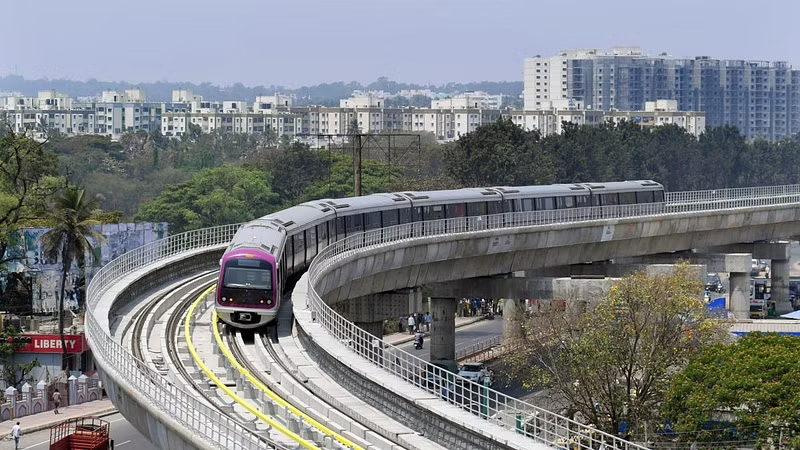
Bengaluru is on the brink of a transformative urban development as Deputy Chief Minister and Minister for Large and Medium Industries, , prepare for a crucial meeting this Friday. The focal point of this discussion will be a coveted 45-acre land parcel in Hebbal, currently held by the Karnataka Industrial Area Development Board (KIADB). This prime real estate is eyed by Namma Metro, which seeks to acquire it for the construction of three vital metro stations and a depot, a step that could revolutionise public transport in the city. The stakes are high, not just for urban planners but also for the local real estate sector, which is lobbying intensely for alternative commercial uses of the land.
Namma Metro’s proposal involves a payment of ₹12.10 crore per acre, amounting to ₹551.15 crore, a sum that promises no financial loss to KIADB. Furthermore, the high-powered committee, led by Chief Secretary , is reportedly in favour of this public project. The acquisition of this land is critical, as it will serve as a major hub where three metro lines will converge—Phase II-B, Phase III, and Phase III-A—turning Hebbal into a pivotal transport interchange. With a suburban railway station also proposed for the area, the potential for enhanced connectivity is immense.
The sustainable development of urban areas hinges on effective transport solutions, and the Hebbal project represents an essential stride in this direction. By integrating metro lines with multi-modal traffic solutions, including a BMTC bus terminal, Namma Metro is championing an eco-friendly approach to urban mobility. Additionally, the proposed multi-level car parking will alleviate congestion, promoting a shift away from private vehicle dependency and contributing to reduced emissions. The history of the land, previously earmarked for a Lake View Tourism Corporation project that never materialised, underscores the importance of strategic, sustainable planning in urban development.
As Bengaluru continues to expand, the meeting on Friday will likely set a precedent for future land use decisions in the city. The balance between public transportation needs and private sector interests will shape not only Hebbal but the entire urban landscape of Bengaluru. By prioritising sustainable infrastructure over commercial interests, the government can ensure that urban growth aligns with environmental sustainability, benefitting citizens and the ecosystem alike. This meeting is not merely about land acquisition; it embodies a vision for a sustainable urban future where public transport is seamlessly integrated into the fabric of city life.




