30 Floating Pontoon Bridges at Maha Kumbh Provide Vital Infrastructure Using Ancient Persian Technique
The Maha Kumbh Mela in Prayagraj, one of the largest spiritual gatherings in the world, attracts millions of pilgrims every 12 years. To facilitate the smooth movement of people across the sacred confluence of the Ganga, Yamuna, and Saraswati rivers, the construction of 30 massive floating pontoon bridges has been a key infrastructure achievement. These bridges, inspired by a 2,500-year-old Persian technique, play a crucial role in ensuring the safety and efficiency of the event.
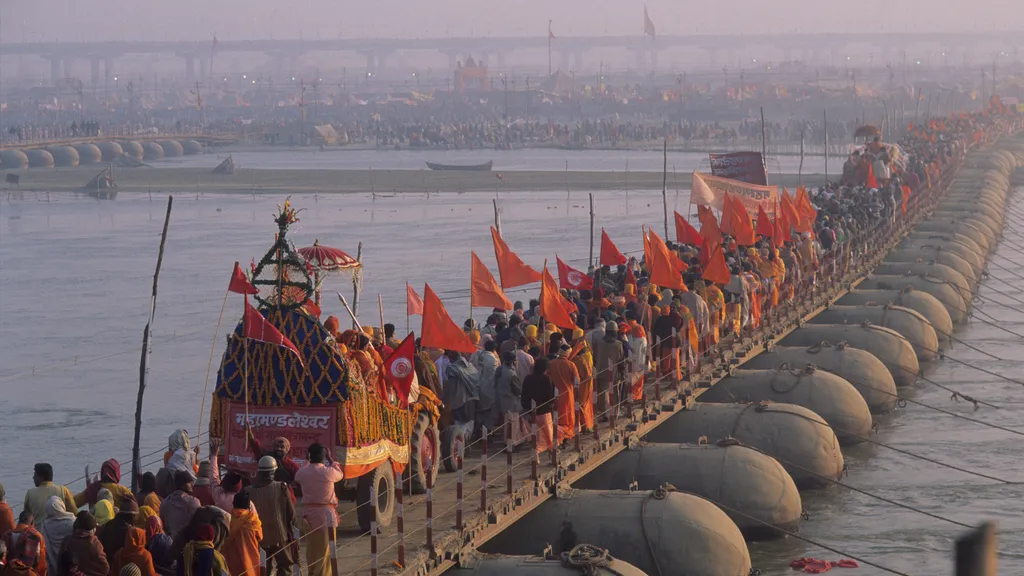
The pontoon bridges, also known as pipa bridges, connect the Sangam area to the sprawling akhada zones. Made with over 2,200 black iron pontoons, each weighing five tonnes, these structures are capable of supporting up to five tonnes of weight. A workforce of more than 1,000 laborers worked for over a year to complete the project, often putting in long hours to ensure its timely construction. The bridges utilize Archimedes’ principle to stay afloat, with the pontoons displacing water to create an upward force equal to their weight. These bridges have been equipped with rigorous safety measures, including CCTV surveillance, to monitor their stability and performance throughout the event. Additional District Magistrate of Mahakumbh Nagar, Vivek Chaturvedi, emphasized the importance of the bridges in maintaining order and providing safe passage for millions attending the Kumbh.
Historically, pontoon bridges have been used since ancient times, notably by Persian King Xerxes I during his invasion of Greece in 480 BC. While India saw the first pipa bridge built in 1874, the Maha Kumbh Mela project surpasses all past endeavors in terms of scale and complexity. The bridges can also accommodate heavy vehicles, including elephants, horses, and chariots, particularly during major events like the Amrit Snan. The total cost of constructing these 30 pontoon bridges amounted to Rs 17.31 crore. Some of the larger bridges, such as the one connecting the Shri Nagvasuki Temple to Jhusi, were built at a cost of Rs 1.13 crore each. After the event, the bridges will be dismantled and repurposed, either stored for future use or redeployed in other parts of Uttar Pradesh. These floating bridges are a testament to the ingenuity of ancient engineering, reimagined for modern use to accommodate the logistical needs of the world’s largest spiritual gathering.