IGI Airport to Improve Passenger Transfers with New Tunnel and Flyover Plans
Delhi’s Indira Gandhi International Airport (IGIA) is set to become even busier as it ramps up operations to handle up to four crore passengers annually from this summer. To cope with the growing demand and ensure smoother transitions between terminals, Delhi International Airport Ltd (DIAL) has put forth a comprehensive infrastructure proposal, focusing on easing traffic between Terminal 1 (T1) and Terminals 2 and 3 (T2 and T3).
The plan includes the widening of India’s only tunnel road under a runway and the construction of a new Y-shaped flyover. These upgrades aim to improve the commuter experience and reduce the strain on the airport’s already crowded transport system, as traffic is expected to increase significantly in the coming years.
The heart of the project is the expansion of the existing six-lane tunnel road that connects T1 with T3/2. The tunnel, which currently accommodates three lanes in each direction, will be enlarged to include a new six-lane underpass section, offering more room for vehicular movement. This modification is particularly crucial as T1, which is set to handle a larger portion of air traffic, will experience a significant rise in transit passengers. Additionally, DIAL has proposed the construction of a Y-shaped flyover that will link the Northern Access Road with key roads leading to Dwarka, Dhaula Kuan, and Vasant Vihar. This flyover aims to make the journey between T1 and T3 faster by bypassing the often congested NSG junction, enabling a smoother flow of traffic. In tandem with these changes, the Northern Access Road itself will be widened to handle the increased volume of vehicles expected to pass through the airport. The entire infrastructure upgrade is estimated to cost around ₹300-350 crore, with DIAL seeking financial assistance from both the Delhi and central governments to complete the project.
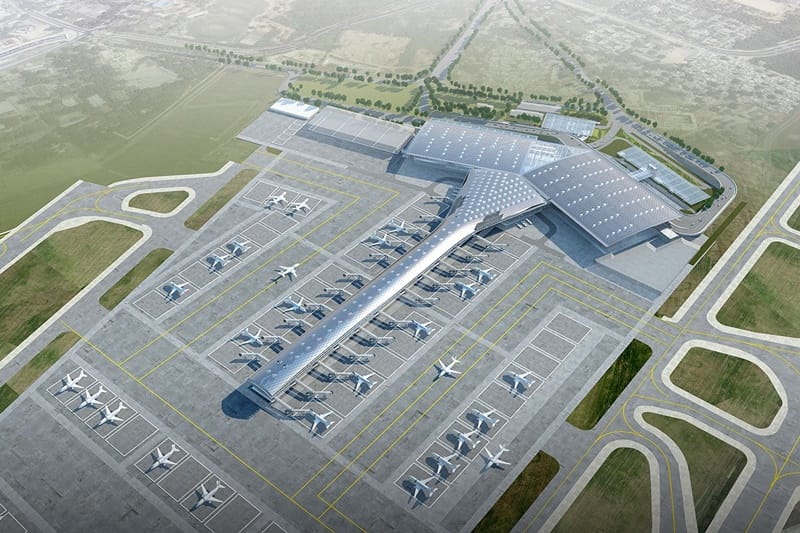
In 2024, IGI Airport handled eight crore passengers, but as passenger traffic continues to grow, the peak capacity is expected to reach 14 crore annually in the next few years. A significant factor contributing to this growth is the planned demolition of T2 to make way for the much larger T4 terminal. To ensure that the airport’s infrastructure keeps pace with these developments, the central government had previously commissioned a detailed traffic study, which was carried out by Japanese consultancy Nippon Koei. The study recommended the Y-shaped flyover and widening of the Northern Access Road as top priorities to ensure seamless connectivity between the terminals. Officials at DIAL emphasise that the proposed road upgrades are critical for improving airport connectivity and handling the expected rise in passenger traffic in the near future. The current plan focuses on making the transfer between terminals much more convenient for passengers, especially those in transit, who often face long and cumbersome travel times due to the airport’s spread-out layout.
While these road improvements are crucial for immediate relief, the longer-term solution for improving airport connectivity includes an automated air train system that will connect T1, T2, and T3, as well as key areas like Aerocity and Cargo City. However, this project has faced delays due to the pandemic and is still a few years away from realisation. The aim is to provide faster, automated, and reliable transportation across the sprawling airport complex, easing congestion and improving the overall passenger experience. As IGI Airport continues to expand and modernise, the proposed widening of the tunnel road and the construction of the Y-shaped flyover represent critical steps towards managing the increasing volume of passengers. These upgrades will not only streamline transit but also contribute to the airport’s ability to handle future passenger growth, ultimately providing a smoother and more efficient travel experience for millions of passengers. These ongoing efforts by DIAL reflect a commitment to enhancing the infrastructure and accessibility of one of the world’s busiest airports, ensuring that IGI remains well-equipped to meet the challenges of the aviation industry in the years to come.