HOW PANDEMIC EVOLVED DESIGN OF CORPORATE OFFICES
The world has realised that a sustainable future can only be brought about by not making anything so large that it goes beyond your own means to sustain if any catastrophe happens; opines Architect ANURADHA GUGLANI Principal Architect and Multidisciplinary Design Professional.
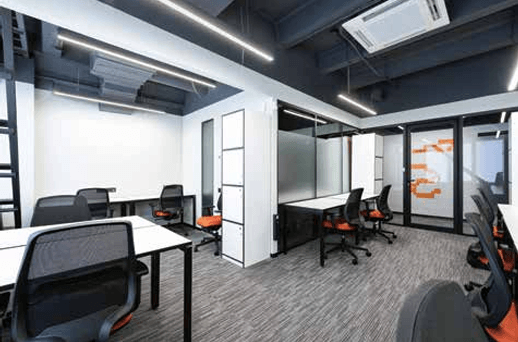
The changing trends over decades have seen a massive evolution of design for corporate office spaces, both internally and externally. It all started with very tiny offices and minimum staff, eventually expanding into large claustrophobic spaces accommodating many working desks whenever a company grew. Sitting in a closed, artificially lit, and conditioned space throughout the day led to mental stress—caused not by work pressure alone, but by the unhealthy, enclosed environment itself.

Realizing these spaces were not conducive to productivity or the mental well-being of employees, companies began tweaking interiors by adding artificial plants, artwork, and color to alter the mood and relax the mind. Good interiors became a bonus—used to attract more employees and create a better impression on visitors and prospective clients. After all, if you look after your employees, you are seen as a more ethical businessman.
It helped, but only superficially. The real need was to de-stress the mind for better productivity. The next trend that evolved was providing employees with recreational activities within the office premises—like gyms, yoga sessions, walking paths, and green areas for a breath of fresh air. This, in turn, led to the addition of changing and shower rooms so employees could freshen up quickly and get back to work. Cafeterias became hubs for casual interaction, fostering a more community-like work culture.
As a result, employees began to feel completely at home in their workplaces and didn’t mind spending long hours there. This balanced environment of “work and play” led to positive development and greater work output. However, this style of working demanded larger spaces. Bigger parcels of land with a focus on landscaping and recreational amenities became the new norm. Thousands of employees would commute from various parts of the city—by driving, carpooling, or company buses—and spend most of their day at these workplace campuses, which eventually began to resemble mini-cities with everything in-house.
That’s how the design of corporate offices evolved—until the pandemic hit. Suddenly, people had to work from the confines of their homes, which were never designed for regular office work. A few months indoors might have seemed manageable, but an entire year brought new challenges. People found themselves trapped inside spaces that either resembled showrooms or served solely as a gathering place for dinner and sleep.
They are those homes that became the most inhabited space by each and every member of the house, the working and the non-working, including children and the pets! Everyone needed their own space to work, which was sound-insulated, clean and organized enough to become the backdrop for their zoom and Google meets.
Then another epidemic hit, this time it was not any disease, it was depression which was caused by not getting enough fresh natural light and air. After spending a whole day in front of the computer, there is no place to escape or unwind. This was not a very good time for all those who never ever really thought how their homes should be. Even the housing trend has evolved with the pandemic. People want to live in villas and independent homes rather than flats and apartments. Sharing amenities, which was the key reason that led to the success of flats and societies, eventually became the very reason for its failure. No one wanted to share any common facilities with each other during the pandemic, not even lifts, leave alone swimming pools!
To have your own little garden and place to step out, some space to be able to work out within the house, and lots of balconies, verandas, and areas that interact with nature now became more desirable than apartments. By tweaking their existing home interiors, moving into new houses, or even taking up villas on long-term rentals, people managed to work from home and successfully delivered their work with even better output. This was possible because the travel time got used for something more productive. Lives became more sustainable. People started becoming more self-sufficient.
Lots of small-scale industries sprouted and small businesses grew—larger, but not large enough to collapse under their own weight again. People understood that ‘small scale is the key.’ Bigger corporations found it not only unaffordable to hold on to their large offices but also realized that those overheads were unnecessary when people could work better remotely from their own little environments or from within their own neighborhoods. Smaller satellite offices for big corporations are the new future of our corporate world.
With fewer vehicles plying during office hours and a resulting lower consumption of fossil fuels, the environment became cleaner. With more time on hand, family time increased. All this led to better mental health and not just a more sustainable, but a more stable world.
The world has realized that a sustainable future can only be brought about by not making anything so large that it becomes unsustainable during a catastrophe. Small damages are easier to handle. Larger ones can shake you up and pull the ground from beneath your feet.
So here we are—back to the age-old concept of small neighborhoods, something we all once had in the past, but had to go through the whole cycle to return to square one. Yes indeed, life is a cycle!
About the Author
Anuradha is an artist, sculptor, furniture designer, and architect. She creates artworks, sculptures, furniture, lampshades, and mosaics as a hobby and occasionally holds exhibitions to showcase her creations. She is the principal architect of a creative architectural, interior, and landscape design firm.
Anuradha specializes in the renovation and adaptive reuse of dilapidated Indo-Portuguese houses. Her work emphasizes sustainability by using locally sourced materials and working with waste. She believes that true sustainability lies in minimizing what you discard and using as little of new resources as possible.