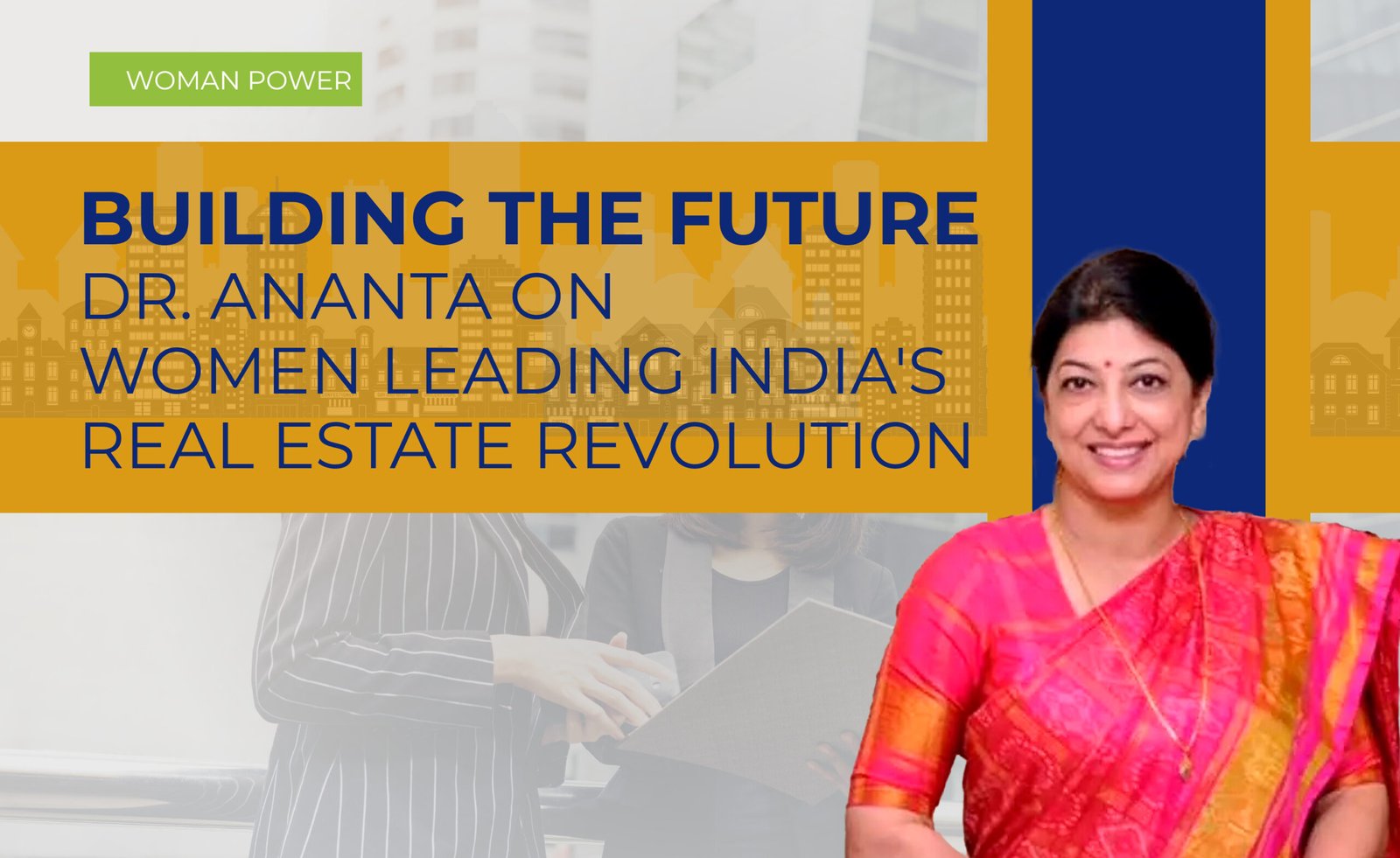
BUILDING THE FUTURE DR. ANANTA ON WOMEN LEADING INDIA REAL ESTATE REVOLUTION
In an exclusive conversation with Homes & Buildings Magazine, DR. ANANTA SINGH RAGHUVANSHI reflects on her journey, the challenges women face in real estate, and the future she envisions for female leaders in the sector.
The real estate industry, traditionally a male-dominated sector, is undergoing a paradigm shift, with women increasingly taking on leadership roles and driving transformative change. Among the most influential figures leading this evolution is Dr. Ananta, a visionary with over three decades of experience in the sector. Having held top positions at DLF, Emaar MGF, Damac, and Experion Developers, she spearheads initiatives as Chairperson of NAREDCO Mahi, where she actively fosters gender diversity, skill development, and sustainable real estate practices.
What inspired you to pursue a career in real estate, particularly in an industry traditionally dominated by men?
When I started my professional journey in 1991, I never once considered gender dynamics. I was driven purely by my passion for marketing and building a career in an industry that excited me. Real estate fascinated me because it wasn’t just about selling properties; it was about shaping cities, creating communities, and making a tangible impact on people’s lives and work. My ambition led me to DLF’s headquarters, where I found myself in an industry where women were few and far between. But the challenge never deterred me. My expertise, dedication, and willingness to learn would pave the way for my success.
The real estate industry, traditionally a male-dominated sector, is undergoing a paradigm shift, with women increasingly taking on leadership roles and driving transformative change. Among the most influential figures leading this evolution is Dr. Ananta, a visionary with over three decades of experience in the sector. Having held top positions at DLF, Emaar MGF, Damac, and Experion Developers, she spearheads initiatives as Chairperson of NAREDCO Mahi, where she actively fosters gender diversity, skill development, and sustainable real estate practices.
The gender disparity was evident, but I always focused on my competence rather than my identity. Over the years, I have witnessed a shift in the industry, and today, more women are stepping into leadership roles, proving that real estate is no longer just a man’s world.
As Chairperson of NAREDCO Mahi, what initiatives are you leading to encourage more women in real estate?
Mahi is not just an initiative but a movement aimed at empowering women at every level of the real estate ecosystem. From labourers to senior executives, we are committed to skilling, mentoring, and fostering career growth through structured programmes.
One of our key initiatives is the NIRED RERA Training, which equips professionals with a deep understanding of real estate regulations. We also have the NIPUN Coaching Programme, designed for those looking to accelerate their careers. Additionally, we are nurturing the next generation of innovators through the Dolphin Tank Incubator, a platform for start-ups in prop-tech. This initiative ensures that women-led businesses receive the exposure and resources they need.
We are also championing sustainability through water-saving initiatives and organising international study tours, allowing women professionals to learn from global best practices. Our objective is simple: to create a real estate industry in which women are not just participants but decision-makers and changemakers.
What are women’s most significant challenges in real estate, and how can they be addressed?
Talent and ambition are not the problem—opportunity and acceptance are. Many women possess the right skills but leave the workforce due to family responsibilities, workplace biases, or lack of support systems. The industry must move beyond token inclusion and foster an environment where women feel valued and empowered.
This begins with inclusive policies—offering flexible work arrangements, leadership mentoring, and family-friendly workplace cultures. When women feel supported, respected, and appreciated, they stay, thrive, and take on more prominent roles. Real estate needs leaders who recognise women’s immense value to the industry, not just in operational roles but in strategic decision-making.
Do you see the real estate industry becoming more inclusive for women?
There has never been a better time for women to enter, excel, and lead in real estate. The industry is changing—workplaces are evolving, diversity policies are strengthening, and women’s voices are being heard.
More companies are realising that gender diversity is not just a social responsibility—it’s a business imperative. Women bring different perspectives, foster collaboration, and drive innovation. As organisations adopt more progressive hiring and leadership policies, we will see an increase in female representation at boardroom tables and decision-making roles.
You mentor women through platforms like She Connects and the Atal Tinkering Labs. How impactful has this been?
One of my greatest privileges has been mentoring women entrepreneurs and young innovators. The We Women’s community, in which I am deeply involved, has over 90,000 members, while She Connects supports over 4,000 women, helping them find direction and confidence in their entrepreneurial journeys.
However, the most rewarding experience has been working with students in Atal Tinkering Labs (ATL), where I mentor bright young minds from classes 6 to 12 under the Atal Innovation Mission. Watching these students design prototypes, explore STEM fields, and develop innovative solutions has reaffirmed my belief that India’s future is in safe hands. The next generation of female leaders will excel in business and drive groundbreaking innovation.
What is your vision for the future of women in real estate?
We must all work towards ensuring that women hold at least 33% of leadership roles in real estate. This isn’t just about numbers—it’s about fostering true equality, diversity, and progress. Women think differently, problem-solve differently, and build differently, and their contributions will reshape the real estate industry in ways we are only beginning to see.
The real estate sector must welcome, nurture, and promote female talent, ensuring equal pay, leadership opportunities, and work environments where women feel secure and respected. This is not just a vision—it is a necessity.
What advice would you give to women navigating the real estate industry?
Success in real estate or any industry is not about following the most straightforward path but making the right choices. Integrity, resilience, and unwavering self-belief will take you further than any external validation.
At every crossroad, choose the path that aligns with your principles, no matter how challenging it may seem. Trust your instincts, embrace new opportunities, and never underestimate your ability to lead and create change. The future of real estate belongs to those who dare to push boundaries, and women have never been better positioned to do just that.