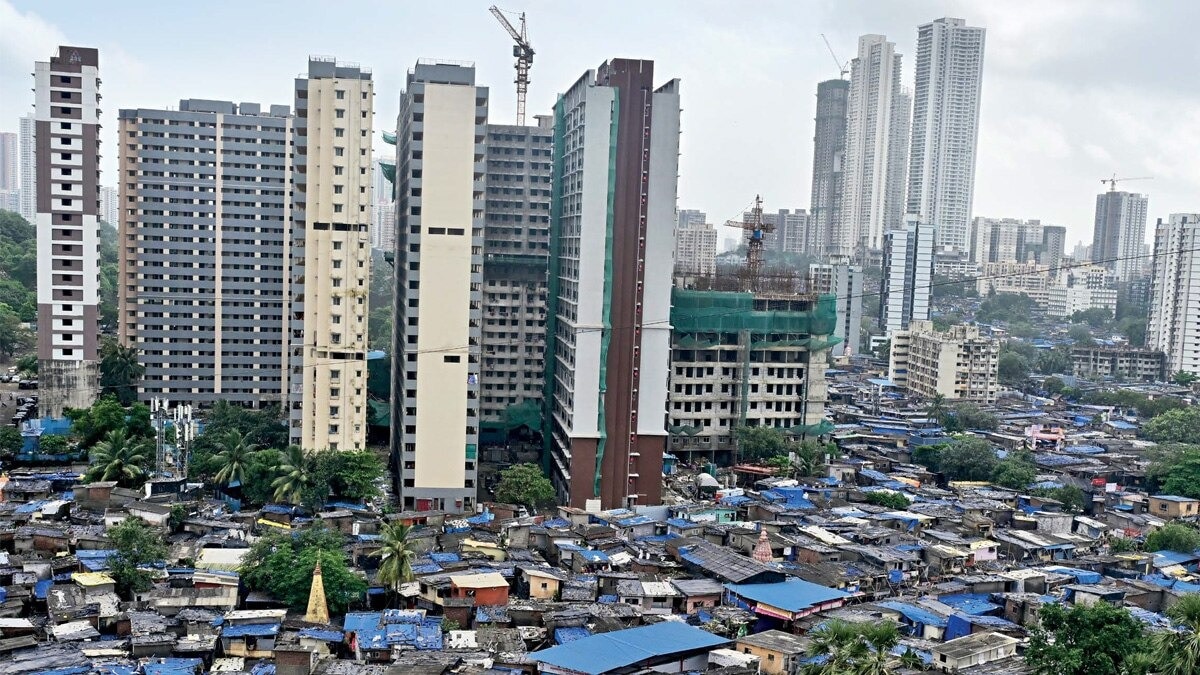
Mumbai’s efforts to transition towards a more equitable and climate-resilient urban environment have received a significant push with the Maharashtra government approving sweeping reforms to its cluster redevelopment framework. The state has removed the long-standing requirement for individual slum households to provide consent for group redevelopment schemes, a change aimed at accelerating the renewal of some of the city’s most vulnerable neighbourhoods. Officials described the move as essential for building safer, denser, and more sustainable urban habitats.
The revised framework, formalised through a recent government resolution, extends cluster redevelopment to larger land parcels with a minimum contiguous area of 50 acres, more than half of which must be categorised as slum land. The Slum Rehabilitation Authority (SRA) has been designated as the nodal agency responsible for identifying eligible clusters and securing approval from the state housing department’s high-power committee. According to officials, central government land may now also be included in these schemes after necessary permissions, marking a first for Mumbai’s redevelopment landscape. A notable shift in the policy is its ability to integrate non-slum structures—including commercial, industrial and warehousing buildings—into a unified redevelopment plan. The resolution also clarifies that structures falling within Coastal Regulation Zone (CRZ) categories I and II can be rehabilitated in situ or relocated within a five-kilometre radius, provided that CRZ and Development Control and Promotion Regulations are followed. Urban planners say this flexibility is vital for ensuring that coastal communities, often the most climate-exposed, receive improved housing built to contemporary safety and sustainability standards.
Ongoing SRA projects are also covered under the new rules. Buildings that already hold occupancy certificates may be reconstructed, retained or demolished depending on the implementation plan approved by authorities. Developers will be required to deposit rental compensation for displaced residents at every stage, a measure intended to reduce the financial uncertainty typically faced by slum-dwellers during long redevelopment cycles. Private-sector participation remains central to the model. Developers who already control more than 40% of land within a designated cluster will receive priority, though appointments may also be made through public-private partnerships or open tenders. Public agencies may collaborate with private developers through joint ventures, with the high-power committee retaining final oversight. Built-up structures located in non-slum pockets of the cluster will require developers to secure formal development rights.
Experts say the revised framework could reshape Mumbai’s approach to inclusive and sustainable housing by increasing scale, reducing delays, and creating opportunities to apply green design principles across larger districts. However, they also caution that effective implementation, transparency, and safeguards for displaced communities will determine whether the reforms achieve their intent of building safer, healthier, and more equitable neighbourhoods.
Maharashtra Ends Consent Requirement To Fast-Track Slum Cluster Redevelopment Projects Citywide