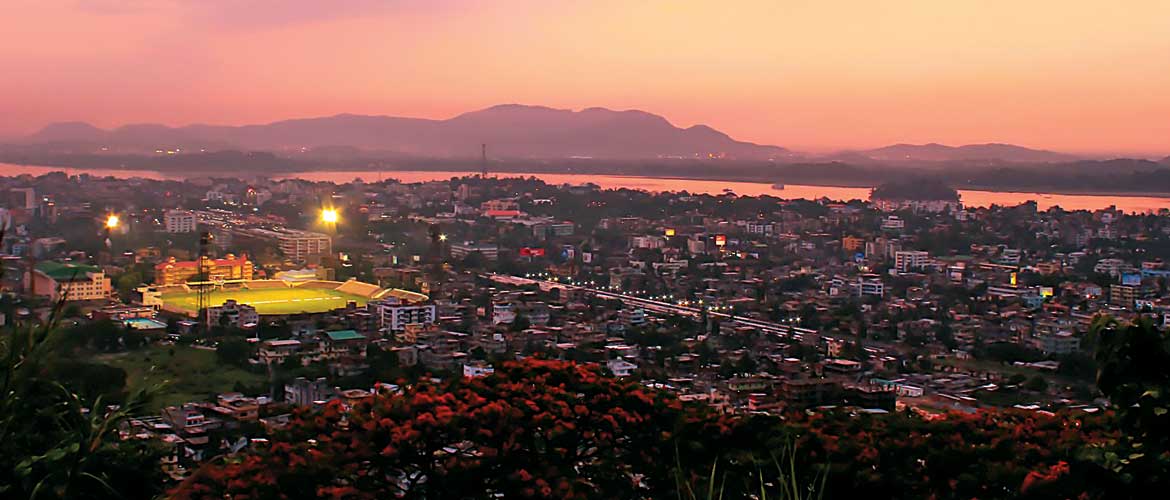
Guwahati is entering a pivotal phase of urban and economic change, with new infrastructure spending and a strengthening commercial base positioning the city as one of Northeast India’s most significant real estate markets. A recent industry assessment suggests that the city’s role as the region’s primary economic gateway will deepen sharply over the next three years, supported by a steady shift toward organised, sustainable urban growth.
Industry analysts note that Guwahati’s advantage lies in its geography and its growing reputation as a centre of education and public services for the wider Northeast. With eight states depending on the city for connectivity, supply chains and skilled labour, investors are increasingly viewing Guwahati as a stable long-term market rather than a speculative bet. A senior real estate strategist said the city now stands at “a meaningful inflection point”, with infrastructure upgrades aligning with investor appetite for high-potential emerging markets. The office sector is expected to expand the fastest. Total stock is projected to increase from around two million sq ft in 2024 to 3.6 million sq ft by 2027, marking an 80 per cent rise. Consultants attribute this demand to the city’s growing Business Process Management cluster and the rise of home-grown start-ups in food technology, financial services and software development. Co-working operators have also reported increased occupancy, driven by young professionals drawn to the city’s lower living costs and improving public amenities.
Transport infrastructure remains central to this transformation. The 93-km Ring Road, slated for completion in 2026, is expected to ease congestion in the core city while enabling new development zones in Azara, Baihata and Narengi. Planners say the six-lane Guwahati-North Guwahati bridge, which will cut cross-river travel time to about 15 minutes, could encourage more balanced development across the river, reducing pressure on existing neighbourhoods. Air connectivity is also being enhanced, with the international airport scheduled to expand its capacity to ten million passengers by April 2025. Urban mobility within the city is set to improve further with the Dighalipukhuri Flyover Assam’s longest expected to streamline movement across key residential and commercial districts. Local institutions such as the Indian Institute of Technology, the College of Architecture and Planning, and the region’s premier medical institutes continue to attract and retain talent.
Urban economists note that this ecosystem is critical for sustainable growth, providing a skilled workforce and supporting more inclusive development across new neighbourhoods. For residents, these shifts hold the promise of better connectivity, diversified job opportunities and higher-quality urban services. Experts caution, however, that Guwahati’s rapid expansion must be balanced with climate resilience, gender-inclusive planning and the protection of natural ecosystems an approach increasingly recognised as essential for equitable city-building in the Northeast.
Also Read: Ahmedabad Sanctions Thirty-One Mega Towers Surpassing Hundred Metres Transforming Western Development Zones
Guwahati Emerging As Key Real Estate Hub With Strong Infrastructure Push Till 2028