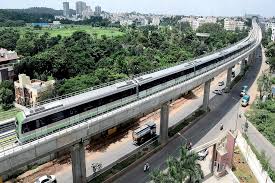
The proposed interstate metro link between Bengaluru and Hosur is beginning to reshape real estate sentiment along the NH-844 corridor, with developers and investors positioning for improved cross-border connectivity and workforce mobility.
If implemented, the Bengaluru–Hosur line would become South India’s first interstate metro rail connection, linking Karnataka’s technology capital with Tamil Nadu’s fast-growing industrial clusters. The planned alignment near NH-844 a strategic stretch connecting employment hubs in South Bengaluru with Hosur’s manufacturing zones has drawn renewed attention from residential developers. Urban mobility experts note that metro-led corridors in Bengaluru have historically recorded gradual but sustained housing demand growth, provided infrastructure delivery remains on schedule. The NH-844 belt is seen as particularly well placed because it sits within commuting distance of Electronic City, one of the city’s largest IT employment nodes. Located roughly 15 km from parts of the corridor, Electronic City continues to anchor residential absorption in South Bengaluru. Existing transit links are also reinforcing early interest. The operational metro station at Bommasandra provides connectivity into the broader Namma Metro network, offering a working transport alternative within driving distance of NH-844. Combined with proposed arterial road upgrades reportedly valued at nearly Rs 7,000 crore, the corridor is increasingly viewed as a structured expansion belt rather than a peripheral highway stretch.
Developers are already responding. Signature Dwellings, among others, has indicated plans to introduce premium, low-density residential projects along the corridor. Industry observers suggest that early-stage corridors allow developers to aggregate larger land parcels, enabling more open layouts and community planning compared to land-constrained inner-city markets. Beyond residential demand, industrial policy is also shaping long-term prospects. The Karnataka Industrial Areas Development Board’s proposed SWIFT City near Sarjapura aims to create a large-scale industrial and innovation ecosystem by 2030. Such employment nodes typically generate housing demand within a 10–20 km radius, placing NH-844 within a favourable influence zone. Additionally, civic proposals such as an international-standard cricket stadium in Bommasandra with a planned capacity of 80,000 seats could enhance the area’s visibility and identity over time. While such projects may not immediately translate into price appreciation, they contribute to broader urban branding. However, analysts caution that infrastructure-led real estate cycles depend heavily on execution timelines. Delays in metro approvals, funding or land acquisition could defer anticipated value gains. Buyers are advised to assess developer credentials, RERA compliance and the phased rollout of infrastructure before committing investments.
As Bengaluru’s growth continues to radiate outward along transport corridors, NH-844 represents a convergence point of inter-state mobility, industrial expansion and suburban housing demand. Whether it evolves into a sustained growth corridor will ultimately hinge on how swiftly mobility infrastructure translates from proposal to operation.
Also Read: Ahmedabad sees major warehousing investment deal
Bengaluru–Hosur metro sparks corridor interest