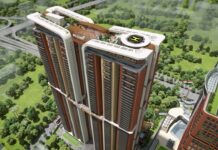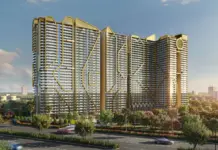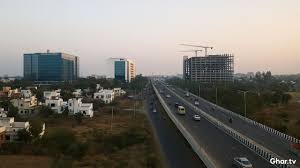
India’s next real estate opportunity may not lie in its largest metros, but in steadily expanding Tier II cities such as Indore. Long regarded as Madhya Pradesh’s commercial capital, Indore is increasingly drawing interest from homebuyers and investors tracking infrastructure growth, economic diversification, and affordability.
Unlike speculative spikes seen in overheated markets, Indore’s rise appears structural. Its central location provides logistical access to major economic hubs such as Mumbai, Delhi, and Ahmedabad, strengthening trade and business mobility. Road corridors, national highways, and Devi Ahilya Bai Holkar International Airport support both passenger and cargo connectivity. The upcoming metro project is expected to further enhance intra-city mobility, potentially unlocking new residential corridors. Economic fundamentals remain a core driver. Industrial activity in Pithampur often referred to as the “Detroit of India” continues to generate employment across manufacturing and automotive sectors. Alongside industry, Indore has built a diversified base spanning IT services, healthcare, education, and retail. This mix reduces dependence on a single sector and creates sustained housing demand from professionals, entrepreneurs, and students. Affordability remains Indore’s strongest comparative advantage. Property prices are significantly lower than Tier I cities, allowing end-users to access gated communities and lifestyle amenities at manageable price points. For investors, lower ticket sizes enable portfolio diversification while offering potential for percentage-based appreciation as infrastructure improves.
Education is another stabilising anchor. Institutions such as IIT Indore and IIM Indore enhance the city’s national profile and generate consistent rental demand. Student housing and compact apartments near academic clusters tend to maintain occupancy even during broader economic slowdowns. Urban governance and livability factors have also strengthened Indore’s brand. The city’s repeated recognition in cleanliness rankings under the Swachh Bharat Mission has reinforced perceptions of civic efficiency and quality of life. Such soft infrastructure clean public spaces, reliable services, and improved traffic management often influences buyer sentiment as strongly as hard infrastructure. Tourism and spirituality provide an additional layer of demand. Indore’s proximity to major pilgrimage destinations such as Ujjain and Omkareshwar Temple supports hospitality and short-term rental potential, particularly as connectivity improves. For investors, the appeal lies in a balanced equation: accessible entry prices, steady job creation, and visible infrastructure upgrades without excessive speculation. For end-users, the attraction centres on livability and relative affordability.
Real estate cycles favour cities undergoing gradual transformation rather than abrupt hype-driven booms. Indore’s trajectory suggests it is entering that critical phase where economic depth, governance improvements, and infrastructure investment begin converging to create sustained property momentum.
Also Read: Pune’s Hinjawadi Township Hosts Realty Influencers
Affordable Indore Gains National Real Estate Attention