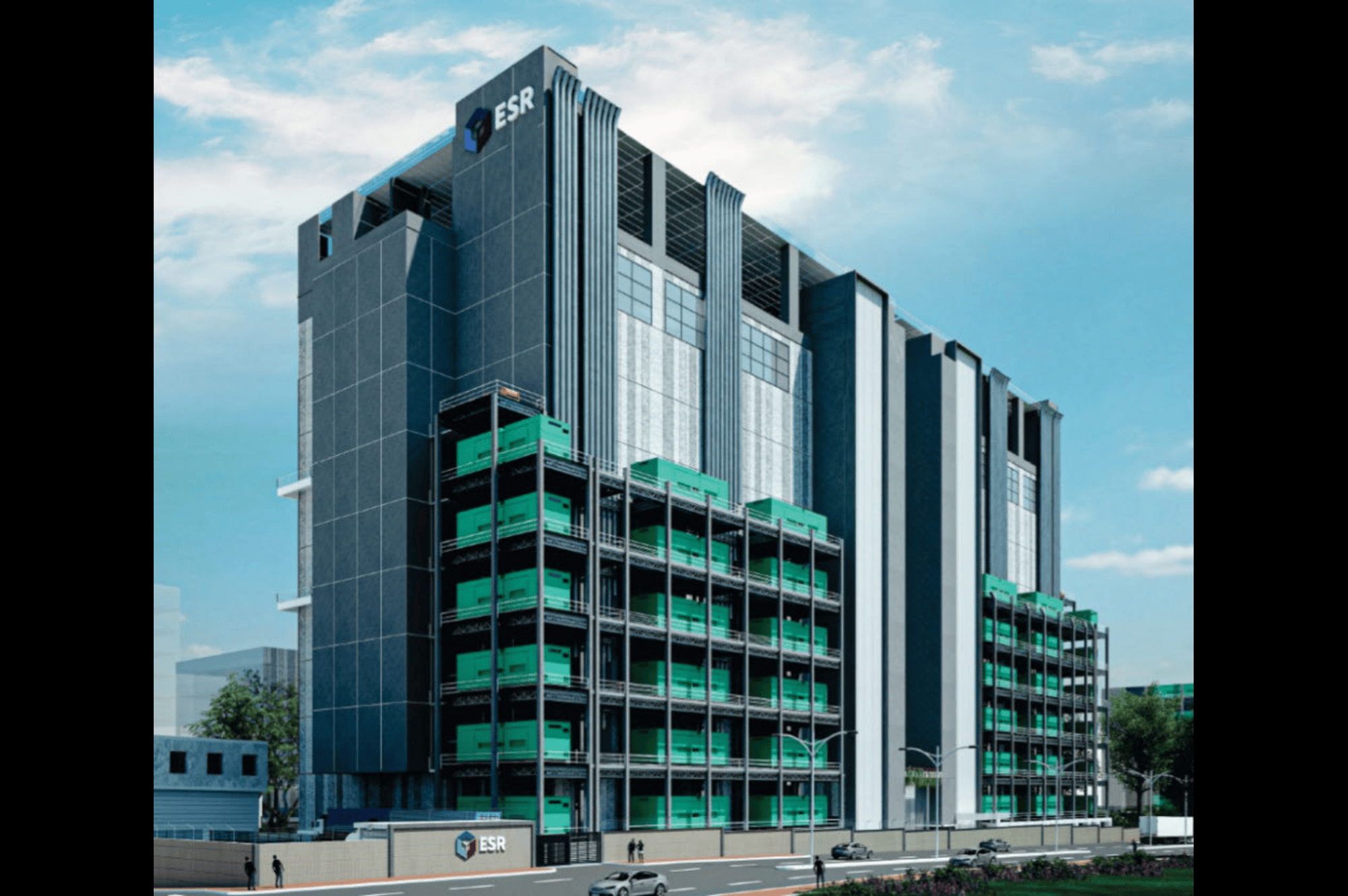
ESR has marked its formal entry into India’s digital infrastructure sector with a 60-megawatt hyperscale-ready facility in Rabale, Mumbai, reinforcing the city’s position as the country’s largest data centre hub. The project represents an investment of roughly $100 million and has already been pre-leased to a major technology occupier, signalling sustained enterprise demand for scalable computing capacity.
The facility, branded as the ESR Rabale MU1 Data Centre, is being developed on a 3.25-acre site within Navi Mumbai’s established data centre corridor. Designed as a multi-storey powered shell, the structure will allow tenants to customise internal fit-outs while benefiting from core infrastructure such as high-capacity power supply, cooling systems and structural resilience. Industry analysts describe Rabale as one of India’s fastest-growing micro-markets for digital infrastructure due to its connectivity to subsea cable landing stations, reliable power access and proximity to financial and corporate districts in the Mumbai Metropolitan Region. As cloud adoption, artificial intelligence workloads and enterprise digitisation accelerate, operators are prioritising scale, redundancy and future expansion potential. The 60 MW capacity places the new facility within the hyperscale category, typically associated with large cloud service providers and global technology firms. Pre-leasing at the development stage indicates that absorption for high-quality capacity remains robust despite rising capital costs and intensifying competition among operators. Urban economists note that data centres have emerged as a strategic real estate asset class in India, sitting at the intersection of technology, infrastructure and energy policy.
While they generate high-value employment and strengthen digital ecosystems, they also require significant electricity and water resources. This has prompted calls for renewable energy integration, efficient cooling technologies and heat mitigation strategies to align growth with climate goals. In Maharashtra, policymakers have introduced dedicated data centre policies offering infrastructure support and regulatory clarity, recognising the sector’s potential to attract global capital. However, experts emphasise the need for coordinated planning to ensure grid stability, disaster resilience and responsible land use, particularly in coastal and flood-prone zones. ESR’s wider Asia Pacific pipeline reportedly exceeds three gigawatts, positioning the Mumbai project as part of a larger regional expansion strategy. For Mumbai, continued investment in facilities such as the Rabale campus strengthens its status as India’s digital gateway, supporting fintech, e-commerce and enterprise technology growth.
As demand for computing power deepens, the challenge for operators and city authorities alike will be to scale capacity without compromising environmental safeguards. The evolution of Mumbai’s data centre ecosystem will depend not only on megawatts added, but on how sustainably and efficiently that capacity is integrated into the urban fabric.
Also Read: Ludhiana AIPL commercial real estate expansion
ESR expands Mumbai digital infrastructure footprint