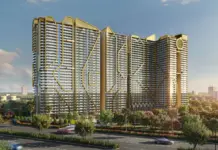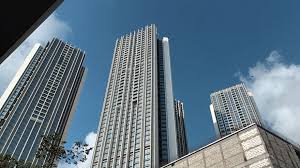
With nearly nine-tenths of the city’s developable land already built upon and households spending close to half their income on home loan repayments, Maharashtra’s housing authority is preparing a large-scale shift toward cluster redevelopment to ease structural stress in the housing market.
At an industry conclave in Mumbai, the vice-president and CEO of Maharashtra Housing and Area Development Authority outlined plans to open up between 800 and 1,000 acres for integrated redevelopment across the island city. The move comes as the Mumbai housing affordability index hovers around 50 per cent, indicating significant strain on middle-income and first-time buyers. Unlike conventional building-by-building reconstruction, the cluster model consolidates fragmented plots often comprising ageing cess buildings into contiguous land parcels ranging from 60 to 100 acres. The approach enables planned layouts with wider internal roads, open spaces, upgraded utilities and community amenities. Officials argue that such township-style planning within city limits could deliver both scale and better infrastructure outcomes. Under the state’s broader roadmap, 2.8 million affordable homes are targeted across the Mumbai Metropolitan Region (MMR) by 2030. MHADA is expected to contribute roughly 0.8 million units through direct construction and policy-backed schemes. In the past two and a half years, about 50,000 units have reportedly been delivered, with a majority of future supply tied to approved or pipeline cluster projects. Urban economists say the scale is ambitious but necessary. Mumbai’s redevelopment landscape has long been constrained by small plot sizes, litigation, and consent thresholds that delay execution. By aggregating land and standardising design frameworks, authorities hope to reduce inefficiencies and accelerate supply particularly for economically weaker sections (EWS) and low-income groups (LIG).
Policy reform is also under consideration. Officials indicated that rationalising premiums, development charges and related taxes for affordable housing could reduce end-user prices by as much as 20–25 per cent in select categories. Industry representatives have consistently flagged high statutory levies as a major contributor to elevated ticket sizes. Connectivity remains central to the strategy. The expansion of metro corridors, upcoming airport infrastructure in Navi Mumbai and improved suburban rail capacity are expected to redistribute demand across the MMR. However, officials cautioned that rapid supply expansion must be calibrated to avoid unsold inventory build-up. Housing experts have also called for diversification beyond ownership models. Rental housing, student accommodation, working women’s hostels and industrial housing are being positioned as complementary formats under the state’s 2025 housing policy framework.
As Mumbai confronts ageing building stock and rising redevelopment risks, MHADA cluster redevelopment represents a structural pivot from fragmented reconstruction to integrated neighbourhood planning. Its success will depend on execution speed, transparent beneficiary identification and sustained infrastructure upgrades that ensure affordability gains translate into liveable, climate-resilient communities.
Also Read: Mumbai Juhu luxury mansion reshapes skyline
Mumbai MHADA cluster redevelopment to unlock land