

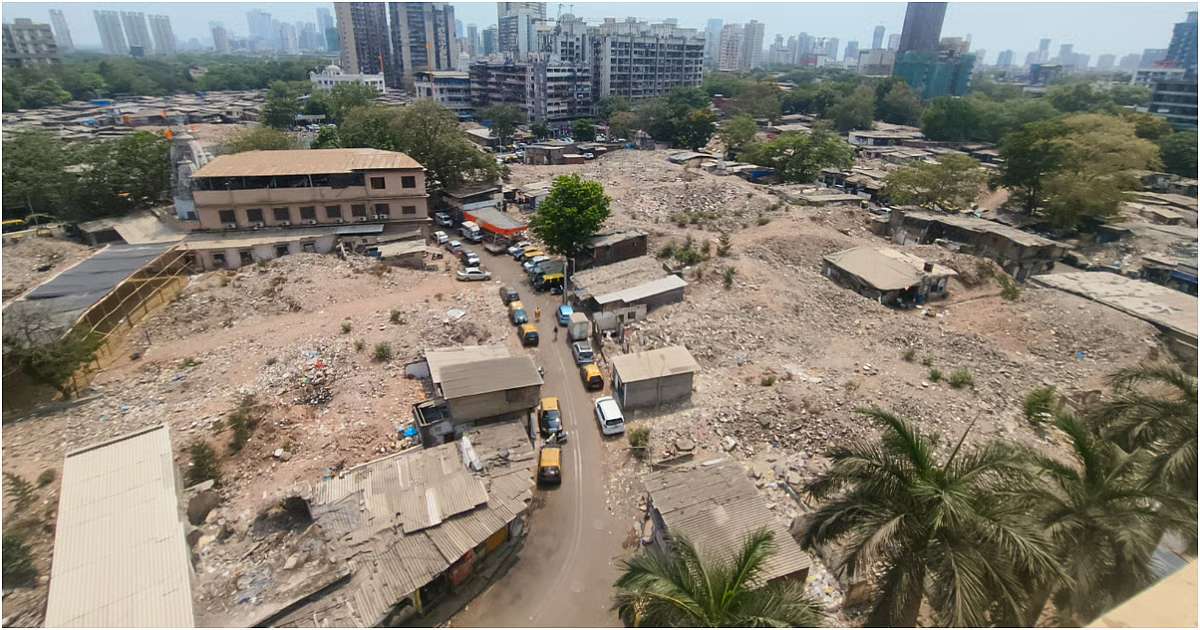
A long-delayed housing renewal effort in eastern Mumbai has moved closer to construction after the state housing authority formalised development agreements for the GTB Nagar redevelopment project in Sion Koliwada. The initiative will replace structurally unsafe residential blocks with high-rise towers, creating safer housing for displaced residents while unlocking additional urban land capacity in one of the city’s dense neighbourhoods.
Officials confirmed that cooperative housing societies representing residents have executed formal development agreements with the state housing authority and the appointed construction and development agency. A separate implementation agreement between the authority and the project developer clears the administrative pathway for construction once statutory approvals are secured.The GTB Nagar redevelopment will be carried out across nearly 11 acres and is expected to rehabilitate roughly 1,200 households. The earlier settlement consisted of two-and-three storey buildings that had been declared unsafe several years ago by the city’s municipal authority. Following the structural assessment, the ageing structures were demolished and families relocated to temporary arrangements.Urban planners say the redevelopment illustrates a broader shift in Mumbai’s housing policy, where failing post-independence residential blocks are being replaced with vertical housing supported by higher permissible floor space index (FSI). In this case, the project will operate under Development Control Regulation 33(9), which allows redevelopment of housing clusters with an FSI of at least 4.5, including fungible floor area that can be used for design flexibility.The proposed plan includes three residential towers rising between 39 and 48 floors. Eligible residents will receive self-contained apartments measuring approximately 635 square feet—significantly larger and structurally safer than many of the units in the original buildings.Urban development specialists note that cluster redevelopments like the GTB Nagar redevelopment are becoming critical in Mumbai’s strategy to address both housing shortages and safety risks. Much of the city’s older housing stock was constructed decades ago and now requires structural renewal to meet modern building standards, fire safety norms and climate resilience requirements.
During the construction phase, displaced residents will receive monthly rental compensation until the new buildings are ready for occupation. Once completed, the housing authority will also oversee maintenance and building management for a fixed post-completion period, helping newly formed housing societies transition into long-term operations.The project also marks a notable institutional step. It is among the first instances where the state housing authority is executing redevelopment on privately owned land through a construction-and-development agency model.
The state government had previously designated the authority as the planning body for the site to streamline approvals and oversight.For Mumbai, where land scarcity and ageing housing remain twin challenges, projects like this represent a delicate balancing act—rebuilding neighbourhoods without displacing communities while making space for a more resilient and inclusive urban future.
Also Read: Mumbai Transformation Plan Targets Infrastructure Housing Growth
Mumbai Approves GTB Nagar Housing Cluster Rebuild




