HomeLatestAuramah Valley Project Signals Shift In Second Homes

Auramah Valley Project Signals Shift In Second Homes

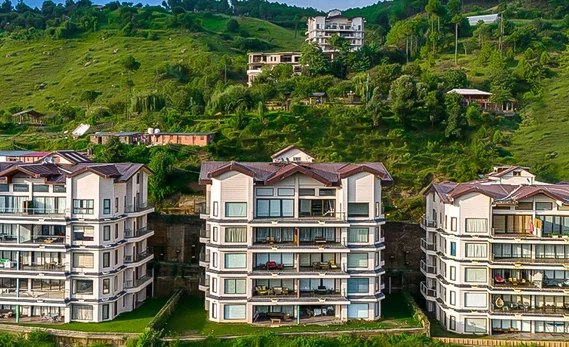
A high-end residential development in Himachal Pradesh is drawing attention for its attempt to merge luxury housing with forested landscapes, reflecting a broader shift in India’s second home market. The project, spread across more than 100 acres in the Himalayan region, targets affluent domestic buyers and overseas Indians seeking alternatives to international property investments.

The emergence of such luxury second homes highlights a changing pattern in real estate demand. Industry observers note that rising disposable incomes, hybrid work models, and improved connectivity are pushing urban residents to consider seasonal or secondary residences within India. Hill states, once constrained by accessibility and limited infrastructure, are now witnessing increased developer interest, raising questions about long-term sustainability and land-use practices. Urban planners caution that while these projects promise low-density living and proximity to nature, they also place pressure on fragile ecosystems. Mountain regions are particularly vulnerable to climate risks, including landslides, water scarcity, and biodiversity loss. Large-scale residential developments, even when marketed as eco-sensitive, require rigorous environmental safeguards and transparent regulatory oversight to prevent irreversible damage.

Developers behind such projects often emphasise integrated living combining housing with wellness amenities, hospitality services, and community spaces. While this aligns with global lifestyle real estate trends, experts argue that the focus must extend beyond exclusivity to include local economic integration. Employment generation, equitable land acquisition, and infrastructure sharing with surrounding communities remain critical benchmarks for responsible development. The demand for luxury second homes also reflects a recalibration of investment preferences. Real estate analysts suggest that geopolitical uncertainties and currency fluctuations have made domestic property more attractive than overseas assets for high-net-worth individuals. At the same time, the sector is evolving from purely financial investment to a lifestyle-driven purchase, where environmental quality and long-term livability play a central role. However, policy experts highlight a regulatory gap in hill regions. Unlike metropolitan areas, many mountain states lack robust frameworks to manage second home proliferation, particularly in ecologically sensitive zones. Without clear guidelines on density, water usage, and waste management, such developments risk straining already limited civic infrastructure.

For local administrations, the challenge lies in balancing economic gains from high-value real estate with environmental preservation. Revenue from tourism-linked housing can boost regional economies, but unchecked expansion may undermine the very natural assets that attract buyers. As India’s real estate market diversifies, projects in environmentally sensitive regions will likely face closer scrutiny. The future of luxury second homes in the Himalayas may depend not just on design and amenities, but on how effectively developers and regulators align growth with ecological resilience and community needs.

Also Read : NCLAT Faces Deadline On Supertech Housing Cases
Auramah Valley Project Signals Shift In Second Homes
RELATED ARTICLES

LEAVE A REPLY

Please enter your comment!
Please enter your name here

- Advertisment -spot_img

Most Popular

Recent Comments

Vedanta Aluminium Output Hits Record as Restructuring Nears

Vedanta Aluminium Output Hits Record as Restructuring Nears

Vedanta closed FY26 with record aluminium and alumina production, strengthening its position in a metals market closely tied to India’s infrastructure, power and transport...

India Steel Consumption Signals Wider Urban Growth

India Steel Consumption Signals Wider Urban Growth

India’s steel consumption has nearly doubled over the past decade, reaching about 152 million tonnes in 2024-25 from 77 million tonnes in 2014-15. The...

Pune GCC Demand Reshapes Commercial Office Market

Pune GCC Demand Reshapes Commercial Office Market

Pune’s office market is increasingly being shaped by Global Capability Centres (GCCs), with multinational firms using the city for technology, engineering, financial and specialised...

Hyderabad Brigade Barcelona RERA Shapes Kokapet Housing

Hyderabad Brigade Barcelona RERA Shapes Kokapet Housing

Hyderabad’s western growth corridor is seeing another large residential addition as Brigade Barcelona, a luxury housing project in Kokapet’s Neopolis, moves ahead with Telangana...

Chandigarh RERA Enters Focus as Prime Homes Near Crores

Chandigarh RERA Enters Focus as Prime Homes Near Crores

Chandigarh’s prime residential market is entering a new price bracket, with registered transactions showing that well-located plots in established sectors can command tens of...