HomeLatestMHADA Mumbai Lottery Highlights Housing Demand Gap

MHADA Mumbai Lottery Highlights Housing Demand Gap

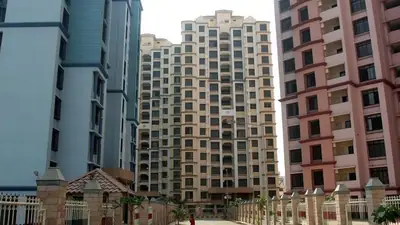
A surge in applications for the latest public housing draw in Mumbai has underscored the persistent demand-supply mismatch in the city’s affordable housing segment. Within days of opening registrations, over 30,000 applicants competed for just 2,640 homes, reflecting the continued struggle of urban households to secure formal housing within reach of their incomes.

The scale of interest in the MHADA lottery reveals more than just aspirational homeownership it points to systemic constraints in land availability, pricing, and planning that limit inclusive urban growth. While state-led housing schemes remain one of the few accessible entry points into Mumbai’s formal housing market, the numbers suggest that supply continues to lag far behind need. A closer look at the offering highlights a diverse price band, ranging from units priced under ₹30 lakh to premium apartments exceeding ₹6 crore. However, the bulk of the inventory lies in mid- and high-income categories, raising questions among urban planners about the adequacy of stock for economically weaker sections. Although smaller units in peripheral areas such as Mankhurd and parts of Goregaon cater to lower-income buyers, their limited volume contrasts sharply with the scale of demand.

Another notable aspect is that a significant share of the homes is still under construction. This introduces uncertainty for buyers, particularly first-time homeowners, who must factor in project timelines, financing burdens, and the risk of delays. Experts note that while under-construction inventory helps expand supply pipelines, it also shifts delivery risk onto citizens many of whom are already financially stretched.The geographic spread of these units reflects Mumbai’s evolving development pattern, with new supply concentrated in suburban and eastern corridors rather than established central districts. This trend aligns with broader urban expansion but raises concerns around connectivity, infrastructure readiness, and environmental sustainability. Without parallel investments in public transport, green spaces, and social infrastructure, such housing clusters risk becoming isolated or resource-intensive. The overwhelming response to the MHADA lottery also highlights the limited role of rental housing in the city’s policy framework. With ownership still seen as the primary pathway to housing security, demand pressures on subsidised or semi-subsidised ownership schemes remain high. Urban policy experts suggest that a stronger rental ecosystem, combined with inclusionary zoning and climate-sensitive planning, could help rebalance the market.

From a governance perspective, the lottery system continues to offer transparency in allocation, yet it does little to address deeper structural issues such as land costs and regulatory bottlenecks. As Mumbai grapples with climate risks, including flooding and heat stress, future housing strategies may also need to integrate resilience standards into design and location planning. With the draw results expected in mid-May, attention will shift to how many applicants ultimately secure homes and how many remain excluded. The broader challenge for policymakers lies not in managing demand, but in expanding equitable, sustainable housing supply that aligns with the realities of a growing urban population.

Also Read : Mumbai Worli Luxury Property Sale Records Rise
MHADA Mumbai Lottery Highlights Housing Demand Gap
RELATED ARTICLES

LEAVE A REPLY

Please enter your comment!
Please enter your name here

- Advertisment -spot_img

Most Popular

Recent Comments

India Construction Waste Crisis Demands Early Action

India Construction Waste Crisis Demands Early Action

As India accelerates infrastructure delivery and urban expansion,experts are calling for a fundamental shift in how the construction industry addresses material waste. The issue has...
India Construction Growth Climbs Global Rankings Fast

India Construction Growth Climbs Global Rankings Fast

India has strengthened its position as one of the world’s most influential construction markets,with its contribution to global building activity rising sharply amid sustained...
India Infrastructure Push Reshapes Future Urban Networks

India Infrastructure Push Reshapes Future Urban Networks

India is continuing to channel significant public investment into transport networks,industrial capabilities and advanced manufacturing as policymakers seek to sustain economic momentum while preparing...
KD Industries Merger Reflects Circular Economy Push

KD Industries Merger Reflects Circular Economy Push

A proposed corporate restructuring in India’s metal and manufacturing sector is drawing attention to the increasing role of sustainability led business models in industrial...
India Building Sector Adapts To Technology Shift

India Building Sector Adapts To Technology Shift

India’s construction sector is undergoing a significant structural shift as digital technologies, sustainability requirements and changing urban needs reshape how buildings and infrastructure are...