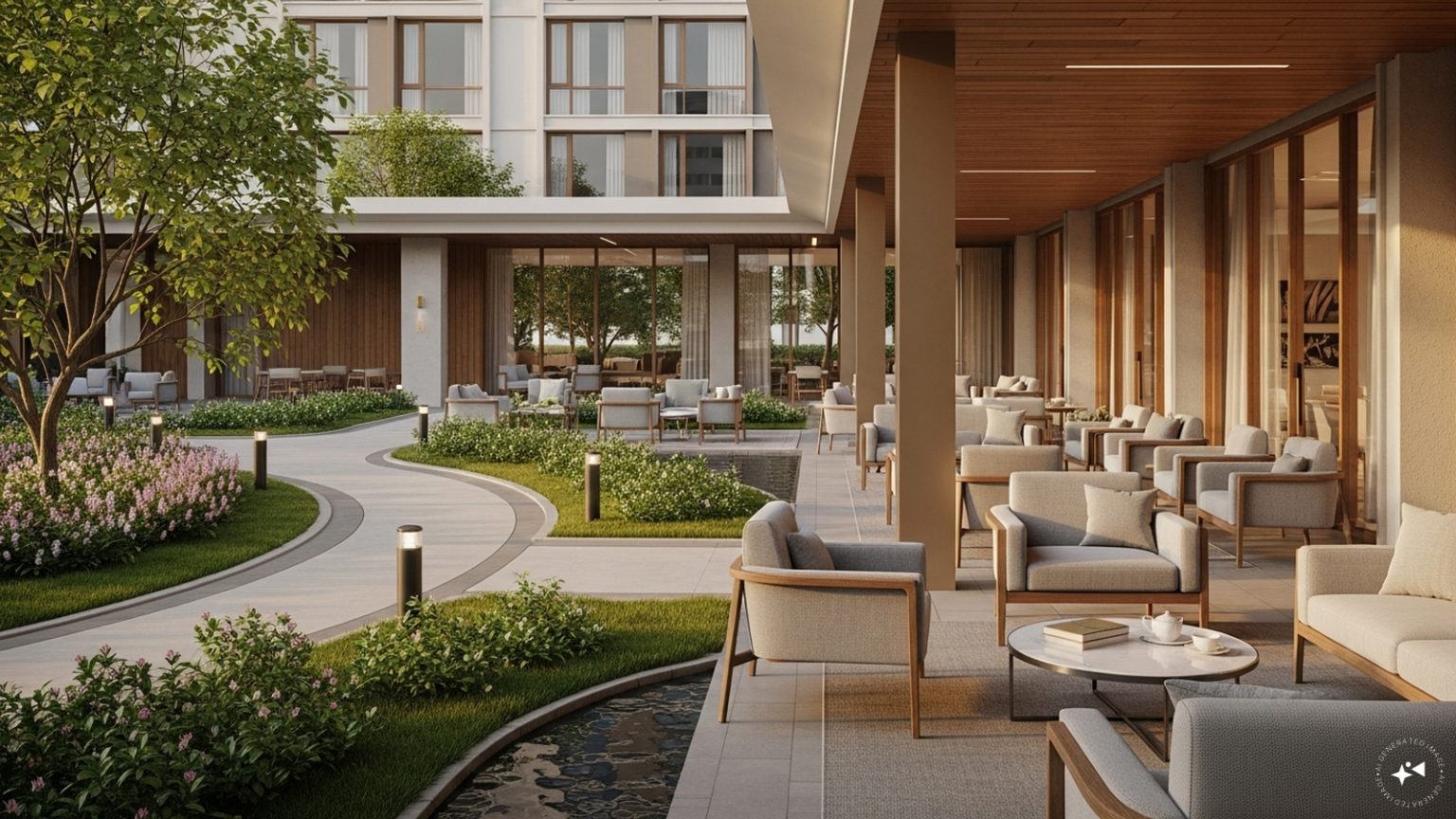
A recent policy revision in Haryana is prompting real estate developers to re-evaluate senior living as a viable urban housing segment, particularly across Gurugram, Faridabad and Panchkula. By allowing higher construction density through transferable development rights, the state has made projects financially more feasible an intervention that could reshape how ageing populations are accommodated within rapidly urbanising regions.
Urban planners note that the change addresses a long-standing constraint in retirement housing: limited buildable area relative to land costs. With increased floor area ratios, developers can now distribute fixed land investments across a larger number of units, improving affordability dynamics while enabling integrated facilities such as healthcare, mobility support, and shared community spaces. This shift is expected to expand the pipeline of senior living housing projects in northern India. The policy arrives amid demographic and social transitions. India’s elderly population is growing steadily, while family structures are becoming more nuclear and geographically dispersed. Many seniors are increasingly seeking independent yet supported living environments rather than relying solely on family care. Industry assessments suggest that senior living housing is transitioning from a niche offering to a mainstream urban need, especially in metropolitan peripheries where land availability allows planned communities.
However, the expansion of such developments raises questions about inclusivity and urban equity. Most current proposals are concentrated in premium or mid-to-high income segments, with limited accessibility for lower-income elderly citizens. Urban policy experts argue that while increased density improves project economics, it must be balanced with affordability mandates and integration into public infrastructure systems such as transport, healthcare networks and green spaces. From a sustainability perspective, the design of senior living communities presents both opportunities and risks. High-density developments, if poorly planned, can strain local resources. Conversely, well-designed projects can incorporate energy-efficient buildings, walkable layouts, and shared services that reduce per capita resource consumption. Experts emphasise the need for climate-responsive architecture, especially given the vulnerability of elderly residents to heat stress and extreme weather.
Market signals indicate rising investor interest, with several large developers exploring projects that combine multi-generational housing with dedicated senior living zones. While occupancy levels in existing facilities remain relatively strong, the sector’s overall penetration in India remains low compared to global benchmarks, pointing to significant latent demand. Looking ahead, the success of Haryana’s approach will depend on regulatory oversight and alignment with broader urban goals. Ensuring that senior living housing evolves as a people-centric, climate-resilient and inclusive segment rather than a purely commercial opportunity will be critical. As cities adapt to ageing populations, policies that integrate housing, healthcare and social infrastructure will shape not just real estate markets, but the quality of urban life itself.
Haryana FAR Reform Boosts Senior Living Projects