HomeLatestRaigad Region Draws Fresh Housing Interest

Raigad Region Draws Fresh Housing Interest

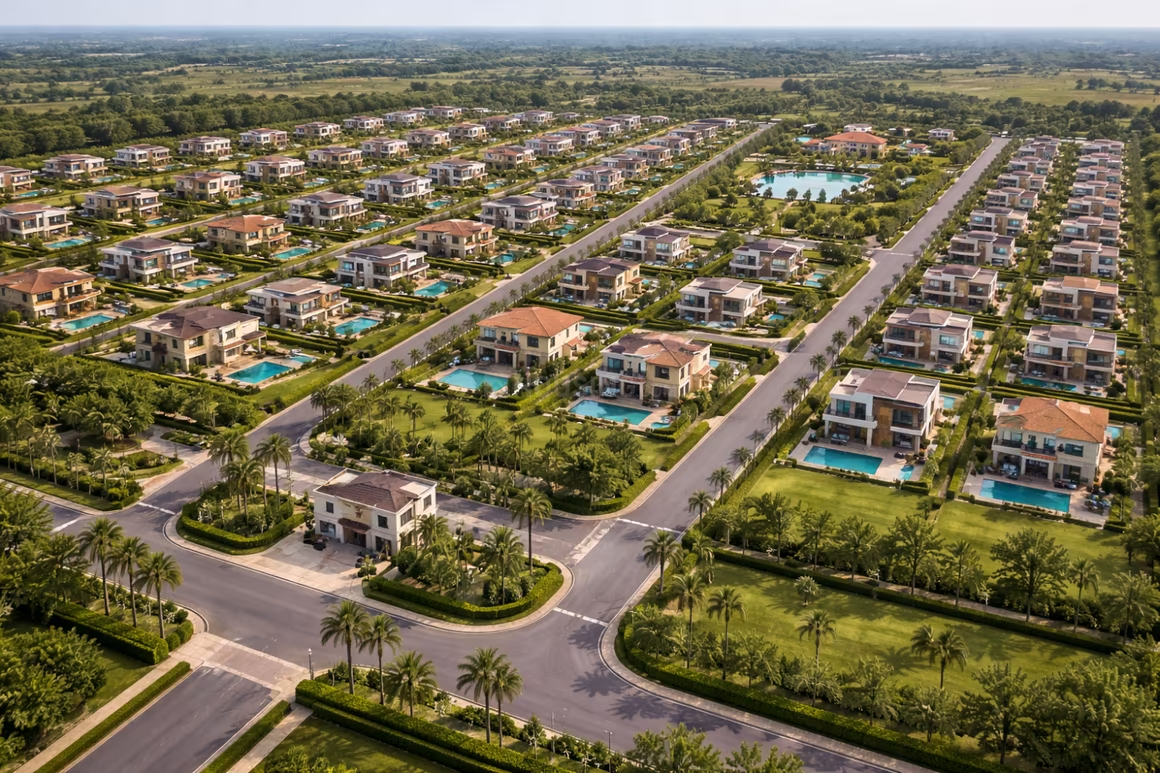
The opening of major transport upgrades around Mumbai is rapidly altering land and housing patterns across Raigad and adjoining hill regions, with developers and investors increasingly targeting emerging micro-markets beyond the city’s traditional suburban limits. Improved expressway access and new regional connectivity projects are now accelerating interest in plotted housing, second homes and low-density residential developments across Karjat, Khopoli, Neral and nearby corridors.

Urban planners say the shift reflects a broader restructuring of the Mumbai Metropolitan Region, where rising land prices, congestion and limited developable space inside the core city are pushing real estate activity outward. The improved road infrastructure is significantly reducing travel friction between Mumbai, Navi Mumbai and western Maharashtra, making previously peripheral locations more commercially viable. Industry estimates suggest land transactions have increased sharply along stretches linked to the upgraded Mumbai-Pune corridor, particularly near expressway exits and future logistics routes. Several developers have either acquired large land parcels or announced township-style projects focused on villas, wellness communities and plotted developments.

Real estate analysts note that the emerging “Mumbai 3.0” narrative is being shaped not only by highway improvements but also by wider infrastructure integration. Projects such as the Mumbai Trans Harbour Link and the proposed Virar-Alibaug multimodal corridor are collectively expanding the commuter and investment geography of the region. However, urban development experts caution that infrastructure-led growth can produce uneven outcomes if planning controls fail to keep pace with speculative investment. The rapid conversion of agricultural and ecologically sensitive land into low-density housing layouts has already raised concerns around groundwater stress, slope stability and the fragmentation of green cover in parts of the Western Ghats foothills.The growing popularity of weekend homes and remote-working residences has also changed buyer behaviour. Locations once considered seasonal tourism destinations are increasingly being positioned as semi-permanent residential alternatives for professionals seeking lower-density living environments. Analysts say this trend gained momentum after hybrid work models became more widely accepted. At the same time, market observers warn first-time investors against assuming uniform appreciation across the corridor.

Connectivity upgrades often create concentrated value pockets rather than region-wide gains. Areas with legal land clarity, reliable civic infrastructure and proximity to transport junctions typically outperform isolated interior parcels.Experts tracking the land market advise buyers to prioritise due diligence over speculative momentum. Title disputes, fragmented ownership patterns and unclear zoning regulations remain common risks in hilly and tribal-adjacent belts around Raigad district. Urban economists also point out that rental demand in second-home markets can fluctuate sharply outside holiday seasons, affecting long-term returns. The expansion of the Mumbai corridor may ultimately redefine how housing growth spreads across western India, but planners argue that future development must balance investment activity with ecological safeguards, public transport integration and water-sensitive urban planning. As infrastructure redraws the region’s growth map, the challenge for authorities will be ensuring that connectivity-led expansion does not outpace environmental resilience and civic preparedness.

Also Read : Aurex Expands AI Led Property Investment
Raigad Region Draws Fresh Housing Interest
RELATED ARTICLES

LEAVE A REPLY

Please enter your comment!
Please enter your name here

- Advertisment -spot_img

Most Popular

Recent Comments

India Aluminium Sector Faces Raw Material Challenge

India Aluminium Sector Faces Raw Material Challenge

India’s smaller aluminium manufacturers are facing mounting financial pressure as rising raw material costs continue to erode competitiveness, prompting industry bodies to seek policy...
NMDC Steel Governance Move Supports Growth Plans

NMDC Steel Governance Move Supports Growth Plans

NMDC Steel has announced a key leadership change in its corporate governance structure with the appointment of a new Company Secretary and Compliance Officer,...
Tata Steel Earnings Reflect Infrastructure Momentum

Tata Steel Earnings Reflect Infrastructure Momentum

India’s expanding infrastructure pipeline helped Tata Steel Q1 Results reflect stronger domestic operational resilience during the first quarter of FY27, even as international operations...
Shree Cement Earnings Signal Cement Sector Challenges

Shree Cement Earnings Signal Cement Sector Challenges

Shree Cement has reported a weaker financial performance for the opening quarter of FY27, with standalone net profit declining year on year despite continued...
Shree Cement Board Meets On Quarterly Performance

Shree Cement Board Meets On Quarterly Performance

Shree Cement’s board is scheduled to meet on Q1 FY27 results this week, with investors closely watching the company’s financial performance amid evolving cement...