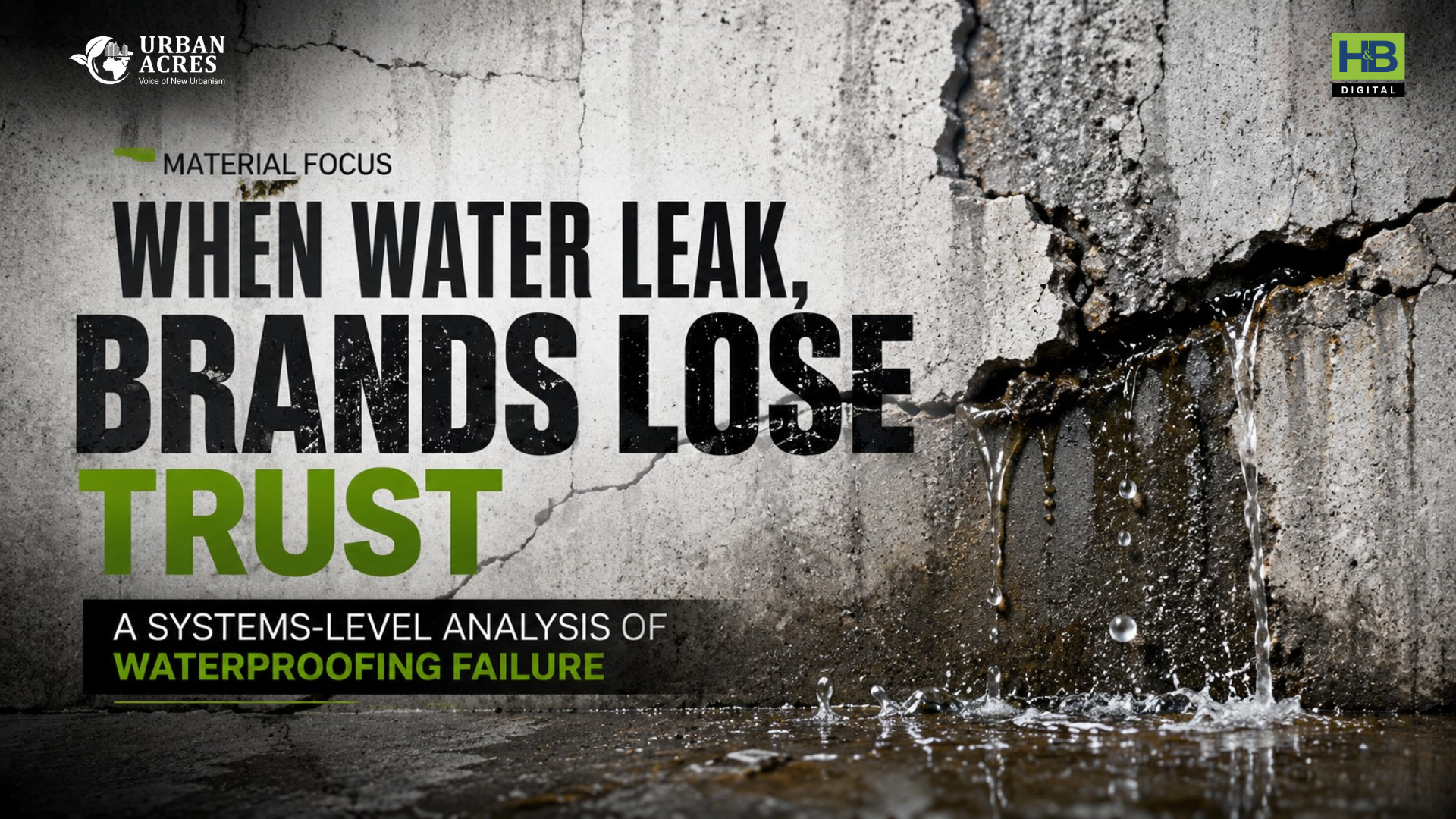
Water ingress is one of the most frequent, costly, and reputationally damaging failures in construction across buildings and infrastructure. Despite decades of material innovation, leakage continues to recur, indicating that the root cause is not product inadequacy but systemic failure in design integration, execution, and lifecycle thinking. This paper examines waterproofing as a construction engineering problem rather than a real-estate defect, analysing physical mechanisms of leakage, failure typologies, climate-driven risk escalation, and the evolution from product-based to system-based waterproofing design.
Drawing on industry practice, forensic logic, and expert insights from leading manufacturers and engineers, the paper argues that waterproofing must be repositioned as a core service-life determinant and governance function. It concludes with a technical and institutional framework for reducing leakage through system redundancy, interface engineering, execution tolerance, and accountability across the construction ecosystem.
Leakage as a Construction failure, not a finishing defect
In construction practice, water leakage is often discovered late and explained away early. It appears first as a cosmetic blemish—damp patches, seepage lines, staining—and is frequently categorised as a defect to be rectified during maintenance or defect liability periods. This framing is deeply misleading.
Water ingress is not a surface imperfection. It is a structural and systemic failure mode that reflects how a building or infrastructure asset was conceived, detailed, constructed, and governed over time. Once moisture enters a structure, it accelerates chemical, mechanical, and biological degradation processes that are difficult or impossible to reverse.
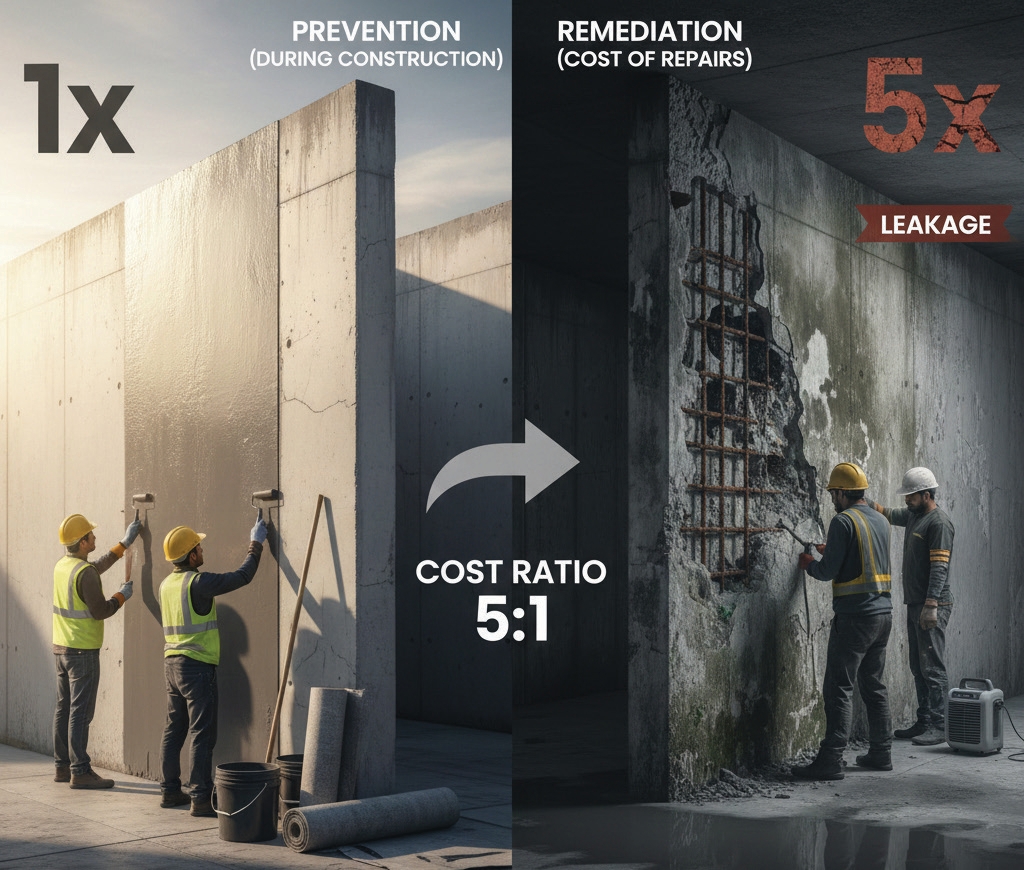
As Tushar Munshi, Director at Shubh Constrocare Products and Services, states from field experience:
‘In waterproofing, the cost of repairs and maintenance is at least five times more than the waterproofing done during construction’.
This ratio captures the economic asymmetry of leakage: prevention is inexpensive relative to remediation, yet remediation is disproportionately common. The persistence of leakage therefore signals not a lack of technology, but a misalignment between construction intent and construction practice.
Scale of the problem: Why water ingress dominates construction failures
Across global defect surveys, forensic investigations, and insurance claim data, moisture-related failures consistently rank among the most prevalent causes of post-construction intervention. In many building typologies—residential, commercial, industrial, and infrastructure—water ingress represents the largest single category of serviceability failure.
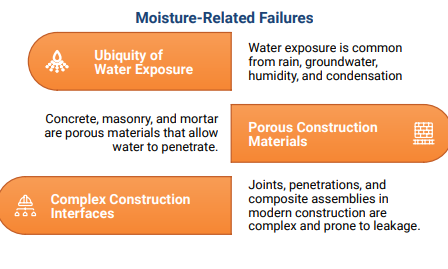
This dominance arises from three factors:
- Ubiquity of water exposure – rain, groundwater, humidity, condensation
- Porous nature of construction materials – concrete, masonry, mortar
- Complexity of modern construction interfaces – joints, penetrations, composite assemblies
While waterproofing typically represents a very small percentage of construction cost, its failure cascades into structural deterioration, asset devaluation, legal disputes, and reputational damage. In practical terms, leakage is a low-probability, high-impact risk that is systematically under-managed.
Physical mechanisms of leakage: How water enters structures
All water ingress in construction can be traced to three physical transport mechanisms. Understanding these mechanisms is foundational to effective waterproofing engineering.
Capillary Transport
Concrete and masonry are porous materials. Even high-grade concrete contains interconnected capillary pores that draw water inward through surface tension forces. Capillary transport explains why moisture can rise against gravity, persist after rainfall ceases, and manifest far from visible cracks.
Crystalline admixtures and hydrophobic treatments aim to block or disrupt these capillaries, but their effectiveness depends on moisture availability, pore continuity, and curing conditions. Failures occur when capillary action is underestimated or when execution prevents the chemistry from fully developing.
Hydrostatic pressure-driven flow
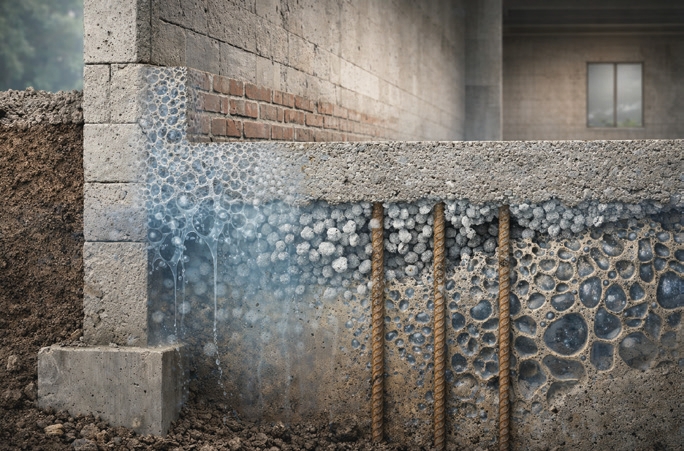
In sub-grade construction, water ingress is dominated by hydrostatic pressure. Groundwater exerts continuous force on basement walls and slabs, exploiting the smallest discontinuities in concrete and waterproofing layers.
Barrier membranes often fail not because of inadequate tensile strength, but because water migrates laterally along interfaces created by:
- Poor bonding
- Tie-rod holes
- Construction joints
- Honeycombing
This is why fully bonded and integral waterproofing systems have gained prominence in basements and tunnels: they eliminate the interface where lateral migration occurs.
As Nikhil Bhatia, National Target Market Manager – Waterproofing & Roofing at Sika India Private Limited (Construction Chemicals), observes:
‘Basement waterproofing today is carried out in confined spaces with rock anchors and complex detailing, where traditional methods are no longer fit’.
Vapour diffusion and condensation
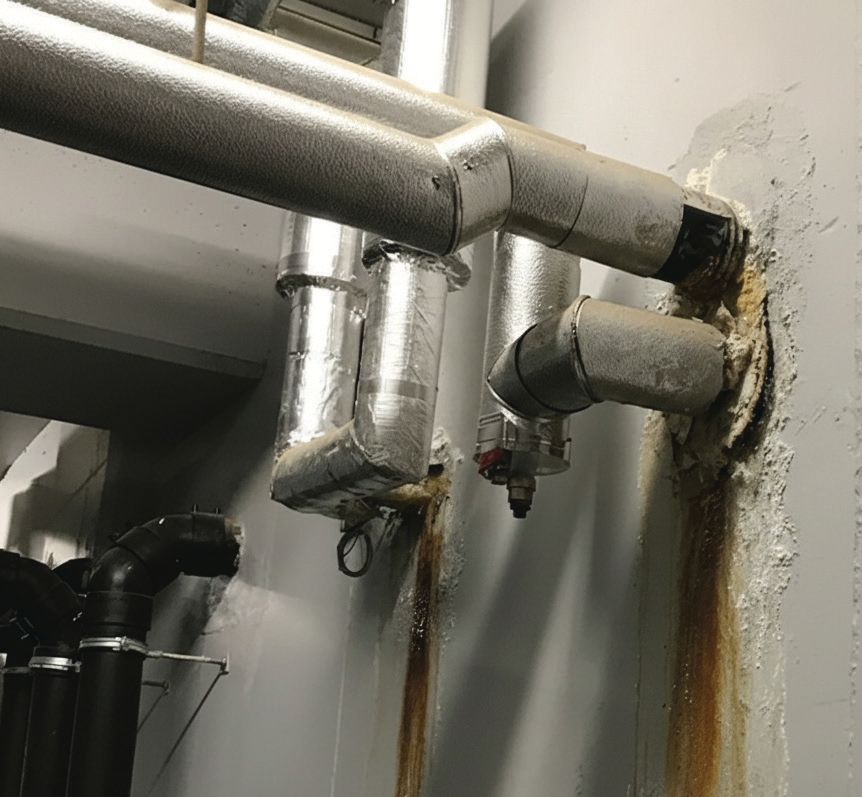
Many failures are not caused by liquid water ingress, but by vapour diffusion. Warm, moisture-laden air migrates through assemblies and condenses on cooler internal surfaces, leading to corrosion, mold growth, and delamination.
Systems that block liquid water but trap vapour are especially vulnerable in tropical and humid climates. Breathability is therefore not an optional feature; it is a durability requirement.
Climate volatility and the Breakdown of historical design assumptions
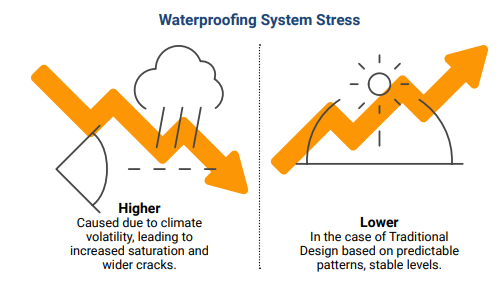
Traditional waterproofing design was based on assumptions of predictable rainfall patterns, stable groundwater levels, and manageable wet–dry cycles. Climate change has invalidated these assumptions.
Unseasonal rainfall, intense cloudbursts, rising water tables, prolonged humidity, and extreme temperature fluctuations now subject waterproofing systems to:
- Increased saturation cycles
- Wider thermal crack movements
- Longer moisture retention periods
- More aggressive chemical exposure
Anubhav Saxena, Chief R&D Officer at Pidilite Industries Limited, highlights this shift:
‘Climate change is causing floods even in traditionally low-rainfall cities. This demands updated waterproofing specifications and a move away from conventional practices’.
Waterproofing systems designed for peak rainfall but not for duration and frequency of exposure now fail prematurely. Climate volatility has transformed waterproofing from a seasonal consideration into a permanent design load.
Structural movement: Waterproofing in Dynamic assemblies
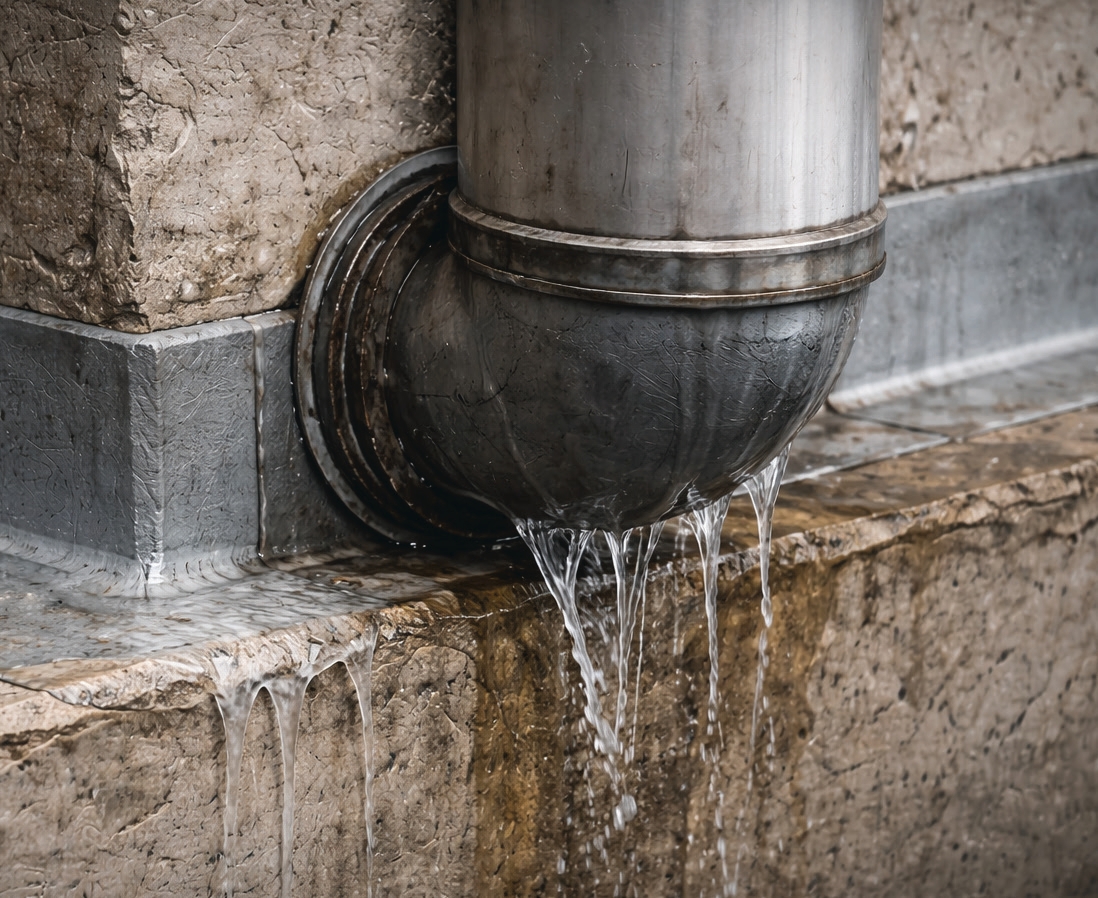
Modern structures are no longer static. High-rise sway, post-tensioned slabs, thermal expansion of podiums, and differential settlement introduce continuous movement.
Waterproofing materials must therefore satisfy two conflicting requirements:
- Strong adhesion to the substrate
- High elasticity to accommodate movement
Rigid systems fail by cracking; highly elastic systems fail if adhesion is compromised. This has driven the adoption of elastomeric, polyurea, and hybrid membranes specified by strain capacity, not just thickness.
Bhatia explains the shift:
‘Higher-grade concrete leads to more structural cracking, large podiums cause water stagnation, and post-tensioned slabs introduce movement. Traditional waterproofing methodologies cannot absorb this behaviour’.
Interfaces as the Primary failure zones
Forensic analysis consistently shows that most waterproofing failures originate at interfaces, not across uninterrupted surfaces. These include:
- Construction and expansion joints
- Pipe and service penetrations
- Tie-rod holes
- Parapet terminations
- Drain outlets
Interfaces combine geometric discontinuity, material incompatibility, and execution variability. Treating them as secondary “details” is a conceptual error; they are primary waterproofing components.
Dr Moulik Ranka, Managing Director, Zydex Industries, articulates the system logic:
‘Waterproofing does not fail in the middle of the slab. It fails at joints, terminations, and interfaces. That is where the engineering effort must go’.
Modern practice therefore integrates factory-made waterstops, swellable profiles, compatible sealant chemistries, and redundant joint treatments into system design.
From Products to Systems: The Evolution of Waterproofing Engineering
The most significant transformation in waterproofing practice is philosophical rather than material. The industry is moving away from product-centric thinking toward system engineering.
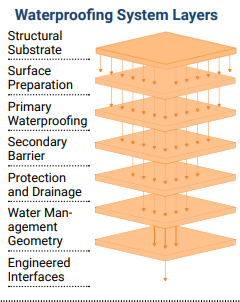 A waterproofing system is a layered, functionally differentiated assembly comprising:
- Structural substrate
- Surface preparation and repair
- Primary waterproofing layer
- Secondary or redundant barrier (where risk is high)
- Protection and drainage layers
- Water management geometry (slopes, outlets)
- Engineered interfaces
Each layer serves a distinct role. Expecting a single layer to perform all functions is the root cause of many failures.
Tushar B. Munshi explains their approach:
‘We define the waterproofing design layer by layer—from the first application to the last line of defence. Redundancy is intentional’.
Redundancy transforms waterproofing from a barrier problem into a risk-management system.
Execution tolerance and the human factor
Even the best-designed system fails if execution variability is ignored. Construction sites rarely offer controlled laboratory conditions. Moisture levels vary, substrates are imperfect, and timelines are compressed.
Zaheer Abbas, National Target Market Manager – Sealing & Bonding at Sika India, notes:
‘Even the best products fail if they are not applied by trained specialist applicators’.
This reality has driven the development of execution-tolerant technologies:
- Pre-applied membranes
- Single-component systems
- Factory-controlled sheets
- Reduced-step chemistries
From an engineering standpoint, the goal is not to eliminate human error, but to limit its consequences.
Lifecycle Degradation: Why Leakage accelerates Structural failure
Water ingress is not a static defect; it is a trigger for degradation mechanisms:
- Carbonation lowers concrete alkalinity
- Chloride ingress initiates reinforcement corrosion
- Corrosion induces expansive stresses
- Cracking accelerates further ingress
Once corrosion begins, surface repairs are largely cosmetic. Structural deterioration becomes self-sustaining.
This is why infrastructure owners allocate disproportionate attention to waterproofing despite its small share of project cost. Waterproofing is not a finish. It is embedded durability engineering.
Legal, Insurance, and Reputational consequences
Leakage has migrated from a maintenance issue to a contractual and legal liability. Courts and tribunals increasingly treat water ingress as a deficiency of service or breach of performance guarantees.
Insurers, responding to rising water-damage claims, are tightening coverage, raising deductibles, and demanding evidence of system-based waterproofing design. Waterproofing is becoming an insurability parameter.
Reputational damage is often greater than legal cost. Leakage erodes occupant confidence, depresses asset value, and undermines brand credibility. Repairs rarely restore trust fully.
Munshi summarises the economic reality:
‘Providing a good product at the right price is a win-win. Repairs later are never economical’.
Predictive systems and Self-healing
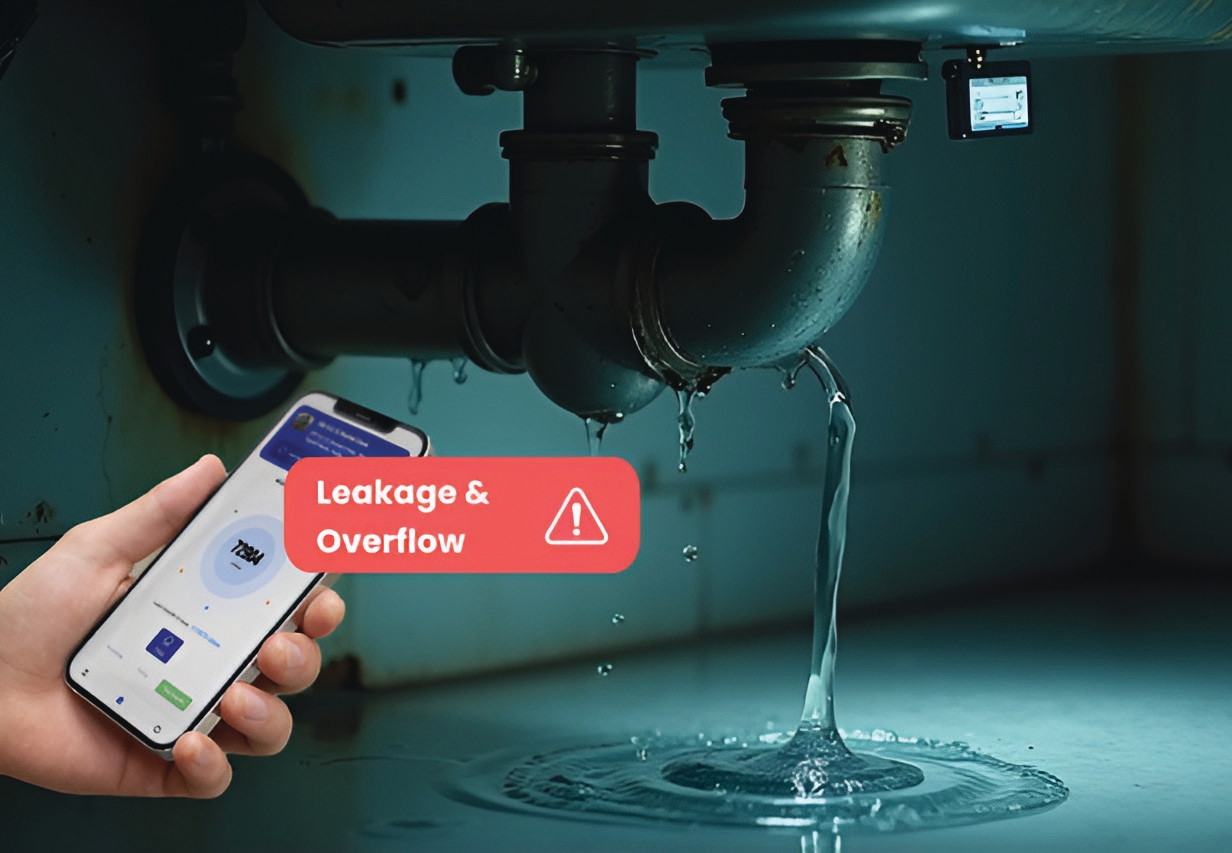
Sensors, IoT monitoring, and AI-driven analytics promise early detection of moisture ingress. Self-healing materials offer autonomous crack sealing. Both are valuable, but neither replaces fundamental resistance.
Saxena cautions:
‘Self-healing and predictive systems work best as part of integral systems, not as standalone solutions’.
Detection without resilience merely documents failure. From an engineering perspective, prediction must complement, not substitute, robust system design.
Governance, skill, and the future of waterproofing
As systems become more complex, execution competence becomes decisive. Certified applicators, manufacturer-supervised installations, and system warranties tied to audits are becoming standard in high-risk construction.
The future waterproofing ecosystem will be defined by:
- System warranties over product warranties
- Interface engineering over generic detailing
- Design-stage integration over post-hoc fixes
- Lifecycle thinking over defect management
Water as the Ultimate Auditor
Water is the most honest auditor in construction. It finds the weakest interface, the rushed detail, the compromised layer. It tests structures continuously, under changing conditions, without regard for intent or marketing narratives.
Leakage is therefore not merely a defect. It is a verdict on engineering judgement, execution discipline, and governance integrity.
In an era of climate uncertainty, legal scrutiny, and informed occupants, dry structures are not a premium—they are the baseline of trust. Waterproofing must move from the margins of drawings to the centre of construction engineering.
Because when water leaks, brands do not merely repair walls—they repair credibility.