HomeBricks & MortarCementIndia Cement Sector Turns Toward Wind Energy

India Cement Sector Turns Toward Wind Energy

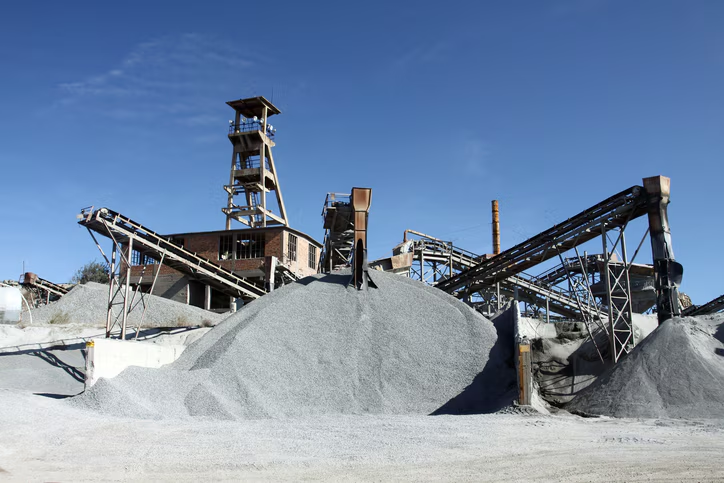
India’s largest cement producer and its recently integrated subsidiary are expanding their reliance on renewable electricity through a new captive wind energy arrangement,signalling a broader shift in how energy intensive industries are responding to rising power costs, emissions pressures and the growing demand for low carbon construction materials.

The latest move involves the procurement of 29.7 MW of captive wind power through a renewable energy platform, with both companies acquiring minority stakes in a project structure that will supply electricity directly to their manufacturing operations. The development forms part of an accelerating trend across India’s cement sector, where producers are increasingly turning to dedicated renewable energy assets to secure long-term power supplies while reducing dependence on conventional fuels.For cities and infrastructure markets, the significance extends beyond corporate energy procurement. Cement remains one of the most carbon-intensive building materials used in housing, transport corridors, industrial parks and urban infrastructure. As governments push for greener construction practices and climate-resilient urban growth, reducing the emissions embedded within building materials is becoming an important consideration for developers, planners and public agencies.Industry analysts note that energy accounts for a substantial portion of cement production costs. Renewable power sourced through captive arrangements allows manufacturers to secure electricity at more predictable rates while insulating operations from fluctuations in fossil fuel markets.

Such strategies have become increasingly attractive as infrastructure spending, housing construction and industrial development continue to drive demand for cement nationwide. The captive wind power project also reflects a wider transformation underway in heavy industry. Rather than relying solely on renewable power purchased from external suppliers, manufacturers are increasingly investing directly in generation assets to meet regulatory requirements and strengthen energy security. Similar arrangements involving solar and hybrid renewable projects have been announced across multiple states in recent months, highlighting a growing preference for captive clean energy models.Public disclosures indicate that renewable energy already constitutes a significant and growing share of the company’s overall power mix, with long-term plans aimed at substantially increasing clean-energy consumption over the coming decade.

The addition of new wind capacity is expected to support those objectives while contributing to lower operational emissions. Urban planners and sustainability experts argue that decarbonising core construction supply chains will be essential if India’s expanding cities are to meet climate commitments without slowing economic growth. While renewable electricity alone will not eliminate emissions associated with cement manufacturing, it represents one of the more immediate pathways available to reduce the sector’s environmental footprint.As demand for housing, transport infrastructure and industrial facilities continues to rise, the success of initiatives such as this captive wind power arrangement may offer an indication of how rapidly heavy industry can align future growth with cleaner energy systems and more sustainable urban development.

Also Read : Madhya Pradesh Cement Capacity Expansion Gains Pace
India Cement Sector Turns Toward Wind Energy
RELATED ARTICLES

LEAVE A REPLY

Please enter your comment!
Please enter your name here

- Advertisment -spot_img

Most Popular

Recent Comments

Kansai Nerolac Campaign Draws Focus To Urban Heat Stress

Kansai Nerolac Campaign Draws Focus To Urban Heat Stress

As Indian cities grapple with longer and more intense heatwaves, a recent public demonstration of heat reflective surface coatings has renewed attention on how...
India Cement Sector Navigates Fuel Transition

India Cement Sector Navigates Fuel Transition

India’s cement manufacturers are increasingly reducing their dependence on petroleum coke, or petcoke, and expanding the use of imported and domestic thermal coal as...
India Steel Sector Faces Global Trade Questions

India Steel Sector Faces Global Trade Questions

India has rejected claims that its steel industry is operating with excessive production capacity, arguing that domestic demand linked to infrastructure expansion, housing growth...
Steel Sector Signals New Infrastructure Cycle

Steel Sector Signals New Infrastructure Cycle

India’s leading steel producers are witnessing renewed investor interest as analysts reassess the sector’s prospects against a backdrop of sustained infrastructure spending, manufacturing expansion...
India Pushes Relief For Steel Exporters

India Pushes Relief For Steel Exporters

India is intensifying efforts to secure protections for small and medium-sized steel exporters ahead of the United Kingdom’s planned overhaul of steel import rules,...