Bengaluru Leads Orient Electric Electronics Home Appliances Campaign Through WPP Media Strategy
Bengaluru has become the centre for Orient Electric’s ambitious push in electronics and home appliances, as the company partners with WPP Media to drive an integrated, data‑driven campaign. The collaboration is designed to enhance brand visibility, connect with urban and semi‑urban consumers, and create a seamless journey from awareness to purchase across digital and offline platforms. Industry experts view this as a strategic shift toward full‑funnel marketingin India’s competitive home appliances market.
Under the new mandate, WPP Media will oversee planning, buying, and execution across Orient Electric’s diverse portfolio, including fans, lighting, switches, and other home electrical solutions. By combining creativity with real-time data analytics, the campaign aims to strengthen engagement, optimise media investment, and deliver measurable business outcomes. “Consumers now expect consistent brand experiences across multiple touchpoints, and integrated media ensures relevance and impact,” an industry expert said.This partnership reflects the broader trend of consumer brands adopting connected media strategies to respond to evolving audience behaviours. With digital adoption rising in India’s urban and semi-urban markets, buyers increasingly navigate multiple screens and channels before making a purchase decision. For Orient Electric, a company long reliant on traditional advertising, this approach represents a move toward intelligent, insights-driven campaigns that align media spend with customer behaviour and purchase intent.
WPP Media’s involvement also signals the growing importance of holistic campaign management, where creative storytelling, media planning, and performance tracking are unified under a single strategy. According to an official from Orient Electric, the partnership is intended not only to drive sales but also to create meaningful touchpoints across consumer journeys, reinforcing the brand’s presence in India’s rapidly expanding home appliances sector.Experts note that integrating data-driven insights with creative execution allows brands like Orient Electric to optimise content, timing, and channel selection, delivering more personalised experiences while maintaining efficiency. The strategy is expected to strengthen the company’s footprint in key metropolitan markets while enhancing visibility in smaller towns where demand for reliable, energy-efficient home appliances is rising.From a broader perspective, such campaigns also intersect with sustainable urban development. As Indian cities grow, energy-efficient appliances, smart home solutions, and reliable electrical products become essential to modern living. By effectively communicating these benefits, Orient Electric positions itself not only as a consumer brand but also as a contributor to inclusive, sustainable urban lifestyles.
Through this strategic collaboration, Orient Electric is set to reshape its media approach, demonstrating how traditional consumer brands can adapt to evolving market expectations. The WPP Media partnership highlights the increasing convergence of creativity, analytics, and consumer insight in India’s electronics and home appliances industry, providing a blueprint for other brands navigating urban and semi-urban markets.
Samsung has completed 30 years of operations in India, establishing itself as a leading force in the consumer electronics sector. From its early beginnings in a small New Delhi office in 1995, the company has expanded local manufacturing, driven India-led research and development, and introduced innovations tailored for Indian households. As it launches the #PoweringInnovationForIndia vision, Samsung aims to deepen its role in shaping a digitally inclusive, technologically advanced, and future-ready consumer electronics ecosystem across the country.
Over the past three decades, Samsung India has steadily built a robust manufacturing and innovation infrastructure. The company now operates multiple production facilities and design centres across the country, focusing on energy-efficient, sustainable, and technologically advanced consumer electronics. “India is not just a market but a key innovation hub,” said a senior Samsung official. “Our initiatives are designed to integrate local talent, research, and sustainable practices to meet the evolving needs of Indian consumers.”The #PoweringInnovationForIndia programme represents the next phase of Samsung’s growth, emphasising deeper investment in local R&D, collaboration with startups and developers, and the adoption of green manufacturing technologies. By designing products specifically for Indian households, Samsung has enhanced accessibility, usability, and digital inclusion, helping bridge technology gaps in urban and semi-urban regions. Analysts note that this approach mirrors broader global trends where multinational consumer electronics companies increasingly localise innovation to support regional economic and social development.
Education and skill development are also central to Samsung’s India strategy. Through partnerships with educational institutions and civic initiatives, the company is empowering young technologists and engineers, fostering innovation ecosystems, and promoting inclusive growth. A senior urban development analyst highlighted that “companies like Samsung play a vital role in integrating technology with social impact, demonstrating how industrial growth can align with equitable urban and digital futures.”Looking forward, Samsung’s strategy aims to balance market leadership with environmental and social responsibility. The expansion of sustainable manufacturing practices, investment in India-led product design, and focus on digital literacy initiatives position the company to contribute meaningfully to the nation’s innovation-led growth trajectory. The company’s vision underscores a commitment to future-ready consumer electronics that are not only technologically advanced but also environmentally responsible and socially inclusive.
By integrating global expertise with local innovation, Samsung continues to shape the Indian consumer electronics landscape while supporting sustainable urban development and inclusive technological growth. The company’s three-decade journey offers insights into how multinational corporations can create long-term value for both markets and communities, driving India’s rise as a hub for innovation and sustainable industry practices.
Goa has joined IKEA India’s digital expansion with the launch of online home décor and furniture deliveries, offering over 6,400 products through its app, website, and assisted phone orders. This move brings organised, sustainable furnishing solutions to a region previously without physical stores, reflecting a growing trend in Indian cities where digital retail is bridging gaps in access, convenience, and eco-conscious consumer demand.
The expansion forms part of IKEA India’s broader strategy to reach emerging markets through digital channels before committing to physical store presence. Delivery timelines are set between three and seven days, allowing households across Goa to access curated furniture and décor selections that were previously available only in larger metropolitan centres. A senior retail strategist noted that such initiatives address untapped demand in states with growing middle-class populations and seasonal tourism-driven housing markets.Beyond product availability, IKEA India is offering supplementary services to enhance the digital shopping experience. Customers can access planning support, assembly, and installation services, alongside a 365-day return policy on select items. These services are particularly important for first-time online buyers in regions where traditional retail options are limited, helping replicate the experiential benefits of a physical store within a digital framework.
Sustainability considerations remain central to IKEA India’s operational model. Deliveries are optimised for efficient routing, reducing carbon emissions associated with last-mile logistics. Additionally, products incorporate sustainable materials and design principles, aligning with urban households’ growing preference for eco-conscious furniture and the development of greener, more inclusive cityscapes. “Efficient digital delivery not only improves access but also supports environmentally responsible consumption,” an IKEA India spokesperson said.Goa already counts nearly 10,000 members in IKEA’s loyalty programme, signalling latent demand for organised home furnishing solutions. Analysts suggest that digital retail in smaller urban and coastal markets can significantly reshape consumer behaviour, moving buyers away from informal local supply chains towards structured, sustainable options. The expansion also demonstrates how omnichannel strategies can balance convenience, inclusivity, and environmental responsibility in India’s evolving retail landscape.
Urban development observers highlight that online access to curated home décor and furniture contributes to broader sustainable city goals. By reducing the need for long-distance travel to major urban centres for shopping, e-commerce initiatives like IKEA India’s delivery model help lower transport emissions, support climate-resilient urban living, and encourage equitable access to quality products for residents in diverse housing contexts.As digital retail strengthens its footprint in regions such as Goa, the model may pave the way for future physical stores while continuing to prioritise sustainable and inclusive urban consumption. IKEA India’s approach exemplifies how thoughtfully implemented online expansion can meet growing urban demand while reinforcing environmental and social responsibility.
Gurugram Launches OMA Largest Delhi NCR Home Décor Store 10615 Sq Ft
Gurugram has welcomed OMA’s largest Delhi NCR home décor store, spanning 10,615 square feet at Ambience Mall, marking a major expansion for the luxury lifestyle brand. The flagship store offers a curated, immersive experience across décor, bedding, bath, and fragrance categories, enabling customers to visualise products in realistic home settings. The launch underscores Gurugram’s growing appetite for premium, experience-driven retail and positions the city as a hub for design-conscious urban consumers.
Designed to move beyond traditional retail layouts, the store unfolds as a walk-through, lived-in home, with sections carefully crafted to highlight both functional and aesthetic possibilities. Industry experts note that such experiential formats help consumers make informed, sustainable choices by allowing them to interact with products in context. This approach aligns with broader trends in urban retail, where immersive, lifestyle-focused stores are gradually replacing conventional product-centric formats.A senior OMA representative said the Gurugram flagship reflects the brand’s commitment to elevating design experiences in cities where households increasingly prioritise thoughtful living. By showcasing curated collections that cater to gifting, everyday use, and seasonal trends, the store encourages mindful consumption over impulsive purchasing. Analysts suggest that this strategy not only strengthens customer engagement but also reduces waste by promoting considered investment in home décor.
Gurugram’s residential growth and rising disposable incomes have made it a key market for premium retail. Mall operators, including Ambience Mall, are strategically curating tenant mixes to integrate lifestyle and home-focused brands, moving beyond fashion and electronics. A senior mall executive highlighted that the OMA store enhances the centre’s appeal to design enthusiasts, homeowners, and high-value gifting customers, reflecting a shift towards urban retail destinations that combine convenience with experiential shopping.The launch also mirrors wider shifts in India’s organised retail sector, where fewer, larger stores offering immersive experiences are gaining prominence. Analysts emphasise that in cities like Gurugram, where urban infrastructure and connectivity support lifestyle retail growth, such formats are particularly effective in attracting extended footfall and fostering brand identity. The store’s scale and design orientation demonstrate how experiential retail can coexist with digital commerce, creating a hybrid urban shopping ecosystem.Yet, as premium retail expands, urban planners and sustainability experts caution that it must be balanced with inclusive access and environmentally responsible practices. Integrating sustainable design, promoting energy efficiency, and ensuring equitable urban infrastructure remain critical if Gurugram’s retail expansion is to support resilient, zero-carbon urban growth. By considering these factors, cities can encourage lifestyle innovation while maintaining long-term social and environmental equity.
OMA’s Gurugram flagship not only redefines home décor retail but also exemplifies the evolving intersection of design, consumer behaviour, and sustainable urban development. For residents and design-conscious shoppers alike, it offers both inspiration and practical engagement, highlighting the potential for premium retail to contribute to more thoughtful, inclusive, and sustainable urban living.
Dhanbad’s coalfields remain among India’s most hazardous, with underground fires burning silently for over a century. Bharat Coking Coal Limited (BCCL) continues to navigate this perilous terrain, balancing coal production with the safety of miners and residents. Advanced monitoring, fire control measures, and careful land management are crucial as the company works to stabilise the region, contain century-old fires, and maintain uninterrupted operations in one of the country’s toughest mining zones.
The Jharia coalfield, a cornerstone of India’s coking coal supply, has been afflicted by underground fires since 1916, a legacy of unscientific pre-nationalisation mining. These fires, often invisible but widespread, threaten lives, homes, and infrastructure. BCCL has responded with an integrated approach including subsurface void filling, surface blanketing, real-time gas monitoring, thermal imaging, and satellite surveillance to track hotspots and prevent disasters.Beyond fires, land subsidence poses a serious hazard. Decades-old abandoned tunnels lie beneath densely populated settlements, restricting open-cast mining expansion. BCCL’s engineers continuously assess high-risk zones, erect barriers, and coordinate evacuation or rehabilitation where necessary. Collaboration with district authorities ensures early warning systems and protective measures are in place for communities living atop coal seams.
Geological challenges further complicate operations. Dhanbad’s coal seams are deep, irregular, faulted, and prone to spontaneous heating, demanding specialised mining techniques, rigorous ventilation, and ongoing scientific oversight. Mines Rescue Teams and technical units conduct regular inspections to maintain operational safety and respond swiftly to incidents. Industry experts note that such vigilance is essential to prevent accidents and maintain continuity in coal output critical for India’s steel and energy sectors.BCCL also contends with a legacy of chaotic underground workings from pre-1971 private mining, including unsupported pillars, scattered galleries, and poorly documented voids. Mapping and safely navigating these structures is a continuous task, requiring advanced monitoring tools, borehole surveys, and thermal imaging to detect and mitigate hidden risks.
Despite these multifaceted challenges, BCCL plays a pivotal role in sustaining India’s industrial supply chain. Its operations illustrate how technological innovation, scientific planning, and community-focused measures can coexist with industrial productivity. In Dhanbad, coal mining is not merely an extractive activity—it is a careful balance of production, safety, and environmental stewardship. The company’s ongoing efforts demonstrate a model of responsible mining that mitigates historical hazards while securing energy resources for the nation.
The New Delhi parliamentary panel has recommended speeding up regulatory clearances for underground coal mining projects across India, citing current procedures as lengthy and cumbersome. The move aims to streamline environmental and forest approvals for low‑impact underground operations, enabling faster project implementation while maintaining necessary sustainability checks. Officials say this could accelerate domestic coal production, attract private investment, and reduce delays, all while minimising land disruption compared with traditional open‑cast mining methods.
The Standing Committee on Coal, Mines and Steel highlighted that underground mining, which typically affects smaller surface areas, faces approval processes similar to large open‑cast projects, creating unnecessary procedural bottlenecks. By rationalising environmental and forest clearance requirements, the panel hopes to incentivise responsible investment in underground operations, making India’s coal sector more efficient without compromising ecological safeguards. Industry experts note that such reforms could also improve the sector’s economic viability and long-term energy security.Currently, India aims to produce 100 million tonnes of coal annually from underground sources by 2030, a target that underscores the urgency of simplifying approval frameworks. Underground operations offer distinct advantages over surface mining, including reduced land displacement, lower reclamation costs, and fewer greenhouse gas emissions from associated activities. “A predictable and accelerated clearance process can encourage private developers to invest in deeper reserves, which are often left untapped due to lengthy bureaucracy,” said an industry consultant familiar with coal policy.
The panel also emphasised the importance of maintaining stringent sustainability checks. Even though underground mining is less invasive, it can still intersect with sensitive ecosystems and water resources, and careful monitoring of local communities remains critical. A senior urban planner added, “Streamlining approvals must not dilute environmental or social safeguards. Robust assessment of ecological impact and community rights is essential for truly sustainable coal development.”To further simplify approvals, the committee suggested exploring a single-window system for underground coal projects, consolidating forest, land, and environmental permissions under a unified timeline. Such a framework would minimise delays, enhance transparency, and align India’s coal sector with global best practices in sustainable resource extraction. The model could later be extended to open-cast projects, potentially easing procedural burdens across the entire coal mining industry.
Policy analysts say these recommendations reflect a broader shift in India’s energy strategy, balancing economic growth with sustainability goals. Streamlined underground mining could boost domestic coal production, generate employment, and attract private capital, while maintaining a lower environmental footprint than surface mining. As the government reviews these proposals, stakeholders from industry, civil society, and urban planning sectors will closely monitor how reforms balance energy needs with ecological and social responsibilities.
Shahdol SEPC Joins JARPL–AT Consortium For ₹3,300 Crore Coal Mining
Shahdol is set to witness a major boost in coal production as SEPC Ltd has partnered with the JARPL–AT Consortium to execute the Rampur Batura Opencast Coal Mine Project. Valued at ₹3,300 crore, the decade-long initiative in the Sohagpur Area will cover the full lifecycle of mining operations, including machinery deployment, project management, and consultancy services, reinforcing SEPC’s long-term energy portfolio and regional industrial presence.
The project represents one of the largest coal ventures in Madhya Pradesh in recent years, with an estimated tenure of ten years. SEPC’s role spans procurement of materials, mobilisation of equipment and manpower, and oversight of operational execution, demonstrating a structured approach that balances scale with disciplined capital deployment. “This collaboration strengthens our mining portfolio and aligns with our strategy of pursuing long-duration projects with clear revenue visibility,” said Venkataramani Jaiganesh, MD of SEPC Ltd.
Energy analysts highlight the significance of Rampur Batura for both local and national energy security. India’s growing electricity demand and industrial coal consumption require reliable domestic supply, and projects like this reduce dependence on imports. A senior mining consultant noted, “Strategically located coal projects not only stabilise regional energy supply but also stimulate employment and infrastructure development, creating lasting socio-economic benefits.”
The Shahdol district, historically reliant on mining, stands to benefit from improved logistics, ancillary industries, and skill development. By leveraging the consortium model, SEPC can engage efficiently in large-scale operations without overstretching resources, ensuring both operational efficiency and long-term financial sustainability. The project’s structured approach also enables integration of environmental safeguards and modern mining technologies, aligning with responsible and low-carbon operational practices.
From a broader perspective, the Rampur Batura project exemplifies a trend towards capital-efficient, long-duration coal projects in India. Companies are increasingly opting for consortium-based execution to distribute risk and optimise resource utilisation while maintaining strategic control over key energy assets. Observers suggest that disciplined execution and adherence to sustainability measures will be essential for balancing economic gains with ecological responsibility.
While coal remains central to India’s energy mix, experts stress the importance of complementing extraction with rehabilitation, eco-conscious practices, and community engagement. Integrating these measures ensures that industrial expansion supports both environmental stewardship and equitable regional development. Over the next decade, the Rampur Batura project could set a benchmark for how large-scale coal operations are executed in India, demonstrating how energy security, economic stability, and sustainable mining practices can co-exist in a rapidly developing region.
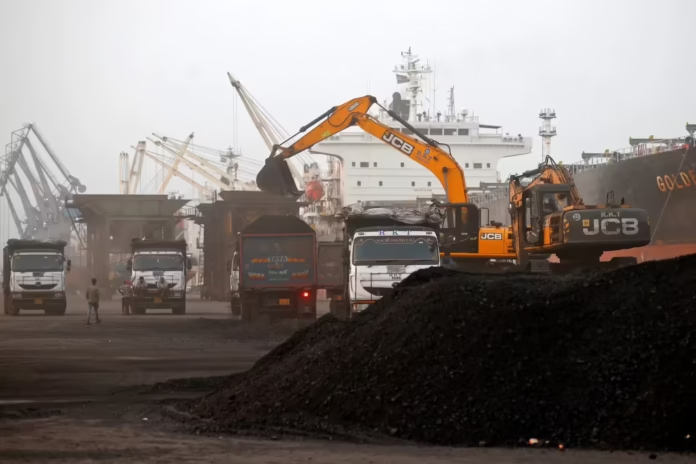
India Coal Output Crosses One Billion Tonnes Again
West Bengal’s Eastern Coalfields Limited (ECL) is on track to achieve a coal production target of 58 million tonnes this fiscal year, signalling a potential return to profitability. The company plans to close or redeploy six loss-making underground mines while enhancing coal quality at key sites, aiming to stabilise operations, manage legacy costs, and meet increasing demand from power plants and industrial units in eastern India.
Prolonged monsoon rainfall between June and August caused significant disruptions in mining activity, with daily precipitation limiting output growth from a 2 percent increase in mid-June to a 5.2 percent decline by late August. Production recovered in September and October, but cyclonic conditions briefly impeded operations. An official noted that output is expected to resume positive growth from November, provided weather conditions remain favourable.Last year, ECL produced 52 million tonnes of coal, and achieving the additional 6 million tonnes is considered essential to financial viability. The company needs a minimum monthly output of four million tonnes to sustain operations. “Reaching the 58-million-tonne target is vital for returning to profit, although market conditions may temper gains,” said a senior company official.
Market pressures have shifted the coal sector towards a buyer-driven model, with clients demanding higher-quality coal at competitive prices. Industry experts observe that higher production alone will not guarantee profitability, which now depends on pricing efficiency and market demand.High legacy costs from ECL’s longstanding underground operations in the Raniganj coalfield continue to constrain margins. Around 67 percent of production costs are allocated to salaries and wages, significantly above Coal India’s average of 48 percent and far higher than newer subsidiaries. “These costs persist regardless of mine activity,” an official explained.To address structural losses, six underperforming underground mines have been identified for closure or manpower redeployment, with decisions expected within the fiscal year. Meanwhile, the company is improving coal quality at major sidings such as Salanpur, Mugma, and Chitra. Salanpur has achieved full compliance with quality standards, while Mugma is 80–90 percent compliant. Chitra continues to face challenges due to steeply dipping coal seams, but improved practices from Salanpur are being applied across sites.
Evacuation and sales constraints at Rajmahal, where ECL maintains its largest coal stockpile, are linked to power plants with lower merit order operations. Discussions are ongoing to optimise pricing and operational efficiency to benefit both ECL and electricity generators.These measures position ECL to strengthen operational resilience, enhance coal quality, and gradually improve profitability while supporting energy and industrial demands in West Bengal and Jharkhand.
New Delhi Confirms B Sairam As Chief Of Coal India Limited
New Delhi has formally approved B. Sairam as the next Chairman and Managing Director of Coal India Limited (CIL), ending months of speculation over the state-owned coal giant’s leadership. Currently heading Northern Coalfields Limited (NCL) as CMD, Sairam will succeed P.M. Prasad upon his retirement on 31 October 2025, bringing extensive experience in coal operations at a time when CIL navigated production growth alongside sustainability and energy transition priorities.
The Appointments Committee of the Cabinet (ACC) has given its formal approval for B. Sairam to assume the top position at Coal India Limited, India’s largest coal producer. His appointment follows the recommendation by the Public Enterprises Selection Board (PESB) in September, reflecting confidence in his operational expertise and strategic oversight at Northern Coalfields Limited, a key subsidiary of CIL.Sairam’s elevation comes as the incumbent CMD, P.M. Prasad, prepares to retire at the end of October 2025. During the interim period, Sanoj Kumar Jha, a 1997-batch IAS officer and Additional Secretary in the Ministry of Coal, held additional charge of CIL to ensure smooth continuity in leadership and decision-making. Analysts note that a seamless transition is critical for maintaining production efficiency and meeting domestic energy demands.Industry experts suggest that Sairam’s tenure is expected to focus on modernising operations, adopting cleaner coal technologies, and integrating sustainability practices without compromising output. “Coal India plays a pivotal role in energy security, and leadership clarity is essential for both operational performance and aligning with national net-zero objectives,” said a senior energy analyst. The company’s output constitutes nearly 80% of India’s coal production, making strategic governance decisions highly consequential for the wider energy sector.
Under Sairam, attention is likely to turn towards strengthening operational efficiency, enhancing mine safety standards, and implementing digital monitoring across coalfields. There is also an increasing emphasis on corporate social responsibility, including community engagement and equitable workforce management, ensuring the benefits of coal operations reach local populations in mining regions.Sairam’s prior experience with NCL equips him with insight into regional mining challenges, workforce dynamics, and infrastructure bottlenecks. This background positions him to oversee CIL’s broader strategy, balancing production growth with environmental responsibility and energy transition considerations. “The focus will likely remain on adopting cleaner technologies, optimising resource use, and supporting India’s climate resilience goals,” noted an industry official.
As Coal India navigates a complex landscape of rising domestic demand, environmental scrutiny, and global energy transitions, Sairam’s appointment signals a strategic intent to stabilise leadership while pursuing operational innovation. His leadership is expected to bridge conventional coal production with evolving sustainability standards, positioning CIL to remain both an economic backbone and a responsible contributor to India’s energy future.
New Delhi CoalSETU Allows Linkage Holders To Export Half Coal Capacity
New Delhi’s coal sector is set for a major shift as the government allows CoalSETU linkage holders to export up to 50 per cent of their coal allocation. Approved by the Union Cabinet Committee on Economic Affairs, the policy introduces a long‑term auction mechanism enabling industrial buyers to flexibly use coal for domestic needs or regional exports, marking a strategic step to optimise reserves, reduce imports, and strengthen energy supply chains.
The CoalSETU (Coal Linkage for Seamless, Efficient and Transparent Utilisation) initiative is a sub‑window under the 2016 Non‑Regulated Sector (NRS) Linkage Auction Policy. It allows industrial consumers to access coal without restrictive end‑use conditions, while also opening up partial export opportunities for surplus supplies. Coking coal is excluded, ensuring that high‑grade metallurgical resources remain prioritised for domestic steel production. A senior official noted that neighbouring countries such as Nepal, Bangladesh, and Bhutan could benefit immediately from the export framework, reinforcing India’s role as a regional energy supplier.The policy is designed to improve ease of doing business for industrial players, particularly in sectors such as cement, aluminium, and sponge iron. By allowing coal allocation across group companies, businesses can optimise operations while mitigating domestic supply volatility. Analysts suggest that long‑term auctioned linkages will stabilise prices, reduce reliance on spot markets, and encourage investment in washed coal facilities, which could improve quality and reduce the environmental footprint of imported alternatives.
Economic observers highlight that CoalSETU complements India’s broader energy strategy by promoting transparent resource allocation, supporting industrial growth, and partially offsetting import dependency. The prohibition on traders participating in the new window ensures that coal flows directly to end‑users, enhancing market efficiency and accountability. “This framework aligns with both industrial competitiveness and the need for strategic energy management,” said an industry expert familiar with the reform.Urban centres like Bengaluru, which host clusters of energy‑intensive industries, stand to benefit from the policy. The combination of domestic allocation flexibility and export potential could enhance regional industrial productivity while providing an additional revenue stream from neighbouring markets. Policymakers also emphasise that increasing the availability of washed coal can indirectly contribute to lower emissions intensity compared with imported coal, supporting India’s gradual transition to a cleaner industrial energy mix.
As the CoalSETU policy is implemented, the focus will be on its impact on urban industrial economies, export patterns, and domestic energy security. By streamlining coal utilisation and integrating export avenues, the government has created a mechanism that balances industrial growth, regional trade, and resource efficiency, setting the stage for more resilient and strategically aligned energy infrastructure in cities like Bengaluru.