
Home Blog Page 154

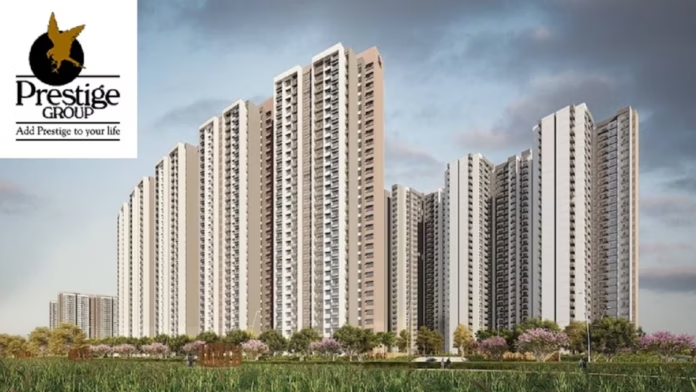
Mumbai Prestige Estates Shares Jump After Rs 938 Crore Stake Acquisition in LLP

0
Mumbai Prestige Estates Shares Jump After Rs 938 Crore Stake Acquisition in LLP

Prestige Estates Projects Ltd. has significantly expanded its commercial real estate footprint with the acquisition of a 66.93% stake in Bharatnagar Buildcon LLP, valued at Rs 938.75 crore. The move follows a robust second-quarter performance, highlighting the group’s strategy to strengthen its portfolio and maintain sustained growth across India’s realty markets.

The transaction, executed through subsidiaries Prestige Falcon Realty and Prestige Projects, involved capital and current account contributions totalling nearly Rs 939 crore. The acquisition is classified as an independent business expansion effort, with no direct related-party involvement beyond promoter shareholdings in Prestige Estates and its subsidiaries. Bharatnagar Buildcon, founded in 2011, is engaged in real estate development and construction and reported a turnover of Rs 3,47,272 lakh for FY25. “The acquisition consolidates our presence in high-potential commercial projects and aligns with our long-term strategy of geographic and segmental diversification,” an official from Prestige Estates said. The announcement came alongside market optimism, with Prestige Estates shares rising over 2% to Rs 1,652.9 in early trade before moderating to Rs 1,646.9, outperforming the Nifty 50’s modest 0.2% gain. Despite a 2% decline in December to date, the stock’s movement signals investor confidence in strategic portfolio expansion and strong operational performance.

Prestige Estates recently reported a 95% year-on-year jump in consolidated net profit to Rs 457.4 crore for Q2 FY26, driven by higher revenue and efficient cost management. Total income for the quarter reached Rs 2,697.8 crore, up from Rs 2,423.8 crore in the corresponding period of the previous fiscal year. Industry experts note that such acquisitions strengthen long-term revenue visibility while enhancing the group’s credentials for large-scale commercial projects. The combination of strategic investment and operational growth positions Prestige Estates to capitalise on rising demand in key urban centres including Bengaluru, Mumbai, Pune, Hyderabad, Chennai, and the NCR. Irfan Razack, Chairman and Managing Director of Prestige Group, emphasised that the company’s robust launch pipeline and strategic acquisitions will sustain growth momentum throughout the financial year. Analysts suggest that consolidating stakes in commercial ventures could improve cash flow stability and enhance investor confidence in the group’s multi-segment portfolio.

With a strengthened commercial portfolio, consistent earnings growth, and a strategic focus on high-value urban projects, Prestige Estates appears well positioned to maintain market leadership and support India’s evolving urban development landscape.

Also Read: Mumbai Prestige Estates Targets Over Rs 1 Lakh Crore With Expanding Project Pipeline
Mumbai Prestige Estates Shares Jump After Rs 938 Crore Stake Acquisition in LLP

Mumbai Prestige Estates Targets Over Rs 1 Lakh Crore With Expanding Project Pipeline

0
Mumbai Prestige Estates Targets Over Rs 1 Lakh Crore With Expanding Project Pipeline

Prestige Estates Projects Ltd is positioning itself for robust growth with a strategic expansion of its real estate portfolio across major Indian markets. The Bengaluru-headquartered developer has set its sights on sales visibility exceeding Rs 1 lakh crore in the coming years, underpinned by fresh project additions and planned launches spanning multiple segments.

In the first half of FY26, Prestige added projects worth approximately Rs 33,000 crore to its pipeline. The company is preparing to launch a further Rs 57,000 crore worth of developments over the next few quarters, complemented by nearly Rs 20,000 crore of existing inventory. These initiatives form part of Prestige’s broader strategy to maintain a strong foothold across metropolitan and emerging cities, including Bengaluru, Mumbai, NCR, Pune, Hyderabad, and Chennai. A senior executive at Prestige noted, “Our multi-city presence and diversified landbank provide us with the flexibility to meet rising housing demand while optimising long-term growth. The current pipeline reflects our commitment to delivering both mid-segment and premium residential solutions with an emphasis on sustainable urban development.” Prestige currently holds close to 1,000 acres of land across India, positioning it to respond swiftly to evolving market demand. In FY25, the company recorded sales bookings of Rs 17,023.1 crore, a decline of 19 percent year-on-year largely attributable to regulatory delays and postponed project approvals. Total sales volume stood at 12.58 million square feet, slightly below the previous year’s levels. Industry analysts suggest that the dip is temporary, as the developer’s pipeline for FY26 remains robust.

The company has outlined 18 residential projects for the second half of FY26, with a combined estimated gross development value of Rs 27,200 crore. Early launches in markets such as Mumbai and Bengaluru have reportedly seen encouraging buyer response. An industry expert observed, “The combination of strategic locations, varied housing segments, and pre-launch visibility is likely to strengthen Prestige’s market perception and reinforce investor confidence.” Looking ahead, Prestige aims to sustain annual pre-sales in the range of Rs 45,000-Rs55,000 crore over the next four to five years. The developer’s approach combines careful geographic diversification with a focus on high-demand segments and sustainable design principles, aligning with broader trends in India’s real estate sector towards inclusive, eco-conscious urban growth.

Analysts note that maintaining operational efficiency and leveraging its extensive landbank will be key for Prestige to achieve its ambitious targets, particularly in a market where regulatory approvals and infrastructure development timelines can significantly influence delivery schedules.

Also Read: Chennai Hosts FICCI Summit Highlighting Well Planned Real Estate Infrastructure Growth Tamil Nadu

Mumbai Prestige Estates Targets Over Rs 1 Lakh Crore With Expanding Project Pipeline

Chennai Hosts FICCI Summit Highlighting Well Planned Real Estate Infrastructure Growth Tamil Nadu

    0
    Chennai Hosts FICCI Summit Highlighting Well Planned Real Estate Infrastructure Growth Tamil Nadu
    Chennai Hosts FICCI Summit Highlighting Well Planned Real Estate Infrastructure Growth Tamil Nadu

    Chennai hosted the REIS Real Estate Infrastructure Summit 2025 on Thursday, signalling renewed focus on strategic and sustainable urban development across Tamil Nadu. Organised by FICCI in partnership with CREDAI and ANAROCK, and sponsored by Casagrand and G Square, the summit centred on the theme “Building Tamil Nadu 2030”, emphasising inclusive, well-planned urbanisation and the role of integrated infrastructure in shaping the state’s growth trajectory.

    The summit attracted senior policymakers, industry stakeholders, and urban planning experts to discuss the pressing challenges and opportunities within the real estate and infrastructure sectors. Analysts noted that Tamil Nadu’s urban centres, particularly Chennai, are witnessing accelerated demand for residential, commercial, and transport infrastructure, underscoring the need for long-term planning that aligns with societal requirements. At the valedictory session, the Chairman of the Tamil Nadu Real Estate Regulatory Authority (TNRERA) stressed that urban planning must be grounded in the practical needs of citizens. He highlighted the critical role of Chennai’s metro rail expansion in meeting commuter demand and facilitating sustainable mobility, while calling for planning frameworks that balance growth with livability. “Infrastructure must serve communities efficiently, integrating transit, housing, and commercial needs while maintaining environmental stewardship,” an official said. Industry experts discussed the importance of deploying modern construction technologies, green building standards, and net-zero initiatives to support Tamil Nadu’s 2030 urban vision. They emphasised that real estate development should be inclusive, promoting affordable housing and equitable access to amenities while mitigating carbon footprints in line with sustainable city principles.

    The summit also shed light on policy interventions needed to catalyse growth without compromising civic welfare. Participants explored mechanisms to streamline approvals, incentivise eco-friendly construction practices, and leverage public-private partnerships to accelerate infrastructure delivery. An urban planner attending the event noted that targeted policies around transport-oriented development and mixed-use planning could substantially reduce congestion and enhance quality of life. Observers remarked that the summit reflected a shift in industry dialogue from purely profit-driven development to socially responsible, environmentally conscious planning. As Tamil Nadu positions itself for rapid urban expansion over the next decade, forums like REIS are expected to play a pivotal role in fostering cross-sector collaboration, ensuring that real estate growth complements sustainable city objectives.

    The summit concluded with a consensus that Tamil Nadu’s real estate and infrastructure sectors must adopt an integrated, forward-looking approach. Industry leaders underscored that development decisions need to prioritise accessibility, environmental resilience, and community engagement, setting a blueprint for a balanced urban future.

    Also Read: Mumbai Firm Partners Messi For G.O.A.T. India Tour Ahead Premium Realty Debut

    Chennai Hosts FICCI Summit Highlighting Well Planned Real Estate Infrastructure Growth Tamil Nadu

    Mumbai Firm Partners Messi For G.O.A.T. India Tour Ahead Premium Realty Debut

    0
    Mumbai Firm Partners Messi For G.O.A.T. India Tour Ahead Premium Realty Debut
    Mumbai Firm Partners Messi For G.O.A.T. India Tour Ahead Premium Realty Debut

    A city-based diversified enterprise has positioned itself on the national stage by becoming an official sponsor of the upcoming G.O.A.T. India Tour 2025, a multi-city event headlined by global football figure Lionel Messi. The partnership marks the group’s strategic entry into the premium housing segment, signalling its intention to court aspirational homebuyers in an increasingly competitive real estate landscape.

    The tour, scheduled to begin in mid-December across four metros, is expected to draw significant public attention not only for its sporting value but also for its broader cultural impact. Industry observers note that such high-profile collaborations are becoming a preferred route for emerging developers seeking brand differentiation, particularly in a market where luxury living is being redefined through sustainability, design-led governance and socially inclusive planning. According to a senior official at the company, the association reflects the firm’s ambition to build a real estate identity that resonates with “global standards of excellence and refinement”. The official added that the forthcoming housing portfolio will focus on creating residences that extend beyond conventional notions of comfort, with an emphasis on well-designed urban environments that prioritise natural ventilation, energy-conscious materials and equitable access to public amenities. The developer is set to launch its dedicated real estate vertical early next year, with plans to expand into hospitality and mineral sectors thereafter. Analysts say the timing is noteworthy, as metropolitan housing markets, especially Mumbai, have seen a renewed push towards premium and luxury products driven by both domestic and international demand. However, they caution that the long-term value for buyers will depend on how effectively developers integrate sustainable infrastructure, safe mobility networks and gender-neutral community spaces areas flagged as crucial for future urban resilience.

    Urban planners suggest that collaborations of this scale can also be an opportunity to highlight responsible city-building practices. “Sport brings people together across class and geography,” an urban policy expert noted. “When companies link themselves with major cultural events, it is an ideal moment to reaffirm commitments to greener neighbourhoods and inclusive infrastructure, rather than just marketing a lifestyle image.” The upcoming tour is expected to feature interactive fan engagements, curated events and retrospective experiences celebrating Messi’s sporting journey. For the sponsoring firm, this visibility is likely to boost brand recall as it enters a segment dominated by long-established players. Market experts believe that aligning with a global personality can help newer entrants build trust, provided it is matched by transparent project governance and adherence to environmental norms.

    As Indian cities pursue climate-smart growth, the evolution of luxury housing will increasingly depend on designs that balance aspiration with responsibility. Whether this latest brand association will translate into meaningful urban outcomes will become evident once the developer unveils its first set of projects next year.

    Also Read: Mumbai Awards SIIL Rs 713 Million Contract For One Forest Avenue Foundation Works

    Mumbai Firm Partners Messi For G.O.A.T. India Tour Ahead Premium Realty Debut

    Mumbai Awards SIIL Rs 713 Million Contract For One Forest Avenue Foundation Works

    0
    Mumbai Awards SIIL Rs 713 Million Contract For One Forest Avenue Foundation Works
    Mumbai Awards SIIL Rs 713 Million Contract For One Forest Avenue Foundation Works

    Mumbai’s infrastructure sector has received a fresh push with Supreme Infrastructure India Ltd (SIIL) securing a key contract for foundation works at a major mixed-use development in Powai. The project, valued at Rs 713.1 million, is expected to support the company’s ongoing restructuring efforts while adding momentum to the city’s construction pipeline at a time when demand for high-density, transit-accessible development continues to rise.

    The Letter of Intent, issued by two property ventures backed by a prominent promoter group with global institutional participation, mandates SIIL to carry out extensive excavation and shore piling works on a strategic Powai land parcel. The site is part of a larger project designed to combine residential and commercial components, reflecting the broader shift towards compact urban districts where living, work and recreation are integrated to reduce commute distances. According to company executives, the package includes the removal of approximately 450,000 cubic metres of soil and rock, alongside the installation of 300 mm-diameter piles averaging 15 metres in depth. Engineers familiar with the project noted that such deep foundation work is essential for ensuring structural stability in terrain with mixed geological conditions, especially in dense neighbourhoods like Powai, which saw rapid urbanisation in the early 2000s. A senior SIIL representative said the order “adds meaningful visibility to the company’s revenue pipeline”, explaining that foundation contracts often serve as gateways to more complex civil works phases. Industry analysts echoed this view, observing that performance on high-value urban projects tends to enhance a contractor’s credibility when bidding for future tenders, particularly those involving global real estate partners.

    The contract is also significant for SIIL as it continues to navigate financial restructuring. Large, early-stage construction packages not only strengthen order books but also stabilise operational cash flows a critical requirement for firms seeking to regain market confidence. A consultant who advises construction firms on capital strategy said that “orders of this scale help align operational capacity with long-term restructuring plans”. For Mumbai, projects like the Powai development raise wider questions around resilience, sustainability and the environmental footprint of construction. Urban planners argue that while growth corridors such as Powai benefit from renewed investment, the city must continue encouraging low-carbon building practices, efficient material use and biodiversity-sensitive design. These principles, they stress, will be essential as Mumbai transitions toward a more equitable and climate-resilient urban model.

    As excavation and piling begin, the project is expected to shape one of Powai’s key land parcels over the coming year. The broader development, once completed, is likely to feed into the city’s push for more integrated, compact districts an approach that aligns with global best practices for greener and more inclusive urban growth.

    Also Read: Mumbai Sees Alarming Construction Surge Inside SGNP Eco-Zone Despite Protection Rules

    Mumbai Awards SIIL Rs 713 Million Contract For One Forest Avenue Foundation Works

    Mumbai Sees Alarming Construction Surge Inside SGNP Eco-Zone Despite Protection Rules

    0
    Mumbai Sees Alarming Construction Surge Inside SGNP Eco-Zone Despite Protection Rules
    Mumbai Sees Alarming Construction Surge Inside SGNP Eco-Zone Despite Protection Rules

    Mumbai’s northern periphery is witnessing renewed tension between ecological protection and unregulated development, as large-scale construction activity has emerged within an Ecologically Sensitive Zone (ESZ) bordering the Sanjay Gandhi National Park (SGNP). The site, located in Chena village off Ghodbunder Road in Thane district, has raised concerns among environmental groups who argue that the integrity of the buffer zone is being compromised at a pace that outstrips regulatory oversight.

    Satellite imagery and on-ground checks indicate significant landscape alteration on roughly ten acres of privately held forest land. According to residents and independent observers, excavation work, debris dumping and tree clearance have accelerated over the past two months, reshaping what was once a dense green patch. A concrete access road has also been laid, extending deeper into the forested slopes. Workers at the site informed visitors that the ongoing activity is part of a residential project intended to house tribal families displaced by another development along the Chena riverfront. They also claimed that the landowner had secured all necessary permissions, though they declined to share further details on the approvals or their timelines. Environmental groups dispute this narrative. A complaint submitted to district and state authorities argues that the works violate ESZ rules, which restrict quarrying and mining to limited personal use by local communities. An environmental advocate involved in the complaint noted that the excavation appears “clearly commercial in scale” and therefore outside permissible activity in a protected buffer.

    The land in question was earlier categorised as reserve forest before being reclassified following litigation initiated by the owner. Although legally recognised as private, it retains a forest designation that typically requires additional scrutiny for any construction or land alteration. Activists also contend that key procedural steps may have been bypassed. Their complaint asks how construction was sanctioned in the absence of a zonal master plan, which is a prerequisite for project clearances within ESZ boundaries. A member of a local conservation network said that follow-ups with forest officials yielded no clarity, with state departments redirecting the issue between themselves and the ESZ monitoring committee. Local residents added that agricultural land once cultivated by tribal communities adjacent to the main site has also been cleared, prompting fears of an expanding development footprint. Several trees, they say, were felled without public disclosure or community consultation. Those opposing the works have demanded an immediate suspension of excavation, a review of all permissions granted, and restoration of damaged stretches of the forest edge. Officials from the ESZ monitoring committee did not comment, while municipal authorities in Mira-Bhayander did not respond to queries.

    As cities like Mumbai and Thane confront development pressures and long-standing housing gaps, the episode underscores the need for transparent governance, stronger ecological assessments and urban growth models that do not compromise critical natural buffers. Sustainable planning, experts note, will require coordination between state agencies and communities to ensure natural ecosystems remain central to urban resilience.

    Also Read: Mumbai Renews Babulnath Temple Land Lease For Thirty Years At One Rupee

    Mumbai Sees Alarming Construction Surge Inside SGNP Eco-Zone Despite Protection Rules

    Mumbai Renews Babulnath Temple Land Lease For Thirty Years At One Rupee

    0
    Mumbai Renews Babulnath Temple Land Lease For Thirty Years At One Rupee
    Mumbai Renews Babulnath Temple Land Lease For Thirty Years At One Rupee

    Mumbai’s state cabinet has approved a long-pending lease renewal for a portion of land within the Babulnath Temple precinct, ending more than a decade of administrative uncertainty for one of the city’s most visited religious sites. The decision grants the temple trust a 30-year extension at a token rent of Rs 1, signalling an attempt to streamline legacy land arrangements that frequently impede civic access and heritage management across the city.

    The temple complex occupies 5,677 square metres, of which 718 square metres have been under lease to the trust since the early twentieth century. The renewal had been overdue since 2012, prompting repeated correspondence between the trust and government officials. According to a senior state representative, the cabinet opted to resolve the matter “in the public interest”, particularly as the land in question functions as a pathway used by thousands of visitors rather than for any revenue-generating activity. As part of the decision, the government has also waived around Rs 34.57 lakh in lease rent arrears accumulated between 2012 and 2021. Officials noted that the collector’s office had earlier raised concerns regarding dues based on commercial-use assessment norms, but the cabinet determined that such classification did not apply to the site’s actual function. A civic official said the waiver was intended to avoid prolonged legal wrangling and ensure continued access for worshippers without disruption. The temple trust has additionally requested that the leased portion be converted to freehold land, a move that would transfer full ownership to the trust. However, the collector’s office has clarified that freehold conversion is permissible only for plots designated for residential, commercial, or industrial purposes. Industry experts said such restrictions are common across Indian cities, particularly where religious or public-use parcels must remain governed under state custodianship to prevent fragmentation or misuse.

    Urban planners argue that recurring disputes around historic land leases highlight the need for clearer policies for properties held by charitable, cultural, and heritage institutions. Many of Mumbai’s oldest neighbourhoods feature century-old agreements that no longer align with current urban regulations, leading to ambiguity for both administrators and occupants. An urban heritage consultant said the Babulnath ruling may set a precedent for updating similarly outdated leases while ensuring that public access and cultural continuity remain protected. The move also underlines broader concerns around managing civic land in dense urban centres. As Mumbai pursues more inclusive and sustainable planning, experts emphasise the importance of balancing the rights of long-established institutions with the city’s need for accessible public spaces, secure pathways, and transparent stewardship of government-owned parcels.

    For now, the lease renewal brings certainty to a site that is woven into the city’s cultural and social life. Officials stated that future decisions on freehold conversion, if considered, would require policy-level amendments rather than case-specific interventions.

    Also Read: Mumbai Announces Amnesty Scheme Granting OC Relief For Over Twenty Thousand Buildings

    Mumbai Renews Babulnath Temple Land Lease For Thirty Years At One Rupee

    Mumbai Announces Amnesty Scheme Granting OC Relief For Over Twenty Thousand Buildings

    0
    Mumbai Announces Amnesty Scheme Granting OC Relief For Over Twenty Thousand Buildings
    Mumbai Announces Amnesty Scheme Granting OC Relief For Over Twenty Thousand Buildings

    Mumbai’s housing landscape is set for another policy shift as the state government introduced a new amnesty scheme aimed at helping thousands of buildings obtain long-delayed occupation certificates (OCs). The framework offers significant waivers on penalties and premiums, potentially affecting more than 20,000 buildings and an estimated one million residents living without formal approvals. Officials said the initiative is expected to ease financial pressures on housing societies and accelerate regularisation in some of the city’s densest neighbourhoods.

    Under the scheme, housing societies that apply for an OC within six months will be exempted from the penalty typically imposed for delays. In addition, they will receive a 50 per cent reduction on premium charges linked to the use of additional floor space index (FSI) and fungible areas. A senior housing department representative said the move aims to support residents caught in regulatory complexities, while also encouraging societies to complete overdue compliance processes. Buildings in Mumbai often struggle to secure OCs due to violations in their original construction ranging from excess FSI usage to missing fire safety clearances and non-adherence to road setback rules. Without an OC, residents face higher utility charges, obstacles in accessing bank loans, and legal vulnerabilities in disputes. Recent cases, officials noted, have underscored the risks, particularly for high-rise clusters where safety certificates remain incomplete. Urban planners said that while regularisation measures are necessary to stabilise existing neighbourhoods, the broader challenge lies in preventing future violations. They emphasised that Mumbai’s development ecosystem shaped by overlapping agencies and complex approval chains needs sustained reforms to ensure more predictable, transparent compliance. A redevelopment policy expert observed that the amnesty could offer temporary relief but must be paired with digitised approvals and stronger enforcement to avoid perpetuating unauthorised construction.

    The government said the scheme will also apply to schools and hospitals listed under unauthorised structures. Further, residents who prefer applying individually for OCs may do so through a dedicated process, according to instructions issued to the municipal corporation. Officials indicated that the programme may later be extended to other cities in the state, acknowledging similar patterns of non-compliance across urban regions. In a separate announcement, the government outlined a rehabilitation policy for slum dwellers and Adivasi communities living within the core and buffer zones of the Sanjay Gandhi National Park (SGNP). A 93-acre land parcel within five kilometres of the park has been earmarked for relocation. According to senior administrators, the move is intended to protect vulnerable households while enabling ecological restoration in one of Mumbai’s most sensitive green zones. Urban researchers said the rehabilitation effort signals an opportunity to design climate-responsive, inclusive housing for communities historically overlooked in planning decisions. They added that careful implementation ensuring adequate social services, equitable access, and community participation will be essential to avoid replicating past resettlement shortcomings.

    As Mumbai attempts to balance regulatory clean-up, environmental protection, and citizen welfare, experts argue that long-term success will depend on integrating resilience and equity into every tier of urban policymaking. The latest announcements, they said, offer an incremental step toward that direction but will require sustained oversight and transparent governance.

    Also Read: Mumbai Unveils New Framework As Eknath Shinde Moves To Redevelop Pagdi Buildings

    Mumbai Announces Amnesty Scheme Granting OC Relief For Over Twenty Thousand Buildings

    Mumbai Unveils New Framework As Eknath Shinde Moves To Redevelop Pagdi Buildings

    0
    Mumbai Unveils New Framework As Eknath Shinde Moves To Redevelop Pagdi Buildings
    Mumbai Unveils New Framework As Eknath Shinde Moves To Redevelop Pagdi Buildings

    Mumbai is set for a significant shift in its redevelopment landscape as the state government unveiled a new regulatory framework aimed at overhauling the city’s ageing Pagdi buildings. The model, a long-standing tenancy arrangement unique to Mumbai, covers thousands of vulnerable structures, many of which are more than six decades old. Officials described the reform as a foundational step towards modernising high-risk housing stock and strengthening the city’s resilience.

    The Pagdi system, widely prevalent in South and Central Mumbai, combines elements of tenancy and ownership. Under this arrangement, tenants pay nominal rent but hold partial rights over their units, including the ability to sell or sublet. While the model offered affordability and stability for generations, it also locked buildings into limited maintenance and redevelopment pathways, leaving many structures structurally distressed. According to government data presented in the legislative assembly, more than 19,000 cessed buildings fall under this category. A senior housing official said the new framework seeks to give clarity on redevelopment rights, governance norms, and tenant–owner negotiations, addressing long-standing disputes that have stalled repairs across neighbourhoods. The official noted that a predictable regulatory structure could enable more equitable redevelopment, particularly in dense areas where residents have struggled with insecure living conditions. Urban planners said the announcement is timely, considering the increasing climate risks facing older housing in the city. Many Pagdi buildings predate modern building codes and are concentrated in zones prone to flooding, heat stress, and infrastructure deficits. Redevelopment, experts said, must therefore balance density gains with safety, environmental performance, and inclusion. They emphasised that the transition offers an opportunity to introduce greener building practices, energy-efficient designs, and more accessible public spaces.

    Developers have long argued that Pagdi redevelopment requires clearer incentives, as the shared rights between landlords and tenants complicate financial agreements. Industry representatives said that the new policy, if supported by transparent procedures, could accelerate investment in inner-city areas where land value remains high but redevelopment has been slow. However, they cautioned that implementation must avoid displacing vulnerable households or eroding affordable rental stock. For residents living in deteriorating buildings, the announcement raises cautious optimism. Community groups said that any redevelopment push must ensure fair rehousing terms, gender-neutral access to documentation, and adequate compensation for long-term tenants, many of whom have lived in the same structures for decades. They added that sustainable redevelopment should prioritise walkable neighbourhoods, improved ventilation, and infrastructure that supports low-carbon mobility.

    As Mumbai prepares to rework regulations that have shaped its housing fabric for generations, stakeholders argue that the success of the initiative will depend on participatory processes and long-term accountability. If implemented effectively, the new framework could help the city reduce its reliance on ageing stock and transition toward safer, more climate-ready, and more equitable urban living.

    Also Read: Navi Mumbai Welcomes Le Meridien Debut Strengthening Hospitality Growth Near New Airport

    Mumbai Unveils New Framework As Eknath Shinde Moves To Redevelop Pagdi Buildings

    Navi Mumbai Welcomes Le Meridien Debut Strengthening Hospitality Growth Near New Airport

    0
    Navi Mumbai Welcomes Le Meridien Debut Strengthening Hospitality Growth Near New Airport
    Navi Mumbai Welcomes Le Meridien Debut Strengthening Hospitality Growth Near New Airport

    Navi Mumbai’s hospitality landscape has added a prominent new entrant with the opening of Le Méridien Navi Mumbai, a move that underscores the city’s rapid commercial growth and its transition into a more diversified urban centre. The international hotel brand’s debut comes at a moment when the upcoming Navi Mumbai International Airport is expected to reshape regional connectivity and stimulate new economic activity.

    Situated in a district that is steadily drawing businesses, the hotel seeks to position itself as a hub for both corporate travellers and leisure visitors. Its 129 rooms and suites adopt a modern, calming aesthetic designed to appeal to travellers seeking environments that balance work and wellbeing. Hotel representatives said the interiors reflect a contemporary interpretation of mid-century design, punctuated with locally inspired art installations intended to anchor the property in the city’s emerging cultural identity. Industry experts noted that the opening reflects a broader trend in metropolitan regions where hospitality investments increasingly align with mixed-use urban development. As Navi Mumbai expands its residential clusters and commercial corridors, global brands are looking to secure an early foothold. A senior executive from the parent company said the region’s infrastructure build-out, particularly the new airport, was a key factor shaping the timing of the launch. According to the official, the group’s pipeline in India is progressing in line with long-term expansion plans centred on major economic nodes. Dining has been positioned as a core element of the guest experience. The property includes an all-day global café, a top-floor Asian restaurant, and a lobby-level patisserie that introduces a curated dessert programme. Hotel managers said the emphasis on varied culinary formats responds to rising expectations among business travellers who increasingly seek high-quality dining within walkable or on-site settings.

    The hotel also offers over 20,000 square feet of event facilities, including one of the city’s largest outdoor venues. Hospitality analysts said such spaces are likely to cater to a growing market for corporate off-sites, weddings, and community gatherings, adding that flexible event infrastructure has become a differentiating factor for hotels in emerging business districts. These spaces, they suggested, also play a role in supporting more inclusive urban environments by enabling civic and social events that bring diverse groups together. The property integrates wellness amenities such as a spa, fitness centre, and an outdoor pool overlooking the surrounding hills. While not branded as a sustainability-focused hotel, its design cues and spatial planning reflect a shift in hospitality towards environments that encourage slower, mindful travel a trend aligned with cities aiming to balance growth with liveability.

    Urban planners observing the launch said that as Navi Mumbai evolves into a polycentric urban node, such developments will need to contribute to a more equitable city fabric. Hotels, they added, increasingly act as shared urban spaces not just for visitors but for local communities seeking accessible public areas, employment opportunities, and cultural engagement. The arrival of a global brand, they argued, offers an opportunity to advance a more inclusive model of urban hospitality if integrated thoughtfully into the city’s development trajectory.

    Also Read: Vivek Oberoi’s BNW Joins Enlightened Minds Launches USD 27 Million Real Estate Fund

    Navi Mumbai Welcomes Le Meridien Debut Strengthening Hospitality Growth Near New Airport