India Welcomes Asian Paints White Teak Launch Anisora Lighting Collaboration With Atelier Oï
India has witnessed the launch of the Anisora lighting collection by Asian Paints’ White Teak in collaboration with acclaimed Swiss design studio atelier oï. The collection blends nature-inspired design with premium materials, featuring alabaster discs and gold-toned accents that diffuse light organically. Designed to elevate contemporary Indian interiors, Anisora exemplifies the fusion of global craftsmanship and material-led innovation, offering sculptural lighting solutions that redefine urban home aesthetics.
The Anisora collection draws its inspiration from the luminous essence of a seed, combining the star anise motif with the Latin term ora, meaning light. This design philosophy centres around a radiating core, symbolising balance and harmony between tradition and modernity. “With Anisora, we aimed to create lighting pieces that are both functional and sculptural, connecting Indian homes with globally recognised design practices,” an official from White Teak said.Alabaster, renowned for its opalescent glow, forms the backbone of the collection. Circular discs are arranged around a central axis, allowing natural light to interact with the stone’s veins, creating dynamic visual textures throughout the day. Gold-toned accents reinterpret classical chandelier and lantern aesthetics, producing a warm, sophisticated ambience suitable for luxury apartments, modern residences, and curated office spaces.
The series spans pendant lights, table lamps, and floor lamps, providing versatility for different interior scales and styles. Industry experts highlight that India’s urban homeowners are increasingly prioritising materials, sustainability, and design in equal measure. A senior interior designer commented, “Lighting today is more than illumination. It’s about enhancing spatial experiences and integrating artful objects that respect natural materials and urban living needs.”Collaboration with atelier oï brings global design sensibility and environmental awareness into the Indian market. The studio’s co-founder explained, “We let the material itself guide the form, inspired by nature and the environment around us, blending ecological consciousness with premium design.” This approach aligns with the growing urban demand for interiors that are elegant, functional, and sustainable.
Anisora is now available exclusively at White Teak experience stores across India and online through whiteteak.com. By marrying Swiss craftsmanship with Indian luxury retail, the collection reflects a broader trend of integrating international design excellence with local urban living. Its launch underscores the evolving expectations of city dwellers who seek interior solutions that combine aesthetic refinement, sustainable materials, and cultural resonance.
Bengaluru Elecbits Boosts AI-Led Electronics Manufacturing For Global Home Appliances Market
Bengaluru-based startup Elecbits has raised USD 5.5 million to scale its AI-driven electronics manufacturing platform, focusing on home appliances for global markets. The Bengaluru firm aims to streamline hardware development cycles, enhance supply-chain transparency, and support manufacturers diversifying production beyond China. With over 200 enterprise clients and an integrated AI platform, Elecbits is positioning itself as a key player in India’s expanding electronics ecosystem.
Founded in 2019 by Saurav Kumar Singh and Nikhil Rawat, Elecbits provides end-to-end electronics development services, including component sourcing, PCB design and fabrication, firmware creation, industrial design, and embedded testing. Its proprietary platform, Elecbits XOR, offers instant quotation, integrated risk management, and real-time supply-chain visibility, enabling faster product development and more reliable manufacturing outcomes for large and emerging hardware companies alike.The startup counts global and Indian enterprises among its clientele, including Panasonic, Schneider Electric, Maruti Suzuki, Urban Company, Zetwerk, OLA, and Valeo. By positioning itself as a vertically integrated “China+1” partner, Elecbits helps businesses reduce dependence on overseas manufacturing while supporting India’s domestic production ecosystem. “Our goal is to create the operating system for India’s electronics future,” a company co-founder said, emphasising efforts to address inefficiencies in traditional hardware development cycles.
Elecbits’ funding round aligns with India’s broader push to boost electronics manufacturing under schemes such as the Production-Linked Incentive (PLI) and Electronics Components Manufacturing Scheme (ECMS). The Ministry of Electronics and IT has reported that ECMS has attracted proposals worth Rs 1.15 lakh crore, nearly double the initial target, while the first seven approved projects alone involve Rs 5,500 crore in investments for components including PCBs, camera modules, laminates, and polypropylene films.Industry analysts highlight that AI-driven platforms like Elecbits XOR can accelerate development timelines, reduce material wastage, and improve operational efficiency. For home appliance manufacturers, these capabilities translate into faster product launches, cost optimisation, and supply-chain resilience—factors increasingly critical in a competitive global market.
Looking ahead, Elecbits plans to deploy the new capital to enhance both its digital and physical infrastructure, expand technical teams, and strengthen international supply-chain networks. The move underscores Bengaluru’s growing role as a hub for smart hardware innovation and supports India’s ambition to become a leading global destination for sustainable, efficient electronics manufacturing.
India Tata Electronics To Build Intel Chips And AI Laptops At $14 Billion Semiconductor Plants
India is set to make a major leap in semiconductor manufacturing as Tata Electronics partners with Intel to build two state-of-the-art facilities worth $14 billion. The Gujarat fabrication plant and Assam assembly-and-testing unit will produce Intel chips and AI-focused laptops for the domestic market, supporting the government’s push to reduce import dependence. Industry experts say the move could transform India’s electronics supply chain, generate thousands of skilled jobs, and strengthen the country’s position in global technology markets.
The partnership will see Tata Electronics manufacture and package Intel products locally, with a particular focus on advanced packaging solutions, a segment the Indian government has emphasised under its Semiconductor Mission. Officials indicated that these facilities will not only cater to Intel’s production requirements but also explore next-generation chip fabrication methods, addressing India’s growing demand for AI-enabled computing devices. “This collaboration is a significant milestone in India’s journey towards self-reliance in high-value electronics,” an industry expert said.The Gujarat facility will house the semiconductor fabrication unit (Fab), while Assam will host an OSAT (Outsourced Semiconductor Assembly and Test) operation. These plants are expected to create thousands of high-skilled positions and foster regional economic growth. Analysts highlight that the investment could also catalyse the growth of ancillary industries, including logistics, raw material supply, and electronics design services, thereby strengthening India’s broader industrial ecosystem.
India’s semiconductor push aligns with a global trend of diversifying production away from China. By enabling Intel to produce chips domestically, Tata Electronics positions India as a competitive player in the high-value semiconductor sector while also promoting locally tailored AI laptops. A senior urban planner involved in industrial infrastructure development noted, “Local semiconductor production is essential for India to remain competitive in emerging technologies.”Beyond production, both companies have indicated that the plants will integrate energy-efficient operations and resource optimisation strategies, supporting India’s ambition for low-carbon industrial development. Experts also point out that scaling domestic semiconductor capacity can enhance supply chain resilience and contribute to more equitable access to advanced technology across regions.
The Tata-Intel initiative combines advanced technology, local manufacturing, and sustainability, demonstrating India’s evolving approach to industrial growth. While challenges in skill development and infrastructure remain, this landmark investment sets a precedent for future semiconductor projects, signalling India’s intent to emerge as a global electronics hub while promoting environmentally responsible industrialisation.
Bengaluru Home Appliance Market Welcomes Butterfly Xeno Series With Tritan Innovation
Bengaluru’s home appliance sector is witnessing a notable innovation as Butterfly Gandhimathi Appliances relaunches its Xeno 750W mixer grinder series, now crafted with Eastman Tritan™ copolyester. The material enhances durability, safety, and aesthetics, allowing consumers to enjoy transparent, scratch-resistant jars that withstand daily kitchen use. With improved design and performance, the Xeno series sets a benchmark for modern Indian kitchens, reflecting growing demand for appliances that combine functionality, premium design, and long-lasting reliability.
For decades, Butterfly has been a trusted name in Indian households, but the relaunch of the Xeno series signals a shift in how manufacturers address evolving consumer expectations. Traditional stainless steel jars, though robust, obscure the food inside, while conventional transparent plastics often warp or crack with regular washing or exposure to acidic ingredients. Butterfly’s adoption of Tritan copolyester resolves these limitations, delivering clear, durable jars that maintain their form and performance over time.The square-contoured jar design, enabled by Tritan’s advanced moulding capabilities, is more than an aesthetic choice. It enhances ingredient circulation, ensuring faster and more uniform grinding across wet, dry, and chutney preparations. Thick-walled, scratch-resistant jars also offer resilience against accidental drops, making them a practical choice for busy households. Tritan’s BPA-free composition, approved by the U.S. Food and Drug Administration for food contact, further reinforces consumer confidence in appliance safety.
Collaboration between Butterfly and Eastman has been pivotal in bringing the Xeno series to market. “Our relationship with Eastman is new but deeply collaborative, built on a shared vision of pushing boundaries and delivering meaningful innovation,” said Swetha Sagar, Chief Business Officer at Butterfly. Industry observers note that such partnerships, which blend material science with design-led appliance development, are shaping a new era of consumer-focused innovation in India’s home appliance segment.Available in both three-jar and four-jar Xeno models, the series supports a wide range of culinary tasks, including juicing and grinding. Retailers in Bengaluru and across India are recognising the series as a standout offering in a competitive category, with consumers increasingly valuing appliances that combine durability, performance, and modern design.
The Xeno relaunch illustrates a broader trend in the home appliance industry, where manufacturers are leveraging innovative materials to meet consumer demand for long-lasting, safe, and visually appealing products. By integrating Tritan into everyday appliances, Butterfly demonstrates how thoughtful material choice can drive both functional excellence and aesthetic appeal, setting new standards for modern Indian kitchens.
Patna Expands Premium Tile Market With Hindware Italian Tiles New Brand Store
Patna has welcomed Hindware Italian Tiles’ latest exclusive brand store, marking the city’s second outlet and the eighth across Bihar. Located in Bigrahpur, the new Marble Vihar store showcases the brand’s premium tile collections, combining contemporary and traditional designs for residential and commercial spaces. This launch reinforces Hindware’s strategic expansion in Eastern India, offering homeowners, architects, and interior designers easier access to high-quality, durable, and design-focused tiles amid Patna’s accelerating urbanisation and construction growth.
The store aims to provide a comprehensive experience of Hindware’s diverse tile portfolio, featuring sleek modern finishes, rustic textures, and versatile designs suitable for floors, walls, and exterior applications. Industry experts note that the growing demand for premium interiors in rapidly urbanising cities like Patna presents a significant opportunity for established brands to connect directly with consumers seeking both aesthetics and functionality.An official from Hindware explained that the new store reflects the company’s commitment to supporting Bihar’s urban and real estate development. “Patna has emerged as a centre for residential and commercial growth,” the executive said. “Our Marble Vihar outlet allows us to bring a curated selection of premium tiles closer to architects, designers, and homeowners, combining design innovation with long-lasting performance.”
Patna’s expanding infrastructure and construction sector have made it a strategic market for home improvement solutions. With rising residential and commercial projects, there is increasing interest in materials that balance durability, style, and environmental considerations. Hindware’s new store provides an accessible platform for customers to explore contemporary Italian-inspired tiles while benefiting from the brand’s longstanding reputation for quality.The launch also strengthens Hindware’s broader retail footprint, which spans over 100 brand stores and more than 800 dealers across 450+ cities in India. This network enables the company to support urban development with accessible, high-quality interior solutions while aligning with sustainable building trends. The store’s design and product offerings reflect an understanding of modern urban lifestyles, providing end-to-end solutions for various spaces, from living areas to kitchens, bathrooms, and outdoor settings.
As Patna continues to evolve as a key growth city in Eastern India, initiatives like Hindware’s Marble Vihar store highlight how retail expansion can complement urban transformation. By offering design-led, durable, and performance-oriented products, the store not only meets current market demand but also encourages a more thoughtful approach to residential and commercial interiors.With this expansion, Hindware Italian Tiles positions itself as a partner in the city’s urbanisation journey, combining aesthetic innovation with functional excellence, and enabling residents and professionals alike to make more informed choices in building and interior design
India Home Interiors Market Expansion Expected To Reach 2.75 Lakh Crore 2030
India’s home interiors sector is entering a phase of rapid expansion, with market size expected to more than double from ₹1.27 lakh crore in 2024 to ₹2.75 lakh crore by 2030, according to recent research by Magicbricks. Tier-2 cities are leading this growth trajectory, with a compound annual growth rate of 19%, nearly double the 12% projected for Tier-1 cities, indicating a shift in demand from metropolitan areas to emerging urban centres.
Resale homes are the key drivers in these markets, accounting for 82% of interior demand. Homeowners increasingly prefer modular furniture, smart storage, and contemporary design solutions to upgrade existing properties. Average expenditure per home in Tier-2 cities stands at ₹3.9 lakh—approximately 74% of Tier-1 spends—demonstrating rising design sophistication and aspirations among middle-income households.A senior Magicbricks official highlighted, “The surge in Tier-2 interiors demand reflects a profound change in consumer behaviour. Homes are no longer just living spaces; they are becoming highly personalised, functional, and design-driven environments. These cities are emerging as powerful engines for the next phase of growth in India’s interiors market.”
Lifestyle changes, urbanisation, higher disposable incomes, and digital influence from social media platforms like Instagram and YouTube are accelerating demand for modern interiors. Bedrooms and living areas continue to attract the highest spending as families prioritise spaces that combine aesthetics with utility. Cities such as Lucknow, Jaipur, Kochi, and Goa are witnessing significant traction, fueled by strong real estate activity and adoption of turnkey interior solutions.The market is also witnessing a structural shift from traditional carpenter-made furniture to modular, factory-finished components, which now constitute 45% of overall spending. Online furniture platforms are expanding rapidly, particularly in Tier-2 cities where offline retail options are limited, and consumers are increasingly confident in e-commerce purchases.
On a global scale, India currently ranks 19th in furniture exports but shows considerable potential for scaling through modular design, customisation, and value-added manufacturing. While China remains the global leader, India’s growing domestic demand, coupled with design innovation in emerging cities, offers a clear growth pathway. Analysts suggest that embedding sustainable materials and energy-efficient manufacturing processes could further align this sector’s growth with the vision of inclusive, eco-friendly urban living.
Bengaluru Designuru 5.0 Celebrates Sustainable Homes Interior Design And Creative Urban Living
Bengaluru is hosting Designuru 5.0, a landmark festival that brings together architects, interior designers, craftsmen, and innovators to showcase sustainable living and creative home solutions. The event highlights interior design for compact urban homes, eco-friendly construction, and citizen-focused urban development. Visitors can explore curated exhibitions, live demonstrations, and discussions on integrating design into everyday life, reflecting how thoughtful interiors and sustainable practices can enhance quality of living and foster more inclusive, environmentally responsible cities.
Organised by the Indian Institute of Interior Designers (IIID) Bangalore Regional Chapter, Designuru 5.0 aims to position Bengaluru as India’s design capital. According to festival organisers, professional design is not a luxury—it improves efficiency, reduces long-term costs, and ensures better planning, construction, and finishes. Exhibitions such as ‘Namma Mane’ showcase innovative solutions for quality living in small plots, addressing the practical realities of urban density while prioritising comfort, aesthetics, and sustainability.A major focus of the festival is gender inclusivity in architecture. Panel discussions explore the role of women in design, alongside debates on alternative construction technologies, eco-conscious materials, and regenerative approaches. One exhibit highlights the modernisation of Toda huts in the Nilgiris using sustainable materials while retaining cultural heritage. These installations underscore the festival’s commitment to zero-carbon construction, highlighting how tradition and innovation can coexist in urban and rural settings.
Beyond architecture, Designuru 5.0 immerses visitors in India’s craft and performing arts. Folk performances including Lambani, Lavani, and Veeragase complement artisan corners and regional Chitra art from Uttara Karnataka. Student projects, live robotic 3D printing demonstrations, and curated showcases like ‘Woven Extravaganza’ highlight the convergence of creativity, technology, and sustainability. A book launch, Ancestral Homes of Tulunadu, adds a literary dimension, examining historical design practices and regional architecture.The festival also addresses city-wide design challenges. Officials, including the Chief Commissioner of the Greater Bengaluru Authority and representatives from Bengaluru Business Corridor, participate in panels discussing citizen-centric infrastructure, urban expansion, and the integration of sustainable design into municipal planning. Organisers emphasise that as Bengaluru grows, aligning urban development with environmentally responsible interiors and public spaces is critical for inclusive, equitable city living.
Through Designuru 5.0, Bengaluru demonstrates that sustainable interior design and creative urban planning are not separate pursuits but interconnected strategies that can improve everyday life. By blending culture, innovation, and environmental responsibility, the festival illustrates how design can serve as a tool for happier, greener, and more resilient cities.
Bengaluru Unveils India’s First Battery-Powered Concrete Mixer With 7m³ Capacity Fast-Charge
Bengaluru has unveiled India’s first battery-powered transit concrete mixer, featuring a 7m³ drum and fast-charging capability, at EXCON 2025. Developed jointly by Schwing Stetter India and Qucev Technologies, the electric mixer is designed to reduce emissions and operational costs while enhancing safety and operator comfort. Equipped with a 192.5 kWh battery and advanced LFP Blade technology, the vehicle marks a pivotal step in electrifying construction equipment and promoting sustainable urban infrastructure across India.
The electric mixer, designed for urban construction sites, employs dual CCS2 DC fast-charging technology, allowing a full recharge in just one hour. Powered by BYD’s Super Safe LFP Blade Battery, the vehicle promises enhanced thermal stability and operational safety, addressing a key challenge in heavy-duty electric machinery. Industry experts note that such innovations are essential for transitioning India’s construction sector toward cleaner, low-carbon operations.The mixer’s drum motor delivers a maximum rated power of 20 kW and 130 Nm of torque, supporting consistent concrete handling across extended work periods. A redesigned cabin provides improved visibility and ergonomic comfort for operators, reflecting a growing emphasis on workforce well-being and productivity in construction machinery design.
N.K. Rawal, MD & CEO of Qucev Technologies, emphasised that the launch underscores both companies’ commitment to sustainable construction mobility. “This is a landmark for India’s construction sector, signalling a practical shift to zero-emission equipment,” he said. V.G. Sakthi Kumar, Managing Director of Schwing Stetter India, highlighted the company’s broader strategy to electrify its product line, citing rising demand for eco-friendly alternatives in heavy equipment.While detailed cost comparisons with diesel mixers remain undisclosed, the electric unit is expected to reduce operating expenses through lower energy costs and maintenance requirements. Analysts anticipate that adopting electric construction vehicles will also help developers comply with emerging urban environmental standards, enhancing the sector’s contribution to climate-resilient city infrastructure.
Schwing Stetter India, a subsidiary of Germany’s Schwing GmbH established in 1998, specialises in concrete batching plants, pumps, and transportation solutions. Qucev Technologies focuses on heavy-duty electric trucks and light commercial EVs, ranging from 3.5-ton electric vans to 55-ton electric tractors, demonstrating a growing domestic market for industrial electric mobility.The launch comes amid heightened attention on sustainable construction practices, as India’s rapid urbanisation and infrastructure expansion put pressure on developers to reduce carbon emissions. Electric transit mixers like this one not only cut pollutants but also signal a long-term transformation in urban building logistics, supporting the development of cleaner, inclusive, and climate-resilient cities.
Industry observers suggest that early adoption of electric construction equipment could pave the way for broader integration of green machinery across commercial and residential projects, combining operational efficiency with environmental stewardship. As the sector experiments with electric innovation, cities like Bengaluru are emerging as testing grounds for technologies that may define the future of low-carbon urban construction in India.
New Delhi Engineers Launch Jamia Nano Concrete Project For Sustainable Urban Infrastructure
New Delhi’s Jamia Millia Islamia has launched a pioneering nano concrete project, backed by a Rs 1.53 crore grant from NBCC (India) Limited. Led by civil engineering experts, the initiative aims to develop high-performance, durable, and eco-friendly concrete for India’s expanding urban infrastructure. By integrating advanced nanomaterials, the project seeks to enhance construction strength, longevity, and sustainability, marking a significant step towards greener, resilient city development.
The collaboration merges academic expertise with industry insight, reflecting a broader trend of public-private partnerships in urban innovation. The research focuses on embedding nanoscale particles into concrete to improve its microstructure, resulting in higher compressive strength, reduced porosity, and better resistance to environmental stressors. According to a senior civil engineering official, “The integration of nanotechnology into concrete could transform urban construction standards, making buildings more resilient and longer-lasting.”Nano concrete technology, though still emerging globally, offers clear environmental and economic advantages. Reduced maintenance cycles and extended lifespan directly lower the carbon footprint of construction projects, aligning with India’s ambitions for sustainable and low-carbon cities. An urban sustainability analyst noted, “This research is crucial not only for infrastructure durability but also for reducing emissions associated with repeated repair and reconstruction.”
Professors Ibadur Rahman, principal investigator, and M Amir Mazhar are spearheading the project. Rahman, recognised for multiple patents in advanced cement technology, brings extensive research experience, while Mazhar focuses on practical applications for large-scale infrastructure. Department head Quamrul Hassan emphasised that the initiative positions India at the forefront of innovative construction materials, with potential implications for both domestic and international projects.The NBCC grant underscores growing recognition of the role universities play in pioneering urban solutions. Officials point out that such collaborations can accelerate the adoption of next-generation construction materials in metro systems, highways, commercial complexes, and residential developments, ensuring cities are built stronger and more sustainably.
Beyond technical improvements, the project aligns with broader urban planning priorities, including long-term resilience, low-carbon development, and efficient resource use. By embedding nano-engineered materials into everyday construction, Indian cities could benefit from reduced lifecycle costs, lower environmental impact, and enhanced safety.As the nation’s urban centres continue to expand, innovations like Jamia’s nano concrete research will be critical in shaping sustainable, high-performing infrastructure. If successful, the initiative may set new benchmarks in construction technology, supporting India’s vision of resilient, eco-conscious, and future-ready cities.
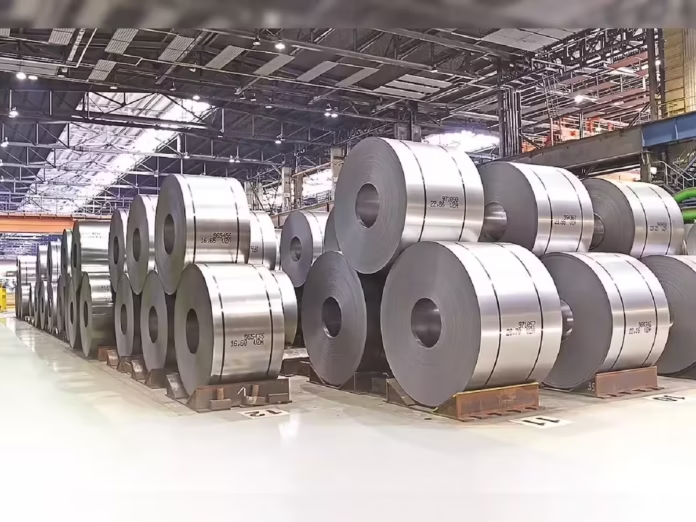
Maharashtra Lloyds Metals Tata Steel Form MoU To Boost Regional Steel And Mining Industry
In a move set to strengthen Maharashtra’s industrial landscape, Lloyds Metals and Tata Steel have signed a Memorandum of Understanding (MoU) to explore strategic collaboration across mining, pelletisation, logistics, and steel production. The agreement aims to leverage both companies’ resources to enhance operational efficiency, secure raw material supply chains, and foster low‑carbon steel initiatives. Analysts highlight the partnership’s potential to drive regional economic growth while embedding sustainability and inclusive development in Gadchiroli’s industrial expansion.
Under the MoU framework, the two firms will jointly evaluate opportunities to develop greenfield steel projects and expand iron ore operations, with an emphasis on sustainable and energy-efficient practices. By integrating mining assets and steel manufacturing capabilities, the collaboration is expected to strengthen supply chain resilience and support India’s broader net-zero ambitions. A company spokesperson noted that the partnership will “combine technical expertise and operational capacity to drive environmentally responsible growth.”For Tata Steel, India’s largest integrated steel producer, the MoU aligns with long-term plans to secure critical raw materials and invest in low-carbon technologies. Industry experts suggest that leveraging Lloyds Metals’ substantial iron ore reserves in Gadchiroli can improve regional steel production efficiency while fostering economic opportunities in rural Maharashtra. The district, rich in mineral resources, could see job creation and infrastructure developmentthrough ancillary industries, benefiting local communities.
Lloyds Metals, with a growing footprint in mining and industrial operations, views the MoU as a platform to scale up its steel production capabilities. Analysts point out that integrating logistics and pelletisation processes could reduce operational costs, improve material handling, and support the shift toward sustainable steel production. The collaboration also offers scope for exploring innovative, lower-carbon products, aligning with India’s decarbonisation commitments.Urban planners and economists emphasise the importance of balancing industrial growth with environmental stewardship. “Strategic industrial partnerships must integrate social, environmental, and economic considerations,” said a regional urban development expert. Careful planning, transparent environmental assessments, and community engagement will be key in ensuring that expanded mining and steel operations do not compromise local ecosystems or livelihoods.
The MoU, though non-binding, signals a growing trend of strategic alliances in India’s steel and mining sector that prioritise sustainable growth alongside economic expansion. As both companies advance feasibility studies and project evaluations, the partnership could serve as a model for responsible industrial development that supports regional equity, job creation, and green industry practices.