Danube Group Sells One Million Sq Ft Shah Rukh Khan Tower Dubai

Maharashtra Introduces Two Wheeler Parking Norms For Developers To Reduce Congestion

The Maharashtra government is considering mandatory two-wheeler parking spaces in new constructions and redevelopment projects, as part of a broader effort to tackle street congestion in Mumbai. Chief Minister Devendra Fadnavis highlighted the issue during a session in the state legislative council, noting that existing Development Control Regulations (DCR) do not account for two-wheelers, leading to spillover parking on streets and lanes.
The gap became particularly evident during the redevelopment of the BDD chawls, Fadnavis noted, prompting authorities to examine how DCR guidelines can be revised to include two-wheeler provisions. Currently, the DCR mandates a minimum number of parking slots in new constructions, but these primarily cater to four-wheelers, leaving residents with limited options for motorbike and scooter parking. Shiv Sena (UBT) MLC Anil Parab raised concerns over traffic police fines being imposed on two-wheelers parked on streets, highlighting chronic parking shortages in many neighbourhoods and residential complexes. Responding, Fadnavis acknowledged the scale of the problem and assured lawmakers that the Urban Development Department and BMC would explore practical solutions, signalling a potential update to building regulations to accommodate the city’s growing two-wheeler population.
Urban mobility analysts suggest that incorporating dedicated two-wheeler parking into redevelopment plans could significantly reduce street congestion, improve pedestrian safety, and streamline traffic flow. “Properly designed parking infrastructure for two-wheelers can prevent spillover onto roads, supporting more sustainable urban transport and safer streets,” said a senior urban planner. With Mumbai witnessing rapid residential growth and increasing vehicle density, urban planners argue that integrated parking solutions are critical to maintain functional streetscapes. Two-wheeler parking has become a pressing challenge, especially in areas where redevelopment projects displace older informal parking arrangements.
Industry experts also note that updating DCR norms to include two-wheeler parking could encourage developers to design multi-modal-friendly buildings, aligning with the city’s broader sustainability goals. Beyond convenience, such measures are expected to reduce traffic delays, lower emissions from vehicles circling for parking, and enhance overall urban livability. As the state deliberates on these regulations, officials emphasise the need to balance development, mobility, and environmental sustainability. By incorporating two-wheeler parking into planning frameworks, Mumbai can reduce street congestion while supporting inclusive, zero-carbon urban growth.
The proposal, if implemented, would represent a significant step in adapting city regulations to modern commuting patterns, reflecting a pragmatic approach to urban transport planning in one of India’s most densely populated metropolitan areas.
Maharashtra Introduces Two Wheeler Parking Norms For Developers To Reduce Congestion
Mumbai Features Goldmedal Smart LED Lighting Solution G-Sense Batten Homes

Goldmedal Electricals has introduced its G-Sense LED Batten in Mumbai, marking a significant step in smart, energy-efficient home lighting. The motion-sensor-enabled batten combines modern design with intelligent functionality, delivering illumination that adapts automatically based on occupancy. Its launch highlights a rising trend in Indian households for technology-driven, sustainable solutions that enhance convenience, safety, and energy conservation in residential interiors.
The G-Sense LED Batten features advanced microwave motion detection, sensing movement within 5–7 metres across a 120-degree field. Its dual brightness mode provides full 20W illumination when motion is detected and reduces to 6W in standby, maximising energy savings. With a crisp 6500K light and high-lumen efficiency, the batten ensures well-lit, comfortable interiors suitable for homes, corridors, and shared spaces. Constructed with durable polycarbonate housing, it promises a lifespan of up to 25,000 burning hours, offering reliability alongside modern aesthetics.Kishan Jain, Director of Goldmedal Electricals, emphasised the broader role of intelligent lighting in sustainable urban homes. “Lighting today is about more than brightness; it enhances safety, reduces energy consumption, and contributes to India’s net-zero 2070 target. Products like the G-Sense LED Batten demonstrate how technology can make everyday living greener and smarter,” he said.
The batten’s sleek and contemporary design integrates seamlessly with home furnishings and décor, complementing residential interiors while providing functional benefits. Its automated operation reduces unnecessary electricity usage, supporting eco-conscious living practices. By blending aesthetics, performance, and sustainability, G-Sense represents a shift in urban Indian households toward smarter, more environmentally responsible home appliances.Experts note that motion-sensor lighting is becoming integral to modern residential design. Beyond energy efficiency, such solutions enhance user experience by providing intuitive, responsive illumination, aligning with trends in smart homes and connected living. In addition, eco-friendly lighting reduces carbon footprints, meeting the growing demand for sustainable household products.
Available across major online and retail platforms, including Amazon, the G-Sense LED Batten positions Goldmedal as a pioneer in intelligent residential lighting. By integrating energy efficiency, advanced motion detection, and contemporary design, the product illustrates how innovation in household lighting can contribute to safer, greener, and more functional homes.
Also Read: Mumbai Hosts Tex Year Technologies Expansion Producing Adhesives For Home Furnishings And Appliances
Mumbai Features Goldmedal Smart LED Lighting Solution G-Sense Batten Homes
Mumbai Hosts Tex Year Technologies Expansion Producing Adhesives For Home Furnishings And Appliances

Mumbai has welcomed Tex Year Technologies India’s second manufacturing facility in Mahad, significantly expanding the production of adhesives for home furnishings and household appliances. The new plant raises annual capacity from 3,400 to 10,000 tons, combining Taiwanese R&D expertise with local manufacturing efficiency. Designed for modern, sustainable Indian homes, Tex Year’s water-based and hot-melt adhesives offer low-odor, durable, and eco-friendly solutions that enhance furniture assembly, appliance production, and overall home functionality.
Tex Year, Taiwan’s first publicly listed hot-melt adhesive manufacturer, entered India in 2013 with a vision to provide locally produced, high-performance adhesives. By integrating global innovation with Indian manufacturing agility, the company has positioned itself as a reliable partner for furniture makers, mattress producers, and appliance manufacturers seeking solutions that meet rising consumer expectations for durability, safety, and sustainability. The new Mahad facility reflects a strategic step in strengthening local supply chains and delivering application-specific solutions to the Indian market.The Mahad plant is aligned with India’s “Make in India” initiative and Tex Year’s Green Platform Strategy, which focuses on environmentally responsible adhesives. Its water-based adhesives, ideal for mattresses and upholstered furniture, minimise chemical emissions while ensuring strong bonding performance. Complementary hot-melt adhesives support white goods assembly, improving efficiency and longevity in appliances such as refrigerators, washing machines, and kitchen equipment. These formulations also contribute to energy efficiency during production and support circular economy principles, making them suitable for environmentally conscious home manufacturers.
Industry experts emphasise that adhesives are increasingly critical in modern homes, where furniture and appliances are expected to combine aesthetics, durability, and functionality. With growing urbanisation and rising disposable incomes, Indian consumers demand products that are not only stylish and efficient but also sustainable. Tex Year’s localized production and tailored formulations enable manufacturers to meet these needs, providing high-quality solutions that reduce reliance on imports and streamline production timelines.The Mahad facility also exemplifies how smart industrial planning can support sustainable urban living. By producing low-odor, eco-friendly adhesives for furniture and appliances, Tex Year enables manufacturers to create homes that are safer, more durable, and environmentally responsible. The plant is expected to serve as a model for future expansions in South Asia, demonstrating how industrial growth can align with modern living trends and sustainability objectives.
Through this expansion, Tex Year reinforces its leadership in industrial adhesives for home furnishings and household appliances, while supporting India’s vision for modern, functional, and eco-conscious homes. The Mahad facility not only strengthens the domestic supply chain but also reflects a growing synergy between innovation, sustainability, and everyday living, shaping the future of Indian homes.
Also Read: Mumbai Showcases Liebherr And News18 Event Redefining Modern Living And Home Design
Mumbai Hosts Tex Year Technologies Expansion Producing Adhesives For Home Furnishings And Appliances
Mumbai Showcases Liebherr And News18 Event Redefining Modern Living And Home Design
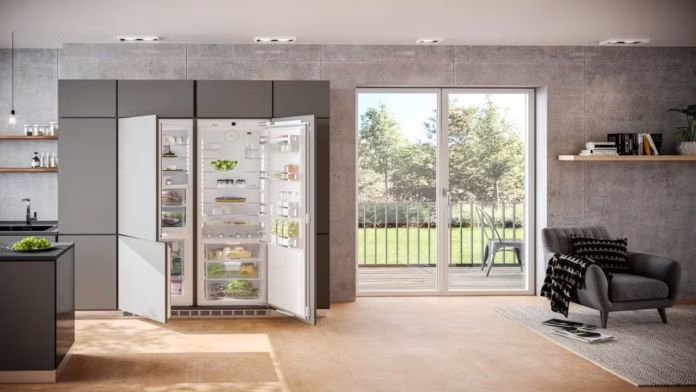
Mumbai recently hosted Innovate & Evolve – Prive, an exclusive event by Liebherr Appliances India in collaboration with News18 Network, bringing together architects, interior designers, real estate leaders, and lifestyle experts. The showcase highlighted how innovative technology, sustainable design, and intelligent appliances are shaping modern living in Indian homes, redefining luxury through functionality and aesthetics. Discussions explored smart home integration, energy-efficient solutions, and future-ready designs tailored for aspirational urban households.
Kapil Agarwal, Managing Director of Sales India at Liebherr Appliances, framed the evening around India’s rapidly evolving urban landscape and the rising demand for premium, tech-enabled homes. He emphasised the brand’s German engineering legacy and innovations like mist-based freshness systems, hands-free operations, and the Hot-to-Cool function, designed to meet Indian cooking and storage habits. Agarwal noted that integrating global advancements into local lifestyles is central to shaping practical, aspirational living spaces.The event featured fireside sessions with global and India-specific leaders from Liebherr, including Steffen Nagel, Managing Director of Sales and Marketing, and Roman Schaefer, Head of Business Area India Appliances. Discussions covered energy efficiency, sustainability, and digitalisation in kitchens. Nagel highlighted the critical importance of engineering long-lasting, low-consumption appliances, while Schaefer noted that India’s dynamic market drives innovation and agile product development tailored to local consumer preferences.
Panel discussions expanded the conversation to the evolution of luxury and intelligent design in urban homes. Abhinandan Lodha, Chairman of House of Abhinandan Lodha, reflected on how modern luxury is increasingly defined by smart infrastructure and technology integration rather than ornamental embellishments. A moderated session with architects, editors, and lifestyle consultants explored how AI, personalised comfort, and design-led appliances can shape future-ready residences that are both efficient and aesthetically refined.
The event also featured design-focused conversations with Sussanne Khan, founder of The Charcoal Project, and Farah Khan Ali, CEO of Farah Khan Fine Jewellery, on blending innovation with personal expression. Their insights highlighted the importance of materials, lighting, and technology in creating immersive living experiences that balance functionality with artistic expression.The evening concluded with curated performances and a networking dinner, reinforcing Mumbai’s role as a hub for forward-looking design and luxury living. By spotlighting innovation, sustainability, and intelligent design, Innovate & Evolve – Prive positioned modern homes as spaces where technology and aesthetic refinement converge, offering a glimpse of the future of Indian urban living.
Also Read: India Electronics And Semiconductor Manufacturing Booms As Nation Emerges Global Electronics Hub
Mumbai Showcases Liebherr And News18 Event Redefining Modern Living And Home Design
India Electronics And Semiconductor Manufacturing Booms As Nation Emerges Global Electronics Hub

India’s electronics and semiconductor manufacturing sector is experiencing unprecedented growth, positioning the country as a global hub for advanced electronics production. Over the past decade, domestic output has increased nearly sixfold, while exports have surged eightfold, driven by rising semiconductor fabrication, mobile assembly, and home appliance production. Industry experts highlight that government initiatives such as PLI schemes and the India Semiconductor Mission are catalysing this transformative expansion.
The surge in semiconductor manufacturing marks a strategic shift in India’s industrial landscape. Historically dependent on imported chips, India now sees a growing number of semiconductor fabrication units coming online, producing memory, microcontrollers, and power management chips. These units are not only serving smartphones and consumer electronics but increasingly supplying components for home appliances, electric vehicles, and industrial equipment, enhancing domestic value addition.Home appliance production has seen a parallel boom. Schemes like the Production Linked Incentive (PLI) for White Goods have attracted investments exceeding ₹10,000 crore, incentivising companies to manufacture air-conditioners, LED appliances, and refrigerators domestically. This has allowed localisation of critical components, reducing import dependence and creating robust supply chains within India. Industry officials note that localisation rates for key appliance components could reach up to 75–80 percent, compared with under 20 percent a decade ago.
The combined growth of semiconductors and home appliances is generating significant employment opportunities across urban and industrial clusters. Skilled and semi-skilled jobs are rising in manufacturing, assembly, logistics, and component fabrication. Experts emphasise that this trend can transform surrounding urban areas, as industrial zones expand with supportive infrastructure, creating a multiplier effect on local economies.Government policy has been central to this transformation. The India Semiconductor Mission, along with the PLI schemes for electronics and appliances, has created an ecosystem that encourages large-scale domestic production while attracting global investment. Measures include tax incentives, streamlined approvals, and improved access to land and utilities for manufacturing parks. These efforts have positioned India as a credible alternative to traditional electronics hubs in East Asia.
Beyond economics, the sector’s expansion carries implications for sustainable urban development. As new industrial hubs emerge, there is an opportunity to integrate energy-efficient manufacturing practices, sustainable logistics, and waste reduction systems. Analysts suggest that aligning industrial growth with environmental safeguards and inclusive workforce development can turn manufacturing zones into models for net-zero and socially balanced urbanisation.
While challenges remain — including scaling semiconductor capacities, developing local supply chains for critical components, and managing energy-intensive production — India’s electronics and home appliance sector demonstrates a clear trajectory toward self-reliance and global competitiveness. With sustained policy support and strategic investment, the country is poised to strengthen its position as a leading electronics and semiconductor hub while shaping sustainable, inclusive industrial cities for the future.
Also Read: India Launches LG Smart Home Electronics With Advanced AI DD 2.0
India Electronics And Semiconductor Manufacturing Booms As Nation Emerges Global Electronics Hub
India Launches LG Smart Home Electronics With Advanced AI DD 2.0

India has witnessed the launch of LG’s latest smart home electronics, featuring the advanced AI DD 2.0 technology designed to transform household laundry. The new range, including front load, top load, and washer-dryer models, integrates intelligent fabric detection, energy-efficient performance, and remote connectivity via LG ThinQ™. Combining convenience with sustainability, these appliances offer faster, hygienic, and precise washing, marking a significant step in modernising Indian homes with smart, eco-conscious technology.
The front load models exemplify LG’s focus on intelligent fabric care, with AI DD 2.0 detecting fabric type, weight, and soil levels to automatically select optimal wash cycles. Steam+ technology further reduces wrinkles and eliminates allergens, while TurboWash® 360° completes thorough cleaning in under 40 minutes. The eZDispense™ system provides precise auto-dosing for up to 30 washes, reducing detergent waste and enhancing efficiency. An industry expert commented, “The combination of AI-driven care and sustainability reflects Indian consumers’ growing demand for smart, eco-conscious appliances.”Top load machines integrate similar AI capabilities, allowing up to 20,000 automatic wash pattern combinations to suit diverse fabrics. TurboWash® ensures a complete wash in 29 minutes, while steam-based cycles remove allergens, catering to health-conscious households. Features like Stain Clean and Duvet Mode enhance versatility, and IPX4-rated panels ensure durability even in high-humidity urban environments. The large-capacity drums and sleek flat designs balance performance with modern aesthetics, reflecting urban home requirements.
The washer-dryer variants, available in 15/8 kg and 20/10 kg capacities, provide all-in-one solutions for space-constrained apartments and monsoon-prone regions. With efficient washing and drying cycles, these models simplify laundry management for busy households, merging convenience with energy-conscious performance. LG ThinQ™ connectivity allows users to schedule, monitor, and control cycles remotely, integrating appliances seamlessly into the emerging smart home ecosystem.Sustainability remains a core theme, with programs such as Micro Plastic Care reducing microplastic discharge by up to 60% and supporting environmental responsibility. Allergy Care and Baby Steam Care modes address sensitive fabrics and skin, highlighting LG’s holistic approach to wellness alongside technological innovation. Industry observers note that the launch underscores the convergence of urban convenience, digital connectivity, and eco-conscious living in India’s evolving smart home market.
The new LG AI DD 2.0 washing machines are available across online marketplaces, offline retail stores, and LG brand outlets in multiple SKUs and premium colours. As Indian consumers increasingly seek appliances that combine intelligent design, energy efficiency, and sustainability, this launch positions LG at the forefront of smart home innovation.
Also Read: India Deploys 3D Concrete Printing To Rapidly Strengthen Forward Military Positions Efficiently
India Launches LG Smart Home Electronics With Advanced AI DD 2.0
India Deploys 3D Concrete Printing To Rapidly Strengthen Forward Military Positions Efficiently

India has deployed advanced 3D concrete printing technology to accelerate the construction and reinforcement of forward military positions along its northern borders. The vehicle-mounted system enables rapid building of bunkers, sentry posts, and defensive structures in challenging terrains, significantly reducing manpower and construction time. Officials say the initiative not only strengthens border security but also demonstrates the country’s growing capability in innovative, efficient, and sustainable defence infrastructure solutions.
The Trishakti Corps’ 3D printer is equipped with a robotic arm, piston pump, circular mixer, and on-board generator, allowing it to operate continuously in remote, mountainous areas. Traditional construction in these regions often requires weeks of labour and extensive logistical support, but the new system can complete complex structures within hours, freeing troops to focus on operational duties rather than manual construction.Military analysts point out that the adoption of 3D printing for forward positions reflects a broader trend towards modernising defence engineering. “This technology not only accelerates construction but also ensures structural precision and durability under harsh conditions,” said a defence expert. The ability to use locally sourced materials further reduces supply chain dependence, which is critical for maintaining operational readiness in remote regions.
Beyond immediate military applications, the technology aligns with sustainable and resilient infrastructure practices. Rapid, modular construction minimises material waste and reduces the carbon footprint associated with transporting heavy construction materials over rugged terrain. Officials note that these techniques could be adapted for civilian purposes, including emergency shelters, disaster-response infrastructure, or high-altitude housing projects where conventional construction is logistically challenging.The initiative also highlights India’s growing domestic capabilities in additive manufacturing. While 3D printing has seen experimental applications in Europe and North America for both defence and urban infrastructure, India’s indigenous development demonstrates the country’s expertise in integrating advanced construction technology with operational efficiency. “Investing in local innovation strengthens national security and positions India as a leader in smart, adaptable construction solutions,” said a senior official.
As 3D concrete printing becomes a strategic tool for rapid fortification, it illustrates the convergence of technology, sustainability, and operational planning. Experts suggest that lessons from these military applications may influence future urban and rural development strategies, promoting modular, resilient, and eco-conscious construction in difficult terrains across the country.By combining innovation with practicality, India’s deployment of 3D printing in defence underscores how advanced technology can enhance efficiency, sustainability, and resilience—principles increasingly vital for both national security and urban infrastructure planning.
Also Read: Uttar Pradesh Ghatampur Coal Thermal Project Unit-2 Begins Full Commercial Operation
India Deploys 3D Concrete Printing To Rapidly Strengthen Forward Military Positions Efficiently
Uttar Pradesh Ghatampur Coal Thermal Project Unit-2 Begins Full Commercial Operation
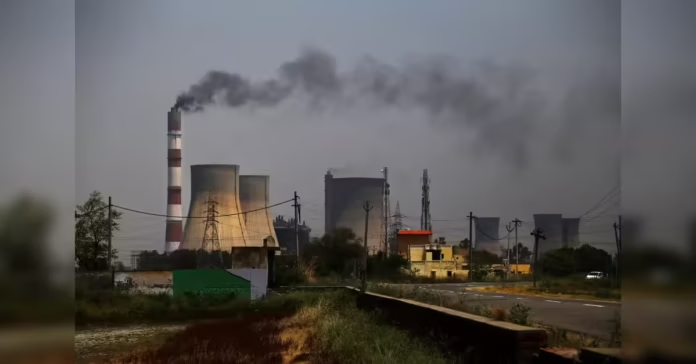
Uttar Pradesh’s Ghatampur Coal Thermal Project reached a critical milestone as Unit-2, with 660 MW capacity, began full commercial operations on 9 December 2025. Together with Unit-1, already operational since December 2024, the plant now generates 1,320 MW, supplying electricity primarily to Uttar Pradesh and Assam. The final 660 MW unit, expected in FY26, will bring total capacity to 1,980 MW, meeting the power needs of around 12 million households and strengthening regional energy self-reliance.
Unit-2 was synchronised with the 765 kV grid in July and successfully completed its 72-hour full-load trial run on the first attempt, reflecting careful planning and execution. Unit-1 has already generated over 4,449 million units of electricity, contributing revenue of ₹2,639 crore. Once fully operational, the project is projected to produce nearly 14,743 million units annually, potentially raising total revenue to ₹8,453 crore and supporting both industrial and residential growth in the region.The project incorporates advanced supercritical technology, along with flue gas desulphurisation (FGD), selective catalytic reduction (SCR) systems, and zero liquid discharge to comply with environmental standards. At peak construction, approximately 8,500 workers were employed, with current operations engaging around 4,000 staff. Total direct and indirect employment is expected to reach 25,000 once all units are operational, reflecting the project’s role in inclusive economic development.
NUPPL is also developing the Pachwara South coal mine in Jharkhand, expected to supply fuel in phases from FY26. Industry experts note that integrating domestic coal sourcing with large-scale power generation strengthens energy security while reducing dependence on imports and supporting sustainable regional development.Urban planners highlight that projects like Ghatampur, while coal-based, demonstrate the potential to combine large-scale electricity generation with environmental compliance and technological innovation. By using supercritical and emissions control technologies, the plant aligns with India’s broader goals for cleaner energy, net-zero targets, and reliable urban electricity supply. As the final unit comes online next fiscal year, Ghatampur is poised to play a pivotal role in powering millions of households, supporting industrial activity, and modelling cleaner, technology-driven coal power practices.
Also Read: Meghalaya Moves Towards Scientific Coal Mining Balancing Livelihood Safety And Regulation
Uttar Pradesh Ghatampur Coal Thermal Project Unit-2 Begins Full Commercial Operation
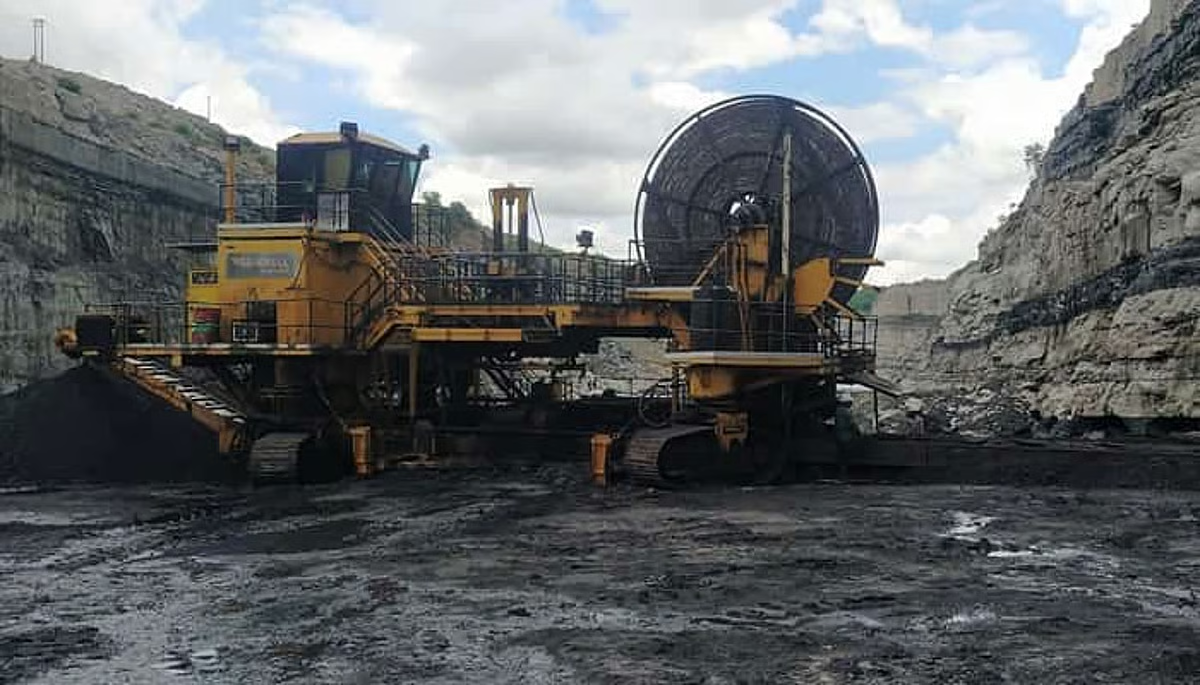
Meghalaya Moves Towards Scientific Coal Mining Balancing Livelihood Safety And Regulation