
Mumbai Mandates MMRC Approval For Redevelopment Or Construction Within Fifty Metres Corridor

Nagpur Urban Growth Accelerates As Kesar India Plans Major High‑Rise Project

Nagpur’s urban landscape is set for a transformative shift as Kesar India acquires a 24,256 sq m plot in the Hingna suburb for a major high‑rise project. Designed as a mixed‑use development, the scheme aims to integrate residential, commercial, and community spaces, reflecting the city’s growing demand for compact, sustainable urban living. Industry observers see the acquisition as a milestone in Nagpur’s emerging skyline and real estate growth.
The Hingna area, strategically located on the eastern periphery of Nagpur, has witnessed increasing development interest due to enhanced connectivity and expanding commercial activity. Kesar India’s latest purchase is expected to accommodate over 1.5 million sq ft of built-up area, combining residential apartments, office spaces, and retail facilities in a single master‑planned development. According to an official, such projects represent the evolving preference for integrated urban centres that reduce commuting needs while promoting community-focused design.Real estate experts highlight that the acquisition signals a broader shift in investment patterns towards secondary cities and suburban zones. With core city plots becoming scarce and expensive, developers are increasingly targeting areas like Hingna that offer scale, accessibility, and growth potential. A senior urban planner noted that the project could set a benchmark for sustainable high‑density development, provided it incorporates energy-efficient design, green spaces, and smart infrastructure.
Kesar India’s plans also reflect growing investor confidence in Nagpur’s urban expansion. The city, known for its industrial base and improving civic infrastructure, is emerging as a viable destination for mixed-use developments that blend work, living, and leisure. The project’s design aims to balance density with amenity provision, creating walkable streets, landscaped courtyards, and public spaces, aligning with trends in inclusive and equitable urban design.Analysts point out that developments of this scale, if planned responsibly, can help mitigate urban sprawl by concentrating population growth in defined corridors. By incorporating sustainable building materials, energy-efficient systems, and transit-oriented access, the high-rise could exemplify a low-carbon urban model while meeting the rising housing and commercial demand in Nagpur.For residents and the city alike, the project may offer enhanced lifestyle options and employment opportunities while influencing surrounding infrastructure development. Utilities, road networks, and public transport services are likely to expand alongside the development, creating a ripple effect that accelerates the suburb’s economic and social vibrancy.
As Nagpur continues to evolve into a regional urban hub, Kesar India’s Hingna high-rise underscores the potential of well-planned mixed-use projects to support a compact, sustainable, and inclusive city vision. Its success will depend on careful integration with existing urban fabric, efficient resource use, and alignment with the city’s long-term development goals.
Also Read:Hyderabad Welcomes Gaurang Shah Store Showcasing India’s Heritage Weaves And Artisans
Nagpur Urban Growth Accelerates As Kesar India Plans Major High‑Rise Project
Hyderabad Welcomes Gaurang Shah Store Showcasing India’s Heritage Weaves And Artisans

Hyderabad has unveiled a landmark space by designer Gaurang Shah, celebrating India’s rich textile heritage. Spread across 22,000 square feet in Jubilee Hills, the three-storey store functions as both a living museum and boutique, showcasing rare weaves such as Kalamkari, Patola, and Jamdani. Visitors can experience traditional craftsmanship up close, with immersive displays and tactile encounters that blend centuries-old techniques with contemporary design innovation.
The building itself is a testament to sustainable and thoughtful design. Shah has experimented with natural materials and dyes, combining kumkum with cement for boundary walls and blending indigo and haldi to achieve façades that reflect India’s artisanal colour palette. A signature black-on-white Tree of Life on the exterior sets the tone, signalling the space as both a cultural hub and a retail destination. “I wanted visitors to sense that these crafts are living, evolving forms of expression,” a studio representative said.Inside, each floor is dedicated to a distinct aspect of India’s textile legacy. The first floor focuses on saris, suspended from nine-foot ceilings, creating the effect of an endless mural. The floor features works in Kalamkari and other natural dye techniques, paired with Kadapa stone flooring and Jaipur hand-painted tiles, allowing the space itself to narrate a multisensory story of craft, colour, and texture.
The second floor pays homage to embroidery traditions across the country, with petit point from Kerala, Mochi stitch from Gujarat, Phulkaris from Punjab, and katha work from Bengal. Shah’s design approach allows visitors to explore these needlework forms in context, bridging heritage with contemporary ready-to-wear womenswear collections.The third floor highlights men’s wear and home décor, with Jamdani weaves spanning regions from Kashmir to Andhra Pradesh. Motifs draw inspiration from Mughal arches, temple carvings, and natural forms, demonstrating the geographic and cultural breadth of India’s textile craftsmanship. Even circulation spaces, such as staircases, are adorned with Patola, Patachitra, Tanjore, and aari embroidery, maintaining engagement as visitors move through the store.
Shah’s immersive approach is underpinned by collaboration with over 7,000 artisan families nationwide, reinforcing the notion that these crafts are dynamic cultural languages, not relics. By integrating tactile museum elements with boutique retail, the store exemplifies how urban spaces can simultaneously support heritage preservation, sustainable design, and inclusive economic opportunities for artisans
Also Read:Indian Cement Market Expands Rapidly With Sustainable Practices And Regulatory Compliance Measures
Hyderabad Welcomes Gaurang Shah Store Showcasing India’s Heritage Weaves And Artisans
Indian Cement Market Expands Rapidly With Sustainable Practices And Regulatory Compliance Measures

India’s cement market is undergoing a rapid transformation as regulatory enforcement, sustainable production practices, and technological modernisation reshape the sector. With total capacity reaching 631 million tonnes in FY24 and per-capita consumption still below global peers, industry leaders are adopting green cement, blended products, and digital monitoring to meet surging infrastructure and housing demand. Investments in precast methods, low-carbon technologies, and compliance-driven expansion signal a decisive shift towards environmentally responsible growth across urban and rural India.
The introduction of binding industrial siting norms under recent amendments to the Air (Prevention and Control of Pollution) Act marks a pivotal moment for the sector. Red-category plants now require at least 500 metres separation from water bodies and residential areas, while orange-category units must maintain distances of 75 to 200 metres depending on effluent discharge. Green-category factories adhere to minimum setbacks of 30 metres from water sources and 100 metres from homes. Real-time pollution monitoring and revised green-belt norms, ranging from 10–25% of plant areas, have further embedded environmental compliance into core operations. “Environmental safeguards are no longer optional; they are central to project approvals,” said a senior industry executive. Companies are complementing compliance with extensive afforestation and water-positive initiatives at mining and manufacturing sites.
Capacity expansion continues to drive growth. Leading groups have ramped production from 70 million tonnes to 100 million tonnes in just over two years, integrating AI-assisted quality controls, robotics, and digitalised systems across multiple plants and ready-mix concrete units. Blended cement now accounts for nearly 95% of trade sales, reflecting both environmental benefits and rising industry standards. Experts note that rural India, which consumes around 70% of cement, is gradually accessing modern technologies and training programmes, with hundreds of thousands of masons and contractors upskilled through structured initiatives.Sustainability is reshaping construction practices nationwide. Precast and modular methods, aligned with IGBC and GRIHA standards, are reducing project timelines by up to six months while cutting carbon footprints. Green cement, currently valued at USD 1.5 billion, is expected to double within a decade, supported by emerging technologies like LC3 and policy measures promoting decarbonisation. Analysts highlight that although India accounts for only 2% of the global precast market, its adoption is accelerating infrastructure delivery for schemes such as PMAY-G and major urban developments.
Digitalisation, resource efficiency, and low-carbon production are increasingly defining competitiveness. Companies leveraging advanced monitoring tools, predictive analytics, and cleaner processes are better positioned to navigate regulatory evolution and meet investor expectations. As the cement sector expands, the combination of rapid growth, environmental stewardship, and modern construction technologies is set to underpin India’s infrastructure ambitions while fostering sustainable urbanisation across cities and rural regions alike.
Also Read: Mumbai SUNROOOF Launches E-store Offering Human Centric Wellness Lighting Across India
Indian Cement Market Expands Rapidly With Sustainable Practices And Regulatory Compliance Measures
Mumbai SUNROOOF Launches E-store Offering Human Centric Wellness Lighting Across India

Mumbai-based SUNROOOF, India’s pioneering wellness lighting brand, has launched a dedicated e-commerce platform to make scientifically designed human-centric lighting more accessible across residential, commercial, and institutional spaces. The platform allows customers to explore daylight solutions tailored to mood, productivity, and daily rhythms, backed by expert guidance and seamless online-to-offline support. With this digital expansion, SUNROOOF aims to accelerate adoption of wellness-focused interiors across India.
The e-store features a curated range of daylighting products designed to enhance wellbeing by supporting circadian alignment, boosting productivity, and improving mental health. Customers can browse solutions with precise specifications, check spatial compatibility, and receive intelligent recommendations, creating a simplified experience previously restricted to offline showrooms. Experts indicate that this approach is likely to strengthen the human-centric lighting segment, which is increasingly integrated into modern urban design and real estate projects.“Today, our e-commerce platform transforms how customers interact with wellness lighting. Users can select designs, verify measurements, choose colours, and begin their wellness lighting journey with minimal friction. A nominal Rs 5,000 booking under the Easy Payments Plan makes this accessible to homeowners, architects, and businesses alike,” said SUNROOOF co-founder, highlighting the company’s user-first digital strategy.
Financially, SUNROOOF has recorded Rs 15 crore in revenue within its first year of operations and aims to achieve Rs 50 crore in 2025, driven by expansion into larger markets and high-value lighting projects. Analysts note that the e-commerce initiative could further boost revenue while democratizing access to wellness technologies, which have traditionally been viewed as niche or premium offerings in India.The launch also aligns with a broader shift towards health-oriented urban environments. Industry observers point out that integrating human-centric lighting into offices, hospitals, hotels, and residential developments can enhance occupant wellbeing, productivity, and comfort, while also contributing to energy efficiency and sustainable urban planning. By combining scientific insight with digital accessibility, SUNROOOF is positioning itself as a facilitator of equitable and health-conscious interior solutions.
Looking ahead, the company expects the e-store to serve as a catalyst for wider adoption of wellness lighting, supporting homeowners, architects, and commercial enterprises in creating environments that prioritise human wellbeing. As Indian cities increasingly focus on inclusive and sustainable design, initiatives like SUNROOOF’s online platform demonstrate how technology can bridge the gap between scientific innovation and everyday urban living.
Also Read:Naidupeta Unveils India’s Largest PCB Manufacturing Plant With Global Technology Partnership
Mumbai SUNROOOF Launches E-store Offering Human Centric Wellness Lighting Across India
Naidupeta Unveils India’s Largest PCB Manufacturing Plant With Global Technology Partnership

Naidupeta has become the focal point of India’s electronics growth as Syrma SGS Technology Limited, in partnership with South Korea’s Shinyoung Electronics, has begun work on the country’s largest printed circuit board (PCB) manufacturing plant. Strategically located in the Naidupeta Industrial Park, the facility is set to serve sectors ranging from consumer electronics to automotive and industrial systems, positioning Andhra Pradesh as a high-tech manufacturing hub while creating over a thousand direct jobs and strengthening the regional electronics ecosystem.
The state-of-the-art facility is designed to manufacture a comprehensive range of PCB products essential for modern electronics, from smartphones and smart devices to automotive control systems and industrial automation tools. Industry experts note that this expansion will significantly enhance India’s domestic electronics capabilities, reducing reliance on imports and integrating the country more deeply into the global electronics supply chain.Naidupeta’s strategic location, with seamless connectivity to national highways, railways, airports, and major ports, has been a key factor in attracting large-scale investments. Officials highlight that the site allows efficient logistics and distribution for both domestic and international markets, further amplifying Andhra Pradesh’s appeal as a manufacturing destination. Beyond direct employment, analysts expect the plant to stimulate indirect job creation across logistics, component supply chains, and service sectors, fostering a broader industrial ecosystem around the hub.
For the state government, the Syrma SGS initiative aligns with Andhra Pradesh’s renewed industrial policy, which emphasises high-tech manufacturing alongside sustainable economic development. A senior state official commented that attracting international partnerships and advanced infrastructure projects signals a long-term vision to establish the region as a technology and electronics powerhouse, while also promoting inclusive workforce development.The project also reflects emerging priorities in sustainable industrial practices. By integrating energy-efficient production methods, waste management systems, and resource optimisation, the plant is expected to minimise environmental impact while contributing to Andhra Pradesh’s goal of green and inclusive industrial growth. Experts argue that such large-scale, technologically advanced facilities can act as anchors for industrial clusters, encouraging complementary businesses and fostering skill development for local youth, particularly in high-demand technical fields.
As the Naidupeta facility progresses, Andhra Pradesh is poised to strengthen its position in India’s electronics and semiconductor landscape. Beyond production capacity, the project exemplifies a model where economic growth, technological advancement, and regional development intersect. Observers anticipate that Syrma SGS’s investment will not only drive industrial modernisation but also catalyse broader socio-economic benefits, demonstrating how strategic high-tech projects can shape the future of sustainable and inclusive urban-industrial ecosystems in India.
Also Read: Delhi Upgrades Coal Plants To Increase Solar Capacity In National Power Grid
Naidupeta Unveils India’s Largest PCB Manufacturing Plant With Global Technology Partnership
Delhi Upgrades Coal Plants To Increase Solar Capacity In National Power Grid
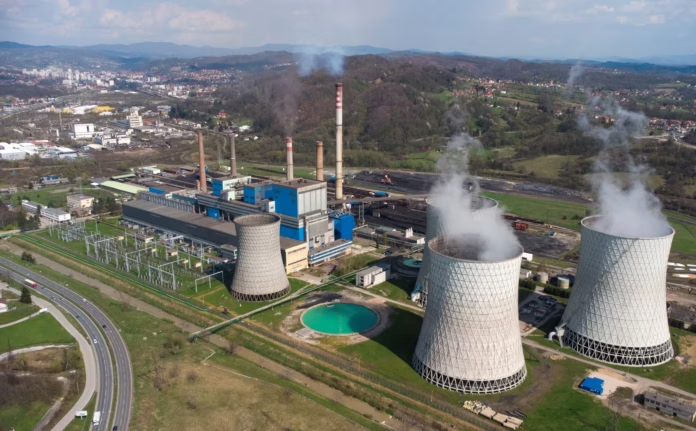
Delhi is preparing to upgrade its coal-fired power plants to operate more flexibly, creating space for a growing share of solar energy in the national grid. Officials familiar with the plan said these modifications will allow coal units to run at lower capacity when solar output peaks, reducing curtailment and improving overall grid stability. The move signals India’s strategic shift toward a more sustainable, low-carbon energy system.
Traditionally, India’s coal plants have been designed to run at full capacity to meet peak electricity demand. However, the rapid expansion of solar and wind energy has introduced variability in the grid, leading to periods where renewable output exceeds demand. “Flexibility is key to integrating renewables effectively,” said a senior energy official. By enabling coal units to ramp up or down quickly, the grid can absorb more clean energy without compromising reliability.The proposed upgrades include modernising turbines, enhancing digital control systems, and investing in predictive maintenance technologies. Such measures allow plants to operate efficiently at partial capacity, complementing intermittent renewable sources rather than competing with them. An industry expert noted, “This approach reduces solar curtailment and ensures baseload supply remains secure, a critical factor for India’s growing urban and industrial centres.”
Financially, coal plant operators will need to allocate budgets for both capital improvements and ongoing maintenance. Regulators are expected to review tariff structures and incentives to make these investments viable. This initiative aligns with India’s broader renewable energy targets, including achieving 500 GW of non-fossil fuel capacity by 2030, reflecting a pragmatic strategy that balances growth, sustainability, and energy security.Beyond technical considerations, the policy carries social and economic significance. By extending the operational life of existing coal plants while promoting cleaner energy integration, jobs in the conventional power sector are safeguarded. Additionally, reducing reliance on new fossil fuel capacity helps cities minimise emissions and supports sustainable urban development.
Experts suggest that flexible coal operations will play a central role in the nation’s energy transition. By allowing solar power to contribute more consistently to the grid, emissions per unit of electricity could decline, and India can move closer to its climate commitments. Policymakers are expected to finalise the roadmap in the coming months, signalling a transformative period for the country’s energy landscape and a more resilient, low-carbon future for its urban centres.
Also Read: Mumbai Welcomes Crompton Expansion With Viona Hobs And Eliteo BLDC Chimneys
Delhi Upgrades Coal Plants To Increase Solar Capacity In National Power Grid
Chennai Strengthens Office Market As 91Springboard Adds 1,00,000 Sq Ft Workspace

Chennai is set to see a significant expansion in premium flexible workspaces as a major workspace solutions provider prepares to open new hubs in both Chennai and Bengaluru. The move underscores the growing demand for adaptable, well-connected office environments across South India, driven by expanding enterprises, digital-first sectors, and a sustained shift towards hybrid work models.
The two upcoming centres, located within established Grade-A business parks in Chennai’s Guindy district and Bengaluru’s Outer Ring Road corridor, collectively span more than one lakh square feet. Industry observers note that this scale of expansion reflects a renewed confidence in South India’s commercial real estate market, where technology firms, global capability centres, and emerging enterprises continue to anchor economic activity. A senior company representative said the new hubs were designed to deliver highly flexible office formats, from private suites to managed floors, ensuring businesses have the choice to scale sustainably. The official added that the organisation aims to introduce an additional 1.5 lakh square feet of workspace in South India by the end of FY 2025–26, indicating robust market demand.
The Chennai hub, situated within Olympia Cyberspace, has been developed with a strong emphasis on environmental performance. The campus integrates energy-efficient systems, water-saving measures, and wellness-focused planning attributes increasingly prioritised by occupiers seeking workspace aligned with sustainability goals. Urban planners say these choices contribute to the broader trend of commercial real estate responding to climate-resilient design norms, especially as South Indian cities face rising heat stress and pressure on resources. In Bengaluru, the new centre at Helios Business Park taps into one of the city’s busiest office corridors. The campus carries multiple global sustainability certifications and is located within walking distance of public transit, which experts believe is critical for reducing commute-related emissions and making workplaces more accessible. The surrounding ecosystem of childcare facilities, food courts, leisure spaces, and essential services is expected to complement the hub’s role as a full-service work destination. Since early 2025, the workspace provider has opened 14 centres across major Indian cities, adding over half a million square feet of operational flex spaces. Analysts say this expansion cycle mirrors the broader transformation of Indian work culture, where companies seek high-quality offices without committing to long-term leases. Many also emphasise that flex spaces play a role in improving workforce inclusivity by offering accessible locations, barrier-free infrastructure, and adaptable environments suited for diverse employee needs.
The latest South India expansion, industry experts note, will help redistribute workspace supply towards areas experiencing population and business growth. For cities such as Chennai, the arrival of new, sustainability-conscious hubs also strengthens efforts to build low-carbon commercial districts capable of supporting equitable economic participation. As the two hubs prepare to become operational by early 2026, stakeholders expect them to contribute not only to the region’s business ecosystem but also to a more climate-aware and socially inclusive urban workspace landscape.
Also Read: Kolkata Retail Summit Marks Infinity Group And RAI Alliance For Industry Growth
Chennai Strengthens Office Market As 91Springboard Adds 1,00,000 Sq Ft Workspace
Mumbai Welcomes Crompton Expansion With Viona Hobs And Eliteo BLDC Chimneys

Mumbai’s premium appliance market has gained momentum as Crompton expanded its kitchen lineup with the Viona Hobs and Eliteo BLDC Chimneys, introducing energy-efficient motors, sealed burners, hybrid designs and automated cleaning to tackle smoke, spills and maintenance issues in Indian homes. The launch, backed by consumer insights and a high-impact digital campaign, reflects rising demand for safer, intuitive and design-driven kitchen upgrades across urban households.
The launch underscores how urban kitchens are no longer seen as purely functional workspaces but as social, design-led and increasingly technology-enabled areas of the home. According to company officials, many families continue to struggle with persistent issues such as smoke accumulation, difficult cleaning routines, slab-cutting constraints and concerns around gas safety. The new appliances seek to resolve these challenges while aligning with the growing demand for energy-conscious and user-friendly solutions.Industry experts note that one of the most visible trends in Mumbai’s housing market is the aspiration for better-designed, efficient interiors, particularly in compact apartments. Space optimisation, reduced energy consumption and improved indoor air quality have become key expectations. To address these needs, the newly launched hob series features sealed burners to prevent seepage, direct flame technology tailored for Indian cooking styles and built-in gas safety controls. The hybrid design also allows the appliance to function as either a built-in or countertop unit, offering flexibility for residents in rented homes or refurbished kitchens.
Equally significant is the introduction of the BLDC chimney series, which uses a high-efficiency motor system commonly associated with energy-saving devices. The model’s strong suction capacity, automatic cleaning function and heat-sensor activation aim to reduce indoor pollution — a challenge often overlooked in fast-paced urban homes. With city residents increasingly attentive to ventilation and indoor hygiene, these features contribute to healthier living spaces without demanding extensive user intervention.A senior company executive said the products were developed using detailed consumer insights, highlighting everyday friction points such as spill management, oil accumulation and the burden of manual maintenance. By automating cleaning and improving cooking efficiency, the appliances are positioned as practical upgrades for families balancing professional responsibilities, long commutes and limited time for household chores.The brand has launched a digital campaign across major platforms to build awareness, reflecting the larger trend of appliance makers targeting urban, tech-savvy demographics. Stores across Mumbai and other metros have begun stocking the new portfolio, with retailers reporting increased consumer interest in low-maintenance, durable and energy-efficient kitchen equipment.
As Indian cities transition towards climate-responsive living, efficient home appliances have become integral to reducing household emissions and improving indoor comfort. While the new portfolio is aimed at premium buyers, experts suggest that widespread adoption of energy-efficient motors, safety-first gas systems and low-pollution ventilation will play a growing role in creating healthier, more inclusive and future-ready urban homes.
Also Read: Kolkata Retail Summit Marks Infinity Group And RAI Alliance For Industry Growth
Mumbai Welcomes Crompton Expansion With Viona Hobs And Eliteo BLDC Chimneys
Kolkata Retail Summit Marks Infinity Group And RAI Alliance For Industry Growth

Kolkata hosted one of its most prominent retail gatherings this year as the Kolkata Retail Summit 2025 brought together business leaders, developers, and technology innovators to examine the future trajectory of India’s retail landscape. The event also marked a renewed push towards more collaborative and sustainable retail development, with Infinity Group emerging as a key partner in shaping the conversations.
The summit, convened at a leading city hotel, drew participation from brands, retailers, and policymakers, signalling the industry’s rising focus on customer experience, digital integration, and urban resilience. Infinity Group, which has a significant footprint in Kolkata’s Salt Lake Sector V micro-market, used the platform to underline its vision for retail spaces that combine accessibility, community value, and long-term sustainability. According to company representatives, more than 500 businesses are currently housed across its developments in the technology and commercial hub. A notable feature of the summit was the developer’s involvement in discussions that examined how partnerships between retailers, brands, and technology providers are reshaping consumer-facing sectors. An official from the organising committee noted that such conversations are crucial as cities transition towards mixed-use, walkable commercial districts that minimise carbon impact while supporting economic density.
The panel moderated by a senior marketing executive from Infinity Group explored how local businesses in Kolkata are repositioning themselves through shared resources and digital tools. Panellists from food, wellness, FMCG, and entertainment sectors pointed out that the next stage of retail growth will demand deeper integration of data-driven planning and an acute understanding of local consumer behaviour. The focus on experience-driven retail was reiterated in discussions highlighting how malls and high-street developments are reinventing themselves as social and cultural anchors. “Retail destinations today must serve as community spaces, not just points of sale,” an industry expert said, adding that modern retail infrastructure must prioritise inclusivity, universal design, and energy-efficient features. The summit also spotlighted Krishna Bhumi Arcade, a spiritual and retail development in Vrindavan led by Infinity Group. A senior official presented the project as an example of how tourism, cultural identity, and modern retail principles can co-exist. The presentation emphasised themes of sustainability and service, aligning with a broader trend where developers are beginning to incorporate climate-sensitive design and environmentally conscious planning into large-scale retail projects.
Participants noted that Kolkata’s retail landscape is evolving rapidly, driven by rising purchasing power, shifting consumer expectations, and improved digital access. For a growing urban population, the quality of retail environments plays a critical role in shaping daily mobility, social interaction, and economic participation. Industry leaders concluded that stronger partnerships among developers, brands, and technology providers will be essential to building future-ready retail corridors especially in dense, fast-growing business districts such as Sector V. The summit closed with a call for more sustainable, inclusive, and community-focused retail ecosystems that can support both local businesses and city residents in the long term.
Also Read: Ayodhya Partners With Tata Sons For 52 Acre Temple Museum Project