
Navi Mumbai Airport Launch Projected To Push Khopoli Into High-Growth Spotlight

Mumbai Suburb Sees Patel Retail Open Its 48th Store Strengthening MMR Presence

Patel Retail Limited has expanded its footprint in the Mumbai Metropolitan Region (MMR) with the opening of its latest outlet in Dombivli East, marking the company’s 48th store across the region. The launch reflects the company’s continued push to strengthen access to organised retail in fast-growing suburban clusters where population density and evolving consumption patterns are reshaping local commerce.
The new store, located near Nilje Station Road, adds another node to the company’s broader regional strategy of entering emerging residential catchments that are witnessing rapid housing development. Industry experts note that suburbs such as Dombivli, Kalyan, and Vasai-Virar have become strategic locations for retailers due to rising apartment-led growth, increasing working-class settlements, and improving rail connectivity. For households in these areas, expanded retail access often translates to better affordability, shorter travel times for daily necessities, and more predictable pricing. Executives associated with the expansion said the company’s steady scale-up is supported by a strong backend ecosystem, including integrated sourcing, in-house packaging, and controlled logistics. This level of backward integration not only reduces supply-side volatility but also supports cost efficiencies that can be passed on to consumers. Retail analysts add that such integration is becoming increasingly important for Indian retailers positioning themselves as value-driven players catering to middle- and lower-middle-income families.
The company’s leadership said the new store reaffirms its commitment to serving communities that have historically relied on fragmented neighbourhood markets. According to the leadership team, Dombivli’s growing residential clusters offer an opportunity to strengthen essential retail accessibility, particularly for families dependent on walkable or near-home shopping options. Urban planners observe that the spread of organised retail in suburban regions such as MMR can play a wider role in shaping sustainable consumption behaviour. When essential goods are available within short distances, residents are less dependent on long commutes or private transport for everyday shopping, helping reduce congestion and emissions. Moreover, modern retail outlets with standardised hygiene norms and structured employment practices contribute to more equitable economic participation by creating stable jobs and safer working environments.
However, they also emphasise the need for retailers to integrate resource-efficient operations—such as energy-optimised lighting, waste reduction measures, and local sourcing—as suburban markets expand. With urban peripheries absorbing much of MMR’s future population growth, strengthening sustainable retail ecosystems will be critical to reducing the environmental footprint of daily consumption. The new Patel Retail outlet in Dombivli East reinforces a broader trend of retail formalisation across MMR’s suburban belt. As the company continues to add stores, industry observers expect greater competition in the essential retail segment, potentially improving affordability and service levels for millions of residents. For rapidly urbanising communities, such expansion represents more than just additional shopping options—it contributes to the building blocks of accessible, inclusive, and resilient neighbourhoods.
Mumbai Suburb Sees Patel Retail Open Its 48th Store Strengthening MMR Presence
Trivandrum Welcomes Hettich First Exclusive Store Showcasing Premium German Furniture Solutions

Trivandrum has witnessed the launch of Hettich India’s first exclusive HeX store, bringing premium German furniture solutions to the city. The experiential store features modern interiors equipped with advanced furniture fittings, architectural hardware, lighting, and built-in kitchen appliances. Customers can also access personalised design consultations, reflecting Hettich’s strategy to expand its network of 25 HeX stores nationwide, while catering to growing demand for functional, aesthetically refined, and durable interiors in urban homes.
The launch signals a shift in Indian urban interiors towards experiential retail, where consumers increasingly prefer interacting directly with products before making purchasing decisions. At the Trivandrum store, visitors can explore a curated environment showcasing furniture solutions designed to optimise space, integrate technology, and enhance daily living. An official from Hettich India noted that the HeX store allows customers to “experience the precision and craftsmanship of German-engineered interiors,” highlighting the brand’s focus on quality and innovation.Situated at Style Wood, M J M Arcade, Pallippuram P.O., the store offers complimentary Free Design Services, enabling bespoke furniture layouts tailored to individual needs and lifestyle preferences. This approach aligns with broader trends in urban India, where residents of Tier-II and Tier-III cities are increasingly seeking smart, design-led solutions that combine utility with elegance. By introducing this experiential format in Trivandrum, Hettich reinforces its commitment to bridging international design standards with local interior aspirations.
The expansion also reflects rising interest in sustainable and long-lasting furniture solutions. By promoting durable fittings, integrated storage, and multifunctional layouts, Hettich contributes to reducing material waste and extending product life, aligning with the broader urban goal of creating environmentally responsible homes. A senior industry expert observed that Trivandrum’s growing urban middle class is driving demand for interiors that balance aesthetics, functionality, and sustainability, positioning the city as a key market for premium furniture brands.Hettich’s entry into Trivandrum demonstrates how international design expertise is meeting India’s evolving urban lifestyle needs. From modular kitchens to furniture lighting and architectural hardware, the store enables residents to visualise interiors that are efficient, stylish, and personalised. The HeX model exemplifies the fusion of experiential retail with thoughtful design, encouraging consumers to consider not only appearance but also long-term usability and comfort.
As Indian cities continue to embrace smart, sustainable, and human-centric living spaces, the Trivandrum HeX store exemplifies how global brands can influence local interior trends. By offering an interactive, design-driven environment, Hettich positions itself at the forefront of premium interior solutions, catering to a growing market of urban dwellers seeking both innovation and quality in their homes.
Also Read: Dehradun Advances Smart Interior Trends With Hafele Opening Cutting Edge Design Studio
Trivandrum Welcomes Hettich First Exclusive Store Showcasing Premium German Furniture Solutions
Dehradun Advances Smart Interior Trends With Hafele Opening Cutting Edge Design Studio

Dehradun is witnessing a significant boost in premium interior solutions with Hafele’s launch of a cutting-edge Design Studio. Situated at 188, Dharampur and developed in collaboration with franchise partner Hurla Interio, the studio offers an immersive experience for homeowners, architects, and interior designers. Showcasing Hafele’s complete range of architectural hardware, kitchen and furniture fittings, appliances, lighting, digital locks, and smart home solutions, it reflects the city’s growing appetite for modern, multifunctional, and technology-enabled living spaces.
The Design Studio has been designed as an experiential destination, allowing visitors to engage directly with the brand’s offerings through interactive displays and realistic mock-ups. According to a senior Hafele official, the aim is to merge global design expertise with local sensibilities, helping clients visualise interior concepts that balance aesthetics, functionality, and sustainability. With urban homeowners increasingly seeking efficient use of space and automation-ready solutions, such studios are becoming central to shaping Dehradun’s modern residential landscape.The inauguration event saw participation from key figures in the interior design and construction sectors, highlighting the rising demand for premium and technology-integrated home solutions. A local design consultant noted that the city’s clientele is increasingly design-conscious, favouring interiors that combine smart security, energy efficiency, and contemporary style. Hafele’s portfolio, spanning architectural hardware to advanced digital locks, aligns with these expectations, providing practical solutions for both new constructions and renovations.
Franchise collaborations, such as the partnership with Hurla Interio, are playing a pivotal role in extending Hafele’s reach while respecting regional design preferences. Experts suggest that such models not only enhance customer engagement but also foster local entrepreneurship and skilled employment within the construction and design ecosystem. By localising global design standards, the studio serves as a platform for knowledge exchange between designers, architects, and homeowners, encouraging more informed and sustainable interior decisions.The Hafele Design Studio also addresses broader urban living trends, from multifunctional spaces to smart home integration. Industry observers point out that experiential studios like this reflect the evolution of India’s mid-sized cities into hubs of contemporary design and technology adoption. For Dehradun, the launch signals a maturation of the local interior market, offering residents exposure to solutions that prioritise efficiency, security, and aesthetic appeal simultaneously.
By combining immersive design experiences with regional insights, Hafele’s Dehradun studio is not only expanding premium interior access but also contributing subtly to sustainable, technology-driven urban living. It sets a benchmark for how modern interior solutions can integrate global innovation with local needs, positioning the city as a growing destination for smart, functional, and stylish home design.
Also Read:Trivandrum Welcomes Hettich First Exclusive Store Showcasing Premium German Furniture Solutions
Dehradun Advances Smart Interior Trends With Hafele Opening Cutting Edge Design Studio
India Welcomes Asian Paints As Official Colour Partner For Cricket Matches

Mumbai has announced Asian Paints as the Official Colour Partner for India Cricket in a three-year collaboration covering over 110 matches across men’s, women’s, and domestic series. The partnership aims to bring vibrant fan experiences to stadiums and digital platforms, blending cricket with colour-driven engagement. By integrating innovative activations like the “Colour Cam” and home décor-inspired “Colour Countdown,” the alliance seeks to enhance the emotional connection of fans nationwide while celebrating India’s shared passion for the sport.
The association positions Asian Paints at the intersection of culture, design, and sport, highlighting how major consumer brands are leveraging cricket’s widespread popularity to engage urban audiences. According to company officials, this partnership underscores their belief that colour can shape experiences and foster connections, extending beyond homes into public spaces where fans gather to celebrate the game. Analysts note that such activations offer a nuanced way to combine lifestyle branding with community engagement, creating emotional resonance across cities.Industry observers suggest that cricket’s role in urban India goes beyond sport, acting as a social glue that brings together people from diverse backgrounds. By embedding colour-driven fan interactions within matches, Asian Paints aims to translate this collective enthusiasm into tangible experiences. Initiatives such as the “Colour Cam,” which highlights visually expressive fans, are designed to celebrate individuality while reflecting the inclusivity of modern urban life. A senior marketing strategist explained that such initiatives effectively turn stadiums into shared cultural spaces where participation becomes part of the city’s evolving social fabric.
The “Colour Countdown” series further blends sport with lifestyle, bringing home décor trends to the forefront of fan engagement. By linking cricket viewing with design and urban living, the brand seeks to create a continuous dialogue between public events and private spaces. Experts argue this approach reflects a broader trend in which urban consumers increasingly value immersive, culturally relevant experiences over conventional advertising.Representatives from the BCCI welcomed the partnership, highlighting how Asian Paints’ legacy in Indian households aligns with cricket’s deep emotional significance. A board spokesperson emphasised that the collaboration is expected to enhance match-day atmospheres and deliver memorable fan experiences across stadiums and digital channels alike. By integrating activations across media, retail, and consumer touchpoints, the initiative demonstrates how corporate partnerships can foster more engaging, inclusive urban experiences while promoting cultural participation at scale.
Beyond marketing, the alliance offers insights into how Indian cities embrace public events as platforms for social cohesion and urban creativity. Through the strategic use of colour and design, cricket matches become more than sporting contests—they transform into communal moments that connect citizens, inspire engagement, and reflect the vibrancy of urban life. Analysts suggest such initiatives can encourage brands and city planners alike to consider how aesthetics, participation, and shared passion contribute to the liveability and inclusivity of urban environments
Also Read:Bhatapara Advances As Ambuja Commissions 4 MTPA Clinker Capacity Unit
India Welcomes Asian Paints As Official Colour Partner For India Matches
Bhatapara Advances As Ambuja Commissions 4 MTPA Clinker Capacity Unit
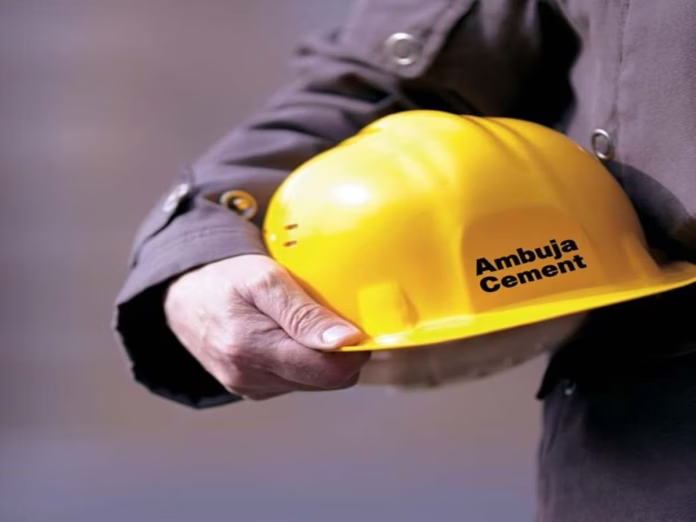
Bhatapara in Chhattisgarh advances its industrial footprint as Ambuja Cements commissions a 4 MTPA clinker capacity unit, pushing its consolidated output to 66 MTPA at a time of rising construction demand across India. The expansion aligns with the company’s strong quarterly performance, marked by higher revenue, improved profitability and a one-time tax gain, while also supporting its revised plan to scale overall capacity to 155 MTPA by FY28 amid growing infrastructure and housing sector requirements.
Industry analysts note that the Bhatapara addition forms part of a broader trend of capacity modernisation across India’s cement sector, driven by rapid urbanisation and the push for more resilient infrastructure. Executives familiar with the development said the brownfield expansion enables faster commissioning while reducing the environmental footprint typically linked to greenfield sites. The facility, designed to operate with enhanced thermal efficiency and alternative fuel inputs, is expected to help reduce emissions intensity over the long term—an increasingly important consideration as cities transition to cleaner construction ecosystems.Ambuja’s financial results for the quarter ending September 2025 illustrate the momentum behind these strategic investments. The company reported a consolidated net profit of ₹1,766 crore, a substantial increase from ₹480 crore in the same quarter last year, supported by a tax write-back. Profit before tax rose 13% year-on-year to ₹838 crore, reflecting steady cost discipline and improved utilisation rates across its network. Consolidated revenue climbed 22% to ₹9,175 crore, marking its highest-ever second-quarter performance.
Market experts suggest that Ambuja’s decision to raise its FY28 capacity target from 140 MTPA to 155 MTPA underscores confidence in sustained medium-term demand, driven by national infrastructure missions, planned urban expansions, and renewed public investment in mobility, housing, and logistics corridors. Many cities in central and eastern India, including those surrounding Bhatapara, are recording steady construction activity, which increases the need for consistent supply of clinker—the backbone of cement manufacturing.For Chhattisgarh, the commissioning of the upgraded unit strengthens the region’s role as an industrial anchor for surrounding states, while also reducing logistic pressures by providing more localised sourcing. Urban planners emphasise that efficient, well-distributed cement capacity can support smoother delivery of public works, provided manufacturers continue transitioning towards greener production technologies. Ambuja’s incorporation of modern kiln systems and its stated pursuit of lower-carbon operations are seen as steps towards aligning heavy industry with India’s climate commitments.On the trading front, Ambuja’s stock moved marginally higher to ₹545.60 during late morning trade, reflecting cautious optimism among investors. While short-term market reaction remained measured, analysts believe that capacity-linked expansions such as Bhatapara typically influence valuations more visibly as production stabilises over several quarters.
As Indian cities expand and infrastructure demands intensify, the challenge for material producers lies in balancing scale with sustainability. Developments like the Bhatapara upgrade signal how established players are recalibrating their growth strategies to support a more resource-efficient, low-carbon built environment—an essential shift for shaping equitable and climate-resilient urban futures.
Also Read: Mumbai Unveils Nuvoco ZERO M UNNATI App Enhancing Rewards And Knowledge Access
Bhatapara Advances As Ambuja Commissions 4 MTPA Clinker Capacity Unit
Mumbai Unveils Nuvoco ZERO M UNNATI App Enhancing Rewards And Knowledge Access

Various states across india have witnessed the launch of Nuvoco’s ZERO M UNNATI App, a digital platform aimed at deepening engagement with contractors, masons, painters, and other on-ground influencers, alongside dealers and trade partners. The app centralises product information, reward tracking, and real-time support, enabling users to redeem benefits seamlessly while staying updated on launches and schemes. It forms a key part of Nuvoco’s broader digital transformation, reflecting the company’s commitment to empowering its network with knowledge and timely assistance.
The platform provides an integrated experience for users to monitor incentives, accumulate and redeem reward points, and access product details instantly. Alerts on promotional campaigns, new product launches, and special schemes ensure that trade partners remain informed in real time. Direct support through a helpline and call-centre services further enhances accessibility, allowing users to resolve queries efficiently without disruptions to their work schedules.Chirag Shah, Head of Marketing, Innovation and Sales Excellence at Nuvoco, noted that the app is designed to strengthen relationships with the company’s influencer network. “By combining rewards, learning resources, and immediate support in a single interface, we aim to empower our trade partners and reinforce Nuvoco’s commitment to customer-first innovation,” he said. Analysts suggest that such digital engagement tools can play a significant role in driving product adoption while building long-term loyalty among contractors and dealers.
Future updates to ZERO M UNNATI will introduce expanded reward catalogues, milestone incentives, consistency bonuses, market conversion rewards, and gamified engagement, creating a next-generation ecosystem for stakeholders. This initiative forms a central pillar of Project DEN (Digitally Enabled Nuvoco), which aims to scale operations, streamline digital workflows, and enrich user experiences across the company’s entire network. The app complements other digital solutions such as Nuvo Setu, Nuvo Nirmaan, and SAP Ariba, strengthening Nuvoco’s holistic digital infrastructure.Nuvoco Vistas Corp Ltd, headquartered in Mumbai, operates across East, North, and West India, and has expanded through acquisitions including Lafarge India, Emami Cement, and Vadraj Cement. With an ambitious plan to increase grinding capacity by 4 MMTPA, the company is on track to reach 35 MMTPA cement production by FY 2026–27, becoming India’s fifth-largest cement producer. Its portfolio spans Cement, Ready-Mix Concrete (RMX), and Modern Building Materials (MBM), supplying materials to landmark infrastructure projects such as the Mumbai–Ahmedabad Bullet Train corridor, major metro systems in Delhi, Jaipur, Noida, Mumbai, and high-profile stadiums.
Through the ZERO M UNNATI App, Nuvoco is signalling a shift toward digital-first engagement, knowledge-driven partnerships, and more transparent, responsive interactions with the construction community, reinforcing its role in supporting a sustainable and efficient built environment across India.
Also Read:Kolkata Welcomes Bangur Concrete New RMC Plant Expanding Capacity Across West Bengal
Mumbai Unveils Nuvoco ZERO M UNNATI App Enhancing Rewards And Knowledge Access
Kolkata Welcomes Bangur Concrete New RMC Plant Expanding Capacity Across West Bengal

Kolkata has strengthened its construction landscape with the commissioning of a new Ready-Mix Concrete (RMC) plant by Bangur Concrete, part of Shree Cement Ltd.’s Bangur Master Brand. Located in Baidyabati, the facility boasts a production capacity of 60 cubic metres per hour, aiming to meet the city’s rising infrastructure, industrial, and real estate demands. Strategically positioned within Hooghly district, the plant is set to ensure timely, high-quality concrete supply across Kolkata and surrounding growth corridors.
The Baidyabati plant is designed to support the city’s expanding urban and industrial projects, where consistent and performance-driven concrete is critical for maintaining construction timelines and quality standards. A company official noted that the facility’s strategic location enables efficient logistics, reducing delays for key infrastructure and real estate developments across eastern India.The Managing Director of Shree Cement Ltd., highlighted the plant’s role in reinforcing Bangur Concrete’s regional presence. “West Bengal represents a vital growth market, and this plant demonstrates our commitment to providing sustainable, high-quality construction solutions while supporting India’s infrastructure ambitions,” he said. Industry experts point out that such expansions are essential to match the rapid pace of urbanisation while maintaining operational excellence and environmental compliance.
Bangur Concrete now operates 26 RMC plants nationwide, each equipped with advanced batching systems, strict quality controls, and eco-compliant processes. The Baidyabati facility incorporates modern batching technology, optimised material handling, and energy-efficient logistics to deliver concrete with minimal environmental impact. Analysts observe that integrating sustainability into core operations is increasingly important as Indian cities pursue low-carbon development and net zero goals.The facility is expected to significantly reduce dependency on external suppliers for large-scale projects, enhancing supply chain resilience across Kolkata. Urban planners emphasise that access to high-quality concrete is critical for accelerating infrastructure projects such as industrial parks, housing developments, and urban transport initiatives, making such facilities central to the city’s economic and civic growth.Additionally, the plant aligns with broader environmental and social imperatives by embedding green construction practices at scale. Efficient batching, material optimisation, and energy-conscious operations contribute to lower emissions and reduced waste, reflecting a growing trend of environmentally responsible urban construction. This approach positions Kolkata as a city where modern infrastructure development can progress alongside sustainability objectives.
As the region experiences increased urban and industrial activity, the Baidyabati RMC plant represents a strategic investment in reliable, sustainable construction solutions. By combining operational efficiency with eco-conscious practices, Bangur Concrete sets a precedent for other manufacturers in eastern India, demonstrating that urban growth and environmental responsibility can advance hand in hand.
Also Read:New Delhi Unveils LED Expo 2025 With Cutting Edge Sustainable Lighting Advances
Kolkata Welcomes Bangur Concrete New RMC Plant Expanding Capacity Across West Bengal
New Delhi Unveils LED Expo 2025 With Cutting Edge Sustainable Lighting Advances

New Delhi unveiled LED Expo 2025 at Yashobhoomi on Thursday, marking the 30th edition of India’s largest platform for smart and sustainable lighting technologies. With over 250 exhibitors, 75 debut participants and 60 new product launches, the event showcases cutting-edge solutions ranging from human-centric and solar lighting to IoT-enabled systems. The expo highlights India’s accelerating shift toward energy-efficient infrastructure and its growing role as a global hub for advanced LED innovation.
Organisers emphasised that this year’s focus goes beyond conventional illumination. Human-centric lighting, which adapts to circadian rhythms, and façade lighting, which enhances urban aesthetics, are central themes, reflecting how modern lighting can simultaneously support energy efficiency and urban design. International exhibitors from China, Germany, Hong Kong, South Korea, and the UAE further illustrate India’s expanding global engagement in the LED sector.Industry experts noted that India’s LED market is entering a pivotal phase. Intelligent street lighting, adaptive urban illumination systems, and high-performance luminaires are increasingly being adopted in cities to reduce emissions, improve operational efficiency, and enhance public safety. These innovations align with broader national commitments to sustainable urban development, net-zero energy goals, and inclusive infrastructure planning.
Visitors encountered solutions across the entire LED ecosystem, from decorative and industrial lighting to connected outdoor networks. Analysts pointed out that smarter lighting networks not only conserve energy but also improve urban accessibility and night-time safety, particularly benefiting women and vulnerable communities. The expo, therefore, functions as both a technology showcase and a barometer of India’s progress toward greener, more equitable cities.The inauguration featured senior officials and industry leaders from the Bureau of Energy Efficiency, INTACH, Energy Efficiency Services Ltd, and multiple design and architecture associations. A senior Bureau official highlighted the transformative role of the UJALA programme in scaling LED adoption nationwide and underlined how the expo supports climate-resilient urban policies.
Heritage and conservation experts attending the event stressed that sensitive lighting solutions are essential for adaptive reuse of historic sites, helping preserve cultural identity while integrating modern energy-efficient technologies. Meanwhile, representatives from micro, small, and medium enterprises (MSMEs) emphasised the growing domestic manufacturing capacity that underpins India’s emerging leadership in global LED exports.Event organisers also highlighted collaborations with multiple government ministries and industry associations, including MeitY, MNRE, COA, FHRAI, IALD, LACMA, and Women in Lighting. Such support, they noted, strengthens the LED ecosystem while accelerating market transformation toward energy efficiency, sustainability, and innovation-led growth.
LED Expo 2025 in New Delhi demonstrates how India’s lighting sector is maturing into a strategic pillar of sustainable urban development. By merging advanced technology with environmental responsibility and inclusive design, the exhibition offers a compelling vision of how cities can embrace cleaner, smarter, and more energy-efficient lighting systems for the next decade.
Also Read: Hyderabad Unveils Tailored Home Elevator Cabin Solutions For Compact And Crowded Homes
New Delhi Unveils LED Expo 2025 With Cutting Edge Sustainable Lighting Advances
Hyderabad Unveils Tailored Home Elevator Cabin Solutions For Compact And Crowded Homes

Hyderabad has unveiled a tailored home elevator cabin design service that helps residents fit lifts into compact and crowded homes while ensuring they blend naturally with existing interiors. By offering flexible cabin sizes, modular installation and personalised aesthetic options, the initiative aims to solve long-standing space and accessibility challenges in older Indian houses. With rising demand for mobility-friendly living, the service promises quieter operation, safer materials and a design process guided by on-site assessments and 3D previews.
Across metros and emerging cities alike, independent homes, duplexes and villas often lack dedicated shafts or adequate stairwell clearances. As multigenerational living expands and residents prioritise mobility-friendly design, many households explore lifts to support ageing family members or enhance long-term accessibility. However, the challenge of fitting a standard-sized cabin into a cramped corner has long stalled such upgrades. According to a senior designer associated with the company, most enquiries today involve “tight spaces where conventional dimensions simply do not work”.The new service tackles this gap by introducing flexible cabin footprints that can be tailored to narrow landings, internal courts or small lobbies created during renovation. Engineers use knock-down construction, allowing cabin components to be moved through narrow doorways and assembled onsite. Industry experts note that such modular solutions are critical for Indian homes, where extending staircases or altering structural walls is often neither feasible nor desirable.
A major element of the offering lies in visual customisation. Instead of accepting a standard interior, homeowners can choose from an array of materials, textures and finishes aimed at blending the lift seamlessly into the home’s design language. Options range from muted wooden panels and warm lighting to contemporary metallic surfaces preferred in modern renovations. An official involved in the project said the aim is to “ensure the lift feels like part of the architecture, not a bulky add-on”.Practical details receive equal focus. Operating panels are positioned for convenient reach, especially for elderly users, while railings are aligned for safe support. Lighting is calibrated to be soft yet sufficiently bright, acknowledging the needs of both children and seniors. As lift doors often open into living or lounge areas, homeowners receive guidance in selecting finishes that match existing palettes and minimise visual disruption.
To streamline decision-making, designers conduct site visits to evaluate natural light, circulation patterns and design cues. Custom visuals and 3D previews allow families to see how the lift will appear before manufacturing begins. Small coordination touches—such as aligning metal trims with staircase railings or choosing flooring that mirrors adjacent rooms—help elevate the final outcome.Safety and longevity remain central to the system’s engineering. The cabins use fire-resistant materials, noise-minimising structures and gearless, belt-driven technology designed for smooth travel. Experts note that quieter, energy-efficient lifts are increasingly valued as cities move towards more sustainable and age-inclusive housing.
With demand for compact, user-friendly elevators accelerating across India, the bespoke service highlights the industry’s gradual pivot towards smarter, more context-responsive home mobility—supporting households as they adapt to evolving accessibility needs while enhancing spatial efficiency in dense urban environments.
Also Read: Tirupati Emphasises Lean Construction Methods To Speed Up Critical Urban Works