
Supreme Court Rules Insolvency Cannot Stall Redevelopment Or Deny Dignified Housing

Mumbai Advances Rs 4.97 Billion Aram Nagar Redevelopment Plan For Transformation

Mumbai’s long-delayed effort to upgrade Aram Nagar has gained momentum, with authorities advancing a redevelopment plan valued at Rs 4.97 billion. The project aims to transform the ageing settlement into a modern, mixed-use precinct that balances urban growth with sustainability and inclusivity two priorities increasingly shaping the city’s redevelopment agenda.
Aram Nagar, located in Versova, has long been associated with Mumbai’s creative industries, housing casting studios, independent film units, and thousands of rental rooms. Yet the area has struggled with deteriorating infrastructure, irregular layouts, and inadequate services. According to officials overseeing the project, the revamped layout will introduce organised housing blocks, improved public amenities, and climate-resilient design elements that address flooding and heat stress challenges that disproportionately affect low-income and informal workers in the precinct.
Early project briefs indicate that the new masterplan will focus on widening internal roads, installing upgraded utility networks, and creating more efficient circulation for pedestrians. The scheme also proposes new public spaces and community facilities, with an emphasis on universal accessibility. Urban planners associated with the consultation process note that improving liveability in such dense pockets is critical as Mumbai attempts to build a more equitable urban fabric. “Redevelopment cannot just replace structures; it must enhance safety, mobility, and access for everyone,” one planner said.
Environmental considerations are expected to feature strongly in the final design. Officials say the project will encourage energy-efficient building envelopes and improved fenestration standards to manage heat and airflow an essential shift as Mumbai records rising temperatures each year. Experts add that elements such as cross-ventilation, shading devices, and optimised window-to-wall ratios can significantly reduce reliance on mechanical cooling, lowering long-term carbon emissions.
The redevelopment also carries socio-economic implications. Aram Nagar’s creative workforce, consisting largely of young aspirants and gig professionals, depends on affordable accommodation and flexible workspaces. Urban researchers caution that redevelopment must protect this ecosystem while addressing infrastructural gaps. If executed sensitively, the project could set a precedent for upgrading older urban precincts without displacing local communities. Officials have indicated that rehabilitation norms will follow established citywide frameworks, offering existing residents secure tenure within the new development.
The plan has further relevance for Mumbai’s broader transition towards more sustainable neighbourhoods. By integrating resilience measures, prioritising walkability, and ensuring equitable access to public amenities, the redevelopment could align with the city’s long-term climate goals. Urban development analysts believe such projects demonstrate how older settlements can evolve to meet contemporary environmental standards while retaining their cultural and economic identity.As authorities move towards tendering and design finalisation, stakeholders emphasise that transparent planning and community engagement will be key to the project’s success. If delivered as proposed, Aram Nagar’s transformation could signal a new model for inclusive, low-carbon redevelopment across Mumbai’s ageing urban clusters.
Also Read : Khopoli Growth Surges With Mumbai Pune Corridor Connectivity Airport And Real Estate Boom
Mumbai Advances Rs 4.97 Billion Aram Nagar Redevelopment Plan For Transformation
Mumbai Pune Markets Rise As Mindspace REIT Buys Three Prime Commercial Assets

Mindspace Business Parks REIT has moved to consolidate its position in two of India’s most active office markets through the acquisition of three premium commercial assets in Mumbai and Pune for ₹2,916 crore. The transaction expands its overall portfolio to nearly 39 million sq ft and strengthens its presence in central business districts that continue to attract global tenants and resilient rental demand.
Industry observers say the acquisitions underscore the growing investor confidence in high-quality, energy-efficient office spaces across India’s leading metropolitan regions.The REIT confirmed that the assets located in Mumbai’s Worli and Bandra-Kurla Complex (BKC) micro-markets and Pune’s Kalyani Nagar collectively add around 0.8 million sq ft of leasable Grade A space. Independent valuers pegged the combined gross asset value at over ₹3,100 crore, reflecting the sustained premium commanded by centrally located, institutionally managed offices. A senior industry expert noted that such assets tend to outperform during market cycles because corporate occupiers increasingly prioritise operational efficiency, sustainability certifications, and better-connected urban districts.
The Board of the REIT’s manager has also approved a preferential issue of up to ₹1,820 crore, subject to unitholder and regulatory clearances, to support the acquisition plan. According to officials involved in the transaction, the newly added buildings offer strong cash-flow visibility and opportunities for rental reversion over the next few years. They also align with the REIT’s broader strategy of assembling a portfolio that blends high occupancy levels with long-term value creation.The Mumbai assets include a newly completed office tower in the Worli business district and another commercial block in the BKC Annexe, both areas that have seen sustained demand from financial institutions and multinational occupiers. Pune’s addition located in the well-established Kalyani Nagar micro-market continues the REIT’s expansion in a city that has emerged as a major services hub with a growing preference for green, efficient workplaces. An official familiar with the acquisition said these assets carry embedded potential for sustainability upgrades, which could strengthen their long-term resilience and appeal to climate-conscious tenants.Mindspace REIT currently operates a portfolio spanning major employment hubs across the Mumbai region, Pune, Hyderabad, and Chennai. With several integrated business parks and standalone office assets, the platform has positioned itself as a key participant in India’s evolving commercial real estate ecosystem.
Analysts say that the REIT’s continued expansion in central districts reflects confidence in the future of office markets, especially as occupiers emphasise people-centric design, better indoor air quality, and reduced energy consumption factors increasingly linked with employee wellbeing and corporate ESG goals.As Indian cities grapple with creating more inclusive and environmentally responsible commercial districts, transactions such as these signal a shift towards urban assets that balance financial performance with long-term sustainability. For tenants and investors alike, the addition of these centrally located assets reinforces the strength of India’s top office markets and the growing relevance of REITs in shaping the country’s urban future.
Also Read : Mumbai BMC Cracks Down On 53 Construction Sites As Pollution Worsens
Mumbai Pune Markets Rise As Mindspace REIT Buys Three Prime Commercial Assets
Navi Mumbai Expo Showcases Redevelopment Push And Infrastructure Boom Driving Realty Growth

Navi Mumbai is preparing for one of its biggest real estate showcases as the Builders Association of Navi Mumbai readies the 24th edition of its annual property expo next month. Scheduled at the CIDCO Exhibition Centre in Vashi, the 2025 edition will focus on how large-scale public infrastructure, redevelopment, and shifting homebuyer expectations are reshaping the city’s growth trajectory. The organisers say the event aims to help citizens understand emerging opportunities in one of the Mumbai region’s fastest-changing urban markets.
The four-day exhibition comes at a pivotal moment for Navi Mumbai. With the international airport nearing the launch of its first phase, the Mumbai Trans Harbour Link improving cross-harbour access, and the metro and coastal roads expanding, the city is entering a phase of accelerated connectivity. Urban planners note that such projects often catalyse compact, low-carbon development clusters, offering residents shorter commutes and more sustainable mobility choices. The Expo, they add, will provide a window into how these links could influence future property values.A senior organiser said the focus this year would extend beyond sales to “knowledge sharing and citizen awareness”. Recognising the rising demand for redevelopment across older nodes, the Expo will host a dedicated conference for housing societies evaluating redevelopment or self-redevelopment. Experts are expected to explain regulatory changes, financial viability, and sustainability benchmarks that societies should prioritise when reimagining ageing buildings. The aim, according to organisers, is to promote transparency and guide residents towards safer, climate-resilient housing stock.
The event will also see participation from more than 40 developers and lenders, many of whom are expected to launch or preview new projects. An official involved in the planning said developers were increasingly aligning new launches with the expectations of younger households seeking walkable communities, efficient building design, and improved public amenities. Large stalls, including a flagship pavilion dedicated to redevelopment projects, are expected to highlight how the city’s market is maturing and diversifying.To widen market outreach, the organisers have onboarded hundreds of brokers from Mumbai. Industry watchers say demand from the island city has risen sharply as Navi Mumbai offers comparatively affordable homes with stronger long-term appreciation prospects. Improved connectivity, they argue, is blurring the boundaries between the two markets, encouraging a more integrated regional property ecosystem.
The exhibition will also feature a dedicated CIDCO pavilion, allowing citizens to compare public-sector offerings with private developments. Officials believe this transparency could help buyers make better-informed choices and create a more equitable housing landscape.As Navi Mumbai continues its transition into a major employment and mobility hub, the Expo is positioned as a platform that brings developers, citizens, and planners together. For residents navigating redevelopment decisions or seeking homes with stronger sustainability credentials, the event may offer valuable insights into how the city’s built environment is set to evolve in the coming years.
Navi Mumbai Expo Showcases Redevelopment Push And Infrastructure Boom Driving Realty Growth
Mumbai BMC Cracks Down On 53 Construction Sites As Pollution Worsens
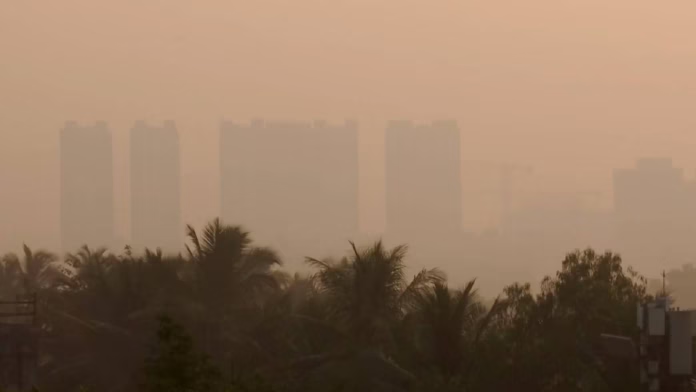
Mumbai is intensifying efforts to curb urban air pollution after the Brihanmumbai Municipal Corporation (BMC) issued stop-work notices to 53 construction sites found violating environmental and dust control regulations. The action highlights the city’s renewed focus on protecting public health while promoting sustainable urban development.
Officials confirmed that the sites targeted in the crackdown were either failing to comply with pollution-control guidelines or had deactivated Air Quality Index (AQI) monitoring equipment, which is mandatory for all major construction zones. “Continuous monitoring of dust and emissions is critical to ensure that construction activities do not exacerbate health risks for residents,” an official said.The BMC’s directives mandate that construction sites install functional AQI sensors, maintain dust suppression measures, and adhere to work-hour regulations to minimise pollution impact. Additional Municipal Commissioner (City) Ashwini Joshi emphasised that any site found tampering with monitoring equipment or neglecting safety protocols would face immediate enforcement action, including fines and suspension of construction activity.
Urban planners note that construction-related emissions remain a significant contributor to Mumbai’s persistent air quality challenges, particularly in dense residential and commercial zones. “The city’s construction sector must balance development objectives with environmental responsibility,” a senior environmental consultant observed. Studies indicate that unregulated dust and particulate matter from building sites directly affect respiratory health, highlighting the importance of proactive civic oversight.Industry experts suggest that the BMC’s crackdown also signals a shift towards more accountable and sustainable building practices. By enforcing real-time monitoring and compliance checks, the city can foster responsible urban growth while aligning with broader sustainability goals, including reduced carbon emissions and improved livability in high-density areas.
The enforcement measures are part of a wider municipal strategy to strengthen environmental governance across Mumbai. Alongside construction site audits, authorities are increasingly leveraging technology for air quality surveillance and integrating green infrastructure in urban planning. Measures such as tree planting, roadside dust mitigation, and the promotion of low-emission construction materials are expected to complement regulatory action.For residents, the immediate benefit of these interventions is cleaner air and reduced exposure to harmful pollutants. Long-term, such enforcement can encourage a culture of compliance and sustainable construction, ultimately contributing to the creation of more resilient, inclusive, and environmentally responsible urban communities.As Mumbai continues to expand, officials emphasise that coordinated action between developers, regulators, and the public is essential to maintain healthy air quality. The crackdown on non-compliant construction sites marks a decisive step in the city’s effort to manage urban growth sustainably while safeguarding the well-being of its citizens.
Mumbai BMC Cracks Down On 53 Construction Sites As Pollution Worsens
Khopoli Growth Surges With Mumbai Pune Corridor Connectivity Airport And Real Estate Boom

Khopoli, a growing town along the Mumbai–Pune corridor, is witnessing a surge in urban development, supported by strategic infrastructure projects and its proximity to the forthcoming Navi Mumbai International Airport. These developments are attracting investors, residents, and businesses, positioning Khopoli as a prominent growth node within the Mumbai Metropolitan Region (MMR).
According to a recent report by Liases Foras, Khopoli’s urban landscape is evolving from an industrial hub to a mixed-use residential and commercial centre. Industry experts note that the town’s connectivity improvements including the Missing Link expressway and expanded railway lines are a key driver of both residential and commercial demand. “Enhanced mobility reduces commute times and increases the attractiveness of suburban areas for investment,” a senior urban planner said.
The GMR Airport project and expressway expansions are expected to catalyse real estate growth, particularly for mid-income housing and integrated townships. Analysts suggest that strategic positioning along the Mumbai–Pune corridor could also stimulate ancillary economic activity, such as logistics, warehousing, and small-scale manufacturing, without placing undue pressure on central city infrastructure.The Maharashtra government has played a proactive role, prioritising infrastructure investments that link Khopoli with regional economic corridors. Transport planners highlight that these interventions not only improve commuter accessibility but also lay the groundwork for sustainable development, by enabling more compact, transit-oriented communities that reduce reliance on private vehicles. “Sustainable mobility is essential for long-term growth and environmental stewardship in emerging suburbs,” an official noted.
Khopoli’s urbanisation, however, must balance growth with environmental sensitivity. Proximity to ecologically sensitive zones demands careful land use planning and green infrastructure integration. Experts argue that incorporating renewable energy, stormwater management, and green public spaces will help the town manage the pressures of rapid urbanisation while enhancing quality of life for residents.Real estate developers are responding with projects that combine industrial heritage and modern urban planning principles. Mixed-use developments, pedestrian-friendly streets, and community amenities are increasingly featured in new projects, reflecting a broader trend toward equitable, inclusive urban design. Such developments are expected to attract both homebuyers and businesses seeking long-term stability in the corridor.
As Khopoli continues to mature as an urban node, its growth illustrates the wider dynamics of the Mumbai–Pune corridor, where transport connectivity, sustainable planning, and strategic investment intersect to shape future cities. Observers believe Khopoli could serve as a model for suburban expansion that is environmentally responsible, economically robust, and socially inclusive.
Khopoli Growth Surges With Mumbai Pune Corridor Connectivity Airport And Real Estate Boom
Sunaina Roshan Acquires Two Andheri East Office Units Worth Six Point Four Crore

Sunaina Roshan, elder daughter of filmmaker Rakesh Roshan and sister of actor Hrithik Roshan, has recently acquired two commercial office units in Mumbai’s Andheri East for a total of Rs 6.42 crore. The purchases, registered on November 24, 2025, are part of a broader family real estate strategy, complementing her parents’ earlier acquisition of five office units in the same Vaidya West World One Aeropolis building, valued at Rs 19.68 crore.
The two new units occupy the eighth floor and collectively cover a carpet area of 2,471 sq ft. Individually, the units measure 1,217 sq ft and 1,254 sq ft, each including two parking spaces. Stamp duties for the transactions amounted to Rs 18.98 lakh and Rs 19.56 lakh, with registration fees of Rs 30,000 per property. Industry observers note that Andheri East remains a prime commercial district, offering seamless connectivity via the Western Express Highway, Mumbai Metro, and nearby railway stations, making it a preferred location for office investments.
Sunaina Roshan, known for her low-profile yet influential presence, authored the pictorial biography To Dad With Love celebrating her father’s career and has consistently highlighted her family’s dedication to the arts and entrepreneurship. Analysts suggest her entry into commercial real estate reflects a strategic diversification approach, ensuring the family’s assets remain concentrated in high-demand, well-connected urban hubs.Experts emphasise that celebrity-driven property acquisitions often generate increased investor attention, particularly in Mumbai’s premium commercial corridors. “High-profile investments can influence market perceptions and encourage broader institutional participation,” an official noted. The Roshans’ coordinated purchases illustrate a deliberate focus on value retention and long-term capital appreciation in Mumbai’s competitive real estate market.
From an urban planning perspective, concentrated investments in well-serviced commercial buildings can contribute to efficient utilisation of city infrastructure and stimulate ancillary services such as retail and transport connectivity. Analysts also underline the importance of sustainable and inclusive development approaches to accommodate the growing demand for commercial and mixed-use properties without exacerbating urban congestion.As the Roshan family continues to expand its presence in Mumbai’s commercial property sector, the trend highlights a broader pattern of high-net-worth individuals leveraging prime urban locations for strategic investments. Such developments underscore the interplay between celebrity influence, urban planning, and economic growth in shaping Mumbai’s commercial real estate landscape.
Sunaina Roshan Acquires Two Andheri East Office Units Worth Six Point Four Crore
Delhi Ncr Luxury Mid Affordable Home Prices Soar Record Growth Across Segments
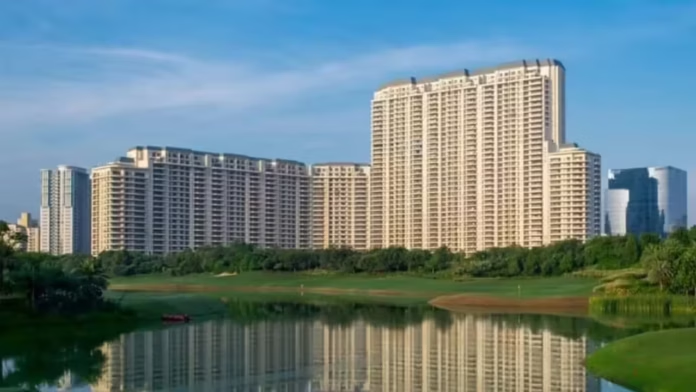
Delhi NCR has overtaken traditional housing hubs to record the fastest growth in home prices across all segments between 2022 and 2025, signalling a shift in India’s residential property dynamics. Analysis by industry experts reveals the region is now leading both luxury and mid-tier markets, underlining growing investor confidence and rising buyer demand for high-quality, well-connected homes.
Luxury properties in Delhi NCR have seen an extraordinary 72 per cent increase in rates, climbing from approximately ₹13,450 per sq ft in 2022 to nearly ₹23,100 per sq ft in 2025. This outpaces Mumbai Metropolitan Region (MMR), where luxury prices rose 43 per cent, and Bengaluru, up 42 per cent. Industry insiders attribute this surge to strong interest from high net-worth individuals and the proliferation of branded premium developments catering to aspirational buyers.Mid and premium homes priced between ₹40 lakh and ₹1.5 crore have also maintained strong momentum. Delhi NCR witnessed a 54 per cent price increase in this segment, compared with 62 per cent in Bengaluru and 49 per cent in Hyderabad. Analysts point to evolving lifestyle preferences post-pandemic, with buyers prioritising larger layouts, integrated amenities, and sustainable living spaces. Developers, recognising higher margins and consistent demand, continue to focus on these categories over lower-cost units.
Affordable housing below ₹40 lakh remains the slowest-growing segment nationwide, with average increases of 26 per cent across top cities. Yet Delhi NCR bucks this trend with a 48 per cent jump in affordable rates, reflecting steady urban migration and localised supply constraints. While prices remain below Hyderabad in this segment, the upward trend highlights the city-region’s broader housing resilience.
Experts suggest Delhi NCR’s dominance stems from a combination of factors: enhanced infrastructure connectivity, robust investor interest, and a steady pipeline of premium residential launches. Rising disposable incomes, growing urban aspirations, and the desire for sustainable, well-planned living environments are driving sustained demand. A senior urban planner notes, “The focus on integrated, amenity-rich communities is reshaping residential choices and aligning with inclusive urban growth objectives.”As the gap between luxury and affordable housing widens, urban planners and policymakers face the challenge of balancing high-end development with equitable access to housing. Sustainable strategies, including mixed-income neighbourhoods and green building practices, could mitigate disparities while supporting Delhi NCR’s continuing role as India’s fastest-growing property market.
Delhi Ncr Luxury Mid Affordable Home Prices Soar Record Growth Across Segments
Mumbai Roshan Family Buys Seven Office Units Worth Twenty Seven Crore

The Roshan family has made a significant entry into Mumbai’s commercial real estate market, acquiring seven office units in the city’s Andheri district for a combined value of Rs 27 crore. According to property registration data reviewed by industry experts, actor-director Rakesh Roshan, his wife Parmila Roshan, popularly known as Pinkie Roshan, and their daughter Sunaina Roshan, completed the transactions on November 19, highlighting Mumbai’s continued appeal to high-net-worth investors.
Rakesh Roshan purchased two office units in the Vaidya West World One Aeropolis building, valued at Rs 3.27 crore and Rs 2.83 crore, covering carpet areas of 1,259 sq ft and 1,089 sq ft respectively. Each unit comes with two dedicated car parking spaces, with stamp duties amounting to Rs 19.64 lakh and Rs 16.98 lakh. Meanwhile, Pinkie Roshan acquired three additional units in the same building, collectively valued at over Rs 13.5 crore, with individual sizes ranging between 1,322 sq ft and 2,033 sq ft. Each unit was registered with standard fees and stamp duties exceeding Rs 20 lakh per property.
Expanding the family’s real estate footprint, Sunaina Roshan invested Rs 6.42 crore in two office units located on the eighth floor of the same building. Together, these units cover a total carpet area of 2,471 sq ft, further reinforcing the family’s preference for well-connected commercial addresses in Mumbai’s prominent business districts.Analysts suggest these acquisitions signal both a diversification strategy and a growing confidence in Mumbai’s commercial property sector. “High-profile investors often catalyse market activity, and celebrity-backed acquisitions can encourage broader interest from institutional buyers,” noted an industry expert. The Andheri region, with its mix of office complexes and proximity to transport hubs, remains a hotspot for commercial property appreciation.
From an urban development perspective, such concentrated investments underscore the increasing demand for high-quality, strategically located commercial spaces. Experts point out that efficient utilisation of office infrastructure, sustainable construction practices, and mixed-use development approaches can support equitable growth while meeting market demand.The Roshan family’s purchases highlight a trend where high-net-worth individuals are contributing to the commercial real estate ecosystem while driving economic activity in established business corridors. With Mumbai continuing to balance dense urbanisation and sustainable development imperatives, such investments can have ripple effects on city planning, infrastructure improvement, and the commercial real estate landscape.
Mumbai Roshan Family Buys Seven Office Units Worth Twenty Seven Crore
Mumbai Airport Corridor Developments Trigger Major Real Estate Surge Across Key Growth Zones
