
Mumbai Ends Slum Dwellers Consent For Cluster Redevelopment Projects Including Central Land

Mumbai High Court Condones Five Month Delay In Filing Loss Return

The Bombay High Court has set aside a Central Board of Direct Taxes (CBDT) order that refused to condone a five-month delay in filing a loss return, offering significant relief to a city-based real estate firm. The judgment is expected to influence how similar cases involving technical delays are assessed, particularly where taxpayers risk losing the right to carry forward genuine business losses.
The case involved a development partnership that submitted its return for Assessment Year 2018–19 almost five months after the statutory deadline. As the return reported a loss, timely filing was essential for the firm to claim carry-forward benefits, a key financial tool for businesses operating in long-gestation sectors such as real estate and urban development. According to an official, the delay stemmed from professional uncertainty relating to the taxation of Transferable Development Rights (TDR) compensation, a complex area that continues to evolve as cities adopt new models of land and infrastructure planning.
In its application to the CBDT seeking condonation, the firm submitted an affidavit from its consultant, legal opinions, and case law supporting the contention that the delay was an honest consequence of ambiguous tax interpretation. But the Board rejected the request, stating that the firm had not shown sufficient diligence and that the circumstances did not amount to “genuine hardship” under Section 119(2)(b) of the Income Tax Act.The High Court took a different view. It held that uncertainty around TDR taxation an issue frequently encountered in high-density cities like Mumbai where redevelopment and land pooling are common constituted a reasonable cause for delay. The Court noted that the taxpayer had a consistent history of timely compliance, and preventing it from carrying forward legitimate losses would amount to disproportionate hardship. Industry experts say the ruling underscores the need for administrative flexibility, especially when businesses navigate complex urban regulatory frameworks.
The Court also dismissed concerns that condoning the delay might allow unverified claims to slip through. It pointed to statutory safeguards in Section 153(1B), which allows the Assessing Officer additional time 12 months from the end of the financial year in which the delayed return is accepted to complete scrutiny. This ensures that revenue interests remain fully protected while preventing procedural lapses from undermining economic activity.Legal analysts believe the judgment has wider relevance for firms involved in redevelopment, infrastructure-linked land acquisition and environmentally sensitive projects, where taxation issues often intersect with evolving urban policy.
As Indian cities push for more equitable and climate-aligned redevelopment models, transparent and predictable tax administration becomes crucial for enabling long-term investments.With the delay now condoned, the return filed in March 2019 will be treated as a valid return, and the Assessing Officer has been directed to complete the assessment according to law. The Court has kept all rights and contentions open, signalling that the matter may still evolve as broader policy discussions continue.
Mumbai High Court Condones Five Month Delay In Filing Loss Return
Mumbai Developer Targets ₹40,000 Crore FY26 Launches After Strong First Half
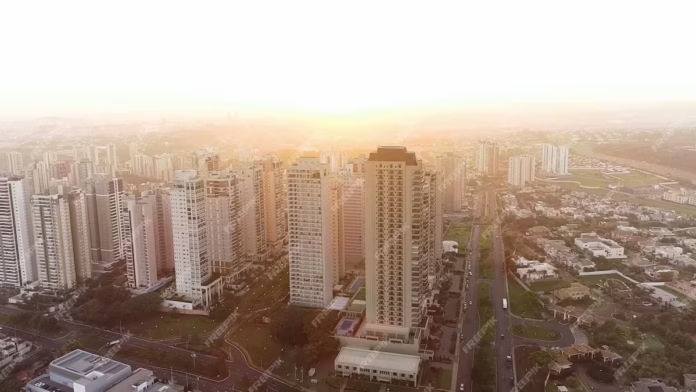
India’s housing sector is set for another year of significant supply expansion as Godrej Properties prepares to scale up its project launches in FY26. The real estate firm expects to roll out developments worth nearly ₹40,000 crore over the year, with the second half alone contributing around ₹22,000 crore. The company believes this aggressive launch strategy will help it capture rising demand in urban markets where homebuyers increasingly prioritise integrated, sustainable and accessible neighbourhoods.
The developer’s momentum builds on strong performance in the previous financial year, during which it achieved over ₹29,000 crore in sales, largely driven by residential projects across key metro regions. A senior company official noted that early traction in FY26 indicates “healthy buyer confidence and continued interest in well-planned communities that offer long-term value as cities grow more dense and mobility patterns shift.”During the first half of FY26, the company launched projects worth ₹18,600 crore and recorded sales bookings of ₹15,600 crore. This accounts for roughly half of its annual guidance, signalling steady progress despite a challenging construction environment marked by rising input costs and evolving regulatory expectations. Industry observers point out that developers with well-capitalised balance sheets and clear planning pipelines are better positioned to introduce housing that aligns with newer urban design priorities, including equitable land use, improved walkability and low-carbon construction practices.
Pre-sales rose 13 per cent year-on-year in the first six months of the fiscal, reaching ₹15,587 crore. Market analysts attribute this growth to the company’s focus on mid- to premium-segment homes and projects located in emerging suburban clusters with access to public transport and social infrastructure. These micro-markets have seen sustained interest from middle-income families seeking improved quality of life, greater open space and energy-efficient housing options.The company’s quarterly financials further reinforced its growth trajectory. Consolidated net profit climbed 21 per cent in Q2 FY26 to nearly ₹403 crore, supported by higher income of around ₹1,950 crore. A senior real estate economist observed that such performance “reflects both operational discipline and a structural shift in urban housing demand towards large-scale, master-planned communities.”
As Indian cities expand, the pressure to balance housing supply with sustainability and inclusiveness continues to intensify. Developers with long-term pipelines are increasingly expected to integrate climate-conscious design, green infrastructure and equitable access into large residential projects. Godrej Properties’ expanded launch calendar therefore comes at a decisive moment, when urban planning frameworks aim to reconcile growth with environmental resilience.The firm maintains that it is well positioned to meet or exceed its full-year targets. If its launch strategy unfolds as anticipated, the upcoming fiscal cycle could significantly influence the scale, distribution and sustainability of new housing across major city regions.
Mumbai Developer Targets ₹40,000 Crore FY26 Launches After Strong First Half
Mumbai Developer Plans ₹22,000 Crore Housing Launches In H2 FY26 Amid Growth

Godrej Properties is preparing for one of its most ambitious expansion cycles yet, with plans to introduce housing projects worth nearly ₹22,000 crore in the second half of FY26. The developer, which has been steadily consolidating its presence across major urban markets, views the upcoming pipeline as a key step in meeting its annual launch target of ₹40,000 crore amid a buoyant demand environment in India’s metropolitan regions.
The company’s confidence is underpinned by its performance in the first half of the fiscal year, during which it rolled out launches valued at ₹18,600 crore. According to a senior company official, the developer’s steady pre-sales growth signals “robust customer appetite, especially in well-connected, future-ready neighbourhoods.” Pre-sales stood at ₹15,587 crore in H1 FY26, reflecting a year-on-year improvement of 13 per cent and indicating consistent interest in mid- to premium-segment homes.
Industry analysts suggest that the firm’s strong balance sheet and steady launch cadence reflect broader shifts in India’s urban housing patterns. Demand has increasingly gravitated towards integrated, environmentally conscious communities that prioritise open spaces, improved mobility access and energy efficiency. With cities struggling to balance rapid residential growth and sustainability goals, developers with structured long-term pipelines are well positioned to influence more inclusive forms of urban expansion.The second quarter proved particularly encouraging for the company. It reported a net profit of ₹405 crore, up 21 per cent from the same period last year, marking its highest-ever results for both Q2 and H1. Booking values also surged, rising 64 per cent year-on-year to ₹8,505 crore in Q2 alone. Four new project additions with an estimated potential of nearly ₹5,000 crore strengthened the developer’s growth visibility for the remainder of the fiscal year.
Despite broader economic headwinds and rising construction costs, the company managed to record a 2 per cent increase in collections during the quarter, totalling ₹4,066 crore. A senior urban economist noted that “consistent collection growth is a crucial indicator of operational resilience, especially when cities are under pressure to transition towards environmentally responsible construction practices.” Looking ahead, the company has reaffirmed its full-year guidance of ₹21,000 crore in collections and is targeting a 20 per cent return on equity by FY28. If the planned launches materialise on schedule, the developer is likely to emerge as one of the few large players shaping the next cycle of urban housing supplyparticularly in high-density markets where sustainable, equitable development remains a core civic priority.
For cities confronting the dual challenge of affordability and carbon reduction, large-scale, responsibly planned residential projects offer opportunities to integrate greener infrastructure, improve last-mile connectivity and encourage more equitable land use. The coming fiscal period will therefore not only test market sentiment but also determine how effectively private developers can support India’s transition towards more climate-resilient and inclusive urban growth.
Mumbai Developer Plans ₹22,000 Crore Housing Launches In H2 FY26 Amid Growth
India Q3 Sentiment Index Shows Rising Realty Confidence Amid Stable Economic Fundamentals
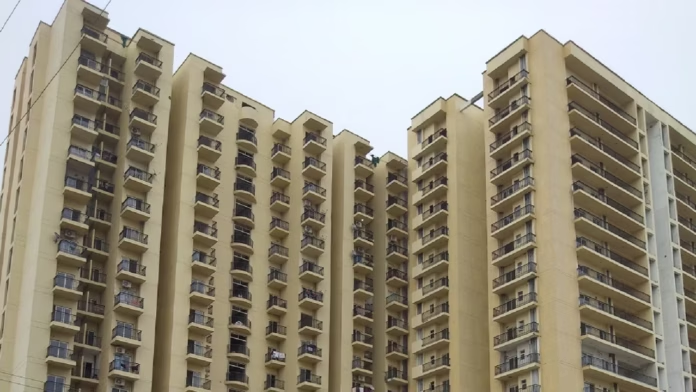
India’s real estate sector recorded a steady rise in confidence through the July–September quarter of 2025, supported by stable economic indicators and firm demand across residential and office markets. The latest sentiment index compiled by two leading industry bodies shows that both current and future outlooks remain firmly optimistic, signalling continued resilience as the country moves towards 2026.
The index’s Current Sentiment Score climbed to its highest reading of the year, reflecting an improvement in market mood across developers, financial institutions, and investors. Industry observers attribute this uplift to steady interest rates, easing inflation, and robust domestic consumption conditions that have helped maintain liquidity and temper uncertainty at a time when global markets are slowing.Confidence in the residential sector has strengthened notably. A majority of respondents expect new project launches to remain stable or rise, with developers increasingly shifting towards premium and high-ticket homes. This shift is partly a response to rising land and construction costs but also reflects changing preferences among urban homebuyers seeking larger and energy-efficient housing. Over seven in ten stakeholders anticipate stable or improving sales over the coming months, supported by rate cuts and incentive-led schemes that continue to draw end-user interest.
The office market, meanwhile, remains anchored by structural demand. Strong leasing pipelines from global capability centres, technology firms, and flex-space operators continue to support absorption despite limited availability of Grade A supply in several key metros. Nearly all respondents expect office rents to hold or rise, a signal of the segment’s depth even as hybrid work models evolve. Southern markets, particularly Bengaluru and Hyderabad, continue to lead sentiment, buoyed by sustained occupier traction and policy support for innovation-led development.
However, the index also reflects cautiousness among developers, whose sentiment eased slightly during the quarter. Rising input costs and moderated activity in mid- and lower-income housing have prompted a more measured stance. In contrast, non-developer stakeholders including banks and private equity funds remain upbeat, citing healthy asset quality, ample liquidity, and an expanding pool of institutional-grade projects. Regionally, sentiment stayed largely stable. The South remained the most optimistic, followed by modest gains in the North driven by steady commercial activity. The West and East posted marginal dips but remained comfortably within the positive range.
Experts note that the broader outlook continues to align with India’s long-term urban trajectory, where sustainable growth, policy continuity, and inclusive development remain central themes. As cities prepare for another year of expansion, the emphasis on climate-resilient buildings, efficient infrastructure, and equitable housing will shape how this optimism translates into on-ground progress. With economic fundamentals holding firm, the sector enters the final quarter of 2025 on stable footing, supported by demand that is increasingly quality-driven and future-oriented.
India Q3 Sentiment Index Shows Rising Realty Confidence Amid Stable Economic Fundamentals
Pune Developer To Invest Rs 1100 Crore In Wellness Housing Project Launch

Pune is set to witness a fresh wave of residential development as a leading real estate firm announced plans to invest ₹1,100 crore in a new wellness-focused housing community. The project, spread across 8 acres, marks a strategic expansion of wellness-led living in one of India’s most active property markets. Industry experts say this model, which integrates health, communal well-being and environmental design, reflects a maturing consumer preference for homes that enable healthier urban lifestyles.
According to a senior executive from the firm, the upcoming development will be built in two phases and ultimately house around 1,000 apartments. The first phase is expected to bring about 500 units to market, with prices beginning at approximately ₹1.25 crore. The company has already completed payment for the land parcel and intends to finance construction largely through internal accruals, signalling confidence in both demand and financial sustainability.
Wellness-centric housing once considered a niche proposition has gained traction in cities where rising urban stress, limited access to open spaces and post-pandemic behavioural shifts have redefined expectations of home environments. In Pune, where young professionals, knowledge-sector workers and nuclear families drive much of the demand, developers are increasingly exploring formats that offer not just amenities but curated, health-oriented ecosystems.
The company’s leadership said the new project will include structured wellness programmes delivered in partnership with fitness and health specialists. Planned offerings include yoga and pilates sessions, aqua aerobics, nutrition guidance, and personalised fitness coaching. Community-based wellness initiatives are also expected to form a core part of the living experience, emphasising social cohesion alongside health outcomes.
An industry observer noted that such developments sit at the intersection of real estate innovation and urban well-being. “Cities need housing models that encourage healthier living without deepening inequalities. Integrating wellness, green design and community spaces is one way to make everyday urban life more balanced,” the expert said.The developer, which currently operates in Pune, Goa and Bengaluru, indicated that this project is only the beginning. Six additional wellness-based residential projects are under consideration for launch in the coming years. At present, the company has five projects under construction, four of which belong to the residential segment.
While construction costs for wellness-centric homes tend to be marginally higher due to specialised spaces and programming, analysts argue that long-term returns both for developers and residents are stronger. Rent and resale value in wellness-led communities have shown resilience even during market fluctuations, particularly when backed by sustainable design standards and inclusive planning.For Pune, the introduction of this project aligns with a broader city-level push towards healthier and more liveable neighbourhoods. As Indian cities grapple with density, climate risks and quality-of-life pressures, developments that blend sustainability with citizen well-being are increasingly seen as essential building blocks for future-ready urban growth.
Pune Developer To Invest Rs 1100 Crore In Wellness Housing Project Launch
Mumbai Slums Encroach Dangerously Near Airport Wall, Flights Land Just Feet Above

A recent viral video has spotlighted growing concerns over slum settlements dangerously close to Mumbai’s Chhatrapati Shivaji Maharaj International Airport (CSMIA), highlighting potential risks to flight operations and urban safety planning. The 19-second clip shows an Air India aircraft on final approach, passing just above rooftops in a densely packed settlement near the airport perimeter. The footage has prompted urgent debates on encroachment, aviation safety, and urban governance.
The video captures a neighbourhood where makeshift structures extend perilously close to the airport’s boundary wall. Several tall flags tied to the slum walls further increase the risk of obstruction for descending aircraft. Aviation experts warn that any protruding object in an approach path—even minor—can compromise safe landings, particularly at high-traffic airports such as CSMIA, which handles millions of passengers annually. An urban safety analyst noted, “Encroachments in sensitive aviation zones reflect gaps in integrated city planning. The coexistence of high-density informal settlements and critical transport infrastructure creates persistent hazards.” Residents and social media users have echoed these concerns, questioning how settlements of this scale were allowed in proximity to a major international airport.
Historically, Mumbai’s rapid urbanisation has led to informal housing developments near key transport infrastructure. While these settlements provide necessary shelter for low-income populations, they also present challenges for regulatory enforcement and risk management. Urban planners highlight the importance of balancing housing inclusion with safety protocols, suggesting relocation, vertical housing solutions, or structured zoning as potential interventions to minimise hazards. Officials from the Airports Authority of India and municipal agencies have yet to provide a formal response, though calls for immediate assessment are mounting. Authorities are urged to verify height compliance, enforce aviation safety regulations, and collaborate with urban planning bodies to mitigate risks without exacerbating housing insecurity.
From a sustainable city perspective, the situation underscores the need for integrated planning that accounts for transport, residential, and safety priorities. Ensuring secure airport approaches while maintaining equitable housing solutions is crucial for a resilient, inclusive, and zero-carbon urban future. As Mumbai continues to expand, proactive management of such encroachments could prevent accidents, enhance air safety, and reinforce civic trust in urban governance.
Mumbai Slums Encroach Dangerously Near Airport Wall, Flights Land Just Feet Above
Srikakulam To Get Rs 2500 Crore Ai Aquaculture Technology Park Development

Srikakulam is set to become the site of India’s first artificial intelligence-enabled aquaculture technology park, following a new agreement between the Andhra Pradesh government and a Kerala-based infrastructure and seafood company. Valued at ₹2,500 crore, the project is expected to strengthen the state’s position as the country’s leading aquaculture producer while advancing more sustainable and technology-driven food systems.
The 500-acre facility, planned near coastal Srikakulam, will integrate hatcheries, indoor farming systems, bio-active research units and processing lines into a single digitally managed ecosystem. Officials familiar with the project said the platform would run on the company’s proprietary AI system, allowing real-time monitoring of water quality, feed efficiency, and environmental impact an approach increasingly seen as essential to building climate-resilient food production models.
As part of the development structure, the core promoter will invest around ₹500 crore in the central infrastructure and research facilities. An additional ₹2,000 crore is expected from allied industries including renewable energy providers, cold-chain operators, small processing units and local micro-enterprises. State representatives noted that the project was approved through a fast-tracked process during a recent investment summit in Visakhapatnam, with assurances of single-window clearances for land and statutory permissions.
A state official said the project aligns with Andhra Pradesh’s goal of developing environmentally responsible aquaculture clusters that can generate year-round incomes, reduce post-harvest losses and improve water stewardship. The facility plans to support multi-species production including shrimp, seabass, grouper and tilapia species preferred by both domestic and export markets. Training programmes for 5,000 aquaculture professionals over five years are also planned, with the intent to upskill local communities and strengthen employment in coastal districts. Industry analysts believe the technology park could become a model for sustainable aquaculture in India, especially at a time when the sector faces increasing pressure to address carbon intensity, water use and habitat degradation. By incorporating AI-supported monitoring systems and renewable power sources, the project aims to demonstrate that large-scale seafood production can be aligned with circular economy principles and inclusive development.
Financially, the company behind the project has reported improved performance in the ongoing fiscal year. Its aquaculture division has driven a year-on-year rise in consolidated profit and revenue, supported by strong orders from Europe and Asia. Analysts say this growth has strengthened investor confidence in the firm’s push towards high-tech, export-oriented food systems.As India’s coastal states prepare for the long-term effects of climate change, initiatives such as the Srikakulam aquaculture technology park illustrate the growing need for innovation-led models that balance economic expansion with ecological responsibility. If successful, the project could help modernise the sector, expand market access for local producers, and advance India’s broader blue economy vision.
Srikakulam To Get Rs 2500 Crore Ai Aquaculture Technology Park Development
India Real Estate Sector Posts Strong Q3 Growth Driven By Office Leasing

India’s real estate sector registered a strong rebound in the July–September 2025 quarter, supported by renewed corporate leasing, steady residential absorption, and sustained capital flows into premium projects. The latest sentiment report released jointly by an industry body and a global property consultancy shows confidence levels strengthening across most segments, signalling continued resilience in the broader urban economy.
The study notes a rise in the current sentiment index from 56 in the previous quarter to 59 reflecting improved confidence among developers, lenders and investors. Future sentiment held firm at 61, suggesting that stakeholders expect the positive trend to continue into early 2026. According to analysts, this optimism is shaped by macroeconomic stability, easing liquidity pressures and a measured inflation trajectory, which together have supported both consumer and institutional decision-making. The office market remained the standout performer this quarter. Industry experts observed that stable occupancies and disciplined supply have helped maintain healthy leasing conditions, particularly in cities with large technology and services clusters. A senior consultant said that nearly four in five industry participants expect economic activity to stay steady or improve, reinforcing corporate real estate demand in the medium term. The report adds that most stakeholders believe new office stock will remain moderate, helping avoid the risks of overbuilding.
Financial conditions also appear supportive. Respondents noted improved access to credit for well-governed developers, especially those operating in Grade-A commercial and high-value residential categories. An official from a financial institution said that accommodative monetary policy and rising institutional interest in income-generating assets have created a more predictable funding climate. Notably, 95 percent of respondents expect office rentals to remain stable or rise, helped by limited supply of prime spaces and consistent occupier interest.The southern region outperformed other zones in the sentiment index, posting a score of 62. Bengaluru and Hyderabad continued to attract a mix of domestic and global firms, driving absorption in both office and premium residential categories. The north zone recorded a stable score of 56, supported by sustained leasing in the National Capital Region, while the east zone reported a score of 59, largely owing to balanced supply pipelines.
Urban planners note that the sector’s momentum could support more sustainable and inclusive city-making if leveraged wisely. They stress the need for public transport connectivity, green building norms and equitable housing frameworks to remain central as cities expand. With demand rising for high-quality, energy-efficient commercial spaces and well-serviced neighbourhoods, the current cycle may help accelerate India’s transition towards climate-conscious urban development.
India Real Estate Sector Posts Strong Q3 Growth Driven By Office LeasingIndia Real Estate Sector Posts Strong Q3 Growth Driven By Office Leasing
Mumbai Draft Eco Plan Sparks Fears Of Development Threatening City’s Last Green Lung
