

India Steel Sector Ramps Up for 300 MT Capacity by 2030

India is strategically advancing towards an ambitious target of 300 million tonnes (MT) in steel production capacity and 160 kg per capita consumption by 2030, as per official data.
With production-linked incentive (PLI) schemes for specialty steel drawing strong investment interest, the country’s steel sector is witnessing a transformative moment. The Ministry of Steel has confirmed that the second round of the PLI scheme has garnered commitments exceeding ₹17,000 crore, reflecting investor confidence in India’s potential to become a global hub for specialty steel. This scheme is designed not only to encourage domestic production but also to boost the industry’s resilience and global competitiveness amid shifting international supply chains.
In alignment with these developments, ‘India Steel 2025’, a major international conference and exhibition, is set to be held next week in Mumbai. The event aims to unlock collaborative opportunities across state and national borders, while also serving as a platform to exhibit India’s policy reforms and infrastructure progress. These efforts aim to improve the ease of doing business across the entire steel value chain—from mining to manufacturing and export logistics. Senior government representatives and global industry leaders are expected to participate, highlighting the strategic significance of the conference. The Prime Minister is scheduled to address the event via video conference, underscoring its national priority. High-level international delegations, including foreign diplomats and ministers from steel-producing nations, will be in attendance, signalling India’s growing engagement in global steel diplomacy.
With over 12,000 visitors, 1,200 delegates, and 250 exhibitors expected, the conference is poised to be among the most prominent global gatherings for the steel sector. It will feature several country-specific sessions led by key players such as South Korea, Sweden, Australia, and Mongolia. These sessions are expected to delve into joint research initiatives, technological collaboration, and the development of resilient supply chains, in an effort to reduce India’s dependency on volatile international steel markets. Another significant component of the event is the Reverse Buyer-Seller Meet, aimed at facilitating direct business engagements and strengthening India’s trade linkages. Officials from the Ministry of Steel emphasised that this approach would help create a dynamic ecosystem that encourages innovation and self-reliance while positioning Indian firms to capture higher value in global markets.
Experts indicate that the Indian steel sector is at a crucial inflection point. While India remains the world’s second-largest steel producer, its per capita consumption still lags behind developed nations. To bridge this gap, public and private stakeholders must invest in modernisation, energy efficiency, and environmentally sustainable technologies. The role of steel in enabling sustainable infrastructure cannot be overstated, especially in a country with massive urbanisation and industrialisation goals. Officials noted that the government’s push for green steel, driven by the National Green Hydrogen Mission and carbon neutrality goals, is beginning to influence policy and investment directions. Future-ready steel production must align with low-emission technologies and circular economy principles to ensure India’s growth is climate-resilient.
India’s rising steel demand is closely linked to sectors such as construction, automotive, renewable energy, and railways. In particular, the thrust on infrastructure development under the National Infrastructure Pipeline, coupled with private sector growth in solar, wind, and electric vehicle manufacturing, is expected to drive long-term demand. The government’s focus on affordable housing and the Make in India initiative further amplifies the steel industry’s relevance in building equitable and inclusive cities. While growth opportunities abound, challenges remain. Land acquisition delays, logistics inefficiencies, and volatile raw material prices continue to impact margins. Additionally, industry leaders have called for reforms in mining policy, faster environmental clearances, and improved port connectivity to ease bottlenecks and reduce operational risks.
Nonetheless, the outlook remains optimistic. India’s steel production capacity expansion is not just about volume—it is about building a robust and sustainable ecosystem. With the right policy support, public-private coordination, and international collaboration, India is poised to transform its steel industry into a pillar of economic strength, social equity, and environmental responsibility. As ‘India Steel 2025’ convenes global stakeholders in Mumbai, the event will serve as both a showcase and a springboard for India’s aspirations to lead the next era of steel innovation. Whether through green metallurgy, inclusive industrial growth, or international partnerships, India’s steel story is being reshaped to reflect its larger development vision.
India Steel Sector Ramps Up for 300 MT Capacity by 2030
Navi Mumbai Airport Nears June Launch Milestone

Navi Mumbai International Airport is rapidly shaping up as India’s next major aviation hub.
The City and Industrial Development Corporation (CIDCO), the project’s nodal agency, convened a high-level meeting this weekend to assess operational preparedness and ensure timely delivery of core infrastructure before the June inauguration deadline. The airport, which has been under development as a sustainable counterweight to the saturated Mumbai Chhatrapati Shivaji Maharaj International Airport, is now in the final leg of its construction phase. The initial phase will handle 20 million passengers annually, with a vision of scaling up to 90 million in subsequent phases. This massive capacity reflects both the scale of urban expansion in the Mumbai Metropolitan Region and the urgent need for decentralised, environmentally responsible transport infrastructure. Saturday’s review meeting, chaired by CIDCO Vice Chairman and Managing Director Vijay Singh, brought together key stakeholders, including Jeet Adani and senior officials of Adani Airport Holdings Ltd, the concessionaire developing the airport. The deliberations focused on seamless coordination across airside and terminal operations, as well as integration with regional transport networks to facilitate smooth passenger and cargo flows.
Regulatory oversight has also intensified. The Directorate General of Civil Aviation (DGCA) has already issued the Airport Information Publication (AIP), an essential document required to map the facility into global aviation databases. Meanwhile, inspections are underway for the aerodrome licence, a mandatory green light before commercial flights commence. Complementing the DGCA process, the Bureau of Civil Aviation Security (BCAS) is advancing its own security audits to ensure the facility complies with national and international safety norms. Sources within CIDCO confirmed that airside infrastructure—comprising runways, taxiways, aprons, and navigational aids—is fully complete, paving the way for final testing protocols. To ensure the airport’s systems are fully synchronised before public operations begin, the Operational Readiness and Airport Transfer (ORAT) process is being actively conducted. These trials test the integration of personnel, logistics, IT systems, and emergency response across stakeholders—including customs, immigration, airlines, and ground staff.
The Adani Group reaffirmed its commitment to delivering an environmentally-conscious, digitally-advanced airport. Design aspects include the use of solar energy, rainwater harvesting, energy-efficient terminals, and green-certified construction materials. With CIDCO and the Maharashtra government actively pushing for multimodal connectivity—linking the airport to metro rail, highways, and inland waterways—this project is poised to redefine sustainable mobility in western India. The aviation sector is watching closely, as leading domestic and international carriers have begun requesting slot allocations, indicating strong interest in tapping into Navi Mumbai’s strategic advantages. The airport’s proximity to industrial clusters in Navi Mumbai, Panvel, and Pune positions it as a future logistics hub, particularly for time-sensitive cargo.
As India expands its global aviation footprint, Navi Mumbai International Airport symbolises more than capacity expansion. It reflects a deeper push toward decentralised development, smart infrastructure, and equitable urban access. While the June inauguration hinges on regulatory clearances and the smooth culmination of ORAT exercises, optimism remains high that the airport will open as scheduled—ushering in a new era for India’s infrastructure narrative.
Navi Mumbai Airport Nears June Launch Milestone
Karnataka approves Tata Realty’s Rs 3,273-crore business park in Bengaluru
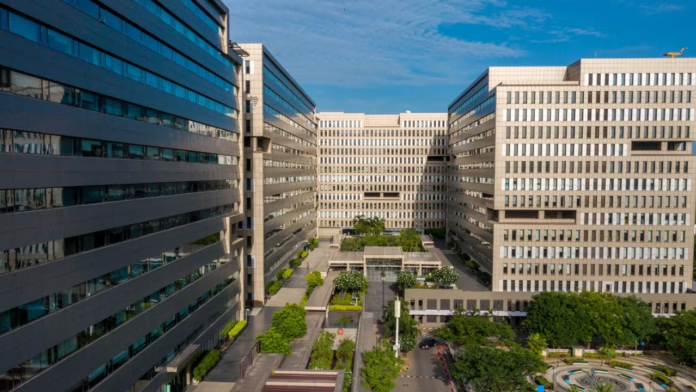
The Karnataka government has approved Tata Realty and Infrastructure Limited’s (TRIL) ambitious plan to develop a cutting-edge IT and ITeS business park in Bengaluru. The Rs 3,273-crore project, set to be built on a sprawling 25.5-acre site in Whitefield, is expected to create approximately 5,500 new job opportunities.
The approval, announced in a government notification on April 17, marks a significant milestone for both TRIL and the city’s rapidly expanding tech ecosystem. Tata’s business park, dubbed Tata Intellion Park, is set to become a key hub for IT and allied services in one of Bengaluru’s most sought-after business districts. The park will house a variety of infrastructure tailored to meet the growing demand for advanced office spaces, and will also include amenities such as retail outlets and food courts, ensuring a modern, self-sustaining environment for businesses and employees alike.
The development comes on the heels of TRIL’s acquisition of the land in August 2023 from Graphite India Ltd. for an estimated Rs 986 crore. Strategically located in Doddanekundi Industrial Area, Whitefield, the site offers excellent connectivity to other major tech parks and industrial zones across the city. Whitefield, an area already recognised for its growing number of tech companies and commercial spaces, will now see another significant investment aimed at further boosting its status as a business hotspot.
With the city’s infrastructure continuing to evolve, the Tata Intellion Park is expected to contribute to Bengaluru’s reputation as India’s leading tech and innovation hub. This move is also expected to generate a significant economic impact on the local economy, not only through job creation but also by providing new avenues for retail and hospitality services in the area. In turn, this is likely to attract more investments to the city, further fuelling the growth of its IT sector.
At the same time, the project is a reflection of Karnataka’s continued commitment to strengthening its infrastructure to support the growth of the tech industry. By backing large-scale projects like this, the state government aims to create sustainable, technology-driven business environments that can accommodate the rapidly changing demands of the global economy.
The approval of Tata Intellion Park also highlights the growing role of private sector giants in shaping the future of urban infrastructure in India. With the government and private companies working together, there is an increasing emphasis on the importance of developing eco-friendly, sustainable, and gender-neutral spaces that cater to the evolving needs of the workforce and businesses.
Given the significance of this development, it is clear that the Tata Intellion Park will serve as a catalyst for Bengaluru’s continued growth as a technology and innovation leader. As the project progresses, it will be watched closely by industry experts and local authorities, with a focus on how it contributes to Bengaluru’s broader vision of becoming a smart, sustainable city.
Karnataka approves Tata Realty’s Rs 3,273-crore business park in Bengaluru
Ghatkopar illegal construction prompts court demolition order make it simple

The Bombay High Court has taken a firm stance against the Brihanmumbai Municipal Corporation (BMC) and the Maharashtra Housing and Area Development Authority (MHADA) over their failure to curb illegal construction activities on a plot in Ghatkopar. The plot, which was originally designated for a playground, saw the unlawful construction of a community hall, which has now resulted in a legal confrontation with the civic authorities. The court has ordered the demolition of the structure and demanded accountability from the officials involved.
In 1994, a public trust, constructed a community hall on a plot in Ghatkopar that was meant for recreational use by the residents. Initially intended for small gatherings, such as naming ceremonies and engagements, the hall was later demolished in December 2023. However, the trust began new construction immediately after, promising the establishment of a Samaj Mandir (community hall) with financial support from a Member of Parliament. This raised serious concerns among residents and activists who questioned the legitimacy of the development.
A petition filed by Ghatkopar residents in March 2024 highlighted the concerns about the loss of a vital green space, which was meant to be a playground. The petition further accused MHADA and BMC of permitting the construction without considering its impact on the already congested area, where open spaces are scarce. The residents also noted that the illegal construction had led to blocked sewerage lines, causing wastewater to spill onto the streets, further disrupting daily life.
The petitioners’ concerns were compounded when they learned, through an RTI inquiry, that MHADA had already disbursed ₹41 lakh in public funds for the project. Despite numerous complaints and objections from residents, both BMC and MHADA had failed to take action against the trust. This prompted legal action, with the court stepping in to investigate the issue.
During hearings, BMC and MHADA sought to justify their actions. MHADA’s lawyer claimed that the project had been approved based on a recommendation from a former Member of Parliament. Meanwhile, the BMC’s representative argued that they had issued notices to the trust, instructing them to cease the illegal construction. However, the court was unconvinced by these defences, especially given the continued violations despite repeated notifications.
The High Court sharply criticised both authorities, accusing them of enabling the construction by their inaction. The division bench of Justices expressed frustration at BMC’s tendency to issue notices without taking further steps to prevent illegal constructions. The court stressed that MHADA, as a planning authority, had a legal responsibility to ensure that such construction was carried out according to the rules, which they had failed to do in this case.
In its ruling, the court emphasised the detrimental effect of illegal constructions on Mumbai’s planned development and the strain they place on the city’s already limited resources. It directed MHADA’s CEO to initiate a full inquiry into the matter and take appropriate action against those responsible for sanctioning the project and approving public funds for it. Additionally, BMC was ordered to demolish the illegal structure, sending a clear message about the need for stricter enforcement of urban planning laws.
The case highlights the broader issue of unchecked urban development in Mumbai, where illegal constructions continue to thrive due to lax enforcement and insufficient accountability from civic bodies. While the demolition order brings a degree of justice to the residents of Ghatkopar, it also raises important questions about the future of urban planning in one of India’s most densely populated cities.
Gurgaon real estate prices rise due to low supply

Gurgaon’s real estate market is defying expectations, continuing to surge even as analysts predicted a post-pandemic price correction. Experts point to the role of non-resident Indians (NRIs) in this uptick, noting their aggressive investments in the city’s premium property sector.
Combined with the city’s limited housing supply, particularly in high-end developments, these factors have created a demand-supply imbalance that is pushing prices higher. This surge is evident in the recent experiences of residents and buyers. Despite the promise of a relatively high budget, many prospective homeowners are finding it increasingly difficult to secure properties, even in Gurgaon’s suburbs. A recent Reddit post by a resident shared their frustration, revealing that a budget of Rs 1.8 crore fell short in acquiring a 3BHK in a sought-after society, highlighting just how out of reach homes have become in the city.
Data further corroborates the ongoing trend. Gurugram, as it is also known, has experienced the sharpest price appreciation among major Indian cities, with a compound annual growth rate (CAGR) of over 20% since the pandemic. This is a stark contrast to cities like Mumbai and Bengaluru, where the frequency of new project launches has remained relatively steady. Gurgaon, on the other hand, had witnessed a slow period of development between 2014 and 2021, with many developers halting projects due to market uncertainty. However, since then, the city has undergone a transformation, evolving into a prime luxury real estate market.
The shift from a mid-income to a luxury housing hub has been largely driven by high-net-worth individuals (HNWI) looking for exclusivity. Gurgaon’s upscale gated communities and modern infrastructure have become a haven for those disillusioned with the congestion and lack of high-end options in Delhi. This has drastically altered the local real estate landscape, as the scarcity of premium properties has led to a hike in prices. Developers are now playing catch-up, striving to meet the growing demand, but the number of available units remains constrained.
Interestingly, new launches in Gurgaon have seen a marked increase in 2024, with project values reaching a record Rs 88,000 crore—almost double the Rs 45,000 crore figure from 2023. However, developers are focusing primarily on high-ticket projects, with a clear emphasis on luxury homes rather than large volumes of affordable housing. This has further squeezed the available inventory, particularly in the mid-segment market. It is expected that while the prices for premium properties are unlikely to see a correction anytime soon, the mid-category market will likely see new projects, offering potential buyers more affordable options in the near future.
Despite these trends, experts advise caution for prospective buyers. With the entry of more mid-tier inventory, buyers should focus on value rather than succumbing to the fear of missing out. The city’s real estate dynamics suggest that prices will hold steady at least until 50% of the new inventory is constructed, making it essential for investors and homebuyers to carefully assess their options before making a purchase.
The unique combination of NRI demand, limited supply, and a shift toward luxury living continues to shape Gurgaon’s real estate market. While this presents opportunities for developers, it also calls for balanced urban growth that addresses the needs of a broader spectrum of buyers, including the middle-income demographic. As the market continues to evolve, how Gurgaon accommodates this growth will have significant implications for its long-term sustainability and inclusivity.
Also Read :
Gurgaon real estate prices rise due to low supply
Green Real Estate Fuels Low Carbon Future

India’s real estate sector is experiencing a significant paradigm shift, with sustainability emerging as a core tenet shaping the development and leasing of properties across major urban centres.
A recent comprehensive report jointly published by CREDAI (Confederation of Real Estate Developers’ Associations of India) and Colliers highlights the rapid proliferation of green-certified buildings, indicating a strong commitment towards environmentally responsible practices within the industry. The report reveals that an impressive 66% of Grade A office spaces in the top six Indian cities now hold green certifications, a figure projected to rise further as stakeholders increasingly prioritise ecological considerations. This transition is propelled by evolving tenant preferences for energy-efficient spaces, the tangible benefits of lower operational expenditures, and the growing imperative of regulatory adherence. The CREDAI-Colliers report, aptly titled “Sustainability in Real Estate: Towards a Greener Skyline,” underscores a profound acceleration in the adoption of green building standards across various asset classes. This surge reflects a confluence of factors, including heightened environmental awareness among developers and occupiers, increasing regulatory pressure to adopt sustainable practices, and a growing influx of climate-aligned investments seeking environmentally sound projects.
According to the findings, the total stock of green-certified Grade A office space in India’s six leading cities has reached approximately 503 million square feet as of 2024. Projections indicate that this green footprint is expected to expand to nearly 700 million square feet within the next two to three years, demonstrating the sector’s strong trajectory towards sustainability. Concurrently, an estimated 80-85% of upcoming office leasing activity is anticipated to be concentrated in green-certified buildings, highlighting a clear market preference for spaces that offer both environmental and economic advantages. Shekhar G Patel, President of CREDAI, emphasised the pivotal role of the real estate sector in India’s journey towards a sustainable and low-carbon future. He noted that with a significant proportion of new developments now embracing green certifications, sustainability has become an indispensable element of real estate strategy across all asset types. Patel asserted that the collective efforts of the industry today will define the urban landscape of tomorrow, where ecological responsibility and economic progress are mutually reinforcing.
The adoption of green building practices in India has witnessed a remarkable near-doubling over the past five years. Data from the Indian Green Building Council (IGBC) reveals that the total certified green building footprint in the country reached an impressive 13 billion square feet by 2024. This encompasses a diverse range of projects, including over 2 million certified residential units, 6,500 commercial ventures, and 750 industrial facilities, showcasing the widespread integration of sustainability principles across the built environment. The trend is particularly pronounced within the office sector, where green-certified buildings are not only achieving superior occupancy and rental rates but are rapidly becoming the industry benchmark. In 2024, these sustainable office spaces recorded average occupancy levels ranging between 80-90%, significantly higher than their non-certified counterparts, which averaged between 65-85%. Furthermore, green-certified office buildings commanded a notable rental premium, with Mumbai leading at up to 24%, followed by Chennai at 16%, and Hyderabad at 14%, indicating the tangible economic value of sustainable construction.
Badal Yagnik, Chief Executive Officer of Colliers India, highlighted the robust annual growth of 20% in leasing activity within green-certified buildings in 2024. He projected a continued upward trend, with the proportion of leasing in such buildings expected to rise from the current ~75% to approximately 80-85% in the coming years, underscoring the sustained shift towards sustainable real estate development within the country’s office market. Among India’s major cities, Bengaluru currently leads in terms of sheer volume of green-certified office stock, boasting 158.2 million square feet, representing 73% of its Grade A inventory. Delhi NCR follows with 93.8 million square feet, and Hyderabad with 86.7 million square feet. Interestingly, Hyderabad exhibits the highest penetration rate of green-certified buildings within its Grade A stock at 75%, indicating a deep integration of sustainability principles in its prime office spaces.
Beyond new constructions, the retrofitting of existing, older office infrastructure is emerging as a significant opportunity to further enhance sustainability within the sector. An estimated 355–385 million square feet of office space older than 10 years presents a potential upgrade market, representing an investment opportunity exceeding INR 425 billion. Additionally, newer buildings (less than 10 years old), encompassing 80–110 million square feet, could be upgraded with relatively lower capital expenditure, potentially unlocking value with significant returns over the asset’s lifespan. Vimal Nadar, Senior Director & Head of Research at Colliers India, pointed out that the adoption of green building practices is no longer confined to core real estate segments. It is rapidly expanding into diverse asset classes such as data centres, hospitality, healthcare, and retail. Notably, data centres, being highly energy-intensive, are increasingly being designed with renewable energy integration and enhanced power and water efficiencies to mitigate their environmental impact, aligning with India’s broader net-zero ambitions.
As India progresses on its path towards a net-zero future, the report advocates for stronger policy frameworks, streamlined environmental clearance processes, the provision of tax incentives for green projects, and the implementation of robust ESG (Environmental, Social, and Governance) compliance measures. The increasing proportion of green assets within Real Estate Investment Trusts (REITs) also signals a growing interest among investors in sustainable developments, further solidifying the trend. With a convergence of interests among developers, occupiers, and investors towards climate goals, and supportive policy frameworks gaining traction, India’s real estate sector is strategically positioned to make sustainability a mainstream and value-generating principle for the foreseeable future, contributing significantly to a greener and more resilient urban landscape.
Green Real Estate Fuels Low Carbon Future
Indospace leases Pune warehouse to manufacturer for Rs 46 lakh monthly rent

Indospace has finalised a major lease agreement with a global manufacturing firm, which will occupy 1.27 lakh square feet of space at its industrial park in Pune.
The lease, valued at ₹46.42 lakh per month, underlines the growing demand for high-grade logistics and storage infrastructure in one of the country’s most active industrial corridors. According to information sourced from property registration documents, the lease commenced on January 29 this year and is set for a five-year term. The deal, priced at ₹36.37 per square foot per month, also includes a six-month security deposit amounting to ₹2.78 crore. The rental agreement includes an annual escalation clause of 5%, ensuring a consistent appreciation of lease value over time. Indospace, backed by a strong institutional presence in the industrial real estate segment, has continued to expand its national footprint through similar long-term partnerships. This specific transaction reflects not only the company’s ability to attract global manufacturers but also Pune’s strategic relevance as a logistics and production hub.
Pune’s infrastructure and connectivity to Maharashtra’s major highways, combined with the city’s increasing industrial specialisation, have made it a preferred destination for warehousing investments. Experts believe that as companies adopt more integrated and digitally enabled supply chains, the demand for sustainable and technologically equipped warehousing facilities will continue to rise. Officials from Indospace did not comment on the development, but market insiders confirmed that the lessee, a multinational manufacturing firm with operations across Asia Pacific, is likely to utilise the facility for high-value storage and assembly operations. The agreement is seen as a signal of India’s strong performance in the Asia-Pacific logistics sector, where resilient demand is being driven by manufacturing diversification, government-backed infrastructure initiatives, and the rise of sustainable industrial development.
This lease follows a pattern of significant warehousing deals across the Pune-Mumbai belt. In January 2025, a logistics firm entered a five-year lease agreement for 4.75 lakh square feet in Khed, near Pune, for approximately ₹73 crore. Similarly, a solar technology manufacturer signed a ten-year lease for over seven lakh square feet in Khalapur near Mumbai with an estimated monthly rent exceeding ₹1.4 crore. In another notable deal, a large auto components firm signed a long-term lease for 77,800 square feet in Chakan, an industrial hub near Pune, valued at ₹40 crore over a decade. These transactions represent a clear trend: institutional-grade warehousing and logistics infrastructure is witnessing surging demand, with Pune emerging as a front-runner in India’s industrial transformation.
According to a Q1 2025 market study by a prominent real estate consultancy, India’s industrial and logistics absorption touched 16 million square feet during the quarter—an 18.5% increase from the same period last year. Tier-I cities contributed 79% of this, with Pune accounting for a robust 2.3 million square feet or 14% of total leasing. These numbers point to both a cyclical recovery and a structural shift in India’s warehousing landscape, where proximity to consumer markets, multimodal connectivity, and sustainable design are becoming non-negotiable features. In terms of environmental alignment, experts emphasise that the new generation of warehousing parks, including Indospace facilities, are increasingly adopting green building certifications, solar energy integration, and smart automation tools. These features are not just value additions but are emerging as key differentiators in a sector seeking to reduce carbon footprints while improving operational efficiency.
Given the rise in e-commerce, electric mobility, and manufacturing diversification through policies such as the PLI scheme, warehousing space has become essential for last-mile delivery networks, reverse logistics, and clean energy assembly units. As per industry observers, Pune’s position at the intersection of traditional manufacturing and emerging tech is making it uniquely equipped to host these evolving industrial requirements. Real estate analysts expect warehousing rentals in strategic locations like Pune to witness steady appreciation over the next 3-5 years, especially as demand outpaces supply in high-quality Grade A facilities. The 5% annual rent escalation embedded in most new lease agreements also reflects this bullish outlook from asset owners and developers.
As the Indian logistics ecosystem continues its post-pandemic restructuring, institutional players like Indospace are playing a critical role in shaping resilient, green, and technology-enabled industrial zones that can serve both domestic and global value chains. For Pune, which already enjoys strong connectivity, skilled manpower, and policy support, the future of sustainable industrial growth appears increasingly tangible. While the full economic impact of such high-value leases will play out over the long term, they offer immediate indicators of India’s growing stature as a manufacturing and logistics destination — not only regionally, but globally.
Indospace leases Pune warehouse to manufacturer for Rs 46 lakh monthly rent
MHADA to resolve housing complaints through Janata Darbar session in Bandra

The Maharashtra Housing and Area Development Authority (MHADA) will hold a Janata Darbar in Mumbai on April 22.
The public interaction session aims to directly address housing grievances from residents living in cessed buildings and transit camp tenements across the city and its suburbs — a demographic often at the receiving end of structural neglect and bureaucratic delays. Scheduled to take place between 12 pm and 2 pm at Bharat Ratna Gulzarilal Nanda Hall, located within MHADA’s Bandra (East) headquarters, the event is part of the state’s broader 100-day action plan under the current administration. Designed to fast-track grievance redressal through accessible governance, the initiative seeks to offer timely resolution to chronic issues that have historically plagued the city’s ageing housing stock and vulnerable communities.
According to senior officials from MHADA, the Janata Darbar initiative reflects a commitment to inclusive and equitable urban development by providing a direct channel for citizens to raise complaints. These include structural repairs, delays in redevelopment, displacement concerns from transit camps, lack of clarity on tenancy rights, and in some cases, basic service delivery in housing clusters where residents often fall through the administrative cracks. As a parallel to the Lokshahi Din — a state government platform for public grievance hearings — the Janata Darbar is decentralised, specific to MHADA’s jurisdiction, and focused squarely on housing challenges that affect thousands of Mumbaikars. Officials from the Mumbai Building Repairs and Reconstruction Board (MBRRB), which operates under MHADA, will preside over the hearing. The board is responsible for the upkeep and redevelopment of Mumbai’s old and dilapidated building stock, particularly those designated as cessed buildings — structures where a fixed amount of rent is collected and redirected for maintenance through the board.
Cessed buildings, primarily located in South and Central Mumbai, have for years remained a complex web of legal, engineering, and political challenges. Residents in these buildings often face a dual burden — uncertainty regarding redevelopment timelines and deteriorating living conditions. Meanwhile, families relocated to transit camps continue to live in temporary accommodation for extended periods, sometimes lasting years. These issues have sparked growing concern among housing rights activists and urban policy experts, who argue that delays in resolving housing issues impact not only living standards but also the broader goals of sustainable and inclusive urban growth. Officials leading the grievance session have urged residents to participate actively and come prepared with complete documentation to facilitate quicker processing of their complaints. The session will enable applicants to submit formal representations, supported by tenancy documents, repair petitions, and relevant correspondence. This effort is not just symbolic; during a similar Janata Darbar held earlier in April, over a dozen cases were reviewed in real-time, with instructions issued for immediate follow-up and resolution.
The state’s housing department views this format as an essential mechanism for improving the transparency and accountability of public service delivery. By creating face-to-face interaction between authorities and affected residents, it aims to build trust in public institutions, particularly in matters related to housing justice — a cornerstone of urban resilience and social stability. Urban governance experts note that such citizen-centric outreach, if institutionalised, could play a vital role in accelerating sustainable redevelopment efforts in Mumbai. With rising pressures on infrastructure, land, and service delivery in the city, streamlined housing reform is critical to meeting the demands of a growing population without compromising environmental integrity or social equity.
Furthermore, this initiative aligns with broader goals to make Indian cities more liveable and responsive to residents’ needs. As Mumbai continues its evolution into a modern metropolis, the equitable treatment of those residing in legacy structures or temporary housing must remain central to the development discourse. Mechanisms like the Janata Darbar are a promising sign that the state is willing to listen and act — not just in policy papers but in the lived realities of its citizens. By proactively creating space for public voices within administrative processes, MHADA’s move may not only help resolve specific grievances but also set a precedent for participatory governance models in urban India. While the success of such initiatives ultimately depends on follow-through and long-term policy support, the gesture itself marks a shift towards a more people-first approach to housing and urban management in Mumbai.
MHADA to resolve housing complaints through Janata Darbar session in Bandra
Adani Realty wins top real estate award for sustainable and visionary development
