
Gallant Sports Introduces Eco-Friendly Sports Flooring for Safe, High-Performance Play

JSW Commits Over Rs 50,000 Crore to Green Steel Facility in Salav

India’s leading steel producers has announced an investment exceeding Rs 50,000 crore to establish an integrated green steel plant in Salav, Maharashtra.
The facility, which will be developed in phases, is expected to reach an initial production capacity of 4 million tonnes per annum (MTPA), with a longer-term goal of expanding up to 10 MTPA. This development positions India at the forefront of green steel production, a sector gaining global urgency amid rising environmental concerns and regulatory shifts like the European Union’s Carbon Border Adjustment Mechanism (CBAM). The CBAM framework, set to impact carbon-intensive goods entering the EU, is prompting major Indian steel manufacturers to realign their strategies. By placing a price on carbon emissions and promoting cleaner production processes, CBAM is influencing export-oriented industries to decarbonise faster. The proposed facility in Salav is expected to rely on renewable energy, low-carbon technology, and cleaner raw material usage to reduce the environmental impact of steelmaking—one of the highest-emission industrial sectors.
Officials at the steel firm emphasised that the green transition is not just about meeting regulatory benchmarks but is integral to long-term business viability in the global marketplace. The company, already a significant player in the Indian steel sector, sees green steel as the future—where sustainability is central to competitiveness. According to company experts, the facility at Salav will act as a blueprint for how India’s core industries can simultaneously pursue scale and sustainability. This strategic expansion also aligns with India’s broader climate ambitions. With commitments under the Paris Agreement and its net zero by 2070 target, the country is actively working to decouple economic growth from emissions. Steel, being a cornerstone of infrastructure, construction, and mobility, will play a crucial role in this green transition. By investing heavily in green steel, the company not only supports India’s domestic climate goals but also ensures it remains a preferred trade partner for eco-conscious economies like the European Union.
The move comes amid rising concerns of unfair trade practices, with Indian manufacturers warning against cheap steel imports, especially from countries like China and Vietnam. Stakeholders have indicated that such dumping practices threaten local industries. Policymakers are reportedly reviewing options to introduce safeguard duties to level the playing field. In this context, the investment in advanced, high-quality green steel capacity could provide India with a strategic edge, both economically and diplomatically. Company insiders further highlighted how green manufacturing will be essential to India’s future economic trajectory. As India continues to record growth rates in the 6–7% range despite global headwinds, domestic demand for high-quality steel is expected to surge—driven by infrastructure, housing, and mobility projects. With the right policy support and sustainable manufacturing practices, India could emerge as a global hub for low-carbon industrial production.
Beyond steel, the company is also expanding its green footprint in mobility. Through its joint venture in the electric vehicle (EV) space, it plans to introduce a hybrid model next year while exploring partnerships for local EV battery cell production. The move to indigenise battery technology aligns with India’s ambition to become a global EV manufacturing base. The company is currently in discussions with Chinese and Korean technology providers to bolster its battery capabilities, with the aim of reducing import dependence and securing energy transition technologies. Experts believe this integrated green industrial vision—from clean steel to sustainable mobility could shape a new narrative for Indian manufacturing. In a world facing climate emergencies, trade realignments, and economic uncertainties, India’s steel-to-wheel industrial strategy may offer a replicable model for other emerging economies.
The investment in green steel at Salav marks a significant milestone not only for the company but also for India’s transition to a low-carbon economy. By betting big on decarbonisation and energy innovation, the firm has laid down a marker for what responsible industrial leadership can look like in the era of climate urgency.
JSW Commits Over Rs 50,000 Crore to Green Steel Facility in Salav
JK Lakshmi Cement Reinforces Green Building Commitment at Vibrant Buildcon 2025

JK Lakshmi Cement, a prominent player in India’s construction materials sector, reinforced its sustainability-focused vision at the recently concluded Vibrant Buildcon 2025 exhibition.
Hosted at Yashobhoomi in New Delhi from April 13 to 16, the event brought together industry leaders, innovators, and policymakers, setting the stage for sustainable development in the country’s infrastructure sector. At the core of JK Lakshmi Cement’s showcase was its array of advanced, eco-conscious building materials, including its signature JK SmartBlox—autoclaved aerated concrete (AAC) blocks known for energy efficiency and speed of construction. These blocks, along with the company’s premium ready-mix concrete and gypsum-based plastering solutions, attracted significant attention from engineers, architects, infrastructure developers, and policymakers visiting the exhibition.
Senior officials from JK Lakshmi Cement reiterated the company’s longstanding commitment to sustainable growth and nation-building through environmentally responsible manufacturing and innovation. According to company representatives, the brand’s presence at Vibrant Buildcon reflects its strategic alignment with India’s growing demand for green infrastructure and low-carbon construction practices. A major draw at the exhibition was the company’s interactive stall, which was inaugurated in the presence of top government and industry representatives. The exhibit drew a large number of stakeholders from across the infrastructure ecosystem, opening opportunities for collaboration on urban and semi-urban development projects aligned with India’s green transition.
Company experts stated that over the past four decades, JK Lakshmi Cement has been a forerunner in driving innovation in cement and construction solutions. The company has steadily scaled its reach across the northern, western, and eastern Indian markets, with a strategic goal of achieving 30 million tonnes of annual cement capacity by 2030. Currently, the company’s combined cement capacity stands at approximately 16.5 million tonnes per annum. Under its Smart Business Solutions (SBS) vertical, JK Lakshmi Cement offers an expanding portfolio that addresses both commercial and residential construction needs. From eco-friendly AAC blocks to high-strength ready-mix concrete and gypsum-based finishes, the solutions are tailored to meet the evolving expectations of a rapidly urbanising India.
According to experts at the company, the introduction of AAC blocks under the JK SmartBlox brand has significantly reduced construction time and improved energy efficiency in buildings. The use of such materials aligns with India’s sustainability roadmap and Net Zero Carbon targets, particularly in sectors such as affordable housing, smart cities, and green commercial infrastructure. Industry stakeholders acknowledged the importance of platforms like Vibrant Buildcon, which facilitate dialogue between material manufacturers and project developers. The interactions at the event reflected an emerging consensus: the future of construction must be guided by environmental stewardship, energy efficiency, and circular design.
Officials highlighted that JK Lakshmi Cement’s ongoing research and development initiatives are centred on reducing carbon emissions, increasing the use of alternative fuels and raw materials, and enhancing product life cycles. These efforts position the company as a leader in building India’s climate-resilient infrastructure. Representatives further noted that such engagements not only strengthen industry networks but also ensure end-users—particularly homebuyers and small-scale builders—are better informed about sustainable material choices. These conversations are critical in a market where cost, speed, and environmental performance must work in tandem.
Part of the storied JK Organisation, JK Lakshmi Cement benefits from a 135-year-old legacy in Indian industry, with interests spanning tyres, paper, textiles, and power transmission. Since its inception in 1982, the cement division has played a pivotal role in shaping India’s built environment, with a focus on affordability, quality, and environmental impact. As the industry prepares for a new wave of urban growth driven by infrastructure investments and green mandates, JK Lakshmi Cement’s presence at Vibrant Buildcon 2025 sends a strong signal: building sustainably is not just a responsibility—it is the foundation for a resilient future.
JK Lakshmi Cement Reinforces Green Building Commitment at Vibrant Buildcon 2025
Adani Deal Delay Clouds Orient Cement Outlook
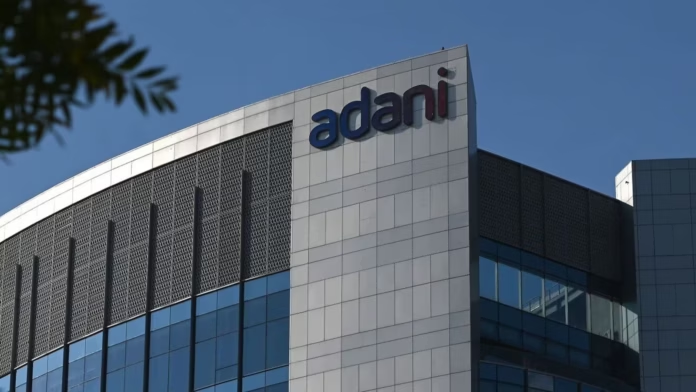
The financial performance of Orient Cement in the quarter ending March 31, 2025, has elicited a largely bearish sentiment from brokerage firms tracking the stock.
The company reported a significant 38.31 per cent year-on-year decline in its net profit, settling at Rs 42.07 crore. This downturn was accompanied by a 7.08 per cent year-on-year slump in sales, which stood at Rs 825.19 crore, and a 28.88 per cent drop in Earnings Before Interest, Taxes, Depreciation, and Amortization (EBITDA) to Rs 110.68 crore for the reported period. This subdued performance comes amidst a backdrop of anticipated changes in the company’s ownership structure, specifically the delayed transfer of a substantial stake to the Adani Group. Investor reaction to these earnings was muted, with shares of Orient Cement initially declining by 2 per cent to Rs 351.25 before stabilising. The company’s market capitalisation for the day hovered around Rs 7,350 crore. Despite the lacklustre financial results, Orient Cement’s board of directors has declared a dividend of Rs 0.50 per share for the fiscal year ending March 31, 2025, with the payout expected within 30 days of the declaration, although the record date for this distribution is yet to be announced.
Elara Capital, in its post-earnings analysis, suggests a potential for improved performance in the future, contingent upon enhanced demand, anticipated synergy benefits arising from the Adani Group’s involvement, and operational leverage. However, the brokerage firm remains cautious, highlighting Orient Cement’s significant exposure to the persistently oversupplied South Indian cement market, which could continue to exert downward pressure on the company’s overall financial health. While Elara acknowledges that the expected open offer, triggered by the Adani Group’s acquisition of a controlling stake, may establish a near-term floor for the stock price, the current trading levels offer limited arbitrage opportunities for investors. The brokerage firm reiterates its concerns regarding the long-term overhang posed by the oversupplied conditions in the South.
Consequently, Elara Capital maintains its ‘sell’ rating on Orient Cement’s stock with an unchanged target price of Rs 225, implying a substantial downside of approximately 37 per cent from the current trading levels. The brokerage has largely retained its existing earnings estimates for the company. The impending change in ownership dates back to October 2024, when Ambuja Cements, a company under the Adani Group’s umbrella, entered into a share purchase agreement with Orient Cement’s promoter group and certain other shareholders. The agreement outlined the acquisition of a 46.80 per cent stake in Orient Cement at a price of Rs 394.5 per share. This acquisition received the necessary approval from the Competition Commission of India (CCI) on March 4, 2025, clearing a significant regulatory hurdle. However, the actual transfer of the stake is yet to be executed, creating a period of uncertainty and potentially impacting the company’s operational and strategic decisions. In contrast to Elara Capital’s bearish outlook, Antique Stock Broking offers a more optimistic perspective, particularly concerning the potential for improved profitability under the new ownership of the Adani Group. Antique anticipates that Ambuja Cement may announce expansion plans for Orient Cement and will likely focus on enhancing the company’s profitability post the acquisition of the controlling stake. Factoring in the expectation of better profitability under the Adani Group’s management, Antique Stock Broking has revised its EBITDA estimates for fiscal years 2026 and 2027 upwards by 6-7 per cent.
Consequently, the brokerage has also increased its target price for Orient Cement’s stock to Rs 320 (from the previous target of Rs 295), based on an unchanged 10 times its FY27E EV/EBITDA (Enterprise Value to EBITDA). Despite this revised target price, Antique maintains a ‘hold’ rating on the stock, suggesting a more neutral stance. The divergent views from these brokerage firms highlight the uncertainty surrounding Orient Cement’s immediate future, which is heavily contingent on the timely completion of the Adani Group’s stake acquisition and the subsequent strategic direction adopted by the new management. While the potential for synergy benefits and improved operational efficiencies under the Adani Group’s leadership offers a glimmer of hope for investors, the persistent challenges in the crucial South Indian market remain a significant headwind that cannot be ignored. The actual trajectory of Orient Cement’s stock price will likely be determined by the interplay of these factors and the market’s assessment of the Adani Group’s ability to turnaround the company’s performance in a competitive and currently oversupplied regional market, all while navigating the broader economic landscape and infrastructure development trends that influence cement demand.
Adani Deal Delay Clouds Orient Cement Outlook
Green Coatings Drive Global Paint Demand

The global texture paint market is experiencing a significant upswing, projected to reach a substantial valuation of USD 18.47 billion by the year 2032.
This robust expansion, anticipated at a compound annual growth rate (CAGR) of 4.43% throughout the forecast period from 2024 to 2032, underscores a growing global preference for wall coating solutions that offer not only aesthetic appeal but also enhanced durability and environmental responsibility. This market momentum is intrinsically linked to the evolving demands of modern urban infrastructure, where both new constructions and renovation projects increasingly prioritise finishes that can effectively conceal surface imperfections while contributing to contemporary design aesthetics. A pivotal factor propelling this market growth is the escalating global awareness of sustainability. This consciousness has spurred the development and adoption of low-VOC (volatile organic compound) and water-based binders, along with other environmentally benign ingredients in texture paints. Consequently, these advanced formulations are increasingly becoming integral to green building certifications and compliance with stringent green building regulations worldwide. This alignment with sustainable practices is not merely an ethical consideration but a crucial market differentiator, resonating with environmentally conscious consumers and businesses alike.
The burgeoning construction activities across the globe, fuelled by the rapid urbanisation and economic expansion in emerging economies, coupled with substantial investments in urban housing and commercial real estate, are acting as primary catalysts for the heightened demand for texture paints. These paints are increasingly favoured for their ability to provide customised textural solutions, enhancing the visual appeal and longevity of both residential and commercial spaces. The United States emerged as the dominant force in the texture paint market in 2023, holding the largest market share with a valuation of USD 1.71 billion. This market is projected to continue its upward trajectory, reaching USD 2.73 billion by 2032, exhibiting a CAGR of 5.34% during the forecast period. The U.S.’s leadership position is underpinned by its well-established construction and renovation sectors, coupled with a growing consumer appetite for premium interior finishes and sustainable design principles. Technological advancements and the strong presence of major industry players, such as Sherwin-Williams, PPG Industries, and Benjamin Moore, who consistently introduce innovative textures and finishes, further bolster market growth in the region. Government initiatives aimed at retrofitting existing public and private infrastructure with energy-efficient and aesthetically pleasing coatings also contribute significantly to this demand.
However, the Asia Pacific region held the largest estimated market share globally in 2023, accounting for a commanding 45.6%. This dominance is primarily attributed to rapid urbanisation, a burgeoning construction industry in developing economies, and an increasing need for decorative wall finishes in both residential and commercial sectors. Countries like China and India have witnessed a remarkable boom in their real estate industries, driven by extensive urbanisation in both urban and semi-urban areas, consequently escalating the demand for quality and economical texture paints. India’s construction industry, recognised as one of the fastest-growing globally, exemplifies this trend, with the expansion of residential complexes and commercial buildings fuelling the need for aesthetically pleasing and durable texture paint solutions. Furthermore, a significant number of local paint manufacturers, including prominent players like Nippon Paint and Asian Paints, actively engage in the production of competitively priced and high-quality paints and coatings, further stimulating market growth within the region. Government initiatives promoting affordable housing projects and sustainable building practices across the Asia Pacific region also serve as crucial growth drivers for the texture paint market.
By type, the sand texture segment commanded the largest market share in 2023, accounting for approximately 50.3% of the global texture paint market. Sand-textured paints are the preferred choice for both residential and commercial applications due to their high mechanical durability, versatility, and visual appeal. These paints effectively conceal wall imperfections and offer a robust, aesthetically pleasing finish that can endure for extended periods. Their resistance to weathering and low maintenance requirements make them particularly suitable for high-footfall areas and exterior walls. Moreover, sand-textured paints are perceived as less prone to dirt absorption, further enhancing their suitability for commercial spaces. Their relatively lower cost and ease of application compared to other texture types also contribute to their significant market share.
In terms of technology, the water-based texture paint segment led the market in 2023, capturing over 63.2% of the share. This segment is poised to maintain its dominance throughout the forecast period, driven by increasingly stringent environmental regulations, lower toxicity levels, faster drying times, and ease of application. Water-based paints comply with stringent VOC emission norms, making them the preferred choice for both residential and commercial applications. While solvent-based texture paints are still in use, their market share is gradually diminishing due to growing environmental and health concerns. The residential segment emerged as the dominant end-use category in the texture paint market in 2023, accounting for a substantial share of approximately 55.7%. This is largely driven by the continuous trend of home renovation and the escalating demand for smart and long-lasting paint finishes. Sand and smooth texture paints have gained significant traction in interior spaces, with a growing number of homeowners moving away from conventional plain wall finishes towards textured alternatives.
The increasing preference for water-based paints in residential buildings, owing to their eco-friendly nature and growing environmental consciousness, further fuels this demand. Additionally, rising disposable incomes, coupled with a desire for stylish home interiors, have amplified the preference of residential consumers for premium texture paints. The global texture paint market is thus witnessing robust growth, driven by a confluence of factors including increasing urbanisation, booming construction activities, a growing emphasis on sustainable building practices, and evolving consumer preferences for aesthetically pleasing and durable finishes. The dominance of the Asia Pacific region, particularly the strong contributions from India and China, alongside the continued growth in the United States and the increasing preference for water-based and sand-textured paints, paints a picture of a dynamic and expanding market poised for sustained growth in the years to come.
Green Coatings Drive Global Paint Demand
Saptashree Group to Launch Indias First AI-Powered IT Park in Thane – AI Thane

AI Thane aims to redefine India’s business infrastructure with intelligent workspaces, automation, and self-reliant design.
In a groundbreaking move that signals a disruption in India’s commercial real estate landscape, Saptashree Group has announced the launch of AI Thane, the country’s first AI-powered commercial IT park. Situated in the thriving business district of Wagle Estate, Thane, the project promises to deliver a new standard in intelligent infrastructure, automation, and sustainable design for the next generation of Indian enterprises.
The development marks a national first: a commercial office hub built entirely around artificial intelligence integration, aimed at transforming how businesses operate, save costs, and scale efficiently. With AI Thane, Saptashree Group positions itself at the forefront of India’s transition to smarter, self-sufficient work environments aligned with the vision of Aatmanirbhar Bharat.
Speaking about the vision behind AI Thane, Sohan Thakur, Director of Saptashree Group, shared, “We’re not just building another IT park—we’re creating a business ecosystem that thinks, adapts, and evolves. AI Thane is our commitment to empowering businesses with infrastructure that’s intelligent, future-ready, and proudly made in India. This is a space where technology isn’t an add-on, it’s the core.”
The project is designed to embed AI into everyday business functions. From facial recognition security and automated climate control to predictive maintenance and smart energy management systems, every aspect of the park will be monitored and optimized by machine learning technologies. The IT Park also comes with Mumbai’s First AI powered human less parking ecosystem for effortless parking for office goers. These features are expected to drastically lower operational costs while improving efficiency, security, and overall business performance for occupants.
AI Thane’s location adds another layer of appeal. Wagle Estate has quietly emerged as one of Mumbai’s most promising commercial zones, offering greater affordability and faster infrastructure growth compared to saturated CBDs like BKC or Lower Parel. Over the last two decades, the area has witnessed a 350% rise in property value and boosts rental yields nearing 9%, making it a highly attractive destination for both investors and businesses.
Designed as a landmark tower at the entry point of Wagle Estate, AI Thane will feature diamond-cut glass façades, pillarless offices, an automated double-height entrance lobby, and scalable layouts for companies of all sizes. However, what sets it apart is its built-in ecosystem for growth—offering investor matchmaking, incubation support for startups, and dedicated zones for business networking.
“This isn’t just about real estate,” Thakur added. “It’s about creating a launchpad for future-first businesses—whether you’re a startup looking for venture support or a multinational seeking intelligent infrastructure. AI Thane is built to scale with you.”
The project’s launch is expected to attract significant attention from forward-looking enterprises, startups, and real estate investors seeking differentiated assets in the post-pandemic commercial market. With only a limited number of premium units available in its first phase, Saptashree Group is opening bookings for early partners and anchor tenants.
Saptashree Group to Launch Indias First AI-Powered IT Park in Thane – AI Thane
Shalimar Paints earns top trust title in Indian market

Shalimar Paints has been recognised as the Most Trusted Brand of India for 2025-26 at the 5th edition of a prestigious brand leadership platform.
With over 120 years of heritage in the Indian paint industry, the company’s achievement underscores its enduring commitment to quality, modernisation and consumer trust in a rapidly evolving marketplace. This recognition marks more than just an accolade—it reflects how a time-honoured brand can remain relevant by blending legacy with forward-thinking innovation. Known for its rich industrial and decorative paint portfolio, the company has leveraged its experience and reputation to cater to evolving consumer expectations across generations. Its new phase of strategic transformation, internally referred to as “Shalimar 2.0,” showcases a modern identity with sustainability, research and customer experience at its core.
The paint maker has focused on redesigning its product offerings with an emphasis on eco-friendly formulations and long-lasting durability, aligning with global trends favouring environmentally responsible consumer goods. Officials at the company noted that this transformation has not only reinforced market presence but also created fresh relevance among younger homeowners and professionals who demand both aesthetics and sustainability. According to senior company experts, the trust recognition was earned through consistent innovation, ethical business conduct and a strong dealer network that functions as a crucial bridge between the brand and consumers. In the last fiscal year alone, the company launched over 40 new products—10 in the decorative segment and 30 in industrial paints—reflecting a robust commitment to research-driven development and responsiveness to market demands.
The company’s rich historical contributions have also played a critical role in shaping its brand equity. Shalimar Paints is known for its work on some of India’s most iconic landmarks, including heritage infrastructure and national buildings. This legacy of restoring and preserving the built environment has helped it establish a trustworthy identity in both public memory and the real estate sector. Behind the brand’s evolution lies a shift in corporate philosophy that prioritises transparency, sustainability and consumer-centric innovation. By adopting eco-conscious practices in manufacturing and investing in R&D capabilities, the brand has managed to stay ahead in an industry that is becoming increasingly competitive and climate-conscious. The push towards green chemistry and safer indoor environments echoes the brand’s strategic shift towards a circular economy and a healthier urban lifestyle.
Experts from the branding and retail sectors attribute the company’s success to its ability to navigate legacy with agility. While many long-standing brands struggle to maintain relevance amid startup disruption and changing consumer behaviours, Shalimar Paints has managed to strike a balance between heritage and innovation. Its clear communication, consistent product performance, and emphasis on ethical practices have set it apart in a market cluttered with short-term value players. Recognition by the brand forum is part of a larger dialogue about how Indian companies are earning consumer confidence in a post-pandemic economy. The 5th edition of the Most Trusted Brands of India aimed to celebrate brands that have built long-term credibility while being adaptable to changing socio-economic and environmental expectations. The forum, which brought together stakeholders from across the branding, marketing and business sectors, reaffirmed that trust is the most valuable currency in today’s market, especially for legacy brands seeking to future-proof their business.
In the words of company insiders, Shalimar Paints’ approach is not just about paint—it is about transforming spaces with vibrancy, performance and purpose. The brand’s renewed identity positions it to lead conversations on responsible consumerism, green urban development, and inclusive industry practices. As cities grapple with pollution, climate adaptation and equity in urban development, brands that align themselves with the ideals of sustainability and ethical growth are becoming instrumental in driving public trust. Shalimar Paints’ strategy—rooted in values yet open to innovation—could serve as a blueprint for other legacy companies aiming to remain relevant in a sustainable, equitable future.
The recognition also reflects an industry shift, where consumer decision-making is increasingly influenced by values such as environmental impact, health safety and authenticity. In such a landscape, Shalimar Paints’ legacy acts not as a burden but as a base to build a responsible future—one where trust and performance go hand in hand. This year’s award offers a timely reminder that India’s most trusted brands are those that listen to their consumers, respect their legacy, and invest in building a better tomorrow through mindful innovation and inclusive growth. With its renewed vision, Shalimar Paints is not just colouring walls, but reshaping expectations of what a responsible brand can achieve.
Shalimar Paints earns top trust title in Indian market
Lodha brand battle ends in mediation

The long-standing legal feud between two of Mumbai’s most prominent property developers has come to a close, following a family-mediated resolution.
The dispute, centred around the usage of the ‘Lodha’ brand name, had sparked significant attention in both corporate and legal circles, as it pitted two influential business entities—run by members of the same family against each other in a ₹5,000 crore lawsuit. As per official statements released on April 14, the companies Mumbai-based listed firm Macrotech Developers and luxury land aggregator House of Abhinandan Lodha (HoABL) confirmed that all outstanding disputes had been amicably resolved under the guidance of family elders. The agreement marks a turning point in the narrative of brand identity, corporate succession, and intellectual property rights in Indian family-run businesses.
Under the terms of the mediated settlement, Macrotech Developers retains exclusive rights to use the brand names ‘Lodha’ and ‘Lodha Group’. The company, which has played a pivotal role in transforming Mumbai’s urban skyline, will continue operating under these titles across its residential and commercial portfolios. Meanwhile, HoABL, a newer but fast-growing entity focused on curated land investments, will exclusively use the name ‘House of Abhinandan Lodha’. According to sources close to the development, the two companies have formally agreed that they are entirely independent of each other and must communicate this clearly in all public engagements. The separation reaffirms that neither party holds any claim, equity, or commercial interest in the other’s business operations, thereby reducing the potential for future trademark confusion.
Legal observers note that this case is significant not just for its high financial stakes, but also for the way it underscores the complexities of legacy brand ownership in Indian family enterprises. The dispute had escalated to the Bombay High Court earlier this year, prompting the court to appoint a retired Supreme Court judge as a mediator. The mediation process, initially expected to conclude within five weeks, was extended slightly to accommodate the detailed terms of agreement. Industry experts believe the resolution brings much-needed stability and clarity to stakeholders, investors, and customers of both firms. For Macrotech Developers, one of the few listed real estate majors in the country, brand protection is critical in a market where trust and legacy heavily influence buyer decisions. For HoABL, the settlement offers clarity and creative freedom to build a distinct brand narrative aligned with modern, sustainable land development and investment.
What stands out in this case is the use of mediation—rather than protracted litigation—to resolve the matter. Experts say that the intervention of respected judicial authorities, along with the role played by family elders, offers a model for amicable conflict resolution in Indian family-owned conglomerates. The mediation route not only saved time and costs but also preserved the family’s reputation, which is often a crucial intangible asset in the Indian business landscape. While the agreement may have drawn a legal line between the two entities, it also sheds light on a broader issue: the importance of brand clarity in an industry that is central to urbanisation and environmental sustainability. As Indian cities pursue smarter, greener growth, the integrity and transparency of real estate brands will be pivotal to consumer trust and policy alignment.
With both firms now free to pursue their individual growth strategies, industry watchers will be keenly observing how they navigate a competitive, sustainability-focused future. As the dust settles on the Lodha name dispute, the real test begins—how each brand delivers on its promises in an era that demands ecological accountability, gender-neutral designs, and inclusive urban expansion. This development is expected to have a ripple effect in the wider real estate industry, especially for legacy businesses looking to reinvent themselves in the age of responsible capitalism. In a market as dynamic as Mumbai’s, where names carry weight and narratives shape valuation, brand clarity may just be the most valuable real estate of all.
Lodha brand battle ends in mediation
ArcelorMittal Nippon Secures Import Exemption for Vital Raw Material

The Centre has granted ArcelorMittal Nippon Steel India (AM/NS India) a critical exemption to import an additional 71,500 metric tonnes (MT) of low ash metallurgical (LAM) coke from Poland.
This decision comes despite the imposition of import restrictions designed to regulate the flow of raw materials into the country. The company, which operates as a joint venture of the world’s largest steelmaker, had earlier raised concerns over the impact of import curbs on its production capabilities. Specifically, AM/NS India had sought relief after its requests to import 168,300 MT of met coke from Indonesia and Poland were rejected by the government. Recognising the potential disruption to operations, officials agreed to allow the import of 71,500 MT from Poland, alongside a request to reroute a previously allocated quota of 88,000 MT from Russia to Poland. This exemption is seen as a critical lifeline for AM/NS India, which faces a constant challenge of securing sufficient quantities of met coke — a key raw material used in steel production. Without this relief, there was a risk of production throttling, potentially affecting the company’s ability to meet both domestic and international demand.
According to experts familiar with the matter, the government’s decision was driven by the necessity to keep the plant operational. “The relief was granted so that the plant remains functional, allowing AM/NS India to import as much met coke as needed to prevent production delays,” one official explained. This swift intervention by the Centre highlights the importance of a well-coordinated approach between the private sector and government authorities, especially in sectors critical to India’s manufacturing economy. The approval comes at a time when the global steel industry is grappling with supply chain disruptions and price volatility, particularly in the wake of international trade policies and economic uncertainty. India’s steel industry, already among the largest in the world, has witnessed a steady rise in demand, both for infrastructure projects and consumer goods. However, securing key raw materials like metallurgical coke has become increasingly difficult, with global competition for resources intensifying.
AM/NS India’s proactive approach in seeking government intervention underscores the significance of securing reliable sources of raw materials to maintain a steady supply chain. Despite challenges posed by the import restrictions, AM/NS India remains optimistic that this temporary relief will enable them to fulfil production needs and avoid any potential slowdown in their operations. Furthermore, the decision is expected to contribute to the overall stability of India’s steel production landscape, which is vital for both economic growth and infrastructural development. The Centre’s decision also reflects its ongoing efforts to balance domestic industrial needs with broader economic objectives. While maintaining control over imports is seen as a way to protect local industries and manage the country’s foreign exchange reserves, the need for flexibility in certain high-stakes sectors like steel production is critical for the national economy.
In addition to the immediate relief, the shift in the import quota from Russia to Poland is seen as a pragmatic move, allowing the company to adjust to the evolving global trade environment. Experts have noted that Poland has emerged as a stable supplier for met coke, providing an alternative to the traditionally relied-upon Russian market. This strategic pivot not only ensures AM/NS India’s operations continue without interruption but also strengthens India’s trading relationships within Europe, further diversifying supply chains in the wake of geopolitical shifts. For AM/NS India, this exemption is an important step in stabilising its supply chain and securing production continuity. However, industry insiders suggest that the government will need to continue to monitor the evolving landscape of global trade and import policies to ensure that domestic industries are not left vulnerable to external shocks. As global trade dynamics shift, India’s industrial policy may have to evolve to remain competitive while safeguarding its long-term sustainability goals.
As India’s manufacturing sector continues to grow, with steel playing a central role in infrastructural and industrial development, the resolution of raw material shortages and supply chain disruptions will remain a top priority. The government’s ability to strike a balance between regulating imports and ensuring that critical industries like steel are not unduly hampered by restrictions will be essential for the country’s future industrial strategy. The government’s quick response in facilitating this exemption reflects a broader commitment to fostering industrial growth while managing resources effectively. While this temporary relief measures AM/NS India’s immediate needs, the longer-term solution will likely require greater focus on resource sustainability and securing a consistent supply of key raw materials for the steel sector, aligned with India’s broader goals of creating an eco-friendly, sustainable industrial base.
As India continues to position itself as a key player in the global manufacturing arena, such strategic interventions will play a significant role in shaping the future of its industrial economy, with the steel sector at its forefront.
ArcelorMittal Nippon Secures Import Exemption for Vital Raw Material
Bollywood singer Shaan and wife Radhika buy Rs 10 crore bungalow in Pune
