
Home Blog Page 300

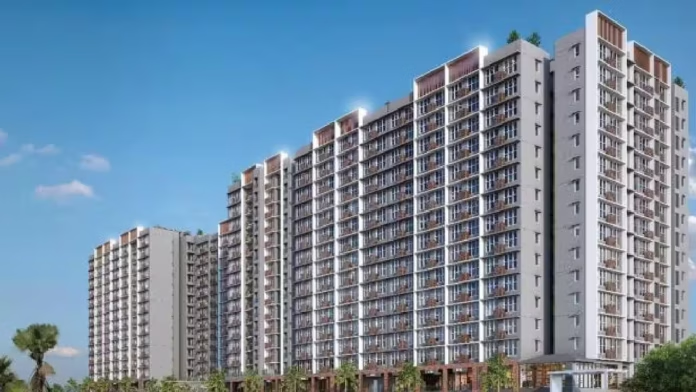
Bengalurus High-End Property Market Gears for 2025 Boom

0
Bengalurus High-End Property Market Gears for 2025 Boom

Bengalurus High-End Property Market Gears for 2025 Boom

Bengaluru luxury housing market is primed for a strong 2025, with high-end property prices set to rise due to sustained demand driven by a robust IT sector, the increasing presence of multinational companies (MNCs), and an expanding high-income population. According to industry analysts, this demand is further fuelled by significant infrastructural developments in key areas such as Whitefield, Sarjapur Road, and North Bangalore.

The city’s thriving IT ecosystem, coupled with the growing number of employment opportunities provided by both established tech giants and emerging startups, continues to attract an influx of affluent buyers and investors seeking luxury properties. In addition to the rising demand, new metro expansions and enhanced road connectivity are expected to boost the desirability of certain locations, making luxury real estate an increasingly valuable asset.

Although Bengaluru saw a brief dip in luxury housing sales in the latter part of 2024, largely due to sluggish conversion rates, the long-term outlook remains positive. During the second quarter of the year, there was a notable surge in luxury property sales, and even in the fourth quarter, projects from reputed developers such as Prestige Group, Brigade Group, and Sobha Group registered strong sales. Whitefield remained the top-performing submarket, with other areas like Hosur Road and Bellary Road also contributing to the sustained demand. Despite the temporary slowdown, the city’s luxury housing segment witnessed a marked increase in new supply, with luxury project launches rising by 12% quarter-on-quarter in the final months of 2024. These projects accounted for nearly 34% of all new launches during the period. The majority of these launches were concentrated in the Whitefield submarket, followed by Bellary Road and Hosur Road, where there is a growing demand for upscale housing. Notable projects such as Prestige White Meadows – Clover Leaf, Sobha Ayana, and TVS Emerald’s Cascadia were among the significant launches in Q4.

The strong demand for high-end properties is driving an increase in capital values and rents within the luxury segment. Both investors and end-users are pushing prices higher, with well-established developers commanding premium prices for newly launched projects. The limited inventory of high-quality properties, combined with their proximity to major office hubs, transport networks, and retail spaces, is contributing to the upward trajectory of rents in the luxury housing market.

As Bengaluru continues to evolve into a major hub for global business and technology, its luxury housing market is expected to experience further growth. The increasing demand from high-net-worth individuals (HNWIs) and the development of residential projects that cater to a luxury lifestyle have established Bengaluru as one of the top destinations for luxury property investment. Looking ahead, the city’s real estate market will remain underpinned by its strong economic fundamentals, including infrastructure development, a skilled workforce, and a steady influx of international businesses. For buyers and investors looking to capitalise on the city’s growth, 2025 promises to be a year of opportunity, with luxury housing prices set to rise further as Bengaluru solidifies its position as a top-tier destination for premium real estate.

The luxury housing market in Bengaluru is not only a sign of the city’s economic vitality but also a reflection of its expanding urban landscape. As the city embraces new infrastructure projects and attracts even more international investors, the demand for luxury properties is set to increase, ensuring a thriving real estate sector well into the next decade.

Hrithik Roshan Renews Lease for Pune Office at ₹6 Lakh

Hrithik Roshan Renews Lease for Pune Office at ₹6 Lakh

Hrithik Roshan Renews Lease for Pune Office at ₹6 Lakh

Bollywood star Hrithik Roshan has renewed his rental agreement for a prime office space in Pune’s rapidly growing Kharadi area, marking another significant milestone in the city’s commercial real estate sector. The 9,209 sq ft office, located in the World Trade Centre within the EON Kharadi business hub, will now be leased at ₹6.08 lakh per month, according to property registration documents.

The renewal comes as part of a 36-month lease agreement registered on February 20, 2025, with the office space leased to Regus Ruby Business Centre Pvt Ltd. The lease’s commencement date is September 25, 2024, and a security deposit of ₹11.67 lakh has been levied on the transaction. Additionally, the agreement includes provisions for a 5% rent escalation each year, underscoring the growing demand for high-quality commercial spaces in the area. Kharadi, once known primarily as an IT hub, has emerged as a prime location for businesses, offering ample opportunities for growth. The area has seen a surge in infrastructure development, attracting a diverse mix of startups, manufacturing companies, and global corporations. The World Trade Centre, where Roshan’s office is situated, serves as a major business centre, housing multinational companies and offering modern amenities for tenants.

The deal reflects Roshan’s ongoing commitment to commercial real estate as a viable investment avenue. Having leased this office to Regus Ruby Business Centre since September 2019, the property has proven to be a long-term asset for the actor. When the initial lease agreement was signed, the monthly rent was ₹4.55 lakh. Over the years, as demand for office space in Kharadi rose, the rent steadily increased, with the amount now set at ₹6.02 lakh for the period of 2023-2024. This lease renewal not only strengthens Roshan’s foothold in the lucrative commercial property market but also highlights a broader trend within the Bollywood community. Several film industry figures, including Amitabh Bachchan, Sara Ali Khan, and Kartik Aaryan, have been investing in commercial spaces across Mumbai and beyond, attracted by the higher returns that such properties offer compared to residential units.

Experts point to the city’s strong business environment, the availability of skilled talent, and its robust infrastructure as key factors driving the growth of commercial real estate in Pune. Harsh Lambah, Country Manager – India and Vice President – Sales at IWG (International Workspace Group), which operates brands like Regus, confirmed the deal and explained that the flexible workspace solutions provided at locations like the World Trade Centre cater to the growing needs of businesses, enabling them to scale efficiently in a rapidly evolving workforce landscape. Lambah added, “Pune’s emergence as a business hub is a testament to the city’s growing appeal among enterprises of all sizes. The region continues to offer a vibrant environment for both established businesses and new startups seeking flexibility and innovation in their office spaces.”

Hrithik Roshan, known for his roles in blockbusters like Koi Mil Gaya and Jodhaa Akbar, is no stranger to entrepreneurship. Besides his real estate investments, he launched his clothing line, HRx, in 2013. His keen interest in property investments aligns with a broader strategy of securing long-term financial growth through tangible assets, capitalising on the increasing demand for premium office spaces. The real estate market in Pune continues to benefit from a combination of factors, including its proximity to Mumbai and its growing status as an IT and educational hub. As more businesses seek to establish a presence in the city, the demand for well-located office spaces like the one leased by Roshan is expected to rise further, adding to the region’s appeal among both local and international investors.

Pune’s continued ascent as a business destination makes it an exciting market for investors looking for sustainable returns. With high-profile figures like Hrithik Roshan leading the way, the city is poised for further commercial real estate growth, contributing to the creation of a dynamic and thriving urban environment.

Godrej Evergreen Square Sells Homes Worth Rs 1000 Crore in Pune

0
Godrej Evergreen Square Sells Homes Worth Rs 1000 Crore in Pune

Godrej Evergreen Square Sells Homes Worth Rs 1000 Crore in Pune

Godrej Properties Ltd has marked a significant milestone in its growth with the successful launch of the Godrej Evergreen Square project in Pune. Just four months after acquiring the land in Hinjewadi, the project has already generated over Rs 1,000 crore in sales, making it the company’s most successful launch in the city both in terms of volume and value. This achievement highlights the increasing demand for high-quality residential projects in Pune’s rapidly developing real estate sector.

Launched in November 2024, Godrej Evergreen Square spans a vast expanse and offers a total potential development area of 2.41 million square feet. With an estimated revenue potential of Rs 2,045 crore, the project reflects the growing demand for premium homes in Pune’s thriving residential markets. The area’s well-established infrastructure, connectivity, and the upcoming metro link have further bolstered the project’s appeal among homebuyers.Strategically located in Hinjewadi, a prominent residential hub in Pune, the development benefits from excellent connectivity, making it an attractive option for professionals and families alike. The region’s proximity to key roads like the Mumbai-Bangalore Highway and the Mumbai-Pune Expressway offers easy access to other parts of the city, while the presence of retail malls, schools, hospitals, and entertainment outlets further enhances its livability.

One of the key selling points of Godrej Evergreen Square is its accessibility to the proposed metro line linking Hinjewadi to Shivaji Nagar. With a metro station just two minutes away, the project is expected to see even more demand once the metro becomes operational, making it a highly sought-after destination for those looking for easy commutes and modern amenities.In a market where consumer confidence has been gradually recovering, especially in the wake of the pandemic, Godrej Properties’ impressive sales figures for the Godrej Evergreen Square project reflect the pent-up demand for quality residential properties.

Buyers are increasingly seeking well-located homes that offer modern amenities and connectivity, and this project seems to hit the right notes with its focus on both lifestyle and convenience.As Pune continues to emerge as a key real estate hub in Maharashtra, the success of Godrej Evergreen Square could serve as a bellwether for future residential developments in the region. The project’s sales figures underscore the potential of the city to attract both developers and buyers seeking long-term investment opportunities in the real estate market.

South Delhi Property Market Valued at Rs 5.65 Lakh Crore

0
South Delhi Property Market Valued at Rs 5.65 Lakh Crore

South Delhi Property Market Valued at Rs 5.65 Lakh Crore

South Delhi, widely regarded as one of India’s most prestigious and sought-after regions, continues to solidify its position as the country’s prime real estate destination. According to a recent report by the Golden Growth Fund (GGF), the total value of real estate across 42 Municipal Corporation of Delhi (MCD) regulated colonies in South Delhi is estimated at a staggering Rs 5.65 lakh crore. With properties in the Category A and B colonies accounting for over Rs 5.35 lakh crore of this total, the area remains a magnet for high-net-worth individuals, investors, and affluent buyers looking for exclusive residential opportunities.

The report outlines the availability of approximately 18,446 plots across the 42 colonies, which range in size from 125 square yards to a sprawling 1750 square yards. The average price per square yard in these areas ranges from Rs 6 lakh to Rs 15 lakh, underscoring the exclusivity and demand for properties in South Delhi. These categories – A, B, and C – are essential classifications by the MCD, determining not only property values but also the rates of stamp duty, property taxes, and circle rates applicable to each locality.

Category A and B colonies, which make up the crème de la crème of South Delhi, are home to some of the most luxurious and desirable properties in the city. Within the 13 Category A colonies, including prestigious names like Mayfair Garden, Panchsheel Park (N and S Blocks), and Vasant Vihar, around 3,704 plots are up for sale. These plots range in size from 200 square yards to 1200 square yards, with prices varying from Rs 7 lakh per square yard to as much as Rs 15 lakh per square yard. These areas are not only known for their prime real estate value but also for their proximity to top schools, government offices, and luxury commercial hubs.

Meanwhile, Category B colonies, of which there are 27 in South Delhi, are also highly desirable. With around 12,720 plots available, the price per square yard in these locations ranges from Rs 6 lakh to Rs 12 lakh, making them a step more accessible compared to their Category A counterparts. These colonies, such as Shanti Niketan, Golf Links, and Niti Bagh, offer an unparalleled blend of exclusivity, greenery, and accessibility, making them a top choice for affluent buyers seeking an upscale lifestyle. The significant valuation of South Delhi’s real estate market highlights a broader trend in the city’s luxury property sector, where scarcity, infrastructure development, and high demand continue to drive growth. The area’s well-established infrastructure, with its wide, tree-lined streets, parks, and excellent connectivity to the rest of Delhi, has long been a hallmark of South Delhi’s charm. However, what sets it apart is its continuing appeal among the elite, with iconic addresses such as Chanakyapuri, JorBagh, and Maharani Bagh cementing their status as symbols of status and wealth.

Despite the soaring property prices, there is a growing recognition of the importance of sustainable development. As urban spaces continue to expand, there is increasing pressure on developers to adopt eco-friendly building practices and incorporate green spaces into their designs. In this context, the future of South Delhi’s luxury real estate market will likely depend on the industry’s ability to balance opulence with environmental responsibility. With global trends in real estate increasingly favouring eco-conscious living, there is significant potential for these high-value properties to embrace zero-net carbon practices, creating spaces that are not only luxurious but also sustainable for generations to come.

South Delhi’s real estate market, with its Rs 5.65 lakh crore valuation, continues to be a lucrative and highly coveted segment of the capital’s property landscape. As demand for luxury homes rises, the region’s mix of prime location, infrastructure, and exclusive addresses ensures its place at the top of India’s real estate sector. However, the future will depend on how these properties evolve to meet the growing need for sustainable and eco-friendly living spaces, setting a standard for luxury homes across the city.

Gurugram Real Estate Market Outpaces Expectations

    0
    Gurugram Real Estate Market Outpaces Expectations
    Gurugram Real Estate Market Outpaces Expectations

    Gurugram Real Estate Market Outpaces Expectations

    In 2024, Gurugram has witnessed an unprecedented transformation, firmly establishing itself as one of India’s fastest-growing real estate markets. Property prices have nearly doubled in a single year, especially in the premium and luxury segments, setting a new benchmark for growth. The surge in high-end residential developments and luxury projects has elevated Gurugram’s status, positioning the city as a serious competitor to Mumbai in the country’s real estate landscape.

    The impressive growth is largely attributed to the city’s evolving infrastructure and its burgeoning status as a business hub. A key factor driving this upward trajectory is Gurugram’s proximity to critical infrastructure, including the newly operational Dwarka Expressway. The expressway, spanning 18.9 km, has drastically reduced travel times, making the city more accessible for both residents and businesses. In addition to this, the city’s well-planned connectivity to the Indira Gandhi International Airport and the upcoming metro line further enhances its appeal for investors and homebuyers alike.
    This influx of infrastructure investments has also attracted high-net-worth individuals (HNIs) and non-resident Indians (NRIs), who are now flocking to the city in search of high-value properties. The availability of vast land banks along the expressway corridor, combined with government-backed initiatives like the Transit-Oriented Development (TOD) and increased Floor Area Ratio (FAR) allowances, have made large-scale residential developments feasible. These policy-driven reforms have accelerated the real estate boom, with Gurugram now seeing price hikes that are on par with some of the most expensive markets globally, such as Dubai.
    As the demand for premium housing skyrockets, luxury developers are setting new trends with innovative, sustainable, and eco-friendly projects. This growing emphasis on green, zero-carbon developments aligns with global trends, reflecting an increased awareness of sustainability among developers and buyers. Gurugram’s focus on gender-neutral and inclusive design also showcases the city’s progressive approach to real estate, making it a model for future-ready cities in India.
    Notably, Gurugram’s appeal is not just about luxury; the city is also witnessing significant urban transformation, with a sharp rise in under-construction property prices—by an astounding 55% in 2024. This surge, which surpasses other metro cities like Delhi, Bengaluru, Pune, and Hyderabad, signals a major shift in the Indian real estate market. The city is rapidly evolving into a modern urban landscape, attracting both investors seeking high returns and homebuyers looking for a premium lifestyle.
    While Mumbai remains India’s financial capital, Gurugram’s meteoric rise in property value and appeal cannot be dismissed. The city’s status as a corporate powerhouse, housing numerous multinational companies and financial institutions, continues to drive housing demand, particularly in its luxury sectors. It is also making a strong case for being the next big hub for real estate investment, rivaling Mumbai’s long-held dominance.
    As Gurugram’s transformation unfolds, it is becoming increasingly clear that the city is not just riding the wave of its current growth but setting the stage for a future where it could rival India’s most iconic real estate markets. For now, all eyes are on Gurugram as it continues to redefine what it means to be a major real estate destination in India. The city’s ability to merge modern infrastructure, luxury living, and sustainable development will likely dictate whether it emerges as the nation’s foremost real estate powerhouse.

    TVS Emerald expands Bengaluru footprint with key land acquisition

    0
    TVS Emerald expands Bengaluru footprint with key land acquisition
    TVS Emerald expands Bengaluru footprint with key land acquisition

    TVS Emerald expands Bengaluru footprint with key land acquisition

    TVS Emerald, the real estate arm of TVS Group, has strengthened its presence in Bengaluru with the acquisition of a 10-acre land parcel in Sathanur. This marks the company’s fourth land purchase in the current financial year, reinforcing its strategy of expansion in high-potential urban markets. With this addition, TVS Emerald’s land deals in this fiscal year collectively hold a revenue potential of ₹5,300 crore, underlining its aggressive growth trajectory in the residential sector.

    The developer’s latest acquisition follows a series of strategic purchases aimed at deepening its foothold in key metropolitan areas. Earlier this year, the company secured two significant land parcels in Chennai—a 12-acre plot on Radial Road and a 4.8-acre site in Padur along the Old Mahabalipuram Road. Additionally, TVS Emerald acquired a four-acre property in Thanisandra, Bengaluru, as part of its ongoing expansion drive. These acquisitions align with the company’s broader vision of establishing a strong presence in high-demand micro-markets across South India.

    Sriram Iyer, Director and CEO of TVS Emerald, emphasised the company’s commitment to sustained growth through strategic land acquisitions. “We have been expanding consistently across Chennai and Bengaluru. The acquisition of this land parcel—our fourth this year—further consolidates our market position and strengthens our pipeline of residential projects,” he said.

    The company’s total project pipeline has now expanded to 8.2 million square feet of development, reflecting its bullish stance on urban housing demand. With a focus on residential real estate, TVS Emerald aims to cater to the growing aspirations of homebuyers while reinforcing its reputation as a trusted developer in the sector.

    Bengaluru, known for its robust real estate market driven by IT and startup growth, remains a prime focus area for developers. Sathanur, where TVS Emerald has made its latest acquisition, is witnessing increased interest due to its connectivity and evolving infrastructure. The city’s sustained demand for residential properties, coupled with government-backed infrastructure projects, makes it a lucrative destination for real estate investments.

    TVS Emerald’s expansion strategy is in line with broader industry trends, where leading developers are acquiring land parcels in high-growth corridors to capitalise on demand. The company’s focus on key micro-markets is expected to drive its growth in the coming years, positioning it as a formidable player in the residential real estate segment.

    150 Years of Indian Railways The Journey from Steam to Vande Bharat and Beyond

      0
      150 Years of Indian Railways The Journey from Steam to Vande Bharat and Beyond
      150 Years of Indian Railways The Journey from Steam to Vande Bharat and Beyond

      150 Years of Indian Railways The Journey from Steam to Vande Bharat and Beyond

      For 150 years, Indian Railways has been the lifeblood of the nation’s transportation system, transporting over 10 billion passengers and 1.6 billion tonnes of freight every year. From the first steam-powered trains of the 19th century to the modern, high-speed Vande Bharat and Namo Bharat trains, India’s railway system has undergone a remarkable transformation.

      With over 8,000 trainsets, 15,000 locomotives, and 300,000 freight wagons, the Indian Railways continues to be an essential part of the nation’s economy and social fabric. When India’s first steam train chugged from Mumbai to Thane in 1853, it marked the beginning of a transportation revolution. Fast forward to the present, and the Indian Railways has grown into one of the world’s largest and busiest railway networks. Today, the country boasts state-of-the-art trains, including the Vande Bharat Express, a semi-high-speed train that represents the future of rail travel in India. These modern trains not only offer speed but also provide enhanced comfort and efficiency for passengers.

      Despite these advancements, India’s rail network still faces the challenge of maintaining a vast and aging infrastructure. With heavy loads running every day, wear and tear are inevitable. As a result, ensuring the continuous availability and reliability of trains has become a priority for Indian Railways. Traditionally, the maintenance of railway systems was mechanical, reactive, and largely depended on fixing issues when they occurred. However, as technology has evolved, so too has the approach to railway maintenance. Indian Railways has increasingly adopted predictive maintenance practices, shifting from a procurement-based model to a proactive lifecycle-based approach. This change allows for more efficient and reliable operation, reducing downtime and extending the life of rolling stock.

      The introduction of Internet of Things (IoT)-enabled digital solutions and advanced data processing has revolutionised operations. Real-time monitoring of assets, including trains, tracks, and stations, has made it possible to detect issues before they escalate into major problems. By collecting and analysing data, Indian Railways can optimise performance, reduce energy consumption, and improve customer satisfaction. For example, intelligent rostering and energy usage monitoring are helping to cut down energy costs and enhance operational efficiency. These measures have already resulted in up to 20% material cost savings, a 30% reduction in train downtime, and a 50% decrease in recurring faults.

      Looking ahead, Indian Railways is set to continue its evolution, with over INR 474,700 crore (USD 56.89 billion) worth of rolling stock on order over the next five years. This influx of investment is expected to further modernise the network and improve its sustainability. The future will also see a greater reliance on strategic partnerships, particularly for rolling stock maintenance. Outsourcing maintenance operations to specialised contractors is seen as an effective way to optimise performance, reduce costs, and ensure the longevity of assets. Moreover, the Indian government’s “Make in India” initiative will be key in fostering local manufacturing and job creation within the railway sector. By encouraging domestic contractors and vendors to participate in rail infrastructure development, the government aims to boost economic growth and enhance the railway system’s capabilities.

      While technology is transforming the operations of Indian Railways, it is also creating new opportunities for upskilling within the railway workforce. The shift towards IoT-enabled solutions and predictive maintenance will require new skill sets, creating avenues for employees to learn and grow in the evolving railway ecosystem. This will not only enhance service quality but also provide long-term job stability for those working within the industry. As Indian Railways celebrates 150 years of service, it stands at the forefront of modernisation, with cutting-edge technology and innovative approaches driving its future. With continued investment in infrastructure, technology, and human resources, Indian Railways is poised to continue playing a vital role in the nation’s economy and society for years to come. The journey from steam trains to the ultra-modern Vande Bharat Express is just the beginning of a new era for Indian Railways, one that promises even greater efficiency, sustainability, and comfort for passengers.

      Dharavi Redevelopment Illegal Structures Identified in Drone Survey to Be Demolished

        0
        Dharavi Redevelopment Illegal Structures Identified in Drone Survey to Be Demolished
        Dharavi Redevelopment Illegal Structures Identified in Drone Survey to Be Demolished

        Dharavi Redevelopment Illegal Structures Identified in Drone Survey to Be Demolished

        Mumbai’s Dharavi, one of the largest and most densely populated slums in Asia, is set for a significant transformation under the ongoing redevelopment project. Following a drone survey conducted in 2023 by Navbharat Mega Developers Pvt Ltd (NMDPL), authorities have set a clear directive: illegal structures built after the survey will be demolished. This decision marks an important step in the redevelopment of Dharavi, which spans a 251-hectare area within the city’s core.

        The NMDPL, which has been tasked with overseeing the Dharavi redevelopment, revealed that the drone survey will serve as a benchmark for determining which structures were erected after the survey date. Any new constructions that have emerged in the Dharavi Notified Area (DNA) since 2023 will be razed to restore order in the area. This move aims to curb the unchecked construction activity promoted by local residents and land mafias that continues to plague the redevelopment project.

        SVR Srinivas, the CEO of the Dharavi Redevelopment Project and chairman of NMDPL, confirmed that action would be taken against these illegal constructions. The focus is on ensuring that the redevelopment process remains unhindered by such unauthorised developments, especially as Dharavi’s transformation into a modern urban space gathers pace. In November 2024, NMDPL submitted the Dharavi Development Plan to the Maharashtra government, which envisions a comprehensive strategy for transforming Dharavi. While the state government has yet to make any formal announcements or recommendations regarding the plan, authorities are continuing with the groundwork. Notably, the construction of rehabilitation tenements for the slum’s residents will take place on 47 acres of railway land allocated for this purpose.

        The plan has already moved forward with the numbering of over 85,000 tenements, which include residential, commercial, religious, and industrial structures. A door-to-door survey has been completed for 50,000 tenements, and the remaining survey is expected to wrap up by the end of April 2025. In an effort to ensure fair rehabilitation, the Dharavi Redevelopment Project/Slum Rehabilitation Authority (DRP/SRA) has clarified the housing entitlements for residents based on their tenure in the area. Ground-floor residents who settled in Dharavi before January 1, 2000, will receive 350 sq ft homes within the area at no cost. Those who settled between January 1, 2000, and January 1, 2011, will be offered 300 sq ft houses outside Dharavi, priced at Rs 2.5 lakh, as part of the Pradhan Mantri Awas Yojana (PMAY).

        The illegal construction issue has long been a concern. In 2019, the Brihanmumbai Municipal Corporation (BMC) undertook a large-scale demolition drive, with assistant municipal commissioner Kiran Dighavkar describing unauthorised construction as a recurring issue in Dharavi. Despite previous efforts, the land mafia and local residents have continued to promote illegal construction activities. The DRP/SRA has now vowed to follow through with stricter enforcement, invoking the Maharashtra Prevention of Dangerous Activities (MPDA) Act to hold perpetrators accountable. This crackdown on illegal structures aligns with the overall goal of the Dharavi Redevelopment Project: to transform the area into a modern and well-planned urban hub. However, residents and local stakeholders have mixed feelings about the demolition drives. While some support the efforts to restore order and improve infrastructure, others are concerned about the disruption to their livelihood and homes.

        The Dharavi redevelopment project is one of the largest and most ambitious urban renewal efforts in India. As the project moves forward, authorities remain focused on providing sustainable housing for the thousands of residents who will be displaced during the process. With ongoing surveys and targeted demolition, the project aims to strike a balance between rehabilitating Dharavi’s residents and modernising the area to meet the needs of Mumbai’s growing population. While the demolition of illegal structures in Dharavi may face opposition, it is a necessary step to ensure the success of the redevelopment initiative. By clearing these unauthorised constructions, the project can move forward towards its goal of transforming Dharavi into a sustainable and thriving urban area.

        Tiger Logistics Introduces CUBOX: A Smarter Shipping Solution for Smaller Shipments

          0
          Tiger Logistics Introduces CUBOX A Smarter Shipping Solution for Smaller Shipments
          Tiger Logistics Introduces CUBOX A Smarter Shipping Solution for Smaller Shipments

          Tiger Logistics Introduces CUBOX A Smarter Shipping Solution for Smaller Shipments

          Tiger Logistics, a prominent player in the global logistics sector, has unveiled its innovative solution, CUBOX, designed to provide an efficient, cost-effective alternative for smaller shipments. This new service targets the Less-than-Container Load (LCL) market, focusing on providing seamless export and import solutions for forwarders and logistics companies in India.

          CUBOX is a consolidation service that enables multiple smaller shipments to be combined into one container, making it an ideal choice for businesses with limited volumes of cargo. This service addresses the rising demand for affordable and reliable international ocean freight solutions, specifically for India’s LCL market, which has become increasingly fragmented and competitive. The launch of CUBOX comes at a time when the demand for flexible, cost-efficient shipping solutions is growing rapidly in India, particularly among businesses in the Western and Northern regions. As Tiger Logistics aims to expand into the Southern parts of India, the company anticipates generating an annual revenue exceeding ₹100 crore from its B2B market strategy.

          Harpreet Singh Malhotra, Chairman and Managing Director of Tiger Logistics, highlighted the strategic significance of CUBOX in the logistics industry. “CUBOX will open new revenue streams and strengthen our competitive advantage globally. It’s designed to transform the fragmented LCL market in India by offering cost-effective, flexible, and efficient ocean freight solutions for logistics and forwarding companies,” Malhotra stated. With its focus on operational efficiency and enhanced customer experience, CUBOX provides a smarter way to ship smaller volumes of goods. By consolidating freight from multiple sources, it helps businesses reduce costs and improve shipping timelines. This is especially beneficial for smaller enterprises or those looking for reliable yet economical shipping options.

          The Indian LCL market is seeing significant growth, driven by a combination of factors including increased demand for international trade, especially in the B2B space, and a shift toward more efficient and sustainable shipping practices. As companies seek solutions that are both flexible and cost-effective, CUBOX is poised to tap into this rising trend by offering a service that can accommodate diverse shipping needs while optimising freight rates. In a statement regarding the future impact of CUBOX, Malhotra emphasized that the service was strategically designed to capitalise on this market demand. “India’s LCL market is primed for growth, driven by a growing need for dependable and economical shipping solutions. CUBOX is designed to bridge the gap between forwarders and shippers, providing efficient, consolidated freight options.”

          Tiger Logistics is also seeing robust financial growth, further validating the market’s demand for services like CUBOX. In its third-quarter results for FY2025, the company reported a more than twofold increase in consolidated profit after tax (PAT), rising to ₹8.42 crore compared to ₹3.68 crore in the same period the previous year. Revenues surged more than threefold, reaching ₹160.46 crore from ₹51.95 crore in the previous year’s quarter. This surge in profitability and revenue growth is attributed to increased deliveries and improved operational efficiency, setting the stage for even greater success as Tiger Logistics expands its offerings.

          As Tiger Logistics positions CUBOX as a key player in the evolving logistics landscape, the company is focused on capturing a substantial share of the LCL market in India. With plans to expand into Southern India and continued investment in infrastructure and customer service, the company is poised to meet the increasing demand for international shipping solutions that offer both cost-efficiency and reliability. The introduction of CUBOX represents a significant step in Tiger Logistics’ expansion strategy and its commitment to revolutionising the shipping industry. By providing an optimised, flexible solution for smaller shipments, Tiger Logistics is set to redefine the LCL market in India, offering businesses an enhanced way to manage their global supply chains.

          Gurugram’s DLF-3 Residents Have Two Weeks to Correct Illegal Extensions or Face Severe Action

            0
            Gurugram’s DLF-3 Residents Have Two Weeks to Correct Illegal Extensions or Face Severe Action
            Gurugram’s DLF-3 Residents Have Two Weeks to Correct Illegal Extensions or Face Severe Action

            Gurugram’s DLF-3 Residents Have Two Weeks to Correct Illegal Extensions or Face Severe Action

            The illegal construction and commercial use of residential properties, the Department of Town and Country Planning (DTCP) in Gurugram has given owners of 600 properties in DLF-3 a deadline to restore their buildings to their original structures. The properties, which have been illegally modified or used for commercial purposes, must comply by the first week of March 2025, or face severe consequences, including the revocation of occupancy certificates, sealing of properties, and disconnections of water and sewer lines.

            The enforcement action follows a series of notices issued to property owners in DLF-3, where many buildings have been extended without proper approval, or have been repurposed for commercial activities. The DTCP claims that the owners could not provide satisfactory explanations for these violations in response to the show-cause notices they received earlier. As a result, the department has escalated its actions, issuing restoration notices, which require owners to return their properties to their original form within a fortnight. Amit Madholia, the district town planner (enforcement), made it clear that failure to comply would result in strict legal action. “We will ensure compliance as per the high court’s directions. Non-compliance will lead to strict legal action, including sealing and utility disconnections,” he said.

            The crackdown began after a resident filed a petition in the Punjab and Haryana High Court, which led to a comprehensive inspection of 15,000 properties across DLF 1-5. The results were startling: violations were found in 4,200 properties, with the majority involving illegal extensions or commercial use of residential buildings. Many of the violations were concentrated in properties originally intended for economically weaker sections (EWS). These 60-square yard plots, meant to provide affordable housing, were found to have been illegally developed into multi-storied buildings, with some even reaching up to eight floors. These properties were being used as paying-guest accommodations or rented out to businesses, completely contradicting their original purpose. Another significant violation was the illegal construction in stilt areas, the covering of backyards, and the enclosure of ventilation cut-outs. Some property owners also expanded rooftops to add additional living spaces. These modifications not only breached building norms but also caused a strain on the area’s civic infrastructure, contributing to parking issues, sewage overflows, and concerns over safety.

            While some property owners have objected to the DTCP’s intervention, many residents of DLF-3 support the authorities’ actions, stating that these illegal constructions have made the area increasingly difficult to live in. Rajiv Malhotra, a local resident, voiced his frustration, saying, “This action was long overdue. Unchecked illegal construction has made this area unlivable. Roads are choked, parking is a nightmare, and basic civic infrastructure is overburdened. We welcome this move by the authorities as it will restore some order and bring back the residential character of our neighbourhood.” Indeed, the unlawful construction has led to a dramatic deterioration in the neighbourhood’s livability, making it difficult for residents to park their cars, navigate congested roads, and even deal with basic sanitation problems. With the deadline looming, many are hopeful that the actions of the DTCP will restore balance to the area.

            The move by the DTCP is seen as a critical step in maintaining the integrity of residential areas in Gurugram, particularly in areas like DLF-3, where development has often outpaced regulatory enforcement. If the restoration notices are not adhered to, property owners will be left with little choice but to face penalties that could disrupt their livelihoods and investments. As the deadline approaches, the hope is that this crackdown will send a strong message to property owners across Gurugram and beyond, ensuring that developments follow legal procedures and that local communities are not left to bear the consequences of unchecked, illegal construction.