Home Blog Page 307

Delhi Metro Phase 4 Expansion: Latest Developments

Delhi Metro Phase 4 Expansion: Latest Developments

Delhi Metro Phase 4 Expansion: Latest Developments

The Delhi Metro Phase 4 project, one of the most anticipated urban infrastructure developments in the national capital, is progressing steadily and promises to significantly enhance the city’s public transportation system. With an investment running into several thousands of crores, this expansion is poised to ease the growing transportation demand in the city, providing better connectivity and fostering seamless travel across Delhi.

Phase 4 will introduce new stretches, connecting some of the city’s most densely populated areas while offering vital links to existing lines. It will feature a total of 6 new corridors covering approximately 104 kilometres, along with 24 additional stations across the city. This strategic expansion will reduce traffic congestion and provide faster, more efficient travel options for Delhiites.

Key corridors in this phase include the Majlis Park to Shiv Vihar section on the Pink Line, the Janakpuri West to RK Ashram corridor, the Aero City to Tughlakabad stretch on the Airport Express Line, and the Mukundpur to Maujpur line. These additions are expected to improve connectivity to crucial areas such as the airport, business districts, and residential zones, facilitating better access for commuters.

Alongside new stations, Phase 4 will also introduce modern facilities, including state-of-the-art security systems, improved train frequency, and better amenities for passengers. The expansion of the metro network will play a pivotal role in reducing the city’s carbon footprint by encouraging people to use public transport, thus reducing road traffic and pollution levels.

In terms of timeline, the Delhi Metro Rail Corporation (DMRC) has targeted completing the entire Phase 4 project by 2025. The development of Phase 4 aligns with the broader objective of creating a sustainable, reliable, and efficient metro network that will serve Delhi for the coming decades.

This metro extension is expected to revolutionise the daily commute for lakhs of Delhi’s residents, providing a much-needed solution to the city’s ongoing transportation woes while contributing to the urban landscape’s future growth.

Maersk and Cochin Shipyard Join Forces for Ship Repair Expansion

Maersk and Cochin Shipyard Join Forces for Ship Repair Expansion

Maersk and Cochin Shipyard Join Forces for Ship Repair Expansion

A significant development in India’s maritime sector unfolded on 17th February 2025 as A.P. Moller – Maersk (Maersk) and Cochin Shipyard Limited (CSL) signed a Memorandum of Understanding (MoU) to collaborate in the domains of ship repair, maintenance, and construction. This move aligns closely with the Government of India’s Vision 2047 maritime objectives and recent Union Budget 2025-26 initiatives, which aim to establish India as one of the top five global maritime hubs. The collaboration underscores India’s strategic position in the global maritime industry, especially as demand for ship repair services is anticipated to rise, coinciding with capacity constraints in global shipyards.

As part of the agreement, Maersk will leverage its extensive global fleet and expertise to assist CSL in enhancing its capabilities, specifically focusing on container ship maintenance, repair, and drydocking services. The partnership will create synergies by incorporating Maersk’s technical proficiency and CSL’s infrastructure, setting the stage for the creation of a world-class maritime service centre within India.

Several key areas of collaboration have been outlined in the MoU. These include technical expertise sharing to meet global ship maintenance standards, exploring new opportunities in ship repair, dry-docking, and shipbuilding, as well as jointly conducting training programs to promote responsible practices in maritime operations. Furthermore, the partnership will focus on skill development initiatives that will benefit both CSL employees and Maersk seafarers, promoting enhanced capabilities within the workforce.

Initially, the collaboration will focus on vessels up to 7,000 TEU for afloat repairs and up to 4,000 TEU for drydocking, with the potential for expanded capabilities as the partnership evolves. The collaboration promises to strengthen India’s position in the international maritime industry, contributing to the nation’s broader goal of becoming a leading maritime hub.

this partnership between Maersk and Cochin Shipyard represents a forward-thinking strategy that not only bolsters India’s maritime infrastructure but also contributes to the global shipping industry by improving repair and maintenance capabilities. The MoU is a testament to the growing importance of India’s role in the maritime sector.

SECL Approves Rs 170 Crore for CSR Initiatives

SECL Approves Rs 170 Crore for CSR Initiatives

SECL Approves Rs 170 Crore for CSR Initiatives

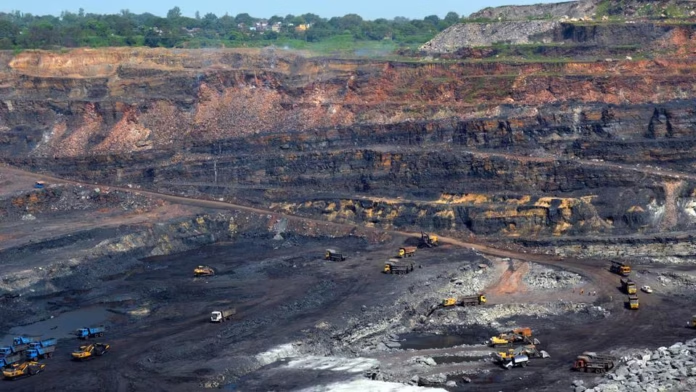
South Eastern Coalfields Ltd. (SECL), one of the leading subsidiaries of Coal India, has earmarked Rs 170 crore for an extensive array of Corporate Social Responsibility (CSR) initiatives in the fiscal year 2024-25. These projects, which are slated for completion over the next two to three years, align with SECL’s commitment to fostering sustainable community development in the regions it operates.

One of the flagship projects of SECL is a significant Rs 48.19 crore Memorandum of Understanding (MoU) with the National Institute of Technology, Raipur, to construct a 500-bed ‘SECL Girls’ Hostel.’ This project will be fully funded by SECL, reinforcing the company’s commitment to supporting higher education for women in the region. The hostel will provide essential accommodation for female students, helping them pursue academic excellence in a safe and supportive environment.

In addition to this, SECL is making strides in enhancing educational infrastructure through its ‘Digi Vidya’ programme. The Rs 13.73 crore initiative, a result of a tripartite MoU signed between SECL, the Anuppur District Administration, and EdCIL India, aims to revolutionise learning in Anuppur, Madhya Pradesh. Under this programme, 84 government schools will be equipped with 265 smart classroom solutions and 84 science labs, empowering students and teachers with modern technology and resources.

SECL is also investing heavily in healthcare, with an allocation of Rs 28.08 crore for the procurement of a state-of-the-art 3.0 Tesla MRI machine for the Late Bisahu Das Mahant Memorial Medical College, Korba. This move aims to bolster the region’s healthcare infrastructure, offering advanced diagnostic capabilities to local communities.

Furthermore, SECL is addressing malnutrition and public health concerns in Vidisha District, Madhya Pradesh, with a Rs 30.92 crore initiative focused on combating malnutrition, stunting, and screening for conditions such as anemia and sickle cell anemia.

In partnership with the National Skill Development Corporation (NSDC), SECL has also announced the establishment of a Multi-Skill Development Institute (MSDI), investing Rs 6.87 crore to train 1,260 youth in SECL operational areas. This initiative aims to equip young individuals with market-relevant skills, boosting employability and contributing to socio-economic upliftment.

These initiatives underscore SECL’s commitment to holistic community development, with a focus on education, healthcare, and skill development, aiming to uplift underprivileged sections of society and ensure long-term sustainability.

THE REVOLUTION IN ILLUMINATION

0

Lighting India: THE REVOLUTION IN ILLUMINATION

How Innovation, Urbanisation, and Lifestyle Changes Are Shaping the Future of Lighting

The Indian lighting industry has emerged as a transformative force within the broader electrical and electronics market. Once a utilitarian segment focused on basic illumination, the sector now defines how spaces are perceived and experienced. From technological breakthroughs to evolving consumer demands, the Indian lighting market navigates complex challenges and opportunities. Our special correspondent, Aditi Thakur’s closer analysis reveals how this industry’s trajectory is intertwined with societal, environmental, and economic changes.

Revolutionary Trends: LED and Beyond

The shift to Light-Emitting Diodes (LEDs) represents more than technological advancement, it signals a paradigm shift in energy consumption and design philosophy: Rohit Mathur, COO of Infra. Market highlights how LEDs have become the cornerstone of modern lighting:

But why has this shift been so impactful? Compared to traditional incandescent bulbs, LEDs consume 75 percent less energy and have 25 times the lifespan. The implications are profound: lower consumer energy bills, reduced carbon footprints, and alignment with India’s global commitments to sustainability. Yet, the widespread adoption of LEDs isn’t just about environmental consciousness. It also reflects a cultural shift, lighting is now viewed as a medium for style, mood-setting, and personal expression.

Urbanisation as a Catalyst for Growth

Urbanisation has been another critical driver of the lighting industry’s growth. Over 35 percent of India’s population lives in urban areas, with megacities like Mumbai, Delhi, and Bengaluru leading the charge. This urban migration has created a demand for modern infrastructure, including malls, highways, and airports, which require advanced, efficient lighting solutions. The rise of urban living has also changed how individuals approach home lighting. Homes are no longer merely illuminated; they are curated.

Economic Insights The Double-Edged Sword of Innovation

While innovation drives the industry forward, it also poses challenges. Advanced technologies like IoT enabled and AI-integrated lighting systems bring higher costs, which can deter mass adoption.

Additionally, the Indian lighting industry relies heavily on imported components, especially energy-efficient LEDs from China. This reliance creates vulnerabilities in the supply chain, particularly during geopolitical or logistical disruptions. As Pawa notes, “The local supply chain is still catching up. Until we achieve self-reliance, the higher costs of imported technologies will remain a barrier for many consumers.”

Shifting Consumer Preferences Wellness and Aesthetics

The pandemic accelerated a shift in consumer behaviour, with individuals seeking lighting solutions that cater to their well-being and interior aesthetics. This trend reflects a deeper awareness of how lighting impacts health and productivity. For instance, poorly designed lighting with excessive glare can strain the eyes and affect mental well-being. “For a long time, lighting was viewed purely as a source of illumination,” explains Pawa. “People are beginning to understand its role in creating comfortable and healthy environments. This has sparked demand for glare-free, ambient lighting solutions tailored for work-from-home setups.” The growing interest in personalised and decorative lighting
has also influenced product designs. Innovations like colourchanging LEDs, dimming functionalities, and IoT controls have made lighting more interactive and customisable. Mathur points out, “Smart technologies are transforming not only how we use light but also how we connect with it.”

The Skilled Workforce Gap A Structural Weakness

The industry’s rapid growth has exposed a critical shortage of skilled professionals. While the demand for specialised lighting designers is rising, the number of them is far behind. This shortage stems from a historical undervaluing of lighting design as a profession.

“In India, architects traditionally handled lighting, considering specialists an unnecessary expense,” says Pawa. “But with increasing disposable incomes and awareness, more people are hiring professional lighting consultants. Although the field is growing, we need significant investment in training programs to meet future demands.”

Balancing Sustainability with Economic Realities

Sustainability is at the heart of the industry’s evolution, but the road ahead is challenging. Sustainable lighting solutions, such as solar-powered or AI-optimised systems, often come at a premium price, creating tension between environmental goals and economic feasibility.

“Many consumers hesitate to pay extra for sustainable products,” observes Manshani. “Producers must innovate to deliver eco-friendly solutions that don’t break the bank.” India’s dependence on imported technologies further complicates the transition to sustainability. A concerted effort toward local manufacturing, research, and development will be essential to overcome this hurdle.


RECPDCL Hands Over Lakadia Transmission Project to Reliance

RECPDCL Hands Over Lakadia Transmission Project to Reliance

RECPDCL Hands Over Lakadia Transmission Project to Reliance

Reliance Industries has been awarded the highly anticipated Lakadia B Power Transmission project, marking a significant development in India’s power transmission sector. The project, which falls under the ambit of the Tariff-Based Competitive Bidding (TBCB) route, was handed over by REC Power Development and Consultancy (RECPDCL), a subsidiary of the Maharatna CPSU, REC. The project will be developed on a Build, Own, Operate & Transfer (BOOT) basis, further solidifying Reliance’s foothold in the energy sector.

As the Transmission Service Provider (TSP), Reliance emerged as the winner after successfully navigating the competitive bidding process, which was managed by RECPDCL, the Bid Process Coordinator. This development is a significant step towards enhancing India’s power evacuation capabilities and fortifying its transmission infrastructure, particularly in Gujarat. The project is aimed at augmenting the transformation capacity at the Lakadia Pooling Station, a critical node in the country’s power transmission grid.

The estimated cost of the project is Rs 512.58 crore, with an implementation period set at 24 months. Once operational, the project will facilitate the evacuation of power from renewable energy generators in the region, particularly wind and solar power projects, thereby contributing to India’s renewable energy goals. The emphasis on power evacuation through this project will aid in managing the fluctuating nature of renewable energy generation, ensuring stable and reliable power transmission.

Reliance Industries’ involvement in this project underscores its growing presence in the infrastructure and energy sectors, where it continues to play a pivotal role in the nation’s energy transition. By securing such large-scale transmission projects, Reliance not only strengthens its portfolio but also supports India’s broader objective of sustainable energy development and enhanced energy security.

This transmission project is poised to make a significant impact on Gujarat’s energy landscape, facilitating better power distribution while meeting the rising energy demands of the region. The successful execution of the Lakadia transmission project will also likely set a precedent for future developments in the transmission space, proving essential in the long-term goal of achieving energy sustainability and grid stability across India.

Real Estate The Scapegoat of Mumbai’s Breathless Struggle

Real Estate The Scapegoat of Mumbai’s Breathless Struggle By Ronita Dsouza

Deonar landfill alone emits 9.8 tonne of methane per hour, contributing significantly to Mumbai’s climate crisis. Methane leaks create ground-level ozone, intensifying heat and threatening both human and environmental health.
This commentary aims to dissect contributors to Mumbai’s air pollution and climate crisis and challenge the simplistic narrative that blames the real estate sector alone. By exploring a broader spectrum of sources— transport, industry, and domestic emissions— it advocates for a balanced, science-driven response. As Mumbai’s AQI worsens each year, the call for decisive, multi-sectoral action is no longer a choice but a necessity.

 Slow Death in Air

Mumbai, once lauded for its invigorating sea breezes and relatively clean air, now grapples with a suffocating reality. The city’s famed coastal charm has been overshadowed by a dark cloud of pollution that hangs heavy, threatening the health of 20 million residents. Once considered a respite from the more polluted interiors of India, Mumbai’s air quality has plummeted alarmingly, with dire consequences for its people and economy. The transformation from a city of clear skies to one of hazardous air is a cautionary tale of unchecked urbanisation and industrial expansion.
The Air Quality Index (AQI) has emerged as a grim indicator of this deterioration. AQI, which measures pollutants such as particulate matter (PM2.5 and PM10), nitrogen dioxide (NO2), sulfur dioxide (SO2), carbon monoxide (CO), and ground-level ozone, reveals a city teetering on the edge of a public health crisis. In the winter months of 2024, Mumbai’s AQI averaged between 200 and 300, placing it in the ‘very poor’ category. On certain days, particularly in industrial zones like Trombay and Chembur, AQI readings breached 400, signaling ‘severe’ air quality levels that pose risks even to healthy individuals.
To look at the severity in context, the World Health Organization (WHO) deems an AQI of 0-50 as safe. Mumbai’s recent average of 250 is five times this threshold, and the concentration of PM2.5 particles, a leading cause of respiratory and cardiovascular diseases, is equally alarming. According to the Centre for Science and Environment (CSE), the city’s annual PM2.5 average has surged to 58 micrograms per cubic meter, exceeding the WHO’s safe limit of 10 micrograms per cubic meter by nearly six times.
The impacts of this crisis are stark. In 2023 alone, air pollution was linked to over 14,000 premature deaths in Mumbai, according to a report by the Indian Council of Medical Research (ICMR). Moreover, hospital admissions for respiratory ailments have spiked by 20 percent over the last three years, with paediatric asthma cases showing a particularly worrisome rise. Schools in polluted zones report absenteeism due to respiratory infections, while elderly citizens in hotspots like Mahul and Trombay increasingly rely on medical oxygen support.
Mumbai’s pollution sources are varied and interconnected. A study by SAFAR (System of Air Quality and Weather Forecasting and Research) attributes 30 percent of the city’s pollution to the transport sector, driven by 3.8 million vehicles on the road, many of which are older than 15 years and classified as “super emitters.” Industries, including power plants and refineries in the Trombay region, contribute 18 percent of the pollution load. The construction sector adds another 10-15 percent, with unregulated activities exacerbating particulate matter emissions.
Perhaps the most alarming is the cumulative effect of these pollutants on Mumbai’s most vulnerable populations. The Global Burden of Disease Study estimates that life expectancy in Mumbai is reduced by 3.2 years due to chronic exposure to air pollution. The psychological toll is equally profound, with residents in hotspots constantly fearing health crises.

Battle for Every Breath

In the sprawling chaos of Mumbai, where life moves as fast as the trains that define the city’s heartbeat, a silent crisis unfolds with every breath. The air that carries hopes and dreams of millions is laced with invisible toxins. For decades, the pollution seemed like a distant shadow, obscured by the glitter of skyscrapers and the hum of progress. But today, it hangs heavy, choking the city’s spirit.
Mumbai’s air quality crisis is not born of a single villain but the result of a tangled web of contributors—each playing a role in a story of negligence, mismanagement, and survival. It is a crisis where actions of many intersect, compounding the damage and creating a systemic problem that no single solution can untangle.

Roads that Choke: Transport at 30 pc

Every morning, the city awakens to the roar of 3.8 million vehicles—a lifeline for the world’s most densely populated metropolis. But beneath the hum of engines lies a darker truth. Nearly 35 percent of these vehicles are older than 15 years, spewing pollutants like PM10 and nitrogen oxides (NOx) far beyond acceptable limits. Dubbed ‘super emitters’, these aging machines are responsible for 49 percent of PM10 emissions from the transport sector.
For Suresh, a taxi driver in Andheri, his car is more than a vehicle—it is survival. “I know it pollutes,” he admits, “but what choice do I have? A new car costs more than I can afford in a lifetime.” His story is echoed by thousands who rely on these ageing vehicles to make a living, even as they add to the city’s pollution burden.
Mumbai’s roads are not just clogged with cars, they are lined with frustration. Congestion in areas like Sion, BKC, Dadar, and Bandra amplifies emissions. Vehicles idle for hours turn these neighbourhoods into pollution hotspots. Despite efforts like Metro, the city’s infrastructure struggles to keep pace with its population, leaving Mumbai reliant on its motorised veins.

Factories and Fumes: Industry at 18 pc

If transport is the visible face of Mumbai’s pollution, industry operates in the shadows. Zones like Trombay and Chembur hum with activity, home to refineries, power plants, and chemical factories that fuel the city’s economy but poison its air.
Take the Tata Power Trombay Thermal Plant, which burns 2.4 million tonne of coal annually, releasing sulphur dioxide (SO2) and fine particulates into the atmosphere. Or BPCL and HPCL refineries, whose operations emit significant amounts of volatile organic compounds (VOCs) and PM10. These emissions are a death sentence for the residents of Mahul, a nearby settlement.
Sunita Yadav, a Mahul resident, describes the air as “acidic.” “We cough until our throats burn. The smell never leaves— it follows you into your home, your dreams.” Doctors in the area report a rise in chronic respiratory illnesses, with children and the elderly the worst affected.
Despite these grim realities, industries operate with minimal oversight. The Continuous Emissions Monitoring Systems (CEMS) remain absent in many facilities, allowing pollutants to flow unchecked. The factories may keep Mumbai running, but they also keep the skies grey

Dust of Progress: Construction at 10 pc-15 pc

Across Mumbai, cranes stretch towards the sky, excavators tear into the earth, and the city grows taller and denser. The dust rising from these sites is the most visible face of pollution, making construction an easy target for blame. But is it truly the villain it’s made out to be?
Construction dust contributes 10 percent to 15 percent of PM10 emissions, with hotspots like Byculla and Navi Mumbai recording AQI levels exceeding 200 during peak activity. Regulations mandate dust suppression measures, but enforcement is inconsistent. Many smaller projects skirt the rules, adding to the city’s particulate burden.
Yet halting construction comes at a cost. Each delayed project means more families waiting for homes, more hospitals postponed, and more incomplete infrastructure. For every crane that stands still, livelihoods are disrupted, and dreams are deferred.

Crisis of Interactions

Mumbai’s air pollution is not just a sum of its parts—it is a crisis born of interactions.
  • Emissions from transport mix with industrial NOx to form ground-level ozone, creating invisible toxins that aggravate respiratory conditions.
  • l Dust from construction amplifies windblown particulates, creating localised hotspots where AQI spikes to hazardous levels.
  • Domestic emissions and waste burning combine to form toxic plumes, affecting neighbourhoods far beyond their origin.
This interconnectedness ensures that no single solution will suffice. Addressing one sector in isolation is like patching a leak in a sinking ship—it may slow the flood, but it will not stop it.

Trombay : Epicentre of Pollution

Trombay, an industrial powerhouse on Mumbai’s eastern periphery, is emblematic of the city’s dual identity: a hub of economic activity and a significant contributor to its environmental crisis. Hosting some of India’s largest industrial establishments, including Tata Power, Rashtriya Chemicals and Fertilizers (RCF), Bharat Petroleum Corporation Limited (BPCL), Hindustan Petroleum Corporation Limited (HPCL), and Bhabha Atomic Research Centre (BARC), Trombay drives Mumbai’s economy while simultaneously degrading its air quality. Coupled with logistics hubs and high-traffic corridors, Trombay has become a major hotspot for pollutants such as PM2.5, PM10, NOx, SO2, and VOCs, affecting both the environment and public health. This section explores Trombay’s key industrial contributors, their operational dynamics, and environmental impact they impose on Mumbai.

CASE STUDY 1

Mumbai’s Live Volcano – A Crisis of Neglect and Survival

Mumbai, the Maximum City, thrives on its unyielding pace and dreams. Yet beneath the shimmering skyline and the promises of progress lie a silent, growing crisis—its mountains of waste. Mumbai generates nearly 9,000- 11,000 metric tonne of garbage daily, a staggering one-third of Maharashtra’s total waste. This refuse, composed of organic, plastic, metal, biomedical, and electronic materials, is shipped to the city’s overburdened landfills, turning them into ticking environmental and humanitarian time bombs. Every breath is a battle for those living in the shadow of these trash mountains.

Mountains of Misery: Deonar and Beyond

The Deonar dumping ground, established in 1927, sprawls over 134 hectares and receives 6,000-9,000 metric tonne of waste daily, despite exceeding capacity in 2002. Fires erupt periodically, sending toxic smoke plumes into the surrounding areas. The acrid smell of burning plastic and methane hangs heavy in the air, an ever-present reminder of civic neglect.
For residents of Shivaji Nagar, a slum bordering Deonar, life revolves around this trash mountain. “We cough until it feels like our lungs will collapse,” says Noor Fatima, a mother of three. Her children, like many others, suffer from chronic respiratory illnesses. According to a study by the Tata Institute of Social Sciences (TISS), the average life expectancy in this area is a shocking 39 years, compared to 73.5 years in the rest of Maharashtra. This stark disparity is not just a health crisis but a reflection of systemic inequality.

Human Cost of Landfills

Deonar, once considered on the outskirts of Mumbai, is now enveloped by dense urbanisation. Educational institutions like the Tata Institute of Social Sciences (TISS) and NGOs like Apnalaya have repeatedly highlighted the plight of the M-East ward, where the landfill sits. Their studies reveal a grim reality:
  • Respiratory Illnesses: Malnutrition, tuberculosis, and asthma are rampant among residents.
  • Toxic Air: Methane and toxic gases from the landfill, exacerbated by medical-waste incinerators, poison the atmosphere.
  • Health Hazards: Fires at the landfill release carcinogens, further worsening air quality.
“The medical waste incinerator is the biggest culprit,” says Purva Dewoolkar, a TISS researcher. Located just outside the Deonar landfill, this private facility, run by SMS Envoclean, churns out hazardous fumes day and night. Residents, however, have little recourse. Many do not exist on electoral rolls, leaving them voiceless in a system that prioritises urban progress over human lives.

Methane: A Climate and Human Catastrophe

Deonar and Kanjurmarg are not just Mumbai’s largest dumping grounds; they are also among its biggest emitters of methane, a greenhouse gas 25 times more potent than carbon dioxide. A study found that one landfill alone emits 9.8 tonne of methane per hour, contributing significantly to India’s climate crisis. Methane leaks create ground-level ozone, intensifying heat and threatening both human and environmental health.
“Organic waste decomposes anaerobically in landfills, generating methane,” explains a waste management consultant. “These emissions are not just an environmental hazard they are a direct threat to human life.” The fires that periodically erupt in the landfills release toxic fumes, further compounding the crisis. For those living nearby, these fires are not news they are a part of life. “The sky turns black, and the smell makes us gag. But where can we go?” asks Abdul Rehman, a Deonar resident.

Broken System: Mismanagement and Neglect

Mumbai’s waste management system, though massive, is deeply flawed. With Gorai and Mulund landfills closed, the burden falls squarely on Deonar and Kanjurmarg, both of which are nearing capacity. The lack of proper segregation facilities exacerbates the problem. Instead of separating biodegradable and non-biodegradable waste, the city’s garbage is dumped en masse, creating mountains of mixed refuse that are nearly impossible to process. “The rules state that landfills should be kilometres away from human habitation,” says Stalin D, an environmental activist. “But in Mumbai, they sit next to housing colonies, schools, and hospitals. It’s as though these people are invisible.”
Mumbai’s waste crisis is more than a logistical problem—it reflects how the city values its people, particularly its most vulnerable. In slums like Dharavi, home to over a million people, open burning is not just common—it’s a survival tactic. Without access to proper disposal systems, residents burn garbage to manage their waste, inadvertently releasing a cocktail of pollutants into the air. These fires emit PM2.5 particles, carcinogens, and toxic gases like dioxins and furans, which pose severe health risks.

Burning Reality: Garbage Fires and Toxic Air

Despite the NGT’s 2016 ban on open garbage burning, Mumbai has not fined a single violator in over 17 years. The city’s clean-up marshals, once tasked with monitoring and penalising illegal dumping and burning, were disbanded in 2022 when their contracts expired. The absence of enforcement mechanisms has allowed these harmful practices to persist unchecked.
According to Dr. Jalil Parkar, pulmonologist at Lilavati Hospital, “Burning plastic, rubber, and other synthetic materials releases fine particles that mix with the air, turning it toxic. These fumes contain carcinogens that increase the risk of cancer and respiratory illnesses, particularly among vulnerable populations like children and the elderly.”
The BMC’s waste management strategy, outlined in its Mumbai Air Pollution Mitigation Plan (MAPMP), identifies garbage burning as one of the top five contributors to the city’s deteriorating air quality. However, gaps in implementation have rendered this plan largely ineffective.
While BMC mandates waste segregation in gated communities, it has failed to extend these practices to slum clusters, where much of the waste is generated. An official admitted, “In slum clusters, segregation of waste is not carried out due to lack of awareness. As a result, most people burn the waste.”

Human Cost: Health and Inequality

For Mumbai’s poorest residents, the waste crisis is not just an environmental issue—it’s a matter of survival. In Dharavi and other slum clusters, the lack of proper waste management infrastructure forces residents to live amid garbage. The health impacts are devastating:
  • Respiratory Illnesses: Children and the elderly are disproportionately affected by asthma, bronchitis, and other respiratory conditions caused by prolonged exposure to toxic air.
  • Chronic Diseases: Carcinogens released from burning plastics increase the risk of long-term illnesses like cancer.
  • Social Injustice: Without access to clean air and proper waste disposal, slum dwellers bear the brunt of the city’s negligence, while wealthier neighbourhoods enjoy comparatively cleaner environments.
As Mumbai dreams of becoming a global city, it must reckon with the mountains of waste it leaves in its wake. The residents of Shivaji Nagar, Mankhurd, Dharavi, and Deonar deserve better—not just for themselves but for the city they call home. It is time for Mumbai to reclaim its air, dignity, and promise of opportunity for all. Only then can it truly be the Maximum City.

CASE STUDY 2

Mahul: Every Day a Winter of Struggle

When winter descends upon Mumbai, the city’s privileged neighbourhoods begin to notice the air they breathe. The chill in the air brings a nip and a blanket of smog that makes breathing a conscious effort. Conversations shift to air purifiers, masks, and weather apps tracking the Air Quality Index (AQI). But as the privileged grapple with a few months of poor air, Mahul, a forgotten pocket of Mumbai, battles for breath every single day of the year.
For the 55,000 residents of Mahul, there is no respite, no winter-specific phenomenon to blame, and no luxury of temporary fixes. Encircled by 15 chemical factories, two major oil refineries, and a coal-fired thermal power plant, Mahul lives in an unending storm of pollutants. In this small, isolated neighbourhood, pollution isn’t a seasonal inconvenience; it’s a daily fight for survival.

Tale of Haves & Have-Nots in the Sky

In South Mumbai, as AQI levels rise above 200 during winter months, residents begin to panic. Air purifiers sell out, jogging routines are replaced by indoor yoga, and discussions over brunches are peppered with concerns about the lingering smog. But for Mahul, where AQI levels rarely dip below 300 on any given day, these concerns seem like a distant luxury.
The air here carries the sharp tang of chemicals from the nearby BPCL and HPCL refineries. Sulphur dioxide and nitrogen oxides fill the atmosphere, while fine particulate matter (PM2.5 and PM10) settles on windowsills, food, and skin. The World Health Organization (WHO) recommends that PM2.5 levels not exceed 10 micrograms per cubic meter, but in Mahul, these levels routinely exceed 60-70 micrograms, making breathing akin to inhaling poison.
Priya Desai, a 36-year-old mother of two with tuberculosis, describes her life in Mahul with resigned despair: “I don’t worry about my health. I worry about my six-year-old son choking in the middle of the night.” Her son, Aarav, has already been hospitalised three times this year with severe asthma attacks. The family cannot afford to move, trapped by the government’s Project Affected People (PAP) scheme, which placed them in Mahul after a road widening project in Sion-Chunabhatti displaced them.
Unlike the privileged neighbourhoods of Mumbai that experience only a few months of discomfort, Mahul’s residents are exposed to hazardous air year-round. A recent study by the Centre for Science and Environment (CSE) revealed that 90 percent of Mahul’s residents suffer from respiratory ailments, including asthma, bronchitis, and chronic obstructive pulmonary disease (COPD). Many, like Aarav, live with the constant fear of suffocation—a fear that never fades, even after winter gives way to spring.
For the privileged class of Bandra and Worli, winter pollution in Mumbai is a temporary disruption to daily routines. It sparks debates over clean energy, better urban planning, and temporary halts to construction projects. For Mahul, however, these debates remain theoretical, far removed from the urgency of their reality. The National Green Tribunal (NGT) ordered the Brihanmumbai Municipal Corporation (BMC) in 2019 to relocate Mahul’s residents, labeling the area “unfit for human habitation.” Yet, years later, the government has failed to act, citing logistical hurdles and a lack of alternative housing. For Mahul, the winter panic in affluent neighbourhoods is a cruel irony—a city that notices pollution for a season but ignores its toxic heart all year round.
In affluent areas of Mumbai, parents worry about whether the air is clean enough for their children to play outside during winter. In Mahul, parents worry whether their children will grow up at all. A study by the Indian Council of Medical Research (ICMR) in 2024 found that Mahul’s children have stunted lung development due to prolonged exposure to PM2.5. Schools in Mahul report absenteeism rates of over 40 percent, as children frequently fall sick with respiratory infections. Dr. Arvind Rao, a paediatrician who runs a clinic in Mahul, describes the plight of his young patients: “Most of the children I see here have lungs that resemble those of heavy smokers. Their bodies are fighting battles they don’t even understand.”
Perpetual Fear of Winter
The privileged in Mumbai may curse the haze brought by traffic and construction dust during the colder months, but Mahul’s air carries the emissions of industrial giants all year long. The Tata Power Trombay Thermal Plant, burning over 2.4 million tonnes of coal annually, releases sulphur dioxide (SO₂) and particulate matter into Mahul’s skies. The refineries of BPCL and HPCL emit volatile organic compounds (VOCs) and nitrogen oxides (NOₓ), contributing to the toxic cocktail residents inhale daily.
The health impacts are devastating. According to the Maharashtra Pollution Control Board (MPCB) data, Mahul’s air regularly exceeds safe pollution limits by 400 percent. Children as young as five are developing chronic respiratory conditions. The elderly, like 68-year-old Ramesh Patel, suffer from constant wheezing and chest pains. “Every breath feels heavy,” Ramesh says. “We are breathing poison, but we have nowhere else to go.”
Mumbai’s battle with air pollution is often framed as a seasonal phenomenon, with the privileged experiencing discomfort during winter months. But Mahul’s story is a stark reminder that for many, pollution is not a passing inconvenience—it is a permanent crisis. While some neighbourhoods worry about AQI charts for a few months a year, Mahul’s residents live in the shadow of industrial chimneys that poison them daily.
The city’s indifference to Mahul’s plight reflects a larger issue: a failure to prioritise environmental justice for the most vulnerable. As Mumbai debates solutions for its winter smog, it must confront the harsh truth that Mahul’s air is a year-round emergency. Until then, the people of Mahul will continue their quiet, desperate fight for something the rest of the city takes for granted—the simple act of breathing.

Key Industrial Establishments in Trombay

Tata Power Trombay Thermal Plant

As Mumbai’s largest coal-fired power plant, Tata Power Trombay burns over 2.4 million tonnes of coal annually to meet the city’s energy needs. While it powers Mumbai’s homes and industries, it also emits large amounts of PM2.5, SO₂, and NOₓ. According to data from the Maharashtra Pollution Control Board (MPCB), the plant accounts for 35 percent of Trombay’s SO₂ emissions and contributes significantly to PM2.5 levels in nearby neighbourhoods. Although the plant has installed scrubbers to control emissions, their effectiveness is limited by the scale of operations, especially during peak demand periods. Residents of Mahul and Chembur experience high respiratory ailments directly linked to the plant’s emissions. A 2024 Greenpeace report identified Tata Power Trombay as one of the city’s most significant contributors to respiratory hospitalisations.

Rashtriya Chemicals and Fertilizers (RCF)

RCF is one of India’s leading nitrogen-based fertiliser producers. However, its operations release harmful chemicals such as ammonia, NOₓ, and particulate matter into the air. RCF’s nitrogen-based processes emit significant amounts of NOₓ, a precursor to ground-level ozone and secondary particulate matter. Ammonia leaks further exacerbate air quality issues in the surrounding areas. Chembur and Wadala East, home to thousands of residents, are heavily affected by these emissions. A study conducted by IIT Bombay in 2023 revealed elevated levels of NOₓ and ammonia within a 3-km radius of the plant, correlating with increased cases of chronic bronchitis.

BPCL and HPCL Refineries

Trombay’s refineries, operated by BPCL and HPCL, play a critical role in processing crude oil into fuels and petrochemicals. However, their activities release VOCs, SO₂, and PM₁₀, contributing significantly to Trombay’s pollution burden. The two refineries emit over 15,000 tonnes/year of SO₂ and significant quantities of VOCs. Storage tanks and pipelines often release hydrocarbons, further adding to ground-level ozone formation. In 2023, MPCB audits highlighted frequent violations of emission standards, particularly during fuel storage and transportation. These lapses have intensified the health impact on nearby residents.

Logistics Hubs and Transport Corridors

Trombay’s role as a logistics hub sees thousands of trucks, tankers, and rail freight vehicles pass through daily. This contributes to high levels of PM₁₀, NOₓ, and CO, further compounding the region’s pollution. Roads leading to BPCL, HPCL, and RCF experience frequent congestion, with idling vehicles releasing significant pollutants. A 2024 SAFAR report states these logistics corridors contribute 20 percent of Trombay’s total PM₁₀ emissions.
Trombay stands as a critical case in balancing industrial growth with environmental sustainability. While it powers Mumbai’s economy, its emissions contribute disproportionately to the city’s air pollution crisis. Without immediate intervention, the region’s pollution will continue exacerbating public health and environmental degradation, creating an unsustainable future for both Trombay and Mumbai. This case study highlights the urgent need for stricter regulations, technological innovation, and inclusive urban planning to ensure that Trombay’s industrial might does not come at the cost of its residents’ health and wellbeing.

Misplaced Blame

Mumbai is a city of dreams, a place where hopes are built as high as skyscrapers that dot its ever-changing skyline. It is a city that breathes life into millions, offering shelter, opportunity, and a promise of a better future. But today, this city, known for its indomitable spirit, finds itself gasping for breath. Amidst the smog and pollution that hang heavy in the air, one sector—the real estate and construction industry—bears the brunt of blame.
The truth, however, is more complicated. Mumbai’s construction sites may be visible, but they are not the villains they are made out to be. The dust rising from these sites is not just dust; it is a reflection of homes waiting to be built, schools for children, hospitals for the ailing, bridges, roads, and metros connecting communities. To halt these projects is to halt progress, and the cost of such actions ripples far beyond what meets the eye.

Convenient Target

Picture this: a bustling construction site in the heart of Mumbai. Cranes swing steel beams into place, trucks rumble down dusty roads, and labourers sweat under the blazing sun. This scene is a symbol of growth, but it is also an easy target. The dust and debris are visible, tangible, and easy to blame when the city’s air turns grey. It doesn’t matter that this dust accounts for just 10 percent-15 percent of Mumbai’s PM10 levels, according to SAFAR, compared to 30 percent from transport and 18 percent from industries. What matters is that it is seen.
For policymakers and the public alike, construction has become the face of pollution. In the winter of 2024, when Mumbai’s AQI plunged into the ‘very poor’ category, construction sites in Borivali and Byculla were ordered to shut down. It was a swift decision meant to show action, but it came with consequences that reached far beyond cleaner air for a few days.
When the machines stopped and the dust settled, it wasn’t just buildings that came to a halt—it was the livelihoods of thousands of workers. The shutdown was devastating for people like Ramesh Kumar, a construction labourer from Uttar Pradesh. “I came to Mumbai to work hard and send money back home. But when the site closed, I had no way to earn. I couldn’t even afford food for my family,” he recalls.
Ramesh’s story is not unique. Construction employs over 50,000 daily wage workers in Mumbai alone. These workers, often migrants, live paycheck-to-paycheck. A week without work means going hungry; a month means returning to their villages with shattered dreams. The impact doesn’t stop there. The halt of construction ripples through industries—cement suppliers, transporters, steel manufacturers—each bearing their share of the burden.

Cost to Mumbai’s Growth

Every Mumbaikar dreams of owning a home in this city of aspirations. Yet, each time construction halts, that dream moves further out of reach. Affordable housing projects, many of which are already delayed, are pushed back even further. In 2024, several Slum Rehabilitation Authority (SRA) projects were frozen for months, leaving thousands of families stuck in unsafe and inadequate conditions.
The delays mean escalating costs for developers, which are ultimately passed on to buyers. Keval Valambhia, Chief Operating Officer of CREDAI-MCHI explains, “When construction stops, it’s not just the workers who suffer. The cost of delays makes housing unaffordable for the middle-class, pushing them further away from their dream homes.”And what about the city’s infrastructure? Each delayed bridge and Metro line means more traffic congestion, and each stalled hospital project means fewer beds for the sick. Halting construction doesn’t just slow growth—it stifles the lifeline of a city striving to accommodate its growing population.

Conclusion: Building Smarter, Not Stopping Progress

Blaming construction is easy, but solutions require vision. Mumbai doesn’t need to stop building—it needs to build smarter. The answer lies in embracing sustainable materials and practices that reduce pollution without halting progress.

Green Cement for a Cleaner Future

Cement production accounts for 7 percent of global CO₂ emissions, but innovations like green cement—made with fly ash and slag—can cut emissions by 30 percent. If every construction site in Mumbai used green cement, the impact on air quality would be profound.

Eco-Friendly Materials

Alternatives like bamboo, recycled steel, and compressed stabilized earth blocks lower carbon footprints and make construction more sustainable. Imagine schools built with materials that don’t harm the planet, homes designed to blend with nature, and hospitals powered by renewable energy.

Cleaner Construction Practices

Dust suppression systems, water sprays, and modular construction techniques can minimize on-site emissions. The goal is not to stop progress but to make it cleaner and more thoughtful.

Shared Responsibility

The air Mumbai breathes is not polluted solely by construction. Vehicles stuck in traffic spew black smoke, industries along Trombay’s coast release sulphur dioxide, and landfills like Deonar burn waste, adding toxins to the air. Each of these sources contributes to the crisis, yet construction bears the brunt of the blame because it is the most visible. As Mumbaikars, we must ask ourselves: Do we want a city that grows responsibly or one that stands still? Progress doesn’t mean pollution. It means finding better ways to build, live, and breathe. Developers must adopt sustainable practices, and policymakers must focus on systemic solutions, not just symbolic actions.
Every halted project represents more than a building—it represents people: families waiting for their first home, workers earning their daily bread, and children dreaming of a better future. Mumbai thrives on ambition and resilience, and its construction sector is the backbone of that spirit. Blaming construction for the city’s air woes is like treating a symptom while ignoring the disease. The solution isn’t to stop building; it’s to build better. Mumbai deserves a skyline that reflects not just its ambition but also its commitment to sustainability. And every Mumbaikar deserves to breathe cleaner air without giving up on the city’s promise of progress.
Because Mumbai isn’t just a city—it’s a living, breathing dream. And every breath counts.


AMENDMENTS AND FUTURE TRENDS IN RERA

0

AMENDMENTS AND FUTURE TRENDS IN RERA: WHAT TO WATCH FOR
IN 2025 AND BEYOND 

By Dr Harshul Savla (MRICS) with Inputs from Amaanuddin Siddique

RERA, the Real Estate (Regulation and Development) Act, 2016, has been pivotal in reshaping the Indian real estate sector. It has emerged as a landmark in the country’s real estate landscape by enhancing transparency, fostering accountability, and empowering consumers. The past two years, from 2023 to 2024, have seen numerous amendments aimed at refining its operations, ensuring greater compliance, and addressing emerging challenges in the industry. As we look towards 2025 and beyond, RERA is poised to evolve further, introducing new provisions and trends that will shape the future of real estate development, project management, and consumer rights.

Overview of Recent RERA Amendments

The amendments introduced in the past two years were crucial in enhancing RERA’s effectiveness in regulating the real estate market. A standout change has been the increased scrutiny of project registrations. Maharashtra, for instance, enforced a rule requiring developers to confirm that no duplicate registrations exist on the same land parcel. This measure was designed to eliminate confusion and ensure that land is not misused for multiple conflicting projects. Additionally, developers seeking project extensions are now subject to more stringent checks. These amendments include fines for unnecessary delays and more robust compensation mechanisms for buyers affected by these delays, ensuring developers remain accountable and projects are completed within a reasonable timeframe.

Along with these, the push for affordable housing saw greater attention. States like Maharashtra have taken steps to use unused land, including salt pan areas, for affordable housing developments, providing housing solutions for economically weaker sections. Technological integration has also risen rapidly, with many states implementing digital platforms that simplify registration and grievance resolution processes. These initiatives have improved RERA’s overall transparency and efficiency, making the regulatory environment more accessible and user-friendly. Noteworthy also was RERA’s ‘amenities disclosure’ ruling, which mandates that developers include a detailed list of amenities in their projects’ sale agreements. This has improved the clarity around what buyers can expect, ensuring that developers’ promises are backed by legal accountability. Another significant change stipulated that developers have three years from project initiation to complete possession, a timeline set to help address project delays and prevent buyer exploitation.

Upcoming Trends and Possible Amendments in 2025 and Beyond

Several trends and amendments are expected to reshape RERA’s framework, leading to more uniformity, accountability, and sustainability in the real estate sector. One of the anticipated changes is the standardisation of RERA regulations across states. Different states interpret and implement RERA provisions in varied ways, leading to confusion and inconsistency. In the coming years, there may be a push to create a more uniform set of guidelines that apply across the country, making it easier for developers operating in multiple states. Additionally, sustainability is expected to become a core focus of future amendments. The growing awareness of climate change and environmental responsibility pushes the real estate sector toward greener practices. Developers may soon be required to adhere to sustainability benchmarks, such as energy efficiency, waste management, and eco-friendly materials. This could be accompanied by financial incentives like tax rebates or reduced loan interest rates for developers who integrate these practices into their projects.

Another likely development is the  imposition of stricter penalties for non-compliance. The government is expected to ramp up efforts to penalise developers who fail to meet deadlines or engage in unethical practices, reinforcing RERA’s goal of ensuring accountability and protecting consumer interests.

Impact on Developers and Builders

The evolving regulatory landscape under RERA presents challenges and opportunities for developers and builders. One of the most immediate effects of the recent amendments is the stricter enforcement of project timelines. Developers now face higher penalties for delays, pushing them to adopt more efficient project management practices. This shift may drive the adoption of advanced construction technologies, including prefabrication and modular building techniques, to reduce delays and meet deadlines.

While compliance with RERA’s more stringent provisions may increase costs, particularly regarding sustainability measures, long-term benefits may offset these costs. Green-certified buildings are becoming increasingly popular with homebuyers, who are more willing to pay a premium for eco-friendly homes. Furthermore, these developments could attract more investment, especially in the context of international sustainability standards that investors now prioritise. Developers must also invest in technology to meet these evolving regulations. Digital tools that track project progress, manage compliance, and facilitate buyer communication will become essential. As the industry moves towards greater digitalisation, developers who embrace these technologies will have a competitive advantage.

Implications for Home Buyers and Investors

The amendments to RERA provide more security and protection for homebuyers. Introducing stronger buyer protections, such as more robust grievance redress mechanisms and higher compensation for delays, is a positive shift. These changes address the long-standing concerns of homebuyers who often face delays or discrepancies in promised project specifications. With the new regulations, consumers can expect better accountability from developers, reducing the risk of investing in delayed or underperforming projects. Investors, too, stand to benefit from these changes. The greater transparency in project registrations and completion timelines will provide investors with more reliable information, helping them make more informed decisions. The focus on green development will likely drive demand for sustainable properties, offering investors a new avenue for returns. However, with sustainability mandates and higher costs associated with compliance, developers may pass some of these costs on to consumers, making it essential for investors to factor these changes into their investment strategies.

State-Specific Variations in RERA Regulations

While RERA is a national law, its implementation varies from state to state, resulting in some inconsistencies. State-specific variations in RERA regulations are a testament to the federal nature of India’s governance, allowing each state to adopt the Act’s provisions based on local needs and real estate dynamics. With its proactive Maha RERA authority, Maharashtra has been at the forefront, implementing stringent digital platforms and introducing measures like automated project updates and real-time grievance redressal mechanisms. For instance, MAHA RERA recently launched a feature enabling buyers to track project progress digitally, ensuring greater transparency.

On the other hand, states like Uttar Pradesh and Haryana have focused more on addressing legacy issues, such as stalled projects. Uttar Pradesh’s UP-RERA played a significant role in reviving delayed projects by enforcing stricter compliance timelines and imposing financial penalties on non-compliant developers. Haryana’s HRERA, meanwhile, introduced measures to safeguard homebuyers by mandating escrow accounts for all ongoing projects, ensuring funds are used solely for the intended developments. These regional adaptations often result in distinct operational dynamics.

For example, Goa has relaxed norms for smaller projects under RERA, exempting those under 500 sq mt and acknowledging the state’s focus on boutique real estate developments. Similarly, Kerala has prioritised affordable housing by offering incentives under its state-level RERA, aligning with local housing needs. Such state-specific variations highlight the flexibility of RERA while also emphasising the need for a more harmonised framework to minimise ambiguities for developers operating across multiple jurisdictions. Over time, we will see a convergence in state-specific RERA regulations as more states adopt the best practices from regions with more developed frameworks. This standardisation will make it easier for developers to operate across state lines and reduce current regulatory complexity.

Sustainability and Green Building Regulations

Sustainability is set to become a central tenet of future RERA regulations. As awareness of climate change and environmental sustainability increases, the real estate sector is pressured to adopt green practices. Future amendments to RERA are expected to introduce mandatory sustainability benchmarks for new developments. These could include energy-efficient designs, the use of renewable energy, water conservation measures, and waste management protocols.

In India, green building certifications such as IGBC (Indian Green Building Council) and GRIHA (Green Rating for Integrated Habitat Assessment) are central to fostering sustainable development. Certified projects emphasise efficient resource use, reduced carbon footprints, and enhanced occupant well-being. For instance, Mahindra Eden in Bangalore stands out as India’s first net-zero energy residential project, using 100 percent renewable energy and integrating biodiversity-friendly practices. Similarly, Brigade Opus in Bengaluru features India’s largest bio-wall, contributing to better air quality and thermal regulation. The Shapoorji Pallonji Parkwest project in Bengaluru incorporates extensive rainwater collection systems and preserves existing trees to minimise environmental disruption.

At a macro level, India has committed to cutting carbon emissions by 1 billion tonnes by 2030 and achieving net-zero emissions by 2070. This commitment is supported by advancements in energy efficiency and renewable energy use in the real estate sector, which currently contributes 30-40 percent of global carbon emissions.

The Role of Technology in RERA Compliance

Technology is revolutionising RERA compliance, making processes more efficient, transparent, and accessible. Digital platforms like MAHA RERA’s comprehensive portal enable developers and homebuyers to access real-time project updates, file grievances, and monitor compliance seamlessly.

MAHA RERA has also pioneered by employing artificial intelligence (AI) to detect advertisements that lack mandatory registration numbers or QR codes, ensuring compliance with advertising norms. Furthermore, MAHA RERA is developing an AI-powered grading system for real estate projects, which will assess them based on factors such as timeliness, quality, and adherence to regulations, offering buyers valuable insights and improving developer accountability.

Blockchain technology is being piloted for property registrations in states like Telangana to ensure tamper-proof records and prevent fraud. These initiatives enhance transparency and trust by creating immutable digital property ledgers.

Additionally, states like Karnataka have introduced integrated systems that automate compliance checks, expediting project approvals. Geographic Information Systems (GIS) are utilised to analyse land-use data, ensuring that developments conform to zoning regulations and enable developers to align projects with local policies.

These advancements demonstrate how technology streamlines compliance and fosters trust and innovation within the real estate sector by addressing long-standing issues such as delays, fraud, and lack of transparency. The continued digitalisation of the real estate sector will make it easier for developers to comply with RERA regulations, streamline communication with consumers, and improve overall efficiency.

Conclusion
As RERA continues to evolve, the act will profoundly impact India’s real estate sector. The amendments made in the previous years have paved the way for a more transparent, accountable, and sustainable future, while upcoming trends point toward increased digitalisation, stricter compliance, and a stronger focus on sustainability. Developers, investors, and homebuyers must stay informed and adapt to these changes to navigate the increasingly complex landscape. The future of RERA promises a more robust regulatory framework that will ensure the growth and stability of the real estate industry, benefiting all stakeholders in the long term.


Adani Announces Rehabilitation of 85,000 in Dharavi

0
Adani Announces Rehabilitation of 85,000 in Dharavi

Adani Announces Rehabilitation of 85,000 in Dharavi

In a significant milestone for Mumbai’s iconic Dharavi redevelopment project, Adani Group has reported that approximately 85,000 residents have been successfully rehabilitated as part of the ongoing urban transformation. The ambitious redevelopment initiative aims to overhaul the area’s infrastructure while improving living conditions for its residents, who have long endured the challenges of overcrowding and inadequate facilities. The relocation of this vast number of residents marks a crucial step in realising the vision of turning one of Asia’s largest slums into a modern urban hub.

The rehabilitation process, spearheaded by Adani, involves providing new homes to residents in the newly developed zones of Dharavi, equipped with modern amenities and better accessibility. The project not only addresses housing needs but also focuses on creating a sustainable living environment, complete with educational facilities, healthcare services, and improved transportation links. By prioritising these aspects, the initiative aims to enhance the quality of life for thousands who have lived in Dharavi for generations, often in unsanitary and congested conditions.

Adani’s efforts to rehabilitate such a large population is part of a broader urban development plan for the area, which is one of the largest slums in the world, spanning over 600 acres. Dharavi is strategically located in the heart of Mumbai, making its redevelopment crucial not only for the welfare of its residents but also for the city’s overall growth. The project is expected to provide long-term economic benefits, boosting employment in construction, real estate, and related sectors while addressing the pressing issues of overcrowding and infrastructure strain.

While the project has faced its fair share of challenges, including land acquisition hurdles and coordination with local authorities, the rehabilitation of 85,000 residents stands as a testament to the progress that has been made. As the Dharavi redevelopment continues to evolve, Adani’s commitment to improving the lives of its residents remains a focal point in transforming this historic locality into a modern urban space.

Rushi Mehta Real Estate Capital Gains Tax Unravelled

0

Rushi Mehta Real Estate Capital Gains Tax Unravelled

Are you planning to sell your house or invest in real estate, or have you recently
inherited some property? Dealing with your real estate assets will have taxation
implications, and taxation laws in India are changing every year. Keeping up with
the ever-changing taxation environment is a head-scratching exercise. If you are
grappling with these issues, then you are in the right place, as we will discuss all
aspects concerning capital gains tax affecting your real estate assets. I am going to refrain from using technical jargon and confusing concepts. Through this article, I aim to provide the readers with an eagle-eye perspective of the taxation landscape of real estate as an asset class, including an overview of the various factors affecting the sale/purchase of a capital asset.

Capital gains refer to the profits obtained from the sale or transfer of any legally owned capital asset, including movable or immovable property, tangible or intangible items. In this forum, we will limit our discussion regarding capital gains on immovable property, which includes your flats, offices, land, godowns, etc. If you are, however, in the business of buying and selling the above immovable properties, then profit from the sale or transfer of these properties would be treated as “Income from Business and Profession” and not as “Capital Gains tax.” If buying and selling immovable properties is not your business enterprise, then the same would be taxed under the head of Capital Gains.

Rate of taxation basis period of holding

The rate of taxation would depend on the duration of the assets you hold before being transferred. If you have owned/held the asset for less than 24 months, then the profit arising from the sale thereof would be treated as short-term capital gains, and subsequent to 24 months of holding, the resultant profit on transfer would be treated as long-term capital gains. If you have inherited some property or have been gifted the property, then the holding period in the hands of your predecessor would also be included to determine the period of holding.

Short-term capital gains are taxed according to the assessee’s tax slab. The amount to be taxed is derived by reducing the cost of acquisition, improvement/alterations/renovations, and expenses pertinent to the sale from the total sale proceeds received from the transfer.

Before the Finance Budget 2024, the taxation laws provided two options for the assessee to compute their long-term capital gains: an option of indexation clubbed with a higher tax rate and a lower tax rate without indexation. The Finance Budget of 2024 initially removed the indexation benefit for long-term capital gains and provided for a flat rate of taxation of 12.5 percent. However, a subsequent rollback was introduced wherein the indexation benefit was made available as an option along with a 20 percent taxation rate for property acquired before July 23, 2024.

“Before the finance budget 2024, the taxation laws provided two options for the assessee to compute their long-term capital gains: an option of indexation clubbed with a higher tax rate and a lower tax rate without indexation”

Indexation as an option for computing long-term capital gains

What is indexation?? And how is it beneficial to the assessee, you might ask? Indexation is used to adjust the purchase price of your investment to reflect inflation. The Indian government provides a Cost Inflation Index (CII) as a metric to estimate inflation on an annual basis. The base year for calculating the cost inflation is 2001-02, which means that even if your asset was acquired in 1998, you must use the cost inflation factor of the base year, which is 2001-02.

The base year has been shifted from 1981 to 2001, which will significantly impact inherited assets, legacy assets, and assets purchased way before 2001, as the inflation benefit thereon would be considerably lower. The base year of 2001 will have a CII value of 100 instead of the year 1981, and hence, the assessee loses out on inflation benefits for all the years before the base year. However, all is not lost, and you are still provided with an option to use either your asset’s historical cost of purchase or its fair market value as of April 1, 2001.

The best alternative to arrive at the fair market value of your asset on April 1, 2001 would be to use the circle rates/ready reckoner rates published by the government every year to determine the fair market value as of that date. However, one should remember that circle rates or ready reckoner rates are just indicative. Suppose the assessor feels that the value of their asset is much higher on April 1, 2001 than the circle rates. In that case, the assessee may use a valuation report to substantiate the higher valuation.

Let’s say you had purchased a flat in 1998 for, say, 46,00,000, and you sell it in 2023-24 for 2,00,00,000, and the fair market value of the asset as of April 1, 2001 as per the ready reckoner rates is 50,00,000. In the above scenario, the indexed value of your asset would be 1,74,00,000 (50 lakh * 348 (CII factor of 2023-24)/100 (CII factor of base year)) to calculate long-term capital gains. The capital gains would hence be 26,00,000 (200 lakh – 174 lakh), which would be taxed @ 20 percent, i.e. 5,20,000.

Caveats for indexation

This indexation option for computing long-term capital gains is available only to individuals and HUFs, not firms or companies. Furthermore, it can be considered only for tax calculation and not for determining or increasing loss for carry forward. The government’s decision to allow taxpayers to choose between a 12.5 percent tax rate without indexation or a 20 percent rate with indexation on long-term real estate transactions (acquired before July 23, 2024) offers flexibility for sellers, who can now choose the option that best suits their financial situation and the extent of their property’s appreciation.

While the 12.5 percent rate may seem attractive in a vacuum, the decision to opt for it or the 20 percent rate with indexation should be made after careful consideration of individual circumstances. Ideally, if a property’s value has significantly outpaced inflation or if the asset has been purchased relatively recently, the 12.5 percent flat rate, without using indexation, might be more beneficial.

As mentioned above, the government has provided the benefit of using indexation as a tool only to reduce longterm capital gains and not to increase capital loss. Therefore, indexation cannot be used to increase the long-term capital loss. There may be scenarios where the LTCG tax under both regimes is ‘Zero’ if the property is sold for consideration below its purchase cost. In such cases, the loss would typically be higher if the assessee applies the indexed cost of acquisition and improvement. Since grandfathering only addresses gains and not losses, taxpayers cannot use indexation tools to calculate a higher loss, offset it against other gains, or carry it forward to future years.

To understand it clearly, let’s say an assessee purchased a flat in 2015 for 50,00,000, which was sold in 2024 for, say, 49,00,000. If we use indexation, then the indexed cost of acquisition in 2024 would be 71,45,669 (50 lakh * 363 (CII index of 2023-24)/254 (CII index of 2015-16)). The assessee cannot, however, use the indexed cost of acquisition, i.e. 71,45,669, to arrive at a higher loss but shall be entitled to only a loss of 1,00,000 (as against 22,45,669 if the indexed cost of acquisition was considered) to be set off against other long-term capital gains or for carry forward of the same. In the same example, if the asset were sold for 70,00,000, then indexation would be allowed to compute capital gains tax (in this case, zero since the indexed value is less than the sale price). Still, the loss calculated as per the said method, i.e. 1,45,669, wouldn’t be allowed to be set off against other long-term capital gains tax or carry forward.

Set off long-term/short-term capital loss

The Act provides for the set-off of various losses against other gains/income of the assessee. Long-term capital loss can only be adjusted towards other long-term capital gains of the assessee. However, a short-term capital loss can be set off against both short-term and long-term capital gains. Furthermore, an assessee can carry forward unadjusted long-term/short-term capital loss for up to the next eight assessment years from the assessment year in which the loss was incurred only on the condition that the return is filed within the original due date. Therefore, if there are capital losses in a particular year, one must ensure diligence in filing returns, lest they would miss out on the benefit of being able to carry forward capital loss, which would help them in reducing tax liability in the following years in the event of a capital gain.

Undervaluation of transactions involving capital assets.

Since we are talking about capital loss, it is essential to point out that the transaction of transfer of capital assets, if done below 90 percent of the fair market value as per circle rate or ready reckoner rates as the case may be, then section 50C of the Income Tax Act would get attracted. In such cases of deemed undervaluation, the value per ready reckoner rates would be treated as the sale consideration. Moreover, the difference between the value so determined as per circle rates/ready reckoner and the actual sale value would be treated as undisclosed income and would be subject to scrutiny from the Income Tax Department. This transaction shall have implications for both buyers and sellers. In the hands of the buyer, since the property is being acquired at less than fair market values, such difference will be taxable as income from other sources u/s 56(2) (x).

Tax exemptions.

Once capital gains tax has been determined, the assessee can avail of various exemptions provided in sections 54, 54F, and 54EC of the Income Tax Act by reinvesting the capital gains or the net sale consideration as the case may be to purchase residential property or specified bonds. These tax exemptions are available only for long-term capital gains tax and not for short-term gains tax. Sections 54 and 54F are available only for individual assessees and HUF; hence, firms, companies, etc., cannot benefit from the same. To claim the exemption, a new residential house property must be purchased or constructed in both sections. The new residential property must be purchased either one year before the sale/transfer or two years after the sale/transfer of the property/asset. The assessee also has the option to construct a new residential house property within three years of the sale of the property/asset.

Conditions and potential pitfalls of availing exemptions.

If the assessee is not able to invest the specified amount in the manner stated above before the date of tax filing or one year from the date of sale, whichever is earlier, the specified amount needs to be deposited in a public sector bank (or other banks as per the Capital Gains Account Scheme, 1988). Furthermore, if the assessee sells the new property within three years, then the original exemption would be reversed, and the sale of the new asset would be treated as short-term capital gain in the case of section 54 and as long-term capital gains under section 54F. Section 54 provides an added flexibility to invest in two properties if the value of capital gains is at most 2 crore. Still, the said option can be availed only once in the assessee’s lifetime. It is also pertinent to note that, as per the latest amendments in the union budget, the income tax exemption under 54 and 54F will be restricted to 10 crore only from April 1, 2023.

Difference between 54 & 54F.

Sections 54 and 54F differ because the former is applicable on the sale of a residential house whilst 54F is applicable on the sale of any asset other than house property. i.e. residential house. Additionally, section 54F casts a responsibility on the assessee to reinvest the entire net sale consideration from the transfer to get income tax exemption, whereas 54 casts an obligation to invest only the capital gains of the transaction. In 54F, if the entire net consideration is not further invested, then the tax exemption is calculated proportionately to the net consideration to the amount invested.

Tax exemption for property received under redevelopment in Metro cities

In case of redevelopment, the new redeveloped flats provided by the developer against existing flats are treated as deemed transfer and hence liable to capital gains tax based on the difference between the fair market value of the new premises as against the original/indexed cost of the old premises as the case may be. However, exemption under 54 & 54F as explained hereinabove applies, with the condition that the new flat so received cannot be transferred for three years. For tenanted flats, one can have a tax benefit under 54F, and for ownership flats, the benefit is available under section 54.

54EC

In addition to investing in another residential house, or if the assessee already has multiple houses, there are other avenues to claim capital gains tax exemption using section 54EC of the Income Tax Act. The assessee can avail of exemption from long-term capital gains tax by investing the total amount to acquire bonds issued by NHAI and RECL within six months of the sale/transfer up to ₹50 lakh. The list of these bonds is available on the official website of the Income Tax Department of India. The amount invested in bonds would attract a lock-in period of five years, and if the bonds are sold during the lock-in period of five years, the tax exemptions claimed earlier would be revoked.

TDS

When buying or selling immovable property worth more than ₹50 lakh, it is also important to remember that the TDS provisions under 194IA of the Income Tax Act are attractive. The buyer must deduct TDS at the rate of one percent on the sale value or the stamp duty value, whichever is higher, and deposit the amount to the seller’s credit. If the seller’s PAN is unavailable, the buyer must deduct TDS at 20 percent instead of one percent.

Taxation for NRIs

The taxation norms and exemptions are equally applicable and available to NRIs as to Indian citizens, but there are restrictions on the repatriation of the sale proceeds outside the country. The NRI seller must submit Form 15CA and 15CB signed by a chartered accountant to repatriate the sale proceeds of the property sold with the authorised dealer bank. The repatriation limit is up to $1 million in a year.

Concerning TDS, an NRI selling a property must obtain a lower deduction certificate from the Income Tax Department under Sec 195 and deduct TDS at 20 percent and 30 percent for long-term and short-term sales, respectively, based on the certificate obtained from the Tax Department. Further, the buyer must obtain a Tax Deduction Number (TAN) from the Tax Department and pay the proceeds after the tax deduction.

Closing Remarks

That’s a lot of information to register and soak in. Due to the paucity of space and to keep the level of discussion essential, I have not dabbled into individual circumstances and instances leading to various tax implications. This article aims to provide a beginner’s guide to capital gains and their implications for purchasing and selling immovable assets. Whilst this may act as a starting point, an initiation into the basics of taxation, I recommend getting a specialist tax planner on board or taking on the advice of your Chartered Accountant to traverse the various nuances of capital gains tax.

As mentioned before, the rules and regulations surrounding the tax regime are ever-evolving and often subject to interpretations which may have completely different ramifications. One small mistake or slip-up may have large, unwanted consequences, so it’s always better to let experts handle things within their expertise. Their professional fees would be a small price if they can structure your transactions to save capital gains tax or if they control the entire process to ensure that there are no procedural lapses leading to the disallowance of exemptions, and so on. Long-term capital gains tax is amongst the lowest tax brackets amongst various investment avenues and, if used properly, can act as a proper tool for tax planning with the upside of capital appreciation.

About the author

Rushi Mehta, Director of Neelyog Group, is a distinguished leader with an exceptional academic record, including 1st Rank in BCom (Narsee Monjee) and 22nd All-India Rank in CA Final. With dynamic leadership, he has propelled Neelyog’s growth and innovation. Actively engaged in industry development, he serves as Joint Secretary of the Slum Rehabilitation Association and a committee member with CREDAI MCHI, driving positive
change in real estate.

Private Equity Bold Investment Shift into Residential Real Estate

    0
    Private Equity Bold Investment Shift into Residential Real Estate
    Private Equity Bold Investment Shift into Residential Real Estate

    Private Equity Bold Investment Shift into Residential Real Estate

    In a significant shift in investment strategies, private equity firms are increasingly turning their attention towards the residential real estate sector, traditionally dominated by institutional investors and individual homebuyers. Over the past few years, the demand for residential properties has seen a notable rise, driven by factors such as the urbanisation trend, housing shortages, and growing demand for affordable and mid-range homes. With real estate markets showing signs of resilience even in the face of global economic pressures, private equity is leveraging its capital to tap into the potential returns that residential investments offer.

    The shift towards residential properties is no coincidence. Private equity firms, historically more focused on commercial real estate, have begun to recognise the steady cash flow and long-term capital appreciation residential properties can deliver. With the growing trend of urban migration, particularly in cities like Mumbai, Bangalore, and Delhi, the need for both affordable and luxury housing has intensified. As India’s middle class continues to expand, demand for homes in urban centres is rising sharply, and private equity firms are increasingly keen on capitalising on this demographic shift.

    The Appeal of Residential Real Estate: High Returns and Stability

    One of the main attractions for private equity firms is the potential for high returns and relative stability that residential real estate can offer compared to more volatile markets. According to reports, residential rental yields in India can range from three to five percent, depending on the location, while cities like Mumbai and Delhi offer returns that tend to outstrip those in commercial sectors. With lower risk profiles than commercial properties and the steady demand driven by growing populations and urbanisation, residential real estate represents a more attractive investment option.

    Moreover, private equity firms are not just focusing on large-scale developments but are also targeting smaller residential projects, including affordable housing, which has become a key area of focus in recent years. Given that the Indian government has committed to providing affordable housing under its Pradhan Mantri Awas Yojana (PMAY), these projects align well with national development goals while offering investors lucrative opportunities. In a country where the housing deficit is substantial, this sector is primed for growth. Private equity’s entrance brings much-needed capital and expertise to accelerate these projects, which could help alleviate the housing shortage in urban areas.

    Sustainability in Residential Real Estate: A Growing Focus

    In light of increasing environmental concerns, private equity investors are also taking a more sustainable approach to residential real estate. As the real estate industry faces mounting pressure to adopt green building practices, private equity firms are investing in projects that prioritise energy-efficient designs, renewable energy integration, and sustainable construction materials. With urbanisation often resulting in increased carbon footprints, energy consumption, and waste generation, private equity’s shift towards sustainability is crucial for fostering long-term urban development.

    In addition to the growing interest in eco-friendly homes, private equity’s involvement in smart cities is paving the way for innovative real estate solutions. From smart homes equipped with energy-efficient systems to sustainable communities powered by renewable energy sources, private equity is playing a key role in shaping the future of urban living. With Indian cities grappling with air pollution, waste management, and the environmental impacts of rapid urban expansion, sustainable real estate developments offer a way forward for a more responsible urban future. This aligns with the broader global push for environmentally-conscious investments, ensuring that economic growth and sustainability go hand in hand.

    Impact on India’s Housing Market and Civic Landscape

    The influx of private equity into the residential sector is not just a financial shift but also a civic development. By focusing on areas with significant housing gaps, these investments could play a crucial role in addressing the housing affordability crisis in India’s growing urban centres. As private equity firms bring in their expertise, the market is likely to see better urban planning, integrated communities, and innovative housing solutions. However, there are challenges. Infrastructure needs, including the development of roads, water supply, and sanitation, must be met for these projects to thrive and for the market to continue its positive trajectory.

    With the entry of private equity into the residential real estate market, urban landscapes may undergo significant transformations. Affordable housing developments, smart city initiatives, and the integration of sustainable urban planning could help address some of the key challenges faced by cities today. Private equity’s impact will be felt not only in the economic sense but also in the way cities evolve to accommodate an ever-growing population in a sustainable and equitable manner. The residential real estate sector is thus set to become a critical player in the urban development narrative across India, benefiting both investors and the larger community in the long run.