Home Blog Page 314

Panvel property boom reshaping investor sentiment

    0
    Panvel property boom reshaping investor sentiment
    Panvel property boom reshaping investor sentiment

    Panvel property boom reshaping investor sentiment

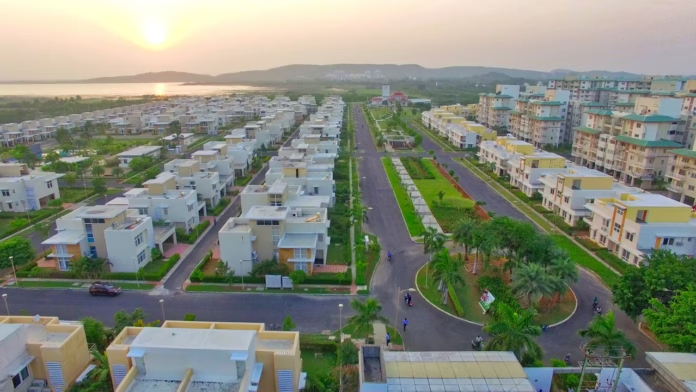
    Once a quiet satellite town, Panvel is rapidly emerging as one of India’s most promising real estate destinations, drawing investors from across the country and abroad. Positioned strategically between Mumbai and Pune, Panvel is witnessing a property boom, thanks to major infrastructure developments and growing affordability. With property prices still 25-50% lower than Mumbai’s mainland and suburbs, the region presents a lucrative opportunity for homebuyers and investors. Industry experts highlight that Panvel’s real estate market mirrors the early growth patterns of North Bengaluru, Noida, and Hyderabad, which saw exponential appreciation following infrastructure advancements.

    The Maharashtra government’s commitment to transforming Panvel into a key business hub is further driving its real estate appeal. Major projects, such as the Navi Mumbai International Airport (NMIA), the Atal Setu trans-harbour link, and the upcoming Mohape railway station, are significantly enhancing connectivity. The Atal Setu has already reduced the travel time between Panvel and South Mumbai to just 30 minutes, making it a viable alternative for professionals seeking affordability without compromising proximity. With NMIA’s first phase set to open in April 2025, the region is poised for an economic and real estate boom similar to Delhi’s Aerocity and North Bengaluru’s Hebbal after their airport expansions.

    Sustainability and Infrastructure: The Pillars of Panvel’s Growth

    Beyond affordability and connectivity, sustainability is emerging as a crucial factor in Panvel’s transformation. With urban expansion placing immense pressure on Mumbai’s core infrastructure, Panvel offers a solution by incorporating sustainable urban planning. Many upcoming residential and commercial developments in the region focus on energy efficiency, water conservation, and eco-friendly construction practices. Reports indicate that demand for green housing in India has surged by 25% over the past two years, aligning with Panvel’s growth trajectory.

    Additionally, the region’s proximity to the Western Ghats and its relatively lower pollution levels compared to Mumbai make it an attractive choice for homebuyers looking for a healthier lifestyle. Real estate developers in Panvel are increasingly integrating open green spaces, rainwater harvesting systems, and solar energy solutions to cater to the rising demand for environmentally conscious living. This focus on sustainability not only enhances the region’s livability but also ensures long-term appreciation of property values.

    The Real Estate Surge and Investor Sentiment

    Investor confidence in Panvel’s real estate market has been reinforced by the presence of top developers such as Godrej Properties, Hiranandani, L&T Realty, Adani Realty, and Wadhwa Group. These developers are spearheading integrated townships that cater to diverse buyer segments, from affordable housing to luxury residences. Data suggests that Panvel’s residential market has recorded a 20% annual increase in property transactions, driven by both end-users and investors. Experts believe that as infrastructure projects reach completion, property prices in Panvel will witness a sharp appreciation, making early investments highly rewarding.

    Testimonials from investors further highlight Panvel’s growth potential. Homebuyers and NRIs alike have recognised the area’s blend of affordability, urban convenience, and promising returns. Many early investors are already witnessing significant capital appreciation, reinforcing Panvel’s reputation as a high-growth market. As Mumbai’s expansion continues, Panvel stands out as the next real estate frontier, offering a unique mix of connectivity, sustainability, and investment potential.

    Civic and Urban Development: Addressing Future Challenges

    As Panvel continues its rapid transformation, ensuring balanced urban development remains a key challenge. While infrastructure projects are progressing, civic amenities such as waste management, public transport, and healthcare facilities must keep pace with the rising population. Experts caution that unplanned urbanisation could lead to congestion and strain existing resources. However, with government policies prioritising smart city initiatives and sustainable infrastructure, Panvel has the potential to become a well-planned urban centre rather than a congested extension of Mumbai.

    Panvel’s journey from a suburban outpost to a booming investment hub reflects India’s evolving real estate dynamics. With its affordability, connectivity, and commitment to sustainable development, Panvel is not just another emerging market—it is shaping up to be Mumbai’s most promising investment destination of the decade.

    Equinox India Real Estate Recovery Gains Momentum Amid Market Challenges

      0
      Equinox India Real Estate Recovery Gains Momentum Amid Market Challenges
      Equinox India Real Estate Recovery Gains Momentum Amid Market Challenges

      Equinox India Real Estate Recovery Gains Momentum Amid Market Challenges

      Equinox India Developments is demonstrating a strong recovery in the Indian real estate sector, navigating challenges posed by economic fluctuations and intensifying market competition. The company’s strategic investments and timely project completions have positioned it as a resilient player in a highly competitive landscape. With the real estate industry witnessing increasing investor confidence and robust housing demand, Equinox India’s resurgence underscores the sector’s overall growth trajectory. Industry reports indicate that premium and mid-segment housing demand has surged by 15% year-on-year, further bolstering the company’s revival. Despite macroeconomic uncertainties and rising construction costs, the firm has remained committed to delivering high-quality residential and commercial projects, strengthening its market presence.

      A significant driver behind Equinox India’s comeback is its ability to align with evolving consumer preferences. Homebuyers are now prioritising modern amenities, sustainability-focused developments, and strategic locations, factors that Equinox India has integrated into its latest projects. The company’s focus on affordability without compromising quality has helped it regain buyer confidence. Additionally, as urbanisation accelerates, metropolitan cities and emerging real estate hubs have provided a fertile ground for expansion. Equinox India’s projects in key urban centres have attracted both end-users and investors, reflecting a shift towards long-term real estate investments. The company’s sales figures indicate a 20% increase over the previous year, showcasing the growing appeal of its properties.

      Sustainability at the Core of Equinox India’s Growth Strategy

      In an era where sustainability is shaping the future of real estate, Equinox India has integrated green building principles and energy-efficient solutions into its developments. The company’s commitment to sustainable construction practices aligns with India’s climate goals and the government’s push for eco-friendly urban infrastructure. By incorporating rainwater harvesting systems, solar energy installations, and smart waste management, Equinox India is not only reducing environmental impact but also enhancing long-term cost savings for homeowners. Reports suggest that demand for sustainable housing has risen by 25% in the past two years, reinforcing the importance of green initiatives in real estate development.

      Impact on Urban Development and Housing Affordability

      The real estate recovery led by developers like Equinox India plays a crucial role in addressing urban housing challenges. As India’s cities continue to expand, the demand for well-planned, sustainable, and affordable housing solutions is at an all-time high. With increasing migration towards urban centres, infrastructural strain and housing shortages remain pressing civic issues. By delivering high-density residential projects and mixed-use developments, Equinox India is contributing to urban transformation and enhancing livability. Furthermore, its approach to affordable housing aligns with government policies aimed at reducing the housing gap and promoting homeownership among middle-income groups.

      Equinox India’s resurgence is not just a testament to its own resilience but also a reflection of the broader real estate sector’s ability to adapt and thrive. As the market continues to evolve, developers who prioritise sustainability, affordability, and innovation will be at the forefront of India’s real estate growth story. The company’s ability to navigate challenges while embracing new opportunities signals a promising future for the sector and homebuyers alike.

      Agora Expands into Australia Real Estate Market with Strategic Growth Plans

        0
        Agora Expands into Australia Real Estate Market with Strategic Growth Plans
        Agora Expands into Australia Real Estate Market with Strategic Growth Plans

        Agora Expands into Australia Real Estate Market with Strategic Growth Plans

        Agora, a leading global real estate investment management platform, has announced a significant expansion into the Australian property market. The company is establishing a dedicated sales and support team across Sydney and Melbourne, marking a strategic move to strengthen its foothold in one of the world’s most dynamic real estate landscapes. This development follows Agora’s successful Series B funding round, which fuelled its international growth ambitions. Australia’s real estate sector has seen increased institutional investment in recent years, making it a prime market for technological advancements in real estate asset management.

        The decision to expand in Australia was further solidified after Agora’s Co-Founder and CEO, Bar Mor, engaged in a roadshow in March 2024, where he met key industry players and received positive feedback on the platform’s potential impact. Agora has already gained traction in the region, serving clients such as GO.FARM Australia, Arcana Capital, and Harbour Credit Partners. “Australia’s real estate market is a powerhouse of opportunities, and Agora’s technology-driven solutions are uniquely designed to empower real estate professionals with efficiency and precision,” said Mor. The expansion aligns with Agora’s mission to revolutionise investment management by automating back-office processes and enhancing investor relations, positioning itself as a vital tool for real estate firms navigating an increasingly complex financial ecosystem.

        Sustainability and the Future of Real Estate Investment

        Beyond financial efficiency, Agora’s expansion into Australia highlights a growing focus on sustainable real estate investments. With investors prioritising environmentally responsible developments, real estate technology solutions play a crucial role in optimising resource allocation and reducing operational waste. Digital investment management tools like Agora enable firms to streamline reporting, monitor energy-efficient projects, and ensure compliance with environmental regulations, ultimately promoting sustainable urban growth. As Australia continues to enforce stringent sustainability mandates in property development, technological innovations in real estate management are expected to become indispensable in achieving net-zero targets.

        The Urban Transformation and PropTech’s Role

        Australia’s rapid urbanisation has made digital transformation imperative in the real estate sector. With property markets in Sydney and Melbourne facing increasing demands for transparency, efficiency, and automation, PropTech platforms like Agora are stepping in to bridge the gap between traditional investment models and modern data-driven strategies. Real estate firms are increasingly relying on technology to navigate regulatory complexities, improve investor engagement, and drive better asset performance. Agora’s entry into the Australian market signifies a broader trend where PropTech solutions are not only enhancing financial management but also reshaping the urban real estate landscape. As global capital continues to flow into Australia’s property sector, investment management platforms are set to play a pivotal role in driving the next phase of market evolution.

        Smart homebuying strategies for India red-hot market

          0
          Smart homebuying strategies for India red-hot market
          Smart homebuying strategies for India red-hot market

          Smart homebuying strategies for India red-hot market

          India’s housing market is witnessing a surge in demand, with prices showing no signs of cooling down. Homebuyers who have resisted the fear of missing out (FOMO) over the past year now face a critical decision—how to secure the right home at the right price in a highly competitive landscape. Experts suggest that while price drops are unlikely, buyers can still make informed choices that align with their financial goals. Whether it’s understanding market trends, negotiating strategically, or timing the purchase effectively, navigating this hot market requires a well-thought-out approach. With urban centres expanding and property appreciation continuing, homeownership remains a crucial long-term investment for Indian buyers.

          With affordability being a primary concern, especially in metros like Mumbai, Delhi-NCR, and Bengaluru, aspiring homeowners need to adopt a smarter approach. According to industry reports, property prices in key cities have surged by 10-15% in the past year alone, making it imperative to lock in rates before further hikes. Developers are also capitalising on demand, leading to reduced inventory in premium and mid-segment projects. Despite high prices, buyers can still find value by exploring emerging micro-markets and considering under-construction projects that offer flexible payment plans. Additionally, negotiating with developers for better pricing, incentives, or stamp duty waivers can further enhance affordability. While the market remains tilted in favour of sellers, patient buyers with strategic decision-making can still secure favourable deals.

          From a sustainability perspective, 2025’s homebuyers should consider investing in energy-efficient and environmentally friendly properties. With increased awareness of climate change and resource conservation, developers are incorporating green building technologies, rainwater harvesting, and solar power into new projects. Not only do these sustainable homes contribute to reduced carbon footprints, but they also offer long-term cost savings on utilities. The shift towards environmentally conscious housing aligns with the government’s push for sustainable urban development, making green homes a lucrative investment. As cities expand, buyers must evaluate a project’s sustainability credentials and future-proof their investment against rising operational costs.

          Beyond financial and environmental factors, civic infrastructure plays a crucial role in shaping real estate decisions. The availability of robust public transport, road networks, and civic amenities significantly impacts property value appreciation. Many urban buyers are shifting focus from central locations to suburban hubs with better affordability and upcoming infrastructure projects, such as metro expansions and expressways. Additionally, government incentives for first-time buyers, lower home loan interest rates, and stable economic growth provide a supportive environment for prospective homeowners. While India’s housing market remains highly dynamic, a strategic approach that balances budget, sustainability, and civic infrastructure will empower buyers to make the right investment in 2025.

          Mahindra Lifespace Rs 1,500 crore rights issue to drive growth

            0
            Mahindra Lifespace Rs 1,500 crore rights issue to drive growth
            Mahindra Lifespace Rs 1,500 crore rights issue to drive growth

            Mahindra Lifespace Rs 1,500 crore rights issue to drive growth

            Mahindra Lifespace Developers Ltd (MLDL), the real estate arm of the Mahindra Group, has announced plans to raise Rs 1,500 crore through a rights issue, reinforcing its commitment to growth while improving its financial position. The funds will primarily be used to pare down existing debt and accelerate its expansion in India’s high-demand residential markets. The company, which focuses on premium and mid-premium housing projects, has been aggressively scaling up its portfolio, particularly in the Mumbai Metropolitan Region (MMR), Pune, and Bengaluru. The decision to raise capital comes at a time when India’s real estate sector is witnessing a resurgence, driven by increasing demand for premium housing and a sustained shift towards branded developers.

            Mahindra Lifespace has significantly increased its business development activities, achieving year-to-date gross development value (GDV) additions exceeding Rs 16,000 crore—nearly four times the Rs 4,400 crore added in FY24. This growth underscores the company’s strategic push to capture a larger market share in key urban centres. With the latest fundraising initiative, MLDL aims to strengthen its presence in high-growth regions and develop large-scale, sustainable residential communities. The company’s board has approved the rights issue, offering fully paid-up equity shares of face value Rs 10 each to eligible shareholders. This move aligns with the broader industry trend of real estate players bolstering their capital reserves to maintain liquidity and seize emerging opportunities in the evolving property landscape.

            From a financial standpoint, Mahindra Lifespace is taking proactive steps to maintain a healthy balance sheet. As of December 31, 2024, the company’s net debt-to-equity ratio stood at 0.5x, reflecting a moderate leverage position. By reducing debt through fresh equity infusion, the developer aims to enhance its financial flexibility and fund large-scale projects without undue financial strain. The real estate sector has seen an uptick in investor confidence, with several prominent players raising capital through rights issues, bond sales, and institutional investments. As homebuyer preferences shift towards well-established developers with strong execution capabilities, MLDL’s strategy to expand in premium segments aligns well with evolving market dynamics.

            From a sustainability perspective, Mahindra Lifespace has been a pioneer in developing green-certified projects and integrated townships with an emphasis on environmental stewardship. The company’s upcoming projects in MMR, Pune, and Bengaluru are expected to incorporate eco-friendly designs, energy-efficient building materials, and advanced water conservation systems. As urbanisation intensifies, real estate developers are being called upon to integrate sustainability into their growth plans. By raising funds to fuel expansion while maintaining its commitment to green development, Mahindra Lifespace is positioning itself as a responsible industry leader. With India’s urban housing demand on the rise, the company’s strategic capital raise reflects a long-term vision that balances financial prudence with sustainable urban development.

            Nexus Select Trust Purchases Bengalurus Vega City Mall

            Nexus Select Trust Purchases Bengalurus Vega City Mall
            Nexus Select Trust Purchases Bengalurus Vega City Mall

            Nexus Select Trust Purchases Bengalurus Vega City Mall

            Nexus Select Trust, one of India’s leading retail real estate investment trusts (REITs), has made a strategic acquisition in Bengaluru by purchasing the Vega City Mall for a substantial ₹913 crore. This acquisition marks a significant expansion for the Trust in the rapidly growing retail sector, further strengthening its presence in key urban markets across India.

            Located in one of Bengaluru’s prime commercial and residential hubs, Vega City Mall is a high-traffic retail space that has become a prominent landmark in the city’s shopping and entertainment landscape. With a gross leasable area of over 1.2 million square feet, the mall offers a mix of national and international retail brands, along with dining and entertainment options that cater to a diverse customer base.

            This acquisition aligns with Nexus Select Trust’s strategic goal of increasing its footprint in the Indian retail real estate market. By acquiring high-quality assets in major cities, the Trust aims to capitalise on the growing demand for retail spaces driven by the rise in consumer spending, particularly in India’s Tier 1 cities.

            Industry experts believe that this acquisition will further strengthen Nexus Select Trust’s position in the market, providing it with an attractive income-generating asset. As part of the deal, the Trust will also have the opportunity to enhance the mall’s performance through strategic upgrades and repositioning efforts, improving its appeal to both tenants and customers alike.

            With the retail sector in India showing strong growth prospects, particularly post-pandemic, this acquisition is expected to provide Nexus Select Trust with a stable and long-term revenue stream. The Trust’s ability to secure such prime properties reflects its growing influence in the Indian commercial real estate sector.

            Protean eGov Secures Major Office Space in Mumbai

            0
            Protean eGov Secures Major Office Space in Mumbai
            Protean eGov Secures Major Office Space in Mumbai

            Protean eGov Secures Major Office Space in Mumbai

            Protean eGov Technologies, a leading player in the digital governance and public sector services sector, has taken a major step in expanding its operational capacity by leasing a substantial 68,021 square feet of office space in Mumbai. This move underscores the company’s commitment to scaling up its infrastructure to support its growing portfolio of services and ongoing digital transformation projects in the public sector.

            The newly leased space is strategically located in one of Mumbai’s prime business districts, ensuring easy access for both its employees and clients. The move is in line with the company’s vision to strengthen its physical presence in key business hubs while offering a conducive work environment for its expanding workforce. As Protean eGov continues to grow its footprint in the digital services domain, the company is making significant investments in office spaces that align with its ambitious business objectives.

            The leasing of the 68,021 sq ft space comes at a time when the company is witnessing robust demand for its services across various sectors, including government services, digital identity management, and public administration. This expansion not only reflects Protean eGov’s positive growth trajectory but also marks its commitment to creating a more modern, collaborative workspace that will support its operations in the rapidly evolving digital ecosystem.

            Experts note that the office space acquisition also demonstrates Protean eGov’s confidence in the economic recovery post-pandemic, as businesses continue to invest in physical spaces while simultaneously embracing hybrid working models. This lease agreement is expected to fuel the company’s efforts to increase its workforce, invest in innovation, and strengthen its market position.

            By securing this prominent office space, Protean eGov Technologies is positioning itself for sustained growth, poised to meet the increasing demands of the Indian government’s digital transformation initiatives.

            ONGC-NTPC Green to Acquire Ayana Renewables in ₹19,500 Crore Deal, Accelerating India’s Clean Energy Transition

              0
              ONGC-NTPC Green to Acquire Ayana Renewables in ₹19,500 Crore Deal, Accelerating India's Clean Energy Transition
              ONGC-NTPC Green to Acquire Ayana Renewables in ₹19,500 Crore Deal, Accelerating India's Clean Energy Transition

              ONGC-NTPC Green to Acquire Ayana Renewables in ₹19,500 Crore Deal, Accelerating India’s Clean Energy Transition

              India’s renewable energy capacity, ONGC-NTPC Green Energy Ltd. (ONGPL), the joint venture between ONGC Green (OGL) and NTPC Green Energy (NGEL), has announced the acquisition of Ayana Renewable Power for ₹19,500 crore (approximately $2.3 billion). The deal, signed through a Share Purchase Agreement (SPA), is set to be a significant catalyst in accelerating India’s transition to a clean and low-carbon energy future.

              Founded in 2018 by British International Investment (BII), Ayana Renewable Power has amassed an impressive portfolio of 4.1 gigawatts (GW) of operational and under-construction renewable energy assets. This includes a diverse range of projects spanning solar, wind, and round-the-clock (RTC) solutions, positioning Ayana as a key player in the renewable energy sector. The acquisition marks ONGPL’s first major move since its establishment in November 2024, signalling its ambition to play a leading role in India’s renewable energy revolution. For ONGC and NTPC, both parent firms of ONGPL, the deal aligns with their broader long-term net-zero goals — ONGC aiming for net-zero emissions by 2038 and NTPC by 2050. This acquisition not only accelerates ONGPL’s growth but also brings India closer to its target of increasing renewable energy capacity and achieving a sustainable energy future.

              Sanjay Kumar Mazumder, CEO of ONGC Green, commented on the strategic importance of the acquisition, saying, “Ayana’s acquisition is a strategic milestone in ONGL and NGEL’s pursuit of a clean energy revolution. This move accelerates India’s transition to a low-carbon economy by leveraging our technical expertise, industry relationships, and financial strength.” Rajiv Gupta, CEO of NTPC Green Energy, highlighted that the acquisition significantly supports NGEL’s target of achieving 60 GW of renewable capacity by FY32. This aggressive expansion plan positions NGEL as one of the leading developers of utility-scale renewable energy in India, paving the way for even more large-scale renewable projects across the country. The acquisition comes at a time when India is looking to accelerate its renewable energy production to meet its climate goals and reduce its reliance on fossil fuels. With Ayana’s strong track record and expertise, the deal reinforces ONGC-NTPC Green’s commitment to boosting renewable energy capacity and driving the nation’s clean energy transition.

              Despite the optimism surrounding this acquisition, the renewable energy sector in India faces numerous infrastructure challenges that may impact the pace of growth. One of the key hurdles is the grid integration of renewable energy, particularly given the intermittent nature of solar and wind power. India’s existing energy grid infrastructure will need significant upgrades to accommodate increased renewable energy output from projects like those owned by Ayana. Additionally, there are concerns about land acquisition for large-scale renewable projects. While the government has been taking steps to ease land acquisition for renewable energy projects, regulatory delays and the potential for local opposition remain significant obstacles that could slow down the rollout of new renewable capacity. Another issue is the need for investment in storage solutions to address the issue of energy intermittency. Round-the-clock (RTC) power solutions like those offered by Ayana are critical to overcoming this challenge, but they require substantial infrastructure investment in energy storage systems to ensure that renewable energy can be delivered reliably throughout the day.

              Lastly, regulatory approvals and environmental clearances are often time-consuming processes that can delay the implementation of renewable energy projects. As the industry scales up to meet ambitious renewable energy targets, the need for streamlined and supportive policies becomes more pressing. The ONGC-NTPC Green Energy acquisition of Ayana Renewables represents a bold step in India’s transition to a low-carbon future. The deal will expand renewable energy capacity and contribute to India’s global leadership in renewable energy development. With the collaboration of industry giants like ONGC and NTPC, coupled with the expertise of Ayana, the future of India’s clean energy sector looks promising. As the country continues to grow its renewable energy capacity, the infrastructure challenges need to be addressed through strategic planning, innovation, and policy support. This acquisition not only serves as a strategic business move but also as a signal of India’s commitment to accelerating its green energy transition.

              Real Estate Sectors ₹22,320 Crore QIP Surge

              0
              Real Estate Sectors ₹22,320 Crore QIP Surge
              Real Estate Sectors ₹22,320 Crore QIP Surge

              Real Estate Sectors ₹22,320 Crore QIP Surge

              The Indian real estate sector has emerged as a leader in the Qualified Institutional Placement (QIP) market , raising an impressive ₹22,320 crore, according to real estate advisory firm ANAROCK. This surge highlights the growing investor confidence in the sector, which has seen a remarkable recovery in recent years, driven by factors such as strong demand, regulatory reforms, and an evolving economy.

              The QIP market, an important avenue for businesses to raise capital from institutional investors, witnessed a marked preference for real estate companies in the first quarter of 2024. This surge in fundraising activity signifies the sector’s strong performance, with realtors raising a significant portion of the total funds raised across industries.

              Real estate, traditionally seen as a stable investment, has gained renewed investor interest as demand for residential, commercial, and industrial properties continues to grow. The increased fundraising through QIP channels has allowed real estate companies to strengthen their balance sheets, fund new projects, and expand their operations.

              Experts attribute this positive trend to several key factors, including favourable government policies, sustained demand for residential housing, and a growing appetite for commercial real estate. Additionally, real estate companies have been able to capitalise on low interest rates and increased liquidity in the market.

              The ₹22,320 crore raised by the real estate sector underscores the growing institutional faith in the sector’s long-term growth prospects. It also reflects the broader economic recovery, which has led to a revival in property sales, especially in the luxury and affordable housing segments.

              Looking ahead, experts suggest that the real estate sector’s strong performance in the QIP market could lead to further growth opportunities, especially in tier-II and tier-III cities where demand for housing and commercial spaces is steadily rising.

              As the market continues to evolve, real estate remains a key driver of capital inflow and economic development in India, with companies expected to explore more fundraising avenues to meet the growing demand for properties across the country.

              Hubballi-Dharwad to Pioneer Karnataka’s First 3D GIS Survey for Property Tax Collection

                0
                Hubballi-Dharwad to Pioneer Karnataka’s First 3D GIS Survey for Property Tax Collection
                Hubballi-Dharwad to Pioneer Karnataka’s First 3D GIS Survey for Property Tax Collection

                Hubballi-Dharwad to Pioneer Karnataka’s First 3D GIS Survey for Property Tax Collection

                The Hubballi-Dharwad Municipal Corporation (HDMC) is set to become the first civic body in Karnataka to conduct a comprehensive 3D Geographic Information System (GIS) survey. This project, which is expected to begin in early March 2025, marks a significant milestone in modernising municipal property tax systems, improving tax collection, and tackling issues related to under-assessment and tax evasion.

                At present, HDMC’s property tax demand note stands at a substantial ₹140 crore, which includes residential, commercial, open plots, and other properties within the municipal limits. However, the corporation has set its sights on increasing this amount to ₹400 crore through the successful implementation of the GIS survey. The survey will provide a much-needed overhaul to the existing tax assessment system by creating a more accurate and accessible database of all properties under HDMC’s jurisdiction. The 3D GIS survey will digitally map every building, structure, and property within the municipal limits. This innovative approach will help HDMC identify unassessed properties, capture accurate details of property boundaries, and ensure that tax assessments are as accurate as possible. By incorporating detailed data, such as building height, floor area, and land-use patterns, the GIS system will create an in-depth digital map that provides real-time insights for efficient tax administration.

                This comprehensive digital mapping is expected to significantly reduce property tax evasion by making it easier for HDMC officials to track developments, including new buildings or alterations to existing properties. The ability to update tax records promptly will further ensure that the tax collection process remains transparent and efficient. This data-driven approach will not only help capture properties currently missing from the tax net but will also ensure that all properties are valued fairly and accurately, preventing instances of under-assessment. The GIS survey will rely on advanced mapping technology, with teams deploying sophisticated tools to capture spatial data accurately. The survey will assess various parameters, such as building height, land use, and property boundaries, all of which will be integrated into a centralised platform accessible to HDMC officials. This centralised system will streamline the tax assessment and collection process, making it more user-friendly and less prone to discrepancies.

                The project, which is expected to cost ₹23 crore, will be carried out by a company with expertise in GIS surveys. Two companies, including a Dubai-based firm with experience in major cities like Varanasi, are participating in the tender process. HDMC plans to complete the survey before the onset of the monsoon season, which will help ensure that the data is accurate and up-to-date. Despite its potential, this ambitious GIS survey initiative is not without its infrastructure challenges. The vast area under HDMC’s jurisdiction, which includes densely populated urban centres as well as peripheral regions, will require substantial coordination and planning. Deploying the necessary technology, ensuring high-quality data collection, and integrating this data into a single platform will require both time and resources. Additionally, the survey process needs to address concerns related to the maintenance and scalability of the digital platform that will store and manage this data. Ensuring that the system remains operational over time and is adaptable to future developments is crucial. As the survey progresses, there may also be logistical challenges in ensuring that property owners comply with data collection efforts, which could slow down the overall progress.

                The 3D GIS survey represents a major leap forward in urban governance, showcasing HDMC’s commitment to using technology to improve municipal services and ensure equitable tax collection. By addressing challenges like tax evasion, under-assessment, and unregistered properties, this project is set to make property tax administration in Hubballi-Dharwad more efficient, transparent, and reliable. As this pilot project progresses, it will not only enhance tax revenue but could also serve as a model for other cities in Karnataka and beyond. The adoption of such cutting-edge technology will ensure that HDMC remains at the forefront of urban governance, making it a pioneer in leveraging GIS technology to improve municipal infrastructure and public service delivery. Hubballi-Dharwad’s pioneering effort in launching a 3D GIS survey is a significant step towards modernising property tax systems. With the project’s emphasis on accurate data collection, transparency, and efficiency, it will set a new standard for property tax administration in Karnataka.