Home Blog Page 326

India’s Bold ₹15,000 Crore Green Steel Budget Proposal

India’s Bold ₹15,000 Crore Green Steel Budget Proposal

India’s Bold ₹15,000 Crore Green Steel Budget Proposal

India’s Ministry of Steel is gearing up to launch an ambitious ₹15,000 crore Green Steel Mission as part of its budget proposals for the upcoming fiscal year. The initiative is poised to revolutionise the country’s steel industry by incentivising low-carbon steel production and promoting a greener, more sustainable future. In a significant move, the Ministry is looking to create a policy framework that not only incentivises the shift to green steel but also ensures its widespread adoption through government mandates.

The proposed Green Steel Mission is focused on pushing the steel sector towards adopting cleaner technologies, with a special emphasis on reducing carbon emissions during production. Green steel is defined by its emission levels, which are capped at 2.2 tonnes of CO2 per tonne of finished steel. In India’s green steel taxonomy, the steel is rated across three levels – three stars (2.0 to 2.2 tCO2e/tfs), four stars (1.6 to 2.0 tCO2e/tfs), and five stars (below 1.6 tCO2e/tfs). The mission envisions the implementation of a Production Linked Incentive (PLI) scheme for green steel producers, alongside additional incentives aimed at promoting the use of renewable energy and assisting smaller producers in transitioning to low-carbon steel production methods.

In an effort to stimulate demand, the government is also considering introducing a mandatory procurement policy, targeting up to 37-40 percent of government steel procurement to be sourced from green steel. This could potentially create a substantial market for low-carbon steel within public infrastructure projects, including those funded by central and state governments, Public Sector Undertakings (PSUs), and other government-backed projects. The Green Steel Mission will focus on promoting technological innovation and enhancing domestic production capacity while protecting the Indian steel industry from unfair trade practices. The Ministry has also advocated for stringent safeguard measures to counter the influx of substandard steel and prevent dumping from cheaper international markets.

Additionally, as part of its long-term vision, the Ministry plans to ramp up international collaborations for clean technology transfer, explore new export markets, and diversify raw material sources, especially tapping into international coking coal supplies and securing investments in coal assets, notably in Mozambique. Despite the promise of a greener future, the capital expenditures required to set up green steel plants are significant. Establishing a green steel plant costs nearly double that of a conventional steel plant using electric arc furnaces or blast furnaces, potentially putting pressure on the financial viability of such ventures. To address this, industry players have underscored the need for government incentives to ensure the sustainability of green steel production and the mandatory procurement of such costlier products. The Green Steel Mission represents a bold step towards reducing the environmental impact of India’s steel industry, while ensuring that the country remains competitive in an increasingly eco-conscious global market.

India-U.S. Bilateral Ties to Expand Under Trump

India-U.S. Bilateral Ties to Expand Under Trump

India-U.S. Bilateral Ties to Expand Under Trump

The Trump administration is actively seeking to fortify its relationship with India, with key diplomatic steps undertaken during the inauguration of President Donald Trump. External Affairs Minister S. Jaishankar, acting as Prime Minister Narendra Modi’s special envoy, was sent to attend the inauguration ceremony and engage with top U.S. officials. This strategic move marks the beginning of a new phase in bilateral ties between the two nations, with a clear focus on collaboration across key sectors.

Jaishankar, who was given high-level protocol at the inauguration, wasted no time in meeting with National Security Advisor Mike Waltz, followed by attending a crucial Quad meeting with U.S. Secretary of State Marco Rubio, Australian Foreign Minister Penny Wong, and Japanese Foreign Minister Iwaya Takeshi. Notably, the first multilateral meeting of Secretary Rubio was with the Quad partners, with the first bilateral meeting being held with India, further underlining the growing significance of India in the Trump administration’s foreign policy calculus.

Sources close to the matter reveal that the Trump administration has decided to build upon the momentum created during the previous U.S. administration, ensuring that India continues to be a central partner. Key areas for collaboration are expected to include technology, defence and security, trade and commerce, and economic ties. The Quad meeting served as a review of past achievements, with Secretary Rubio reminding the gathered ministers that President Trump initiated the Quad foreign ministers dialogue back in 2017, establishing a platform for dialogue on regional security and stability.

The discussions between Jaishankar and his U.S. counterparts have been described as positive and constructive. Both sides are committed to advancing their relationship based on mutual interests and security concerns. With the Indo-Pacific region becoming an area of increased strategic focus, both India and the U.S. are aligned in ensuring freedom of navigation, building resilient global supply chains, and enhancing their response to humanitarian and natural disasters. Jaishankar is set to hold a press conference in Washington before his return to India, marking the conclusion of a highly successful trip aimed at further solidifying the India-U.S. relationship.

Ambuja Cement Hit with Rs 6.6L Green Penalty

Ambuja Cement Hit with Rs 6.6L Green Penalty

Ambuja Cement Hit with Rs 6.6L Green Penalty

In a stern reminder of the importance of adhering to environmental regulations, Ambuja Cement’s Rauri plant in Darlaghat has been slapped with a hefty ₹6.6 lakh environmental compensation (EC) for violations of the Air (Prevention and Control of Pollution) Act, 1981. The penalty has been imposed for a period spanning from 8 December to 30 December, 2024, after a series of inspections revealed that the plant had failed to maintain necessary equipment and control emissions.

The issue came to light following multiple inspections carried out by the State Pollution Control Board (SPCB), which identified operational issues within the plant machinery. According to the findings, the plant’s pre-heater duct ruptured due to a failure in power supply, leading to increased air pollution. The breakdown in the cyclone and subsequent emissions from the unit further contributed to environmental degradation. Despite several notifications, including show-cause notices issued on 12, 16, and 27 December, the plant failed to take corrective action promptly. A shutdown of operations was enforced on 11 December 2024, after repeated violations were observed. The Regional Officer of SPCB, Anil Kumar, stated that despite several inspections and warnings, the plant’s management neglected timely repairs, leaving operations non-compliant with pollution control measures.

Air pollution control devices, crucial to limiting harmful emissions like nitrogen oxides and sulfur dioxide, were reportedly not functioning as required, causing additional environmental hazards. The imposition of the fine follows instructions from the National Green Tribunal (NGT), underscoring the seriousness of protecting air quality. The cement industry, which is a significant contributor to air pollution due to the emission of particulate matter, carbon monoxide, and other pollutants, has been under increasing scrutiny from regulatory authorities. The Rauri plant’s failure to meet air quality standards is a stark reminder of the need for industrial units to prioritise environmental safety. The case highlights the growing pressure on cement manufacturers in India to ensure compliance with stringent environmental norms, as regulatory bodies intensify their enforcement actions. With environmental concerns at an all-time high, this fine could signal a shift towards more rigorous accountability for industrial polluters in the country.

IGI to Expand International Flight Capacity at T3 to Meet Growing Demand

    0
    IGI to Expand International Flight Capacity at T3 to Meet Growing Demand
    IGI to Expand International Flight Capacity at T3 to Meet Growing Demand

    IGI to Expand International Flight Capacity at T3 to Meet Growing Demand

    Delhi’s Indira Gandhi International Airport (IGIA) is preparing for a significant expansion to meet the growing demand for international flights. With a surge in both domestic and international passenger numbers, the airport is planning to convert a domestic pier at Terminal 3 (T3) to accommodate more international passengers. This move comes in response to the booming operations of Air India and IndiGo, which have dramatically increased their international flight offerings.

    Currently, T3, the airport’s sole terminal handling international traffic, is operating at overcapacity. It is designed to handle 6.5 crore (65 million) passengers annually, with 2 crore (20 million) international passengers and 4.5 crore (45 million) domestic flyers. In 2024, T3 exceeded its international passenger capacity by handling over 2.1 crore international flyers. This demand, coupled with an expected rise in international traffic, has prompted the need for swift action to expand the terminal’s capacity. The conversion of a domestic pier to international use will increase T3’s international capacity by around 1 crore (10 million) passengers annually, although this will reduce the domestic capacity by the same number. The move comes as part of a larger strategic plan, with the airport’s domestic capacity set to increase following the full operationalisation of Terminal 1 (T1) in a few months. Once T1 is up and running, the combined domestic capacity of Terminals 1, 2, and 3 will reach 10 crore (100 million) passengers annually.

    DIAL (Delhi International Airport Ltd) plans to mitigate the reduction in domestic capacity at T3 until additional infrastructure is developed. One of the key developments is the addition of Pier E at T3, which will have the capacity to handle 1 crore (10 million) additional passengers annually by mid-2027. However, until Pier E is completed, there are concerns regarding domestic-to-international transfer passengers. Currently, passengers needing to transfer between terminals will have to use buses, with no airtrain connection available until at least 2027. This delay could result in inconveniences for a significant number of transit passengers, particularly those with connecting flights or luggage. Terminal 2, which is exclusively domestic, is set to handle up to 1.5 crore (15 million) passengers annually for the next 2-4 years. However, it will eventually be demolished to make way for a much larger Terminal 4, which could accommodate up to 4 crore (40 million) passengers. DIAL had initially considered converting T2 into an international terminal, but this plan was shelved due to the complexity and cost of installing necessary infrastructure, such as immigration and customs facilities.

    The increased international focus is a direct result of the rapid expansion plans by both Air India and IndiGo. Air India, now under the ownership of the Tata Group, is aggressively expanding its international routes with a record number of aircraft orders. IndiGo, which has ordered wide-bodied aircraft to start long-haul international flights, is also poised for rapid international expansion. In light of these developments, airport officials have recognised the need to quickly boost international capacity to prevent a potential congestion crisis in the future. An airport official highlighted the significance of this shift, explaining, “While we have sufficient domestic capacity for the next few years, it’s the international side where we need to focus now. If we don’t act soon, we will face a capacity crunch.” The rapid expansion of Air India and IndiGo underscores the need for IGIA to evolve into a true aviation hub for India, meeting the demands of these carriers’ ambitious growth plans. As India’s aviation industry continues to soar, the expansion of IGI’s international capacity is a necessary step to ensure it remains a central player in global air travel. With an expected growth in both international and transit passengers, this strategic expansion will not only alleviate current congestion but will position the airport as a leading hub in the region.

    NGT Directs DDA to Deconcretise Yamuna Floodplain Projects for Ecological Restoration

      0
      NGT Directs DDA to Deconcretise Yamuna Floodplain Projects for Ecological Restoration
      NGT Directs DDA to Deconcretise Yamuna Floodplain Projects for Ecological Restoration

      NGT Directs DDA to Deconcretise Yamuna Floodplain Projects for Ecological Restoration

      The National Green Tribunal (NGT) has instructed the Delhi Development Authority (DDA) to implement the recommendations of the National Mission for Clean Ganga (NMCG) for six ongoing projects located on the Yamuna floodplain. This directive, issued on January 21, 2025, comes as part of an ongoing effort to reverse the environmental damage caused by uncontrolled concretisation and development in the sensitive area.

      The NGT’s ruling is a continuation of its 2015 order, which established clear guidelines for regulating construction activities on the Yamuna floodplain. In this latest order, the tribunal reiterated that no permanent structures or concretisation should occur on the floodplain, except in exceptional circumstances. The NGT’s decision was prompted by a news report last year, which highlighted the growing issue of concrete developments on the floodplain. Following this, the NGT took suo motu cognisance and asked for an assessment of the situation. In response, NMCG visited six sites — Asita East, Baansera (including a casting yard), Millennium Bus Depot, Surghat, and Qudsia Ghat (now known as Vasudev Ghat) — and recommended deconcretisation. The NMCG’s inspection team found that several sites, once advertised as eco-friendly or necessary for infrastructural development, had been heavily concretised, undermining the floodplain’s ecological health. For example, Baansera, promoted as an eco-friendly bamboo park by DDA, had a casting yard linked to the Public Works Department’s Barapullah elevated corridor project. The NMCG recommended that DDA collaborate with the Public Works Department to vacate and deconcretise the area for restoration.

      The casting yard near the Signature Bridge, managed by the Delhi Metro Rail Corporation (DMRC), was also identified as needing attention. NMCG’s report emphasised that DDA should ensure that DMRC complies with notices and deconcretises the area. At Asita East, the NMCG pointed out a 300-metre pathway covered with paver blocks, suggesting that DDA rework the area and reduce the paved space. The report recommended that only limited access for manual-run bicycles or battery-operated cars be allowed in the restored space. Meanwhile, the Millennium Bus Depot, constructed during the 2010 Commonwealth Games, featured extensive concrete parking stretches. NMCG recommended conducting tests to evaluate the environmental impact of the material used before proceeding with any demolition. DDA was instructed to submit an action plan for the restoration and management of waste generated by this process, under the supervision of a competent authority.

      The NGT has given DDA clear instructions to follow through with the deconcretisation and restoration actions suggested by the NMCG, as well as the findings of the Central Pollution Control Board (CPCB) report. The tribunal has urged DDA to expedite these measures and implement them as quickly as possible, without causing unnecessary delays. This order has sparked a renewed focus on the ecological restoration of the Yamuna floodplain, with DDA now tasked with reversing the damage caused by years of construction. Environmentalists and local communities have welcomed the NGT’s directive, seeing it as an important step toward the protection of the river’s natural habitat. Officials have expressed that the deconcretisation process will be challenging, but it is crucial for the long-term health of the Yamuna river. By restoring the floodplain, they aim to strengthen the river’s natural flood regulation abilities, improve biodiversity, and enhance the overall quality of life for the people who live along its banks. The NGT’s decision highlights the growing importance of sustainable development in urban planning, particularly in areas as ecologically sensitive as floodplains. As the DDA moves forward with these remedial actions, the hope is that future projects in the region will place a greater emphasis on environmental preservation, setting a precedent for other urban developments across India.

      Kolhapur MLA Kshirsagar Pushes for Rs 1,500 Crore Ring Road Network to Enhance Connectivity

        0
        Kolhapur MLA Kshirsagar Pushes for Rs 1,500 Crore Ring Road Network to Enhance Connectivity
        Kolhapur MLA Kshirsagar Pushes for Rs 1,500 Crore Ring Road Network to Enhance Connectivity

        Kolhapur MLA Kshirsagar Pushes for Rs 1,500 Crore Ring Road Network to Enhance Connectivity

        Shiv Sena MLA Rajesh Kshirsagar has made a bold move to push for a comprehensive infrastructure development plan aimed at enhancing Kolhapur’s connectivity with the Shaktipeeth highway. The proposed Rs 1,500 crore ring road network, designed to connect Kolhapur city to the highway, could become a game-changer for the region, improving traffic flow and boosting local development.

        Kshirsagar recently stated that the new network of ring roads would ease vehicular movement in Kolhapur, connecting the city to the Shaktipeeth highway that is set to pass through the district. This ambitious infrastructure project aims to bolster Kolhapur’s position as a key transport hub in Maharashtra. The MLA also revealed that the Kolhapur Municipal Corporation (KMC) administrator has been tasked with proposing the plan, and the MLA is set to seek Rs 1,500 crore from the state government to fund the initiative. The move comes amidst growing concerns from local farmers and residents who are opposing the Shaktipeeth highway. Kshirsagar’s approach aims to alleviate these concerns by providing a much-needed boost to Kolhapur’s connectivity, thereby improving transportation and trade in the region. Officials believe that the ring road network will play a pivotal role in Kolhapur’s economic development. At a recent meeting with KMC officials, Kshirsagar discussed the project in detail with the city’s administrator, K Manjulekshmi, and engineers, including additional commissioner Rahul Rokade and city engineer Netradeep Sarnobat. Their collective input will be crucial in shaping the project and ensuring its smooth execution.

        The ring road network is expected to significantly reduce congestion within the city and connect major points with the Shaktipeeth highway, facilitating better access to commercial and residential areas. For the people of Kolhapur, the project promises enhanced daily commutes and smoother connectivity to surrounding regions, making the city more accessible to tourists and businesses alike. Kshirsagar also highlighted several other developmental plans that would transform Kolhapur in the coming years. He mentioned that Chief Minister Eknath Shinde had promised Rs 50 crore for the construction of the main administrative building of KMC. Additionally, the MLA noted that flood control funding had been increased to Rs 3,700 crore, and efforts were underway to secure Rs 500 crore under the Mahalaxmi Temple tourism development plan. Moreover, the MLA stressed the importance of expanding Kolhapur’s city limits to support its growth. “Kolhapur city will not progress until its delimitation is addressed,” Kshirsagar stated, adding that he would pursue discussions with both Chief Minister Devendra Fadnavis and Deputy Chief Minister Eknath Shinde to ensure that the city’s boundaries are increased.

        As Kolhapur continues to grow, infrastructure projects such as the ring road network will be key to managing the city’s expanding needs. By improving connectivity between Kolhapur and the Shaktipeeth highway, the project will not only benefit commuters but also create a more efficient transport network for the surrounding districts. This could also pave the way for future investment, improving the region’s economic prospects. Although some opposition to the Shaktipeeth highway remains, Kshirsagar’s proposal to improve infrastructure in Kolhapur shows a commitment to addressing local concerns and making the city more connected and accessible. Officials and residents alike are optimistic about the positive impact the ring road network will have on the region’s growth and development. Kolhapur’s future is being shaped by these vital infrastructure projects, and the ring road network, if approved, will be a cornerstone in transforming the city into a more connected, efficient, and thriving urban centre.

        Ahmedabad-Udaipur Vande Bharat Express: A New Era in Rail Connectivity

          0
          Ahmedabad-Udaipur Vande Bharat Express: A New Era in Rail Connectivity
          Ahmedabad-Udaipur Vande Bharat Express: A New Era in Rail Connectivity

          Ahmedabad-Udaipur Vande Bharat Express: A New Era in Rail Connectivity

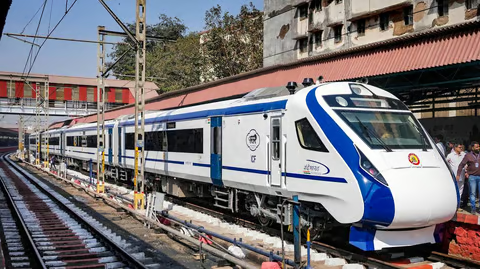
          Ahmedabad-Udaipur Vande Bharat Express is all set to begin operations, heralding a new chapter in rail connectivity between Gujarat and Rajasthan. With the successful electrification of the Ahmedabad-Himmatnagar-Udaipur route, this modern train service will offer passengers a much faster, more comfortable travel option. Slated for launch in late January or early February, this new Vande Bharat Express promises to be a game-changer for commuters and tourists alike.

          The introduction of the Ahmedabad-Udaipur Vande Bharat Express will significantly reduce the travel time between these two cities. Currently, the five-hour road journey will be shortened to approximately four hours, offering a much more efficient alternative for passengers. The train will run six days a week, with the exception of Tuesdays, providing a reliable and convenient option for travellers. The train will depart from Udaipur at 6:10 am and reach Ahmedabad at 10:25 am, with a brief stop at Himmatnagar for two minutes. The return journey will leave Ahmedabad at 5:45 pm and arrive in Udaipur by 10:00 pm. The starting and ending point of the train in Ahmedabad will be the Asarwa railway station, making it easily accessible for many passengers. This new service is expected to be a great relief for both daily commuters and tourists.

          The Ahmedabad-Udaipur Vande Bharat Express will feature eight AC chair car coaches, ensuring a comfortable travel experience. The coaches are designed to offer spacious seating, modern amenities, and efficient air conditioning, making the journey a pleasant one for all passengers. The train is set to become a popular choice for those looking to travel between these two vibrant cities, offering a modern, air-conditioned option that is far more comfortable than the conventional trains currently operating on the route. Tourism professionals in Udaipur have warmly welcomed the launch of the Vande Bharat Express, anticipating a significant boost to the region’s tourism and pilgrimage sectors. Udaipur, known for its rich history and beautiful attractions, including the Shrinathji and Eklingji temples, is expected to see an influx of visitors. By connecting Udaipur more efficiently with Ahmedabad, the train will also provide easy access to the city’s airport, which could prove particularly convenient for tourists.

          Officials are hopeful that the new Vande Bharat Express will lead to increased economic activity, with more tourists visiting Udaipur’s renowned tourist sites. There has also been a suggestion to align the train’s schedule with hotel check-in times and temple visiting hours, further enhancing the convenience for travellers. Udaipur’s Lok Sabha member, Mannalal Ravat, has lauded the initiative, proposing the extension of Vande Bharat services to other cities like Indore and Surat. Such expansions could further enhance regional connectivity, benefiting even more passengers. While the train’s launch has been widely celebrated, some passengers have raised concerns about the train’s schedule and stops. In particular, there have been suggestions to include Daungarpur as a stop along the route, which would serve more people and make the service even more accessible. The authorities have taken note of these concerns and are considering them as the service progresses.

          The Ahmedabad-Udaipur Vande Bharat Express is part of the broader effort by Indian Railways to improve regional rail connectivity. Along with existing Vande Bharat routes, including those connecting Udaipur to Jaipur and Agra, this new service further strengthens Udaipur’s role as a key rail hub. For residents and tourists alike, the launch of this modern and fast train promises to make travel not only quicker but also more enjoyable. This new initiative marks a significant step in improving India’s rail infrastructure and positioning it as a global leader in high-speed connectivity. With its modern amenities and reduced travel time, the Ahmedabad-Udaipur Vande Bharat Express is expected to redefine regional travel in the coming years. The Ahmedabad-Udaipur Vande Bharat Express promises to bring substantial benefits to passengers, tourism, and regional connectivity. With the anticipation surrounding its launch, it is clear that this new train service will be a milestone in India’s rail history, setting the stage for even greater advancements in rail travel in the future.

          India-Japan Collaboration to Launch Alfa-X Bullet Train on Mumbai-Ahmedabad Corridor by 2029

            0
            India-Japan Collaboration to Launch Alfa-X Bullet Train on Mumbai-Ahmedabad Corridor by 2029
            India-Japan Collaboration to Launch Alfa-X Bullet Train on Mumbai-Ahmedabad Corridor by 2029

             India-Japan Collaboration to Launch Alfa-X Bullet Train on Mumbai-Ahmedabad Corridor by 2029

            India’s ambitious plans to revolutionise rail travel are set to take a giant leap forward with the launch of the Mumbai-Ahmedabad high-speed rail corridor. Funded through a strategic collaboration with Japan, the project will feature the state-of-the-art Alfa-X bullet trains, slashing the travel time between Mumbai and Ahmedabad to just over two hours. Expected to be operational by 2029-30, this new corridor will not only improve the travel experience but will also establish India as a leader in high-speed rail technology.

            The Mumbai-Ahmedabad corridor, which is a crucial part of India’s high-speed rail network, promises to transform the way people travel between these two bustling cities. The journey, which currently takes around 7 to 8 hours by road or conventional trains, will be reduced to just about 2 hours, making it as quick as air travel but far more economical and environmentally friendly. The ambitious project is being funded by a 50-year loan from the Japan International Cooperation Agency (JICA), which is covering 80% of the project cost. At an incredibly low interest rate of just 0.1%, this funding arrangement is a major boost to the project’s financial viability. Indian officials have lauded the collaboration with Japan, noting the expertise that Japan brings, particularly in high-speed rail technology, which is evident in the success of its Shinkansen system.

            Construction for the Mumbai-Ahmedabad bullet train corridor is progressing at a rapid pace, with civil contracts already awarded. The track work is set to be completed by 2026-27, and with this timely schedule, the project is well on its way to meeting its 2029 launch deadline. One of the standout features of the project is its integration of cutting-edge engineering solutions. Notably, the line will include a 21-kilometre undersea tunnel, marking a significant achievement in rail construction. This feature is a major engineering feat, ensuring that the high-speed trains can smoothly travel under water while maintaining top speeds.

            The Alfa-X bullet train, which will be used on this corridor, is tailored specifically for Indian conditions. Indian authorities have worked closely with Japanese experts to ensure that the trains offer extra luggage space and enhanced dust resistance to suit local needs. These modifications ensure that the trains will provide a comfortable and efficient experience for passengers while maintaining the cutting-edge standards set by the Shinkansen system. In addition to the Alfa-X Shinkansen, India is also developing its own semi-high-speed trains, capable of reaching speeds of 280 km/h. Set to launch by 2026, these homegrown trains will complement the Shinkansen technology, further enhancing India’s self-sufficiency in rail technology. This collaboration between India and Japan marks a significant step towards a future where India not only benefits from international technological advancements but also builds its own capacity to produce cutting-edge infrastructure. India’s Railways Minister has expressed pride in the project, stating that it will set a new benchmark for high-speed rail travel, not just in India but globally. The introduction of the Mumbai-Ahmedabad high-speed rail corridor will also serve as a model for future corridors, with plans for similar projects being discussed for other major cities across the country.

            This project reflects India’s long-term vision to modernise its transport infrastructure and make travel more sustainable and accessible. By offering an alternative to the overburdened road and air routes, the bullet train system will significantly reduce congestion and pollution. It will also foster economic growth by connecting major urban centres more efficiently. Officials are optimistic that this project will lay the groundwork for more high-speed rail corridors in the future, ultimately contributing to a more connected and economically vibrant India. As the project moves forward, it will continue to generate excitement among citizens, commuters, and industry stakeholders, all of whom stand to benefit from the reduced travel time and increased efficiency that the bullet train promises. The India-Japan collaboration on the Mumbai-Ahmedabad high-speed rail corridor is a monumental step forward in transforming Indian rail travel. With a completion target set for 2029-30, this project will not only shorten travel times dramatically but also pave the way for India’s growing presence in the global high-speed rail network. The successful implementation of this initiative will likely be a game-changer for both transportation and economic development in the country.

            Maharashtra Secures Record Rs 6.25 Lakh Crore Investment at World Economic Forum 2025

              0
              Maharashtra Secures Record Rs 6.25 Lakh Crore Investment at World Economic Forum 2025
              Maharashtra Secures Record Rs 6.25 Lakh Crore Investment at World Economic Forum 2025

              Maharashtra Secures Record Rs 6.25 Lakh Crore Investment at World Economic Forum 2025

              Maharashtra has set a new benchmark for industrial growth, signing 31 Memoranda of Understanding (MoUs) worth an astounding Rs 6,25,457 crore during the 2025 World Economic Forum (WEF) summit in Davos. The agreements span various sectors, including steel, renewable energy, electric vehicles (EVs), infrastructure, and more, signalling a major leap in Maharashtra’s industrial and economic future.

              Chief Minister Devendra Fadnavis, in the presence of senior government officials, praised the unprecedented level of investment, which will drive growth and innovation in the state. “This MoU marks a new record for Maharashtra, ensuring comprehensive growth and development for the state’s economy,” Fadnavis stated, highlighting the strategic importance of these investments in bolstering Maharashtra’s status as an industrial powerhouse. A standout feature of the agreements was the involvement of major corporate players such as JSW Group and Tata Group. JSW, which will invest a record Rs 3 lakh crore, is particularly focused on Maharashtra’s Green Transformation, with investments in green energy, cement, and renewable energy projects. Tata Group, another key investor, has committed Rs 30,000 crore to expand across multiple sectors, promising to create thousands of jobs and propel Maharashtra’s industrial landscape forward. Other notable companies that participated in discussions and MoU signings include ReNew Power, which plans to develop a 15,000 MW pipeline of wind energy projects in Beed, and Schneider Electric, which aims to incorporate AI into Maharashtra’s energy sector. Companies such as Mastercard, Cognizant, and Louis Dreyfus Company also expressed strong interest in investment, particularly in technology, agriculture, and food processing.

              The series of MoUs also signals a strong push towards sustainability. Among the significant agreements, Waaree Energy’s Rs 30,000 crore investment in green energy and solar components stands out, with the promise of creating 7,500 jobs. Additionally, Powerin Urjaa and Open Origin India Inc are set to contribute a combined Rs 30,000 crore in green energy, helping Maharashtra become a hub for clean energy solutions. This transition to sustainable energy is seen as a crucial step in the state’s broader goal of achieving a “Green Maharashtra.” In the automotive sector, the state government has signed MoUs with companies like ZR2 Group for investment in electric vehicles (EVs) and Viraj Profiles for steel production, generating thousands of jobs. Investments like these will not only enhance the state’s industrial capacity but also help build a more environmentally friendly infrastructure in line with global green energy goals. The MoUs are expected to generate substantial employment opportunities across various sectors. The agreements will create over 50,000 jobs in sectors ranging from steel and metals to green energy, defence, and automotive. Local communities, particularly in regions like Chhatrapati Sambhajinagar, Gadchiroli, and Nagpur, are set to benefit from these investments, providing a much-needed boost to regional economies.

              For Fadnavis, these agreements are not just about investment figures; they are a sign of Maharashtra’s growing attractiveness as a business destination. “We are committed to providing all necessary support to investors, ensuring that these projects not only succeed but also contribute to Maharashtra’s long-term economic stability,” he added. In his post-event address, Fadnavis expressed immense satisfaction at the progress made, calling the historic signing of MoUs a significant milestone for Maharashtra. With sectors ranging from education to defence, and food processing to logistics, the state is positioning itself to lead in global economic circles. The collaboration between the state government and private sector giants marks a turning point in Maharashtra’s development, underpinned by its commitment to green transformation, job creation, and infrastructure development. Maharashtra’s successful MoU signings at the World Economic Forum signify a future brimming with industrial growth, sustainability, and job opportunities. The state’s proactive approach to attracting global investments is set to transform its economic landscape, positioning it as a leader in India’s industrial revolution

              Aurangabad Set to Boost Rural Infrastructure with 500+ Roads and 35+ Bridges in 2025

                0
                Aurangabad Set to Boost Rural Infrastructure with 500+ Roads and 35+ Bridges in 2025
                Aurangabad Set to Boost Rural Infrastructure with 500+ Roads and 35+ Bridges in 2025

                Aurangabad Set to Boost Rural Infrastructure with 500+ Roads and 35+ Bridges in 2025

                Aurangabad, a district in Bihar, is set to undergo a significant boost in its rural infrastructure in 2025, with over 500 new roads and 35 bridges planned to improve connectivity. These projects are part of the state government’s efforts to modernise transport networks and facilitate better access to remote villages, reducing travel time and enhancing mobility.

                Mohammad Arshad, the Superintendent Engineer of the Rural Works Department (RWD), revealed that under the Mukhyamantri Gram Sampark Yojana (Residual), a total of 439 km of roads will be constructed across various assembly constituencies within the district. These projects will span key regions including Rafiganj, Nabinagar, Obra, Goh, Aurangabad, and Kutumba constituencies. This expansion aims to address the current gaps in rural connectivity and improve access to local markets, schools, and healthcare facilities. The district has faced challenges due to its lack of adequate road infrastructure, with many smaller hamlets and settlements remaining isolated. As part of the solution, the RWD is using a mobile app for surveys to identify areas that need connectivity through paved roads. A detailed project report (DPR) will be submitted by February 28, 2025, to the department, with tenders to be finalised by the end of the current financial year. Construction work for the selected roads will commence soon after, enhancing transport options for rural residents.

                Apart from roadwork, the district is also focusing on bridge construction to improve access to more remote locations. Under the Mukhyamantri Gram Setu Yojana, 152 bridges and culverts are in the pipeline. Already, a list of 12 bridges has been submitted for approval, and their construction is expected to significantly reduce travel distances, connecting underserved villages to block and district headquarters. This improvement will play a key role in enhancing economic activity, as better transport links will facilitate the movement of goods and people. Another important aspect of the ongoing rural development efforts is the reconstruction of outdated roads. The Mukhyamantri Gram Sadak Unnayan Yojana aims to rebuild roads that are over five years old, with several projects already underway. For example, in the Aurangabad division, 383 roads are planned for reconstruction, with 303 DPRs already submitted. Similarly, the Daudnagar division has proposed 239 rural road projects, and 185 of these have already been submitted for approval. Arshad emphasised that roads connected to national and state highways, which experience heavy traffic, will also undergo widening to 5 metres, ensuring smooth traffic flow and improved safety for commuters.

                For rural residents, these infrastructure developments represent more than just new roads and bridges; they offer a gateway to better opportunities. Easier access to schools, markets, and healthcare facilities will improve the quality of life in these communities. Additionally, farmers will benefit from better roads to transport their produce to urban areas, potentially improving their incomes and livelihoods. Local officials are optimistic about the long-term impact of these projects. The enhanced connectivity will make the district more accessible to tourists, businesses, and government services. Furthermore, the construction of modern, paved roads and bridges is expected to reduce dependence on informal transport networks, improving safety and reliability. The rural infrastructure boost in Aurangabad will play a crucial role in modernising the region, improving transportation, and facilitating greater economic development. With the construction of more than 500 roads and 35 bridges, the district is on track to make significant strides towards achieving greater connectivity and rural development, benefiting communities for years to come.