Home Blog Page 330

Real Estate Focuses on Senior Living Post-Covid Boom

    0
    Real Estate Focuses on Senior Living Post-Covid Boom
    Real Estate Focuses on Senior Living Post-Covid Boom

    Real Estate Focuses on Senior Living Post-Covid Boom

    Senior Living: A Growing Niche in Real Estate
    Indian real estate firms are increasingly venturing into senior living facilities as demand surges post-Covid-19. With the pandemic reshaping priorities, housing tailored to the elderly has emerged as a vital market segment. Leading developers, including GMR, Prestige, Kanodia, JK Urbanscapes, Trehan Iris, and Stonecraft, have taken steps to address this need. For instance, Stonecraft Group launched its maiden premium senior living project in Hyderabad, while JK Urbanscapes has initiated its Advait project in Gurugram, spanning 2.6 acres. The focus is now on bridging a significant demand-supply gap in senior-specific housing, an area long underdeveloped in India.

    A Booming Market with Untapped Potential
    India’s senior population is projected to more than double, reaching 346 million by 2050 from 156.7 million in 2024. This growth underscores the urgency for senior living solutions. Currently, the penetration rate of senior housing in India stands at a mere 1%, with only 20,000 organised units, according to Colliers. In comparison, countries like the US, UK, and Australia have achieved a 6-7% penetration rate. Experts highlight that 26.7% of urban elderly live alone or with only their spouse, indicating a pressing need for managed, community-driven senior living facilities that offer safety, healthcare, and companionship.

    Urban Challenges and Sustainability in Senior Living
    As cities expand, space constraints and affordability issues further complicate the housing landscape for seniors. Developers are tasked with creating sustainable projects that cater to the elderly while adhering to urban planning norms. Stonecraft Group’s focus on premium assisted living solutions is indicative of a broader trend towards sustainable and inclusive urban development. Integrating green spaces, energy-efficient designs, and healthcare accessibility into senior housing projects can address both environmental concerns and the specific needs of this demographic.

    Civic Responsibility in Catering to the Elderly
    The development of senior living facilities isn’t just a commercial opportunity; it’s a civic imperative. With increasing nuclear families and changing social dynamics, providing safe and inclusive housing for the elderly has become essential. Projects like GMR’s senior living plan in Hyderabad’s Aerocity and JK Urbanscapes’ expansion into Bengaluru and Kolkata highlight the industry’s commitment to addressing these challenges. As developers step up, they are poised to redefine urban housing by prioritising the well-being of India’s aging population.

    RioCan REIT Announces $550 Million Debenture Offering

      0
      RioCan REIT Announces $550 Million Debenture Offering
      RioCan REIT Announces $550 Million Debenture Offering

      RioCan REIT Announces $550 Million Debenture Offering

      Strengthening Financial Footing with a $550 Million Offering
      RioCan Real Estate Investment Trust, one of Canada’s leading REITs, has announced the offering of $550 million in senior unsecured debentures. This strategic move underscores RioCan’s commitment to fortifying its capital structure while meeting long-term financial goals. The offering comprises two tranches with staggered maturity dates, enabling the trust to maintain liquidity and optimise capital management. Such efforts align with its broader vision of sustaining growth in an ever-evolving real estate landscape.

      Securing Stability Amid Dynamic Markets
      The decision to issue senior unsecured debentures reflects RioCan’s proactive approach in navigating market uncertainties. The funds raised will primarily be channelled towards refinancing existing debt and supporting operational investments. This initiative not only reinforces investor confidence but also strengthens RioCan’s position within the real estate sector. By tapping into robust financial instruments, the REIT aims to maintain stability amidst fluctuating market dynamics and ensure continued value delivery for stakeholders.

      Sustainability: A Cornerstone of RioCan’s Growth
      RioCan’s financial strategies also highlight its emphasis on sustainability. The trust has incorporated green building practices and energy-efficient solutions across its properties, aligning its growth trajectory with environmental responsibility. Sustainable financing mechanisms, such as green bonds, are becoming integral to the sector, and RioCan’s debenture offering marks a step towards further integrating ESG principles into its operations. With investors increasingly valuing responsible business practices, RioCan’s commitment to sustainability adds a compelling layer to its financial offerings.

      Implications for Urban Development and Civic Needs
      The capital raised through the debenture issuance also has significant implications for urban development. As RioCan focuses on mixed-use developments, the funds will likely contribute to projects that enhance urban landscapes while addressing civic challenges. From creating community-centric spaces to upgrading infrastructure, such investments underscore the role of REITs in shaping cities. However, balancing high-value developments with affordable housing remains critical in ensuring equitable urban growth—a concern that RioCan and its peers must address to sustain their leadership in the sector.

      Exclusivity and Solitude Define Mumbai Ultra-Luxury Homes

      0
      Exclusivity and Solitude Define Mumbai Ultra-Luxury Homes
      Exclusivity and Solitude Define Mumbai Ultra-Luxury Homes

      Exclusivity and Solitude Define Mumbai Ultra-Luxury Homes

      Exclusivity Fuels Mumbai’s Elite Housing Market
      Mumbai, a city known for its density and hustle, is witnessing a unique shift in its luxury real estate segment. With homes priced at Rs 100 crore or more, the appeal for exclusivity and solitude is reshaping the definition of luxury. For the city’s elite, these homes are not just about sprawling layouts or opulent interiors but the promise of privacy in a metropolis of over 20 million people. Situated in prime locations, these ultra-premium properties have become a benchmark of status, attracting buyers who value both space and exclusivity over everything else.

      The Economics of Ultra-Luxury Living
      The steep price tags of Mumbai’s luxury homes are justified by their location and exclusivity. Residential areas like Malabar Hill, Worli, and Bandra are hotspots for such properties, commanding a premium for their address. While Rs 20–50 crore homes may offer luxury, the Rs 100 crore-plus bracket is differentiated by unparalleled offerings, including private elevators, exclusive floors, and unobstructed sea views. According to real estate experts, the demand for such properties has seen a rise, fuelled by the city’s growing ultra-high-net-worth individuals (UHNWIs) and their preference for unique living experiences.

      A Sustainable Perspective on Luxury
      As the luxury segment evolves, sustainability is becoming a key consideration. Developers are now integrating eco-friendly designs and energy-efficient technologies into these high-end projects, aligning with global environmental standards. Green terraces, rainwater harvesting systems, and low-carbon construction methods are gaining traction, offering residents not just exclusivity but a guilt-free luxury experience. These features not only appeal to the environmentally conscious buyer but also enhance the long-term value of the property, making sustainability a cornerstone of ultra-luxury living.

      Balancing Urban Expansion with Civic Needs
      The rise of exclusive real estate in Mumbai underscores the city’s dichotomy—ultra-luxury coexists with stark urban challenges such as limited affordable housing and inadequate infrastructure. Critics argue that the focus on high-end development might widen socio-economic gaps, highlighting the need for balanced urban planning. While these properties showcase Mumbai’s global appeal, policymakers must also prioritise civic issues like traffic management, public amenities, and equitable housing to ensure holistic urban growth. The luxury real estate boom, while impressive, raises important questions about the inclusivity of urban development in India’s financial capital.

      Rate Cuts and Incentives Crucial for Reviving Real Estate, Says Hiranandani

        0
        Rate Cuts and Incentives Crucial for Reviving Real Estate, Says Hiranandani
        Rate Cuts and Incentives Crucial for Reviving Real Estate, Says Hiranandani

        Rate Cuts and Incentives Crucial for Reviving Real Estate, Says Hiranandani

        Reviving Real Estate: A Call for Change
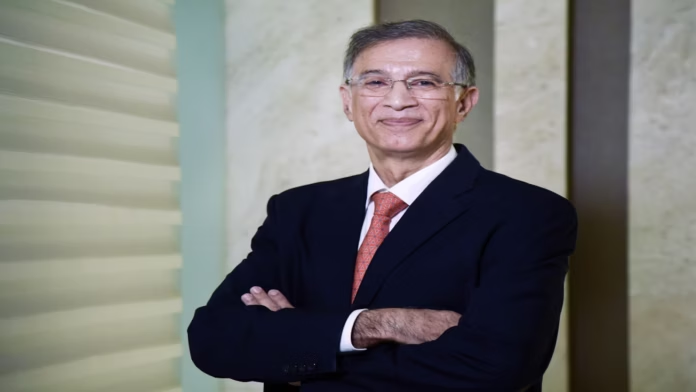
        At the World Economic Forum in Davos, Niranjan Hiranandani, Managing Director of Hiranandani Group, highlighted the pressing need for measures to revitalise India’s real estate sector. He emphasised that a reduction in RBI interest rates and targeted incentives for housing are critical to spurring growth, particularly in the affordable housing segment, which is experiencing a slowdown. Hiranandani underscored that without proactive steps, India’s broader economic growth could falter, given real estate’s significant role in the GDP. His remarks reflect growing concern among industry leaders over the sector’s uneven performance.

        India’s Global Investment Appeal
        Hiranandani exuded optimism regarding India’s position on the global investment map. He noted a positive perception of the Indian market, independent of the “China Plus One” strategy, indicating a shift towards India as a standalone investment destination. The commercial real estate sector, bolstered by Real Estate Investment Trusts (REITs), has emerged as a lucrative avenue for investors, with international giants like Brookfield and Blackstone leading the charge. However, the residential sector continues to lag, with muted interest that hinges on government policy and the forthcoming Union Budget.

        The Sustainability Dimension
        Sustainability remains pivotal to the sector’s long-term growth. Hiranandani pointed out that modern projects incorporating green technologies and energy-efficient designs are more attractive to investors. These initiatives align with global standards and address urban challenges, such as resource management and reducing carbon footprints. As sustainability gains traction, it is increasingly influencing investment decisions, particularly in the commercial and residential sectors. This shift is crucial to aligning India’s real estate growth with global environmental goals, fostering a balance between urban expansion and ecological preservation.

        Civic Integration and the Road Ahead
        Despite a promising outlook, challenges in civic infrastructure persist, particularly in terms of traffic management, waste disposal, and affordable housing supply. Hiranandani highlighted the need for collaboration between developers and government bodies to address these issues. With adequate policy support and a favourable budget, he believes the residential sector could mirror the success of its commercial counterpart. Additionally, he pointed to a robust investment sentiment in manufacturing, driven by government initiatives and strong ROI prospects, signifying an overall shift in India’s economic narrative.

        North Bengaluru gains NRI investment spotlight

        0
        North Bengaluru gains NRI investment spotlight
        North Bengaluru gains NRI investment spotlight

        North Bengaluru gains NRI investment spotlight

        A Gateway for US NRIs
        North Bengaluru has firmly established itself as a preferred investment destination for US-based Non-Resident Indians (NRIs). With its strategic proximity to Kempegowda International Airport and seamless connectivity via the Outer Ring Road and the proposed metro extensions, this region has become synonymous with convenience and growth potential. For US-based investors seeking lucrative opportunities, North Bengaluru’s burgeoning infrastructure and high-quality residential projects provide an ideal balance of modern amenities and promising returns.

        Urban Growth Drives Demand
        The region has witnessed a steady rise in urbanisation, with several multinational companies setting up operations in its vicinity. Business parks, IT hubs, and co-working spaces are rapidly transforming the area into a thriving economic corridor. This growth has fuelled demand for premium residential options catering to the workforce and expatriates. Additionally, the presence of international schools, healthcare facilities, and recreational hubs has bolstered its appeal, ensuring a holistic living experience for families. NRIs investing in North Bengaluru are capitalising on the region’s long-term potential for appreciation, with property values in prime localities already reflecting double-digit growth year-on-year.

        Sustainability at the Forefront
        One of North Bengaluru’s standout features is its emphasis on sustainable development. Several residential projects are integrating green building practices, including rainwater harvesting systems, solar energy utilisation, and eco-friendly construction materials. This shift towards environmentally conscious designs not only aligns with global trends but also addresses growing concerns about urban heat islands and water scarcity. Such initiatives resonate strongly with US-based NRIs, who often prioritise sustainability in their investment decisions, making North Bengaluru a beacon of responsible urbanisation.

        Challenges and Civic Integration
        Despite its rapid growth, North Bengaluru faces challenges in integrating civic infrastructure with its real estate development. Traffic congestion and inconsistent water supply are pressing concerns that require immediate attention from municipal authorities. Experts believe that a collaborative approach between developers and civic bodies can address these gaps. Investments in sustainable transport solutions and efficient waste management systems will be key to ensuring the region’s long-term viability. For NRIs, the promise of a well-rounded urban ecosystem remains a crucial factor influencing their investment choices.

        Urban transformation led by developer magnate synergy

          0
          Urban transformation led by developer magnate synergy
          Urban transformation led by developer magnate synergy

          Urban transformation led by developer magnate synergy

          The dynamics of the real estate sector are undergoing a transformation as prominent developers align their operations with influential real estate magnates to create landmark projects. This synergy is reshaping urban landscapes, driving sustainable practices, and meeting the aspirations of a burgeoning middle class. Such collaborations blend the strategic foresight of magnates with the execution prowess of developers, forging a path towards ambitious residential and commercial ventures tailored to India’s evolving urban demand.

          In a bid to establish long-term value, these partnerships are addressing critical urban challenges such as housing shortages, infrastructural deficits, and sustainability imperatives. A key focus remains on developing eco-conscious spaces equipped with energy-efficient systems, sustainable building materials, and green certifications. By doing so, these projects aim to enhance liveability while aligning with global environmental standards. Experts opine that such projects not only uplift market sentiment but also encourage civic participation, fostering a sense of shared responsibility towards urban development.

          Sustainability plays a pivotal role in these collaborations. Developers and magnates are adopting smart urban designs that prioritise resource efficiency, waste management, and renewable energy integration. These initiatives are crucial in cities like Mumbai, Bengaluru, and Hyderabad, where rapid urbanisation risks compromising ecological balance. By ensuring environmentally sound practices, these projects contribute to reducing urban sprawl and preserving local ecosystems, setting benchmarks for future developments.

          While these ventures bring transformative potential, they also highlight the importance of regulatory and civic frameworks. Experts urge municipalities to collaborate more effectively, ensuring seamless approval processes and infrastructure upgrades to support such large-scale developments. By incorporating public amenities and creating job opportunities, these projects not only fuel economic growth but also enhance the quality of urban life. This interplay of vision, execution, and sustainability positions the sector to redefine India’s real estate landscape.

          Hyderabad real estate sees evolving buyer preferences

          0
          Hyderabad real estate sees evolving buyer preferences
          Hyderabad real estate sees evolving buyer preferences

          Hyderabad real estate sees evolving buyer preferences

          Hyderabad’s real estate market closed 2024 with a mix of optimism and caution. While annual home sales registrations grew by 7%, the month of December marked a 20% year-on-year dip, with 5,805 properties registered compared to 7,254 in December 2023. The transaction value in December also declined by 14% to ₹3,590 crore from ₹4,191 crore the previous year. Despite the year-end slowdown, the overall residential market showed resilience, as the annual transaction value rose sharply by 23% year-on-year, signalling steady demand and buyer confidence in the city’s long-term prospects.

          The city witnessed a shift towards premiumisation, with homes priced above ₹1 crore increasing their share of total registrations from 10% in 2023 to 14% in 2024. Simultaneously, properties priced below ₹50 lakh accounted for 60% of registrations, a decrease from 68% the previous year. This shift underscores Hyderabad’s evolving buyer preferences, with a growing segment of purchasers seeking higher-value and larger properties. Additionally, mid-sized homes ranging from 1,000 to 2,000 sq. ft. remained the most preferred, contributing to 69% of total registrations.

          Sustainability continues to play a critical role in Hyderabad’s real estate landscape. The districts of Medchal-Malkajgiri and Rangareddy emerged as key contributors, accounting for 42% and 41% of registrations, respectively, while Hyderabad city contributed 17%. Urban planners emphasise the importance of integrating green infrastructure and optimising urban spaces, especially in emerging hubs like Medchal-Malkajgiri, to balance the increasing population density and ensure a sustainable urban environment.

          Shishir Baijal, Chairman and Managing Director of Knight Frank India, highlighted the changing dynamics in Hyderabad’s real estate market. “Properties valued above ₹50 lakh now represent 40% of registrations, up from 32% in 2023. This upward trend demonstrates the growing aspirations and purchasing power of homebuyers,” he said. While the December slowdown reflects seasonal market fluctuations, the overall growth indicates Hyderabad’s robustness as a real estate destination driven by infrastructural advancements, job creation, and a strong cultural appeal.

          Pune real estate market hits ₹7,098 crore milestone

          0
          Pune real estate market hits ₹7,098 crore milestone
          Pune real estate market hits ₹7,098 crore milestone

          Pune real estate market hits ₹7,098 crore milestone

          The Pune real estate market has witnessed an impressive resurgence in 2024, marked by a 25% increase in property registrations and a 33% rise in stamp duty revenue. According to data from the Maharashtra Inspector General of Registration (IGR), a total of 190,025 property registrations were recorded in 2024, up from 152,323 in 2023. Revenue collections surged to ₹7,098 crore, compared to ₹5,352 crore the previous year. In December alone, property registrations rose by 18% year-on-year, with 17,348 transactions generating ₹620 crore in revenue, an 11% increase compared to ₹560 crore in December 2023.

          The demand for larger homes and premium properties was a standout trend, driven by shifting buyer preferences post-pandemic. Properties priced above ₹1 crore saw their market share rise from 12% in December 2023 to 15% in December 2024, reflecting a trend of premiumisation. Homes priced between ₹50 lakh and ₹1 crore remained the most sought-after, commanding 34% of the market share. Additionally, the share of apartments larger than 800 sq ft grew from 28% in December 2023 to 30% in December 2024, underscoring the sustained demand for spacious housing. This shift is largely attributed to buyers prioritising comfort and quality of life, especially as hybrid work models become the norm.

          Sustainability remains a crucial perspective in Pune’s real estate growth. Central Pune, comprising Haveli Taluka, Pune Municipal Corporation (PMC), and Pimpri Chinchwad Municipal Corporation (PCMC), contributed 82% of residential transactions in December 2024. While this marked a slight decline from 2023, the emergence of projects in other regions, such as West Pune, hints at a broader, more inclusive development approach. Integrating green building practices and optimising urban infrastructure in these expanding zones could enhance long-term sustainability and reduce urban congestion.

          The rise in demand for premium and spacious homes also highlights Pune’s growing reputation as an attractive destination for high-value investments. Shishir Baijal, Chairman and Managing Director of Knight Frank India, emphasised the economic stability of Pune as a driving factor. “The return to office culture has significantly influenced housing demand. The rise in premium home purchases reflects buyers’ confidence in Pune’s economic growth and development,” he stated. Furthermore, developments in suburban areas like Mawal and Mulshi demonstrate the city’s adaptability to evolving buyer preferences, ensuring a balanced urban expansion.

          BWSSB inaction leaves building illegally occupied

          0
          BWSSB inaction leaves building illegally occupied
          BWSSB inaction leaves building illegally occupied

          BWSSB inaction leaves building illegally occupied

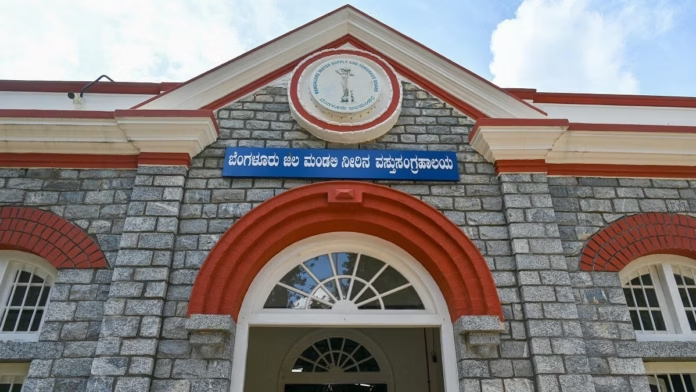
          A Bangalore Water Supply and Sewerage Board (BWSSB) facility in Ambedkar Nagar, a Dalit colony near Whitefield, has been illegally occupied by private individuals for the past two years, raising civic and urban governance concerns. The building, originally constructed to support water supply operations, has become the centre of unauthorised activities, allegedly under the influence of a local real estate goon. Despite repeated complaints by residents, including government school teacher Sonnappa T., no substantial action has been taken by the BWSSB or Bruhat Bengaluru Mahanagara Palike (BBMP).

          The structure, built in 2002, includes a water tank on the ground floor with two rooms above it designated for housing water pumps and accommodation for the waterman. However, as the tank, with a 2-lakh-litre capacity, has fallen into disuse, private persons broke open the locks to occupy the rooms. These spaces now serve as offices for real estate dealings, with at least five people operating from the premises daily. Residents claim the misuse reflects the negligence of civic authorities and a lack of accountability in addressing unauthorised occupations.

          The incident highlights broader urban governance issues, particularly the failure to optimise public infrastructure for community benefit. Residents argue that the abandoned BWSSB facility could be repurposed for various public utility projects. Instead, the unauthorised occupation not only breaches civic trust but also underlines the loopholes in law enforcement. While a local BWSSB official assured action, his efforts so far have been limited to superficial visits. The continued inaction has deepened frustration among residents, who feel their grievances are being overlooked.

          From a sustainability perspective, such cases of public infrastructure misuse undermine the principles of resource efficiency and equitable urban development. The water tank, which could have bolstered water conservation efforts in a drought-prone city like Bengaluru, remains idle. Mismanagement of public resources not only exacerbates urban challenges but also diminishes opportunities for building sustainable cityscapes. Activating unused infrastructure for rainwater harvesting or community water storage could significantly benefit areas like Ambedkar Nagar.

          Property Deals in Purandar Struggling Despite Push for New Airport

            0
            Property Deals in Purandar Struggling Despite Push for New Airport
            Property Deals in Purandar Struggling Despite Push for New Airport

            Property Deals in Purandar Struggling Despite Push for New Airport

            Despite the Maharashtra government’s renewed focus on developing the Purandar airport, property transactions in the region remain sluggish, showing only marginal growth over the past year. Official data reveals that 3,602 sale documents were registered in 2024, a slight increase from the 3,315 recorded in 2023. While the numbers indicate some growth, they are far from the surge expected after the airport project received its necessary technical clearances over a year ago.

            The primary reasons for the sluggishness in property deals are attributed to two major factors: an ongoing land acquisition process and resistance from local villagers. “Even though the project has been in discussion for the last two years, property deals are not high. Once the Maharashtra Industrial Development Corporation (MIDC) issues a formal notification on land acquisition, transactions are expected to gain momentum,” said a registration department official.

            This anticipation is linked to the government’s recent steps, including a meeting led by Maharashtra’s Chief Minister, Devendra Fadnavis, where the MIDC was designated as the project’s nodal agency. The push for the airport comes as the Navi Mumbai international airport is set to begin operations this year, further highlighting the need for a second airport to meet the growing demand in the region. However, despite the government’s push, property developers and investors remain cautious, taking a ‘wait and watch’ approach, especially in the seven villages directly affected by the land acquisition. These villages — Pargaon Memane, Ekhatpur, Munjwadi, Kumbharvalan, Udachiwadi, Vanpuri, and Khanavadi — are slated to provide the land for the airport project, but the uncertainty surrounding land acquisition is deterring both developers and potential buyers.

            Local sentiment also adds to the delay, with many villagers voicing their opposition to the land acquisition. Some villagers have expressed their desire to sell their land but are waiting for a formal discussion. One local resident, who owns around 5,000 sqft in Pargaon Memane, said, “We are among a group of villagers who want to sell their land. We are awaiting a formal discussion.” However, there are others who are strongly against giving up any land and had even openly voiced their discontent during the assembly elections. Newly elected MLA Vijay Shivtare has been cautious in addressing the issue with locals, likely to avoid further alienating them. The resistance from villagers could create additional challenges for the project, further slowing the pace of land transactions. An official from the MIDC stated that once the land acquisition notification is issued, the government will enforce directives to stop transactions in the notified villages. However, this has not yet occurred, leaving developers and residents in a state of uncertainty.

            A Pune-based builder, who had previously announced a project in Purandar, echoed the sentiment, stating that without a clear timeline from the state government regarding land acquisition, developers would be hesitant to invest in the area. “Until we know when land acquisition will occur, we are not looking at investments,” the builder said. In general, land transactions in Purandar taluka, which consists of 108 villages, typically range between 3,000 and 3,500 annually. The government had initially planned to establish Pune district’s second international airport in the taluka in 2018, approximately 50 km from Pune city, to cater to the growing demand for air travel in the region. However, despite the promise of the airport bringing economic benefits, the slow pace of property transactions and local opposition highlight the challenges that still lie ahead for this ambitious project. As the Maharashtra government pushes forward with its plans, the real estate market in Purandar will remain in flux, waiting for key milestones in land acquisition and project development to unlock potential growth.