Home Blog Page 333

India’s Bullet Train Vision Revolutionising Connectivity and Driving Economic Growth

    0
    India's Bullet Train Vision Revolutionising Connectivity and Driving Economic Growth
    India's Bullet Train Vision Revolutionising Connectivity and Driving Economic Growth

    India’s Bullet Train Vision Revolutionising Connectivity and Driving Economic Growth

    India is on the verge of a transport revolution. With Prime Minister Narendra Modi’s recent statement that the first bullet train will soon be operational, the country’s rail system is set for a transformative leap. The much-anticipated Mumbai-Ahmedabad High-Speed Rail (MAHSR) project, which kicked off in 2017 during a visit from Japan’s former Prime Minister Shinzo Abe, marks the beginning of a new era in Indian railway infrastructure. The project, aimed to be operational by 2027, is a critical part of Modi’s larger vision of modernising Indian Railways and boosting the country’s infrastructure to drive economic growth.

    The MAHSR will initially operate in Gujarat, with further extensions into Maharashtra, marking the first step towards a comprehensive high-speed rail network in the country. While the MAHSR project is largely being supported by Japanese technology and expertise, India is also forging ahead with the development of indigenous bullet train technology. This includes the Vande Bharat trains, which are set to evolve from semi-high-speed to full high-speed status, with the help of India’s own Integral Coach Factory and BEML. The goal is to achieve speeds of 280 km/h, making it one of the fastest trains in the country.

    This new generation of Vande Bharat trains recently achieved a significant milestone with its sleeper version hitting 180 km/h during trials. Over the next two years, two prototype trains will be developed and tested on the Mumbai-Ahmedabad corridor, laying the foundation for the first indigenous bullet train. As these trains develop, the Indian Railways is also drawing inspiration from Japan’s Shinkansen, which first ran at 210 km/h in 1964 and later reached speeds of 320 km/h. However, the financial aspect of these ambitious plans presents a significant challenge. The price tag for each car of India’s indigenous bullet train is Rs 28 crore, a fraction of the cost of Japanese rolling stock. While this makes the indigenous trains much more affordable, the funding required to build an expansive network, especially the “diamond quadrilateral” of high-speed rail connecting major cities, will need innovative financing models. Japan’s International Cooperation Agency (JICA) has provided soft loans for the MAHSR project, but India will need to explore alternative sources of capital, such as private-sector investment and global patient capital, to make this vision a reality.

    The idea of bullet trains is not just a matter of high-speed transportation; it also promises to integrate India’s growing cities more closely. Researchers, such as Kyle Chan from Princeton University, point out that regions connected by high-speed rail become one cohesive commuting zone. Cities like Hyderabad, Bengaluru, and Chennai could form a tech corridor connected by bullet trains, creating more opportunities for businesses and workers alike. Economically, cities with access to high-speed rail tend to benefit more due to improved connectivity, which in turn drives growth, productivity, and job creation. In addition to the economic benefits, bullet trains will contribute positively to environmental goals. Unlike diesel-powered cars or planes, bullet trains are electrically powered, reducing dependence on fossil fuels. As a result, they can significantly cut down on carbon emissions, aligning with India’s climate change mitigation goals and reducing its reliance on imported energy.

    While the vision for a bullet train network in India is promising, there are concerns about its real-world impact. Many people in rural and semi-urban areas are wary that the focus on high-speed trains might neglect basic transport needs. There is also concern about the high cost of the project, which could place a strain on public finances. Nonetheless, officials remain confident that the long-term economic and environmental benefits of a well-integrated, high-speed rail system will outweigh these concerns. The bullet train project is a bold step towards modernising India’s infrastructure, and while challenges remain, it holds immense potential to reshape travel, connect cities, and stimulate economic growth across the nation. With international collaboration and domestic innovation, the dream of high-speed rail could soon become a reality, revolutionising the way India travels and conducts business.

    Assam Chief Minister Highlights 16% Drop in Road Fatalities During Year-End Festivities

      0
      Assam Chief Minister Highlights 16% Drop in Road Fatalities During Year-End Festivities
      Assam Chief Minister Highlights 16% Drop in Road Fatalities During Year-End Festivities

      Assam Chief Minister Highlights 16% Drop in Road Fatalities During Year-End Festivities

      Assam’s efforts to improve road safety over the festive season have yielded positive results, with a 16% reduction in road accident fatalities compared to the previous year. Chief Minister Himanta Biswa Sarma announced this achievement on 17th January 2025, sharing that between 24th December 2024 and 15th January 2025, 163 people lost their lives in road accidents, down from 195 during the same period in 2023. While this is encouraging progress, Sarma stressed that the loss of even one life is still a cause for concern, with plans in place to further reduce fatalities.

      The reduction in fatalities is largely attributed to strict law enforcement, which included enhanced traffic monitoring and safety regulations during the peak of the festive season. On the last day of 2024, Assam saw only 32 accidents, resulting in 8 fatalities, which was a notable improvement compared to previous years. Sarma urged residents to adopt safe driving practices and reaffirmed the government’s commitment to achieving the ambitious goal of zero road accident fatalities in the near future. Despite these improvements, the state continues to face challenges related to road safety. Chief Minister Sarma highlighted that a significant portion of accidents involved driving under the influence of alcohol, a problem that remains prevalent in urban centres like Guwahati. The state has responded by focusing on increasing awareness and implementing more stringent enforcement of alcohol-related offences, aiming to curb drunk driving.

      In addition, Sarma has called for a holistic approach to road safety, particularly focusing on infrastructure improvements. During a recent meeting with district commissioners, police superintendents, and officials from the transport department, the CM discussed key measures to address the root causes of road accidents. The government is investing in better lighting for foot over-bridges and flyovers, a crucial step to ensure visibility and prevent accidents at night. Moreover, the installation of speed breakers, especially near schools, hospitals, and police stations, has been prioritised to reduce the risk of accidents in these high-footfall areas. Sarma has also ordered that two speed breakers be installed within every kilometre of rural roads, with the design to be decided in consultation with local communities. While the government’s actions are starting to yield results, residents continue to express concern over the conditions of many rural roads. Poor infrastructure, combined with heavy traffic and inadequate safety measures, contributes to the risk of accidents in less urbanised areas. Many rural communities are calling for more urgent repairs to these roads, as well as the implementation of additional safety features such as reflective road signs and better markings to guide drivers.

      At a national level, Union Minister Nitin Gadkari recently emphasised that faulty road construction should be classified as a non-bailable offence. His comments came amid a broader conversation on improving road safety across India, which has the highest number of road accidents in the world. According to Gadkari, road contractors and engineers must be held accountable for accidents caused by substandard construction, and penalties for such negligence should be severe. Despite these national challenges, Assam’s efforts in the past month show promise. The combination of stricter enforcement, infrastructure upgrades, and public awareness campaigns has begun to make a tangible difference in road safety. However, more work remains to be done, particularly in tackling the root causes of accidents and addressing infrastructure deficiencies, especially in rural areas. As the government continues its push for zero fatalities, the people of Assam hope that these measures will result in safer roads and fewer lives lost in the years to come.

      Aerocity Set for Major Transformation with $2 Billion Investment to Boost Connectivity and Growth

        0
        Aerocity Set for Major Transformation with $2 Billion Investment to Boost Connectivity and Growth
        Aerocity Set for Major Transformation with $2 Billion Investment to Boost Connectivity and Growth

        Aerocity Set for Major Transformation with $2 Billion Investment to Boost Connectivity and Growth

        Delhi’s Aerocity is preparing for a monumental transformation, with a host of new developments set to drastically increase its connectivity and capacity. With the opening of the second phase of the Global Business District (GBD) by the end of this year, the area is primed to become a major hub for business, shopping, and leisure. The project, backed by a $2 billion investment from Bharti Real Estate, will reshape the city’s infrastructure and urban landscape.

        At the heart of this transformation is the construction of a new loop that will provide seamless connectivity for motorists coming from Terminal 1 (T1) of Indira Gandhi International Airport (IGIA). This loop, currently under development, will direct traffic straight from the tunnel beneath the runway to Aerocity, bypassing major congestion points. Expected to be completed within a year, this loop will significantly ease access to the area, which currently houses a bustling mix of office buildings, hotels, and a metro station. As India’s largest aviation hub, Delhi Airport handles over 70 million passengers annually, with that number set to double in the coming years. The airport’s expansion includes plans to increase the footprint of Aerocity, which is already home to three office buildings—Worldmark 1, 2, and 3—alongside 11 hotels and a thriving metro connection. The daily footfall currently stands at about 50,000, but with the opening of four new office buildings by the end of 2025, this figure is expected to rise dramatically. In total, the GBD will expand by an additional 40 lakh square feet, which will also feature retail spaces.

        Moreover, Aerocity will see the introduction of India’s largest mall, spanning 30 lakh square feet, by 2027. According to S K Sayal, MD and CEO of Bharti Real Estate, this will cause footfall to surge ten-fold by 2027-28. These developments are aligned with the broader goal of making Aerocity a global gateway for businesses and tourists alike. However, the ambitious project extends beyond commercial space. The future vision for Aerocity includes a multi-modal transport hub, which will integrate several key transportation systems. Delhi Metro, the Rapid Rail Transit System (RRTS), and an air train linking T1, T2/3, and Aerocity are all part of the plan to enhance accessibility. The air train, which is set to be operational by 2027-28, will connect the airport terminals, cargo facilities, and Aerocity, providing easy access for passengers and workers alike. DIAL (Delhi International Airport Ltd) is spearheading this initiative, with a focus on creating an integrated hub to accommodate IGIA’s projected annual passenger traffic of 14 crore by the next decade.

        Given the congestion on Delhi NCR roads, particularly the major routes like the Gurgaon Expressway, the government is also prioritising the development of public transport solutions. The expansion of Delhi Metro lines and the integration of RRTS into the new transport hub will provide much-needed relief for commuters. The upcoming infrastructure will not only ease traffic but also position Aerocity as a key business and leisure destination in the region. Sayal emphasised that the project will be a statement of India’s growing global influence and its ambition to lead in business and commerce. The projected impact on the local economy and job creation is immense. Once the full scale of the developments is realised, Aerocity will become a hub for business executives, global investors, and tourists, offering a range of offices, retail spaces, and recreational facilities. With a carefully crafted vision and robust infrastructure improvements, Aerocity is on track to become a world-class destination. As the city readies itself for this transformation, the future of Delhi’s business, tourism, and connectivity appears brighter than ever.

        Housing Sales Fall by 26% in Top Eight Cities Delhi-NCR Defies Trend

        0
        Housing Sales Fall by 26% in Top Eight Cities Delhi-NCR Defies Trend
        Housing Sales Fall by 26% in Top Eight Cities Delhi-NCR Defies Trend

        Housing Sales Fall by 26% in Top Eight Cities Delhi-NCR Defies Trend

        The Indian housing market experienced a notable slowdown in the last quarter of 2024, with a 26% year-on-year (YoY) drop in housing sales across the country’s top eight cities. This downturn was primarily driven by a combination of factors, including assembly elections in Maharashtra and Haryana and rising property prices, which dampened consumer sentiment. Despite the overall decline in sales, a closer look at the data reveals a 10% quarter-on-quarter (QoQ) increase, largely driven by the festival season.

        The cities covered in the survey included Delhi-NCR, Mumbai Metropolitan Region (MMR), Pune, Kolkata, Ahmedabad, Hyderabad, Bengaluru, and Chennai. According to PropTiger.com, a digital real estate transaction platform, both the number of new launches and the total sales witnessed a significant dip in Q4 2024. The survey suggests that the political climate, especially the assembly elections held in Maharashtra and Haryana in October and November respectively, played a crucial role in hindering real estate transactions. Additionally, the persistent rise in property prices further added to the affordability challenge for potential buyers.

        Among the eight cities, Delhi-NCR emerged as a notable exception. The region saw an impressive surge in home sales, with 9,808 units sold in the October-December quarter, marking a substantial 50% increase from the 6,528 units sold during the same period in 2023. This uptick in sales is attributed to both demand driven by the festive season and the continued preference for residential properties in the region, despite the overall market slowdown. Real estate experts believe that Delhi-NCR’s resilience can be credited to a combination of factors, including its large housing inventory, improved affordability compared to other metropolitan cities, and ongoing infrastructure developments.

        In contrast, the real estate markets in MMR, Pune, Bengaluru, and Chennai showed a clear dip in housing sales. Experts suggest that the rising prices of properties in these markets, combined with the uncertainty brought about by the elections, led to a decrease in buyer confidence. In Mumbai, for instance, a highly priced property market has made it increasingly difficult for first-time homebuyers to enter the market. This trend was seen across most major cities, where affordability remained a concern for the average homebuyer, particularly in urban centres.

        New launches across these cities also mirrored the trend of declining sales. PropTiger.com’s data shows a 33% drop in new housing launches during the same quarter, pointing towards a more cautious approach from developers. The combination of stagnant sales and high construction costs has led builders to slow down their project launches, opting instead to complete existing projects or focus on more affordable offerings in peripheral markets.

        Despite the overall slowdown, the quarter’s positive QoQ growth is encouraging for the real estate market, especially when viewed through the lens of the festive season, which often brings a temporary boost in housing demand. However, the outlook for 2025 remains uncertain, with experts predicting that housing sales will continue to face pressure from high property prices and possible policy interventions by state governments.

        As the market continues to evolve, developers, investors, and homebuyers alike will need to adjust to a complex mix of political, economic, and market-driven factors. While Delhi-NCR stands out as a beacon of hope in an otherwise subdued market, it remains to be seen whether this trend will be sustainable in the long term, or if other cities will eventually follow suit as affordability and market dynamics continue to evolve.

        Exploring Italy Affordable Living and Real Estate

          0
          Exploring Italy Affordable Living and Real Estate
          Exploring Italy Affordable Living and Real Estate

          Exploring Italy Affordable Living and Real Estate

          Italy, with its captivating landscapes, timeless cultural heritage, and renowned cuisine, remains an alluring destination for tourists and expats alike. As one of Europe’s most desirable places to settle, it offers a rich tapestry of opportunities, particularly for those seeking a mix of relaxation, heritage, and contemporary living. Yet, beyond the idyllic images of Italian villas and romantic streets, the real estate landscape in the country is also marked by several economic shifts. From the cost of living to the rise in property purchases, Italy is experiencing both challenges and opportunities. This analysis delves into the factors driving these trends, and what the future holds for Italy’s property market.

          The cost of living in Italy remains relatively lower compared to many Western European countries, making it an attractive option for retirees and young professionals alike. Regions like Tuscany and Lombardy have drawn expats seeking a balance between an idyllic lifestyle and affordability. Italy’s Mediterranean climate further enhances its appeal, allowing year-round living in cities like Rome, Florence, and Milan, without the harsh winters that often plague northern Europe. However, the cost of living is not uniform across the country. While the larger metropolitan cities experience higher living expenses, particularly in terms of rent and day-to-day essentials, smaller towns and rural areas continue to offer affordable housing options. According to recent data, while Milan’s average monthly rent for a 1-bedroom apartment can touch €1,200, similar properties in southern Italy might cost a mere €500-600. This disparity is crucial for buyers and renters looking for a mix of affordability and accessibility.

          Real estate in Italy is undergoing a quiet transformation, driven by both domestic demand and international interest. While Italy’s cities have always been popular among foreign buyers, the pandemic has seen a surge in interest towards more rural properties, as remote working gains traction. In fact, areas like Sicily and Calabria are witnessing an influx of foreigners looking for homes in peaceful locations at affordable prices. Despite the challenges posed by the economy, including slow growth projections, the Italian property market is relatively resilient. However, it’s important to note that property prices in Italy are not as low as one might think. Prime locations, such as the Amalfi Coast or historical centres in Florence and Venice, continue to command premium prices, often exceeding €5,000 per square meter. For a more budget-conscious investor, opportunities lie in overlooked regions like Abruzzo or Molise, where prices remain relatively low but still offer proximity to key infrastructure and stunning natural beauty.

          Sustainability is increasingly becoming a priority for Italy’s real estate sector, with government-backed initiatives encouraging green building practices. The European Union’s push for sustainability has prompted Italy to accelerate the development of energy-efficient homes and eco-friendly commercial spaces. This shift is driven not only by global environmental concerns but also by economic incentives like tax deductions for renewable energy installations. In fact, Italy has committed to reducing carbon emissions by 55% by 2030, which has stimulated green building projects across major cities. Additionally, eco-friendly apartments and villas with energy-efficient features, such as solar panels, insulation, and rainwater harvesting systems, are seeing an uptick in demand, particularly among younger, environmentally conscious buyers. The focus on sustainability is not just limited to new builds but also renovation projects, where developers are encouraged to integrate energy-saving technologies into older properties. As a result, the real estate market is adapting to a green future, with a growing emphasis on low-energy, sustainable housing.

          Looking to the future, Italy’s real estate market offers both risks and rewards. While the country’s appeal as a desirable living destination continues to attract investment, issues such as regional disparity in property prices and the ongoing challenges posed by Italy’s ageing population remain. However, for investors and homebuyers willing to look beyond the traditional hotspots and embrace Italy’s evolving landscape, there are ample opportunities to be had. Moreover, the country’s commitment to sustainable growth provides a clear path forward, as environmental considerations are integrated into both urban and rural developments. With a continued focus on eco-conscious living, technological integration, and diversified housing options, Italy’s real estate market stands at a critical juncture in its evolution, ensuring that it remains a top contender for global property investment in the years to come.

          Emerging Real Estate Trends in South Korea

            0
            Emerging Real Estate Trends in South Korea
            Emerging Real Estate Trends in South Korea

            Emerging Real Estate Trends in South Korea

            South Korea’s real estate market is navigating through dynamic shifts as 2025 unfolds, shaped by various forces including government policies, technological innovation, and demographic changes. A focus on affordability, suburban living, and sustainability marks the year as a pivotal moment for the sector. These shifts are underpinned by the government’s robust strategy to address housing needs, the growing appeal of suburban areas, and the rise of technology-driven developments. This article delves into the pivotal trends, the economic influence of the real estate market, and how these trends interconnect to form a sustainable growth trajectory for the industry.

            A key development in South Korea’s real estate landscape is the government’s increased focus on affordable housing. Amidst soaring real estate prices in cities like Seoul and Busan, the government has earmarked a budget of over 10 trillion KRW to meet the housing demand. By 2025, the aim is to address 30% of the housing needs in high-density urban areas. This is being achieved through various policy measures, including rental caps and subsidies for developers. Furthermore, the integration of innovative construction technologies is accelerating, driving down costs and increasing the speed at which affordable homes are built. Public-private partnerships are also playing a vital role in easing the financial burden on the state, creating opportunities for investors while fostering sustainable urban growth.

            The demand for suburban living is another pivotal trend influencing South Korea’s property market. As a result of the COVID-19 pandemic, remote work setups have gained popularity, encouraging many homebuyers to seek larger living spaces outside the confines of South Korea’s bustling urban hubs. With enhanced transportation networks, including new subway lines and express bus routes, commuting from the suburbs to major cities has become more feasible. As a result, the volume of suburban property transactions is expected to surpass urban sales by 2025. This shift presents developers with the challenge of balancing suburban growth with the continued demand for city-based infrastructure, while ensuring that the suburban areas are equipped with green spaces, community facilities, and quality schools.

            Technology and sustainability are the dual pillars supporting the transformation of South Korea’s real estate sector. The proliferation of smart homes, equipped with Internet of Things (IoT) devices for enhanced convenience, energy efficiency, and security, is rapidly reshaping market dynamics. The country’s real estate industry is also embracing PropTech innovations, such as artificial intelligence for market analysis, digital platforms for property transactions, and blockchain for secure contracts. These technologies are not only improving market efficiency but also increasing transparency and security for consumers. In addition to these technological strides, environmental sustainability is taking centre stage, with construction projects adhering to stricter green building standards. Builders are integrating renewable energy solutions, such as solar panels and geothermal systems, into their designs, aligned with South Korea’s broader carbon neutrality goals for 2050. Government incentives and subsidies for renewable installations have further fuelled this trend, enabling both developers and homebuyers to make environmentally conscious decisions.

            While the real estate market has experienced significant growth, challenges remain. The supply of new apartments is expected to be insufficient to meet demand, causing market volatility. However, these challenges create investment opportunities, particularly in regions poised for growth thanks to planned infrastructure improvements and government-backed urban regeneration projects. The government’s regulatory framework, including measures to restrict speculative purchases, tax reforms, and restrictions on foreign ownership, are designed to stabilise the market and ensure long-term sustainability. Additionally, South Korea’s demographic shifts, such as the rapidly aging population and the growing demand for retirement communities, offer another layer of complexity, driving the need for inclusive housing designs that cater to seniors. This demographic shift is shaping the future of housing, creating a diverse array of housing solutions that aim to balance the needs of young professionals, families, and seniors.

            Macrotech Developers Ambitious ₹8600 Crore Expansion in Bengaluru

            0
            Macrotech Developers Ambitious ₹8600 Crore Expansion in Bengaluru
            Macrotech Developers Ambitious ₹8600 Crore Expansion in Bengaluru

            Macrotech Developers Ambitious ₹8600 Crore Expansion in Bengaluru

            Mumbai-based real estate giant Macrotech Developers, known for its Lodha brand, has announced its plans to develop residential projects across 64.4 acres in Bengaluru. With a projected gross development value (GDV) of ₹8600 crore, this move is seen as part of the company’s strategy to make significant inroads into the highly competitive Bengaluru property market. The developments will be spread across multiple prime locations, from Devanahalli in the north to Bannerghatta Road and Sarjapur in the south, with a focus on high-quality residential offerings designed to meet the growing demand for housing in the city’s thriving IT corridor.

            Macrotech Developers’ expansion plan includes a mix of ongoing and upcoming projects, such as Lodha Mirabelle in Manyata Business Park (10 acres, ₹1,200 crore GDV) and Devanahalli (17 acres, ₹2,400 crore GDV), among others. The south Bengaluru region will see developments like Lodha Azur (9.2 acres, ₹800 crore GDV) and Sarjapur (19 acres, ₹2,800 crore GDV). These projects, which aim to cater to Bengaluru’s increasing demand for modern housing, are expected to drive the company’s presales growth, with the company forecasting significant returns from this market in the coming financial year.

            Strategic Land Acquisitions and Market Share Goals

            In recent months, Macrotech has been actively acquiring land, both through outright purchases and joint development agreements with landowners. A prime example is the recent acquisition of a 19-acre land parcel, which will see the development of a ₹2,800 crore housing project. The company’s strategy of combining strategic land buys with joint development agreements demonstrates its commitment to expanding its presence in Bengaluru. As part of its broader vision, Macrotech aims to capture 15% of the Bengaluru housing market by the end of the decade.

            Abhishek Lodha, Managing Director and CEO of Macrotech Developers, noted that the company has successfully completed its pilot phase in Bengaluru. This phase, which began in 2021, focused on building a robust local team and understanding the region’s market dynamics. Having now transitioned beyond this phase, the company is set to tap into Bengaluru’s high-growth potential, which is expected to see a surge in demand for residential properties driven by the city’s growing IT and business sectors.

            The Growing Demand for Housing and Economic Impact

            Bengaluru, often dubbed the ‘Silicon Valley of India,’ has been experiencing an unprecedented surge in its real estate market, particularly in the residential segment. As more technology companies set up operations in the city, the demand for quality housing in well-connected areas is on the rise. According to market reports, south and north Bengaluru, in particular, have witnessed robust price appreciation, driven by the influx of professionals and tech workers. The expansion plans by developers like Macrotech are poised to meet this demand, providing new homes to the city’s rapidly growing population.

            This urban expansion, while promising for the local economy, also highlights the need for sustainable urban planning. With the increasing pressure on Bengaluru’s infrastructure, developers must integrate green building practices and energy-efficient designs in their projects to mitigate environmental impact. Macrotech’s projects, especially those in strategic areas such as Sarjapur and Devanahalli, are likely to reflect this growing emphasis on sustainability, ensuring that Bengaluru’s urban growth remains eco-friendly and livable for future generations.

            Sustainability Focus and Civic Responsibility in Macrotech’s Expansion

            As Macrotech expands its footprint in Bengaluru, the company is increasingly focused on integrating sustainable practices into its developments. In line with global trends towards green building certifications, Macrotech is expected to adopt eco-friendly technologies such as rainwater harvesting, energy-efficient systems, and sustainable construction methods in its projects. This commitment is crucial in a city like Bengaluru, which faces challenges such as water scarcity and traffic congestion. Sustainable development is not only a responsibility for developers but also an urgent civic issue, as rapid urbanisation puts immense pressure on natural resources.

            Furthermore, Macrotech’s plans will contribute to the creation of modern residential communities that are well-connected, fostering better social and civic infrastructure in Bengaluru. By focusing on locations that are in close proximity to business districts, transportation hubs, and essential services, the company’s developments will enhance urban mobility and quality of life for residents. This approach ensures that Bengaluru’s urban growth remains balanced, addressing both economic and environmental considerations while providing long-term benefits to the city’s residents.

            Sanofi Leases Over 2.7 Lakh Sq Ft in Hyderabad at ₹2 Crore Per Month

            0
            Sanofi Leases Over 2.7 Lakh Sq Ft in Hyderabad at ₹2 Crore Per Month
            Sanofi Leases Over 2.7 Lakh Sq Ft in Hyderabad at ₹2 Crore Per Month

            Sanofi Leases Over 2.7 Lakh Sq Ft in Hyderabad at ₹2 Crore Per Month

            In a significant move, global pharmaceutical giant Sanofi Healthcare has leased over 2.7 lakh square feet of office space in Hyderabad’s thriving IT and business district, Hitech City. The lease, valued at more than ₹2 crore per month, is set for a five-year tenure, underscoring the company’s commitment to expanding its footprint in one of India’s key technology hubs. The office, located in the RMZ Spire building, will occupy the 11th to 17th floors, offering ample space for Sanofi’s growing operations in the region.

            This lease agreement, signed on December 10, 2023, and registered in January 2024, highlights the increasing demand for prime office spaces in Hyderabad, particularly in the Hitech City and Gachibowli corridors. These areas are home to several multinational corporations and tech giants, making them the city’s most sought-after locations for business operations. Sanofi’s decision to move into RMZ Spire aligns with the company’s vision of expanding its presence in Hyderabad, a city that continues to see exponential growth in terms of both infrastructure and business opportunities.

            The lease agreement includes a substantial security deposit of ₹15.3 crore, with the rent fixed at ₹75 per square foot. As the lease progresses, the rent will see a 15% escalation after the third year. Furthermore, Sanofi has secured 303 parking spaces within the building, with an option to purchase additional covered parking units at ₹5,000 per unit. With average rental rates in RMZ Spire hovering between ₹73 and ₹80 per square foot, this deal is seen as a major indicator of the health of Hyderabad’s office leasing market.

            Hyderabad’s Office Space Market Shows Steady Growth

            The leasing activity in Hyderabad has been on a steady upward trajectory, particularly in the IT-centric hubs of Gachibowli and Hitech City. Between 2019 and 2023, average rental prices in these areas have seen significant increases. For instance, in Hitech City, monthly rents surged from ₹23,000 in 2019 to ₹27,500 by 2023, while Gachibowli’s rents saw a similar increase, jumping by 20% during the same period. This increase in rental rates reflects the growing demand for high-quality office space in one of India’s most dynamic cities.

            In comparison to global markets, Hyderabad’s office rental rates remain competitive, making it an attractive destination for businesses looking to expand their operations in India. This trend has also been observed with other global players like Facebook and Google, both of whom have renewed or expanded their office leases in the city, demonstrating confidence in the long-term viability of Hyderabad as a business hub. Facebook, for instance, recently renewed its lease for 3.7 lakh square feet at ₹2.8 crore monthly, highlighting the city’s enduring appeal for multinational corporations.

            Sustainability and Civic Impact in Hyderabad’s Office Leasing Trend

            As Hyderabad’s office leasing market continues to grow, the focus is also shifting towards the sustainability of these developments. The demand for energy-efficient buildings and green office spaces is on the rise, with companies increasingly looking for properties that align with their corporate sustainability goals. RMZ Spire, where Sanofi will establish its new office, is one such building that adheres to green building standards, reflecting the broader shift towards sustainable urban development in India. This is not just a corporate trend; it is a civic issue, as urban centres like Hyderabad need to balance rapid commercial development with environmental consciousness.

            In addition, the city’s urban planning authorities are increasingly prioritising infrastructure that supports both business and quality of life. With the rise of IT corridors like Hitech City and Gachibowli, the integration of green spaces, efficient public transport, and energy-saving office buildings are crucial to ensuring that Hyderabad remains a sustainable and liveable city. As more companies like Sanofi move into these commercial spaces, their commitment to sustainability will set a precedent for future developments, which will likely focus on reducing energy consumption and promoting eco-friendly business practices.

            Conclusion: The Future of Hyderabad’s Real Estate Landscape

            Sanofi’s latest office lease in Hyderabad marks a significant step in the city’s continuing evolution as a global business hub. As the demand for prime office spaces in Hitech City and Gachibowli rises, real estate developers and corporate tenants are likely to focus more on sustainability and green building certifications to ensure long-term viability. Hyderabad’s office leasing market is not just thriving in terms of rental growth, but is also contributing to the city’s civic and environmental development, ensuring that future generations benefit from a balanced, sustainable urban ecosystem.

            SDI Realty and Nexus Bring Major Retail Expansion to Fort Worth

              0
              SDI Realty and Nexus Bring Major Retail Expansion to Fort Worth
              SDI Realty and Nexus Bring Major Retail Expansion to Fort Worth

              SDI Realty and Nexus Bring Major Retail Expansion to Fort Worth

              The bustling residential expansion in northwest Fort Worth has just secured a major retail boost, as Houston-based SDI Realty collaborates with Nexus Real Estate Co. to bring a new grocery-anchored shopping centre to the area. This new development, anchored by the popular grocery chain Kroger, is expected to cater to the growing number of residents in nearby communities. Located in the rapidly-developing Rancho Canyon area, the project promises to address the increasing demand for local amenities, offering not just groceries, but a range of other retail services to residents.

              With Fort Worth’s residential sectors rapidly expanding, especially in the northwest, this new centre is designed to provide a much-needed convenience for homeowners. Local developer Lennar Homes has been spearheading the construction of the Rancho Canyon community, which is projected to add several hundred new homes to the area. Greg Urech, President of Land-DFW for Lennar, shared that while the initial plan for this site was residential, discussions with DB2RE led to the incorporation of a retail component that will undoubtedly enrich the lives of the growing local population. The presence of Kroger will now enable daily shopping needs to be met more conveniently, while other retailers are likely to follow in this evolving space.

              A noteworthy aspect of the development is its strategic location amidst various other new residential projects, such as Centurion American’s Alpha Ranch, a sprawling 1,825-acre master-planned community. This growing demand for homes is indicative of the area’s strong market potential. Fort Worth’s northwest corridor, which continues to be a hotbed for real estate development, is now poised for a transformative retail presence. This shopping centre marks the start of a broader trend in the area, with further developments expected to follow.

              However, beyond its commercial implications, the development also highlights the need for sustainable urban growth. As more people move into these new communities, access to local amenities and reducing the need for long commutes to distant shopping centres is critical for the environment. By promoting the establishment of essential services close to residential areas, this project is contributing towards more sustainable urban living, reducing the ecological footprint of daily activities. Additionally, by focusing on retail and grocery access, developers are also addressing the growing trend for “walkable” neighbourhoods, where residents can easily access services without the need for a car, leading to a reduction in vehicle emissions.

              This new retail development also brings up important civic issues, especially concerning the integration of such amenities into the community fabric. Urban planners have long advocated for the importance of incorporating retail spaces alongside residential developments to foster a balanced and thriving environment. In this case, the addition of Kroger and its accompanying retail outlets demonstrates a commitment not just to economic development, but to creating sustainable, connected communities where people can live, work, and shop without the need to travel great distances.

              As the northwest Fort Worth area continues to develop, this partnership between SDI Realty, Nexus, and DB2RE is a clear indicator of the trend towards mixed-use spaces that provide residents with everything they need within a few miles of their homes. With this kind of development, it’s evident that the future of Fort Worth will be defined by integrated living spaces that promote convenience, sustainability, and a higher quality of life.

              Green Shoots in China Real Estate Market

                0
                Green Shoots in China Real Estate Market
                Green Shoots in China Real Estate Market

                Green Shoots in China Real Estate Market

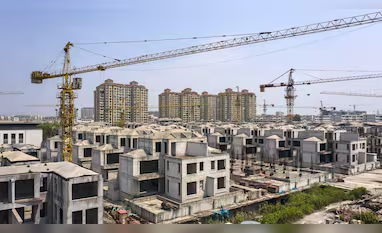
                After months of downturn, China’s real estate sector is showing early signs of recovery, marking a significant shift in market sentiment. According to recent data, residential and commercial property prices in China’s first-tier cities rose month-on-month in December, indicating a stop to the market’s prolonged slump. The latest figures from the National Bureau of Statistics (NBS) reveal that prices in Beijing, Shanghai, Guangzhou, and Shenzhen—the country’s major metropolitan hubs—saw an increase of 0.2% for new homes, marking the first rise since June 2023. Additionally, secondhand home prices also saw a modest rise, further bolstering hopes for a more sustained recovery in the coming year.

                The improved market conditions are a direct result of the government’s ongoing policy support, which aims to rejuvenate the housing market and reignite demand. The government’s decision to relax home purchase restrictions, ease financial burdens for homebuyers, and accelerate the redevelopment of urban villages are key factors driving the recovery. These targeted initiatives, such as lowering the purchase threshold and alleviating repayment pressures, have sparked renewed enthusiasm among homebuyers, according to Kang Yi, head of the NBS. The optimism reflected in December’s data is largely due to these government-backed efforts, which have helped address both supply and demand imbalances.

                From a broader perspective, the recovery in first-tier cities is expected to have a ripple effect on smaller urban markets. As larger cities show signs of stability, smaller and second-tier cities have experienced less pronounced declines, with prices in these areas largely remaining flat. Third-tier cities have seen their month-on-month price reductions narrow, further suggesting that the market downturn is stabilising. Real estate experts, such as Chen Wenjing from the China Index Academy, believe that the improvement in first-tier cities will help rebuild consumer confidence, which in turn will boost demand and price stability in smaller cities.

                However, the recovery remains fragile, and experts caution that continued policy support and government intervention will be necessary for the market’s long-term health. Measures like expanding urban village redevelopment, optimising down payment and interest rate policies, and increasing special-purpose bonds to reclaim idle land are expected to play a key role in sustaining the market’s momentum. Yan Yuejin, a leading analyst at E-house China R&D Institute, has highlighted the importance of tapping into latent housing demand to achieve a more robust and sustainable growth trajectory. The long-term outlook for China’s real estate market remains positive, but continued efforts are required to ensure that the recovery is not short-lived.

                Sustainability and Urban Development: Key Challenges for China’s Housing Market

                While the short-term outlook for China’s real estate sector appears positive, the government’s push for recovery must also align with sustainable urban development goals. The accelerated redevelopment of urban villages and the increase in housing resettlement via monetised compensation are significant steps towards revitalising areas in need of infrastructure improvement. However, these efforts must be carefully managed to avoid over-expansion and environmental degradation.

                Sustainable development in China’s rapidly urbanising cities is becoming increasingly important, as unchecked growth can lead to the loss of green spaces, increased pollution, and overburdened infrastructure. For instance, the push for new housing development must be balanced with the preservation of natural resources and the environment. Policymakers will need to ensure that urban expansion aligns with environmental and civic goals, such as improving public transport systems, reducing carbon footprints, and promoting green building standards. Only then can the sector maintain long-term growth without compromising the quality of life for residents or the environment.

                In conclusion, while China’s real estate market is showing promising signs of recovery, both in terms of price stability and market sentiment, it remains essential that growth is managed with sustainability in mind. The government’s current policies offer a framework for recovery, but sustained efforts are needed to ensure that the growth trajectory remains stable and environmentally responsible. Balancing the need for housing development with environmental and social considerations will be crucial in shaping the future of China’s urban landscape. With continued government intervention and careful planning, the housing sector has the potential to contribute to the broader economic and social goals of sustainable urbanisation.