Home Blog Page 335

Santa Cruz Residents Fight Real Estate Encroachment Threatening Bondvol Lake

0
Santa Cruz Residents Fight Real Estate Encroachment Threatening Bondvol Lake

Santa Cruz Residents Fight Real Estate Encroachment Threatening Bondvol Lake

In a passionate and united response, the residents of Santa Cruz and petitioner Arturo D’Souza are sounding an alarm over the growing threat of real estate encroachment around the historic Bondvol Lake. The lake, a 110-year-old structure originally built by the Portuguese to combat famine, is not just a source of historical value but also a crucial environmental asset. Recently declared a wetland and biodiversity hotspot in October 2022, Bondvol Lake is facing a new challenge—attempts by real estate developers to alter its protected boundaries, potentially endangering both its ecological balance and the surrounding communities.

The latest developments have stirred up significant concern among local villagers. Dense tree cover along the hillside surrounding the lake has been cleared, allegedly by developers who have purchased land in the area, with the intention of encroaching upon the lake’s buffer zone. These developers have approached the High Court, seeking to reduce the buffer zone from the court-mandated 200 metres to a mere 50 metres. This move has drawn a sharp reaction from the local community, who see it as a blatant attempt to undermine the lake’s protection. Arturo D’Souza, who has been actively leading the resistance, referred to a 2016 High Court directive that upheld the 200-metre buffer, emphasising that this ruling still stands, and any alteration to it would be contested.

One of the core concerns raised by the villagers is the lack of accountability from government authorities. The clearing of land for construction in a protected zone is particularly troubling, as it raises questions about how such actions were authorised. D’Souza has questioned the involvement of key government bodies such as the Directorate of Survey and Land Records, Panchayat, and the Town and Country Planning (TCP) Department, asking how plots could have been sold within a legally protected zone despite clear judicial directives. This apparent disconnect between policy and enforcement has created a sense of betrayal among residents, who feel that their voices are not being heard.

The stakes are high for the local community. Bondvol Lake is not only a significant historical landmark but also an essential resource that supports thousands of farmers in the region by recharging wells and sustaining agriculture. The proposed real estate developments, driven by speculative motives, threaten to disrupt this delicate ecological balance. Former Deputy Sarpanch and current panch member Inacio Dominic Pereira has warned that if the destruction continues, residents will take to the streets in protest, with an FIR already filed against one developer for damaging a green patch. Heritage promoter Sanjeev Sardessai has also condemned the actions, calling for the scrutiny of the corrupt officials allegedly involved in granting illegal permissions.

Sustainability and Civic Challenges in Protecting Bondvol Lake

The ongoing battle to protect Bondvol Lake is not just about preserving a historic site—it is a fight for the sustainability of the region’s environment. The lake plays a critical role in the local ecosystem, providing essential water resources to farmers and promoting biodiversity. Real estate encroachment, especially in the form of deforestation and unregulated construction, could severely impact this vital water resource, further exacerbating the water scarcity issues in the region.

Moreover, the broader environmental consequences of unchecked urban development cannot be ignored. As land is cleared and built upon, the ecological integrity of the area diminishes, leading to soil erosion, loss of green cover, and reduced groundwater recharge. For Santa Cruz residents, the fight to preserve Bondvol Lake is not just about protecting a local heritage site but about ensuring sustainable development that does not sacrifice the environment for short-term gains. The involvement of local officials, including Santa Cruz MLA Rodolfo Fernandes, has been pivotal in garnering support for the cause, but the real test will lie in holding developers and authorities accountable to their commitments to safeguarding the lake’s future.

In conclusion, the community’s outcry against the encroachment of Bondvol Lake is a stark reminder of the importance of preserving natural heritage sites in the face of rapid urbanisation. The battle unfolding in Santa Cruz highlights the challenges of balancing development with environmental preservation. As the situation progresses, it is clear that public pressure, legal frameworks, and sustainable urban planning will be critical in ensuring that Bondvol Lake remains a thriving, protected ecosystem for generations to come.

Growing Threat of Speculative Trends in Indian Real Estate Market

    0
    Growing Threat of Speculative Trends in Indian Real Estate Market
    Growing Threat of Speculative Trends in Indian Real Estate Market

    Growing Threat of Speculative Trends in Indian Real Estate Market

    In the ever-evolving landscape of India’s real estate sector, investors are increasingly falling prey to speculative trends that inflate property prices beyond their intrinsic value. Akshat Shrivastava, founder of Wisdom Hatch, recently warned against the rising dangers of treating real estate as a speculative asset. In a post on X (formerly Twitter), Shrivastava shed light on how the prices of properties are being artificially inflated through speculative activities, which could lead to potential losses for those who fall into the trap.

    Shrivastava’s analysis of the current property market paints a concerning picture. He stated, “A house that costs ₹1 crore today, will cost ₹3 crore in a few years. Why? Because the price of things goes up when there is speculation on assets.” This is a key observation for potential investors. Builders in India, according to Shrivastava, have found ways to create an illusion of value by inflating the prices of residential and commercial real estate. As more people buy into the idea that the prices will continue to rise, this creates a vicious cycle of demand that drives prices further up, often resulting in an unsustainable market.

    The crux of the issue lies in the speculative mindset that has gripped the real estate sector. Real estate, traditionally considered a stable and reliable investment, has recently been seen by many as a vehicle for quick financial gains, driven by short-term market trends rather than long-term value. This speculative behaviour has led to rapid price hikes, creating an inflated property market where the gap between demand and actual value continues to widen. Potential homebuyers and investors may find themselves locked into high-priced properties that do not hold the expected value, leading to financial strain. For example, in cities like Delhi and Mumbai, property prices have skyrocketed over the last few years, yet the true market value of these properties remains questionable.

    From a sustainability perspective, speculative pricing in real estate is not only an economic issue but also an environmental one. As demand for properties increases artificially, there is a greater push for rapid construction, often without sufficient regard for the environmental impact. Builders focus on high-margin projects rather than incorporating eco-friendly practices like energy-efficient designs, water conservation, or sustainable building materials. This not only puts pressure on the infrastructure and resources of cities but also undermines long-term sustainability. The rapid urbanisation and the unchecked growth of residential complexes in already crowded areas contribute to the strain on civic amenities, waste management, and green spaces. This unchecked expansion, driven by speculative pricing, often leads to a reduction in the quality of life for residents, with increased pollution and reduced access to essential services.

    As Shrivastava rightly points out, the current trend of speculative real estate can also affect the broader market. While it may seem lucrative in the short term, the risks of an eventual price correction remain high. Investors who are drawn into the speculative frenzy might end up holding assets that lose value when the market stabilises, leading to widespread financial repercussions. The sustainability of the real estate market, in both economic and environmental terms, hinges on the adoption of more responsible, long-term investment strategies. Urban planners and policymakers will need to play an active role in regulating speculative pricing and encouraging responsible development that balances economic growth with environmental preservation.

    In conclusion, the speculative trends currently influencing the real estate market pose significant risks to both investors and the broader urban ecosystem. As property prices continue to soar, driven by speculative buying and selling, there is a growing need for a more sustainable approach to development. By focusing on long-term value creation and sustainability, the real estate sector can better serve the needs of investors and the community while ensuring that cities remain livable and resilient for future generations.

    Shifting Luxury Real Estate Landscape in Southern Metro Cities

      0
      Shifting Luxury Real Estate Landscape in Southern Metro Cities
      Shifting Luxury Real Estate Landscape in Southern Metro Cities

      Shifting Luxury Real Estate Landscape in Southern Metro Cities

      The southern regions of major metropolitan cities in India have long held a prominent position in the real estate sector, traditionally viewed as the prime residential zones. Whether it’s South Delhi, South Mumbai, South Bengaluru, South Chennai, or South Kolkata, these areas have consistently been at the top of the property pyramid, home to the city’s elite and the Who’s Who of society. However, in recent years, a transformation is underway, as new emerging localities are competing for attention, with younger buyers and the neo-rich increasingly looking towards newer addresses.

      In Mumbai, for instance, south-central locales like Lower Parel and Worli, once considered industrial hubs, have rapidly evolved into the city’s luxury hotspots. These areas are now witnessing the rise of high-end residential projects, thanks to the availability of large land parcels and cutting-edge architectural designs. Meanwhile, areas such as Bandra, Juhu, and Powai are also asserting themselves as new luxury districts, reflecting the city’s dynamic urban growth. The influx of high-net-worth individuals (HNIs) into these areas signals a shift away from traditional areas towards newer, more modern precincts. However, a lack of sufficient land for new projects in prime areas has contributed to the rise of these emerging luxury neighbourhoods. In this regard, Mumbai’s shift reflects the growing demand for upscale properties, even as older zones like Colaba and Malabar Hill retain their cachet among legacy home buyers.

      In Delhi, the scarcity of land due to government control by the Delhi Development Authority (DDA) has resulted in a dearth of new luxury housing options in prime areas. While South Delhi’s prestigious localities such as Greater Kailash, Vasant Kunj, and Safdarjung Enclave remain high on demand, they mostly offer builder floors, which cater to those seeking legacy homes rather than new-age luxury residences. The rising cost of land has placed South Delhi out of reach for many affluent buyers. As a result, areas like Gurugram, just beyond the capital, have emerged as the new luxury destination for the younger affluent class. Gurugram, along with parts of Noida and Greater Noida, now competes with Delhi for the attention of high-net-worth individuals seeking modern, world-class amenities and projects. This shift reflects the growing need for more accessible, yet luxurious, housing options closer to commercial hubs.

      Chennai, too, is experiencing a transformation in its real estate landscape. The prime residential areas of South Chennai, traditionally represented by T. Nagar, Mylapore, and Adyar, have now expanded to include the fast-developing corridors of Old Mahabalipuram Road (OMR) and East Coast Road (ECR). While these zones were historically the centre of the city’s luxury real estate market, the city’s expansion has prompted a change in how South Chennai is perceived. Today, OMR and ECR are seen as the new heart of South Chennai’s upscale living spaces, while older residential areas still retain their high demand. This shift reflects the broader urbanisation trends in the city, where growth has extended southward, presenting new opportunities for developers to build projects that cater to the rising demand for luxury homes.

      Kolkata’s southern neighbourhoods, such as Alipur, Jodhpur Park, and Lansdowne, have long been synonymous with luxury living. However, the lack of new residential projects in these areas has led to a growing demand in other southern parts of the city, such as Rajarhat, which now offer new developments to cater to the increasing demand for high-end housing. South Kolkata’s limited supply is pushing buyers to explore newer areas, while developers are focusing on suburban areas like Rajarhat to meet demand. This evolving trend highlights a shift in buyer preferences, which is not only driven by luxury but also by factors such as connectivity, sustainability, and urban development.

      Sustainability and Civic Considerations in Southern Luxury Housing

      Sustainability has increasingly become a key consideration for both developers and buyers in these shifting markets. As urbanisation accelerates, cities are facing significant challenges with infrastructure and environmental sustainability. The rising demand for luxury homes in newly emerging areas like Gurugram and Rajarhat underscores the importance of creating sustainable housing that balances growth with eco-friendly solutions. Developers are now investing in energy-efficient buildings, green spaces, and better waste management systems to reduce the environmental footprint of new projects.

      Moreover, cities like Bengaluru are seeing a rise in integrated, eco-conscious communities that offer not only luxury but also sustainability through the use of solar power, water conservation, and waste recycling. As demand for these environmentally responsible homes grows, the need for civic improvements, such as better waste management and more green spaces, becomes evident. The government’s role in fostering such urban growth, through initiatives like sustainable construction regulations and infrastructure development, will play a critical role in shaping the future of luxury housing in southern metro cities.

      In conclusion, the luxury real estate market in southern metro cities is witnessing a significant transformation. While traditional areas continue to hold value, new neighbourhoods are carving out their own identity as prime destinations for the wealthy and aspirational buyers. The shift reflects not only changing tastes but also broader urban development trends, and the focus on sustainability will likely drive the future of this market. As cities evolve, the intersection of luxury, affordability, and environmental responsibility will shape the real estate landscape in the years to come.


      Maharashtra to Unveil Innovation City, Accelerating Startup Growth and Tech Development

        0
        Maharashtra to Unveil Innovation City, Accelerating Startup Growth and Tech Development
        Maharashtra to Unveil Innovation City, Accelerating Startup Growth and Tech Development

        Maharashtra to Unveil Innovation City, Accelerating Startup Growth and Tech Development

        Maharashtra is gearing up to enhance its position as a leader in the Indian startup ecosystem with the launch of a groundbreaking Innovation City. The ambitious project, unveiled by Chief Minister Devendra Fadnavis, is designed to foster technological advancements and create an ecosystem that nurtures startups and innovation. Inspired by the success of Gujarat’s GIFT (Gujarat International Finance Tec-City), this new city is set to revolutionise the state’s infrastructure, providing the perfect platform for growth in the tech sector.

        At a recent startup and technology forum held in Mumbai, coinciding with National Startup Day, CM Fadnavis outlined the comprehensive plans for the Innovation City, which will serve as a hub for startups, technology companies, and entrepreneurs. By replicating the success of GIFT City, Maharashtra aims to create an infrastructure conducive to tech innovation, with state-of-the-art facilities that encourage startups to flourish.

        A key part of this transformation will be the launch of a new startup policy, which Fadnavis announced will be revealed within the next two months. This progressive policy is set to focus on streamlining processes for entrepreneurs, offering incentives such as tax exemptions, reduced compliance requirements, and faster patent application procedures. It aims to create a favourable environment for both national and international startups, making Maharashtra one of the most attractive destinations for business and innovation in India. The Maharashtra government has also made a significant commitment to ensuring the growth of startups in the state. Fadnavis highlighted the establishment of a ₹100 crore fund, which will be dedicated to supporting startups across Maharashtra. The Small Industries Development Bank of India (SIDBI) has pledged to make ₹30 crore available in each of the state’s divisional centres, with additional funds earmarked for Mumbai, the city that remains the tech and innovation hub of Maharashtra. This funding initiative aims to provide startups with the financial resources necessary to scale their operations and develop cutting-edge technologies. With over 25,000 startups already operational in the state, the new fund will further solidify Maharashtra’s position as a leader in India’s startup landscape.

        Maharashtra’s commitment to developing its tech ecosystem is evident in its already thriving startup scene. Cities like Mumbai, Pune, Nagpur, Nashik, and Chhatrapati Sambhaji Nagar have seen rapid growth in tech startups, contributing to the state’s rise as the top destination for tech innovation. In fact, Mumbai surpassed Bengaluru in 2024 with an impressive $3 billion in tech funding, underscoring Maharashtra’s growing dominance in the sector. Mumbai itself raised a staggering $25.6 billion in tech funding in 2024, further reinforcing the city’s role as a powerhouse for technological advancements. As the state continues to bolster its innovation infrastructure, Maharashtra is expected to see even more growth in tech-driven investments and business opportunities. Maharashtra is not only focusing on technology startups but is also making strides in other sectors like defence. The state has established a dedicated fund to support startups and MSMEs (micro, small, and medium enterprises) involved in defence technology. This initiative will foster synergies between the technology and defence industries, further expanding Maharashtra’s industrial capabilities. Furthermore, Maharashtra is transforming its Industrial Training Institutes (ITIs) into AI-focused centres in partnership with universities. These centres will serve as breeding grounds for the next generation of tech professionals, ensuring that the state has a skilled workforce capable of meeting the demands of a rapidly evolving technological landscape.

        With the launch of the Innovation City, a forward-thinking startup policy, and substantial financial backing for tech enterprises, Maharashtra is poised to become the epicentre of innovation in India. The state’s growing focus on infrastructure, funding, and technological development positions it as a global leader in driving the future of business and technology. As Maharashtra continues to offer unmatched opportunities for startups and entrepreneurs, its vision for the Innovation City is an exciting step towards creating a thriving, future-ready ecosystem. By fostering a culture of innovation, collaboration, and growth, Maharashtra is set to inspire other states in India to follow suit, making it a model for technological and industrial development across the country. With the strong backing of government policy, funding initiatives, and infrastructure improvements, Maharashtra is well on its way to becoming the go-to destination for startups and technology-driven businesses in India.

        Kerala’s Infrastructure Boost Driving Industrial Growth and Investment Opportunities

          0
          Kerala's Infrastructure Boost Driving Industrial Growth and Investment Opportunities
          Kerala's Infrastructure Boost Driving Industrial Growth and Investment Opportunities

          Kerala’s Infrastructure Boost Driving Industrial Growth and Investment Opportunities

          Kerala, a state renowned for its natural beauty, is increasingly making a name for itself as an investment powerhouse, thanks in large part to its strategic focus on infrastructure development. Chief Minister Pinarayi Vijayan, in a recent meeting with IT company representatives ahead of the Invest Kerala Global Summit, underlined the significance of robust infrastructure in attracting both domestic and international investments. As the state continues to modernise its infrastructure, it is poised to become a leading destination for industrial growth and economic development.

          One of the most important areas of focus for Kerala’s government is the improvement of air connectivity. Chief Minister Vijayan stressed the state’s commitment to ensuring seamless air transport links, which play a crucial role in the region’s economic development. The state government is collaborating closely with the central government to fast-track airport development projects. Among the key initiatives in the pipeline are the expansion of Kozhikode and Kannur airports, which will accommodate growing demand for air travel. Additionally, the long-anticipated Sabarimala airport, which is expected to boost connectivity to one of the region’s most visited religious sites, is also on track to become a reality. These upgrades are not limited to existing airports. Kerala is also constructing new airstrips, making it easier for both business and leisure travellers to access the state. Improved air connectivity will attract businesses and industries, supporting the growth of Kerala as a commercial hub.

          Water transport is another key area where Kerala is making significant strides. The state government is set to complete the development of the Kochi Water Metro and the Kovalam-Bekal national waterway in the near future. These projects will significantly improve transportation infrastructure and open new industrial opportunities by connecting Kerala’s coastal areas with smoother, more efficient transport routes. With the development of inland waterways, Kerala aims to reduce the pressure on roadways and create a more sustainable, multi-modal transport network. These water transport advancements are expected to be a game-changer for industries that rely on efficient logistics and transportation, enhancing Kerala’s appeal as a business destination. On the digital front, Kerala is enhancing its infrastructure to become a hub for technology and innovation. CM Vijayan highlighted the government’s efforts to build three new IT corridors in the state. The aim is to create an environment conducive to technology-driven growth and attract investment in the IT sector. Kerala has already made significant strides in this area, with Technopark emerging as one of India’s most successful tech parks, housing a large number of IT firms.

          The state is focused on expanding its Technopark campuses, replicating the success of the original campus in other parts of Kerala. This expansion is expected to further position the state as a leader in India’s startup ecosystem, fostering job creation and supporting technological innovation. Additionally, the introduction of artificial intelligence (AI) in Kerala’s school curriculum aims to nurture a future-ready workforce. By equipping students with cutting-edge skills, the state is working to retain local talent while attracting professionals from around the globe. Kerala’s approach to industrial development goes beyond just infrastructure. CM Vijayan assured business leaders that the state government views industrial establishments as vital components of society. The administration has pledged to address any challenges faced by businesses, creating a supportive and investor-friendly environment. The confidence in Kerala’s growing industrial sector is reflected in the increasing number of new enterprises and investments across various industries, including technology, sustainable energy, and manufacturing. The government’s commitment to resolving issues swiftly and fostering business growth has encouraged investors to view Kerala as a stable and dynamic market for expansion.

          With improved air connectivity, advancements in water transport, and a focus on technology infrastructure, Kerala is becoming one of the most attractive investment destinations in India. CM Vijayan’s vision for the state includes creating a sustainable, modern infrastructure ecosystem that supports industrial growth, encourages entrepreneurship, and retains a skilled workforce. As the state continues to implement these projects, Kerala’s economy is expected to grow at an accelerated pace, further bolstered by its increasingly business-friendly policies and infrastructure. The combination of seamless connectivity, cutting-edge technology, and a conducive business environment makes Kerala a key player in India’s industrial landscape. As Kerala moves forward, the ongoing investment in infrastructure will ensure that the state remains competitive, vibrant, and ready to meet the challenges of the future. The Kerala government’s emphasis on infrastructure development reflects its commitment to modernising the state and providing new avenues for industrial growth. The initiatives outlined by CM Vijayan signal the beginning of an exciting phase for Kerala, with ample opportunities for investors, businesses, and entrepreneurs looking to tap into the state’s evolving economic landscape.

          J&K Chief Minister Advocates Modern Urban Planning Strategies for Sustainable Development

            0
            J&K Chief Minister Advocates Modern Urban Planning Strategies for Sustainable Development
            J&K Chief Minister Advocates Modern Urban Planning Strategies for Sustainable Development

            J&K Chief Minister Advocates Modern Urban Planning Strategies for Sustainable Development

            Jammu and Kashmir (J&K) is on the cusp of a major transformation, as Chief Minister Omar Abdullah has called for the adoption of modern urban planning strategies to drive sustainable development across the region. Speaking at a meeting held on January 16, 2025, Abdullah emphasised the need for strategic urban development to ensure J&K’s cities evolve in an organised, future-ready manner that caters to the region’s growing population and changing needs. The focus of the meeting was to review and implement progressive urban planning initiatives aimed at enhancing the infrastructure and livability of J&K’s cities.

            Abdullah’s vision for J&K’s urban transformation revolves around a well-organised, sustainable growth model that accommodates both population expansion and economic growth. He urged the Housing and Urban Development Department to take immediate steps in implementing innovative urban-planning strategies, particularly highlighting the potential of land pooling, Transferable Development Rights (TDR), and Transit-Oriented Development (TOD).

            A key strategy discussed during the meeting was land pooling, which involves multiple landowners coming together to pool their land for development projects. Abdullah emphasised the benefits of this collaborative approach, which allows for overcoming the challenges posed by fragmented land holdings. He stressed that land pooling would not only enhance infrastructure but also increase land values for the participating landowners. In this model, urban authorities would allocate sufficient space for roads, parks, and public amenities, while the remaining land would be redistributed among the original landowners. This strategy offers a more sustainable and equitable alternative to traditional land acquisition methods, which often face legal and logistical challenges. Moreover, by developing planned urban spaces, landowners can benefit from a more organised layout and increased infrastructure development.

            The meeting also covered the Transferable Development Rights (TDR) system, which allows developers or landowners to sell or trade their development rights for land surrendered for public purposes such as road widening, heritage conservation, or public amenities. Abdullah underscored that TDR would provide a balance between heritage preservation and urban expansion, enabling cities to grow while safeguarding cultural and historical assets. TDR allows developers to build more than the usual Floor Area Ratio (FAR) limits in certain areas, making better use of available land. This flexibility can help in the development of congested regions, ensuring more efficient use of space while preserving the heritage and charm of older parts of the city.

            Another critical strategy discussed was Transit-Oriented Development (TOD), which focuses on high-density urban development around public transport hubs. Abdullah emphasised that TOD would play a vital role in transforming J&K’s cities into sustainable, well-connected urban centres. By promoting mixed-use developments near transit stations, TOD can reduce the dependence on personal vehicles, cut down traffic congestion, and improve urban mobility. TOD is expected to integrate residential, commercial, and recreational spaces within walking distance of public transport, creating vibrant, liveable communities that reduce travel time and improve overall quality of life. Abdullah believes that TOD will contribute significantly to J&K’s urban sustainability, making the cities more connected and accessible to all residents.

            The successful implementation of these urban-planning strategies will require close collaboration between various stakeholders, including local authorities, developers, and landowners. Abdullah highlighted the importance of urban governance agencies in facilitating development while ensuring a balance between growth and sustainability. He stressed that it would be crucial to involve all parties in the decision-making process to ensure that development projects meet the needs of the region’s residents while promoting efficient use of resources. In addition to the core urban planning strategies, the meeting also focused on the development of Integrated Solid Waste Management (ISWM) systems across J&K. These systems aim to improve waste disposal, road cleaning, and water body management through Public-Private Partnerships (PPP). Such initiatives are crucial for maintaining a cleaner, healthier environment and promoting sustainable urban living.

            The urban planning strategies discussed in the meeting are pivotal for transforming J&K’s cities into modern, sustainable urban centres that are equipped to handle future challenges. The adoption of land pooling, TDR, and TOD will be crucial in creating a well-organised urban landscape, fostering economic growth and improving the quality of life for the region’s residents. Chief Minister Abdullah’s vision for J&K goes beyond simply constructing new infrastructure. His call for the integration of modern urban-planning strategies shows a commitment to creating cities that are not only physically developed but also future-proof, sustainable, and livable. These initiatives will provide a framework for J&K’s cities to thrive, offering residents better opportunities, efficient services, and a higher standard of living. As these policies begin to take shape, they will pave the way for a new era of planned urban development in J&K—one that harmonises the needs of the present with the aspirations for the future. The Chief Minister’s forward-thinking approach is set to make J&K a model for urban sustainability and efficient development in the coming years.

            Ludhiana Smart City Bus Stops in Disrepair Highlight Infrastructure Neglect

              0
              Ludhiana Smart City Bus Stops in Disrepair Highlight Infrastructure Neglect
              Ludhiana Smart City Bus Stops in Disrepair Highlight Infrastructure Neglect

              Ludhiana Smart City Bus Stops in Disrepair Highlight Infrastructure Neglect

              Ludhiana Smart City Bus Stops in Disrepair Highlight Infrastructure Neglect Despite being designated a “Smart City,” Ludhiana is grappling with a pressing infrastructure issue that undermines its modern ambitions. The city’s bus stops, particularly those on Gill Road, are in a state of disrepair, with dilapidated shelters and broken seating, which is raising concerns among citizens. This issue, brought to light by concerned local resident Maninder Pal Singh, points to a significant disconnect between Ludhiana’s urban development goals and its actual infrastructure upkeep.

              Ludhiana’s Smart City designation was intended to bring in modern infrastructure, revamp public spaces, and improve urban amenities. However, these aspirations are at odds with the current state of the city’s bus stops. Singh’s complaint, submitted to the Punjab Special Secretary, highlights the poor maintenance of these bus stops, many of which are used to display state government advertisements. While these ads are prominently showcased, no efforts have been made to address the deteriorating conditions of the bus shelters themselves, leaving commuters in uncomfortable and unsafe conditions. These bus stops serve as essential points for commuters, many of whom are left standing due to broken or missing seats, with inadequate shelter from the elements. The situation is particularly challenging for vulnerable groups such as the elderly and children, who are forced to wait in unhygienic conditions. The problem is compounded by unauthorised street vendors occupying much of the space around these bus stops, further exacerbating the issue of overcrowding and lack of functionality.

              Originally designed to support the city’s bus service expansion and provide residents with a functional, clean, and safe place to wait for buses, the bus stops have become a shadow of their intended purpose. The planned growth of the city’s bus services has not materialised as expected, and the bus stops, instead of being centres of comfort and convenience for passengers, have largely been turned into spaces for advertising. This shift reflects a misallocation of resources, where public infrastructure that was supposed to benefit commuters is allowed to fall into disrepair, while revenue from advertisements is prioritised. Singh’s complaint calls for immediate attention to these bus stops, urging local authorities to prioritise repairs and upgrades. Key concerns include the installation of proper seating, ensuring cleanliness, and regulating the space to prevent encroachment by street vendors. These basic improvements are necessary for transforming the bus stops into functional, safe spaces that align with the city’s modernisation efforts and its Smart City vision.

              The poor condition of Ludhiana’s bus stops raises an important question: can a city truly be considered “smart” if it neglects its basic infrastructure? Public transport, and particularly bus stops, are fundamental to ensuring a city’s accessibility and connectivity. Smart cities are meant to offer modern solutions for urban living, but neglecting the upkeep of essential public services such as transport undermines this vision. The city’s failure to maintain these bus stops contradicts its Smart City ambitions and calls into question the priorities of its development plan. While ambitious projects like the development of new infrastructure are essential, the city must not overlook the importance of maintaining and upgrading existing public services. Ludhiana’s neglected bus stops are a glaring reminder that modern urban development should balance the introduction of new technologies and services with the ongoing upkeep of essential, everyday infrastructure.

              Singh’s complaint and the growing public outcry surrounding the bus stops have sparked the need for immediate action. Local authorities must take swift steps to repair these bus stops, ensuring they meet basic standards of hygiene, safety, and comfort. Only by addressing these fundamental issues can Ludhiana live up to its “Smart City” label and provide residents with an efficient and accessible public transportation system. Upgrading these bus stops should be seen not just as a repair project but as an opportunity to align the city’s infrastructure with the needs of its citizens. When basic public amenities are neglected, the integrity of a city’s broader development plans can be questioned. In the case of Ludhiana, the repair and renovation of its bus stops should be a priority in ensuring the city’s infrastructure truly serves the needs of its residents. Ludhiana’s Smart City aspirations cannot be fully realised if the city’s foundational infrastructure, such as bus stops, continues to be neglected. The poor state of these bus stops highlights the need for the local government to shift focus towards maintaining and upgrading essential public services. A truly “smart” city should balance innovation and modernisation with the care and attention needed to maintain the basic amenities that citizens rely on daily. For Ludhiana to truly embody its Smart City vision, it must first address these critical infrastructural gaps, ensuring that public transport systems are accessible, safe, and functional for all its residents.

              Kanpur Development Authority Pushes Forward with Infrastructure for New Kanpur City

                0
                Kanpur Development Authority Pushes Forward with Infrastructure for New Kanpur City
                Kanpur Development Authority Pushes Forward with Infrastructure for New Kanpur City

                Kanpur Development Authority Pushes Forward with Infrastructure for New Kanpur City

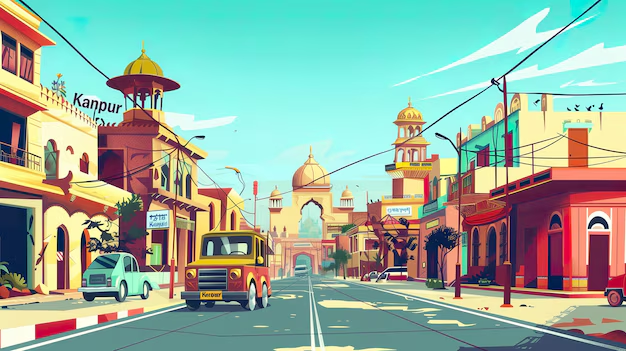
                The New Kanpur City project, a long-awaited urban expansion initiative by the Kanpur Development Authority (KDA), is finally gaining traction. With a focus on essential infrastructure development, the project aims to transform Kanpur into a modern urban hub that supports its growing population and economy. Initially conceived in 1996, the project faced multiple delays but is now progressing with renewed vigour, particularly in infrastructure development.

                A critical aspect of the New Kanpur City project’s success is the preparation of vital infrastructure. KDA has embarked on a comprehensive planning phase, finalising the site plans based on acquired land and conducting thorough studies of the land’s topography. This process is vital for determining the locations for development and the infrastructure upgrades necessary to support the city’s expansion. One of the key components of the infrastructure development includes constructing roads, sewerage systems, and drinking water pipelines. Roads are crucial to ensuring smooth connectivity across the new city, while the sewerage system will address waste management needs. The drinking water pipelines will ensure that the city’s future residents have access to reliable and clean water supplies, a critical element for any modern urban area. KDA has allocated a budget of ₹183.5 crore for the first phase of this infrastructure work, which will provide the foundation for further urbanisation. The goal is to complete the essential road networks and utility services, making the area more conducive to residential and commercial development. The infrastructure being developed in this phase is crucial for creating a sustainable urban environment, in line with modern urban planning principles.

                The New Kanpur City project is being implemented in phases, with the first phase covering 53.31 hectares of land, which includes areas such as Sambalpur, Gangapur, Chakbada, Singhpur Kachar, Hindupur, and Bairi Akbarpur. KDA has already acquired approximately 45 hectares of land and is working with local farmers to acquire an additional 5 hectares, bringing the total land available for the first phase to 50 hectares. The remaining 39.69 hectares of land are in the process of acquisition, with KDA expecting state government approval in the coming month. While challenges related to land acquisition, including unclear land titles and encroachments, have arisen, KDA has been proactive in addressing these issues. In a recent success, KDA recovered approximately 70 bighas of illegally occupied land in Sanigawan village, a significant step towards protecting the land earmarked for the project. The authority is also working to verify other landholdings across different residential schemes to prevent future encroachments and ensure that all land used for the New Kanpur City project is properly documented.

                With infrastructure development and land acquisition progressing, KDA is focused on creating a sustainable urban environment in the New Kanpur City project. The planned infrastructure will enhance the quality of life for future residents and provide the necessary framework for a thriving economy. From reliable road networks and sewage systems to access to clean water, these developments will lay the foundation for a modern city that can cater to both residential and commercial needs. KDA’s efforts are not only focused on physical infrastructure but also on creating a model for sustainable urban growth. The New Kanpur City project will incorporate the best practices in urban planning, ensuring that the development supports long-term sustainability and resilience. Once complete, the New Kanpur City project will represent a significant leap forward in Kanpur’s development. By providing modern infrastructure and fostering sustainable growth, the project will create a city that meets the demands of its growing population while supporting economic growth. The vision behind the New Kanpur City is to create a modern, efficient, and sustainable urban environment that will serve as a model for future urban projects across India.

                KDA’s emphasis on infrastructure development is key to turning this vision into reality. As the project progresses, the authority remains committed to addressing challenges and ensuring that the development adheres to the highest standards of urban planning and sustainability. The New Kanpur City project is not just about creating a new urban space—it’s about building a future-ready city that will enhance the quality of life for its residents and contribute to the region’s economic growth. With a focus on robust infrastructure and sustainable urban planning, the New Kanpur City project is taking significant steps towards transforming the city into a modern urban hub. As the first phase progresses, the Kanpur Development Authority’s dedication to delivering essential utilities and road networks is laying the foundation for the city’s growth. Once completed, New Kanpur City will set a new benchmark for urban development in India.

                Inclusivity and Affordablity at the Forefront of CREDAI – MCHI Property Expo

                  0

                  Inclusivity and Affordablity at the Forefront of CREDAI – MCHI Property Expo

                  The much-anticipated CREDAI-MCHI Property Expo 2025 is set to take place from January 17th to 19th at the Jio World Convention Centre, Mumbai. This is not just an exhibition; it is a transformative platform aimed at addressing the pressing issues of housing affordability and inclusivity. With over 10,000 homebuyers from diverse communities across the Mumbai Metropolitan Region (MMR) expected to attend, the event signifies a decisive step toward building an equitable and inclusive housing ecosystem.

                  Affordable Housing for All

                  CREDAI-MCHI is committed to making homeownership a reality for all segments of society. With housing options starting at just ₹14 lakhs, the expo bridges the gap for first-time homebuyers. In a move that emphasizes inclusivity, women homebuyers will receive an exclusive ₹2 lakh discount as part of the Pink Sunday initiative on January 19th.

                  “The CREDAI-MCHI Property Expo is not merely an exhibition of homes; we are expecting over 10,000 homebuyers from various communities across the length and breadth of MMR. For us, it’s not just a trade fair but a platform that represents a decisive step towards addressing the pressing issue of housing affordability and inclusivity. We are committed to bridging the gap by offering housing options starting at an accessible ₹14 lakhs, while offering ₹2 lakh extra discounts to women homebuyers. This initiative underscores our dedication to making homeownership achievable for all segments of society,” said Nikunj Sanghvi, Convenor, CREDAI-MCHI Property Expo.

                  A Celebration of Inclusivity

                  The expo will also host the Her Home, Her Honour national conclave, featuring discussions on women’s empowerment, LGBTQ+ inclusivity, and affordable housing. Panels such as Breaking the Binary: Real Estate for Every Identity and Her Voice, Her Victory will spotlight the voices of changemakers and thought leaders who are breaking barriers and gender stereotypes.

                  “At CREDAI-MCHI, we strongly advocate for urgent reforms in the real estate sector to prioritize inclusivity and affordability. There is a pressing need for policy changes, including rationalising premiums, streamlining taxes, and creating a balanced housing market that benefits both homebuyers and developers.

                  As part of the CREDAI-MCHI Expo, we are proud to host the national conclave, ‘Her Home, Her Honour,’ addressing critical issues like the alarmingly low property ownership rate for women in Maharashtra, currently under 2 percent. This platform will drive a national dialogue on promoting gender-neutral spaces and fostering inclusivity in the housing industry. Additionally, we aim to lay the foundation for a supportive framework for the LGBTQ+ community in real estate, setting new benchmarks for equity and representation.

                  This initiative reflects our commitment to redefining real estate’s role not just as a provider of homes, but as a catalyst for creating a fair and welcoming society for all.”

                  Keval Valambhia, COO, CREDAI-MCHI

                  Her Home, Her Honour is a bold national initiative to challenge and redefine the deeply entrenched gender biases in real estate. For centuries, we have accepted narratives like ‘Father’s Home,’ ‘Husband’s Home,’ or ‘Brother’s Home,’ which systematically exclude women from their rightful place in property ownership. This initiative is about disrupting that norm and creating a space where ‘Her Home’ becomes a symbol of independence, equality, and empowerment.

                  This movement is not just about breaking stereotypes; it’s about building an industry that values inclusivity through gender-neutral spaces and equitable policies. At its heart, Her Home, Her Honour is a call for transformation, ensuring women are no longer mere participants in the housing market but rightful stakeholders and leaders. Ronita Dsouza, Managing Editor – Homes & Buildings Magazine, National Convener – Her Home, Her Honour Collective.

                  Mizoram Plans Ropeway to Enhance Connectivity Between Aizawl and Lengpui

                    0
                    Mizoram Plans Ropeway to Enhance Connectivity Between Aizawl and Lengpui
                    Mizoram Plans Ropeway to Enhance Connectivity Between Aizawl and Lengpui

                    Mizoram Plans Ropeway to Enhance Connectivity Between Aizawl and Lengpui

                    The Mizoram government is mulling the construction of a ropeway system linking Aizawl, the state capital, with Lengpui, the location of Mizoram’s only airport. The project also includes the Sairang railway station, aiming to create a seamless travel experience for both residents and visitors.

                    Chief Minister Lalduhoma recently chaired a meeting to discuss the feasibility of the Aizawl-Sairang railway station-Lengpui ropeway project, which could significantly improve the state’s public transportation infrastructure while offering tourists a unique way to experience the scenic beauty of Mizoram. The proposed project is designed to connect the bustling city of Aizawl with the Lengpui region, a crucial gateway for air travel in Mizoram. The project could become a game-changer for the state, enabling faster and more efficient travel while encouraging more tourism-related activities.

                    Mizoram, known for its hilly terrain and picturesque landscapes, relies heavily on road networks for intra-state connectivity. However, roads can be challenging to navigate, especially in the state’s more remote areas. By introducing a cable-car system between Aizawl and Lengpui, the state government aims to provide a more reliable and time-efficient mode of transport, particularly for tourists travelling to the region. The ropeway will not only reduce travel time but also offer visitors a unique perspective of the lush landscapes of the region. The development of the ropeway is expected to stimulate the local tourism sector, attracting both domestic and international visitors who want to explore the natural beauty of Mizoram. This initiative aligns with the government’s ongoing efforts to enhance the state’s tourism infrastructure and provide modern solutions to connectivity challenges. Lengpui, being the location of the state’s only airport, is a critical point for air travel, and improving connectivity to this hub will undoubtedly ease transportation for people arriving and departing the state.

                    The meeting, attended by several key officials, discussed the possibility of executing the project under the state’s tourism department or the Aizawl Sustainable Urban Transport Project (ASUTP). The latter is currently being implemented by the Urban Development and Poverty Alleviation (UD&PA) department as part of an externally aided initiative to improve urban infrastructure. The decision to explore these options indicates the government’s commitment to the success of the project, ensuring that it aligns with existing development plans and maximises the benefits to the public. Minister for Urban Development and Poverty Alleviation, K. Sapdanga, and Tourism Minister Lalrinpuii were present at the meeting, indicating that the project is being given top priority within the state’s development agenda. The inclusion of experts and advisors in the discussions further underscores the seriousness with which the Mizoram government is approaching the feasibility of this ambitious infrastructure project.

                    Mizoram has long faced challenges in terms of connectivity, with its hilly terrain making traditional road transport less efficient. By proposing the ropeway project, the government is exploring innovative solutions to address these issues while simultaneously promoting tourism and economic growth. The ropeway system has the potential to transform the way people travel within the state, offering both a practical and scenic alternative to traditional road travel. If successful, the project could open doors to similar infrastructure initiatives in other parts of India’s northeast, where challenging geography often hampers economic and social progress. The state government’s forward-thinking approach may serve as a model for other states grappling with similar connectivity challenges.

                    The Mizoram government’s proposal to build a ropeway between Aizawl and Lengpui is a significant step towards modernising the state’s transportation system. The initiative aims not only to improve the day-to-day connectivity between the state capital and the only airport but also to enhance tourism by offering visitors a chance to enjoy the region’s spectacular scenery from above. With key stakeholders discussing the project’s feasibility and exploring the best methods of execution, this ambitious project could play a crucial role in shaping the future of Mizoram’s infrastructure and tourism landscape. As Mizoram continues to look for ways to improve its connectivity and boost its tourism sector, the success of this ropeway project could set a precedent for similar projects across the northeast, helping to unlock the region’s full potential.