Home Blog Page 347

Ludhiana Smart City Bus Stops in Disrepair Highlight Infrastructure Neglect

    0
    Ludhiana Smart City Bus Stops in Disrepair Highlight Infrastructure Neglect
    Ludhiana Smart City Bus Stops in Disrepair Highlight Infrastructure Neglect

    Ludhiana Smart City Bus Stops in Disrepair Highlight Infrastructure Neglect

    Ludhiana Smart City Bus Stops in Disrepair Highlight Infrastructure Neglect Despite being designated a “Smart City,” Ludhiana is grappling with a pressing infrastructure issue that undermines its modern ambitions. The city’s bus stops, particularly those on Gill Road, are in a state of disrepair, with dilapidated shelters and broken seating, which is raising concerns among citizens. This issue, brought to light by concerned local resident Maninder Pal Singh, points to a significant disconnect between Ludhiana’s urban development goals and its actual infrastructure upkeep.

    Ludhiana’s Smart City designation was intended to bring in modern infrastructure, revamp public spaces, and improve urban amenities. However, these aspirations are at odds with the current state of the city’s bus stops. Singh’s complaint, submitted to the Punjab Special Secretary, highlights the poor maintenance of these bus stops, many of which are used to display state government advertisements. While these ads are prominently showcased, no efforts have been made to address the deteriorating conditions of the bus shelters themselves, leaving commuters in uncomfortable and unsafe conditions. These bus stops serve as essential points for commuters, many of whom are left standing due to broken or missing seats, with inadequate shelter from the elements. The situation is particularly challenging for vulnerable groups such as the elderly and children, who are forced to wait in unhygienic conditions. The problem is compounded by unauthorised street vendors occupying much of the space around these bus stops, further exacerbating the issue of overcrowding and lack of functionality.

    Originally designed to support the city’s bus service expansion and provide residents with a functional, clean, and safe place to wait for buses, the bus stops have become a shadow of their intended purpose. The planned growth of the city’s bus services has not materialised as expected, and the bus stops, instead of being centres of comfort and convenience for passengers, have largely been turned into spaces for advertising. This shift reflects a misallocation of resources, where public infrastructure that was supposed to benefit commuters is allowed to fall into disrepair, while revenue from advertisements is prioritised. Singh’s complaint calls for immediate attention to these bus stops, urging local authorities to prioritise repairs and upgrades. Key concerns include the installation of proper seating, ensuring cleanliness, and regulating the space to prevent encroachment by street vendors. These basic improvements are necessary for transforming the bus stops into functional, safe spaces that align with the city’s modernisation efforts and its Smart City vision.

    The poor condition of Ludhiana’s bus stops raises an important question: can a city truly be considered “smart” if it neglects its basic infrastructure? Public transport, and particularly bus stops, are fundamental to ensuring a city’s accessibility and connectivity. Smart cities are meant to offer modern solutions for urban living, but neglecting the upkeep of essential public services such as transport undermines this vision. The city’s failure to maintain these bus stops contradicts its Smart City ambitions and calls into question the priorities of its development plan. While ambitious projects like the development of new infrastructure are essential, the city must not overlook the importance of maintaining and upgrading existing public services. Ludhiana’s neglected bus stops are a glaring reminder that modern urban development should balance the introduction of new technologies and services with the ongoing upkeep of essential, everyday infrastructure.

    Singh’s complaint and the growing public outcry surrounding the bus stops have sparked the need for immediate action. Local authorities must take swift steps to repair these bus stops, ensuring they meet basic standards of hygiene, safety, and comfort. Only by addressing these fundamental issues can Ludhiana live up to its “Smart City” label and provide residents with an efficient and accessible public transportation system. Upgrading these bus stops should be seen not just as a repair project but as an opportunity to align the city’s infrastructure with the needs of its citizens. When basic public amenities are neglected, the integrity of a city’s broader development plans can be questioned. In the case of Ludhiana, the repair and renovation of its bus stops should be a priority in ensuring the city’s infrastructure truly serves the needs of its residents. Ludhiana’s Smart City aspirations cannot be fully realised if the city’s foundational infrastructure, such as bus stops, continues to be neglected. The poor state of these bus stops highlights the need for the local government to shift focus towards maintaining and upgrading essential public services. A truly “smart” city should balance innovation and modernisation with the care and attention needed to maintain the basic amenities that citizens rely on daily. For Ludhiana to truly embody its Smart City vision, it must first address these critical infrastructural gaps, ensuring that public transport systems are accessible, safe, and functional for all its residents.
    Kanpur Development Authority Pushes Forward with Infrastructure for New Kanpur City

      0
      Kanpur Development Authority Pushes Forward with Infrastructure for New Kanpur City
      Kanpur Development Authority Pushes Forward with Infrastructure for New Kanpur City

      Kanpur Development Authority Pushes Forward with Infrastructure for New Kanpur City

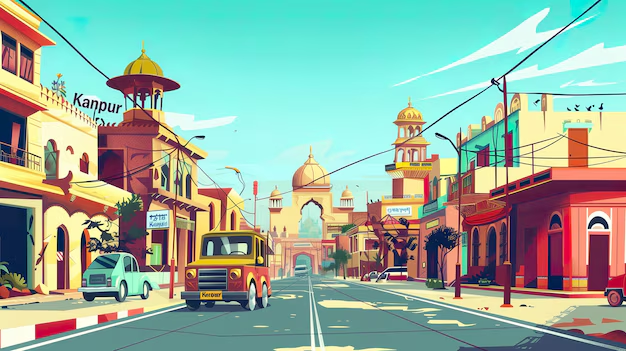
      The New Kanpur City project, a long-awaited urban expansion initiative by the Kanpur Development Authority (KDA), is finally gaining traction. With a focus on essential infrastructure development, the project aims to transform Kanpur into a modern urban hub that supports its growing population and economy. Initially conceived in 1996, the project faced multiple delays but is now progressing with renewed vigour, particularly in infrastructure development.

      A critical aspect of the New Kanpur City project’s success is the preparation of vital infrastructure. KDA has embarked on a comprehensive planning phase, finalising the site plans based on acquired land and conducting thorough studies of the land’s topography. This process is vital for determining the locations for development and the infrastructure upgrades necessary to support the city’s expansion. One of the key components of the infrastructure development includes constructing roads, sewerage systems, and drinking water pipelines. Roads are crucial to ensuring smooth connectivity across the new city, while the sewerage system will address waste management needs. The drinking water pipelines will ensure that the city’s future residents have access to reliable and clean water supplies, a critical element for any modern urban area. KDA has allocated a budget of ₹183.5 crore for the first phase of this infrastructure work, which will provide the foundation for further urbanisation. The goal is to complete the essential road networks and utility services, making the area more conducive to residential and commercial development. The infrastructure being developed in this phase is crucial for creating a sustainable urban environment, in line with modern urban planning principles.

      The New Kanpur City project is being implemented in phases, with the first phase covering 53.31 hectares of land, which includes areas such as Sambalpur, Gangapur, Chakbada, Singhpur Kachar, Hindupur, and Bairi Akbarpur. KDA has already acquired approximately 45 hectares of land and is working with local farmers to acquire an additional 5 hectares, bringing the total land available for the first phase to 50 hectares. The remaining 39.69 hectares of land are in the process of acquisition, with KDA expecting state government approval in the coming month. While challenges related to land acquisition, including unclear land titles and encroachments, have arisen, KDA has been proactive in addressing these issues. In a recent success, KDA recovered approximately 70 bighas of illegally occupied land in Sanigawan village, a significant step towards protecting the land earmarked for the project. The authority is also working to verify other landholdings across different residential schemes to prevent future encroachments and ensure that all land used for the New Kanpur City project is properly documented.

      With infrastructure development and land acquisition progressing, KDA is focused on creating a sustainable urban environment in the New Kanpur City project. The planned infrastructure will enhance the quality of life for future residents and provide the necessary framework for a thriving economy. From reliable road networks and sewage systems to access to clean water, these developments will lay the foundation for a modern city that can cater to both residential and commercial needs. KDA’s efforts are not only focused on physical infrastructure but also on creating a model for sustainable urban growth. The New Kanpur City project will incorporate the best practices in urban planning, ensuring that the development supports long-term sustainability and resilience. Once complete, the New Kanpur City project will represent a significant leap forward in Kanpur’s development. By providing modern infrastructure and fostering sustainable growth, the project will create a city that meets the demands of its growing population while supporting economic growth. The vision behind the New Kanpur City is to create a modern, efficient, and sustainable urban environment that will serve as a model for future urban projects across India.

      KDA’s emphasis on infrastructure development is key to turning this vision into reality. As the project progresses, the authority remains committed to addressing challenges and ensuring that the development adheres to the highest standards of urban planning and sustainability. The New Kanpur City project is not just about creating a new urban space—it’s about building a future-ready city that will enhance the quality of life for its residents and contribute to the region’s economic growth. With a focus on robust infrastructure and sustainable urban planning, the New Kanpur City project is taking significant steps towards transforming the city into a modern urban hub. As the first phase progresses, the Kanpur Development Authority’s dedication to delivering essential utilities and road networks is laying the foundation for the city’s growth. Once completed, New Kanpur City will set a new benchmark for urban development in India.

      Inclusivity and Affordablity at the Forefront of CREDAI – MCHI Property Expo

        0

        Inclusivity and Affordablity at the Forefront of CREDAI – MCHI Property Expo

        The much-anticipated CREDAI-MCHI Property Expo 2025 is set to take place from January 17th to 19th at the Jio World Convention Centre, Mumbai. This is not just an exhibition; it is a transformative platform aimed at addressing the pressing issues of housing affordability and inclusivity. With over 10,000 homebuyers from diverse communities across the Mumbai Metropolitan Region (MMR) expected to attend, the event signifies a decisive step toward building an equitable and inclusive housing ecosystem.

        Affordable Housing for All

        CREDAI-MCHI is committed to making homeownership a reality for all segments of society. With housing options starting at just ₹14 lakhs, the expo bridges the gap for first-time homebuyers. In a move that emphasizes inclusivity, women homebuyers will receive an exclusive ₹2 lakh discount as part of the Pink Sunday initiative on January 19th.

        “The CREDAI-MCHI Property Expo is not merely an exhibition of homes; we are expecting over 10,000 homebuyers from various communities across the length and breadth of MMR. For us, it’s not just a trade fair but a platform that represents a decisive step towards addressing the pressing issue of housing affordability and inclusivity. We are committed to bridging the gap by offering housing options starting at an accessible ₹14 lakhs, while offering ₹2 lakh extra discounts to women homebuyers. This initiative underscores our dedication to making homeownership achievable for all segments of society,” said Nikunj Sanghvi, Convenor, CREDAI-MCHI Property Expo.

        A Celebration of Inclusivity

        The expo will also host the Her Home, Her Honour national conclave, featuring discussions on women’s empowerment, LGBTQ+ inclusivity, and affordable housing. Panels such as Breaking the Binary: Real Estate for Every Identity and Her Voice, Her Victory will spotlight the voices of changemakers and thought leaders who are breaking barriers and gender stereotypes.

        “At CREDAI-MCHI, we strongly advocate for urgent reforms in the real estate sector to prioritize inclusivity and affordability. There is a pressing need for policy changes, including rationalising premiums, streamlining taxes, and creating a balanced housing market that benefits both homebuyers and developers.

        As part of the CREDAI-MCHI Expo, we are proud to host the national conclave, ‘Her Home, Her Honour,’ addressing critical issues like the alarmingly low property ownership rate for women in Maharashtra, currently under 2 percent. This platform will drive a national dialogue on promoting gender-neutral spaces and fostering inclusivity in the housing industry. Additionally, we aim to lay the foundation for a supportive framework for the LGBTQ+ community in real estate, setting new benchmarks for equity and representation.

        This initiative reflects our commitment to redefining real estate’s role not just as a provider of homes, but as a catalyst for creating a fair and welcoming society for all.”

        Keval Valambhia, COO, CREDAI-MCHI

        Her Home, Her Honour is a bold national initiative to challenge and redefine the deeply entrenched gender biases in real estate. For centuries, we have accepted narratives like ‘Father’s Home,’ ‘Husband’s Home,’ or ‘Brother’s Home,’ which systematically exclude women from their rightful place in property ownership. This initiative is about disrupting that norm and creating a space where ‘Her Home’ becomes a symbol of independence, equality, and empowerment.

        This movement is not just about breaking stereotypes; it’s about building an industry that values inclusivity through gender-neutral spaces and equitable policies. At its heart, Her Home, Her Honour is a call for transformation, ensuring women are no longer mere participants in the housing market but rightful stakeholders and leaders. Ronita Dsouza, Managing Editor – Homes & Buildings Magazine, National Convener – Her Home, Her Honour Collective.

        Mizoram Plans Ropeway to Enhance Connectivity Between Aizawl and Lengpui

          0
          Mizoram Plans Ropeway to Enhance Connectivity Between Aizawl and Lengpui
          Mizoram Plans Ropeway to Enhance Connectivity Between Aizawl and Lengpui

          Mizoram Plans Ropeway to Enhance Connectivity Between Aizawl and Lengpui

          The Mizoram government is mulling the construction of a ropeway system linking Aizawl, the state capital, with Lengpui, the location of Mizoram’s only airport. The project also includes the Sairang railway station, aiming to create a seamless travel experience for both residents and visitors.

          Chief Minister Lalduhoma recently chaired a meeting to discuss the feasibility of the Aizawl-Sairang railway station-Lengpui ropeway project, which could significantly improve the state’s public transportation infrastructure while offering tourists a unique way to experience the scenic beauty of Mizoram. The proposed project is designed to connect the bustling city of Aizawl with the Lengpui region, a crucial gateway for air travel in Mizoram. The project could become a game-changer for the state, enabling faster and more efficient travel while encouraging more tourism-related activities.

          Mizoram, known for its hilly terrain and picturesque landscapes, relies heavily on road networks for intra-state connectivity. However, roads can be challenging to navigate, especially in the state’s more remote areas. By introducing a cable-car system between Aizawl and Lengpui, the state government aims to provide a more reliable and time-efficient mode of transport, particularly for tourists travelling to the region. The ropeway will not only reduce travel time but also offer visitors a unique perspective of the lush landscapes of the region. The development of the ropeway is expected to stimulate the local tourism sector, attracting both domestic and international visitors who want to explore the natural beauty of Mizoram. This initiative aligns with the government’s ongoing efforts to enhance the state’s tourism infrastructure and provide modern solutions to connectivity challenges. Lengpui, being the location of the state’s only airport, is a critical point for air travel, and improving connectivity to this hub will undoubtedly ease transportation for people arriving and departing the state.

          The meeting, attended by several key officials, discussed the possibility of executing the project under the state’s tourism department or the Aizawl Sustainable Urban Transport Project (ASUTP). The latter is currently being implemented by the Urban Development and Poverty Alleviation (UD&PA) department as part of an externally aided initiative to improve urban infrastructure. The decision to explore these options indicates the government’s commitment to the success of the project, ensuring that it aligns with existing development plans and maximises the benefits to the public. Minister for Urban Development and Poverty Alleviation, K. Sapdanga, and Tourism Minister Lalrinpuii were present at the meeting, indicating that the project is being given top priority within the state’s development agenda. The inclusion of experts and advisors in the discussions further underscores the seriousness with which the Mizoram government is approaching the feasibility of this ambitious infrastructure project.

          Mizoram has long faced challenges in terms of connectivity, with its hilly terrain making traditional road transport less efficient. By proposing the ropeway project, the government is exploring innovative solutions to address these issues while simultaneously promoting tourism and economic growth. The ropeway system has the potential to transform the way people travel within the state, offering both a practical and scenic alternative to traditional road travel. If successful, the project could open doors to similar infrastructure initiatives in other parts of India’s northeast, where challenging geography often hampers economic and social progress. The state government’s forward-thinking approach may serve as a model for other states grappling with similar connectivity challenges.

          The Mizoram government’s proposal to build a ropeway between Aizawl and Lengpui is a significant step towards modernising the state’s transportation system. The initiative aims not only to improve the day-to-day connectivity between the state capital and the only airport but also to enhance tourism by offering visitors a chance to enjoy the region’s spectacular scenery from above. With key stakeholders discussing the project’s feasibility and exploring the best methods of execution, this ambitious project could play a crucial role in shaping the future of Mizoram’s infrastructure and tourism landscape. As Mizoram continues to look for ways to improve its connectivity and boost its tourism sector, the success of this ropeway project could set a precedent for similar projects across the northeast, helping to unlock the region’s full potential.

          CRS Approves Katra-Reasi Section for Jammu-Srinagar Train Services

            0
            CRS Approves Katra-Reasi Section for Jammu-Srinagar Train Services
            CRS Approves Katra-Reasi Section for Jammu-Srinagar Train Services

            CRS Approves Katra-Reasi Section for Jammu-Srinagar Train Services

            The Commissioner for Railway Safety (CRS) has approved the recently laid Katra-Reasi section of the Udhampur-Srinagar-Baramulla (USRBL) rail project. This marks a significant step towards the introduction of regular train services connecting Jammu and Srinagar. The new section, which forms part of a larger vision to improve connectivity in the region, is expected to play a crucial role in easing travel for both locals and tourists while providing a safe and efficient transportation option for the region.

            The Katra-Reasi stretch of the rail network has been a long-awaited project, and with the CRS approval, it is now cleared to operate with several important operational stipulations. While the final official date for the inaugural run has not been confirmed, sources indicate that it is expected to occur within the month. The CRS green-light is a critical milestone that opens the path to the commencement of regular train services, which are expected to enhance connectivity in Jammu and Kashmir and support the region’s economic and tourism growth. For security reasons, trains running on the Jammu-Srinagar route will operate exclusively during daylight hours. This decision reflects the need for heightened security in the region and aims to ensure the safety of passengers. In addition, special security measures will be implemented, particularly at Katra, where separate boarding arrangements will be made for Srinagar-bound trains. Passengers will undergo stricter security checks to ensure the smooth and secure operation of services.

            A notable aspect of this phase is that non-stop trains from major cities like Delhi to Srinagar will not be available immediately. For now, passengers will need to board trains to Srinagar via Katra, where they will undergo a separate security screening before continuing their journey. Although these operational restrictions may seem limiting, they are essential for ensuring passenger safety in a region that requires additional vigilance. In terms of operations, the Katra-Reasi section is set to allow trains to run at a maximum speed of 85 km/h on the normal track, and 15 km/h on the loop line of the station. This speed limit ensures a safe and reliable service, taking into account the geographical and topographical challenges of the region. The CRS has outlined specific conditions that must be met before regular operations commence, including adherence to safety protocols and infrastructure standards.

            The approval of this section will likely play an essential role in improving the overall connectivity between Jammu and Srinagar, two vital cities in the region. The ability to travel by rail will reduce the travel time between these locations, providing a convenient alternative to road transport. Additionally, this development is expected to enhance the overall economic activity, as improved transportation links foster trade, tourism, and local commerce. This clearance from the CRS marks a turning point in the decades-long effort to provide a modern and efficient rail service between Jammu and Srinagar. The Udhampur-Srinagar-Baramulla rail project has been one of the most ambitious infrastructure initiatives in Jammu and Kashmir, and the Katra-Reasi section is a key part of this larger vision. Once fully operational, the rail network will provide a seamless connection, reducing the dependence on roadways and increasing accessibility to the picturesque Kashmir Valley.

            With the introduction of this new train service, the region will not only gain an important mode of transport but will also benefit from enhanced safety measures. As train travel becomes more accessible, it will offer a new avenue for tourism, allowing visitors to experience the region’s natural beauty without the difficulties posed by road travel. The new services are expected to attract more tourists, contributing to the region’s economy and providing a much-needed boost to local industries. The approval of the Katra-Reasi rail section is a significant step in the broader development of the region’s infrastructure. While the path to regular train services is accompanied by additional security checks and daytime operations, the benefits to the local economy, tourism, and overall connectivity are undeniable. As the CRS clears the way for regular operations, it is expected that future developments will bring further improvements to the rail network, including non-stop trains and more extensive services. This is a landmark moment for the people of Jammu and Kashmir, setting the stage for greater integration into the national rail network and contributing to the region’s growth and prosperity.

            Indian Railways Earnings Reach Rs 2 Lakh Crore with Record Freight Loading

              0
              Indian Railways Earnings Reach Rs 2 Lakh Crore with Record Freight Loading
              Indian Railways Earnings Reach Rs 2 Lakh Crore with Record Freight Loading

              Indian Railways Earnings Reach Rs 2 Lakh Crore with Record Freight Loading

              Indian Railways has recorded impressive earnings of Rs 2.04 lakh crore in the current fiscal year, a significant 4% increase over the same period last year. The surge is largely attributed to higher freight loading and a substantial increase in the number of special trains during peak demand periods. This milestone marks a crucial moment for the national transporter, which has consistently worked towards enhancing operational efficiency and expanding its services.

              A major contributor to this record-breaking figure is the freight segment, which has seen an uptick of nearly 2%, with Indian Railways handling almost 1.18 billion tonnes of goods from April to December 2024. This growth is expected to continue, with a senior official stating that Indian Railways is exploring adjustments to freight rates to increase revenue even further. “We estimate higher goods earnings if fares on certain commodities are rationalised,” the official said, highlighting that freight operations are likely to remain at the core of their revenue model. The rise in earnings also reflects a broader increase in the number of train services, with the total number of mail, express, passenger, and other trains rising by 3%, reaching a historic total of more than 2.07 million runs. This achievement comes at a time when passenger demands are surging, and Indian Railways has responded by introducing a higher frequency of special trains. The number of special trains run during periods of high demand surged by an extraordinary 54% year-on-year, reaching a total of 57,169 special trains during the nine-month period.

              In line with its ongoing expansion efforts, Indian Railways is also rolling out a new timetable that includes 62 pre-scheduled special trains on popular routes. This move is designed to ensure that train availability meets rising demand, especially during peak travel periods. The new timetable will also feature the introduction of 74 new services, including 34 pairs of Vande Bharat trains, which are expected to enhance the speed, comfort, and convenience of passenger travel. Vande Bharat trains are at the heart of Indian Railways’ modernisation strategy. These semi-high-speed trains are designed to significantly reduce travel times between major cities and improve passenger comfort. With the introduction of more Vande Bharat trains, the railways hopes to attract more passengers and compete with other modes of transport in terms of speed and reliability. Looking ahead, Indian Railways is setting its sights on more ambitious projects. One of the key goals for the coming year is to continue improving infrastructure, including commissioning upgraded railway stations, launching more modern trains, and decongesting the track network. These efforts are designed to address the growing demand for rail services and ensure that the infrastructure is capable of supporting India’s expanding economy.

              As part of this long-term vision, the Indian government is expected to allocate an additional 15-20% increase in capital expenditure (capex) for FY26, which could see the overall allocation rise from Rs 2.65 lakh crore in the current fiscal year to over Rs 3 lakh crore. This increased budget will likely be directed towards the development of railway stations, procurement of new trains, and the enhancement of signalling and track systems. According to officials, nearly 80% of the current year’s capex has already been spent, and the target for this fiscal year is expected to be met well before its conclusion. As Indian Railways continues to grow, its focus is not only on expanding services and revenues but also on improving safety and sustainability. The introduction of new trains, the focus on decongesting tracks, and an increased capex allocation reflect a commitment to long-term growth and operational excellence.

              The increased earnings are a testament to Indian Railways’ evolving strategies and its ability to meet the transportation needs of a rapidly growing nation. By modernising its fleet, improving infrastructure, and adjusting freight rates, the railways is positioning itself for future success. With a target operating ratio of 98.22% by the end of the fiscal year, the national transporter is optimistic about its financial health and its capacity to reinvest in further enhancing railway infrastructure through the Development Fund and Rashtriya Rail Sanraksha Kosh (RRSK). Indian Railways’ strong financial performance in the current fiscal year underscores the progress made by the national transporter in enhancing its operations, freight services, and passenger offerings. With an ambitious vision for modernising its services, increasing train frequencies, and expanding infrastructure, Indian Railways is set to continue playing a pivotal role in driving the country’s economic growth. The upcoming budget will likely provide the financial muscle needed for these ambitious plans, ensuring that the railways remains a key player in India’s future.

              Amit Shah to Launch Major Development Projects in Vadnagar, Gujarat

                0
                Amit Shah to Launch Major Development Projects in Vadnagar, Gujarat
                Amit Shah to Launch Major Development Projects in Vadnagar, Gujarat

                Amit Shah to Launch Major Development Projects in Vadnagar, Gujarat

                Union Home and Cooperation Minister Amit Shah will be in Vadnagar, a historic city in Gujarat’s Mehsana district, to inaugurate a series of significant development projects aimed at transforming the city into a major cultural and tourism hub. With an estimated cost running into crores, these initiatives focus on preserving Vadnagar’s rich heritage while improving infrastructure and promoting tourism.

                Vadnagar, with a history spanning over 2,500 years, has always been a melting pot of diverse cultures. It has witnessed the rule of multiple dynasties and stood as a vital trade centre along ancient routes. Notably, Vadnagar is the birthplace of Prime Minister Narendra Modi, whose vision has highlighted the city’s heritage potential. His efforts have brought Vadnagar into the spotlight, and the city is now poised for rapid growth as a tourist destination. Under the leadership of Amit Shah and Gujarat Chief Minister Bhupendra Patel, the state government is focusing on the preservation and development of Vadnagar’s cultural landmarks. Shah’s visit will mark the inauguration of the Archaeological Experience Museum, India’s first such facility, which showcases the city’s deep-rooted cultural history. Built at a cost of Rs 298 crore, this four-story structure spans 12,500 square metres and will house over 5,000 artefacts, ranging from sculptures to inscriptions, reflecting Vadnagar’s diverse heritage.

                The museum is more than just a static display; it offers an interactive experience with audio-visual films and exhibits, immersing visitors in the city’s fascinating past. A permanent shed will also showcase artefacts from ongoing archaeological excavations in the city. This development represents a step forward in making Vadnagar a focal point for cultural tourism in Gujarat. Alongside the museum, Shah will inaugurate Prerna Sankul, a Rs 72 crore project dedicated to preserving the historic primary school where Narendra Modi received his early education. The school, established in 1888, has been renovated by the Archaeological Survey of India to combine modern educational practices with moral teachings. It serves as an inspiring landmark for students, with a curriculum developed by IIT Gandhinagar, offering value-based education.

                Amit Shah’s visit will also include the inauguration of a Sports Complex in Vadnagar, built at a cost of Rs 33.5 crore. This state-of-the-art facility is designed to foster new athletic talent, providing world-class amenities for various sports, including an 8-lane, 400-metre synthetic athletic track, an astroturf football field, and dedicated spaces for kabaddi, kho-kho, and volleyball. The complex aims to identify and nurture emerging sports talent, with a special emphasis on para-sports programmes for Divyang athletes. A hostel for 200 students (100 boys and 100 girls) is also under construction, providing athletes with accommodation and the necessary resources to excel. This modern sports infrastructure is expected to benefit the local community by encouraging a strong sports culture and creating opportunities for youth to pursue their athletic dreams.

                Amit Shah will also review ongoing efforts to preserve Vadnagar’s heritage. The development plan includes the conservation of four key complexes, including façade restoration, building repurposing, and road construction. These upgrades aim to enhance the pedestrian experience with improved signage, street furniture, and the creation of a heritage trail, allowing visitors to explore Vadnagar’s rich cultural tapestry. Prerna Sankul will act as a central landmark, with all heritage routes converging here. In addition to these landmark projects, Shah will also visit the Hatkeshwar Temple, a 17th-century temple dedicated to Hatkeshwar Mahadev. This visit highlights the importance of preserving Vadnagar’s spiritual and architectural heritage, further reinforcing its status as a cultural gem.

                Vadnagar’s transformation is an example of how heritage can be preserved while also fostering growth. With the inauguration of these key projects, including the Archaeological Museum, Prerna Sankul, and the Sports Complex, Vadnagar is set to become a major hub for both cultural tourism and local talent development. Amit Shah’s visit marks a pivotal moment in the city’s evolution, as it seeks to celebrate its rich history while embracing the future. The city’s new infrastructure projects will not only attract tourists but also inspire a new generation of students and athletes, shaping Vadnagar into a prosperous and dynamic cultural destination.

                Air India Express Launches Daily Flights from Patna to Key Cities

                  0
                  Air India Express Launches Daily Flights from Patna to Key Cities
                  Air India Express Launches Daily Flights from Patna to Key Cities

                  Air India Express Launches Daily Flights from Patna to Key Cities

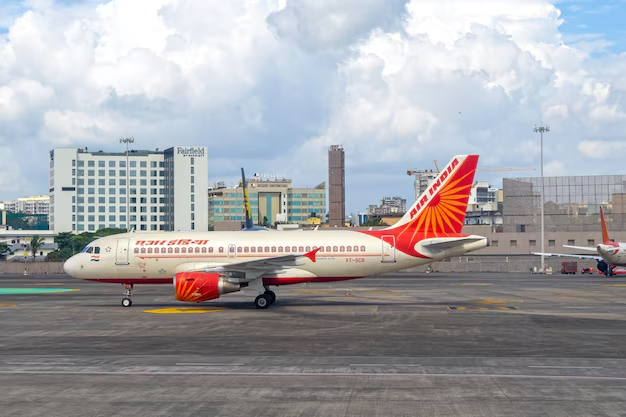
                  Air India Express has launched daily flights connecting the city to Bengaluru, Bhubaneswar, and Hyderabad. This significant step is part of the airline’s broader strategy to improve connectivity between emerging cities and key destinations across India, as well as its expanding network to international locations.

                  The announcement, made on Wednesday, marked a key moment for Patna as it gains improved access to some of the most important cities in India. The launch was celebrated with an event at Jay Prakash Narayan Airport, where senior officials from Air India Express, the Airports Authority of India, and other key stakeholders gathered to mark the occasion. The first flights took off with great enthusiasm, and passengers on board were given special boarding passes to commemorate the milestone. The new routes from Patna to Bengaluru, Bhubaneswar, and Hyderabad reflect Air India Express’ commitment to enhancing air connectivity within India. Bengaluru, known as the tech hub of the country, and Hyderabad, another major metropolitan city, will offer travellers in Patna better access to business and tourism opportunities. Bhubaneswar, the capital of Odisha, is a growing centre for culture and commerce, and its inclusion in these new routes will help connect Patna with yet another important city in Eastern India.

                  These flights are part of Air India Express’ broader vision to enhance regional connectivity and cater to the increasing demand for air travel. The airline has also been adding new destinations to its network in recent months, further solidifying its position in the Indian aviation market. Recent additions include cities like Dimapur, Dibrugarh, and Sri Vijay Puram (Port Blair), and international destinations like Bangkok and Phuket. The introduction of these daily flights is not only a boost for air travel but also contributes to the region’s economic growth by enhancing connectivity between important business hubs and tourism centres. With the addition of Patna to this expanded network, local businesses and residents will benefit from easier access to markets, job opportunities, and other key sectors in Bengaluru, Bhubaneswar, and Hyderabad. The connectivity also opens up new travel possibilities for leisure travellers who can now explore these bustling cities with greater convenience. Bengaluru, known for its vibrant culture and tech industry, and Hyderabad, a major centre for business, technology, and cuisine, will be appealing destinations for many.

                  Air India Express, a subsidiary of Air India, is expanding rapidly, with its growing fleet approaching the significant milestone of 100 aircraft. The airline’s recent expansion in both domestic and international markets highlights its commitment to serving an increasingly diverse and expanding customer base. Its winter schedule this year has seen a 30% increase in operations compared to last year, with over 400 daily flights now in operation, up from around 325 last year. This growth comes in tandem with an expansion of services to new destinations. Internationally, Air India Express is enhancing its presence in Southeast Asia, with destinations like Bangkok and Phuket now accessible from various parts of India. Domestically, the airline continues to fill gaps in regional connectivity, linking smaller cities to major metropolitan hubs.

                  To celebrate the launch of these new flights, Air India Express offered special boarding passes to the first passengers on the inaugural flights. These small touches help create an engaging experience for travellers and mark the airline’s continued focus on customer service. The airline’s expansion also aims to ensure that passengers enjoy a seamless, reliable, and comfortable travel experience across its growing network. Air India Express’ latest move is a clear indication of the growing demand for air travel in India and the airline’s dedication to meeting this demand. With the addition of these new daily flights from Patna to Bengaluru, Bhubaneswar, and Hyderabad, the airline is making it easier for both business and leisure travellers to explore and connect with key destinations. This expansion, combined with the airline’s growing fleet and enhanced regional connectivity, positions Air India Express for continued success in the highly competitive aviation industry. As the airline continues to grow and extend its reach, passengers can expect more routes and better connectivity across India and beyond. This expansion plays a key role in the development of India’s aviation infrastructure, ensuring that regional cities like Patna are better connected to the rest of the country.

                  CRISIL Calls for Policy Support to Boost Green Energy Demand in Budget 2025

                    0
                    CRISIL Calls for Policy Support to Boost Green Energy Demand in Budget 2025
                    CRISIL Calls for Policy Support to Boost Green Energy Demand in Budget 2025

                    CRISIL Calls for Policy Support to Boost Green Energy Demand in Budget 2025

                    As India gears up for its Union Budget 2025, CRISIL, the prominent ratings agency, has made a compelling call for the government to drive demand for emerging renewable energy technologies. According to Rahul Prithiani, Senior Director & Global Head of Energy and Sustainability at CRISIL, a clear policy focus on these emerging technologies, especially green hydrogen, is crucial to creating a conducive environment for growth in the renewable sector.

                    “Creating demand is key to driving the renewable energy sector forward,” Prithiani stated. He emphasised the need for government intervention to support the adoption of green energy technologies through incentives and strategic policy measures. Green hydrogen, for example, requires not only technological innovation but also a supportive framework to encourage its widespread use, which remains underdeveloped in India.

                    CRISIL forecasts a massive surge in green energy investments, predicting a fivefold increase by 2030, totalling over Rs 31 lakh crore. This significant leap will be crucial for India’s clean energy goals, which align with the country’s commitment to the Paris Agreement on climate change. A large portion of the investment, Rs 19 lakh crore, will be allocated to storage and renewable energy, while Rs 4.1 lakh crore will focus on the transportation and automotive industries, including electric vehicles (EVs). Around Rs 3.3 lakh crore is expected to go into the oil and gas sector as part of India’s broader decarbonisation strategy. This comprehensive investment will aid in meeting the nation’s energy demands while transitioning to a cleaner, more sustainable future. Amish Mehta, Managing Director & CEO of CRISIL, elaborated on the necessity of government action in his remarks at the India Infrastructure Conclave 2025. “Accelerating grants and incentives, scaling up blended finance initiatives, and providing policy support are essential to drive initiatives for carbon market development and industrial decarbonisation,” he said, reinforcing the urgency of robust government backing.

                    For emerging renewable technologies such as green hydrogen, carbon capture, utilisation and storage (CCUS), and energy storage solutions, the Indian government must create a policy landscape that provides clarity and security for investors. The development of these technologies is capital-intensive, and while debt financing is readily available for established sectors like solar and wind energy, high-risk technologies face challenges in securing adequate funding. Government funding and incentives are pivotal for de-risking investments in high-tech solutions. CRISIL highlighted that blended finance, which combines public and private capital, could play a crucial role in bridging the gap for high-risk, high-investment projects. Moreover, international collaboration through organisations like the International Solar Alliance can help with technology transfers, concessional funding, and expertise sharing. India’s commitment to decarbonisation under the Paris Agreement demands investments of approximately $10 trillion by 2070. The country has pledged to raise the proportion of power generated from non-fossil fuel sources to 50% and reduce the carbon intensity of its GDP by 45% by 2030. This ambitious plan relies heavily on the scaling up of renewable energy technologies and the decarbonisation of industrial processes.

                    However, financing large-scale investments remains a challenge. CRISIL notes that while solar, wind, and EV projects have access to relatively lower-risk financing, newer technologies like green hydrogen and CCUS require substantial government backing to make them viable. This support will be critical in enhancing project feasibility and attracting private sector investments. The financing landscape for emerging green technologies can be divided into low-risk and high-risk categories. For low-risk projects, there is significant debt financing available, driven by strong capital markets and development finance institutions. For high-risk ventures, however, government support and incentives will be critical to attracting private investments, particularly from specialised climate and venture funds.

                    Moreover, as green technologies evolve, international partnerships and funding schemes will become increasingly important. CRISIL’s report stressed the importance of cooperation between public and commercial sectors, as well as international stakeholders, to accelerate the transition to a greener economy. As India strives to meet its renewable energy and decarbonisation targets, the role of emerging technologies cannot be overstated. The upcoming Union Budget presents a crucial opportunity for the government to set the tone for the future of India’s energy transition. With the right policies in place, including the scaling of financial support and fostering innovation, India can lead the way in green energy while simultaneously driving economic growth. Through the concerted efforts of the public and private sectors, alongside international collaboration, India can meet its ambitious climate goals and establish itself as a global leader in sustainability.

                    Sarla Aviation to Launch Electric Flying Taxis in India by 2028

                      0
                      Sarla Aviation to Launch Electric Flying Taxis in India by 2028
                      Sarla Aviation to Launch Electric Flying Taxis in India by 2028

                      Sarla Aviation to Launch Electric Flying Taxis in India by 2028

                      Sarla Aviation, an electric flying taxi startup, is poised to launch its revolutionary air taxi services in India by 2028, promising to transform the future of urban mobility. The company, which focuses on electric vertical takeoff and landing (eVTOL) aircraft, plans to start its services in Bengaluru, one of the world’s most congested cities, and expand to Delhi, Mumbai, and Pune. These electric flying taxis, designed to ease urban congestion, aim to provide a faster, more efficient mode of transportation.

                      Adrian Schmidt, the co-founder and CEO of Sarla Aviation, is optimistic about the Indian market. In an interview, he highlighted India as the largest market for flying taxis globally, citing the country’s rapidly expanding urban population and significant transportation challenges. For Schmidt, the key to success in India is pricing, and he believes that flying taxis could eventually be as affordable as an auto-rickshaw ride. This pricing model would make eVTOLs accessible to a wide range of commuters, from business professionals to everyday travellers.

                      Sarla Aviation’s flying taxis will accommodate up to six passengers and carry a maximum load of 680 kg. These eVTOLs will offer services similar to premium ride-hailing options such as BluSmart, Ola SUV, or UberXL, with initial costs likely to be comparable to that of an UberXL ride. For example, a 50-kilometre journey from Bengaluru’s Electronic City to its international airport, which costs around Rs 2,000 by UberXL, would be priced similarly for an air taxi. Over time, the company plans to reduce ride costs, aiming to make flying taxis an affordable alternative to other transport modes. These air taxis will primarily cater to travellers between airports and commercial hubs, such as IT parks in Bengaluru, where traffic congestion is a daily challenge. By utilising airspace, these taxis promise to bypass ground traffic entirely, offering a much-needed solution for overcrowded cities.

                      Sarla Aviation is not alone in pursuing this ambitious vision. US-based competitor Archer Aviation also has its eyes set on India as its largest market. Archer’s eVTOL, named “Midnight,” is expected to begin its commercial launch in 2026. The company has already partnered with IndiGo’s parent firm, InterGlobe Enterprises, and plans to offer a seven-minute ride between Connaught Place in Delhi and Gurugram, with ticket prices between Rs 2,000 and Rs 3,000. Archer is slated to begin its certification process with the Directorate General of Civil Aviation (DGCA) this year, with similar processes in place with the US Federal Aviation Administration (FAA). Meanwhile, Sarla Aviation plans to unveil its first flying taxi prototype, “Shunya,” on Friday at the Bharat Mobility Global Expo in New Delhi, marking a major milestone in its journey.

                      Sarla Aviation’s commitment to electric flying taxis stems from a desire to address India’s significant mobility challenges. Schmidt notes that India is at a pivotal point in its history, with the potential to become a global superpower. However, achieving this vision requires a modern, efficient mobility system that can drive economic productivity across various sectors. Flying taxis, Schmidt believes, will be a game-changer, offering uncongestible, capital-efficient solutions to India’s urban transport issues. One of the major advantages of flying taxis is the relatively low infrastructure requirements compared to traditional modes of transport. Unlike metros or roads, which demand extensive infrastructure investments such as tunnels or rail systems, flying taxis only need a flat landing area. This makes them particularly suitable for high-density cities like Bengaluru, where tall buildings already have helipads for fire safety purposes, providing a natural landing space for eVTOLs.

                      Sarla Aviation has just raised $10 million in Series A1 funding, led by Accel, with additional participation from prominent angel investors like Flipkart’s Binny Bansal and Swiggy’s Sriharsha Majety. This funding will be used to build two additional prototypes of their flying taxis, establish an R&D centre in Bengaluru, and expand its workforce from 30 to around 100-120 people in the next six to ten months. The successful roll-out of flying taxis in India could lead to an entirely new mode of urban transport, offering benefits not only for commuters but also for the broader economy. Sarla’s focus on affordable pricing and scalability could help realise the dream of a congestion-free future for India’s rapidly growing cities. As Sarla Aviation prepares to unveil its first prototype, “Shunya,” the Indian market is set to witness the birth of a new era in air mobility. With flying taxis providing a solution to urban congestion, the future of transportation in India could be transformed, making it faster, more efficient, and more accessible for millions of people. The investment in infrastructure and technology will be crucial in bringing this vision to life, but with substantial funding and strategic partnerships, Sarla Aviation is on track to make electric flying taxis a reality for India’s cities by 2028.