
Home Blog Page 349

Atal Setu Boosts Connectivity Despite Falling Short of Traffic Expectations

    0
    Atal Setu Boosts Connectivity Despite Falling Short of Traffic Expectations
    Atal Setu Boosts Connectivity Despite Falling Short of Traffic Expectations

    Atal Setu Boosts Connectivity Despite Falling Short of Traffic Expectations

    Atal Setu Falls Short of Traffic Projections but Boosts Connectivity and Economic Growth

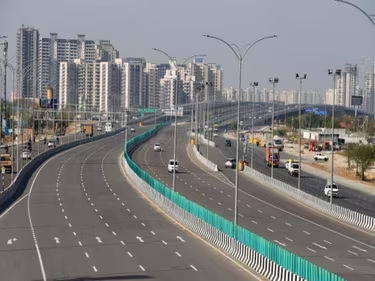
    On 12 January 2024, the Atal Setu, previously known as the Mumbai Trans Harbour Link, was inaugurated as India’s longest sea bridge, connecting Mumbai with Navi Mumbai. The ambitious infrastructure project, which spans 22 kilometres and was built at a cost of Rs 17,840 crore, was heralded as a game-changer for the region’s transportation network, promising to reduce travel time, ease congestion, and foster economic development. However, as the bridge marks its first anniversary, the Mumbai Metropolitan Region Development Authority (MMRDA) has reported that the traffic flow has significantly fallen short of initial expectations, sparking questions about the bridge’s true impact.

    One of the most anticipated aspects of the Atal Setu was its potential to alleviate Mumbai’s notorious traffic congestion. The bridge was expected to handle over 56,000 vehicles per day by 2021, with projections rising to 88,550 vehicles per day by 2031. However, the reality has been starkly different. During its first year of operation, the bridge recorded an average daily traffic of just 22,689 vehicles, far below the forecasted numbers. While this is still a notable volume, it highlights a gap between the anticipated usage and actual demand.

    In total, the bridge facilitated the movement of around 83 lakh vehicles in its first year, with the highest single-day traffic recorded at 61,807 vehicles just days after its inauguration. These figures fall short of the lofty projections, and many are questioning whether the bridge has lived up to its initial promise. Despite falling short of the expected traffic numbers, the Atal Setu has undeniably played a significant role in improving connectivity between Mumbai and Navi Mumbai. One of its most notable achievements is providing faster access to the upcoming Navi Mumbai International Airport, which is expected to become operational later this year. The bridge also enhances access to Mumbai Port and Jawaharlal Nehru Port, facilitating smoother logistics for industries and reducing travel times to major destinations such as Pune, Goa, and other parts of South India.

    The six-lane bridge, which features advanced traffic management systems (ATMS) and round-the-clock monitoring by patrol teams, has certainly contributed to a smoother, more efficient commuting experience for the region’s residents. With the improved infrastructure, traffic jams that once plagued the route have become less frequent, benefiting both daily commuters and logistics operators alike. Despite the bridge’s significant infrastructure improvements, it is clear that the full benefits have yet to materialise. MMRDA has stated that it remains optimistic about the future of Atal Setu, recognising that it is still in the early stages of its operation. With the bridge expected to support the growing population and increase in commercial activity in the region, it’s likely that traffic demand will rise as more people and businesses take advantage of the new connectivity.

    Moreover, the bridge is part of a larger vision to transform the Mumbai-Navi Mumbai region into a more interconnected urban hub. As Navi Mumbai develops further and new infrastructure projects, such as the Navi Mumbai International Airport and the Mumbai Coastal Road Project, continue to progress, the demand for the Atal Setu is expected to increase. The optimism within the MMRDA stems from the long-term view, anticipating that future growth will fill the gap between projections and actual usage. While the traffic numbers may not have reached their targets, Atal Setu remains a landmark in India’s infrastructure landscape. Beyond its numbers, the bridge stands as a testament to the country’s ambition to modernise its transport systems and meet the demands of urban growth. Its advanced safety features, modern design, and ability to ease congestion around key economic hubs continue to contribute to Mumbai and Navi Mumbai’s development.

    Chief Minister Devendra Fadnavis has praised the bridge’s role in transforming the region, stating that it has positively impacted the movement of millions of vehicles, thereby contributing to economic growth. As the region grows and more projects come online, the full potential of Atal Setu will likely be realised in time. The Atal Setu has certainly proven to be an invaluable addition to Mumbai’s infrastructure, despite the initial shortfall in traffic figures. With its strategic location, world-class features, and strong economic potential, the bridge stands as a symbol of India’s growing capacity for large-scale infrastructure development. While immediate traffic figures have been lower than expected, the bridge is set to play an increasingly crucial role as the region expands and more people and businesses utilise the improved connectivity. For now, the Atal Setu remains an infrastructure milestone with the promise of future success.

    Alliance Air Expands Northeast Connectivity with New Flights to Imphal

      0
      Alliance Air Expands Northeast Connectivity with New Flights to Imphal
      Alliance Air Expands Northeast Connectivity with New Flights to Imphal

      Alliance Air Expands Northeast Connectivity with New Flights to Imphal

      Alliance Air Expands Northeast India Network: New Flights to Imphal

      Alliance Air is significantly enhancing air connectivity in Northeast India with the launch of new flights linking Imphal, the capital of Manipur, to three other major destinations in the region. Starting from January 15, 2025, the airline will connect Imphal to Kolkata, Guwahati, and Dimapur, offering residents and businesses in the region improved travel options and more seamless access to other parts of India.

      This new addition to the airline’s network comes as part of the Ministry of Civil Aviation’s ongoing efforts to improve air connectivity to the Northeastern states, where transport infrastructure has traditionally been a challenge. The service is expected to strengthen the region’s connectivity, facilitating easier movement for both residents and tourists.

      The introduction of these new flights is expected to have a multifaceted impact on the region, benefiting not only local residents but also businesses and the tourism industry. Travel between the capitals of neighbouring states – Kolkata, Guwahati, and Dimapur – and Imphal will now be more convenient, saving valuable time and opening up new opportunities for trade and cultural exchange. The region has long struggled with high airfares, particularly for flights to and from Manipur. However, the new service comes with a key benefit: fares for these new flights will be capped at Rs 5,000. This measure was highlighted by Manipur’s Chief Minister N. Biren Singh, who explained that this pricing structure was put in place after the government engaged with the Ministry of Civil Aviation to ensure affordability for the people of Manipur. With rising airfares often a barrier to travel, this new initiative aims to alleviate the financial strain on local residents while encouraging more frequent travel to and from the region. “Airfare is quite high (in Manipur), but with the new service, prices will not exceed Rs 5,000. This will benefit the people of our state,” said N. Biren Singh, adding that the new flights will make the region more accessible.

      The expansion of Alliance Air’s operations in Northeast India is part of a larger strategy by the Ministry of Civil Aviation to improve air links in the region, which has often been underserved due to the difficult geography and lower demand. With this new initiative, there is a clear push to stimulate economic growth and make the region more attractive to tourists, businesses, and investors alike. These new routes will also help integrate the Northeastern states more effectively into the broader Indian economy. The improved accessibility is expected to contribute positively to the growth of sectors such as tourism, retail, and services in the region. By improving transport links, the government hopes to create new economic opportunities and foster better integration with the rest of the country. The new flights will also complement existing services provided by other carriers, including Indigo, Air India, and Air India Express, which currently operate from Imphal airport. However, the addition of these new routes will help spread the demand and offer more options for passengers, reducing the pressure on existing flights and improving overall service quality.

      The launch of the Imphal-Kolkata, Guwahati, and Dimapur flights marks another important step in improving air connectivity to Northeast India. This is just the beginning of a larger trend towards enhancing transport links across the region, which is set to continue in the coming years with other infrastructure developments, including new airports and improved road and rail networks. These improvements are not only crucial for local development but also help make Northeast India more integrated with the rest of the country, driving social and economic progress. As travel becomes more accessible and affordable, it’s expected that the region will see increased tourism, a boost in business activities, and better connectivity for residents, ultimately improving quality of life.

      Alliance Air’s new flight routes connecting Imphal to Kolkata, Guwahati, and Dimapur are a significant development in enhancing Northeast India’s air connectivity. With capped fares at Rs 5,000, this service brings affordable travel options to the region, benefiting local communities and businesses alike. By improving access to major cities, this initiative will help stimulate regional economic growth, promote tourism, and contribute to the broader integration of Northeast India with the rest of the country’s economy. As infrastructure continues to improve, Northeast India is poised for greater opportunities in the years ahead.

      Vadpe-Majiwada Stretch Expansion to Ease Congestion and Boost Thane Economy

        0
        Vadpe-Majiwada Stretch Expansion to Ease Congestion and Boost Thane Economy
        Vadpe-Majiwada Stretch Expansion to Ease Congestion and Boost Thane Economy

        Vadpe-Majiwada Stretch Expansion to Ease Congestion and Boost Thane Economy

        Thane’s Highway Upgrade: A Strategic Solution for Bhiwandi’s Congested Roads

        Thane’s traffic bottlenecks may soon be a thing of the past, thanks to the ongoing upgrade of the Vadpe-Majiwada stretch on the Old Mumbai-Nashik Highway. This ambitious project, spearheaded by the Maharashtra State Road Development Corporation (MSRDC), is set to transform a crucial 23.8 km stretch into a modern eight-lane highway, designed to alleviate severe congestion caused by the daily movement of heavy goods vehicles, particularly from Bhiwandi’s sprawling warehouses.

        For years, Bhiwandi, a major logistics hub in Maharashtra, has struggled with heavy truck traffic, making commuting through the region a time-consuming and frustrating experience. The new road development promises to bring much-needed relief by improving traffic flow, reducing delays, and ultimately boosting economic activity in the region. The Vadpe-Majiwada highway upgrade is designed with modern infrastructure in mind. The new eight-lane highway will include two-lane service roads on either side, ensuring smooth traffic flow for local commuters. The project is also set to feature ten underpasses at key locations such as Walshin, Sonale, Kharegaon, Yewali Flyover, Saravali, Pimplas, Ovali, Mankoli Motagaon, Dive Gaon near the petrol pump, and Dive. These underpasses are expected to play a critical role in easing the daily congestion caused by trucks entering and exiting Bhiwandi’s industrial areas. By providing an alternative route for commercial vehicles, the underpasses will significantly reduce gridlock and improve traffic conditions along the vital stretch of road. According to MSRDC officials, these underpasses will span a total of 8 km and are scheduled for completion by May 2025.

        In addition to the underpasses, the highway upgrade will also see the construction of several critical bridges and flyovers. Notable structures include the Kasheli Creek Bridge (817.5 meters), Kalwa Creek Bridge (199 meters), Vadpe Flyover (320 meters), and a Railway Bridge (84.15 meters). These additions will further enhance connectivity and reduce the time spent in transit, particularly for commuters travelling between key regions in Thane and beyond. One of the most significant elements of the upgrade is its alignment with the soon-to-be-completed Samruddhi Mahamarg expressway. The expressway, which connects Igatpuri to Thane, is nearing completion, with only the final 76-km stretch left to finish. This stretch includes a 4.2-km spur linking to the under-construction Mumbai-Vadodara Expressway, which is set to drastically cut down travel time between Mumbai and Nagpur. With 98% of the Samruddhi Mahamarg’s work completed, this connection will provide smoother, faster access between the two regions, while also reducing the load on the Old Mumbai-Nashik Highway.

        The completion of the Vadpe-Majiwada highway expansion, alongside the Samruddhi Mahamarg expressway, is expected to have a transformative impact on the region’s infrastructure. Not only will it alleviate congestion, but it will also stimulate local economic activity by improving transportation efficiency. With better road access, businesses in the area will benefit from quicker delivery times, reduced transportation costs, and improved connections to key urban centres. Moreover, the enhanced highway will likely encourage further industrial and commercial development along the corridor, attracting investment and creating new job opportunities. The MSRDC believes these projects will play a pivotal role in the region’s economic future, driving growth and improving the quality of life for its residents. The expansion of the Vadpe-Majiwada stretch of the Old Mumbai-Nashik Highway is a much-needed infrastructure project that will alleviate traffic congestion in Thane and Bhiwandi, two key regions in Maharashtra’s economic landscape. With the addition of underpasses, flyovers, and major bridges, the upgrade promises to enhance connectivity, reduce travel time, and support economic development. As the project progresses towards its completion in 2025, it is expected to play a critical role in improving the region’s transportation network and fostering long-term growth.

        Dense Fog and Cold Wave Disrupt Travel in Delhi-NCR: Flight Delays and Road Hazards

          0
          Dense Fog and Cold Wave Disrupt Travel in Delhi-NCR: Flight Delays and Road Hazards
          Dense Fog and Cold Wave Disrupt Travel in Delhi-NCR: Flight Delays and Road Hazards

          Dense Fog and Cold Wave Disrupt Travel in Delhi-NCR: Flight Delays and Road Hazards

          Dense Fog Disrupts Delhi-NCR, Causes Flight Delays and Road Hazards of Delhi-NCR, reducing visibility to near zero early on Wednesday and causing significant disruptions to travel. The phenomenon follows an orange alert issued by the India Meteorological Department (IMD), which warned of dense to very dense fog in the capital and surrounding areas. The fog, which is expected to persist throughout the week, has severely impacted both road and air traffic, making travel hazardous and delaying flights at Indira Gandhi International (IGI) Airport.

          The IMD issued an orange alert for Delhi on Wednesday morning, cautioning residents and travellers about the dense fog. According to the IMD, visibility in several parts of Delhi, including Laxmi Nagar, New Delhi Railway Station, Shankar Vihar, and areas bordering Uttar Pradesh, was reported to be extremely low. These areas, along with other parts of Delhi NCR, saw poor visibility, making it challenging for motorists, pedestrians, and public transport services to navigate the streets safely. The IMD has predicted that the foggy conditions will continue in isolated areas throughout the week, urging people to exercise caution during travel. The dense fog also contributes to a drop in temperatures across the region, as Delhi grapples with a cold wave sweeping through northern India.

          In addition to the visibility challenges on the roads, air travel has been severely impacted. As of 4:35 am on Wednesday, the Indira Gandhi International Airport (IGI) issued a travel advisory warning passengers about potential delays in flight operations. The advisory stated that while flights will continue to take off and land, those not equipped with Category III (CAT III) instrument landing systems may experience delays due to the low visibility caused by the fog. Flight tracking platform Flightradar24 reported that around 75 flights were delayed, affecting both arrivals and departures. Passengers were urged to contact their respective airlines to receive updated information on flight timings. This disruption highlights the ongoing challenges posed by the weather conditions at one of the country’s busiest airports, where visibility is crucial for smooth operations, particularly during low-visibility events like fog.

          The dense fog has also wreaked havoc on road traffic, with several accidents reported on key highways and streets in Delhi-NCR. With visibility drastically reduced, it has become increasingly difficult for drivers to safely navigate roads. Areas like the Delhi-Noida-Direct (DND) flyway, Ring Road, and Outer Ring Road saw slow-moving traffic, and travel times were significantly extended. Public transport services, including buses and metro services, have also been affected by the weather conditions. The Delhi Traffic Police have issued advisories, urging motorists to drive cautiously, maintain a safe distance, and use fog lights where possible. The fog is expected to persist for the next few days, and authorities are on high alert to manage the traffic disruptions.

          The dense fog is a consequence of the ongoing cold wave affecting northern India. On Wednesday, Delhi recorded a minimum temperature of 8°C, and the maximum temperature is expected to reach only 18°C. This cold wave, along with the fog, has led to a significant drop in temperature across Delhi-NCR, making travel even more challenging for residents. With foggy conditions and the cold wave expected to last throughout the week, residents are being advised to stay updated on weather forecasts and transportation advisories. Delhiites are also being urged to dress warmly and take necessary precautions while venturing outdoors.

          Given the persistent fog and cold wave, the Delhi Police and local authorities have ramped up efforts to ensure public safety. They have deployed additional patrols to assist with traffic management, particularly on major roads prone to accidents due to the low visibility. In addition, hospitals and emergency services are on high alert to handle any health issues arising from the cold weather, such as respiratory problems or hypothermia. Motorists are being reminded to reduce speed and avoid sudden lane changes, while pedestrians are advised to wear reflective clothing to make themselves more visible in the dense fog. Moreover, commuters are encouraged to rely on public transportation systems, such as the Delhi Metro, which has continued to operate without major disruptions, as an alternative to road travel. As dense fog continues to disrupt daily life in Delhi-NCR, residents and travellers are facing significant challenges. With the ongoing cold wave sweeping through northern India, the situation is expected to persist throughout the week. Authorities, including the IMD and IGI Airport, have issued advisories to keep the public informed about potential delays and safety measures. For those travelling, it is crucial to stay updated on the latest weather reports and to exercise caution while commuting.

          Greater Noida Authority Ramps Up Efforts to Recover Rs 30 Crore Water Dues

          0
          Greater Noida Authority Ramps Up Efforts to Recover Rs 30 Crore Water Dues
          Greater Noida Authority Ramps Up Efforts to Recover Rs 30 Crore Water Dues

          Greater Noida Authority Ramps Up Efforts to Recover Rs 30 Crore Water Dues

          Greater Noida Authority has set a target to collect Rs 30 crore in pending water dues. With over 270 major defaulters, the authority is using smart water meters and other strategies to improve collection rates by the end of the financial year.

          As the financial year draws to a close, the Greater Noida Industrial Development Authority (GNIDA) is intensifying its efforts to recover outstanding water bills. With just two months remaining before the fiscal year ends, the authority has set a target to collect Rs 30 crore out of the pending Rs 68 crore. So far, the authority has managed to collect only Rs 38 crore, approximately 55% of the target.

          To achieve its target, GNIDA has issued notices to over 270 major defaulters from various sectors, including industrial, institutional, group housing, and commercial establishments. These defaulters, whose water dues exceed Rs 50,000, have been asked to clear their pending payments or file grievances if they believe there are discrepancies in their bills. Rajesh Gautam, a senior manager at GNIDA, explained that the authority has ramped up its efforts to improve collection this year. Last year, GNIDA managed to collect Rs 44 crore against a target of Rs 61 crore, achieving 72% of its goal. This year, however, the target has been increased, and GNIDA is exploring several strategies to improve the collection rate. The authority has stated that water charges apply from the date of possession after the completion certificate is issued, even if the water supply is not being used, a point clearly outlined in the lease agreements.

          One of the key initiatives in this regard is the installation of smart water meters across various types of properties in Greater Noida. These meters are designed to curb water wastage, streamline the process of generating accurate bills, and improve the overall recovery of dues. The installation of these smart meters will be prioritised in bulk water users such as group housing societies, industrial complexes, and commercial establishments, where water consumption is typically higher. Greater Noida has more than 300 group housing societies, and the installation of smart meters in these societies is expected to make a significant impact on reducing water wastage and improving billing accuracy. As part of the pilot project, GNIDA installed smart water meters in two housing societies in November 2024. The trial period lasted a month, and the officials are now awaiting the project report to assess its effectiveness before scaling it up.

          In addition to the installation of smart meters, GNIDA is also making efforts to address billing grievances. Officials have urged allottees to either settle their dues or raise any concerns they may have regarding incorrect or disputed bills. The authority has made it clear that the water charges are applicable as per the terms in the lease agreements, regardless of whether the water supply is utilised or not. The installation of smart water meters is just one part of GNIDA’s broader plan to enhance its water billing and recovery process. Once the meters are fully installed, they will not only assist in improving the accuracy of bills but also help in monitoring water usage in real-time. This initiative is expected to play a pivotal role in enhancing the financial health of the authority, reducing wastage, and improving customer satisfaction. Officials are optimistic that these combined efforts, including improved billing systems and smarter infrastructure, will help the authority reach its target for this financial year. As the deadline looms, the emphasis on efficient recovery and technological upgrades is likely to make a noticeable difference in both the revenue collection and the region’s overall water management.

          Atal Setu Records Lower Traffic Than Expected in Its First Year of Operation

          0
          Atal Setu Sees Lower-Than-Expected Traffic in Its First Year of Operation
          Atal Setu Sees Lower-Than-Expected Traffic in Its First Year of Operation

          Atal Setu Records Lower Traffic Than Expected in Its First Year of Operation

          Atal Setu Sees Lower-Than-Expected Traffic in Its First Year of Operation

          Atal Setu, India’s longest sea bridge, connecting Sewri in Mumbai to Chirle in Navi Mumbai, marked its one-year anniversary on January 12, 2025. The bridge was inaugurated by Prime Minister Narendra Modi in 2024, and while it has transformed regional connectivity, the traffic numbers have fallen short of initial expectations.

          The Atal Bihari Vajpayee Sewri-Nhava Sheva Atal Setu, a crucial infrastructure project for Maharashtra, spans nearly 22 kilometres, with 16.5 km over the sea and 5.5 km on land. Initially, the Mumbai Metropolitan Region Development Authority (MMRDA) had projected that the bridge would handle around 56,000 vehicles daily. However, in its first year, the bridge has only recorded an average of 22,689 vehicles per day, significantly below these early estimates. Despite the lower-than-expected traffic, the bridge has still proven to be an essential addition to the region’s infrastructure, contributing greatly to smoother and faster transit between Mumbai and Navi Mumbai. Over the past year, a total of 83,06,009 vehicles have used the bridge, which has been a key factor in reducing travel time and improving connectivity between major hubs in the region. On its highest traffic day, January 14, 2024, the bridge witnessed 61,807 vehicles, just after its opening to the public.

          The Atal Setu, which cost approximately Rs 17,840 crore to build, has not only reduced the time required for inter-city travel but also provided much-needed relief to commuters. The bridge connects key locations, including the Mumbai International Airport and the soon-to-be-operational Navi Mumbai International Airport, which is expected to further boost its traffic once fully operational. The Atal Setu bridge has also enhanced the region’s safety and operational efficiency with its cutting-edge infrastructure, including real-time traffic monitoring and emergency systems. Designed to handle a larger volume of vehicles in the future, it is expected that the traffic will gradually increase as surrounding infrastructure improves, further integrating Mumbai and Navi Mumbai, and driving regional economic growth.

          The six-lane bridge also plays a significant role in reducing travel time to destinations such as Pune, Goa, and South India, thus facilitating better connectivity for both passengers and freight. This is expected to drive further economic and social development in the region. In addition, the bridge has improved access to the Mumbai Port and Jawaharlal Nehru Port, which are crucial for trade and commerce in the country. In a statement, Maharashtra Chief Minister Devendra Fadnavis praised the Atal Setu for its transformative impact on the region. He highlighted that the bridge has served over 8 million vehicles in just one year, benefiting the economic and social landscape of the surrounding areas.

          To ensure the safety and smooth operation of the bridge, the MMRDA has implemented advanced traffic management and emergency response systems. The bridge is equipped with an Advanced Traffic Management System (ATMS), which is supported by Fire-Rescue Vehicles (FRVs), maintenance teams, and patrolling units that work 24/7 to monitor traffic and handle incidents quickly. These systems have helped maintain high safety standards and ensure efficient handling of any disruptions. While the traffic numbers in the first year have not met initial expectations, the Atal Setu has still proven to be a crucial infrastructural development, dramatically improving the flow of vehicles between two of Maharashtra’s most important cities. As more infrastructure projects continue to develop around it, the bridge’s usage is expected to grow, with significant long-term benefits for the region’s connectivity and economy.

          CREDAI-MCHI Expo 2025 Revolutionising Home Buying with Quick Bookings and Women Empowerment

          0
          CREDAI-MCHI Expo 2025 Revolutionising Home Buying with Quick Bookings and Women Empowerment
          CREDAI-MCHI Expo 2025 Revolutionising Home Buying with Quick Bookings and Women Empowerment

          CREDAI-MCHI Expo 2025 Revolutionising Home Buying with Quick Bookings and Women Empowerment

          The 32nd Property and Home Finance Expo, organised by CREDAI-MCHI, is set to take place from January 17-19, 2025, at the Jio World Convention Centre in Mumbai. This three-day event, themed “The Mall of Homes,” promises to bring significant changes to the home-buying experience, offering both innovations and interactive experiences for potential homebuyers and industry professionals. The event will serve as a platform to simplify the process of buying homes while empowering women and promoting a seamless and efficient property purchase journey.

          The expo will feature over 100 developers from across the country, including well-established names such as DGS Township, Adani Realty, Ajmera Realty, Kalpataru, Rustomjee, and Raymond Realty, among many others. Over 500 projects spanning 5000+ locations will be on display, providing prospective homebuyers with a vast array of choices to suit different needs and budgets. Alongside developers, more than 25 financial institutions like State Bank of India, LIC Housing Finance, and Tata Capital will offer home financing solutions, ensuring a smooth transaction process for attendees. With exclusive discounts and offers from developers and loan providers, this event is shaping up to be a game-changer in the real estate sector.

          Mr. Dominic Romell, President of CREDAI-MCHI, highlighted the initiative to simplify the home-buying process, with a special focus on the “Book Your Home in 10 Minutes” concept. By launching the first Quick Real Estate Mall, the expo aims to transform traditional home buying by allowing visitors to book their dream homes and secure loan approvals in just ten minutes. This initiative, aimed particularly at first-time homebuyers, is expected to drastically reduce the time and complexity traditionally associated with purchasing a home. Mr. Nikunj Sanghavi, Convener of the expo, also expressed his excitement, describing the event as “a movement that redefines the future of home buying,” promising a seamless experience for all visitors.

          One of the standout features of the 2025 CREDAI-MCHI Expo is the introduction of Pink Sunday, which focuses on empowering women homebuyers. The initiative, under the CREDAI-MCHI Stree Awas Yojna, aims to encourage women to purchase homes in their own name, offering up to ₹2 lakh in additional discounts. This initiative is not only a step towards gender inclusivity but also strives to make homeownership more accessible for women across India. Additionally, the expo will offer a range of exclusive deals such as no stamp duty, GST, and significant discounts of up to ₹18 lakh on select properties. These attractive perks, along with a chance to win giveaways like iPhones, two-wheelers, and even a Maruti Suzuki Ertiga, make the expo a once-in-a-lifetime opportunity for prospective buyers.

          The expo will also host the prestigious Golden Pillars Awards and the Spaciux Awards for Architects, recognising excellence in the real estate and design sectors. With over 100,000 visitors expected over the three days, the event is set to become one of the largest real estate exhibitions in India. The event organisers have ensured easy access with free parking at the Jio World Convention Centre and free entry to the expo. Visitors can register online through the official website and enjoy a unique, hassle-free home-buying experience. As CREDAI-MCHI continues to innovate, this expo marks a significant step forward in simplifying the property purchase process, empowering women, and making homeownership accessible to a broader demographic.

          Delhi Luxury Real Estate High-Rises Redefining the City Landscape

          0
          Delhi Luxury Real Estate High-Rises Redefining the City Landscape
          Delhi Luxury Real Estate High-Rises Redefining the City Landscape

          Delhi Luxury Real Estate High-Rises Redefining the City Landscape

          New Delhi, once synonymous with sprawling bungalows and independent floors, is now witnessing a dramatic shift in its real estate landscape. The city, long known for its horizontal expansion, is rapidly embracing vertical living, with luxury high-rise condominiums replacing the traditional homes that once defined its character. This transformation, spurred by the post-pandemic surge in demand, signals a change in the way Delhiites perceive and approach urban living. The new face of luxury real estate in Delhi is one that combines the best of modern architecture, community living, and integrated housing solutions.

          Recent data underscores this trend, revealing that luxury homes are increasingly becoming the preferred choice for buyers. According to a report by JLL, 19% of all homes sold in Delhi-NCR in the first half of 2024 were in the luxury segment. This growing preference is being met with an array of high-rise developments, setting new benchmarks for urban living. Developers have been quick to respond, launching projects that offer unparalleled luxury, security, and convenience, such as DLF ONE Midtown, located in Moti Nagar. This project stands as a testament to the growing demand for high-rise luxury, with over 900 apartments spread across four towers, offering extensive green spaces, a state-of-the-art clubhouse, and sophisticated residential designs.

          One of the leading proponents of this shift is Aakash Ohri, JMD and Chief Business Officer of DLF Ltd. He emphasizes that Delhi’s evolving real estate market reflects an increasing demand for integrated living spaces that combine comfort, security, and a sense of community. “ONE Midtown in West Delhi epitomizes this transformation. It offers residents a harmonious blend of luxury and functionality, with expansive green areas, thoughtfully-designed homes, and advanced amenities. This shift represents a broader trend where buyers are looking for more than just a home – they are seeking an integrated lifestyle,” says Ohri.

          Developers like TARC Limited are also capitalising on this shift, with projects such as TARC Kailasa and TARC Tripundra offering upscale residences in sought-after locations like Patel Road and Bijwasan. Amar Sarin, MD and CEO of TARC Limited, notes that homebuyers in Delhi are increasingly moving from independent builder floors to luxury high-rises. “The demand for high-rise living is not just about comfort but also about offering an unparalleled living experience that blends modern design with traditional elegance,” he states. This market shift is driven by evolving buyer preferences, with a growing focus on integrated developments that offer not just homes but a full range of lifestyle amenities.

          The post-COVID real estate boom in Delhi reflects broader changes in the city’s housing market. In 2024, the luxury housing sector saw a 25% year-on-year increase in sales, with nearly half of all sales in Delhi-NCR coming from luxury segments. Shashank Vashishtha, Executive Director at eXp India, attributes this to the city’s appeal to both local and outstation buyers, alongside a scarcity of integrated developments. He points out that the scarcity of such developments has created a favourable investment climate for both established and emerging developers, further cementing Delhi’s status as a premier residential destination.

          However, while this growth is encouraging, it is important to consider its impact on sustainability and the environment. The rapid rise of luxury high-rises raises questions about urban planning and resource management. As the city continues to grow vertically, challenges such as water usage, waste management, and traffic congestion need to be addressed. The need for sustainable building practices, such as energy-efficient designs and eco-friendly materials, becomes critical. Integrating green spaces and promoting public transport solutions within these luxury developments can help mitigate the environmental footprint of such urban expansion, ensuring that the city’s transformation is sustainable in the long run.

          India’s 2025 Budget Balancing Fiscal Prudence with Infrastructure Investment for Global Leadership

            0
            India’s 2025 Budget Balancing Fiscal Prudence with Infrastructure Investment for Global Leadership
            India’s 2025 Budget Balancing Fiscal Prudence with Infrastructure Investment for Global Leadership

            Balancing Infrastructure Spending and Fiscal Discipline for Sitharaman in Upcoming Budget

            As India strives to cement its place as a global economic leader by 2047, the upcoming budget for 2025 presents a delicate balancing act for Finance Minister Nirmala Sitharaman. The country’s infrastructure development has emerged as a cornerstone of its recent economic success, but with growing demands for fiscal prudence, the government faces the challenge of sustaining high levels of investment in both physical and digital infrastructure.

            In the aftermath of the pandemic, India faced a sharp dip in consumption, private investments, and exports. To counter these effects, the government ramped up its infrastructure spending, recognising the potential of these investments to fuel economic recovery and long-term growth. In 2018-19, infrastructure spending stood at a modest ₹3 trillion, or just 1.6% of the country’s GDP. By 2024-25, however, this figure has surged to ₹11.11 trillion, which constitutes 3.4% of GDP. This aggressive investment has been a crucial factor in India’s recent growth trajectory, helping the nation become the fastest-growing large economy in the world. In 2023-24, India’s GDP growth reached an impressive 8.2%, a testament to the success of its infrastructure strategy. Roads, ports, and airports saw considerable improvements, easing the movement of goods and services across the country. However, the challenge remains: India’s infrastructure needs are vast, and they go beyond just physical structures. There is an urgent need for social and digital infrastructure to meet the demands of a growing population and an increasingly digital economy.

            As Finance Minister Sitharaman prepares the budget for the coming year, there is pressure to maintain infrastructure spending at 3.4% of GDP. This is a promise made by the government in response to the country’s many infrastructure shortcomings. While the physical infrastructure deficit is clear, the need for digital transformation and improvements in social infrastructure—such as healthcare, education, and housing—has become equally critical. The government’s push for greater infrastructure spending has sparked debates. On one hand, this investment is seen as essential for India to remain competitive in a rapidly changing global economy. High-quality infrastructure will not only bolster the nation’s economic capabilities but also help attract foreign investments, improve the ease of doing business, and provide job opportunities across the country. However, the flip side is the increasing fiscal burden. As the government continues to prioritise infrastructure, it must also address other areas like social welfare, environmental concerns, and fiscal discipline, all while balancing the need for sustainable growth.

            Private investors have also been encouraged to participate in infrastructure development, particularly in areas like ports, railways, and urban development. Public-private partnerships (PPP) have gained traction as a model to overcome funding constraints, bringing in expertise and efficiency from the private sector to complement government efforts. While maintaining momentum in infrastructure investment is crucial, Sitharaman must also consider how to manage India’s fiscal health. Overcommitting to infrastructure projects without a clear funding plan could result in a ballooning deficit, impacting long-term economic stability. Thus, the upcoming budget will likely be a careful negotiation between the need for continued infrastructure expansion and the demands of fiscal prudence.

            In the coming months, all eyes will be on the government’s budget proposal, with infrastructure spending expected to play a significant role. However, how the government plans to fund these investments, while ensuring balanced growth across various sectors, will be key to its success. India’s journey toward becoming a developed nation is undeniably tied to its ability to overhaul its infrastructure. However, the 2025 budget must balance the urgency of this transformation with long-term fiscal responsibility to ensure that infrastructure investments continue to drive the nation forward.

            Mumbai Airport to Relocate General Aviation Operations to Navi Mumbai International Airport to Alleviate Congestion

            0
            Mumbai Airport to Relocate General Aviation Operations to Navi Mumbai International Airport to Alleviate Congestion
            Mumbai Airport to Relocate General Aviation Operations to Navi Mumbai International Airport to Alleviate Congestion

            Mumbai Airport to Relocate General Aviation Operations to Navi Mumbai International Airport to Alleviate Congestion

            As Mumbai continues to face overwhelming congestion at its city airport, a new plan is underway to alleviate parking woes for private and charter aircraft. The city’s busy airport will soon transfer most of its general aviation aircraft operations, including business jets, turboprops, and charter planes, to the newly developing Navi Mumbai International Airport (NMIA), scheduled for completion by the end of 2025. This strategic shift aims to tackle long-standing parking challenges, improve operational efficiency, and create a world-class infrastructure for general aviation.

            Currently, general aviation aircraft are parked at the distant aviation bays of Mumbai’s international airport, a situation that has become increasingly unmanageable as the demand for space grows. These aircraft are positioned far from the main runway, and with limited parking capacity, the airport has struggled to provide sufficient space for all flying vehicles. Passengers boarding private flights from Mumbai must contend with time-consuming procedures, including towing aircraft to parking slots after engines are shut down.

            The move to Navi Mumbai will come as a relief to both operators and passengers. A spokesperson for Adani Airports Holdings Ltd, which is spearheading the development of NMIA, explained that the new airport will offer state-of-the-art infrastructure, with specific provisions for private and charter aircraft. This transition will not only ease the current parking challenges but also create an optimal environment for these aircraft, bringing the city closer to international aviation standards. Scheduled to commence operations in 2025, the Navi Mumbai airport will initially begin handling domestic flights in the second half of May or early June 2025. The general aviation terminal and a portion of the planned parking bays and hangars are expected to be operational by the end of the year, setting the stage for a gradual move from Mumbai’s existing airport to the new facility. Operators of private and charter aircraft will be encouraged to shift their parking to Navi Mumbai, which promises to offer more space and more efficient layout designs compared to the congested city airport.

            Despite this shift, Mumbai airport will remain accessible for general aviation activities. Aircraft will continue to land at the city airport for passenger pick-ups, after which they will relocate to Navi Mumbai for parking. The general aviation terminal in Kalina, which handles passengers boarding private or charter flights, will remain operational, allowing for seamless travel to and from the city centre. Capt. Rajesh Bali, Managing Director of the Business Aircraft Operators Association (BAOA), welcomed the move, acknowledging that Mumbai airport’s current layout, where aircraft are parked a considerable distance from the runway, does not meet international standards. He pointed out that the improved designs at NMIA would address these concerns and provide a more streamlined, effective solution for general aviation.

            Currently, Mumbai’s airport has the capacity to park just 24 general aviation aircraft, a figure that falls short given the growing demand. The lack of sufficient space has made it necessary to adopt operational procedures where aircraft must be towed into parking spots. This inefficiency will be eliminated with the completion of NMIA, which promises to accommodate a larger volume of aircraft, thereby relieving the pressure on Mumbai’s primary airport. For years, operators and aviation stakeholders have expressed concerns over the lack of space for private aircraft at Mumbai airport. With the upcoming shift to Navi Mumbai, these challenges are set to be addressed, creating a better experience for both operators and passengers. The transition represents a significant milestone in Mumbai’s aviation development, offering hope for an optimised, future-ready airspace. In the coming months, as Navi Mumbai’s international airport nears completion, Mumbai’s aviation infrastructure will undergo a much-needed transformation, improving the city’s ability to cater to the growing demand for private and charter aviation.