Home Blog Page 350

Technopark Signs MoU with Brigade Enterprises for World Trade Centre at Phase-I Campus

    0
    Technopark Signs MoU with Brigade Enterprises for World Trade Centre at Phase-I Campus
    Technopark Signs MoU with Brigade Enterprises for World Trade Centre at Phase-I Campus

    Technopark Signs MoU with Brigade Enterprises for World Trade Centre at Phase-I Campus

    Technopark has signed a memorandum of understanding (MoU) with Brigade Enterprises Ltd to establish a World Trade Centre (WTC) at its Phase-I campus. The announcement was made on January 14, 2025, when the MoU was handed over to Kerala’s Chief Minister, Pinarayi Vijayan, marking a significant milestone for the state’s IT and infrastructure sectors.

    The World Trade Centre Thiruvananthapuram will be developed on a non-SEZ (Special Economic Zone) land parcel within Technopark, which is already home to a thriving IT ecosystem. According to Technopark CEO Sanjeev Nair, the addition of premium office spaces by Brigade will significantly enhance the existing infrastructure. The WTC’s Grade A office spaces are expected to attract more IT/ITeS companies, which will drive investments into the region and reinforce Thiruvananthapuram’s position as a preferred IT destination.

    “The premium office spaces of World Trade Centre by Brigade will be a big boost to the existing IT infrastructure of Technopark. With the supply of more Grade A office spaces in Technopark, the park will be able to attract more IT/ITeS companies and investments to consider Thiruvananthapuram as a preferred IT destination,” said Sanjeev Nair. This development builds on the success of the WTC in Kochi, Kerala’s first World Trade Centre. Brigade Enterprises Ltd, a prominent real estate developer, is bringing its expertise to Thiruvananthapuram, with plans to develop over a million square feet of premium office space. The project will also include a business-class hotel equipped with facilities for meetings, events, and conferences, making it an international landmark for the city.

    “We are encouraged by the success of WTC Kochi and are delighted to bring Kerala’s second WTC to Thiruvananthapuram. With the overall plan to develop over a million sq.ft of premium office space, including a business-class hotel, this development is set to become an international landmark for the city,” said Jaishankar, Executive Chairman of Brigade Group. “At Brigade, we strive to bring world-class experiences to our clients, and WTC Thiruvananthapuram is yet another step in this direction.” This partnership highlights a forward-thinking approach to urban development in Kerala, where the government is looking to expand the state’s IT infrastructure to accommodate growing demand. Technopark Phase-I is already a hub for over 400 companies and employs more than 55,000 professionals, and the addition of WTC office spaces is expected to further strengthen this vibrant ecosystem.

    The initiative aligns with Kerala’s broader ambitions to enhance its global competitiveness in the IT sector. The project also underscores the growing interest in Thiruvananthapuram, which is rapidly emerging as a key player in the Indian tech landscape. Brigade Enterprises, already involved in the development of an IT building, Brigade Square, in Technopark Phase-I, is set to take this collaboration further. The WTC will not only cater to IT companies but also serve as a platform for international businesses, fostering cross-border trade and networking opportunities. As this ambitious project progresses, Thiruvananthapuram is poised to become a significant IT and business hub, offering cutting-edge infrastructure, global business connectivity, and enhanced opportunities for both local and international investors. With this partnership, Technopark continues to evolve as a vital player in Kerala’s economic growth and transformation into a global IT destination.

    Telangana CM A. Revanth Reddy Seeks Centre’s Support for Hyderabad Metro Phase 2 and Key Infrastructure Projects

      0
      Telangana CM A. Revanth Reddy Seeks Centre's Support for Hyderabad Metro Phase 2 and Key Infrastructure Projects
      Telangana CM A. Revanth Reddy Seeks Centre's Support for Hyderabad Metro Phase 2 and Key Infrastructure Projects

      Telangana CM A. Revanth Reddy Seeks Centre’s Support for Hyderabad Metro Phase 2 and Key Infrastructure Projects

      Telangana Chief Minister A. Revanth Reddy called for the Centre’s assistance in advancing the second phase of the Hyderabad Metro Rail, along with other pivotal infrastructure projects aimed at transforming Hyderabad into a global city. Speaking at the release event of the autobiography of former Maharashtra Governor Ch Vidyasagar Rao, the CM stressed the importance of cooperation between the state and the Union government for the holistic development of Telangana.

      Reddy highlighted that 60% of the state’s revenue is generated by Hyderabad, making it a key economic hub for Telangana. With a focus on making the state’s capital competitive on a global scale, the CM appealed for the establishment of a dry port in the state and called on the Centre to expedite the completion of the Kazipet Railway Coach Factory. These projects, according to Reddy, are crucial to elevate the state’s infrastructure and economic standing.

      One of the central aspects of his appeal was the development of the second phase of the Hyderabad Metro Rail, which is expected to address the growing transportation needs of the city’s ever-expanding population. Reddy expressed optimism that the Union Cabinet would approve the project in its upcoming meeting, citing similar metro development initiatives supported by the Centre for other cities like Bengaluru and Chennai. Reddy also urged for the sanctioning of the Regional Ring Road (RRR) and a regional ring rail network around Hyderabad, projects that he believes will help make the city more accessible and connected, fostering its growth as a global metropolis. His vision includes positioning Hyderabad to compete not just with cities like Amaravati but with global powerhouses such as New York and Tokyo.

      The CM made a point of encouraging bipartisan cooperation, calling on Union Minister Bandi Sanjay Kumar and BRS leader Vinod Kumar to join hands for the state’s development. “We should work together for Telangana,” he said, highlighting that political differences should not obstruct the state’s progress. This call for unity across party lines is a significant move in an era of increasing political fragmentation. In addition to infrastructure development, Reddy touched upon the role of students in politics, reflecting on the important part they played during the Telangana movement. He expressed concern over the diminishing influence of universities, arguing that the revival of ideological student politics is critical to maintaining the political integrity of the state.

      In the same vein, Reddy addressed the issue of political defections, which he attributed to a lack of ideology. He stressed that loyalty to political parties rooted in ideology is essential for the stability of democratic processes. The CM also noted the importance of the opposition’s role in holding the government accountable while maintaining the democratic spirit, citing that no members of the opposition had been expelled from the state assembly in the past 13 months under his administration. The presence of dignitaries like Haryana Governor Bandaru Dattatreya, Odisha Governor Hari Babu Kambhampati, and Union Minister of State for Home Bandi Sanjay Kumar underscored the significance of Reddy’s message, highlighting the broader political and developmental implications of his call for Centre-state cooperation. With an eye on global competitiveness and a strong vision for Telangana’s future, CM A. Revanth Reddy is pushing for key infrastructure projects that are expected to not only enhance the city’s global stature but also drive its economic growth in the coming decades. The focus on metro expansion, regional connectivity, and industrial development signals a comprehensive strategy to ensure Hyderabad’s continued success as an economic powerhouse in India.

      BEST Bus Strike Disrupts Services in Mumbai Flash Strike by Contractual Employees

        0
        BEST Bus Strike Disrupts Services in Mumbai Flash Strike by Contractual Employees
        BEST Bus Strike Disrupts Services in Mumbai Flash Strike by Contractual Employees

        BEST Bus Strike Disrupts Services in Mumbai Flash Strike by Contractual Employees

        A flash strike by contractual employees at a private bus operator hired by the Brihanmumbai Electric Supply and Transport (BEST) undertaking brought partial disruption to the city’s bus services on Monday, 13th January 2025. The strike, primarily affecting services from the Pratiksha Nagar depot, stemmed from an alleged incident of mistreatment involving a pregnant woman conductor. Over 100 buses were reported to be off the road, though the impact was contained within a single depot, leaving other BEST operations largely unaffected.

        BEST, which manages a fleet of nearly 3,000 buses and caters to over 30 lakh passengers daily, has faced significant challenges recently. Notably, it has been without a permanent General Manager for over a week, with an additional commissioner from the Brihanmumbai Municipal Corporation (BMC) currently handling the position. This leadership gap has come at a time when the corporation is dealing with the fallout of this unexpected industrial action. The strike involved employees from Mateshwari, a private operator responsible for the wet lease of buses at the Pratiksha Nagar depot. Wet leasing refers to a model where private operators maintain buses, including driver salaries and vehicle upkeep, while the public transport authority manages scheduling and routes. The disagreement appears to have been triggered by a complaint of mistreatment against the private operator’s management, particularly involving a pregnant conductor. While BEST officials refrained from disclosing the details of the grievance, union leader Suhas Samant suggested that the strike was a direct response to this mistreatment.

        The impact was immediately felt on several routes. According to Samant, all 110 buses operated by Mateshwari from the Pratiksha Nagar depot were halted. The strike left many commuters stranded, with passengers experiencing delays and disruptions. BEST’s official spokesperson, Sudas Sawant, confirmed that the strike was confined to Pratiksha Nagar, and operations at other depots continued without disruption. This strike highlights the broader issue of labour relations in the public transport sector, where private operators and their employees often clash over working conditions, pay disputes, and treatment. The incident also raises questions about the safety and welfare of female workers in the transport industry, with the mistreatment allegations underlining the vulnerability of pregnant women in the workforce.

        On the administrative front, the ongoing leadership vacuum at BEST adds another layer of complexity to resolving the issue. The absence of a General Manager has left a leadership void, making it difficult to address disputes effectively. This situation underscores the challenges faced by Mumbai’s public transport system in terms of both leadership and employee welfare. While the strike has been partially resolved with limited disruptions, the situation has brought to light critical issues within the transport network. Commuters, many of whom rely on BEST buses for their daily journeys, have expressed frustration over the inconvenience caused. With tensions simmering in the workforce, both the BEST management and the private operators must find a way to address these grievances in order to restore stability and maintain the trust of the public. While Mumbai’s public transport system continues to function amid challenges, incidents like this flash strike expose the underlying tensions within the sector. It is clear that efforts must be made to improve the working conditions for staff, particularly women, and to ensure that leadership gaps do not disrupt critical services that millions of people rely on every day.

        EcoBox Industrial Parks Enhances India’s Logistics Infrastructure with 50-Acre Acquisition in Chennai

          0
          EcoBox Industrial Parks Enhances India’s Logistics Infrastructure with 50-Acre Acquisition in Chennai
          EcoBox Industrial Parks Enhances India’s Logistics Infrastructure with 50-Acre Acquisition in Chennai

          EcoBox Industrial Parks Enhances India’s Logistics Infrastructure with 50-Acre Acquisition in Chennai

          EcoBox Industrial Parks, a fast-growing operating platform backed by Alta Capital, is making significant strides in expanding India’s logistics infrastructure with a recent acquisition of 50 acres of land in Chennai’s Mannur locality. This development marks an important step towards enhancing the nation’s industrial infrastructure, crucial for meeting the increasing demand for modern industrial and logistics facilities across the country.

          The planned development on this site will span 1.2 million square feet, with an investment of over ₹400 crore. Located just 3 km from State Highway 50, the project is ideally situated in Tamil Nadu’s flourishing industrial ecosystem. The strategic location provides easy access to key industrial corridors and the manufacturing base in Chennai, making it an attractive proposition for a wide range of industries including e-commerce, third-party logistics (3PL), and light manufacturing.

          This move by EcoBox comes at a time when India’s logistics sector is undergoing rapid transformation, driven by the demand for high-quality, efficient supply chain solutions. The country’s industrial base has been expanding, and facilities like the one planned in Mannur are essential to accommodate the growing needs of both domestic and international businesses. As demand for space in India’s logistics parks increases, developments like this are set to play a key role in strengthening the country’s infrastructure, which is vital for its economic growth. Ashish Shah, CEO of EcoBox Industrial Parks, noted that the acquisition of the Mannur site aligns with the company’s strategy to establish a strong presence in key industrial regions across India. “Mannur’s strategic location and connectivity make it an ideal site for addressing the growing demand for modern industrial infrastructure. This acquisition is an important step in expanding our presence in India’s key industrial regions,” Shah remarked.

          The acquisition of land for this logistics park is part of EcoBox’s larger strategy to develop facilities that support and enhance India’s supply chain. By focusing on areas with strong connectivity, EcoBox aims to facilitate faster and more efficient movement of goods, which is essential for industries relying on logistics and transportation to function smoothly. The development is expected to provide state-of-the-art facilities designed to meet the needs of a variety of industries. These will include large-scale warehouses, distribution centres, and custom-built facilities tailored to specific business needs. The logistics infrastructure being created in Mannur will be equipped with modern amenities and technology, which will not only improve operational efficiency but also reduce the cost of logistics for companies operating in the region.

          The acquisition also expands EcoBox’s portfolio significantly, bringing its total managed space to 4.8 million square feet. This growing portfolio signals EcoBox’s commitment to enhancing the logistics infrastructure landscape in India. As a part of Logicap Advisors, the logistics arm of Alta Capital, EcoBox is positioned to capitalise on the expanding market demand, offering investors and tenants well-located, modern logistics facilities. In addition to enhancing India’s industrial infrastructure, this project in Mannur is set to create numerous job opportunities, contributing to the regional economy. The demand for skilled workers, as well as for auxiliary services such as transportation, security, and maintenance, will provide a significant boost to the local economy. EcoBox Industrial Parks’ new project in Chennai is more than just a real estate development; it is a vital piece in India’s evolving industrial infrastructure puzzle. The facility will not only support the logistics and manufacturing sectors but will also help position India as a stronger player in the global supply chain, capable of meeting the needs of a rapidly growing economy.

          India’s Metro Network Becomes World’s Third-Largest with 1,000 km Expansion

            0
            India’s Metro Network Becomes World’s Third-Largest with 1,000 km Expansion
            India’s Metro Network Becomes World’s Third-Largest with 1,000 km Expansion

            India’s Metro Network Becomes World’s Third-Largest with 1,000 km Expansion

            India has recently achieved a significant milestone in its efforts to improve urban infrastructure, becoming the world’s third-largest metro network with the addition of 1,000 kilometres to its existing system. This achievement not only highlights the country’s growing commitment to modernising its urban transport but also showcases the tangible progress under Prime Minister Narendra Modi’s leadership, with a strategic vision for seamless and efficient urban mobility.

            Since the inception of India’s modern metro system in 2002, initiated by former Prime Minister Atal Bihari Vajpayee in Delhi, the network has expanded at an unprecedented rate, especially since 2014. Over the past decade, the metro network has tripled in size, growing from a modest 300 kilometres to over 1,000 kilometres, dramatically reshaping urban mobility for millions of citizens. The growth has been truly impressive in both scale and scope. The number of states with metro systems has increased from just five to eleven, while the number of cities with metro connectivity has risen from five to 23. This means that cities across the country, from Kolkata to Bengaluru, now benefit from modern, fast, and reliable public transport options, making daily commutes more efficient for urban dwellers. One of the standout features of this expansion is the dramatic increase in daily ridership. In 2014, the daily ridership stood at 28 lakh passengers. Today, it has surged to over 1 crore, reflecting the growing reliance on metro systems as an efficient mode of transport. This 2.5-fold increase in ridership is a testament to the metro’s ability to address the increasing demand for urban mobility in densely populated areas.

            Additionally, the distance travelled by metro trains has also experienced significant growth, expanding from 86,000 kilometres per day to a staggering 2.75 lakh kilometres. This not only reflects the increased scale of operations but also demonstrates the critical role metros play in alleviating road congestion and reducing pollution in major cities.The metro system’s expansion is part of a broader vision by PM Modi to create a world-class transport infrastructure. This vision is centred around providing affordable, comfortable, and sustainable transport solutions for urban residents, thus improving the overall quality of life. By investing in metro infrastructure, India is addressing the growing need for reliable public transport, while also contributing to the reduction of traffic congestion and the environmental impact of traditional transport modes.

            The inauguration of new metro projects has been a focal point of this initiative. For example, the recent launch of the 13-kilometre stretch of the Delhi-Ghaziabad-Meerut Namo Bharat Corridor, designed to significantly improve regional connectivity, is one of several new projects aimed at enhancing India’s urban transport network. This corridor, along with the 2.8-kilometre stretch of Delhi Metro Phase IV, showcases the government’s continued commitment to improving regional connectivity and reducing travel time for commuters. Moreover, the planned Rithala-Kundli metro section, part of Phase IV, is expected to enhance connectivity between Delhi and neighbouring Haryana. The new corridor, which spans 26.5 kilometres, will benefit key areas such as Rohini, Bawana, Narela, and Kundli, providing efficient connectivity for thousands of commuters. The rapid expansion of India’s metro network reflects the nation’s ongoing urbanisation and the government’s determination to meet the growing infrastructure needs of its people. As the metro network continues to evolve, it is set to play a crucial role in reshaping the urban landscape, providing millions of citizens with sustainable, reliable, and modern transport options. With further metro extensions planned across various regions, India’s urban mobility is poised to become even more accessible and effective in the years to come.

            Noida Power Sector Faces Rs 317 Crore Debt as Recovery Efforts Struggle

            0
            Noida Power Sector Faces Rs 317 Crore Debt as Recovery Efforts Struggle
            Noida Power Sector Faces Rs 317 Crore Debt as Recovery Efforts Struggle

            Noida Power Sector Faces Rs 317 Crore Debt as Recovery Efforts Struggle

            Noida’s power sector is grappling with a massive outstanding debt of Rs 317 crore as around 90% of consumers have yet to clear their dues. Despite the launch of the One-Time Settlement (OTS) scheme by Uttar Pradesh Power Corporation Limited (UPPCL) to ease the repayment process, the recovery rate has been dismal. With the deadline for the scheme fast approaching, the local power department is pushing for stricter enforcement and immediate recovery efforts to tackle this growing financial burden.

            The OTS scheme, which was introduced in phases from December 2024 to January 2025, was designed to help consumers settle their electricity bills at discounted rates. The first phase of the programme offered a 100% waiver on surcharge for timely payment, with subsequent phases providing lesser discounts. By the end of the first phase on December 31, only 13,500 consumers had taken advantage of the scheme, clearing just Rs 30.40 crore of the total Rs 347 crore owed. This leaves over 1.17 lakh defaulters yet to pay, with a collective outstanding amount of Rs 317 crore. This low uptake has prompted officials to ramp up their efforts to enforce stricter penalties and push for greater participation in the scheme. Harish Bansal, Chief Zonal Engineer of Noida’s power department, stated that power connections would be disconnected for large defaulters if they fail to clear their dues. Additionally, the department plans to set up recovery camps to make it easier for consumers to pay their arrears before the end of the month.

            Despite the challenges, the power department remains committed to the implementation of the OTS scheme, hoping to recoup the outstanding payments and ease the financial strain on the power utility. Officials have also called for the greater involvement of local public representatives in raising awareness about the scheme and its benefits. A significant portion of Noida’s consumers, particularly farmers and domestic users, stand to benefit from this initiative, with substantial discounts on pending dues if paid in full. The situation highlights the ongoing infrastructural challenges faced by Noida’s power distribution system. The district’s electricity department has been struggling to recover arrears, even as it tries to balance modernisation and maintenance with the financial demands of large-scale infrastructure improvements. In a meeting with the technical team, Bansal directed that all necessary preparations be made for the upcoming summer, with special attention given to upgrading infrastructure, trimming overgrown trees, and carrying out essential repairs.

            Noida is also facing broader challenges in its power infrastructure as the city expands. Power outages and inefficient supply systems are becoming increasingly common in certain parts of the city, particularly in areas that have not seen significant upgrades in recent years. The department is under pressure to not only collect dues but also to ensure that the electricity supply remains consistent and reliable. The OTS scheme offers a temporary solution to the outstanding arrears, but Noida’s power department must also invest in long-term improvements to ensure its financial viability and to meet the growing demands of a rapidly expanding city. As the deadline for the scheme approaches, officials are hopeful that these efforts will help reduce the backlog of dues, ensuring that the department can continue to invest in crucial infrastructure upgrades. For Noida’s residents, the outcome of this recovery drive is critical. While the city continues to modernise and expand its infrastructure, timely payment of dues by consumers is essential to maintain and improve the power supply, paving the way for a more sustainable urban environment.

            Navi Mumbai Airport Expands to Meet Rising Aviation Demand with New Runway

            0
            Navi Mumbai Airport Expands to Meet Rising Aviation Demand with New Runway
            Navi Mumbai Airport Expands to Meet Rising Aviation Demand with New Runway

            Navi Mumbai Airport Expands to Meet Rising Aviation Demand with New Runway

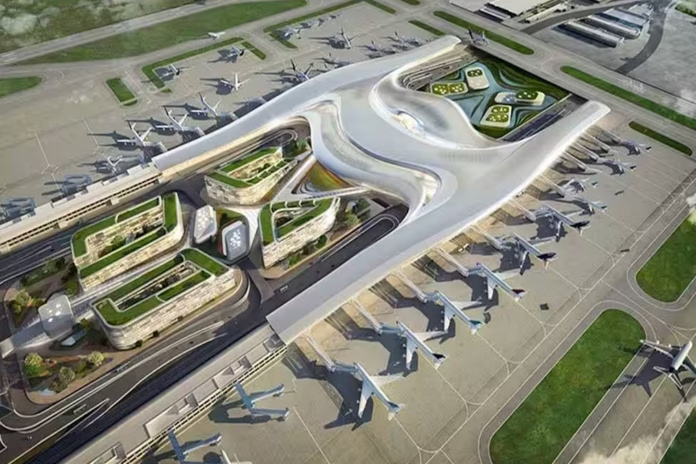
            Navi Mumbai Airport Gears Up for Major Expansion to Handle Growing Aviation Demand. The ongoing development of the Navi Mumbai International Airport (NMIA) is set to significantly transform the region’s aviation infrastructure. In a bid to cater to the rising demand for air travel and aviation services, the airport authorities have begun dismantling structures to make way for a second runway and further enhance the airport’s capacity. This move is a pivotal step towards establishing NMIA as a state-of-the-art hub for both commercial and general aviation.

            NMIA, which is expected to commence domestic flight operations by mid-2025, is undergoing rapid infrastructural upgrades. Among the key developments is the expansion of the runway system, including the construction of a second runway. The first runway, once operational, will be supplemented by the second, allowing the airport to accommodate a greater volume of air traffic and provide an efficient solution to congestion at Mumbai’s city airport. A significant challenge for Mumbai’s city airport, as it continues to handle increasing air traffic, is the limited parking capacity for general aviation aircraft. Currently, small aircraft, including business jets, turboprops, and charter planes, are often parked at distant general aviation bays, far from the main runway. This arrangement not only complicates operations but also fails to meet international standards for general aviation parking.

            To address these issues, most of the general aviation aircraft currently stationed at Mumbai airport will be relocated to the new facilities at NMIA. These facilities, including hangars and parking bays, are designed to cater specifically to private and chartered aircraft, providing much-needed space and ensuring more efficient use of the airport’s infrastructure. The move is expected to ease congestion at the city airport, which struggles with the tight space and growing demand. Capt. Rajesh Bali, Managing Director of the Business Aircraft Operators Association (BAOA), acknowledged the decision to shift general aviation aircraft to NMIA, highlighting that the new airport would be more suited to modern aviation standards. He pointed out that the distance between Mumbai city airport’s runway and the parking bays for general aviation aircraft does not comply with established international guidelines. The design of NMIA, on the other hand, is set to offer optimised layouts, ensuring better efficiency and safety.

            Currently, Mumbai airport accommodates just 24 general aviation aircraft, but this number is expected to grow. With limited space, aircraft often need to be towed into parking slots, which can slow down operations and create additional challenges for the airport staff. NMIA, however, will be equipped with dedicated spaces for a larger fleet, reducing the need for such operational workarounds and improving overall functionality. NMIA’s expansion project is also a response to the growing demand for private and charter aircraft services, as well as the increasing pressure on Mumbai’s city airport. By offering modern and advanced facilities, including more hangars and parking bays, NMIA will not only address these challenges but also enhance the aviation infrastructure for the region. It will provide much-needed relief for the aviation community and enable smoother operations for general aviation operators, many of whom have long awaited the availability of better infrastructure.

            As the airport nears its official opening, its robust infrastructure will be key to accommodating the growth of aviation in Mumbai and beyond. By the end of 2025, NMIA is poised to become a key player in India’s aviation landscape, enhancing connectivity and meeting the growing demands of both commercial and private aviation sectors. With the gradual shift of general aviation operations to the new airport, the region’s aviation infrastructure is set to evolve, marking a new era of seamless and efficient air travel.

            Noida International Airport Faces Challenges with Connectivity and Infrastructure Ahead of Opening

            0
            Noida International Airport Faces Challenges with Connectivity and Infrastructure Ahead of Opening
            Noida International Airport Faces Challenges with Connectivity and Infrastructure Ahead of Opening

            Noida International Airport Faces Challenges with Connectivity and Infrastructure Ahead of Opening

            As Noida International Airport (NIA) gears up for its long-awaited opening in just four months, there’s a growing concern that its infrastructure may not be fully equipped to handle the number of passengers it hopes to attract. While the airport promises to serve as a modern gateway for the region, the lack of sufficient connectivity to key areas in the National Capital Region (NCR) raises questions about how feasible and attractive it will be for travellers.

            Located in Jewar, approximately 90km from Indira Gandhi International (IGI) Airport in Delhi and 60km from Noida City Centre, the airport’s accessibility is currently limited. The situation is compounded by the fact that there are few public transport options connecting Jewar to central NCR, leaving travellers with expensive and time-consuming alternatives. At present, the only viable modes of transport are limited to a handful of private and UP Roadways bus routes. With a target of 5-6 million passengers in its first year, the airport’s feasibility largely depends on its ability to attract passengers despite these transport barriers. Realising the urgency, the authorities have started exploring temporary solutions, such as collaborating with Mahindra Mobility for an airport taxi service, and setting up a dedicated city bus service connecting key NCR locations to the airport. However, these initiatives may not provide an immediate, long-term solution to the transport challenges that the airport faces.

            The lack of a fast, efficient transport system remains the airport’s primary hurdle. While several transport projects, including a 72km rapid rail corridor and a Delhi Metro extension connecting with the Airport Express line, are on the drawing board, these are long-term plans unlikely to materialise before 2030. As a result, the proposed taxi and bus services will become the primary means for travellers to reach the airport. An Uber ride from Noida Sector 52 to the airport, for example, costs over Rs 1,300, which is a significant amount considering it’s nearly half the cost of a domestic flight. With similar fare structures for rides from other NCR locations, passengers are likely to feel discouraged by the additional cost of getting to the airport. Furthermore, the lack of transport options could also limit the airport’s appeal for international passengers, who might instead prefer to fly from IGI, where the connectivity is far superior.

            The city’s connectivity infrastructure is clearly a major concern, with the rapid rail and metro links still years away from completion. The authorities’ push for a 200-vehicle bus fleet that will connect the airport to various regions of NCR is one of the immediate solutions in progress. The bus routes will link the airport to major spots like Botanical Garden Metro Station, Noida Sector 35, and areas in Greater Noida. While this bus service will be crucial in the short term, the delay in metro and rapid rail connections raises doubts about the long-term viability of Noida International Airport as a competitive transport hub. According to experts, a robust public transport system is critical to the airport’s success. S Velmurugan, an expert in traffic engineering, argued that passengers need convenient and affordable access to the airport if it is to succeed. “Public transport, like buses with at least 50 well-connected routes, could alleviate travel woes for middle-class travellers and ensure the airport meets its potential,” he stated.

            With just a few months before the launch, NIA faces an uphill task in bridging the connectivity gap. While the construction of a 750-metre elevated road from the airport to the Yamuna Expressway will improve the final stretch of the journey, it does little to address the lack of connections from Delhi or other major parts of NCR. In stark contrast, Delhi’s IGI Airport enjoys multiple transport links, including the Airport Express Line, buses, and taxis. As the NIA inches closer to its launch, the onus is now on authorities to make good on their promises of seamless connectivity to ensure the airport can fulfil its potential and serve as a viable alternative to IGI. Ultimately, for Noida International Airport to thrive, it needs an efficient, accessible, and affordable transport network that connects it to the wider NCR region. The success of the airport depends on how quickly the infrastructure issues are addressed in the coming months.

            Indian Real Estate PE Investments Surge by 32.5% in FY25 Amid Fewer Deals

              0
              Indian Real Estate PE Investments Surge by 32.5% in FY25 Amid Fewer Deals
              Indian Real Estate PE Investments Surge by 32.5% in FY25 Amid Fewer Deals

              Indian Real Estate PE Investments Surge by 32.5% in FY25 Amid Fewer Deals

              The Indian real estate private equity (PE) landscape has witnessed an intriguing trend in FY25, where the total investment value has seen a substantial uptick, even though the number of deals has dwindled. According to a survey conducted by Anarock Capital, while the number of PE deals in the first nine months of FY25 dropped from 30 in 9M FY24 to 24 in FY25, the total value of these deals increased by 32.5%, reaching an impressive $2.82 billion. This surge in investment, despite fewer transactions, highlights a significant shift in the focus of private equity investors towards high-value deals, with large-scale transactions dominating the market.

              The notable driver behind this increase is the landmark $1.54 billion warehousing deal between Reliance, ADIA, and KKR. This deal, along with another major deal by Blackstone and LOGOS worth $204 million, helped push the industrial and logistics sector to the forefront of private equity investment. These two deals alone accounted for a significant portion of the total investment, with the logistics and warehousing sectors capturing a remarkable 62% of the total PE activity during this period. According to Shobhit Agarwal, this trend underlines the growing importance of logistics infrastructure in India’s rapidly expanding economy, as companies continue to invest in robust supply chains driven by e-commerce, manufacturing, and third-party logistics.

              Interestingly, hybrid deals — which combine both debt and equity — became the dominant transaction structure, making up 55% of the total PE activity in the period. This preference for hybrid transactions reflects the current market dynamics, where investors are seeking a balance between equity and debt to manage risk amid economic uncertainty. Traditional debt and equity deals have become relatively scarce, as high interest rates and geopolitical factors have led to caution among investors. However, with the industrial and logistics sectors thriving, there remains a strong appetite for investment in this space, even amidst challenges.

              A closer look at the geographic distribution of these deals reveals that multi-city transactions are on the rise. The Reliance-ADIA/KKR deal, along with two other multi-city deals, drove the share of such transactions to more than 62%. Bengaluru and Hyderabad emerged as the key cities for these deals, capturing 11% and 10% of the deal share, respectively. Despite this, the office and residential sectors still account for a smaller proportion of the PE pie, with these sectors capturing 14% and 15% of total investments, respectively. The relatively muted activity in the commercial real estate sector can be attributed to concerns over geopolitical risks and high interest rates, which have negatively impacted valuations.

              From a sustainability perspective, the growing interest in industrial and logistics properties is noteworthy. The sector’s strong performance is closely linked to several key drivers, including the booming e-commerce industry and increasing consumer demand. Furthermore, the shift from Grade-B to Grade-A properties signifies a growing emphasis on sustainability and environmental considerations. Investors are keen on properties that not only offer operational efficiency but also adhere to environmental, social, and governance (ESG) standards. This trend aligns with India’s broader goals of promoting sustainable development, as businesses increasingly prioritise sustainability in their operations and investments.

              Overall, while the Indian real estate PE market has seen a reduction in the number of deals, the sharp increase in investment size, particularly in the logistics sector, demonstrates investor confidence in India’s long-term growth potential. As interest rates stabilise and geopolitical concerns ease, it is expected that this growth trajectory will continue, driven by both domestic and foreign investments. The industrial sector, with its strong fundamentals and focus on sustainable, high-quality assets, will remain a key area for investment in the coming years.

              Finding Affordable Flats in Bengaluru for Less Than ₹20,000 Per Month

              0
              Finding Affordable Flats in Bengaluru for Less Than ₹20,000 Per Month
              Finding Affordable Flats in Bengaluru for Less Than ₹20,000 Per Month

              Finding Affordable Flats in Bengaluru for Less Than ₹20,000 Per Month

              The real estate market in Bengaluru has experienced a meteoric rise in rental prices over the past year. Areas once considered affordable, such as Indiranagar and Koramangala, have seen rents soar by 30-40%. However, despite the escalating costs in prime residential zones, there remain a few pockets in the city where one can still rent a flat for less than ₹20,000 per month, albeit with some limitations. For many, especially students and young professionals, finding a rental home within a budget of ₹20,000 has become increasingly challenging, but it’s not entirely out of reach.

              While larger and more modern apartments in central areas are commanding premium rents, smaller units like 1BHKs and studio apartments are still available in certain localities across the city. These units typically range from 300 to 500 square feet and can be found in areas that are less saturated with new developments. Sunil Singh, a real estate expert, notes that although the availability of affordable units is limited, these smaller apartments do cater to the demand from those seeking affordable housing in a city that is seeing an influx of professionals from across the country and abroad. Many of these units are located in the outskirts or emerging areas of the city, where rents are still somewhat lower.

              North Bengaluru, in particular, has become an increasingly popular choice for renters seeking affordability. The region, known for its rapid growth post-pandemic, has experienced a significant surge in demand for residential properties, especially among IT professionals and students. Key micro-markets like Hennur Road, Yelahanka, Jakkur, and Hebbal have emerged as sought-after rental hubs. Local brokers reveal that while a 1BHK near Hennur Road can cost around ₹25,000, these areas are still relatively more affordable than their counterparts in the central business districts. However, the trade-off is the distance from the city centre—roughly 30 km—which might deter some renters looking for proximity to Bengaluru’s bustling IT corridors.

              On the other hand, areas closer to Bengaluru’s key IT hubs, such as Indiranagar and Koramangala, present higher rental prices. A typical 1BHK in these areas, measuring around 400-450 square feet, now costs between ₹20,000 and ₹25,000 per month, with fully furnished units pushing the price to ₹30,000 or more. Despite the rising rental costs in these prime locations, demand remains strong due to the proximity to major business districts and the overall convenience these areas offer. According to Kiran Kumar, Vice President of Hanu Reddy Realty, a 1BHK in Indiranagar recently rented out for ₹30,000, reflecting the high demand in the locality. The ongoing shift towards hybrid work arrangements, combined with the city’s reputation as a tech hub, has further exacerbated the demand for quality living spaces near corporate offices.

              However, there is hope for those who are more flexible with location and size. South Bengaluru, particularly areas such as Kanakapura Road and Mysore Road, offer rental units for as low as ₹15,000 to ₹20,000 per month. These areas are seeing a notable increase in demand for studio apartments, with BTM Layout and Koramangala also becoming hotspots for renters on a budget. A typical studio apartment in these parts, ranging from 300 to 400 square feet, can be rented for as little as ₹20,000 per month, with additional amenities such as a swimming pool and gym, making it an attractive option for single professionals or students.

              While it’s clear that Bengaluru’s real estate market is evolving, the trend towards more affordable options in peripheral areas speaks to a larger trend of suburbanisation in major cities. From a sustainability perspective, the increased demand for rental homes in the outer reaches of Bengaluru suggests a shift towards greener urban planning, where less congested areas with better infrastructure may reduce the city’s overall carbon footprint. Additionally, with new developments, including the expansion of the metro, these areas may become even more accessible, improving both the quality of life and the environmental footprint.

              Ultimately, while it’s still possible to find apartments under ₹20,000 in Bengaluru, renters will need to look beyond the popular, centrally-located areas and explore emerging markets. As the city’s rental market continues to adapt to the changing needs of its population, we may see more areas catering to budget-conscious residents, offering affordable and sustainable living options.