Home Blog Page 354

Kolkata Metro to Introduce Extra Services on North-South Corridor from January 13

    0
    Kolkata Metro to Run Additional Services Along North-South Corridor Starting January 13
    Kolkata Metro to Run Additional Services Along North-South Corridor Starting January 13

    Kolkata Metro to Introduce Extra Services on North-South Corridor from January 13

    Kolkata Metro is set to introduce 14 additional services along the North-South corridor of the Blue Line, starting from January 13, 2025. This move aims to reduce the overcrowding during peak hours and improve the commuting experience for passengers. The new services, scheduled on a trial basis, will run from Monday to Saturday and will provide a much-needed boost to the city’s public transport infrastructure.

    The new timetable will see seven up and down services added during the morning rush (from 9 am to 11 am) and evening peak hours (from 5 pm to 8 pm). With the added services, passengers travelling between Dum Dum and Kavi Subhash stations will now experience metro trains running at intervals of just six minutes, significantly reducing waiting times during the busiest periods. For commuters on the Blue Line, this addition promises a welcome relief from the usual congestion. The increased frequency during rush hours will help manage the growing demand for metro services, especially with Kolkata’s population steadily increasing and urban mobility becoming a challenge.

    In addition to the new peak-hour services, special night services will also be available along the Blue Line. These night-time services will operate at 10.40 pm from Monday to Friday between Kavi Subhash and Dum Dum stations, providing more flexibility for late-night commuters. The availability of these special services is expected to make the metro a more convenient option for those who need to travel after regular service hours. The decision to introduce these additional services comes in response to growing passenger demand and a broader effort to improve the city’s metro network. Kolkata Metro has been making several advancements to cater to the needs of its passengers, and these changes are expected to have a positive impact on the daily lives of many.

    This move will not only ease the burden on commuters but also encourage more people to use public transport, helping alleviate traffic congestion and reduce carbon emissions in the long term. As more people opt for metro services, the environmental benefits of reduced road traffic will become more apparent. The trial basis for these additional services is a crucial step towards assessing the effectiveness of the changes. If successful, the new schedule could become permanent, setting a precedent for more improvements in the city’s metro network. With Kolkata Metro continuing to evolve, the introduction of these additional services is a significant milestone in its journey to offer better, faster, and more efficient travel options for the city’s residents. The improvements are expected to make public transport a more viable and comfortable choice for many, potentially reshaping the daily commuting landscape in Kolkata for the better.

    CRISIL Predicts 8-9% Growth in India’s Steel Demand in 2025

    CRISIL Predicts 8-9% Growth in India’s Steel Demand in 2025
    CRISIL Predicts 8-9% Growth in India’s Steel Demand in 2025

    CRISIL Predicts 8-9% Growth in India’s Steel Demand in 2025

    India is expected to continue outpacing other major steel-consuming nations in terms of demand growth in 2025, with an anticipated increase of 8-9 percent, according to a recent report by CRISIL Market Intelligence and Analytics. This robust demand growth is attributed to a marked shift towards steel-intensive construction, particularly in housing and infrastructure sectors, as well as heightened demand from engineering, packaging, and other industrial segments.

    The report, however, notes that while the demand for steel is poised to rise significantly, domestic supply could remain a concern. It highlights that in 2024, steel demand in India increased by an impressive 11 percent, but there were challenges on the production front. A key factor contributing to weaker growth was the rise in competitive imports and a decline in steel exports. In particular, finished steel imports surged by 24.5 percent, while steel exports dropped by 6.4 percent, leading to an additional 3.2 million tonnes of finished steel entering the domestic market. This surge in imports accounted for 2 percent of India’s total finished steel demand. The report also reveals a significant increase in finished steel imports from key global exporters. China, traditionally an exporter of value-added products such as galvanised, coated, and stainless steel, has seen a dramatic rise in its steel exports to India. Between 2022 and 2024, finished steel imports from China more than doubled, with hot-rolled coil (HRC) imports jumping 28-fold.

    HRC is used as raw material for producing downstream steel products, and the imports, often priced lower than domestic steel, have exerted downward pressure on domestic steel prices. Similarly, imports from Japan and Vietnam have risen significantly, with Japan’s finished steel imports increasing 2.8-fold and HRC imports soaring 16.6-fold. Finished steel imports from Vietnam surged eightfold, with HRC imports increasing by 27 times. The influx of imports has contributed to a decline in domestic steel prices, with HRC prices falling by 9 percent and cold-rolled coil (CRC) prices dropping by 7 percent in 2024. This decline in prices has led to slower top-line growth for domestic steel manufacturers. However, the report notes that the decreasing prices of coking coal, which dropped by 12 percent in 2024, have helped ease margin pressures for steel producers.

    Iron ore prices, meanwhile, are expected to rise by 9-10 percent in the upcoming period, which could further impact steel production costs. Notably, the price of Chinese HRC exports also fell by 12 percent in 2024, continuing to remain lower than domestic mill prices, adding to the competitive pressure on India’s steel industry. The report suggests that the imposition of a safeguard duty on steel imports, as proposed by the industry, could offer a positive boost to domestic steel prices in 2025. If implemented, steel prices are expected to rise significantly, particularly in the first half of the year.

    Ludhiana’s Bold 2025 Vision for Infrastructure and Public Services Development

      0
      Ludhiana’s Ambitious 2025 Plans for Infrastructure and Public Services
      Ludhiana’s Ambitious 2025 Plans for Infrastructure and Public Services

      Ludhiana’s Bold 2025 Vision for Infrastructure and Public Services Development

      Ludhiana, a key industrial hub in Punjab, is set to undergo a transformative phase in 2025, with a series of ambitious infrastructure projects aimed at enhancing connectivity, improving public services, and uplifting the quality of life for its residents. The city’s strategic developments will bolster its position as a commercial and logistics powerhouse, attracting investments and setting a benchmark for urban growth in the state.

      A major milestone in Ludhiana’s infrastructure upgrade is the anticipated launch of the Halwara International Airport, expected to significantly improve air connectivity and foster economic growth. The airport is poised to not only boost tourism but also enhance trade and logistical operations, giving a much-needed impetus to the region’s industrial landscape. This will create new opportunities for residents, with better travel options and a more connected city.

      In addition to the airport, several other key projects are in the pipeline. The Ludhiana railway station is set to undergo a major overhaul, aligning with the city’s aspirations to become a smart city. The upgrade of the city’s roads, along with the construction of overbridges and underpasses, will alleviate traffic congestion, enhancing mobility within the city and improving access to neighbouring areas. However, to truly modernise the city, these infrastructure projects must be accompanied by a focus on sustainability and efficiency. Among the most pressing needs in Ludhiana is the improvement of the public transportation system. Residents have voiced the need for a well-connected metro network, along with the introduction of smaller buses within the city to ease traffic. Currently, the road network faces congestion, exacerbated by the proliferation of e-rickshaws. These vehicles, often found near busy spots like the railway station, are seen as a contributing factor to traffic chaos. A rethinking of the public transport system, alongside stricter regulation of e-rickshaws, could provide smoother commutes for everyone.

      Another significant aspect of Ludhiana’s 2025 plans involves bolstering healthcare facilities. The city requires more advanced, well-equipped hospitals to cater to the growing population, along with better waste management and the cleaning of the Buddha Nullah. These efforts will not only ensure access to quality care but also contribute to a healthier, cleaner environment. Enhancing the city’s healthcare infrastructure is crucial as it serves as a lifeline for thousands, especially for lower-income residents who rely on affordable, accessible services. Ludhiana’s transformation is not limited to infrastructure alone. Environmental sustainability is a key focus, with plans to promote renewable energy sources, reduce industrial pollution, and encourage greener practices. This will help the city mitigate its environmental impact and improve air and water quality, making it a more liveable and eco-friendly urban space.

      On the socio-economic front, authorities are emphasising vocational training to better equip the workforce for the evolving job market. Strengthening industry-academia collaborations will also play a pivotal role in ensuring a skilled workforce, prepared to meet the demands of future industries. However, the city must also address long-standing challenges such as encroachments, stray animals, and inadequate public amenities. There are calls to relocate the non-operational carcass plant and to solve the issue of abandoned infrastructure, such as the stalled City Centre project. Despite these challenges, residents remain optimistic, confident that Ludhiana will emerge as a modern, well-connected, and sustainable city by 2025. With a concerted effort from local authorities, along with active participation from the community, Ludhiana is on track to becoming a city of the future—vibrant, thriving, and forward-looking.

      SAIL, John Cockerill to Invest ₹6,000 Crore in Steel Plant

      SAIL, John Cockerill to Invest ₹6,000 Crore in Steel Plant
      SAIL, John Cockerill to Invest ₹6,000 Crore in Steel Plant

      SAIL, John Cockerill to Invest ₹6,000 Crore in Steel Plant

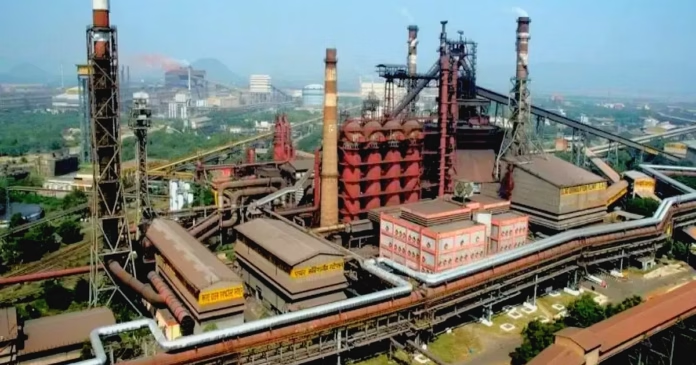
      In a landmark collaboration, Steel Authority of India Limited (SAIL) and John Cockerill India are set to jointly invest approximately ₹6,000 crore in the establishment of a downstream steel plant. The facility will focus on the production of cold-rolled grain-oriented (CRGO) and cold-rolled non-oriented (CRNO) electrical steels, which are critical components in transformer and generator manufacturing. This initiative is expected to significantly reduce India’s dependence on imports for these vital materials.

      The raw material for the new plant—hot-rolled coils (HRCs)—will be supplied by SAIL. The downstream steel unit is anticipated to be set up at one of SAIL’s existing production sites, though the final location decision is yet to be confirmed. The project is expected to be completed between 2027 and 2029, according to sources familiar with the development. This joint venture follows the signing of a memorandum of understanding (MoU) between SAIL and John Cockerill India in November 2024, focusing on advanced green steel technologies. The partnership aims to promote the development of sustainable steel solutions in India, with a particular emphasis on carbon steel, green steel, and silicon steel production.

      The downstream plant is expected to have a production capacity of 1.5 million tonnes per annum (MTPA). SAIL also plans to set up an electric arc furnace as part of its green steel initiative, which will be used to produce cold-rolled steel sheets. This aligns with the government’s new definition of green steel, which is defined as steel produced with a CO2 equivalent emission intensity of less than 2.2 tonnes of CO2 per tonne of finished steel. Given the steel industry’s high carbon footprint, this move is part of India’s broader efforts to reduce emissions and promote sustainability within the sector.

      In an effort to transform India’s iron and steel production, the MoU outlines a roadmap where 2025 will focus on feasibility studies, 2026 will be dedicated to legal and financing frameworks, and the formal project kick-off is expected in 2027. According to Michael Kotas, Managing Director of John Cockerill India, this MoU marks the beginning of extensive discussions between both companies, as the project needs to make economic sense for both parties. Currently, India imports the majority of its CRGO sheets, consuming around 400,000 tonnes annually, of which only 50,000 tonnes is produced domestically. The new plant will thus help to meet the growing demand for these specialised steel products, positioning India as a key player in the global market for electrical steels.

      Air India Takes Off After Tata Acquisition, Expanding Globally and Strengthening Domestic Presence

        0
        Air India Soars After Tata Acquisition with Global Expansion and Stronger Domestic Focus
        Air India Soars After Tata Acquisition with Global Expansion and Stronger Domestic Focus

        Air India Takes Off After Tata Acquisition, Expanding Globally and Strengthening Domestic Presence

        Air India, the airline has made remarkable strides in reshaping its strategy, focusing on expansion, market segmentation, and reinforcing its position as a major player in both domestic and international aviation. Air India is set to challenge foreign carriers on international routes, while also addressing the domestic market with a renewed approach to its operations.

        A key part of this transformation is the clear segregation of roles between Air India and its low-cost arm, Air India Express. With a combined fleet nearing 300 aircraft, Air India aims to dominate the international market and cater to premium passengers on domestic routes, while Air India Express will focus on short-haul international flights and the remaining domestic routes. This strategic realignment has already reduced route overlaps significantly, cutting the overlap from 20% to just 12%, and in the short-haul segment, this reduction is even more pronounced—from 26% to 5%. Nipun Aggarwal, Chief Commercial Officer of Air India, has emphasised the importance of focusing on the airline’s hubs in Delhi, Mumbai, and Bengaluru. These hubs will serve as central points for aggregating passengers flying from Southeast Asia, the Far East, and the SAARC region. Air India aims to connect these passengers to long-haul markets such as Europe, the United States, and Canada. This approach will allow Air India to compete directly with West Asian hubs like Dubai, Abu Dhabi, and Doha.

        This hub strategy is not only aimed at enhancing convenience for passengers but also at increasing Air India’s long-haul market share. The airline has noted that the majority of international passengers—76%—opt for connecting flights rather than direct routes. With Air India currently holding a monopoly on long-haul flights to Western Europe, the US, and Canada, the airline is in a strong position to leverage this demand. Despite this, Indian carriers currently hold just 21% of the long-haul market share, contributing over 50% of Air India’s total revenue from international operations. In line with its ambitious growth plans, Air India is looking to add 570 new aircraft to its fleet over the next decade. This expansion will be powered by orders with Boeing and Airbus, following a successful addition of over 90 planes in the past three years, including narrow-body and wide-body aircraft. This marks a faster growth rate than that of Vistara during its first ten years of operation.

        A major benefit of the integration between Air India and Air India Express is the rollout of a unified loyalty programme, which has already seen significant growth in enrolment—from 30,000 to 150,000 new members per month. This will help Air India further consolidate its position in the domestic market while enhancing customer loyalty across its service offerings. With upcoming greenfield airports in Noida and Navi Mumbai, Air India is also working to optimise its operations in these high-capacity regions. Aggarwal acknowledged the challenges of operating from two separate airports in the same metropolitan area but remains confident that creative strategies will be employed to balance capacity and optimise operations at Delhi and Mumbai airports. Air India’s plans for expansion under Tata Group’s leadership mark the beginning of a new era for Indian aviation. With a clear strategy for both domestic and international markets, a growing fleet, and a focus on improving passenger experience, Air India is positioning itself as a global competitor ready to take on the challenges of the future.

        28 Workers Rescued from Kannauj Railway Station Collapse Following 16-Hour Rescue Operation

          0
          28 Workers Rescued in Kannauj Railway Station Collapse After 16-Hour Operation
          28 Workers Rescued in Kannauj Railway Station Collapse After 16-Hour Operation

          28 Workers Rescued from Kannauj Railway Station Collapse Following 16-Hour Rescue Operation

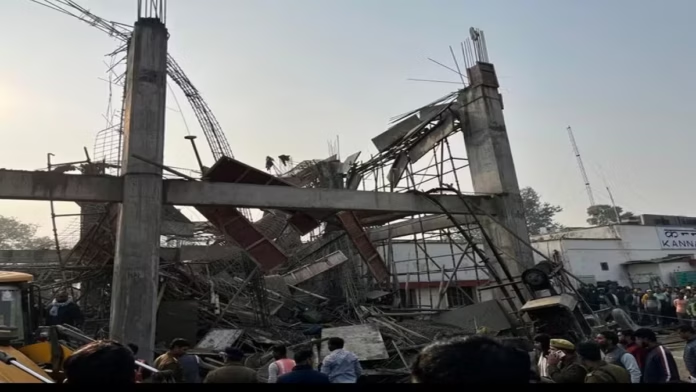
          A dramatic rescue operation at Kannauj Railway Station concluded in the early hours of Sunday morning with the successful rescue of 28 workers trapped under debris after the collapse of a building. The incident, which occurred on Saturday afternoon, has drawn significant attention and relief, with no fatalities reported despite the severity of the collapse.

          The collapse took place during construction work for the Atal Mission for Rejuvenation and Urban Transformation (AMRUT) project, aimed at upgrading and improving the infrastructure at Kannauj Railway Station. The building’s shuttering structure, which was being installed at the station premises, collapsed unexpectedly while workers were engaged in their duties. Fortunately, the timely and coordinated efforts of rescue teams ensured that all 28 workers were safely pulled out from under the debris following a grueling 16-hour operation. The rescue mission was led by teams from both the National and State Disaster Response Forces, alongside railway personnel. The response teams worked tirelessly through the night, clearing debris and ensuring that every worker was accounted for and safely evacuated. The workers were quickly transferred to a nearby hospital for treatment, though, remarkably, no casualties were reported. Initial reports suggest that the workers sustained injuries ranging from minor to serious, and all of them are expected to recover.

          District Magistrate Shubhrant Kumar Shukl visited the site on Sunday morning, expressing relief at the successful operation and the fact that no lives had been lost. The incident raised concerns about safety during construction, particularly under such large-scale infrastructure projects, but the quick rescue response provided some comfort to the public. CCTV footage from the site shows a labourer attempting to fix the shuttering just moments before the roof collapsed. The footage suggests that a beam being carried by the worker may have caused the shuttering to slip, leading to the sudden collapse. The cause of the incident, however, remains under investigation.

          The North Eastern Railway (NER) has launched an official investigation into the collapse and set up a three-member committee to look into the cause of the accident. The committee is composed of senior railway officials, including the Chief Engineer for Planning and Design, the Additional Divisional Railway Manager (Izzatnagar), and the Chief Security Commissioner of the Railway Protection Force (RPF). The findings of this investigation are expected to provide clarity on whether the incident was caused by human error, structural failure, or other factors. Public opinion around the incident has largely been one of shock and concern, particularly about worker safety in such critical infrastructure projects. The people of Kannauj, as well as wider railway officials, have expressed both relief and praise for the quick response, but many are also calling for a thorough review of construction safety standards to prevent future accidents.

          To mitigate the impact of the incident on the affected workers, NER officials have announced ex gratia compensation. Workers who sustained minor injuries will receive Rs 50,000, while those with more serious injuries will be compensated with amounts up to Rs 2.5 lakh. This compensation is aimed at providing immediate relief to the workers and their families, many of whom rely on these construction jobs for their livelihoods. The Kannauj Railway Station building collapse has sparked important conversations about worker safety in large infrastructure projects, and it remains to be seen how the findings of the ongoing investigation will influence future practices in construction within the railway sector. The priority, for now, is ensuring the well-being of those affected, alongside a commitment to preventing such incidents in the future.

          Telangana’s Steel Plant Dream: Centre Suggests AP Model

          Telangana’s Steel Plant Dream: Centre Suggests AP Model
          Telangana’s Steel Plant Dream: Centre Suggests AP Model

          Telangana’s Steel Plant Dream: Centre Suggests AP Model

          Telangana’s long-standing wait for the establishment of an integrated steel plant, promised during the bifurcation of states a decade ago, continues to face hurdles. In a significant development, the Union Government has now advised Telangana to follow the model adopted by Andhra Pradesh to set up the steel plant. This approach involves the state government partnering with a private investor to initiate the project, rather than relying on public sector undertakings.

          The issue was once again raised by Telangana’s Chief Minister, A. Revanth Reddy, during a recent visit to Delhi, where he sought clarity on the plant’s long-delayed progress. Despite the commitments made under the Andhra Pradesh Reorganisation Act of 2014, the plant has yet to materialise in the state. Sources have revealed that the Centre has urged the state government to look into private-public partnership models, similar to the one employed by Andhra Pradesh for its own steel plant. Specifically, Telangana has been encouraged to collaborate with a private investor to establish the steel mill at one of the two shortlisted sites near Mahbubabad, an area rich in iron ore deposits, including those from the Ramandurg and Donimalai mines. Iron ore, a critical feedstock for steel production, is essential in large quantities for such a project, with the ratio being roughly 1.5 tonnes of ore for every tonne of steel produced.

          In Andhra Pradesh, the government has been working with AMNS India, a joint venture between ArcelorMittal and Nippon Steel, to develop a massive 17.8 million tonnes per annum (mtpa) steel plant. This greenfield unit, with an estimated investment of ₹1.5 lakh crore, is expected to be developed in two phases. The project has garnered significant attention, with meetings held between the state government and Steel Ministry officials, although no official announcements have been made yet. At a recent meeting between Telangana government representatives and officials from the Union Home Ministry, it was discussed that the Ministry of Steel might play a role in facilitating a feasibility study by Steel Authority of India Limited (SAIL) for the proposed steel plant. Alternatively, Telangana could explore the possibility of partnering with a private player, akin to Andhra Pradesh’s model, to bring the project to fruition.

          However, there has been resistance to certain earlier proposals, such as setting up a plant in Khammam district, which SAIL deemed unfeasible. According to a senior Ministry official, the earlier studies conducted by consultancy firm MECON had suggested Mahbubabad as a more viable location for the plant. Additionally, in 2019, Mahbubnagar, closer to the iron ore-rich regions of Karnataka, was also considered a potential site. In the case of the two shortlisted locations in Mahbubabad, the Telangana government has expressed its preference for securing captive mines through the Mine Development and Operations (MDO) route for one of the sites, while for the other, it has proposed sourcing iron ore at market prices. The Mines Ministry has also been asked to consider reserving approximately 176 million tonnes of iron ore for the Telangana Mineral Development Corporation (TGMDC) Ltd., which would support the steel plant’s feedstock requirements. Despite the ongoing discussions and feasibility studies, the state remains in a state of anticipation, waiting for concrete action on a project that holds the potential to significantly boost Telangana’s industrial landscape and employment opportunities.

          Kolkata Metro’s Planned Purple Line Extension to Eden Gardens to Enhance Connectivity

            0
            Kolkata Metro's Proposed Extension of Purple Line to Eden Gardens Set to Boost Connectivity
            Kolkata Metro's Proposed Extension of Purple Line to Eden Gardens Set to Boost Connectivity

            Kolkata Metro’s Planned Purple Line Extension to Eden Gardens to Enhance Connectivity

            The Kolkata Metro’s latest proposal to extend the Joka-Esplanade Purple Line by an additional 1.6 km to Eden Gardens is garnering excitement among commuters, sports fans, and residents alike. This extension will significantly improve transportation access, especially for people working and living in key areas like Strand Road, Babughat, Calcutta High Court, and BBD Bag, while also benefiting cricket and football enthusiasts attending events at Eden Gardens.

            Currently, the 14.4-km Purple Line connects Joka and Esplanade, operating in two sections – an elevated 8-km stretch and an underground 5-km corridor. The proposal to extend the line further to Eden Gardens would place a metro station right at the iconic stadium, benefiting fans attending matches as well as office-goers in the surrounding areas. The extension would enhance access to vital locations, such as Millennium Park and the nearby Mohun Bagan football ground, making it an attractive addition to the city’s transportation network.

            Metro Railway sources indicate that the proposal has already been submitted to the Railway Board for approval. The initial plan was to link Eden Gardens to the Esplanade hub via a long subway. However, this new extension proposal, which will include a 1.6 km tunnel, is seen as a more effective solution for streamlining access. Unlike the subway plan, the new tunnel would offer easier and quicker access for commuters, reducing the need for a lengthy underground walk. From an environmental perspective, the revised proposal could also benefit the city by preserving several trees near Manohar Das Tarag, which would have been affected by the initial plan. By shifting the crossover point of the underground tracks closer to Strand Road, the metro authorities aim to minimise the environmental impact while still achieving their goal of improved connectivity. The plan also aligns with the vision of creating a major metro hub at Esplanade, which will feature commercial spaces and underground parking, ensuring that the central station remains a crucial node in the Purple Line network. As one of the busiest corridors, Esplanade will continue to serve as the primary station, while the Eden Gardens extension acts as an offshoot, further linking the city’s diverse regions.

            For passengers, this extension will provide a much-needed boost in terms of convenience, with direct metro access to high-traffic areas like the high court, business districts, and the iconic stadium. Metro authorities estimate that the system already serves around 7.5 lakh passengers daily, and the extension to Eden Gardens will only further increase this figure, improving the efficiency and reach of Kolkata’s public transport network. Commuters and sports fans are expected to benefit the most from this development. With Kolkata being a hub for cricket and football, access to Eden Gardens via metro will reduce traffic congestion and allow fans to attend matches without worrying about parking or navigating crowded streets. Moreover, daily office-goers will enjoy faster, more efficient transport, making their commutes more comfortable and convenient. The proposed extension of the Joka-Esplanade Purple Line to Eden Gardens is a step in the right direction for Kolkata’s transportation system. The plan has the potential to transform how people move around the city, bringing improved connectivity, environmental considerations, and greater convenience to the people of Kolkata. If approved, it could become a game-changer for both the city’s public transit infrastructure and its sports culture.

            Gautam Adani Unveils Mega ₹65,000 Cr Projects in Chhattisgarh

            Gautam Adani Unveils Mega ₹65,000 Cr Projects in Chhattisgarh
            Gautam Adani Unveils Mega ₹65,000 Cr Projects in Chhattisgarh

            Gautam Adani Unveils Mega ₹65,000 Cr Projects in Chhattisgarh

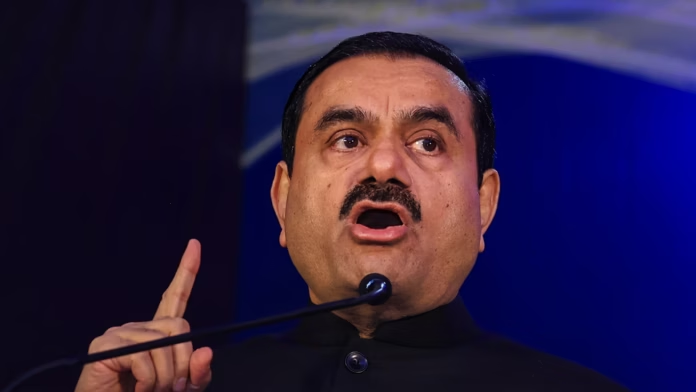
            In a significant development for Chhattisgarh’s industrial landscape, Gautam Adani, the Chairman of the Adani Group, has announced a monumental ₹65,000 crore investment in the state’s energy and cement sectors. This major infusion will be focused on expanding the group’s power generation capacity and cement manufacturing units, promising a substantial boost to the state’s economy.

            During a key meeting with Chhattisgarh Chief Minister Vishnu Deo Sai on 12th January, 2025, Adani confirmed that ₹60,000 crore will be allocated towards the expansion of the Adani Group’s existing power plants in Raipur, Korba, and Raigarh. This expansion is expected to augment the state’s total power generation capacity by an additional 6,120 MW, thereby addressing growing energy demands and fostering long-term industrial growth. Alongside the power sector, the Adani Group has also earmarked ₹5,000 crore for the development of its cement plants in the state. This expansion will not only strengthen the group’s position in the cement industry but also contribute significantly to Chhattisgarh’s infrastructure development.

            In a forward-looking move, Adani has pledged an additional ₹10,000 crore over the next four years to support initiatives in critical areas such as education, healthcare, skill development, and tourism under the Adani Group’s Corporate Social Responsibility (CSR) programme. This gesture aligns with the state’s long-term goals of sustainable development and socio-economic progress. The meeting also touched upon other potential collaborations, including the manufacturing of defence-related equipment and the establishment of data centres, along with a proposed Global Capability Centre in Chhattisgarh. These ventures could further enhance the state’s industrial ecosystem and create significant employment opportunities. This massive investment is seen as a critical step in strengthening Chhattisgarh’s industrial base, attracting further investments, and generating jobs. With this commitment, the Adani Group is positioning itself as a key partner in the state’s growth story, paving the way for an industrial renaissance in the region.

            NCLAT Approves Merger of Indiabulls Real Estate and Embassy Group, Forming a Pan-India Real Estate Giant

              0
              NCLAT Clears Indiabulls Real Estate and Embassy Group Merger, Creating a Pan-India Real Estate Player
              NCLAT Clears Indiabulls Real Estate and Embassy Group Merger, Creating a Pan-India Real Estate Player

              NCLAT Approves Merger of Indiabulls Real Estate and Embassy Group, Forming a Pan-India Real Estate Giant

              The National Company Law Appellate Tribunal (NCLAT) has cleared the way for the merger between Indiabulls Real Estate Limited (IBREL) and Embassy Group. The approval from NCLAT comes as a major relief to both Indiabulls and Embassy Group after the Chandigarh bench of the National Company Law Tribunal (NCLT) had earlier blocked the merger in May 2023.

              The merger, which was initially delayed for nearly 18 months, had already received approval from various regulatory bodies, including the Competition Commission of India (CCI), stock exchanges, and shareholders. However, the NCLT had rejected the merger due to objections raised by the Income Tax Department concerning the valuation and swap ratio of shares. The tax department had expressed concerns over the methodology used to value the companies involved, as well as discrepancies in the valuation process. The NCLAT, however, overturned the NCLT’s decision, ruling that the valuation done by experts using the Discounted Cash Flow (DCF) method was valid. This method is widely recognised in the industry for its accuracy in determining the value of shares. The NCLAT also observed that the objections raised by the Income Tax Department had been addressed, as the profit-sharing ratio of the joint venture partner in the Cornerstone Project had been revised to ensure consistency in the project’s cash flow.

              The NCLAT’s decision is seen as a win for the companies involved, especially as it marks the end of a prolonged legal battle. Indiabulls Real Estate, now operating under the name Equinox India Developments, had sought approval for the amalgamation with two other companies – NAM Estates and Embassy One Commercial Property Developments (EOCPDPL). The merger aims to create a stronger, Pan-India real estate entity with a robust presence in both North and South India. Commenting on the ruling, a spokesperson for Indiabulls Real Estate expressed satisfaction with the NCLAT’s decision, stating that it would help create a stronger, more competitive real estate player. The merger would facilitate the expansion of the group’s footprint across the country, leveraging both its existing operations and the new assets brought in through the merger. From a public perspective, the merger has been widely supported as a strategic move that will create synergies across both regions. Real estate experts believe that the merged entity will be better positioned to compete with other major players in the market, particularly given the scale of the new, diversified portfolio of assets.

              The ruling by the NCLAT also serves as a reminder of the challenges companies face when navigating regulatory approvals and valuations during mergers and acquisitions. While the merger has now been cleared, it highlights the importance of due diligence and transparency in corporate transactions, especially when it involves multiple stakeholders and regulatory bodies. This development is expected to benefit shareholders, employees, and stakeholders of all three companies involved. The merger will allow for improved operational efficiencies, better access to capital, and a more extensive portfolio of commercial and residential properties across India. The NCLAT’s decision is a critical milestone for the real estate industry, reinforcing the regulatory framework that governs mergers and acquisitions. It also marks the beginning of a new chapter for Indiabulls Real Estate and Embassy Group, as they combine forces to create a stronger Pan-India real estate player capable of taking on the challenges of an ever-evolving market.