Home Blog Page 359

Damaged Roads Leading to Railway Crossing Restored to Smooth Condition

0
Damaged Roads Leading to Railway Crossing Restored to Smooth Condition

Damaged Roads Leading to Railway Crossing Restored to Smooth Condition

The battered roads leading to the Vellakinaru-Saravanampatti railway level crossing in Coimbatore have been repaired, bringing relief to the thousands of motorists who had long faced inconvenience and safety risks. The resurfacing was done after significant pressure from local residents and continuous petitions to railway authorities.

The issue had been ongoing for months. Locals, particularly those in the Podanur area, had repeatedly voiced concerns about the poor condition of the roads, filled with large potholes that caused accidents and heavy traffic jams, particularly during peak hours. With an average of 3,000 vehicles crossing the stretch daily, the road’s deterioration had become a significant problem. Traffic congestion often stretched for over a kilometre, causing delays and posing dangers to commuters.

M. Devendran, Secretary of the Coimbatore District Road Protection Committee, recalled how the committee had approached the Railway Assistant Divisional Engineer in Podanur several times since September 2024. Despite these repeated requests, there was initially no response from the railway authorities. This only added to the frustration of local residents who had to endure unsafe driving conditions. The breakthrough came after the public petition gathered significant support, including signatures from concerned citizens. The railway authorities, in response to mounting pressure, committed to fixing the roads. On January 9, 2025, the potholes were filled with concrete, and traffic was temporarily diverted to the nearby Urumandampalayam route while repairs were carried out.

Locals are relieved by the timely intervention, but many still feel that the problem could have been addressed sooner. As Devendran pointed out, the absence of a timely response from the authorities contributed to a situation where commuters had to endure not just long traffic jams but also an increasing number of accidents. For residents like Pradeep Kumar, a daily commuter, the repairs come as a welcome change. “It’s been a nightmare driving on these roads for months. I’ve seen several accidents happen, and it’s only because the roads were in such bad shape,” he said. “Hopefully, this repair work will be maintained, and we won’t have to face the same issues again.”

However, while the repairs are a relief, many still feel that road safety and infrastructure maintenance need more attention. The repair of these roads comes at a time when the nation is also grappling with broader issues of road construction delays, particularly due to land acquisition problems. A report by Deloitte’s Bhavik Damodar highlighted that delays in land acquisition were slowing down the overall pace of road construction, with many expressway projects facing similar hurdles. This situation underscores the urgent need for better road safety measures and efficient responses from authorities to address infrastructure problems. With significant investments earmarked for road projects in the 2024-25 Union Budget, there is hope that the pace of road repairs and new developments will accelerate across the country. For now, residents of Podanur and surrounding areas are breathing easier, knowing that the immediate road safety issues have been addressed, thanks to the power of collective action and public pressure.

Simplified Approach to Real Estate Investment Opportunities in India

    0
    Simplified Approach to Real Estate Investment Opportunities in India
    Simplified Approach to Real Estate Investment Opportunities in India

    Simplified Approach to Real Estate Investment Opportunities in India

    Real estate investment is a sought-after opportunity for many, offering long-term financial growth. However, navigating through the complexities of the property market has often posed challenges for both seasoned investors and first-time buyers. The landscape is evolving, and real estate investment is now more accessible than ever, thanks to a growing focus on simplifying processes and enhancing transparency. This shift has been particularly evident in India, where a dynamic property market continues to witness a surge in demand, creating opportunities for profitable investments.

    Several factors have combined to make real estate investment easier than ever. First and foremost, advancements in technology have made property transactions more streamlined. Online platforms now offer a wealth of information, from market insights and legal frameworks to the availability of properties that match specific investment criteria. This digital shift has allowed potential investors to explore various avenues of investment—from residential properties and commercial spaces to land and mixed-use developments—all from the comfort of their homes. This approach not only saves time but also ensures that buyers can make well-informed decisions.

    Moreover, the introduction of regulations like the Real Estate (Regulation and Development) Act, 2016 (RERA) has further increased transparency within the sector. RERA’s primary objective is to protect homebuyers by ensuring that developers adhere to project timelines and quality standards. By requiring developers to register their projects with the regulator and provide detailed project plans, buyers can feel more secure knowing that their investments are protected. This legal safeguard plays a crucial role in boosting investor confidence, as it eliminates much of the uncertainty and risks previously associated with real estate transactions.

    However, the true allure of real estate investment goes beyond the ease of the transaction and regulatory protections. The sector’s emphasis on sustainable development is rapidly gaining traction, offering a new dimension to investments. Many developers are now focusing on eco-friendly construction practices, offering green building certifications and incorporating renewable energy solutions. From water conservation to waste management and energy-efficient designs, sustainable real estate is not just about the environment; it’s also about ensuring the long-term viability of the property. Investors are increasingly recognising that properties with sustainable features not only contribute to the well-being of the planet but also deliver better returns by attracting environmentally conscious tenants and buyers.

    With urbanisation on the rise, demand for real estate is expected to grow exponentially. Cities are expanding rapidly, and with it, the need for residential, commercial, and mixed-use developments has surged. Regions that were once considered peripheral are now experiencing unprecedented growth. This expansion presents a unique opportunity for investors looking to capitalise on emerging markets. Investing in these up-and-coming regions offers the potential for significant capital appreciation, with the promise of long-term returns. Furthermore, many of these developments are designed with sustainability at their core, contributing to the creation of smart, green cities that offer an enhanced quality of life.

    As the real estate sector continues to evolve, it becomes clear that the gateway to profitable property investments is wide open. Whether you’re looking to diversify your portfolio or embark on your first investment, the tools and resources are readily available to help you succeed. By understanding market trends, taking advantage of technological advancements, and investing in sustainable developments, you can secure a place in India’s rapidly growing real estate market, making the most of the opportunities it offers for a bright and profitable future.

    North Bengaluru’s Rapid Growth Transforms Real Estate Landscape

    0
    North Bengaluru’s Rapid Growth Transforms Real Estate Landscape
    North Bengaluru’s Rapid Growth Transforms Real Estate Landscape

    North Bengaluru’s Rapid Growth Transforms Real Estate Landscape

    North Bengaluru has emerged as one of the most dynamic real estate development hubs in Bengaluru, catalysed by a combination of strategic infrastructure investments and an evolving business landscape. Once considered peripheral to the city’s primary growth corridors, North Bengaluru is now experiencing a surge in residential and commercial property demand. This transformation is largely driven by several key factors, including improved infrastructure, strategic connectivity, proximity to the Kempegowda International Airport, and the rapid expansion of tech parks in the region.

    The region’s most significant advantage is its strategic location, which connects it to key business districts such as Hebbal, Yelahanka, and the upcoming Aerospace Park. The latter, rapidly developing as an industrial and aerospace hub, is driving industrial growth and creating a high demand for housing and office spaces. Furthermore, the Kempegowda International Airport, which is one of India’s busiest, has undergone continuous expansion, turning its surrounding areas into highly sought-after commercial zones. As businesses gravitate towards the airport’s vicinity, demand for commercial spaces has escalated, making North Bengaluru an attractive prospect for real estate developers and investors alike.

    Ravi Kumar, a seasoned real estate investor in the region, remarked, “The development in this area has been phenomenal, especially with the expansion of the airport and the construction of the Outer Ring Road. These developments have not only improved connectivity but have also made North Bengaluru one of the most desirable places for residential and commercial investment. The upcoming Namma Metro North Extension Line, which will connect Hebbal and Yelahanka to the city centre, is another game-changer that will reduce commuting time and further enhance the area’s appeal.”

    Additionally, North Bengaluru’s rapid transformation can be attributed to the flourishing IT sector. The region is now home to several high-profile tech parks and multinational companies, creating significant demand for both office and residential spaces. As global companies set up their operations here, their employees seek housing nearby, driving up both property prices and rental demand. “We are witnessing consistent demand for office spaces and upscale residential projects. The presence of multinational corporations has elevated North Bengaluru as a prime business destination,” said Kumar.

    Sustainability also plays a key role in the growing appeal of North Bengaluru. As developers flock to the area, there is a growing emphasis on green buildings and eco-friendly infrastructure. With rising awareness of climate change and urban sustainability, developers are integrating energy-efficient solutions, rainwater harvesting systems, and green spaces into their projects. This shift towards sustainable development is not only attracting environmentally conscious investors but is also a key factor in enhancing the long-term livability of the region. The upcoming infrastructure developments, such as the Peripheral Ring Road, are expected to further reduce traffic congestion, contributing to cleaner air quality, while green building certifications will make North Bengaluru an ideal model for sustainable urban growth.

    In conclusion, North Bengaluru’s emergence as a real estate powerhouse is the result of strategic planning, infrastructure development, and the expansion of the tech and aerospace sectors. The region is no longer on the outskirts of Bengaluru’s growth trajectory but is at the heart of it, with numerous opportunities for investors and developers. The emphasis on sustainable growth, paired with the ongoing government initiatives and private sector involvement, positions North Bengaluru as a key player in Bengaluru’s real estate market. As the city continues to evolve, North Bengaluru will undoubtedly remain a central focus for both residential and commercial development.

    Awfis Leases Major Commercial Space in Pune for ₹15 Crore Annually

    0
    Awfis Leases Major Commercial Space in Pune for ₹15 Crore Annually
    Awfis Leases Major Commercial Space in Pune for ₹15 Crore Annually

    Awfis Leases Major Commercial Space in Pune for ₹15 Crore Annually

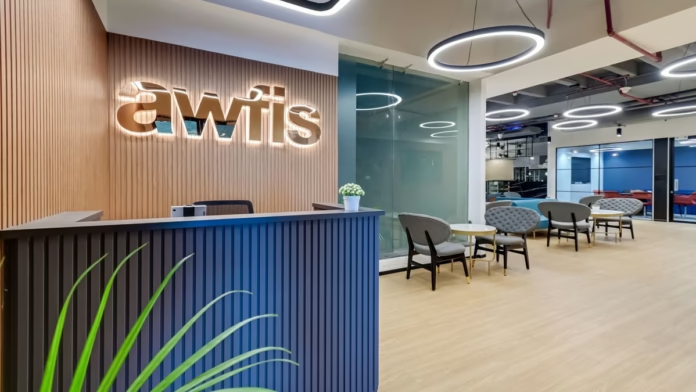
    Awfis, a leading co-working space provider, has signed a significant lease deal in Pune’s rapidly growing commercial hub, Kharadi. The company has secured 2.7 lakh square feet of office space spread across 17 levels of the Nyati Enthral 2 building for a lease period of five years. The lease is valued at an annual rent of ₹15.77 crore, marking a major expansion for Awfis and underscoring the growing demand for flexible office spaces in Pune’s commercial real estate sector. The lease, which started on January 1, 2025, includes provisions such as a security deposit equivalent to seven months of rent and an 18-month rent-free or fit-out period for the company to customise the space as per its requirements.

    The Kharadi area, known for its strategic location and proximity to Pune’s IT and business districts, continues to attract a diverse range of businesses. With the commercial property market in Kharadi witnessing rents of around ₹90 per square foot, multinational companies such as Wipro, Infosys, and Tech Mahindra have established a strong presence. This new lease by Awfis is not an isolated case, as the commercial real estate market in Kharadi has seen a steady stream of transactions, signalling a continued demand for high-quality office spaces. Recent deals, including the renewal of a 1.08 lakh square feet lease by CA (India) Technologies Private Limited and Mindspace Business Parks REIT’s renewal with Nvidia Graphics Private Limited, indicate the robustness of Pune’s office space market.

    The growth in commercial leasing activity, especially in areas like Kharadi, points to the increasing demand for well-connected, flexible workspaces. As businesses, particularly in the IT and finance sectors, adapt to hybrid working models, companies like Awfis are capitalising on the rising demand for co-working solutions. This expansion in co-working spaces also ties into the broader trend of office flexibility, where businesses prefer leasing spaces that can scale with their changing requirements. The Kharadi area, with its evolving infrastructure and commercial offerings, positions itself as a key player in Pune’s office real estate sector.

    From a sustainability perspective, the expansion of co-working spaces such as Awfis’s latest lease deal in Kharadi provides a new lens through which to view urban development. Co-working spaces are often seen as more sustainable compared to traditional office setups because they typically optimise space usage and reduce the need for large corporate footprints. These shared spaces promote a more efficient use of resources and reduce the environmental impact of maintaining standalone offices. Additionally, with developers increasingly focusing on green building certifications and energy-efficient designs, properties like Nyati Enthral 2 contribute to Pune’s growing eco-conscious real estate market. With the rising emphasis on sustainability and the efficient use of space, the Pune real estate market is likely to see further investment in buildings that combine commercial utility with environmental responsibility.

    In conclusion, Awfis’s new lease in Pune’s Kharadi area highlights the resilience of the commercial real estate market in the region, especially in the co-working space segment. This deal signifies more than just a commercial transaction; it reflects the ongoing evolution of the office space market, where flexibility and sustainability are paramount. As companies continue to seek adaptable workspaces, Pune’s commercial real estate market is poised for sustained growth, driven by a combination of strategic location, infrastructure development, and an increasing shift towards green, efficient office spaces.

    Over 1000 Real Estate Ads in Maharashtra Found Deceptive

    0
    Over 1000 Real Estate Ads in Maharashtra Found Deceptive
    Over 1000 Real Estate Ads in Maharashtra Found Deceptive

    Over 1000 Real Estate Ads in Maharashtra Found Deceptive

    In a concerning revelation, over 1000 real estate advertisements in Maharashtra have been flagged for misleading claims, raising alarms about the exploitation of loopholes by developers. According to the Advertising Standards Council of India (ASCI)’s half-yearly report (April–September 2024), of the 2115 real estate ads screened, 1027 were found to violate the Real Estate (Regulation and Development) Act (RERA). The issue highlights the ongoing challenges faced by flat buyers in Maharashtra, as developers continue to mislead potential customers with false promises and deceptive marketing practices.

    The Forum for People’s Collective Efforts (FPCE), a prominent consumer rights body, has expressed its concerns to the Union Government, calling for more stringent actions to curb the issue. Despite the Maharashtra Real Estate Regulatory Authority (MahaRERA) entering into an MoU with ASCI in February 2024 to monitor such violations, critics argue that the penalties imposed remain insufficient. The fines levied on developers, averaging between ₹15,000 and ₹20,000 per violation, are seen as inadequate given the scale of the issue. The total penalty collected by MahaRERA from 628 developers was ₹88.90 lakh, a sum many experts believe is too minimal to deter further violations.

    Advocates for consumer protection, such as Anil Dsouza, Secretary of the MahaRERA Bar Association, argue that while both ASCI and MahaRERA are taking steps in the right direction, stricter enforcement of penalties is essential. Dsouza stresses that misleading advertisements not only create confusion among prospective buyers but also foster a sense of distrust in the real estate sector. He calls for more robust collaborations with real estate bodies like CREDAI and NAREDCO to ensure compliance with RERA regulations and to establish higher standards for advertising in the real estate sector.

    From a sustainability and consumer perspective, the consequences of misleading real estate advertisements extend beyond legal ramifications. Many of these advertisements showcase images or features that do not align with the actual project, misrepresenting amenities, layouts, or facilities. This misinformation often results in disappointed buyers, causing reputational damage to developers and leading to increased litigation. Additionally, the use of misleading claims also affects urban planning and the long-term sustainability of residential projects. When developers cut corners on advertising ethics, it often correlates with poor practices in the actual construction, leading to projects that may lack the necessary infrastructure and amenities. In the context of rapidly urbanising regions like Maharashtra, this can have a significant impact on the broader civic landscape, straining resources and hindering proper planning.

    In conclusion, the ongoing issue of misleading real estate advertisements in Maharashtra underscores the need for urgent regulatory reform. The current fines and penalties fail to serve as a sufficient deterrent for developers who continue to exploit these loopholes. To protect consumers and ensure the growth of a trustworthy and sustainable real estate sector, stricter advertising regulations, more severe penalties, and better oversight are imperative. Addressing these issues will not only safeguard the interests of flat buyers but also contribute to the creation of a more transparent, ethical, and sustainable real estate environment in the state.

    JKRERA Issues Notices to 20 Projects for Non-Compliance with Real Estate Act

      0
      JKRERA Issues Notices to 20 Projects for Non-Compliance with Real Estate Act
      JKRERA Issues Notices to 20 Projects for Non-Compliance with Real Estate Act

      JKRERA Issues Notices to 20 Projects for Non-Compliance with Real Estate Act

      In a decisive move to enforce the Real Estate (Regulation and Development) Act, 2016 (RERA), the Jammu and Kashmir Real Estate Regulatory Authority (JKRERA) issued notices to over 20 real estate projects in the Kashmir province on January 10. The inspections were carried out to ensure compliance with the mandatory registration requirements under Section 3 of the RERA Act, which mandates that all real estate developers and promoters register their projects with the regulatory authority before advertising or selling properties.

      The inspection, led by JKRERA Chairperson Satish Chandra, included a thorough review of prominent real estate projects in Srinagar and surrounding areas, including Harco City Centre, Regal Mall in Lal Chowk, Ahmad Plaza in Batamaloo, and Rose Hills Estate, among others. Developers of these projects have been given 15 days to comply with the registration requirement, or they will face penalties as stipulated by the Act. If non-compliance persists, developers risk penalties up to 10% of the estimated cost of their projects, with further legal consequences, including possible imprisonment for up to three years.

      This crackdown highlights JKRERA’s commitment to ensuring that real estate development in the region adheres to planned, organised growth. Chairperson Satish Chandra highlighted the growing problem of unregulated and unapproved colonies emerging across the Kashmir Valley, many of which lack basic amenities such as roads, water, and electricity. These issues not only jeopardise the safety and quality of life for future residents but also pose significant hurdles to sustainable urban development. By enforcing RERA, the authority aims to curb the spread of haphazard urbanisation and ensure that developers deliver projects that meet both legal and civic standards.

      From a sustainability perspective, the push for proper registration and adherence to development regulations has important implications for the region’s future. The unplanned development of real estate projects can lead to long-term environmental and infrastructural strain. As Kashmir faces increasing urbanisation, ensuring that projects comply with the necessary regulations will help reduce the strain on resources, promote eco-friendly building practices, and ensure that developments are sustainable in the long run. Moreover, by focusing on proper planning, JKRERA is working towards creating livable, resilient urban spaces that will benefit not just developers but also residents and future generations.

      In conclusion, the steps taken by JKRERA to ensure the compliance of real estate projects with RERA are essential for the future of urban development in Jammu and Kashmir. By addressing issues related to unregistered developments and unapproved colonies, the authority is playing a crucial role in protecting the interests of homebuyers and fostering a more sustainable, regulated, and accountable real estate sector. Developers who fail to adhere to these guidelines must recognise the importance of planned growth in building a prosperous and sustainable urban landscape for the region.

      Indian Real Estate Attracts $11.4 Billion Investment in 2024 Led by Mumbai & Delhi-NCR

      Indian Real Estate Attracts $11.4 Billion Investment in 2024 Led by Mumbai & Delhi-NCR
      Indian Real Estate Attracts $11.4 Billion Investment in 2024 Led by Mumbai & Delhi-NCR

      Indian Real Estate Attracts $11.4 Billion Investment in 2024 Led by Mumbai & Delhi-NCR

      The Indian real estate market witnessed a remarkable surge in equity investments in 2024, drawing in a total of $11.4 billion, marking a 54% annual increase. This growth comes largely from developers and institutional investors, positioning India as a leading real estate destination in the region. According to CBRE’s recent report, Mumbai and Delhi-NCR emerged as the top beneficiaries, together capturing around 50% of the total investments. Both cities are central to India’s urban transformation, with each accounting for approximately 25% of the capital inflows. Other cities such as Bengaluru, Chennai, and Hyderabad followed, contributing a substantial share to the overall investment landscape.

      From a broader perspective, the primary driver of investment activity in 2024 was the land and development sites sector, which dominated with a 39% share of total inflows. The office sector, long a backbone of India’s real estate market, also attracted significant capital, receiving 32% of the total equity investments. Retail and residential sectors accounted for smaller portions, with 9% and 8% respectively. The report also highlighted that the industrial and logistics sector—driven by the rise of e-commerce and quick commerce—attracted growing interest, contributing 6% to the overall equity investments. This shift toward logistics and industrial spaces underscores the evolving demands of the Indian economy, driven by technological advancements and changing consumer preferences.

      Domestic investors remained the dominant force in this growth, accounting for approximately 70% of the total equity investments in 2024. However, international investors from Singapore, the United States, and Canada contributed a combined 25%, further enhancing India’s appeal as a global investment hub. Developers led the way in capital inflows, capturing 44% of total investments, while institutional investors accounted for 36%. Corporations, REITs, and other categories made up the remaining portion of the investments. The influx of capital into the Indian real estate market is a clear indication of the sector’s resilience and growing attractiveness as an investment opportunity.

      Looking forward, industry experts anticipate continued momentum in 2025, with sustained growth expected from institutional investors and domestic developers. Gaurav Kumar, Managing Director of Capital Markets and Land at CBRE India, noted that increased demand for office spaces, residential units, and mixed-use developments would drive further capital inflows. Additionally, retail and hospitality segments are poised for recovery as businesses adapt to evolving consumer needs. The increasing focus on sustainability and eco-friendly construction practices, especially in logistics and office developments, is also likely to shape the real estate landscape. This shift towards more sustainable and energy-efficient buildings is critical in addressing urban challenges, particularly in rapidly growing cities like Mumbai and Delhi-NCR.

      In terms of sustainability, the real estate sector is poised to play a pivotal role in shaping India’s urban future. The surge in investments in land and development sites presents an opportunity to integrate green technologies and sustainable practices from the ground up. Developers are increasingly recognising the need for eco-friendly infrastructure, with energy-efficient buildings and sustainable urban planning becoming key priorities. As the demand for commercial spaces, residential units, and industrial logistics grows, there is a significant opportunity to ensure that these developments are aligned with India’s climate goals. As real estate investments continue to flow into the sector, both domestic and international stakeholders must prioritise sustainability to create urban environments that are not only economically prosperous but also environmentally responsible.

      In conclusion, the Indian real estate sector’s performance in 2024, marked by substantial equity investments, is a testament to the industry’s growth potential. Mumbai and Delhi-NCR’s dominance in capital inflows underscores the importance of these cities in driving India’s real estate boom. As the sector continues to evolve, the focus on sustainability, coupled with increasing demand across various asset classes, suggests a promising future for India’s real estate market. The year 2025 is expected to see further investments, with developers and investors alike leveraging the opportunities presented by a rapidly modernising and increasingly sustainable urban landscape.

      Andhra Pradesh Revives Real Estate with Strategic Reforms

        0
        Andhra Pradesh Revives Real Estate with Strategic Reforms
        Andhra Pradesh Revives Real Estate with Strategic Reforms

        Andhra Pradesh Revives Real Estate with Strategic Reforms

        Andhra Pradesh’s real estate sector has faced significant challenges over the past five years, a situation exacerbated by the instability caused by the previous government’s controversial decision to decentralise power with three capitals. This move, according to P. Narayana, the state’s Minister for Municipal Administration and Urban Development, resulted in a major disruption across several sectors, including real estate, thereby impacting lakhs of families dependent on the industry. However, addressing this issue head-on at the CREDAI property show in Vijayawada on January 10, Narayana outlined a comprehensive set of reforms that aim to rejuvenate the sector and restore its former vibrancy.

        The reforms introduced by the Andhra Pradesh government aim to address the challenges faced by the construction and real estate sectors by focusing on restoring balance, increasing transparency, and improving ease of doing business. One of the key highlights of the minister’s address was the government’s emphasis on developing Amaravati, along with other regional towns, in a way that promotes sustainable growth. The creation of Smart Cities and the enhancement of urban infrastructure are pivotal to these reforms. Narayana pointed out that Vijayawada’s real estate market, closely tied to Amaravati’s development, is seeing rapid growth, and the establishment of Amaravati as a key urban hub would generate substantial employment opportunities across the state.

        To stimulate growth, the state government has facilitated ₹4 lakh crore worth of investments, 80-90% of which are earmarked for the North Andhra and Rayalaseema regions. This demonstrates the state’s strategic intent to ensure a balanced regional development, moving beyond the confines of its capital city. Additionally, the implementation of a free sand policy has provided much-needed relief to the construction sector, addressing one of the major hurdles for builders. By simplifying the building and layout permission process, the government has streamlined bureaucratic procedures, thus reducing delays and costs. This, combined with the introduction of a single-window approval system, is expected to significantly boost confidence among developers and investors, fostering a more efficient real estate ecosystem.

        Narayana also urged builders to support the government’s housing initiatives for the underprivileged and ensure that development does not remain confined to high-profit areas alone. Incentives have been introduced to encourage developers to work on projects at reasonable rates, focusing on inclusive urban development. The launch of a Government Order (G.O.) regarding simplified building permissions, along with the allowance for structures up to 15 metres in height without the need for permission, has been welcomed by the industry. The delegation of authority to Licensed Technical Personnel (LTPs), engineers, and architects to grant building permissions further decentralises power, making the approval process more efficient. These reforms are aligned with the government’s overarching goal to transform Andhra Pradesh into a model for sustainable urban development.

        From a sustainability perspective, these reforms hold immense potential for creating eco-friendly and resilient urban landscapes. The development of Smart Cities is expected to integrate green technologies and sustainable building practices, helping address the growing concerns of climate change and urban pollution. By promoting infrastructure improvements and streamlining construction processes, Andhra Pradesh is taking a proactive approach to creating urban environments that are not only livable but also responsible towards future generations. As the state embarks on this ambitious path of urban rejuvenation, the focus on balanced development, transparency, and sustainability will be key in ensuring that the real estate sector serves the larger goal of equitable and environmentally conscious growth.

        In conclusion, the reforms being introduced by Andhra Pradesh’s government represent a crucial step towards revitalising the real estate sector, improving urban infrastructure, and promoting sustainable growth. These changes are designed not only to attract investment but also to foster a more inclusive, transparent, and future-ready real estate market. With a clear focus on the needs of both developers and residents, these reforms promise to make Andhra Pradesh a leading example of urban transformation in the country.

        U.S. Blocking Nippon Steel’s Acquisition of U.S. Steel Risks Straining U.S.-Japan Relations

        U.S. Blocking Nippon Steel’s Acquisition of U.S. Steel Risks Straining U.S.-Japan Relations
        U.S. Blocking Nippon Steel’s Acquisition of U.S. Steel Risks Straining U.S.-Japan Relations

        U.S. Blocking Nippon Steel’s Acquisition of U.S. Steel Risks Straining U.S.-Japan Relations

        The Biden administration’s recent decision to block Nippon Steel’s acquisition of U.S. Steel on national-security grounds has not only stirred controversy in the United States but also raised concerns in Japan. The move, which has effectively put a halt to the $14 billion deal, threatens to strain relations between the U.S. and one of its most important allies in Asia.

        The blockage comes amid a period of economic growth in Japan, where stock markets reached new heights in 2024. The tensions sparked by the U.S. government’s intervention in what was a significant deal for Nippon Steel has the potential to ripple across international markets, putting American companies and investors in Japan at risk. For U.S. investors with stakes in Japan’s thriving economy, this move could introduce uncertainties, particularly in sectors like industrial manufacturing, where cross-border acquisitions are a common strategy. Furthermore, U.S. companies operating in Japan could face challenges due to the growing strain between the two nations.

        While the Biden administration cited national security concerns as the primary reason for blocking the deal, critics argue that the decision was ill-timed and could undermine diplomatic relations between the two countries, especially at a time when Japan’s economy is showing positive momentum. U.S. allies like Japan may view this move as a sign of protectionism that could set a concerning precedent for future foreign acquisitions. With diplomatic and economic repercussions looming, both governments will likely need to navigate these tensions carefully to avoid further strain in their longstanding partnership. The implications for U.S. investors and businesses operating in Japan could become clearer as the fallout from this acquisition block unfolds.

        South Africa Govt Supports AMSA Amid Wind-Down of Long Steel Operations at Newcastle Plant

        South Africa Govt Supports AMSA Amid Wind-Down of Long Steel Operations at Newcastle Plant
        South Africa Govt Supports AMSA Amid Wind-Down of Long Steel Operations at Newcastle Plant

        South Africa Govt Supports AMSA Amid Wind-Down of Long Steel Operations at Newcastle Plant

        The South African government has reaffirmed its commitment to supporting the steel industry following ArcelorMittal South Africa’s (AMSA) decision to wind down its long steel business operations at the Newcastle plant in KwaZulu-Natal. The Department of Trade, Industry, and Competition (dtic) emphasized the steel sector’s crucial role in the nation’s economic recovery and industrialization plans, citing its importance in industries like manufacturing, mining, construction, and transportation.

        In a statement, the dtic expressed concern over AMSA’s move, highlighting the ongoing challenges that have led to this decision, including weak economic growth, high logistics and energy costs, and the influx of low-cost steel imports. The government reaffirmed its intention to work closely with AMSA and other stakeholders to find sustainable solutions that ensure the long-term viability of South Africa’s steel industry. “While we acknowledge the serious challenges facing AMSA, the department is committed to supporting the company and working with all stakeholders to address these issues,” the dtic said. “We are focused on developing strategies that will not only address immediate concerns but also strengthen the steel sector in the long run.”

        AMSA attributed the decision to the unsustainability of its long steel business, citing persistent cost pressures, particularly in logistics and energy, and the adverse effects of policies such as the Price Preference System (PPS) and the export scrap tax. These issues have particularly impacted the Newcastle Works, forcing the company to transition its long steel business into care and maintenance. Steel production at the plant is expected to cease by late January 2025, with the final phase of wind-down operations concluding by the end of Q1 2025. Despite the reduction in long steel operations, AMSA’s coke-making operations at Newcastle will continue, albeit at a reduced scale to reflect the lower demand. Additionally, the company will be focusing on other areas of its business, including maintaining its operations in Vereeniging and AMRAS.

        The dtic also outlined the need for comprehensive strategies to revitalize the steel sector, including addressing structural inefficiencies in production, promoting local procurement, and investing in low-carbon technologies to improve sustainability and market competitiveness. The government emphasized the need for a collective effort to overcome these challenges, which include improving productivity, market competitiveness, and aligning with global green industry standards. The department intends to continue engagements with AMSA and other relevant stakeholders to develop workable solutions that can mitigate the impact on the steel sector and ensure its long-term resilience. This latest development highlights the urgency for proactive measures to protect one of South Africa’s critical industries, which plays a key role in the country’s economic future and industrial growth.