Home Blog Page 374

Keval Valambhia Honoured with “Hero of Humanity” Award by Yuva Unstoppable

Keval Valambhia Receives Hero of Humanity Award

Keval Valambhia Honoured with “Hero of Humanity” Award by Yuva Unstoppable

Keval Valambhia, Chief Operating Officer of CREDAI MCHI, has been awarded the prestigious “Hero of Humanity” Award by Yuva Unstoppable for his exceptional contributions to the education and upliftment of the children of construction workers, as well as his instrumental role in enabling financial inclusion for laborers in the construction sector. The award ceremony took place at the iconic Jio Convention Centre in Mumbai, with the honor presented by renowned Bollywood actor and social activist Sonu Sood.

Keval Valambhia has been at the forefront of social transformation in the real estate sector, leading initiatives aimed at enhancing the welfare of construction workers and their families. Under his leadership, CREDAI MCHI facilitated the opening of over 4,000 Jan Dhan accounts for construction laborers, promoting financial literacy and inclusion for one of the most underserved segments of society.

In addition, Valambhia’s dedication to the education and well-being of laborers’ children has been groundbreaking. Through partnerships and innovative programs, he has ensured access to quality education, bridging the gap for those who otherwise lack the means to access such opportunities. His efforts have not only uplifted lives but also set an inspiring precedent for the real estate and construction industry.

In his acceptance speech, Keval Valambhia expressed gratitude to Yuva Unstoppable and his team at CREDAI MCHI for their support, stating, “This award is not just recognition of my efforts but a testament to the resilience and potential of construction laborers and their families. Together, we can build a future where every child dreams big, and every laborer is treated with dignity and respect.”

The “Hero of Humanity” Award is a recognition by Yuva Unstoppable, a leading non-profit organization, for individuals who have made significant strides in creating social impact and championing human dignity. The event brought together leaders, philanthropists, and celebrities who are driving meaningful change in their communities.

UAE real estate market saw record-breaking growth in 2024

    0
    UAE real estate market saw record-breaking growth in 2024
    UAE real estate market saw record-breaking growth in 2024

    UAE real estate market saw record-breaking growth in 2024

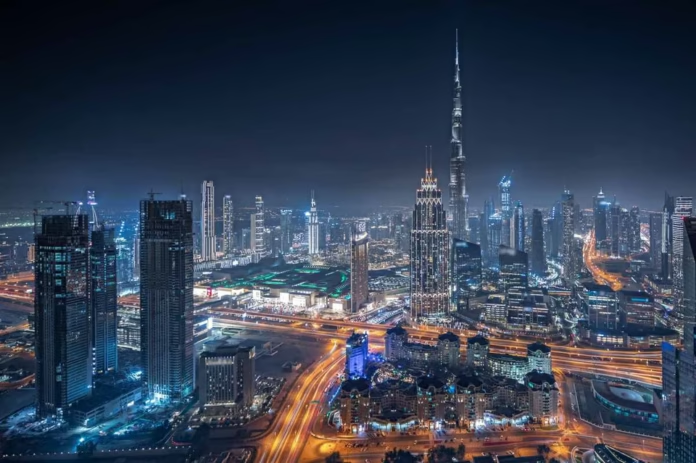
    The UAE’s real estate market displayed unwavering growth throughout 2024, solidifying its place as a vital engine for the country’s economy. With a remarkable increase in both project development and real estate transactions, the sector continued to thrive, attracting significant investments and maintaining a robust trajectory. As the UAE positions itself as a global hub for property investment, the year’s performance demonstrates its appeal, particularly to high-net-worth individuals (HNWIs) seeking lucrative opportunities in luxury real estate.

    Record Transactions Across Key Emirates: A Look at the Numbers

    The UAE’s real estate market saw a surge in transaction volumes in 2024, with data indicating a total value of AED 893 billion in transactions. This figure reflects a year of dynamic market activity, with more than 331,300 deals recorded. Mortgage transactions alone contributed AED 229.3 billion, making up over 50,000 transactions. The emirates of Abu Dhabi, Dubai, Sharjah, and Ajman each contributed significantly to the overall growth, underscoring the diversity and strength of the property market across the nation.

    In particular, Dubai emerged as the standout performer, breaking records with AED 760.7 billion in transactions across 226,000 deals. Notably, the city’s property sales hit AED 522 billion through 180,000 transactions, while mortgage activity surged to AED 187 billion with 35,000 mortgages. This performance reaffirms Dubai’s position as a prime destination for both local and international investors, offering a range of lucrative opportunities in residential, commercial, and luxury real estate.

    Abu Dhabi, Sharjah, and Ajman: Resilience and Diversity Across the Market

    Abu Dhabi’s real estate market also saw a healthy performance, with transactions totaling AED 79.3 billion through 25,046 deals. The capital city has been a hotbed for both ready and off-plan properties, with the Department of Municipalities and Transport’s “Dari” platform reporting AED 46.5 billion in sales. Similarly, Sharjah witnessed strong market dynamics, with transactions totalling AED 36.4 billion in 2024. Sharjah’s distinctive projects and growing infrastructure continue to attract both residential buyers and investors.

    Meanwhile, Ajman’s real estate sector has demonstrated impressive growth, recording transactions valued at AED 16.35 billion by October 2024, reflecting a 43% increase compared to the previous year. With a diverse range of investment opportunities and continued demand for both residential and commercial properties, Ajman’s market is well on its way to becoming a key player in the UAE’s real estate landscape.

    Sustainability and Future Prospects: A Resilient Market Poised for Growth

    The impressive growth witnessed in the UAE real estate sector in 2024 is not only a sign of the country’s economic vitality but also an indicator of its commitment to sustainable development. As the demand for real estate continues to soar, the integration of sustainability in construction and infrastructure is becoming more significant. Developers are increasingly incorporating green building practices, energy-efficient technologies, and sustainable designs, ensuring that projects align with global sustainability standards.

    Looking ahead to 2025, international reports predict continued growth for the UAE real estate market, fuelled by the completion of key development projects, government incentives, and a favourable investment environment. As the country focuses on enhancing urban sustainability through smart city initiatives and green infrastructure, the future of the UAE’s real estate market seems poised to not only drive economic growth but also contribute to sustainable urban development. The combination of a thriving property market and sustainable growth strategies makes the UAE a beacon of opportunity for investors in the years to come.

    Green Building Movement Drives India’s Real Estate Growth

      0
      Green Building Movement Drives India’s Real Estate Growth
      Green Building Movement Drives India’s Real Estate Growth

      Green Building Movement Drives India’s Real Estate Growth

      India’s real estate sector is undergoing a dramatic transformation, where rapid economic growth is aligning with the urgent call for sustainability. As one of the primary pillars of India’s economy, contributing 7% to the GDP in 2023 and expected to increase to 13% by 2025, real estate is on the brink of reshaping the country’s future. The sector is poised to reach a market size of $1 trillion by 2030, underscoring the need for a sustainable approach to ensure both environmental and economic stability. As urbanisation surges and a growing middle class demands housing, India faces the crucial challenge of fostering sustainable growth that can handle future demands without compromising the environment.

      Economic Growth Meets Sustainability in Real Estate Development

      India’s urbanisation, fuelled by an expanding middle class and substantial investments, provides a complex backdrop for real estate development. The demand for housing, commercial spaces, and infrastructure is at an all-time high, yet the need for sustainability has never been more pressing. Government initiatives such as the Smart Cities Mission, the Pradhan Mantri Awas Yojana (PMAY), and the Real Estate (Regulation and Development) Act (RERA) are gradually steering the sector towards greener practices. While these initiatives have been vital in fostering transparency and encouraging responsible development, the challenge remains in striking a balance between swift urbanisation and environmental preservation. Developers face the dual task of addressing the urgent need for real estate while minimising the ecological impact.

      The Rise of Green Buildings: Shaping a Sustainable Urban Landscape

      A noteworthy shift towards sustainability is evidenced by India’s adoption of green building practices. According to the Indian Green Building Council (IGBC), more than 11,000 projects across India are now registered with a collective green footprint surpassing 10.27 billion square feet. These buildings adhere to rigorous environmental standards, with over 248 projects receiving LEED (Leadership in Energy and Environmental Design) certifications. This momentum reflects the industry’s growing commitment to sustainable construction and eco-friendly design.

      The adoption of energy-efficient materials, water-saving technologies, and renewable energy systems such as solar panels has significantly reduced the carbon footprint of real estate developments. In addition to environmental benefits, these green practices offer cost savings by lowering energy consumption and operational costs, making sustainability an economically viable option for developers. Homebuyers and commercial tenants, too, are becoming more eco-conscious, further driving the demand for such spaces.

      Policy Support and Innovation in Real Estate Sustainability

      The Indian government has been a catalyst in supporting the green revolution in real estate. Through the Smart Cities Mission, which advocates for the integration of smart infrastructure, energy-efficient buildings, and green spaces, the government is transforming urban environments into more sustainable and liveable spaces. Furthermore, the adoption of innovative construction techniques—such as prefabricated building components, recycled materials, and Building Information Modeling (BIM)—is revolutionising the sector. These technologies not only enhance construction efficiency but also reduce resource wastage.

      However, challenges persist. The cost of sustainable materials remains high, and the lack of skilled labour proficient in green construction methods is an impediment. Despite these hurdles, there is a significant opportunity for growth in this space. With government policies encouraging eco-friendly practices and the private sector stepping up with innovative solutions, the future of real estate in India looks brighter, aligning growth with sustainability.

      India’s Real Estate Future: A Green Vision

      The future of India’s real estate sector is intrinsically linked to its ability to balance growth with sustainability. Real estate, once seen primarily as an economic engine, is now emerging as a crucial player in the nation’s environmental responsibility. By embracing global sustainability standards, incorporating innovative construction techniques, and fostering strong regulatory frameworks, India’s real estate sector can redefine itself as a leader in sustainable development. As the sector moves forward, it is poised to set a benchmark for green growth, ensuring that urbanisation not only meets the needs of the present but also safeguards the future.

      Vizianagaram’s Real Estate Growth Driven by Bhogapuram Airport and Development Projects

        0
        Vizianagaram's Real Estate Growth Driven by Bhogapuram Airport and Development Projects
        Vizianagaram's Real Estate Growth Driven by Bhogapuram Airport and Development Projects

        Vizianagaram’s Real Estate Growth Driven by Bhogapuram Airport and Development Projects

        Vizianagaram, a growing city in Andhra Pradesh, is on the verge of a major transformation, as the impending completion of the Bhogapuram international airport, coupled with several key infrastructure projects, is set to trigger a real estate boom. Speaking at the Confederation of Real Estate Developers’ Associations of India (CREDAI) three-day property show, Minister for MSME and NRI Affairs, Kondapalli Srinivas, highlighted that the city is poised to become one of the fastest-growing regions in the state. With projects such as the petrochemical venture, Mulapeta port, and various government-led developmental activities, the entire north Andhra region, including Vizianagaram, will undergo significant change, reshaping its economic and social landscape.

        The construction of the international airport at Bhogapuram is a pivotal milestone in this transformation, with its potential to enhance connectivity and drive economic activity. Srinivas noted that once the airport becomes operational, Vizianagaram’s real estate sector will witness an unprecedented surge, as it will attract businesses, investors, and homebuyers, resulting in a significant increase in property demand. This is expected to lead to a wave of migration, with families settling around the city, drawn by the improved infrastructure, job opportunities, and lifestyle offerings that will inevitably accompany the airport’s completion.

        On the first day of the CREDAI property show, state vice-president K. Subhash Chandra Bose expressed optimism over the large turnout of prospective buyers, affirming that there is strong demand for properties in the region. The successful event is a testament to the growing confidence in the market, with many potential homeowners showing interest in investments in the area. CREDAI’s chairman, V. Pardha Saradhi, and president, Ch. Suryanarayana Raju, also emphasised the significant role of favourable home loan interest rates, particularly with bank rebates, in boosting both construction and real estate activities. These financial incentives are seen as a positive catalyst in accelerating the sector’s recovery and growth.

        Looking at the long-term prospects of this development, the impact of the Bhogapuram airport and related projects extends beyond just economic benefits. From a sustainability perspective, these large-scale urban developments provide an opportunity to integrate eco-friendly, green building practices in both residential and commercial properties. Ensuring that infrastructure meets environmental standards, such as energy-efficient buildings and waste management systems, will help maintain the ecological balance while supporting the region’s rapid urbanisation. As Vizianagaram’s property market expands, it will be critical for developers to prioritise sustainable construction methods, contributing not just to growth but also to long-term environmental responsibility.

        The civic and urban implications of this rapid growth are far-reaching. While the surge in real estate is exciting, it also brings challenges related to infrastructure, urban planning, and sustainability. The increased demand for housing and commercial spaces calls for careful planning to avoid congestion, ensure efficient waste management, and improve local amenities. Government intervention will be essential to provide a framework that balances growth with sustainability. The rise of Vizianagaram as a key city in north Andhra has the potential to address long-standing civic issues by focusing on comprehensive urban planning that takes into account the future needs of both residents and businesses.

        In conclusion, the upcoming Bhogapuram international airport, coupled with large-scale infrastructure projects, is set to fuel the real estate growth in Vizianagaram. With its promising future, the city will not only see a boom in property demand but also a transformation in its civic landscape, making it an ideal destination for homebuyers, investors, and businesses alike. However, this growth must be carefully managed to ensure that it remains sustainable, contributing positively to the region’s long-term prosperity.

        Brigade Group Launches ₹2700 Cr Residential Project in Bengaluru’s Whitefield

        Brigade Group Launches ₹2700 Cr Residential Project in Whitefield-Hoskote Road, Bengaluru
        Brigade Group Launches ₹2700 Cr Residential Project in Whitefield-Hoskote Road, Bengaluru

        Brigade Group Launches ₹2700 Cr Residential Project in Bengaluru’s Whitefield

        India’s prominent real estate developers, Brigade Group, has announced a landmark project in Bengaluru’s rapidly expanding real estate market. The company has signed a definitive agreement to develop a large-scale residential community on a 20-acre land parcel located on Whitefield Road. This prime location will host a project with a total saleable area of 2.5 million sq ft, with a Gross Development Value (GDV) estimated at a staggering ₹2700 crore. With the total land cost pegged at ₹630 crore, this project is poised to become one of the major additions to the residential landscape in Bengaluru.

        This development reflects Brigade Group’s ongoing commitment to enhancing Bengaluru’s dynamic urban fabric by delivering high-quality, sustainable living spaces. Whitefield, already known as the city’s largest and most prominent IT hub, continues to experience rapid growth, drawing homebuyers seeking proximity to their workplaces. Whitefield’s immense appeal is further amplified by its superior connectivity via road, rail, and the upcoming metro extension. This seamless accessibility adds tremendous value, making it a prime destination for both professionals and real estate investors.

        Pavitra Shankar, Managing Director of Brigade Enterprises, highlighted the strategic importance of the new project. “By acquiring prime land in high-demand locations like Whitefield, we are strengthening our residential portfolio and supporting our long-term growth strategy. This project is a step towards offering Bengaluru’s residents high-quality living spaces that meet their evolving needs while adhering to the highest sustainability standards,” said Shankar. This ambitious project is part of Brigade Group’s broader strategy to increase its footprint in residential real estate across key urban markets, as the company also has several other upcoming developments in Bengaluru, Chennai, and Hyderabad.

        The focus on sustainability is a cornerstone of Brigade Group’s vision for this new residential development. The project will integrate green building practices, energy-efficient solutions, and environmentally friendly designs that align with global trends towards sustainable urban living. As the city of Bengaluru continues to grapple with challenges such as pollution and resource scarcity, developments like these are a much-needed contribution to building greener, more responsible urban spaces. The incorporation of sustainable materials and technologies will not only reduce the environmental impact but also ensure long-term cost savings for residents. Moreover, with its prime location, the development promises to contribute to the city’s overall infrastructural growth, enhancing both economic and social sustainability.

        From an urban perspective, this project underscores the growing demand for residential properties in Bengaluru, particularly in areas like Whitefield, where the city’s tech-driven economy is rapidly expanding. As the demand for high-quality housing increases, projects like Brigade’s will play a crucial role in shaping the city’s skyline while ensuring that the new developments are in line with evolving civic and environmental needs. The city’s focus on urban renewal, combined with its infrastructure expansion, offers a positive outlook for the real estate market in the coming years, making this project a significant milestone for Brigade Group.

        Brigade Group’s ₹2700 crore residential project on Whitefield Road is not just an investment in real estate, it is an investment in sustainable urban growth. The project will bring world-class living standards to Bengaluru’s residents while reinforcing the importance of responsible development in the city’s rapidly transforming landscape. As the market continues to expand, it is clear that projects focused on sustainability and smart urban planning will be the future of real estate development in India.

        Indian real estate investment reached $6.5 billion in 2024

          0
          Indian real estate investment reached $6.5 billion in 2024
          Indian real estate investment reached $6.5 billion in 2024

          Indian real estate investment reached $6.5 billion in 2024

          Indian real estate has demonstrated an extraordinary resurgence in 2024, with institutional investments soaring to a remarkable $6.5 billion, reflecting a 22% growth over the previous year. This remarkable figure underscores the confidence in the nation’s real estate market, particularly in industrial and warehousing sectors, which together accounted for an impressive 39% of total investments. While office spaces were not far behind with a 36% share, the standout performance of industrial assets marks a significant shift in investment priorities, driven by the nation’s growing industrial base and manufacturing resilience.

          The industrial and warehousing sector, with $2.5 billion in inflows, has benefited from India’s manufacturing boom, which has been buoyed by positive macroeconomic indicators such as a stable Purchasing Managers’ Index (PMI) and a robust Index of Industrial Production (IIP). This growth trajectory is also a testament to the evolving logistics and supply chain dynamics, which are increasingly prioritising Grade A industrial developments. In an interesting turn of events, the residential sector too has registered substantial growth, reaching $1.1 billion—a 46% increase from the previous year. Foreign inflows have largely driven the market, contributing 66% of the overall investment, while domestic players have shown a rising interest, with their contributions growing by 27% year-on-year.

          One of the standout features of the year was the robust growth seen in the fourth quarter of 2024, which witnessed an astonishing $1.9 billion in investments—almost double the amount seen during the same period in 2023. This reflects a sustained and growing confidence in India’s real estate market, not just from international investors but also from homegrown institutions. The strategic shift in investor confidence is further underscored by the 43% share of domestic investments in Q4 2024. This growing momentum signals a potential long-term trend towards increased local investment across a diverse range of real estate assets, from office spaces to residential developments, as the nation’s economic fundamentals continue to improve.

          From a civic and sustainability standpoint, this influx of investments represents more than just economic growth. It highlights an evolving urban landscape with a focus on sustainable development. The shift towards industrial and warehousing properties—driven by demand for state-of-the-art facilities that can handle modern supply chain needs—can be seen as a significant step towards more sustainable urban infrastructure. These investments often come with a focus on energy efficiency, waste reduction, and the integration of green technologies, which aligns with global trends towards more sustainable real estate. As Tier-I cities continue to attract investments, there is an increased emphasis on responsible construction practices that not only stimulate economic growth but also reduce the environmental footprint.

          Mumbai, a major hub for real estate investments, accounted for a substantial 58% of the office sector’s investments, while industrial and warehousing assets secured 20% of the city’s total inflows. The overall trend reveals a pivot towards more sustainable, future-ready developments, with a clear focus on creating infrastructure that can withstand the evolving demands of manufacturing, logistics, and urbanization. The government’s push for infrastructure development through initiatives like ‘Make in India’ is likely to continue playing a pivotal role in shaping investment flows across the country. As investors remain optimistic, particularly those from the Asia-Pacific region, India’s real estate sector is poised for an exciting, sustainable future.

          In conclusion, 2024 marks a pivotal year for India’s real estate sector, characterised by robust investments, a focus on sustainability, and a balanced approach to urban growth. The surge in industrial and warehousing investments reflects a broader global shift towards more sustainable and resilient real estate, making India a compelling destination for both domestic and international investors. With the ongoing government support for infrastructure and industrial growth, coupled with rising confidence among local players, the outlook for 2025 is equally promising, with potential for even greater investment diversification and sustainability-focused developments.

          Pune-Mumbai Expressway’s New Link Road Will Slash Travel Time to Navi Mumbai Airport by 2 Hours

            0
            Pune-Mumbai Expressway’s New Link Road Will Slash Travel Time to Navi Mumbai Airport by 2 Hours
            Pune-Mumbai Expressway’s New Link Road Will Slash Travel Time to Navi Mumbai Airport by 2 Hours

            Pune-Mumbai Expressway’s New Link Road Will Slash Travel Time to Navi Mumbai Airport by 2 Hours

            The long-awaited new link road on the Pune-Mumbai Expressway is nearing completion, with the Maharashtra State Road Development Corporation (MSRDC) announcing that 90% of the project is already finished. The new road will provide faster access to the Navi Mumbai International Airport, which is expected to open in April 2025. By reducing travel time by up to two hours, the link road will significantly enhance accessibility for travelers, offering a more efficient route to the airport.

            Currently, the drive from Pune to Mumbai’s existing international airport is 160 km long and takes approximately four hours. However, the new link road will cut the distance to Navi Mumbai International Airport to just 120 km, reducing the travel time to about two and a half hours. The new route will bypass the town of Lonavala, further decreasing the journey time to as little as two hours. This development is expected to revolutionize the connectivity between Pune and the Mumbai Metropolitan Region, offering a much-needed shortcut for frequent travelers. Spanning 13.3 km, the link road will bypass a challenging 19.8-km section of the Pune-Mumbai Expressway, including the Lonavala ghat, notorious for its steep slopes and sharp curves. The new road will improve safety, ease traffic congestion, and provide smoother travel along this vital route. It incorporates advanced safety features such as an Intelligent Traffic Management System (ITMS) and emergency medical services. The project also includes the construction of two tunnels and two cable bridges to ensure seamless passage through the difficult terrain, further enhancing the overall travel experience.

            With a total budget of ₹6,595 crore, the project is expected to be completed by June 2025. Although initially slated for completion in 2022, the project experienced delays due to the COVID-19 pandemic. However, with construction now in full swing, the link road is progressing rapidly, and its completion is anticipated to significantly improve traffic flow on the Pune-Mumbai Expressway. Once finished, the new link road will provide travelers with a quicker and safer route to the Navi Mumbai International Airport. The enhanced connectivity will not only benefit daily commuters but also those heading to international destinations. By improving accessibility, this infrastructure upgrade is poised to bolster the region’s economy and further enhance the effectiveness of the transport network. With the new link road, the Pune-Mumbai Expressway will become a key catalyst in improving connectivity and driving economic growth across Maharashtra.

            India to Ease PLI Scheme for Speciality Steels, Boosting CRGO Production for Power Sector

              0
              India to Ease PLI Scheme for Speciality Steels, Boosting CRGO Production for Power Sector
              India to Ease PLI Scheme for Speciality Steels, Boosting CRGO Production for Power Sector

              India to Ease PLI Scheme for Speciality Steels, Boosting CRGO Production for Power Sector

              The government plans to relax conditions under its production-linked incentive (PLI) scheme. These adjustments, aimed at boosting domestic production, include lowering investment thresholds and plant size requirements for CRGO projects. The changes are designed to meet the increasing demand for CRGO steel, driven by the growth of the power sector in India.

              The government is considering reducing the minimum investment requirement for CRGO projects from ₹5,000 crore to ₹3,000 crore, as well as decreasing the minimum plant size from 200,000 tonnes to 50,000 tonnes. These revisions follow recommendations from the power ministry, aiming to make the PLI scheme more accessible and attractive to a broader range of companies. By making these adjustments, the government hopes to encourage increased domestic production of CRGO steel, which is crucial for power transmission equipment, including transformers.

              India has long faced a shortage of CRGO steel, with domestic production meeting only 10-12% of the country’s demand. The remaining demand is met through imports, which contributes to higher costs and supply chain uncertainties. Experts believe that by enhancing local production capabilities, India can reduce its dependency on imports, making the supply of CRGO steel more reliable and cost-effective. With the growing power and infrastructure needs in India, particularly in the renewable energy sector, boosting domestic CRGO production is seen as essential for long-term economic and energy security. As India strives to achieve its ambitious goal of 500 GW of renewable energy by 2030, the demand for CRGO steel is expected to rise significantly. The Global Trade Research Initiative (GTRI) forecasts that the need for CRGO steel will increase by 10-12% annually, driven by the expansion of power transmission lines, especially in renewable energy-rich states like Rajasthan and Gujarat. The relaxation of PLI conditions is expected to play a pivotal role in meeting this growing demand by encouraging more investment in CRGO steel production. This move will not only support the power sector’s infrastructure needs but also contribute to the development of a more robust renewable energy grid.

              With the expansion of power generation capacities, particularly in renewable energy, there is a critical need for advanced transmission infrastructure. By promoting domestic CRGO production, the government is ensuring that India’s power sector remains competitive and capable of supporting the nation’s renewable energy targets. The policy adjustments are expected to help address the growing demand for CRGO steel and improve the country’s ability to maintain an efficient power transmission network, which is crucial for a sustainable energy future. The relaxation of the PLI scheme for CRGO steel production represents a strategic move to reduce India’s dependence on imports, ensure a more cost-effective and reliable supply of critical materials, and support the rapid expansion of the country’s power transmission infrastructure. As India pushes forward with its renewable energy goals and power sector development, the increased production of CRGO steel will play a key role in strengthening the national economy and meeting long-term energy needs.

              Pune Takes Bold Steps to Tackle Traffic Congestion with Metro, Ring Roads and More

                0
                Pune Takes Bold Steps to Tackle Traffic Congestion with Metro, Ring Roads and More
                Pune Takes Bold Steps to Tackle Traffic Congestion with Metro, Ring Roads and More

                Pune Takes Bold Steps to Tackle Traffic Congestion with Metro, Ring Roads and More

                Pune’s rapid population growth over the last two decades has put immense pressure on its traffic infrastructure, resulting in severe congestion. With a population that has nearly tripled in that time, city planners are focusing on ambitious projects to address these challenges. The Pune Metro, one of the flagship initiatives, is central to the city’s plan to improve public transport and reduce reliance on private vehicles.

                While the metro system is still expanding, early projections show that ridership is growing, and once fully operational, it promises long-term benefits. Shravan Hardikar, Managing Director of MahaMetro, emphasized the importance of creating a multimodal transport network, where buses, metros, and other transport modes complement each other. Though construction may cause temporary disruptions, the metro’s ultimate goal is to offer a more efficient and eco-friendly commuting option for the city’s residents. This project represents a significant step toward improving Pune’s public transport infrastructure and reducing road congestion.

                Despite the growing emphasis on the metro, buses are still expected to remain the backbone of Pune’s public transportation system. Currently, Pune’s public transport agency, PMPML, serves over 60 lakh people but operates only about half the number of buses required to meet the city’s transportation needs. Experts like Ranjit Gadgil, a social activist, argue that the city’s bus services are woefully inadequate, leading many residents to opt for private vehicles. To bridge this gap, experts suggest a significant increase in the bus fleet, with an emphasis on improving frequency and reliability. The target of 50 buses per lakh population, as outlined by experts, has not yet been met. This bus shortage is one of the main drivers behind the city’s traffic woes, underscoring the need for greater investment and improvements in the city’s bus system alongside the metro project. Enhancing bus services, particularly in underserved areas, will be crucial in addressing the city’s transport challenges and encouraging people to use public transport more frequently.

                To further ease congestion, multiple agencies are collaborating on the development of infrastructure that will enhance mobility across Pune. The Pune Municipal Corporation (PMC), Pimpri-Chinchwad Municipal Corporation (PCMC), MahaMetro, and other local bodies are all working together to implement projects like ring roads, flyovers, and new bridges. Vikas Dhakne, Additional Municipal Commissioner, noted that these measures aim to improve overall mobility, reduce traffic congestion, and make travel more efficient for commuters. However, challenges such as land acquisition, financing, and opposition to certain projects—like tree felling—continue to slow progress. In addition to these projects, experts argue that Pune must move away from relying solely on road expansions and consider more sustainable transport policies. This includes promoting cycling, walking, and shared mobility options. Ranjit Gadgil pointed out that Pune’s Comprehensive Mobility Plan (CMP), which was developed several years ago, called for a more sustainable and people-centric transport system. Unfortunately, the plan has not been fully realized, with many efforts still focused on road infrastructure. Experts believe that the future of urban transport in Pune lies in integrating metro, bus, and other sustainable modes of transport to create a seamless and efficient transport system. If successful, this approach could help alleviate congestion and provide Pune with a more sustainable urban mobility model that benefits both the environment and the quality of life for its residents.

                ₹12,500 Crore Investment to Revolutionise Delhi’s Highway Infrastructure

                  0
                  ₹12,500 Crore Investment to Revolutionise Delhi's Highway Infrastructure
                  ₹12,500 Crore Investment to Revolutionise Delhi's Highway Infrastructure

                  ₹12,500 Crore Investment to Revolutionise Delhi’s Highway Infrastructure

                  Union Minister for Road Transport and Highways, Nitin Gadkari, has unveiled plans to address two of the city’s most pressing issues: traffic congestion and air pollution. With an investment of Rs 12,500 crore, the government has sanctioned four major highway projects that will significantly improve connectivity between Delhi and its neighbouring regions. These projects will not only ease traffic but also offer much-needed infrastructure to accommodate the growing number of vehicles.

                  The announcements were made following demands raised by seven Delhi BJP MPs, one day prior. The projects, once completed, are expected to provide a boost to the capital’s infrastructure, enabling smoother transit and better connectivity for people commuting to and from Delhi. The first of the approved projects involves a 20-kilometre link between the Urban Extension Road (UER) II and the Delhi-Katra Expressway via the KMP Expressway. Costing approximately Rs 2,500 crore, this vital route will offer seamless access for vehicles coming from Jammu & Kashmir and Punjab to Indira Gandhi International Airport (IGI) and the Delhi-Mumbai Expressway. The connectivity from these states will significantly reduce the burden on Delhi’s congested roads.

                  The second project is a 17-kilometre link that will connect UER-II at Alipur to the Delhi-Dehradun Expressway at Tronica City, Ghaziabad. With an investment of Rs 2,200 crore, this project aims to ease the movement of vehicles from Rajasthan and Haryana to Dehradun, a vital connection for both residents and tourists. The third project, worth Rs 4,400 crore, involves a 35-kilometre bypass from the Delhi-Dehradun Expressway to Noida, bypassing East Delhi. This will ease congestion on the capital’s major roads, creating a smoother route for travellers heading to and from Noida, while reducing traffic volume in the city. The fourth, and perhaps most ambitious, is the construction of a 5-kilometre tunnel from Shiv Murti on the Delhi-Gurgaon Expressway to Nelson Mandela Road, costing Rs 3,500 crore. This tunnel will relieve the pressure on one of Delhi’s most critical routes, facilitating better flow of traffic between Delhi and Gurgaon, a bustling commercial hub.

                  These highway projects are part of a broader initiative to tackle the growing issues of air pollution and traffic congestion in Delhi. Gadkari highlighted that these investments were not only about improving travel times but also aimed at making the capital more liveable by reducing the burden of traffic and emissions from long commutes. Furthermore, the government has already rolled out projects worth around Rs 60,000 crore in Delhi and surrounding areas, underscoring the ongoing commitment to infrastructure development in the region. With the completion of these four highway projects, Delhi is poised for a transformation that will make travel more efficient and less polluting. The enhanced connectivity to key expressways and the construction of vital tunnels are expected to ease traffic for commuters, enhance economic activities, and create more sustainable transportation routes. As the government pushes forward with these development plans, the public can look forward to a more connected and less congested Delhi.