Home Blog Page 482

Global Real Estate: A Closer Look at Renting Trends in Bubble Markets

    0
    Global Real Estate: A Closer Look at Renting Trends in Bubble Markets
    Global Real Estate: A Closer Look at Renting Trends in Bubble Markets

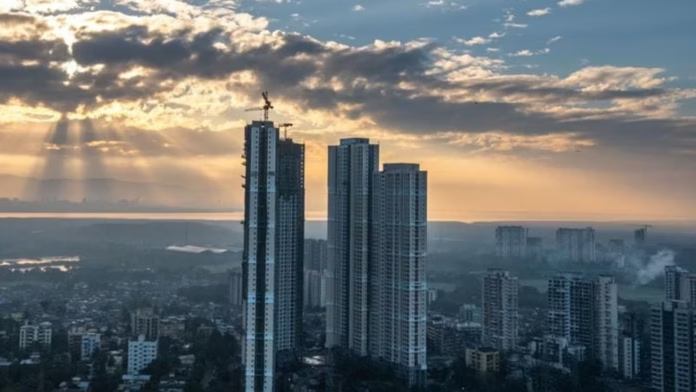
    As the global real estate market continues to evolve, a fascinating trend has emerged: while home prices in many bubble cities have experienced a decline, rental prices have surged. This divergence between the two has significant implications for both homeowners and renters.

    Several key cities have witnessed substantial increases in rental costs. Dubai, for instance, has seen a remarkable 60% surge in real rents since 2020. This rapid growth is attributed to a booming population and a surge in demand for office space. Similarly, Madrid has experienced a significant rise in rental prices, leading to protests from tenants who are struggling to keep up with the increasing costs. In contrast, Singapore has seen a decline in real rents due to government interventions aimed at curbing foreign demand.

    Population growth and economic recovery have been major drivers of rising rental demand in many cities. As more people move to urban areas, the demand for housing increases, putting upward pressure on rental prices. Furthermore, the shift towards remote work and flexible work arrangements has led to increased demand for housing in suburban and rural areas. This has, in turn, driven up rental prices in these regions. The future of rental markets will be shaped by a variety of factors, including economic conditions, demographic trends, and government policies. As interest rates rise and economic uncertainty persists, the demand for rental housing may moderate. However, in the long term, the growing population and urbanization trends are likely to continue to support rental demand.

    While renting may seem like an attractive option for many, it’s important to consider the long-term implications. Rising rents can erode purchasing power and make it difficult for renters to save for a down payment on a home. Ultimately, the decision to rent or buy depends on individual circumstances, financial goals, and market conditions. By understanding the factors driving rental trends, individuals can make informed decisions about their housing choices.

    Steel Industry to Embrace Green Technologies

    Steel Industry to Embrace Green Technologies
    Steel Industry to Embrace Green Technologies

    New Delhi: The Indian government is gearing up to introduce a comprehensive incentive package aimed at promoting green steel manufacturing, as officials explore various financial mechanisms to support this vital industry shift. This initiative is poised to encompass soft loans, an interest subvention scheme, viability gap funding, and a production-linked incentive framework, along with an updated definition of ‘green steel’. These measures are part of a broader strategy to align India’s steel sector with global sustainability goals and combat emerging environmental challenges.

    Discussions between the steel ministry and the finance ministry are already underway to finalise the contours of this package, with officials suggesting that the rollout will occur in distinct phases. “The discussions focus on the specifics of the incentives… A decision is anticipated soon,” shared an anonymous official involved in the talks. Notably, the government is also set to prioritise green steel in its public procurement processes, mandating timelines for the industry to transition to cleaner technologies. This dual approach underscores the administration’s commitment to environmental sustainability while simultaneously addressing the competitive pressures faced by domestic steel producers.

    The urgency behind this push is amplified by global challenges, particularly the non-tariff barriers such as the European Union’s Carbon Border Adjustment Mechanism (CBAM). With steel exports to the EU likely to see price increases of $65-70 per tonne due to the next phase of CBAM, local manufacturers must pivot towards greener production methods to maintain competitiveness in international markets. The impending regulatory landscape necessitates a proactive response from the Indian steel sector to avoid losing market share and to safeguard jobs within this crucial industry.

    Sustainability stands at the forefront of this initiative, as the government aims to not only reduce the carbon footprint of steel production but also to foster a more resilient and environmentally responsible industry. The steel sector is a significant contributor to greenhouse gas emissions, and transitioning to green steel could play a pivotal role in India’s climate goals. By investing in cleaner technologies, the government not only addresses environmental concerns but also ensures the long-term viability of the steel industry. As India positions itself as a leader in sustainable manufacturing, the successful implementation of this incentive package will be vital in navigating both local and global market challenges, fostering civic responsibility, and enhancing urban development through cleaner industrial practices.

    Mindspace REIT Wins Award for Second Consecutive Year for Global Office Excellence

    0
    Mindspace REIT Wins Award for Second Consecutive Year for Global Office Excellence
    Mindspace REIT Wins Award for Second Consecutive Year for Global Office Excellence

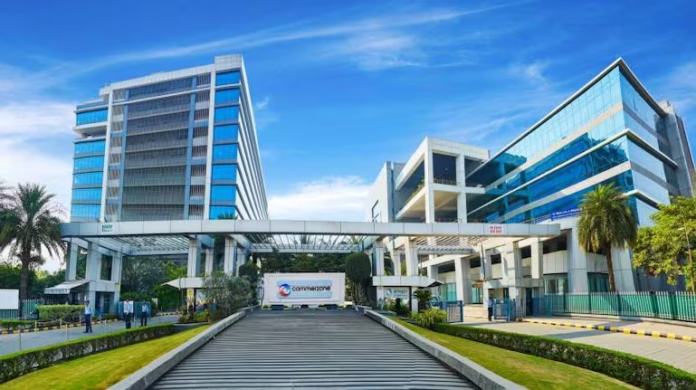
    Mindspace Business Parks REIT has achieved remarkable acclaim by being awarded the ‘Global Listed Sector Leader – Office Development Benchmark’ for the second consecutive year. This prestigious recognition highlights Mindspace’s commitment to sustainability and excellence, as the REIT recorded an impressive score of 99 out of 100 in the Office Development Benchmark, significantly surpassing both GRESB and its peer averages.

    Additionally, it secured a commendable score of 91 out of 100 in the Standing Investment Benchmark, where it ranked third among Indian real estate peers. The CEO of Mindspace REIT, stated, “At Mindspace REIT, sustainability is at the core of our strategy. This recognition fortifies our commitment to not only meet but exceed industry benchmarks. Our 5-Star Rating and top scores in GRESB affirm that we are on the right path in integrating environmental, social, and governance (ESG) principles into every facet of our operations.” This sentiment underscores the unified dedication across all teams, aiming to uphold Mindspace REIT’s foundational ESG values. GRESB, an independent organisation, provides validated ESG performance data and peer benchmarks, aiding investors and managers in enhancing business intelligence and decision-making. The growing importance of ESG considerations is evident, with over 95% of investors now utilising ESG data in their investment strategies. GRESB data is employed by over 150 institutional and financial investors, as well as approximately 3,000 funds, companies, and asset operators.

    This recognition not only elevates Mindspace REIT’s reputation but also reflects a broader industry trend where sustainability is increasingly becoming a decisive factor for investors. As environmental concerns gain prominence, stakeholders are keenly aware of the importance of responsible real estate practices. Mindspace’s emphasis on sustainability resonates with the public, as more individuals and businesses seek partnerships with firms that prioritise ethical operations. Moreover, this accolade is a testament to the collective efforts of Mindspace’s diverse teams, showcasing how integrated ESG practices can lead to industry leadership. In a market that is evolving rapidly, companies that embrace sustainable practices are not just enhancing their operational efficiency but also nurturing community trust and investor confidence. As Mindspace REIT continues to expand its Grade A portfolio, currently encompassing 33.6 million sq. ft., the company remains focused on not only achieving financial success but also making a positive impact on society and the environment. This dual commitment illustrates a holistic approach to business that is increasingly necessary in today’s conscientious market.

    Ambuja Gains Ground on UltraTech’s Limestone Advantage

    Ambuja Gains Ground on UltraTech’s Limestone Advantage
    Ambuja Gains Ground on UltraTech’s Limestone Advantage

    Mumbai: Ambuja Cements, under the stewardship of the Adani Group, has effectively rivalled UltraTech Cement’s dominance in limestone reserves through strategic acquisitions and auction wins, establishing a critical supply foundation for long-term operations. By June, Ambuja Cements had built eight billion tonnes of limestone reserves, positioning it closely behind UltraTech’s ten billion tonnes, a significant shift that could impact India’s cement market dynamics. While UltraTech has taken a conservative stance in recent limestone auctions, Ambuja’s aggressive bidding strategy secured nearly one billion tonnes of limestone reserves through various state auctions over the past year, showcasing its commitment to robust expansion in India’s competitive cement sector.

    Ambuja Cements has used acquisitions as an additional lever to reinforce its resource base. The recent takeover of Sanghi Industries in 2023 brought one billion tonnes of limestone into Ambuja’s portfolio, while the acquisition of Orient Cement added reserves in Rajasthan. This focus on resource acquisition aligns with the Adani Group’s deep-pocketed strategy to ensure Ambuja’s competitive edge in the race to secure this essential raw material. The Indian cement sector faces a critical need for limestone as all major players ramp up capacity expansions. Limestone availability is particularly crucial since cement plants are generally located near these deposits to control transportation costs and environmental impact.

    Beyond expansion, cement companies are also prioritising limestone reserves to anticipate lease expiries and rising premium costs linked to the Mines and Minerals (Development and Regulation) Act (MMDR). Some leases are set to expire from 2030 onwards, which could drive up operating costs if companies must bid at higher premiums or even risk losing critical resources. An estimated 25% of existing limestone leases could expire across the industry. Analysts warn that failing to retain these leases could expose companies to rising freight costs or, in extreme cases, disrupt operations if alternative reserves aren’t secured promptly. Ambuja’s significant auction wins in FY24 underscore its proactive approach to securing reserves, a move that industry insiders suggest could be essential for business continuity.

    This competition for reserves raises questions about sustainability and environmental responsibility in the cement industry. Although limestone is abundant, mining activities carry an environmental impact. Companies like Ambuja and UltraTech must weigh the implications of resource extraction and incorporate sustainable mining practices to mitigate ecosystem disruption. Efforts to integrate sustainable mining practices into resource extraction could benefit the industry’s long-term resilience, ensuring raw material availability without undermining environmental stability. As Ambuja and UltraTech bolster their limestone reserves, the broader challenge will be to balance aggressive acquisition with commitments to sustainable development, maintaining industry growth without compromising on ecological stewardship.

    Raigad’s Real Estate Market Gets a Boost with KSC New Town

      0
      Raigad's Real Estate Market Gets a Boost with KSC New Town
      Raigad's Real Estate Market Gets a Boost with KSC New Town

      The Maharashtra government’s recent decision to appoint the Mumbai Metropolitan Region Development Authority (MMRDA) as the New Town Development Authority (NTDA) for the KSC New Town project marks a significant milestone in the region’s development. This ambitious initiative, encompassing the Karnala, Sai, and Chirner regions of Raigad district, is poised to transform the area into a thriving urban center.

      The KSC New Town project is strategically located near the upcoming Navi Mumbai International Airport, making it an attractive destination for both residential and commercial development. The proximity to the airport is expected to boost connectivity, attract businesses, and drive real estate demand. Real estate developers and industry experts are optimistic about the potential of KSC New Town. They believe that the project will create new opportunities for residential, commercial, and mixed-use developments. The availability of land, coupled with the government’s focus on infrastructure development, will make this region an attractive investment destination.

      The development of KSC New Town is expected to lead to the creation of modern townships with world-class amenities, including schools, hospitals, shopping malls, and recreational facilities. The emphasis on sustainable development and green infrastructure will further enhance the appeal of this emerging urban center. As the KSC New Town project progresses, it is likely to attract significant investment from both domestic and international players. The region’s proximity to Mumbai and Pune, coupled with its natural beauty and favorable government policies, makes it an ideal location for real estate development.

      The KSC New Town project is a testament to the government’s commitment to urban development and infrastructure investment. By creating a well-planned and sustainable urban center, the government aims to cater to the growing demand for quality housing and commercial spaces in the Mumbai Metropolitan Region.

      Lodha Achieves Best-Ever Quarterly Pre-Sales of ₹4,290 Crore.

      0
      Lodha Achieves Best-Ever Quarterly Pre-Sales of ₹4,290 Crore.
      Lodha Achieves Best-Ever Quarterly Pre-Sales of ₹4,290 Crore.

      Macrotech Developers, known for its Lodha brand, has achieved a remarkable quarterly pre-sales performance, recording ₹4,290 crore despite the traditionally inauspicious ‘Shradhh’ period in September. This surpasses previous expectations and reflects a resilient demand in the housing sector, particularly for quality branded residences.

      Managing Director and CEO of Macrotech, attributes this success to strong consumer optimism and affordability. “Early indicators of the festive season reveal robust demand for quality housing. The ongoing competition among mortgage providers, coupled with the anticipated decline in interest rates in the second half of FY25, is likely to bolster the mid-income segment, where we have a significant presence,” he stated. The company’s strategic maneuvers included the sale of land for a data centre in Palava to a global player at approximately ₹120 million per acre, positioning Palava as a burgeoning data centre hub. Furthermore, Lodha expanded its project portfolio by adding four new ventures in Pune and Bengaluru, with a total Gross Development Value (GDV) of ₹55 billion. With the first half of the fiscal year yielding a business development figure of ₹166 billion—more than 75% of its annual guidance of ₹210 billion—Lodha is poised for substantial growth. The projects launched in Bengaluru, with a GDV of ₹38 billion, are expected to significantly accelerate their operational momentum in the coming year.

      In line with its commitment to sustainable development, Lodha has acquired approximately 45 acres in Chennai for digital infrastructure, increasing its stake in its digital platform from 33% to 67%. This aligns with their goal to enhance annuity income to ₹15 billion by FY31. Additionally, the company is advancing its sustainability initiatives by concluding a tender for a 6MW renewable power project under the Open Access Solar schemeIn collaboration with IIT Delhi, Lodha is also experimenting with a greener LC3 concrete mix at Palava, which has the potential to reduce embodied carbon in concrete by up to 40%. This commitment to sustainability reflects a growing awareness among consumers, who are increasingly valuing environmentally responsible practices in construction. The Unnati upskilling centre, which has reached a milestone of benefiting 1,000 women, highlights Lodha’s dedication to social responsibility. Such initiatives not only enhance community welfare but also foster a sense of empowerment, creating a lasting impact on the lives of local residents.

      Mumbai’s Housing Crisis Deepens as Affordable Homes Slip Away

      0
      Mumbai’s Housing Crisis Deepens as Affordable Homes Slip Away
      Mumbai’s Housing Crisis Deepens as Affordable Homes Slip Away

      Mumbai, India’s financial powerhouse, now grapples with one of the nation’s highest real estate costs, making even basic housing increasingly inaccessible for the working class. While some newly built luxury properties in south Mumbai are priced as high as Rs 1.5 lakh per square foot, even the most affordable projects barely meet the needs of the average Mumbaikar. For instance, small slum rehabilitation units in areas like Worli and Mahalaxmi cost upwards of Rs 50 lakh for a mere 300 square feet, stretching affordability for low-income residents. Amid this surge, the average flat price in Greater Mumbai stands at Rs 3.4 crore, leaving many to contend with cramped conditions or to live far from the city centre.

      Despite a record 52,551 units sold and 49,181 new launches in Greater Mumbai as of September 2024, the city’s housing demand remains unmet. Experts say the average flat size in Greater Mumbai is around 832 square feet, with properties ranging from compact 1RK units of 150 square feet to luxurious 32,000-square-foot penthouses. The price of entry into this market remains steep, with the most affordable 1RK units priced at Rs 32 lakh in Malad (West) and Bhandup (West) and modest 1BHK units starting from Rs 48 lakh. With approval costs in Mumbai as high as 50 times those in cities like Hyderabad, the prospect of launching affordable housing projects remains bleak, worsening the crisis.

      Experts highlight a notable shift in living conditions, as exorbitant prices have forced many working-class families into overcrowded chawls or to the outskirts, where affordable options are still available. Here, one-room dwellings are shared among multiple occupants, impacting their health and well-being. This reality starkly contrasts with the relatively lower costs in areas such as Bhandup, Dahisar, Vikhroli, Borivli, and Kandivli, where prices range between Rs 15,500 and Rs 22,500 per square foot. These areas saw significant price hikes of up to 39% since 2019, led by consistent demand and new developments, particularly for 2BHK configurations.

      Sustainability experts warn that Mumbai’s housing crisis could have a lasting impact on its urban development and sustainability efforts. As more people relocate to the city’s outskirts, daily commutes increase, adding to pollution and straining public transport. If unaddressed, Mumbai’s housing challenges may deepen social divides, pushing low-income families further from economic opportunities. Urban planners advocate for balanced, affordable development to ensure sustainable growth and improve quality of life for Mumbai’s residents.

      Mumbai’s High Rental Costs Strain Professionals’ Finances

      0
      Mumbai's High Rental Costs Strain Professionals’ Finances
      Mumbai's High Rental Costs Strain Professionals’ Finances

      Mumbai continues to hold the title of India’s most expensive city for rental housing, with the average rent for a 1 BHK apartment climbing to INR 5.18 lakh annually. According to a recent CREDAI-MCHI report, this figure far exceeds the average annual earnings of junior-level employees, who typically make around INR 4.49 lakh. This disparity has triggered concern across professional segments, where the escalating cost of living is becoming unsustainable, potentially driving talent to relocate to more affordable cities like Bengaluru or Delhi-NCR, where rental rates are nearly half that of Mumbai.

      Comparatively, junior-level professionals in Bengaluru and Delhi-NCR not only pay lower rents—around INR 2.32 lakh and INR 2.29 lakh per year, respectively—but also enjoy a higher disposable income. In these cities, their average annual earnings reach INR 5.27 lakh in Bengaluru and INR 4.29 lakh in Delhi-NCR, allowing for a more comfortable standard of living. In Mumbai, however, high rent levels significantly erode disposable income, leaving professionals struggling to balance daily expenses and long-term savings, which could diminish the city’s appeal as a business hub.

      Mid- and senior-level professionals are equally burdened by Mumbai’s steep rental prices. Mid-level professionals earning an average salary of INR 15.07 lakh annually are estimated to spend nearly half—around INR 7.5 lakh—on a 2 BHK apartment. This cost compares starkly with the INR 3.90 lakh and INR 3.55 lakh average rents for similar apartments in Bengaluru and Delhi-NCR. The lack of disposable income, coupled with long, taxing commutes, is encouraging professionals at all levels to consider relocating to cities with a better work-life balance and cost of living.

      Beyond individual financial burdens, Mumbai’s housing crisis reflects broader systemic challenges. High approval costs for real estate projects, estimated to be up to 50 times higher than in cities like Hyderabad and Bengaluru, deter affordable housing projects and make it difficult for developers to meet the city’s soaring demand. While Mumbai has over 1,671 infrastructure projects underway, including the ambitious metro rail and Trans Harbour Sea Link, the city’s high cost of living risks underutilising these developments if professionals continue to migrate to more affordable cities. Without intervention, Mumbai may face an outflow of talent, leaving the city’s future growth hanging in the balance.

      This exodus reflects a significant civic challenge, highlighting the need for policy reforms to make Mumbai a more sustainable city for residents across all income levels.

      Soaring Rent Prices Impact City Living

        0
        Soaring Rent Prices Impact City Living
        Soaring Rent Prices Impact City Living

        India’s residential rental market has become increasingly challenging for urban tenants, with home rents surging between 26% and 67% across major cities in the past three years. According to data from property consultant Anarock, key micro-markets in cities like Bengaluru, Gurugram, and Mumbai are witnessing sharp rent hikes that are stretching budgets and impacting financial stability, particularly for middle-income renters. Bengaluru’s Sarjapur Road, for example, now demands ₹35,000 monthly—an increase of 67%—while Thannisandra Main Road has climbed 56% to ₹32,000, making it one of the most affected areas. Gurugram, Chennai, and Hyderabad are also seeing significant upward trends, reshaping renters’ spending capacity and overall lifestyle choices.

        Top consumer goods companies have also voiced concerns over these rental trends. The sharp rise in living costs is forcing many to divert funds from discretionary expenses like travel and entertainment, while savings and investment options for the middle class are diminishing. This phenomenon is compounded in Mumbai and the National Capital Region (NCR), where rent in prime locations now consumes nearly half of tenants’ monthly income. For instance, Mumbai’s Chembur locality has seen a 38% rent increase, now hovering around ₹63,000 for a two-bedroom flat in top-tier complexes, while Mulund’s eastern suburb is nearing ₹50,000, up 26%. Rent inflation is reportedly outpacing capital appreciation, making homeownership an increasingly attractive financial decision in the current environment.

        From a civic perspective, these surges are indicative of the high demand for quality housing in urban centres, pushing renters to re-evaluate their financial and lifestyle priorities. A growing inclination toward homeownership is emerging as a response to unsustainable rental costs, with prominent developers like Signature Global emphasising the stability that ownership provides. Runwal Realty’s Director notes that in contrast to the volatile rental market, homeownership offers financial advantages through tax incentives and the long-term security of asset ownership, benefits that renters are increasingly drawn to.

        While the rental trend reflects ongoing urbanisation, sustainability remains a pressing concern, especially given the strain on urban resources and infrastructure. As cities grapple with accommodating rising populations, the importance of sustainable housing developments and diversified, affordable residential spaces has never been more crucial. In the context of India’s real estate trajectory, the necessity for green building practices and affordable housing schemes could provide a long-term solution, balancing quality urban housing demand with resource efficiency.

        Festive Season Expected to Spark Indian Real Estate Surge Amid Price Hikes

          0
          Festive Season Expected to Spark Indian Real Estate Surge Amid Price Hikes
          Festive Season Expected to Spark Indian Real Estate Surge Amid Price Hikes

          India’s real estate sector is gearing up for a boost in sales this festive season, propelled by the aspirations of homebuyers and developers eager to meet rising demand. Despite significant price hikes in core urban markets and construction costs that continue to climb, potential buyers are motivated by tradition and new deals presented by developers during this period. PropTiger.com reported double-digit growth in property prices in eight prime residential markets in the third quarter of 2024 compared to the previous year. While buyers anticipate a rate cut, the Reserve Bank of India’s continued stance on interest rates at 6.5% adds to the financial strain on both developers and buyers, affecting affordability. Developers are nonetheless optimistic, hopeful that the festival period will yield a sales boost of 5-20%.

          Many developers, including Omaxe, are witnessing heightened demand, with some projecting substantial sales figures. Omaxe’s Managing Director stated that the company expects a notable sales increase compared to last year, marking an 85% rise over last year’s festive period. In premium locations such as Goa, Axis Ecorp anticipates strong investor interest in its luxury suite offerings, aiming for ₹30 crore in sales. This trend is not restricted to major metros; interest spans cities like Jaipur, Udaipur, and Goa, highlighting a broad-based demand. According to real estate experts, the combination of high-quality developments and festive discounts is enticing buyers to act on their property aspirations.

          As developers expect heightened activity, they are addressing evolving buyer preferences, including environmentally sustainable projects that promote long-term value. Branded developers, noted for their reliability, see a significant interest surge as buyers increasingly seek trusted builders for these high-value investments. This shift aligns with a growing environmental consciousness, which promotes sustainable, eco-friendly developments. Companies such as Runwal Realty in Thane, for example, have launched projects that incorporate green features in line with the post-COVID buyer demand for healthy, amenity-rich living spaces.

          The current surge in sales underpins India’s urban economic growth and reflects changing consumer behaviour, with more millennials entering the property market and impacting both residential and commercial spaces. Millennials now constitute 60% of homebuyers, underscoring the need for modern, sustainable housing options. Commercial real estate is equally robust, with leasing for premium office spaces rising by 35% as more global firms expand in India. The industry’s growth, as observed by Bharti Real Estate, points to a long-term multiplier effect on the economy, positioning the real estate sector as a pivotal contributor to India’s sustained urbanisation and economic prosperity.