
Home Blog Page 490

Luxury Home Sales Soar 37.8% in 2024, Driving Real Estate Growth

0
Luxury Home Sales Soar 37.8% in 2024, Driving Real Estate Growth

Sales of luxury homes in India, priced at ₹4 crore and above, have experienced a remarkable growth of 37.8% year-on-year during the first nine months of 2024, according to a report by CBRE South Asia. This surge in demand is underscored by the sale of 12,625 luxury units from January to September, a significant increase from 9,160 units in the same timeframe last year.

The chairman and CEO of CBRE India, highlighted the trend towards high-end and premium segments as traditional markets like Noida, Bengaluru, Pune, and Chennai increasingly gravitate towards luxury developments. He noted a noticeable shift from standalone bungalows to modern apartments and penthouses, emphasising that premium amenities will play a pivotal role in distinguishing luxury projects in the competitive landscape. The Delhi-NCR, Mumbai, and Hyderabad regions have emerged as the primary markets, collectively accounting for nearly 90% of total luxury housing sales across seven key cities. Notably, Delhi-NCR led the way with 5,855 units sold, representing a staggering 72% increase year-on-year. Mumbai followed with 3,820 units sold, reflecting an 18% growth, while Hyderabad recorded sales of 1,540 luxury homes. Pune also saw a surge, with 810 units sold in the same period.

Moreover, Kolkata demonstrated a substantial uptick in luxury residential sales, showcasing a 1.6-fold increase. The robust demand has prompted developers to launch new projects, adding approximately 215,000 units to the market. Mumbai, Pune, and Hyderabad are particularly dominant, together representing 64% of the cumulative unit launches between January and September 2024. In the July to September 2024 quarter alone, total sales surpassed 68,400 units, supported by over 62,000 new unit launches. The apartment launch share in Mumbai, Pune, and Hyderabad accounted for 65% of total sales in the same period, with Mumbai holding a 32% share, followed by Pune at 18% and Bengaluru at 15%. The rise in luxury home sales reflects not only growing affluence but also a shift in consumer preferences towards more sophisticated living environments. Many buyers are now looking for homes that offer not just luxury but also sustainability. This trend signals a broader awareness of environmental responsibility, with a focus on developments that incorporate green technologies and sustainable practices. As cities expand and modernise, the luxury housing market’s growth is a testament to the evolving landscape of Indian real estate. While consumers express excitement about the availability of premium homes, there is also a sense of responsibility towards ensuring that these developments support sustainable urban growth.

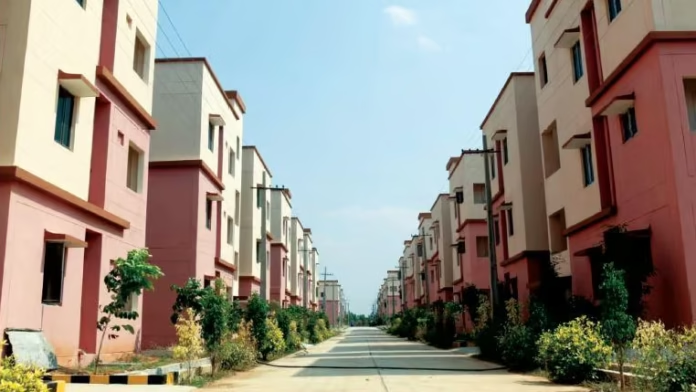
Emaar Invests ₹2,000 Crore in Mumbai Homes

0
Emaar Invests ₹2,000 Crore in Mumbai Homes

Emaar India is set to make a significant mark in the Mumbai real estate landscape with its recent announcement of a ₹2,000 crore investment. Following its successes in North India, the company unveiled its latest villa project, Casa Venero, in Alibag, a coastal town near Mumbai, on October 21. The 84-villa project, spread over a sprawling 25-acre land parcel, will feature units priced between ₹9 crore and ₹15 crore, generating a revenue potential of approximately ₹700 crore. “We see immense potential in the Mumbai market, which is not only mature but also offers a diverse range of opportunities,” stated Emaar India’s CEO.

Targeting the mid and luxury segments, Emaar has expressed interest in redevelopment projects throughout Mumbai, eyeing locations like Bandra and Andheri. “We’re open to all localities and are particularly keen on the high-demand areas,” the CEO added. The company’s strategic foray into Mumbai aligns with a post-pandemic trend, where various developers such as Puravankara, Prestige Group, and DLF have also sought opportunities in the market. Alibag’s appeal as a secondary home destination has drawn interest from high-net-worth individuals, including Bollywood celebrities. However, a shift is underway as the upper middle class begins to invest in properties, signalling a potential transformation of Alibag into a primary residence choice.

As Emaar launches Casa Venero, the company anticipates that around 80% of the buyers will be locals from Mumbai, particularly from South Mumbai. This interest highlights a growing trend among city dwellers seeking escape from urban congestion without sacrificing proximity to the city. The villa project’s strategic location near Mandwa jetty, which offers ferry services to South Mumbai, further enhances its appeal. “Alibag has the potential to become a first home destination in the coming years, with its natural beauty and burgeoning infrastructure,” the CEO expressed, suggesting a new trend where luxury living meets serene coastal life.

Real estate analysts predict that as infrastructure develops in Alibag, it could transition from being a holiday getaway to a primary housing market over the next decade. “For many South Mumbai residents, Alibag already feels like an extension of the city, serving as their primary residence,” noted the Managing Director and Co-CEO of Isprava Group. The burgeoning interest in Alibag illustrates a shift in lifestyle preferences, where homebuyers are increasingly valuing tranquillity, green spaces, and community amenities in their quest for sustainable living. Emaar’s commitment to luxury residential offerings underscores its ambition to provide high-quality living spaces that resonate with the evolving demands of modern Indian homeowners.

HUDCO Provides ₹11,000 Crore Loan for Amaravati Development Project

    0
    HUDCO Provides ₹11,000 Crore Loan for Amaravati Development Project
    HUDCO Provides ₹11,000 Crore Loan for Amaravati Development Project

    The Housing and Urban Development Corporation Ltd (HUDCO), a central public sector enterprise, has pledged to extend a loan of ₹11,000 crore for the ambitious construction of Amaravati, the greenfield capital city of Andhra Pradesh. This significant financial commitment marks a crucial step in the state’s ongoing efforts to develop a modern urban hub that embodies sustainable growth and innovative planning.

    Municipal Minister met with HUDCO’s chief executive, in Delhi to discuss the state’s development proposals for Amaravati. Following the discussions, Kulshrestha expressed satisfaction with the government’s plans, resulting in HUDCO’s agreement to provide the much-needed funding to the Andhra Pradesh Capital Region Development Authority (AP CRDA). This ₹11,000 crore loan is part of a broader financing strategy for Amaravati’s Phase-1 development, which has a total estimated cost of ₹26,000 crore. The World Bank and the Asian Development Bank (ADB) have already committed ₹15,000 crore towards the project, meaning the new HUDCO funding secures the necessary financial backing for the initial phase of construction.

    Amaravati has been envisioned as a sustainable city, incorporating green spaces, efficient public transport systems, and environmentally friendly infrastructure. This development aims to not only serve as the political and administrative heart of Andhra Pradesh but also to set a benchmark for future urban projects across India. The successful implementation of Amaravati is expected to stimulate local economies, create jobs, and enhance the quality of life for residents. From a human perspective, the people of Andhra Pradesh are optimistic about the transformative potential of Amaravati. Local businesses anticipate increased opportunities, while residents hope for improved infrastructure and services. However, there is also a palpable sense of caution, with many citizens keenly aware of the challenges faced during previous urban development projects in the state.

    Moreover, sustainability is a focal point of Amaravati’s planning. The integration of green technologies and materials, as well as the emphasis on preserving natural resources, reflects a commitment to environmental stewardship. This approach is vital not only for the well-being of current residents but also for future generations who will call Amaravati home. As the project progresses, the collaboration between government entities and financial institutions like HUDCO will be crucial. The successful funding and execution of Amaravati could serve as a model for other states looking to innovate and invest in sustainable urban development.

    UltraTech Cement Reports Q2 Profit Drop Due to Weak Demand and Low Prices

    UltraTech Cement Reports Q2 Profit Drop Due to Weak Demand and Low Prices
    UltraTech Cement Reports Q2 Profit Drop Due to Weak Demand and Low Prices

    UltraTech Cement has reported a significant drop in its second-quarter profits, highlighting ongoing challenges within the industry. For the quarter ending September 30, the company posted a consolidated net profit of ₹8.2 billion ($97.5 million), reflecting a substantial 36% decrease from the same period last year. This performance fell short of analysts’ expectations, who had projected a profit of ₹10.53 billion, underscoring the current market pressures.

    The downturn can be attributed to a combination of slumping prices and a notable dip in demand, typical of a seasonally weak quarter. The construction sector, which heavily relies on cement, has seen reduced activity due to various economic factors, including rising material costs and delayed project approvals. As a result, UltraTech’s financial results serve as a bellwether for the broader cement industry, which is grappling with similar issues. Market analysts have expressed concern over the implications of these results. The sharp decline in profit may signal a challenging road ahead, particularly as construction activity remains sluggish. Stakeholders are closely monitoring the situation, as continued weak demand could compel companies to adjust pricing strategies or curtail production, potentially leading to further market instability.

    From a sustainability perspective, the challenges faced by UltraTech Cement raise important questions about the industry’s future. The increasing need for environmentally friendly construction practices is juxtaposed with the economic realities of maintaining profitability. Companies are now under pressure to innovate and adopt greener production methods, which can be capital-intensive. Many in the industry believe that embracing sustainable practices is not just an ethical obligation but also a pathway to resilience in a competitive market. Local communities, dependent on the construction sector for employment and economic activity, are also feeling the pinch. As demand for cement dwindles, so too does the availability of jobs, impacting families and the overall economy. Residents are hopeful that recovery will come with renewed infrastructure projects, which could reinvigorate demand for cement and restore stability to the local job market.

    Thane’s Real Estate Shines with Oberoi Launch

    0
    Thane's Real Estate Shines with Oberoi Launch
    Thane's Real Estate Shines with Oberoi Launch

    In a remarkable demonstration of market confidence, Oberoi Realty has successfully sold luxury residences worth ₹1,348 crore in just three days following the launch of its new housing project, Oberoi Garden City Thane. This significant achievement comes after the company commenced bookings on October 18 for the first phase of the 75-acre development, which includes five residential towers featuring both 3 BHK and studio apartments, with sizes starting from 1,475 square feet. This rapid sales momentum reflects a strong demand for premium living spaces in Thane, a region increasingly recognised for its appealing blend of urban convenience and residential tranquillity.

    The overwhelming response to Oberoi Garden City Thane underscores a growing trend among buyers seeking luxurious and holistic living experiences. As the chairman and managing director of Oberoi Realty remarked, the trust and enthusiasm displayed by customers affirm the company’s commitment to delivering top-tier housing solutions. The project boasts an impressive array of over 30 amenities, including a five-star JW Marriott Hotel, an exclusive private membership club, and an Oberoi International School, catering to the diverse needs of modern families. Such features position Oberoi Garden City as a potential benchmark for luxury living in the Thane region.

    Moreover, Oberoi Realty’s financial performance has seen substantial growth. The company reported a staggering 74% increase in booking value for the second quarter of fiscal 2024-25, reaching ₹2,509 crore compared to ₹1,441 crore in the same period last year. This surge is indicative of the robust recovery in the real estate sector and the increasing appetite for high-end properties among consumers. The company’s profit after tax for the first half of FY25 also experienced a commendable 33% rise, further solidifying its standing in the competitive market.

    From a sustainability perspective, Oberoi Garden City represents a significant step towards environmentally conscious urban development. The integration of green spaces and modern amenities within the project aligns with the broader objectives of creating sustainable living environments. As cities face escalating challenges related to urbanisation and climate change, developments like Oberoi Garden City Thane offer a model for future projects, promoting eco-friendly practices while enhancing the quality of life for residents. This focus on sustainability not only addresses immediate housing needs but also contributes to the long-term viability of urban living.

    Coastal Project Enhances Mumbai’s Real Estate Appeal

    0
    Coastal Project Enhances Mumbai's Real Estate Appeal
    Coastal Project Enhances Mumbai's Real Estate Appeal

    Mumbai is on the brink of a significant urban transformation with the recent inauguration of the first phase of the Mumbai Metro Line-3 by Prime Minister Narendra Modi. This ambitious infrastructure project, with an estimated investment of ₹14,120 crore, is designed to enhance connectivity across the city. Spanning 12.5 km from Aarey to Bandra Kurla Complex (BKC), this underground metro line, also known as the Aqua Line, will feature ten new stations, including key transit hubs like T2 and Santacruz. The full route, extending 33.5 km and connecting Aarey to Cuffe Parade, will provide a comprehensive transport network, alleviating congestion and reducing travel times for millions of commuters.

    The strategic development of Metro Line-3, alongside ongoing projects such as the Coastal Road and the Bandra-Worli Sea Link Extension, signals a revival of South Mumbai’s real estate market. Industry leaders are optimistic about the potential for these projects to rejuvenate areas like Dadar, Mahim, and Matunga. With improved connectivity to critical business districts and residential areas, property values in these regions are expected to rise. The enhancements to urban infrastructure are viewed as a catalyst for economic growth, attracting new residents and businesses alike. As the director of Prescon Group noted, the area is poised for redevelopment due to the aging real estate stock, and these high-impact projects will undoubtedly reinvigorate interest in South Mumbai’s real estate market.

    The intersection of Metro Line-3 with existing transport systems, including Metro Line-1 at Marol Naka, is anticipated to significantly boost accessibility across the city. This enhanced connectivity will not only benefit commuters but is also expected to drive up housing demand, particularly in well-connected suburban regions like Kandivali and Borivali. The director of CCI Projects highlighted the impending surge in housing demand as these areas become increasingly attractive for homebuyers seeking convenient living options. The infrastructure improvements represent a forward-thinking approach to urban planning, ensuring that Mumbai remains competitive on a global scale.

    In terms of sustainability, these infrastructure initiatives promise to foster a greener urban environment. By encouraging the use of public transport over personal vehicles, the Metro is expected to reduce traffic congestion and associated pollution levels. Moreover, the development of well-planned urban spaces around metro stations will promote walkability and enhance the quality of life for residents. As Mumbai continues to evolve, the integration of advanced transport networks is vital for accommodating the needs of its expanding population while addressing pressing environmental challenges. By 2025, the seamless connectivity of air, road, and metro systems is projected to position Mumbai as a world-class urban centre, ready to tackle the complexities of modern urban living.

    Gurugram’s DTPE Seals Seven Houses in DLF-1 Amid Crackdown on Illegal Constructions

    0
    Gurugram's DTPE Seals Seven Houses in DLF-1 Amid Crackdown on Illegal Constructions
    Gurugram's DTPE Seals Seven Houses in DLF-1 Amid Crackdown on Illegal Constructions

    The Department of Town and Country Planning (DTPE) in Gurugram has sealed seven houses in the DLF-1 area. This operation, led by DTPE officer Manish Yadav, was conducted in the A-Block Extension and B-Block, where residents had reported unauthorised modifications made to properties even after obtaining occupancy certificates.

    The sealing action affected four houses in Lane A-48, two in Lane A-27, and one in B-Block. The crackdown came after numerous complaints from local residents, who voiced concerns over the growing number of illegal constructions that not only marred the aesthetic appeal of the neighbourhood but also posed safety hazards. “We have been complaining about these violations for months. These illegal constructions spoil the aesthetics and create safety hazards,” remarked resident. The violations included filling in cut-out areas, installing grills in defiance of zoning regulations, and converting stilt parking spaces into additional rooms for domestic staff. Such activities, according to local residents, have exacerbated congestion in an already busy area. The another resident, expressed relief over the action taken by the DTPE. “We were worried about increased congestion. This move towards maintaining order is commendable,” she stated. Before the sealing took place, property owners received show-cause notices and restoration orders, providing them with ample time to rectify their illegal modifications. However, a lack of compliance led to the enforcement actions executed on Monday. The structures sealed extended beyond permissible limits, breaching town planning guidelines.

    This operation was conducted under the supervision of duty magistrate ATP Anish Grover, along with planning officer Puneet and junior engineers, alongside other departmental staff. The crackdown is part of an ongoing effort by the DTPE to restore order and curb illegal constructions throughout Gurugram, with more inspections and enforcement actions planned in the near future. From a sustainability perspective, these illegal constructions pose not just an aesthetic concern but also an environmental one. Unregulated building practices can lead to poor drainage, increased flooding risks, and a loss of green space. The local community’s push for adherence to regulations reflects a desire for sustainable urban development that prioritises safety and ecological balance. As the crackdown continues, residents remain hopeful that the authorities will maintain vigilance against illegal modifications. The sentiment among locals indicates a strong demand for transparency and accountability in building practices, with many expressing that they would like to see consistent enforcement to preserve the integrity of their neighbourhood.

    HUL Expands Logistics with Bhiwandi Warehouse

    0
    HUL Expands Logistics with Bhiwandi Warehouse
    HUL Expands Logistics with Bhiwandi Warehouse

    Hindustan Unilever Limited (HUL) has made a notable investment in its logistics capabilities by leasing 5.93 lakh square feet of warehousing space in Bhiwandi, a strategic location near Mumbai, at an initial monthly rent of ₹1.54 crore. This decision reflects the growing demand for warehousing facilities in Bhiwandi, which has established itself as a pivotal hub for various companies, particularly e-commerce firms, seeking to optimise their supply chains. The area’s strategic advantages are further enhanced by the impending completion of the Mumbai-Nagpur Expressway, which is expected to bolster connectivity and drive economic growth.

    The lease agreement, effective for a period of seven years, includes a rental escalation clause of 5% annually. According to property registration documents, the transaction was registered on October 7, with a security deposit equivalent to six months’ rent, highlighting the confidence HUL places in its operational expansion within the region. The stamp duty paid for this transaction amounted to ₹1.73 crore, alongside a registration fee of ₹30,000, indicating a significant financial commitment by the company to enhance its logistical footprint.

    This move is not just a business decision; it aligns with the broader trend of industrial and logistics leasing across India’s top markets, which has seen a moderation in activity, recording 16.6 million square feet during the first half of 2024. Major cities like Bengaluru, Delhi-NCR, and Kolkata have accounted for nearly 58% of total space take-up, showcasing a concentrated demand for logistics facilities in metropolitan areas. While the overall new supply of industrial space has decreased by 16% to 15.5 million square feet, there remains a robust interest in third-party logistics, which constitutes 40% of leasing activity across key cities.

    Sustainability is increasingly becoming a focal point in industrial leasing, with companies like HUL recognising the importance of efficient supply chain management to reduce their carbon footprint. As the demand for sustainable logistics solutions grows, HUL’s investment in a large warehousing facility reflects its commitment to optimising operations while addressing environmental concerns. This development could lead to the adoption of more sustainable practices in warehousing and distribution, ultimately benefiting both the company and the community as they navigate the complexities of modern urban infrastructure.

    Institutional Investment in Indian Real Estate Reaches $4.61 Billion, Up 31% in 2024

    0
    Institutional Investment in Indian Real Estate Reaches $4.61 Billion, Up 31% in 2024
    Institutional Investment in Indian Real Estate Reaches $4.61 Billion, Up 31% in 2024

    Institutional investments in the Indian real estate sector have experienced a remarkable upswing, with a 31% year-on-year increase, reaching a total of $4.61 billion for the period from January to September 2024. This significant growth, as reported by real estate consultancy firm Vestian, reflects strong consumer demand and a burgeoning investor confidence in the Indian market.

    The data indicates that the inflow from institutional investors during the first nine months of 2024 has already surpassed the total investments recorded for the entire year of 2023. This positive trend underscores a robust economic environment, buoyed by consistent GDP growth, which has increasingly attracted foreign and domestic investors alike. In the July-September quarter alone, institutional investments surged by 41%, climbing to $960.8 million compared to $679.9 million in the same period last year. However, it is noteworthy that this influx saw a substantial decline of 69% from the preceding June quarter, which had garnered a hefty $3.12 billion in investments. Despite this drop, the outlook remains optimistic, bolstered by ongoing infrastructure development and evolving work-from-office policies that are revitalising demand in the commercial sector.

    CEO of Vestian, emphasised that both foreign and domestic investors are increasingly active in the market, driven by the rapid pace of infrastructure improvements across India. Chennai emerged as a focal point for investments in the third quarter, capturing 48% of the total investments. The majority of this capital flowed into industrial and warehousing sectors, as well as commercial and residential projects. The sustainability aspect of this investment surge cannot be overlooked. As urbanisation accelerates, the shift towards sustainable development practices in construction and urban planning is becoming a priority. This is not only crucial for environmental preservation but also for meeting the rising expectations of socially conscious investors. Overall, the revitalisation of the Indian real estate market signals a hopeful future, where infrastructure development and sustainable practices can coalesce to enhance urban living while supporting economic growth.

    India Launches First Green Steel Facility: A Revolutionary Step to Transform the Industry!

      0
      India Launches First Green Steel Facility: A Revolutionary Step to Transform the Industry!
      India Launches First Green Steel Facility: A Revolutionary Step to Transform the Industry!

      In a landmark initiative set to revolutionize steel production, Gensol Engineering has partnered with Matrix Gas & Renewables to establish India’s first and largest green steel production facility. This project represents a significant milestone in sustainable manufacturing, utilizing 100% green hydrogen to transform traditional steel production processes.

      With an estimated capital expenditure of ₹321 crore, the facility has garnered substantial support from the Indian government, which is providing 50% of the capital expenditure incentives. This collaboration highlights a shared commitment to reducing carbon emissions within the steel sector, essential for combating climate change. Employing advanced direct reduced iron (DRI) vertical shaft technology, the facility will convert iron ore into sponge iron without relying on fossil fuels. By using green hydrogen sourced from renewable energy, it aims to eliminate CO₂ emissions typically associated with coal and natural gas.

      Notable partners, including the Indian Institute of Technology Bhubaneswar and Sweden’s Metsol AB, will oversee the project’s lifecycle. With a capacity to produce 50 tons per day, Matrix will handle land acquisition, environmental assessments, design, engineering, procurement, and logistics. Chirag Kotecha, Whole-Time Director of Matrix, emphasized the facility’s significance, stating it positions India at the forefront of the clean energy transition. The shift towards green steel production promises not only a cleaner environment but also economic benefits, including job creation in emerging green technologies. This facility symbolizes a commitment to sustainable practices in heavy industries, setting a precedent for future developments and ensuring India’s leadership in the global transition towards renewable energy.