Home Blog Page 494

The Evolution of Luxury Living in NCR: Sustainability and Personalization Drive Demand

0
The Evolution of Luxury Living in NCR: Sustainability and Personalization Drive Demand

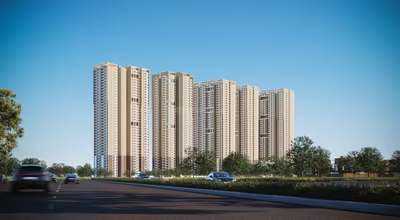
The dynamic landscape of luxury real estate, homebuyer preferences in the National Capital Region (NCR) are shifting significantly. Affluent buyers are increasingly seeking residences that embody not only opulence but also sustainability, unique themes, and personalized experiences. A recent JLL report reveals that Delhi-NCR accounted for 64% of all luxury residential launches among India’s top seven cities in the first half of 2024, reflecting a growing demand for exclusive living experiences.

Developers are responding by introducing theme-based projects that cater to diverse buyer interests, ranging from cultural and wellness themes to international aesthetics. Manoj Gaur, CMD of Gaurs Group, highlights that high-net-worth individuals (HNIs) are looking for homes that mirror their achievements. His firm has integrated unique themes into projects like The Islands, offering a private-island experience. Moreover, developers are drawing inspiration from global destinations and eco-friendly living concepts. For instance, the Prateek Group’s latest project in Siddharth Vihar features a fantasy-world theme, merging Colonial and European architectural influences for a tranquil living environment.

Smart home technology is also a priority for discerning buyers, who value convenience and efficiency. Properties with wellness-focused gardens and community spaces are increasingly popular. Deepak Kapoor of Gulshan Group emphasizes that homes should narrate a story, allowing residents to connect meaningfully with their surroundings. As luxury, sustainability, and individuality converge, developers must innovate continuously to meet the evolving preferences of conscious and aspirational buyers, shaping the future of luxury living in NCR.
Indian Realty Sector Achieves $1.4 Billion in Q3

    0
    Indian Realty Sector Achieves $1.4 Billion in Q3
    Indian Realty Sector Achieves $1.4 Billion in Q3

    The Indian real estate sector has shown impressive resilience and growth in the third quarter of 2024, recording 25 transactions that totalled a remarkable $1.4 billion. This surge is largely driven by Qualified Institutional Placement (QIP) issues initiated by developers, indicating a robust recovery and strategic positioning within the market. The quarter not only marked an all-time high in the number of deals but also achieved the second-highest total value since the second quarter of 2023, reflecting an increasing confidence among investors and stakeholders in the real estate landscape.

    While the QIP activities played a pivotal role in boosting deal values, the private equity sector also contributed significantly to the momentum. Despite a considerable decline in private equity deal values from $1.4 billion in Q2 to just $0.4 billion in Q3, the volume of deals remained stable, highlighting ongoing interest in smaller, focused investments. The quarter saw eight mergers and acquisitions (M&A) valued at $51 million, along with 12 deals in the private equity and venture capital space, amounting to $401 million. This trend demonstrates a shift towards more calculated and strategic investment approaches within the market.

    The heightened activity in the capital markets during this period is particularly noteworthy. The quarter featured one initial public offering (IPO) worth $49 million, alongside four QIPs amounting to an impressive $940 million—nearly six times the value recorded in the previous quarter. Notably, Prestige Estates emerged as a frontrunner in this landscape, successfully raising $602 million through QIP initiatives. This indicates that major players in the sector are proactively seeking avenues to capitalise on favourable market conditions while addressing the growing demand for sustainable and innovative real estate solutions.

    From a sustainability perspective, the influx of capital into the real estate sector aligns with the industry’s increasing commitment to environmentally responsible practices. Investors are becoming more discerning, favouring projects that emphasise sustainability and long-term viability. This shift not only enhances the appeal of properties but also reflects a broader societal push towards eco-friendly urban development. The emphasis on sustainable practices within the real estate sector is critical, as it directly contributes to civic betterment and the overall quality of life for urban residents, fostering a healthier and more sustainable living environment.

    Exploring Future Opportunities: Current Trends in Real Estate Investment

      0
      Greater Noida Authority Raises ₹533 Crore from Successful Auction of Nine Commercial Plots
      Greater Noida Authority Raises ₹533 Crore from Successful Auction of Nine Commercial Plots

      The industry experts discussed emerging trends in real estate investment. Chaired by Ian Aylward, former Head of Manager Selection and Responsible Investment at Barclays, the session featured insights from Fund Managers of TIME Investments. 

      The macroeconomic environment significantly influences real estate investment decisions. Andrew Gill suggested we may be nearing peak interest rates, indicating a potential stabilization or decline soon. He stated, “We’ve seen many indicators recently that inflation has at least steadied.” FM echoed this, predicting that the Bank of England’s next move could be a cut to policy rates, which may stimulate rental growth as economic conditions improve.

      Shifts in government policy are also reshaping the real estate landscape. Norris expressed optimism about Labour’s focus on planning reform and enhanced tenant rights, believing these changes will benefit both residential and commercial markets. He remarked, “Planning reform is great news for the type of businesses we invest in at Gravis,” highlighting the potential for expedited development.

      Investors have multiple avenues within real estate, including physical properties, Real Estate Investment Trusts (REITs), and hybrid strategies. While direct ownership offers tangible assets, Gill cautioned about liquidity challenges. REITs provide a more liquid option, allowing investment in a portfolio of properties, with Norris noting that “some of the best quality commercial real estate is in the listed space.” Sustainability is increasingly prioritized, with the potential for planning reforms to enhance environmentally responsible building practices, ensuring long-term viability in the sector.

      Mumbai’s Future Brighter with Metro Line 3

        0
        Mumbai's Future Brighter with Metro Line 3
        Mumbai's Future Brighter with Metro Line 3

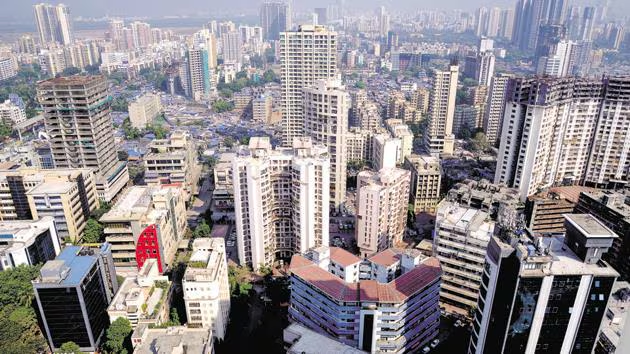
        The inauguration of the first phase of Mumbai Metro Line 3 marks a significant milestone in the city’s infrastructure development. This long-awaited project, connecting Bandra Kurla Complex (BKC) to Aarey, is poised to revolutionize travel in Mumbai, reducing congestion and improving connectivity. The Aqua Line, Mumbai’s first underground metro, will not only enhance the commuting experience for residents but also have a profound impact on the city’s real estate landscape.

        Areas such as Mahim, Dadar, Matunga, and Worli are expected to witness increased property values and transaction volumes due to improved connectivity and development potential. The launch of Metro Line 3 is part of a broader plan to enhance Mumbai’s transportation infrastructure. The extension of the Santacruz-Chembur Link Road (SCLR) and the upcoming Phase II of Metro Line 3 will further strengthen the city’s transport network, catering to its growing population and economic aspirations. The Malad-Goregaon region is also anticipated to benefit significantly from Metro Line 3 and Metro Line 7.

        The convergence of these two metro lines will drive residential and commercial development in the area, making it an attractive destination for millennial homebuyers seeking convenient and affordable housing options. The Aqua Line’s full 33.5 km route, connecting Aarey to Cuffe Parade, will offer improved connectivity across Mumbai’s key regions. The integration with Mumbai Metro Line 1 at Marol Naka will further enhance accessibility.

        The launch of Metro Line 3 has generated significant excitement and anticipation among homebuyers and investors. The improved connectivity and lifestyle amenities offered by projects along the metro corridor are expected to drive demand for residential properties in the western suburbs. As Mumbai continues to invest in its infrastructure, the city is poised to become a more competitive global center. The seamless integration of air, road, and metro networks will not only improve the quality of life for residents but also attract businesses and investment.

        Greater Noida Authority Raises ₹533 Crore from Successful Auction of Nine Commercial Plots

        0
        Greater Noida Authority Raises ₹533 Crore from Successful Auction of Nine Commercial Plots
        Greater Noida Authority Raises ₹533 Crore from Successful Auction of Nine Commercial Plots

        The Greater Noida Industrial Development Authority (GNIDA) successfully auctioned nine commercial plots, raising a remarkable ₹533 crore, surpassing the reserve price of ₹458 crore. This auction highlights the growing interest in Greater Noida as a prime destination for commercial investment, signalling robust market confidence amid evolving urban landscapes.

        Among the successful bidders, Adamant Construction clinched the largest plot, while Nirala World, based in Noida, emerged as the highest bidder for two plots. This comes shortly after GNIDA auctioned three residential plots for ₹521 crore, well above the reserve price of ₹262 crore, showcasing the authority’s effective strategy in promoting both residential and commercial growth.

        The Chairman and Managing Director of Nirala World, expressed enthusiasm for their recent acquisitions, revealing plans to develop a commercial project—potentially a mall or high-street—on a newly acquired land parcel of 10,600 square meters, purchased for ₹180 crore, inclusive of GST, lease rent, and stamp duty. With a construction budget estimated between ₹250-300 crore, this venture is expected to significantly contribute to the local economy and job creation.

        Nirala World’s portfolio also includes a luxury residential project in Greater Noida West, comprising 4,050 homes, of which 3,600 units have already been handed over to buyers, with the remaining 450 units slated for delivery soon. Such developments are critical for meeting the growing housing demands in the area, further emphasizing the authority’s commitment to balanced urban growth.

        In previous auctions, GNIDA has demonstrated its ability to attract substantial investments, with notable acquisitions by major players like Godrej Properties and Sobha. In a recent e-auction of five land parcels, the authority managed to sell them for a staggering ₹1,500 crore, significantly boosting its revenue.

        The successful auction of commercial plots not only marks a financial triumph for GNIDA but also underscores the importance of sustainable urban planning. As Greater Noida evolves into a bustling urban centre, it is vital for new developments to incorporate sustainable practices. By focusing on mixed-use developments that integrate residential, commercial, and green spaces, the authority aims to create a vibrant community while minimising environmental impact.

        The growing interest from developers signals a positive outlook for Greater Noida’s commercial landscape, positioning it as a competitive player in the NCR region. As infrastructure and connectivity improve, the potential for economic growth remains significant, benefitting residents and investors alike.

        Rising Rates Threaten Homebuying Confidence

          0
          Rising Rates Threaten Homebuying Confidence
          Rising Rates Threaten Homebuying Confidence

          The dynamics of the Indian real estate market are poised for a significant shift as recent findings from the FICCI-Anarock Homebuyer Sentiment Survey reveal that nearly 90% of prospective buyers will reconsider their home purchase plans if mortgage rates surpass 9%. This survey, which garnered responses from 7,615 participants, indicates that affordability remains a central concern for homebuyers. Over 71% of respondents expressed that their buying decisions would remain stable as long as mortgage rates hover below 8.5%. However, once the rates breach the 9% threshold, an overwhelming 87% anticipate a substantial impact on their purchasing choices, illustrating the delicate balance between financing costs and homeownership aspirations.

          The survey underscores that the Indian residential market is primarily driven by end-users, with 67% of participants indicating their intention to buy properties for self-use rather than as investment vehicles. The data reveals a strong preference for homes within the budget range of ₹45-90 lakh, chosen by over 35% of buyers, while 28% are inclined towards properties priced between ₹90 lakh and ₹1.5 crore. This shift toward budget-conscious choices reflects a broader trend among homebuyers prioritising value and sustainability, indicating that the current economic climate is making buyers more discerning about their financial commitments.

          Furthermore, the survey highlights the increasing emphasis on quality and reliability in real estate transactions. A staggering 98% of respondents demanded timely project completion, while 93% prioritised improved construction quality. With sustainability now a key concern for buyers, there is a growing expectation for developers to deliver well-ventilated and eco-friendly homes. As highlighted by industry leaders, integrating sustainable practices into residential developments is not just a trend; it has become essential for attracting and retaining buyers. This shift towards sustainability reflects a societal recognition of the importance of environmentally responsible living spaces.

          Industry experts have also voiced the need for robust regulatory frameworks to foster investor confidence and ensure sustainable growth in the real estate sector. By enhancing transparency and governance, regulatory bodies like SEBI are paving the way for a more trustworthy investment environment. The maturation of the real estate market, coupled with regulatory measures like RERA, is encouraging buyers to consider under-construction properties, reflecting growing confidence in developers and the industry’s trajectory. As the market evolves, the emphasis on sustainable practices and regulatory compliance will likely shape the future landscape of Indian real estate.

          Bengaluru Metro’s Green Line Expansion Set to Launch by Month-End

          Bengaluru Metro’s Green Line Expansion Set to Launch by Month-End
          Bengaluru Metro’s Green Line Expansion Set to Launch by Month-End

          The Bangalore Metro Rail Corporation Limited (BMRCL) is poised to enhance the city’s public transport network with the anticipated launch of the extended Green Line metro services between Nagasandra and Madavara by the end of October. This long-awaited development, which features a 3.7-kilometre stretch with stations at Manjunath Nagar, Chikkabidarakallu, and Madavara, is expected to significantly impact daily commuting patterns for thousands of residents.

          With all construction work completed and successful tests conducted, BMRCL is in the final stages of securing a launch date from the Urban Development Department. Following the Railway Safety Commissioner’s approval for commercial operations in early August, the metro authority is optimistic about initiating services as soon as governmental consent is granted. Once operational, this extension is projected to increase metro ridership by approximately 6,500 daily, contributing to an overall monthly total of around 200,000 passengers. The new route will particularly benefit commuters from Anjanapura and Jindal Nagar, as well as those travelling from Nelamangala who are likely to utilise bus or private transport to reach Madavara and continue their journey via metro. Bengaluru’s metro system is not merely about convenience; it represents a vital step towards sustainable urban transport. By encouraging the use of public transport, the Green Line extension aligns with broader environmental goals. According to BMRCL projections, a substantial portion of passengers—49%—are expected to rely on public transport along the Yellow Line, further promoting eco-friendly commuting options.

          However, the expansion comes with its own set of challenges. The upcoming Yellow Line, set to launch by January next year, spans 18.8 kilometres and includes key interchange stations. Yet, parking at these interchanges poses a significant concern. With projected usage of up to 400,000 passengers daily on interchange routes, the existing parking facilities at these stations may soon prove inadequate, exacerbating traffic congestion. Bengaluru South MP Tejasvi Surya has advocated for expedited approval of the Green Line extension, emphasizing its potential to alleviate congestion on the busy Tumakuru Road Highway. He highlighted that this addition would extend the metro network to 77 km, thereby enhancing connectivity and reducing reliance on personal vehicles.

          As the city grapples with escalating traffic issues, the metro expansion is a beacon of hope for a more sustainable future, promising to make Bengaluru’s urban transport more efficient and environmentally friendly. With the anticipated surge in metro users, the onus now lies on the city’s transport authorities to address the pressing challenges of infrastructure, ensuring that the dream of seamless commuting becomes a reality for all residents.

          Vikarabad’s Drone Survey Initiates Digital Master Plan

            0
            Vikarabad's Drone Survey Initiates Digital Master Plan
            Vikarabad's Drone Survey Initiates Digital Master Plan

            A drone survey commenced in Vikarabad on Thursday, marking a significant step in creating a comprehensive digital master plan for the municipality. Vikarabad has been selected as one of 20 municipalities in Telangana with populations exceeding 50,000 to develop a Geographical Information System (GIS)-based master plan under the Atal Mission for Rejuvenation and Urban Transformation (AMRUT) 2.0, an initiative by the Union Ministry of Housing and Urban Affairs, partially funded by the Central Government.

            This pioneering drone survey is being conducted collaboratively by Vikarabad district authorities and officials from the Survey of India, establishing Vikarabad as the first municipality to implement this advanced technology for urban planning among its peers. The other municipalities involved in this initiative include Jangaon, Kagaznagar, Bodhan, Gadwal, and several others, all seeking to enhance their urban infrastructure through similar digital master plans. The primary objective of this survey is to gather precise data that will inform the development of critical infrastructure, including roads, housing, drainage systems, water pipelines, cell towers, public toilets, reservoirs, markets, and cremation or burial grounds. As collector Prateek Jain stated during a recent meeting, the master plan aims to cater to the needs of Vikarabad for the next 30 to 40 years, emphasising the importance of sustainable urban planning that accommodates growth while addressing the current demands of residents.

            The implementation of a digital master plan in Vikarabad promises to transform urban development and enhance residents’ quality of life. By leveraging cutting-edge technology, this initiative aims to improve governance and resource management, effectively addressing urban sprawl and inadequate infrastructure. A GIS-based approach enables comprehensive analysis of land use and resource allocation, ensuring future developments are environmentally sustainable and socially inclusive. This strategy is vital for mitigating climate change challenges like flooding and water scarcity through resilient designs.

            Importantly, this initiative offers hope for Vikarabad’s residents, representing a vision of a well-planned, modern city that caters to their needs while prioritizing environmental preservation. It embodies the idea that urban spaces should be thoughtfully designed to improve the lives of those who inhabit them, fostering a sustainable and vibrant community for the future.

            High-End Properties Gain Ground in India

            0
            High-End Properties Gain Ground in India
            High-End Properties Gain Ground in India

            The recent Homebuyer Sentiment Survey conducted by FICCI-Anarock reveals a notable shift in the Indian real estate market, with luxury homes gaining significant traction among buyers. As the landscape of homeownership evolves, real estate remains the preeminent choice for investment, with a striking 59% of respondents indicating a preference for property over other investment avenues. This enduring faith in real estate underscores its status as a stable asset class, especially amid economic uncertainties.

            A deep dive into the survey’s findings highlights an intriguing trend: while 67% of participants intend to purchase land or properties for personal use, only 33% do so for investment purposes. This indicates a growing inclination among Indians to seek homes that cater to their lifestyle aspirations rather than simply viewing real estate as a financial asset. The shift towards purchasing larger properties is also evident, with over 50% of homebuyers now favouring 3BHK flats. This growing demand reflects a shift towards spacious living, catering to families who prioritise comfort and room to grow.

            The luxury segment is particularly noteworthy, with 28% of buyers opting for properties priced over ₹90 lakh. This trend highlights the increasing willingness of affluent buyers to invest in high-end homes that offer not just shelter but also a lifestyle. Additionally, the survey shows that big apartments remain the preferred choice for 58% of respondents. However, it is essential to note that there is a rising interest in basic residential plots, particularly in southern India, signalling a diversified approach to property investment.

            From a sustainability perspective, the burgeoning demand for luxury homes presents both opportunities and challenges. Developers are now faced with the task of integrating sustainable practices into these high-end projects to meet the expectations of environmentally conscious buyers. Features such as energy-efficient systems, sustainable materials, and green spaces are becoming paramount in luxury developments. As the urban landscape continues to evolve, incorporating sustainability into luxury living will not only enhance property values but also contribute to a greener future for India’s cities.

            Bengaluru Favors 3BHKs, MMR Prefers 1BHKs

            Bengaluru Favors 3BHKs, MMR Prefers 1BHKs
            Bengaluru Favors 3BHKs, MMR Prefers 1BHKs

            The ongoing impact of the pandemic on homebuyer preferences is becoming increasingly evident, with a recent Homebuyer Sentiment Survey revealing that a significant 51% of prospective buyers now favour three-bedroom apartments (3BHKs). This is a notable increase from just 41% recorded in the same survey two years ago. The trend is particularly pronounced in metropolitan areas like Bengaluru, Chennai, and Delhi-NCR, where over half of the respondents have expressed a preference for larger living spaces. This shift towards more spacious homes reflects a broader desire for comfort and versatility as families adapt to changing lifestyles in the post-COVID era.

            Conversely, the Mumbai Metropolitan Region (MMR) and Pune are witnessing a growing demand for one-bedroom apartments (1BHKs). In these regions, more than 40% of participants indicated a preference for 2BHK units, with first-time homebuyers increasingly leaning towards 1BHK configurations. Real estate experts attribute this trend to a demographic shift towards nuclear families, as many individuals transition from joint family setups. The allure of affordable and conveniently located 1BHK apartments in the western markets has made them particularly attractive for young professionals and those entering the housing market for the first time.

            Sustainability considerations are also influencing buyer preferences across the spectrum. While larger 3BHK apartments often promise more space and flexibility, developers are increasingly focusing on eco-friendly designs and energy-efficient technologies to appeal to environmentally conscious buyers. In Pune, for instance, 2 and 3BHK units are in high demand among IT professionals who are still navigating hybrid work arrangements. Developers are recognising the importance of integrating sustainable features into their projects to attract this demographic, further contributing to the city’s evolving urban landscape.

            Moreover, the survey indicates a growing inclination towards timely project completion, with 98% of homebuyers prioritising this assurance. This demand for punctuality in project delivery is not merely a trend but reflects a fundamental shift in consumer expectations. As awareness around quality and sustainability rises, developers must adapt to meet these evolving needs. A staggering 93% of respondents highlighted the importance of construction quality, while 72% expressed a desire for well-ventilated homes. Such insights emphasise that the modern homebuyer is not just looking for space but also prioritises a healthy and sustainable living environment.