Home Blog Page 504

Maestro Realtek and GS Group’s Visionary Project

0
Maestro Realtek and GS Group's Visionary Project

Pune’s commercial real estate sector is on the brink of a significant transformation with the announcement of an ambitious new development by Maestro Realtek and GS Group. This strategic joint venture will see the construction of a state-of-the-art commercial complex along Kesnand Road, a location renowned for its connectivity and strategic advantages.

The forthcoming project is poised to redefine the commercial landscape of Pune, featuring contemporary office spaces and advanced facilities that cater to the escalating demands of businesses and investors. The development aims to make a substantial impact on the local real estate market, promising top-tier amenities and infrastructure designed to support a dynamic business environment. This collaboration merges Maestro Realtek’s extensive experience in high-quality real estate projects with GS Group’s robust project management capabilities, setting a new benchmark for commercial real estate in the region. Both companies are committed to delivering a project that not only meets the current demands of the market but also anticipates future trends. The ambitious nature of this venture is expected to play a pivotal role in driving Pune’s economic growth, generating job opportunities, and attracting further investment, thus stimulating local economic activity.

With its prime location and cutting-edge amenities, the development is likely to attract a diverse range of businesses, enhancing Pune’s reputation as a commercial hub. The project will offer modern office spaces equipped with state-of-the-art infrastructure, effectively blending design and functionality to create a conducive business environment. The potential ripple effects of this major venture could lead to further developments and investments in the area, underscoring Pune’s expanding commercial opportunities. This initiative not only highlights the city’s growing stature in the real estate sector but also reinforces the importance of sustainable practices in urban development. By incorporating green building standards and sustainable design principles, the project aims to minimise its environmental footprint while fostering economic growth. As Pune continues to evolve, the Kesnand Road development stands as a testament to the city’s forward-thinking approach and commitment to creating a vibrant, sustainable business ecosystem that benefits both the local economy and its residents.

Real Estate Sector’s ₹1 Lakh Crore Fundraising Boom

Real Estate Sector’s ₹1 Lakh Crore Fundraising Boom

India’s real estate sector has experienced a remarkable fundraising surge, accumulating over ₹1 lakh crore in the past 19 to 20 months. This impressive achievement, primarily driven by debt issuances, highlights the sector’s robust growth trajectory and enhanced creditworthiness, fuelled by a vibrant housing market and steady cash flows. According to recent data from Prime Database, real estate and civil construction companies raised approximately ₹95,975 crore through debt in 2023 and 2024, with ₹61,600 crore secured last year and ₹34,375 crore so far this year. In contrast, equity fundraising has seen a modest increase, rising from just ₹124 crore in 2023 to ₹8,772 crore in 2024, predominantly due to initial public offerings (IPOs).

The fundraising landscape remains dynamic, with an additional ₹28,350 crore in issuances anticipated. This includes ₹16,635 crore in debt, ₹9,695 crore through Qualified Institutional Placements (QIPs), and the balance via IPOs. A spokesperson from Equirus Investment Banking noted that developers are benefiting from improved cash flow predictability, as payments are often received on a milestone basis. This financial stability allows real estate firms to secure debt financing at competitive rates, particularly for those with strong credit ratings. Although the rise in equity issuances in 2024 is noteworthy, debt financing continues to be favoured due to its cost-effectiveness. Investors typically seek higher returns, making debt financing, available at rates between 10% to 12%, a more attractive option.

The capital raised is being strategically allocated towards construction financing, land acquisition, and sustaining new project launches. In the first half of 2024 alone, there were 54 land deals encompassing over 1,000 acres, while 2023 saw nearly 100 deals covering over 2,700 acres, according to Anarock, a leading real estate consultancy. Notably, larger, listed real estate players are increasingly acquiring projects or land from smaller, unlisted entities, often opting to develop these assets independently or through joint ventures. The emergence of real estate platforms backed by strategic investors has further bolstered fundraising efforts through QIPs and preferential issues.

Building a Greener Future: The Push for Sustainability in Real Estate

Building a Greener Future: The Push for Sustainability in Real Estate

The real estate sector is undergoing a transformative shift, increasingly prioritising sustainability in response to urgent environmental challenges and the need for climate change mitigation. Traditionally viewed as a major contributor to resource consumption and carbon emissions, the industry is now striving to reduce its ecological footprint while accommodating the growing demand for housing and commercial spaces. Key areas of concern include emissions from construction activities, energy use, transportation, and waste generation. As a result, leading developers are adopting innovative sustainable practices and technologies to enhance the environmental performance of their projects while simultaneously improving asset quality and longevity.

Prominent among these is DLF, a leading force in Indian real estate, which has made significant strides in sustainable development. The company has pioneered initiatives such as zero-discharge water systems and advanced sewage treatment plants that recycle millions of litres of water daily. Such measures not only relieve local water stress but also highlight DLF’s commitment to environmental stewardship. The company’s recognition in prestigious indices like the Dow Jones Sustainability Index further underscores its dedication to sustainable practices. A DLF spokesperson articulated the company’s ethos, stating, “Sustainability is ingrained in our operations. Our sewage treatment plants recycle over 14 million litres of water daily, which supports horticulture, secondary water use, and lake replenishment, thereby lessening dependence on groundwater.”

Elan Group, another significant player in Gurgaon, has also embraced sustainability, integrating eco-friendly designs and energy-efficient systems into its developments. A representative from Elan remarked, “We understand that sustainable practices are vital for shaping the future. Our goal is to create spaces that not only serve current needs but also promote a healthier, greener tomorrow.” Such efforts reflect a growing consensus among developers that proactive environmental measures yield both ecological and economic benefits, including energy savings, reduced operational costs, and increased property values.

From Industry to Innovation: Howrah’s Growth Story

    0
    From Industry to Innovation: Howrah's Growth Story
    From Industry to Innovation: Howrah's Growth Story

    Nestled along the banks of the Hooghly River, Howrah is experiencing a remarkable transformation, evolving from its historical identity as an industrial and textile powerhouse into a burgeoning urban centre. This shift not only redefines Howrah’s role in West Bengal’s real estate market but also highlights the city’s potential as a key player in the region’s economic landscape.

    Historically, Howrah has benefited from its strategic location and robust infrastructure, establishing itself as a crucial link between Kolkata and the broader Indian market. The city’s industrial development, particularly in textiles and manufacturing, laid a solid foundation for its economic growth. Areas such as Shibpur, Belur, and Dasnagar became instrumental in driving this industrial boom, attracting businesses and investors eager to tap into Howrah’s dynamic environment. However, recent years have witnessed a significant shift in Howrah’s real estate landscape, catalysed by its proximity to Kolkata. This change is evident in the surge of both commercial and residential investments, as developers and homebuyers are increasingly drawn to the city’s evolving infrastructure and strategic advantages. The real estate revival is characterised by a wave of new projects designed to meet the growing demand for modern living spaces and commercial establishments.

    This renaissance is underpinned by substantial investments in infrastructure and urban development, enhancing Howrah’s appeal as a desirable location for various projects. Improved connectivity, along with upgraded urban amenities, has reinvigorated the city’s standing, reflecting a broader trend of urban rejuvenation. Howrah is positioning itself as a competitive and attractive market within West Bengal, not only transforming its skyline but also invigorating its local economy. The influx of new developments is creating job opportunities, boosting local businesses, and attracting further investments, reinforcing Howrah’s status as a significant urban centre. As this transformation unfolds, it promises to contribute positively to both the economic and social fabric of the city, paving the way for a prosperous future. From a sustainability perspective, the resurgence of Howrah offers a unique opportunity to integrate environmentally conscious practices into its urban development. Emphasising green building standards and sustainable urban planning can ensure that Howrah’s growth is not only economically viable but also environmentally responsible. This approach will help create a livable city that meets the needs of its residents while preserving its rich heritage for future generations.

    EFC Invests ₹800 Million in Pune Expansion

    0
    EFC Invests ₹800 Million in Pune Expansion
    EFC Invests ₹800 Million in Pune Expansion

    EFC has made a strategic move to secure an expansive office space of 49,556 square feet in Pune, investing ₹800 million in this prime commercial property. This acquisition highlights EFC’s commitment to enhancing its operational footprint in one of India’s most vibrant business hubs, reflecting a calculated approach towards growth in the competitive Pune real estate market.

    The newly acquired office space is strategically located in a high-demand commercial zone, which is expected to bolster EFC’s operational efficiency and support its growth trajectory. Pune has long been recognised as a key IT and industrial centre, making it an attractive destination for corporations looking to expand their presence. With a thriving business environment and continuous infrastructural improvements, EFC’s investment positions the company to better cater to its clientele and tap into the evolving opportunities within the region. Beyond being a substantial financial commitment, this acquisition also underscores Pune’s rising status as a leading commercial destination. EFC’s investment is anticipated to have positive ripple effects on the local economy, potentially generating numerous employment opportunities and stimulating ancillary businesses. Furthermore, the enhanced operational capabilities resulting from this acquisition will provide EFC with a robust platform for future growth and expansion in the region.

    This strategic purchase aligns with a broader trend of increasing corporate investments in Pune’s real estate sector. As businesses flock to the city, attracted by its favourable economic conditions and infrastructural developments, similar acquisitions are likely to shape the future landscape of commercial real estate in Pune. The purchase of 49,556 square feet of office space by EFC stands as a testament to the company’s confidence in Pune’s evolving commercial sector and its commitment to sustainable growth. In terms of sustainability, EFC’s decision to invest in this new office space highlights a commitment not just to economic growth, but also to creating a workplace that aligns with sustainable practices. The integration of green building technologies and energy-efficient designs in this new office can contribute positively to the environment while ensuring that the company meets its operational goals. This approach underscores the importance of sustainable development in real estate, ensuring that corporate growth goes hand in hand with environmental stewardship.

    CIDCO Land Auction Raises INR 422 Crores

      0
      CIDCO Land Auction Raises INR 422 Crores
      CIDCO Land Auction Raises INR 422 Crores

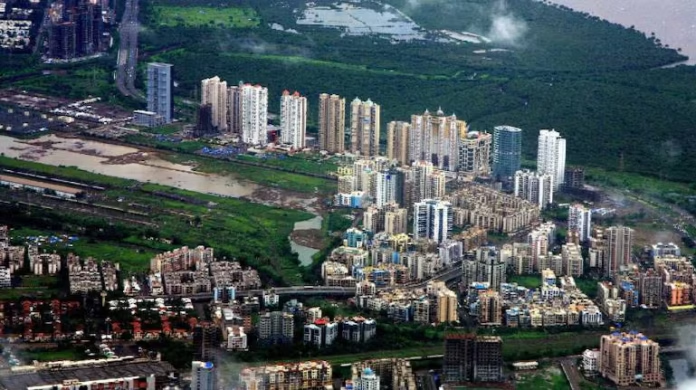
      The City and Industrial Development Corporation (CIDCO) has once again demonstrated the unwavering demand for prime real estate in Navi Mumbai, successfully raking in INR 422 crores from the auction of 13 prime plots across various locations. The auction, which featured land parcels in sought-after nodes like Kharghar, Kalamboli, Pushpak Nagar, Panvel, and New Panvel, showcased the growing confidence of developers and investors in the region’s real estate market.

      The auctioned plots, with development potential ranging from 1.1 Floor Space Index (FSI) to 2 FSI, attracted competitive bidding, with base prices being surpassed by significant margins. Kharghar, known for its well-established infrastructure and proximity to key amenities, emerged as a particularly popular choice among developers. Pushpak Nagar, a developing area with promising growth prospects, also garnered significant interest. The auction highlights the growing appeal of Navi Mumbai as a real estate investment destination. The region’s burgeoning infrastructure, including the upcoming Navi Mumbai International Airport and Metro Rail, coupled with its proximity to Mumbai, has made it a desirable location for both residential and commercial development.

      The robust bidding activity also reflects the stable real estate market in Navi Mumbai. Bid prices, which were reportedly three to four times the base rates, indicate a strong demand for land and a positive outlook for future development. CIDCO’s strategic release of land parcels has played a crucial role in stabilizing housing prices in the region and providing much-needed supply to meet the growing demand. While the increased plot availability may intensify competition among developers, prospective homebuyers are advised to exercise caution and invest only in RERA-registered projects. Conducting thorough due diligence is essential to ensure a sound investment decision. The CIDCO land auction serves as a testament to the thriving real estate market in Navi Mumbai. The strong demand for land and the competitive bidding witnessed during the auction highlight the region’s potential for continued growth and development.

      JLL Ranks India 31st in Transparency Index

        0
        JLL Ranks India 31st in Transparency Index
        JLL Ranks India 31st in Transparency Index

        India’s real estate sector has reached a significant milestone in transparency, as highlighted in JLL’s ‘Global Real Estate Transparency Index 2024’, where the country secured the 31st position among 89 nations. This achievement is particularly noteworthy as it marks the first time that India’s tier-I markets have entered the ‘transparent’ category, signalling a transformative phase in the accessibility and integrity of real estate data in the country.

        According to JLL’s report, India’s improved ranking is largely attributed to the institutionalisation of commercial assets and enhanced access to comprehensive real estate data. The composite score of 2.44 reflects India’s ongoing commitment to refining its market processes and transparency measures. This leap into the ‘transparent’ tier is a direct result of more robust institutional frameworks and clearer transaction processes, which have collectively improved the quality and availability of real estate information. JLL has recognised India as the leading global improver in this year’s index, underscoring its leadership role in promoting market transparency. The report points to significant advancements in transaction processes and overall market fundamentals, establishing India as a benchmark for other nations aiming for similar improvements. The surge in transparency is largely driven by better access to diverse real estate data, positioning India as a key player in the global landscape of real estate transparency.

        As India continues to enhance its real estate transparency, the sector is poised to attract greater investor confidence and stimulate further institutional investment. This recognition from JLL not only celebrates India’s current progress but also lays the groundwork for future advancements in the real estate market. The implications for sustainability are profound; as transparency improves, the likelihood of responsible investment increases, fostering a real estate environment that prioritises ethical practices, environmental stewardship, and social responsibility. In a market where transparency and sustainability often go hand in hand, India’s achievement can inspire a shift towards more sustainable real estate development practices. The positive impact of transparency on investment climates can lead to developments that are not only economically viable but also environmentally and socially responsible, ensuring that the benefits of growth are shared broadly across communities.

        BMC Slams Contractor for Substandard Aarey Road Work

          0
          BMC Slams Contractor for Substandard Aarey Road Work
          BMC Slams Contractor for Substandard Aarey Road Work

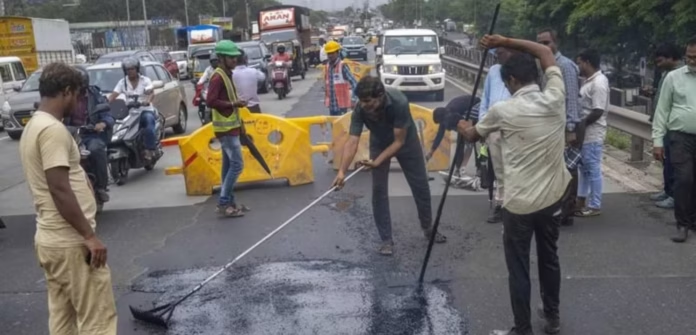
          The Brihanmumbai Municipal Corporation (BMC) has dealt a severe blow to a contractor responsible for the concretization of Aarey Colony road, imposing a hefty fine and demanding that the defective work be rectified at the contractor’s own expense. This stern action follows a thorough inspection that revealed significant quality issues, including cracks, surface deterioration, and inadequate texture in the newly laid stretch.

          The incident underscores the BMC’s commitment to ensuring high standards of quality in infrastructure projects. The contractor’s financial deductions, which will cover both the cost of repairs and a substantial penalty, serve as a stark reminder of the consequences of neglecting quality control. The corporation’s emphasis on future penalties and potential debarment from future projects further reinforces its zero-tolerance policy for substandard work. The Aarey Colony road, a crucial artery connecting the area to the Western Express Highway, is a vital infrastructure asset. The concretization project, valued at INR 36 crore, was intended to improve the road’s condition and enhance connectivity. However, the substandard work has not only compromised the road’s durability but has also delayed its completion.

          The BMC’s action against the contractor also highlights the shortcomings in the quality monitoring process. The quality monitoring agency, tasked with overseeing the project, has been penalized for failing to ensure compliance with the contract’s quality standards. This incident raises questions about the effectiveness of the existing quality control mechanisms and the need for stricter oversight to prevent similar occurrences in the future. The incident serves as a cautionary tale for contractors working on infrastructure projects in Mumbai. It underscores the importance of adhering to quality standards and prioritizing the long-term durability of projects. The BMC’s decisive action sends a clear message that substandard work will not be tolerated and will result in severe consequences.

          Greater Noida to Implement 15% Hike in One-Time Rent

          0
          Greater Noida to Implement 15% Hike in One-Time Rent
          Greater Noida to Implement 15% Hike in One-Time Rent

          In a decisive move, the Greater Noida Authority has announced a substantial increase in one-time property rents, effective from September 15. The new policy will raise the one-time payment to 15 times the annual rent for all property categories, a significant shift from the previous rates. This decision, stemming from a board meeting held on June 15, has been formalised with an official order issued on July 31, reflecting the authority’s commitment to generate additional revenue for urban development.

          Currently, residential and group housing properties are charged an annual rent of 1% of the total premium, with the one-time payment set at 11%. Under the revised scheme, this will escalate, placing further financial pressure on property holders. For instance, a residential property with a total premium of ₹10 lakh will see its one-time payment rise from ₹1.1 lakh to ₹1.5 lakh post-deadline. Similarly, commercial properties will witness an increase from ₹2.75 lakh to ₹3.75 lakh, translating to a staggering 37.5% rise in costs. The authority has indicated that these revenue increments, which exceed ₹400 crore annually, are vital for financing critical urban projects, including infrastructure enhancements and land acquisitions.

          The urgency behind this adjustment is underscored by the ongoing development initiatives in Greater Noida. Plans are in motion for significant projects such as the Greater Noida West Metro, the Multimodal Logistics Hub, and the Transport Hub, which are expected to bolster connectivity and economic growth in the region. The Chief Executive Officer of the Greater Noida Authority has strongly urged property holders to act swiftly, taking advantage of the current rates before the impending deadline.

          Greater Noida Implements New Rental Policies

          Greater Noida Implements New Rental Policies
          Greater Noida Implements New Rental Policies

          The Greater Noida Authority has announced a considerable increase in one-time property rents across all categories, effective post-September 15. This change affects a range of properties, including residential, industrial, commercial, IT, and institutional spaces, and is set to impact both existing and potential property owners.

          For residential properties, the current one-time rent is 11% of the total property premium. To illustrate, a residential property valued at INR 10 lakh incurs an annual rent of INR 10,000. If the payment is made before the deadline, the one-time rent will be INR 1.1 lakh. However, those who delay payment beyond September 15 will face a steep increase to INR 1.5 lakh, marking a staggering 36% rise in rental costs. Commercial properties will see similar adjustments, with the monthly rent for a space valued at INR 10 lakh currently set at INR 25,000. Should the payment be settled before the cut-off date, the one-time amount will be INR 2.75 lakh, but it will soar to INR 3.75 lakh after September 15, reflecting a 36.4% increase.

          This decision was formalised during a board meeting on June 15, with an official notification released on July 31. Notably, the new rates apply only to leases issued from June 15 onwards, ensuring that those who have already made payments remain unaffected by this increase. The Greater Noida Authority, which generates over INR 400 crore annually from lease fees, utilises these funds for vital development projects, including infrastructure improvements and land acquisition. The Authority’s CEO has encouraged property owners to settle payments promptly to avoid the impending higher charges. In tandem with the rent increase, the Greater Noida Industrial Development Authority (GNIDA) has approved a 5.30% rise in land allocation rates for the financial year 2024-25. Significant development projects in Greater Noida include the Greater Noida West Metro, a Multimodal Logistics Hub, and a Transport Hub, all of which are expected to shape the real estate landscape in the region. This rate adjustment is likely to influence real estate transactions and investment decisions as the Greater Noida Authority continues its efforts in urban development. From a sustainability standpoint, the increase in rental costs poses potential challenges for affordability, particularly for low- and middle-income families. Stakeholders must balance the need for urban development with the imperative of inclusive housing solutions, ensuring that the benefits of growth are shared equitably across all demographics. This approach is crucial in fostering sustainable communities that support diverse populations while driving economic growth.