Home Blog Page 505

Greater Noida’s Tough Stance on Property Delays

0

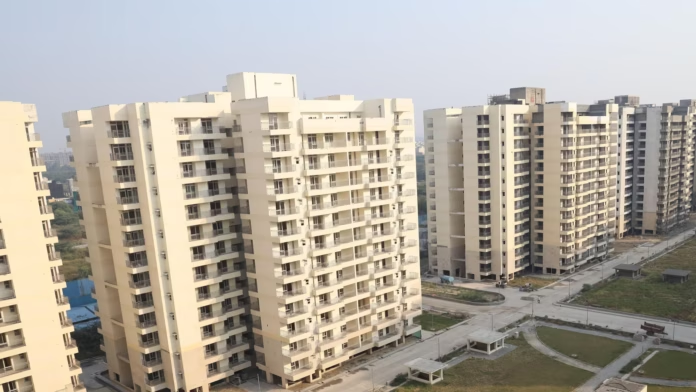
The Greater Noida Authority has issued a resolute ultimatum to property allottees who have yet to formalise their registrations or commence construction on residential plots, some of which have been held for as long as twenty years. With a deadline set for October 30, 2024, the authority has mandated that allottees must finalise property registration and begin construction by June 30, 2026. Failure to comply will result in the cancellation of their allotments, a decisive step aimed at addressing long-standing delays in the area’s urban development.

This announcement, made following a board meeting on June 12, underscores the authority’s commitment to enforcing regulations designed to expedite property development. Approximately 5,000 property allottees across various categories are impacted by this move, many of whom have not taken the necessary steps to execute property registries or initiate construction despite the considerable time elapsed since their allotments. The Additional Chief Executive Officer of the Greater Noida Authority emphasised the critical need for action, stating, “Numerous allottees have failed to complete the registry or commence construction on their plots. This has persisted for many years, and it is imperative that these issues are resolved promptly.”

The authority’s initiative aims to enhance urban development by ensuring that residential plots are utilised effectively. By imposing strict deadlines, Greater Noida seeks to overcome the stagnation that has characterised many of its allotments. The push for timely registration and construction aligns with the city’s broader goals of maintaining a well-planned urban environment. Such measures not only streamline development processes but also contribute to the overall improvement of Greater Noida’s infrastructure, ensuring that the region can meet the growing demands of its population.

Miyapur: The Next Frontier for Real Estate Investment

Miyapur: The Next Frontier for Real Estate Investment

Miyapur, located in the northwestern region of Hyderabad, is emerging as a key player in the real estate landscape, offering a compelling blend of affordability, connectivity, and robust infrastructure development. This locality is quickly becoming a focal point for both residential and commercial investments, driven by its strategic advantages and growing popularity among buyers and investors alike.

One of Miyapur’s most significant draws is its strategic positioning within the city. The area boasts excellent connectivity, facilitated by the Hyderabad Metro system, which includes the Miyapur Metro Station that connects residents to the city centre and other vital regions. Additionally, its proximity to the Outer Ring Road ensures smooth travel to various commercial hubs, making it an attractive option for commuters. This enhanced connectivity is pivotal as it provides not just accessibility but also a sense of community for residents seeking to balance work and leisure. Furthermore, the area’s competitive pricing for housing presents an enticing opportunity for buyers, particularly first-time homeowners and young professionals who are increasingly drawn to urban living.

Rapid infrastructure improvements are another compelling reason to consider Miyapur for investment. The locality has witnessed significant upgrades in road networks, public amenities, and the establishment of new commercial entities. Upcoming developments, including residential complexes, shopping centres, and educational institutions, are poised to elevate the area’s attractiveness and property values. In addition, the planned green spaces and recreational facilities promise to enhance the quality of life for residents, contributing to a vibrant community atmosphere that prioritises well-being and sustainability.

For commercial real estate investors, Miyapur offers substantial prospects. The burgeoning residential population, coupled with improved infrastructure, is attracting businesses eager to establish their presence in a thriving area. With the ongoing development of business parks and increased commercial activity, Miyapur is set to emerge as a significant business hub in Hyderabad. As the locality evolves, investors can anticipate rising property values and rental yields, solidifying Miyapur’s position as a strategic choice for both residential and commercial real estate investments. The area’s growth not only reflects a shift in market dynamics but also a commitment to creating sustainable urban spaces that enhance the overall living experience for residents.

NAR Data Reveals Complex Housing Trends

    0
    NAR Data Reveals Complex Housing Trends
    NAR Data Reveals Complex Housing Trends

    The National Association of Realtors (NAR) sheds light on the current dynamics of the real estate market, revealing both challenges and opportunities. Although the data reflects trends from the previous month, it provides critical insights into emerging patterns that could shape the housing sector’s future.

    In July, existing home sales showed a 2.5% decline compared to the same month last year, highlighting the persistent challenges faced by the housing market throughout 2024. Initially, NAR had projected a robust 13.5% increase in sales for the year, bolstered by expectations of declining mortgage rates. However, this optimistic forecast has not materialised as anticipated. The ongoing presence of relatively high mortgage rates, combined with economic uncertainty and affordability issues, has significantly dampened buyer sentiment and overall market activity. This year-over-year decline underscores the difficulties in achieving the earlier predicted growth and raises questions about the market’s resilience. Contrasting this decline, the July data revealed a 1.3% month-over-month increase in existing home sales. This slight rebound could suggest that the market is beginning to stabilise, possibly due to minor adjustments in mortgage rates or an uptick in available inventory. While this improvement provides a glimmer of hope, it is premature to conclude that a sustained recovery is underway, given the myriad of factors affecting the market landscape.

    The NAR’s home sales figures serve as an essential indicator for gauging the real estate market’s trajectory. While the year-over-year data highlights ongoing challenges, the recent month-over-month uptick may point to the beginning of a stabilisation phase. Market participants will need to keep a keen eye on upcoming data releases to determine whether this positive movement is merely a temporary fluctuation or the onset of a more enduring trend. As the real estate landscape continues to evolve, stakeholders must remain informed and adopt a cautious, adaptive approach. The interplay between mortgage rates, buyer demand, and broader economic conditions will be crucial in shaping the market’s future direction. For now, the mixed signals reflected in the latest home sales numbers underscore the necessity for vigilance and strategic planning in navigating the complexities of the current market dynamics. From a sustainability perspective, the ongoing challenges in the housing market highlight the importance of fostering affordable housing solutions. As prices fluctuate and affordability remains a pressing concern, a balanced approach towards sustainable development that caters to diverse income groups becomes imperative. Ensuring that all segments of society have access to housing not only supports economic stability but also promotes social equity, making it essential for policymakers and real estate stakeholders to prioritise inclusivity in future developments.

    Residential Sales Surge: ICRA Forecasts 10-12% Growth

    0
    Residential Sales Surge: ICRA Forecasts 10-12% Growth
    Residential Sales Surge: ICRA Forecasts 10-12% Growth

    The Indian residential real estate market continues to exhibit remarkable resilience, with ICRA predicting a robust 10-12% increase in sales across the top seven cities in the fiscal year 2025. This optimistic outlook is underpinned by a confluence of factors, including a sustained surge in demand, historically low inventory levels, and a strategic approach to new project launches.

    Following a stellar performance in FY2024, the market is poised to further consolidate its gains. Key metrics such as sales velocity, collections, and inventory levels are anticipated to remain healthy, reflecting a strong demand-supply dynamic. The projected rise in new launches, expected to reach 767 million square feet (msf), signifies a 12% year-on-year increase, driven primarily by the need to address the persistent inventory shortage. The decline in unsold inventory from 732 msf in March 2023 to 687 msf as of June 2024, coupled with a low years-to-sell (YTS) ratio of 0.9 times, indicates a well-balanced market.

    This positive trend is further supported by a steady flow of new projects, ensuring a continuous supply of housing options to meet the growing demand. While challenges such as elevated home loan interest rates and rising property prices persist, the Indian residential real estate market has demonstrated remarkable adaptability. Sales have consistently reached new highs, with only minor fluctuations in the traditionally slower first quarters. The sustained growth is attributable to a combination of strong end-user demand and manageable affordability levels.

    Looking ahead, ICRA anticipates a modest increase in gross debt for FY2025, primarily driven by the rising cost of construction finance. However, leverage levels are expected to remain stable, reflecting a healthy financial position for the sector. Additionally, the average sale price of residential units is projected to rise further, driven by a shift towards luxury segments and the pricing flexibility afforded by strong sales performance. The Indian residential real estate market remains on a strong trajectory, supported by a combination of favorable market dynamics and a resilient demand environment. The anticipated growth in sales, coupled with a healthy financial position, bodes well for the continued development and expansion of the sector.

    DDA Launches 40,000 Flats to Tackle Housing Crisis

    0
    DDA Launches 40,000 Flats to Tackle Housing Crisis
    DDA Launches 40,000 Flats to Tackle Housing Crisis

    In a significant move to alleviate the housing shortage in Delhi, the Delhi Development Authority (DDA) is set to launch an ambitious housing initiative starting on 19 August. This initiative will open registrations for nearly 40,000 flats, many of which have remained unsold for years. The DDA’s strategy involves three distinct housing schemes that aim to provide a diverse range of residential options at discounted prices, while also offering the added advantage of freehold status to potential buyers.

    This initiative particularly targets Economically Weaker Sections (EWS) and Lower Income Groups (LIG), highlighting the DDA’s commitment to addressing the affordable housing crisis in the capital. By offering these units at competitive rates, the DDA not only aims to boost its revenue from long-standing inventory but also to create opportunities for those who struggle to find affordable housing in a city where real estate prices have skyrocketed. The flats will be categorised according to different housing needs and will be updated to meet current living standards before possession is granted, ensuring that buyers receive quality homes that are ready for immediate occupancy.

    The introduction of freehold rights is a strategic enhancement designed to empower buyers, providing them with greater control over their property. This feature makes the flats more appealing to prospective homeowners who seek both affordability and long-term security. As the DDA proactively works to streamline its housing distribution, this initiative underscores its dedication to improving housing accessibility for Delhi’s residents, particularly those in need of support.

    Bengaluru and Hyderabad See Record Price Growth

      0
      Bengaluru and Hyderabad See Record Price Growth
      Bengaluru and Hyderabad See Record Price Growth

      Housing prices across India’s major metropolitan areas have experienced a remarkable surge, increasing by 44% over the past five years. A recent report from Anarock Research reveals that Hyderabad and Bengaluru are at the forefront of this trend, showcasing the highest property price increases among the country’s leading cities.

      From 2019 to the first half of 2024, Hyderabad led the way with an impressive 64% increase in housing prices, closely followed by Bengaluru at 57%. In contrast, Kolkata registered the lowest growth at 25%, while both the National Capital Region (NCR) and the Mumbai Metropolitan Region (MMR) experienced a more modest rise of 48%. This disparity in price appreciation underscores the unique dynamics influencing each city’s real estate landscape. The acceleration in housing prices has been particularly notable in the aftermath of the COVID-19 pandemic, with the past two years witnessing a significant upswing. This growth can be attributed to robust demand and an increase in new housing supply across these urban centres. As highlighted by the chairman of ANAROCK Group, the post-pandemic recovery phase has injected renewed confidence into the real estate market, resulting in a surge in property values.

      Anarock’s report further examines price trends in the top three micro-markets of each city, focusing on areas with substantial new housing supply. Bagaluru in Bengaluru stands out as a prime example, boasting an astounding 90% price appreciation from 2019 to the first half of 2024. During this period, average residential prices in Bagaluru soared from ₹4,300 per square foot to approximately ₹8,151 per square foot. This substantial increase is largely due to the introduction of around 17,065 new units in Bagaluru, predominantly targeting the mid and premium market segments. Notably, over 94% of these newly launched units were priced between ₹40 lakh and ₹1.5 crore, reflecting the strong demand for housing in these price brackets. In stark contrast, only 6% of the supply consisted of luxury units priced above ₹1.5 crore, and there has been a notable absence of affordable housing developments in Bagaluru since 2019, signalling a shift towards higher-end properties.

      The broader trend of rising housing prices across India’s top cities is driven by a mix of increasing demand, economic recovery, and strategic initiatives from real estate developers. As the market evolves, stakeholders must remain vigilant to effectively navigate the complexities of the post-pandemic real estate landscape. With Hyderabad and Bengaluru leading the charge, the trajectory of property prices in India’s metropolitan areas is set for continued growth. However, this growth comes with challenges. There is an urgent need to balance escalating property prices with affordability and accessibility to ensure that the housing market meets the diverse needs of buyers across various economic segments. The focus on higher-end properties, while beneficial for some, raises concerns about inclusivity in urban housing, emphasising the importance of sustainable development that caters to all demographics.

      BDA Achieves Record Sales with ₹1 Crore Flats in Chandra Layout

      BDA Achieves Record Sales with ₹1 Crore Flats in Chandra Layout
      BDA Achieves Record Sales with ₹1 Crore Flats in Chandra Layout

      The Bangalore Development Authority (BDA) has set a remarkable benchmark in the city’s real estate market with the successful sale of all 120 high-end 3BHK flats in its latest residential project located in Chandra Layout. Priced at over ₹1 crore each, this achievement reflects a robust demand for premium housing in Bengaluru and signifies a turning point in the city’s evolving residential landscape.

      The development, aptly named Nagarbhavi Flats, is strategically situated at the entrance of Chandra Layout, benefitting from its proximity to the Nayandahalli Metro station and the outer ring road. Such prime locations have become increasingly sought after, enhancing the appeal of the flats, which are housed in a modern ten-storey tower comprising 12 units per floor. With a base price starting at ₹1.04 crore and peaking at ₹1.15 crore for units with premium views, the project caters to a discerning clientele. In-house amenities like a gym, well-maintained internal roads, and proximity to parks and the Durga Parameshwari temple have further elevated the desirability of these properties. Interestingly, legal professionals, including judges and advocates, have acquired more than 20 of these luxury flats, highlighting the project’s appeal among high-profile buyers.

      The BDA employed a strategic sales approach, implementing differential pricing based on direction. Flats facing North and East attracted a 5% premium due to Vaastu preferences, while South and West-facing units were offered at slightly reduced rates to stimulate sales. This nuanced strategy has allowed the BDA to tap into cultural preferences that resonate with buyers. Prior to this project, the highest-priced property from the BDA was a 3BHK duplex flat in Alur, priced at ₹50 lakh, illustrating the substantial leap in value that this new offering represents.

      Kokapet Leads Hyderabad’s Real Estate Boom

      0
      Kokapet Leads Hyderabad's Real Estate Boom
      Kokapet Leads Hyderabad's Real Estate Boom

      Hyderabad’s real estate landscape is witnessing remarkable transformations, with recent data revealing impressive price gains across several localities. A detailed analysis conducted by ANAROCK, a prominent real estate services firm, has highlighted that three key areas in Hyderabad are among the top performers in India’s property market. This price appreciation underscores the city’s increasing allure for both investors and homebuyers.

      Notably, three localities in Hyderabad have been featured among the top ten across various Indian cities experiencing significant price escalations. Recent statistics indicate that these areas have witnessed price increases exceeding 50% over the past five years. Among the standout regions are Bachupally and Tellapur, both of which have made their mark in the top ten list, reflecting a strong demand driven by infrastructural improvements, enhanced connectivity, and a surge in commercial activities. Leading the charge, Kokapet has registered a staggering 89% increase in property prices from 2019 to the first half of 2024, with average prices soaring from ₹4,750 per square foot in 2019 to ₹9,000 in H1 2024. This extraordinary surge underscores Kokapet’s strategic significance and its rising desirability among property buyers and investors alike.

      The price escalation in Hyderabad’s real estate market can be attributed to multiple factors. Key infrastructural advancements, including the expansion of the metro rail network and improved road connectivity, have played a crucial role. The proliferation of IT and business parks has further transformed suburban areas into attractive residential and commercial zones. The development of essential social infrastructure, such as schools, hospitals, and shopping centres, has enhanced the appeal of these regions. Moreover, Hyderabad’s relatively affordable housing market, particularly when compared to metropolitan giants like Mumbai and Delhi, has attracted a steady influx of young professionals and middle-income families. This demographic shift has spurred demand for residential properties, further amplified by a limited new supply in certain areas.

      The ANAROCK report also notes the impact of government policies in shaping Hyderabad’s real estate dynamics. The city benefits from a favourable regulatory environment that encourages real estate development and investment, instilling confidence among developers and buyers alike. The Telangana government’s commitment to improving the ease of doing business and ensuring transparent land transactions has further bolstered market growth. Looking ahead, the outlook for Hyderabad’s real estate market remains optimistic. With ongoing infrastructural developments and a continuous influx of investments, the city is well-positioned to sustain its growth trajectory. For both investors and homebuyers, regions such as Kokapet, Bachupally, and Tellapur present promising opportunities for capital appreciation and long-term returns. As Hyderabad forges ahead in its real estate journey, the focus on sustainable development and equitable housing will be critical in maintaining its position as a leading property market.

      Greater Noida Lease Rent Hike: Implications for Residents and Investors

      0
      Greater Noida Lease Rent Hike: Implications for Residents and Investors
      Greater Noida Lease Rent Hike: Implications for Residents and Investors

      The Greater Noida Authority has announced a major hike in the one-time lease rent for residential and other properties, effective from September 15. This decision, made during the board meeting on June 15, marks a significant shift in the financial obligations of property holders. Under the new guidelines, the one-time lease rent will be set at 15 times the annual lease rent across all property categories, a substantial increase from current rates.

      At present, residential and group housing properties are subjected to an annual lease rent of 1% of the total premium, while the one-time payment is calculated at 11%. For industrial, commercial, IT, and institutional properties, the annual lease rent stands at 2.5%, with a one-time payment rate of 27.5%. Under the new policy, allotments made after June 15 will be impacted by the increased rates, while existing allotments that have already been settled will remain unaffected. For instance, a residential property with a total premium of ₹10 lakh currently incurs a one-time lease rent of ₹1.1 lakh; this amount will rise to ₹1.5 lakh post-September 15. Similarly, an industrial property with the same total premium will see its one-time lease rent escalate from ₹2.75 lakh to ₹3.75 lakh.

      The Greater Noida Authority generates over ₹400 crore annually from lease rents, which are crucial for funding development initiatives such as land acquisition, infrastructure upgrades, and city maintenance. The CEO of the Greater Noida Authority has encouraged stakeholders to capitalise on the existing rates before the increase takes effect, underscoring that the revenue collected is vital for both ongoing and future city development projects. This urgency highlights the interconnectedness of fiscal policy and urban development, suggesting that stakeholders must act swiftly to mitigate potential financial burdens.

      200,000 Pune Properties Miss Tax Discounts

        0
        200,000 Pune Properties Miss Tax Discounts
        200,000 Pune Properties Miss Tax Discounts

        In Pune, a staggering 200,000 property owners have neglected to submit the mandatory PT3 forms—self-occupancy affidavits essential for securing a 40% discount on property tax—despite numerous extensions of the deadline. The Pune Municipal Corporation (PMC) has identified that this widespread non-compliance stems from a considerable number of properties being either locked or rented out, prompting owners to hesitate in declaring their property’s true status.

        Initially, the PMC estimated that approximately 450,000 properties would need to file PT3 forms to claim the tax concession. However, recent surveys have revealed a significant shortfall, raising alarms about the actual occupancy and usage of these properties. A PMC official highlighted that many unreported properties are likely rented out, leading to owners avoiding the submission of self-occupancy affidavits necessary for the tax relief. To address this compliance issue, the PMC launched a comprehensive city-wide survey to identify properties that have not submitted the required forms. This initiative began with a pilot project in June at the Sinhagad Road ward office, which uncovered several inconsistencies. For instance, some properties that were genuinely self-occupied were incorrectly taxed due to the absence of submitted affidavits. Consequently, the PMC decided to extend this survey across all wards to ensure adherence to tax discount regulations.

        Efforts have also included engagement with housing societies to collect accurate information on property occupancy; however, this approach has not garnered the expected level of cooperation. The head of the PMC Property Tax Department emphasised the need for residents to complete the PT3 formality to benefit from the tax discount. The 40% discount for self-occupied properties was first introduced in 1970 but faced legal challenges, leading to its temporary withdrawal in the 2018-19 fiscal year. Following public outcry, the policy was reinstated for the 2022-23 fiscal year. To encourage compliance, the PMC has embarked on extensive door-to-door campaigns. Initial surveys took place on May 6 in areas like Vadgaon Dhayari, Vadgaon Budruk, and Hingane, with larger inspections running from June 19 to August 15. During this period, 150 officials were mobilised from various PMC departments to facilitate PT3 form submissions. Additionally, divisional and Peth inspectors distributed forms directly to property owners, maximising participation.

        The PMC’s proactive measures highlight the critical role of accurate property tax declarations in sustaining municipal revenue and ensuring equitable taxation. As Pune continues its urban expansion, strict adherence to these policies will be vital in maintaining the city’s fiscal health while safeguarding residents’ rights to fair taxation. Looking ahead, the PMC is expected to intensify its efforts to enhance compliance, ensuring all eligible property owners can take advantage of the available tax incentives.