Home Blog Page 507

DDA Unveils E-Auction for Premium Properties

0
DDA Unveils E-Auction for Premium Properties

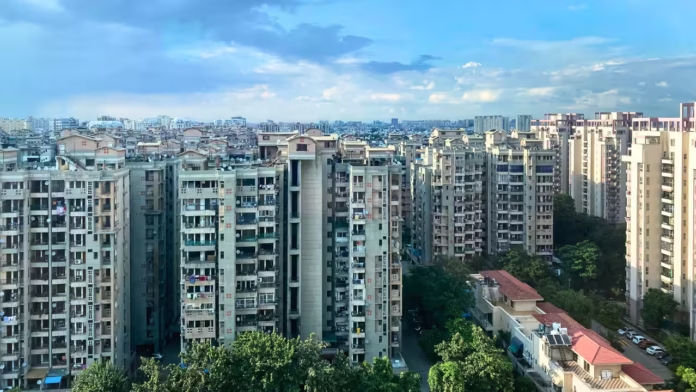
The real estate landscape in Delhi, the Delhi Development Authority (DDA) has announced the launch of an e-auction for a range of high-end luxury properties, including penthouses and premium apartments. Scheduled to commence on September 24, 2024, this initiative is part of the DDA’s Special Housing Scheme 2024 and is poised to attract considerable attention from potential homebuyers seeking opulence in the capital.

The auction will present a selection of approximately 173 luxury residential units situated in the highly sought-after Dwarka sector. The diverse range of properties is aimed at catering to various buyer segments, with reserve prices structured to appeal to both mid-income groups and affluent individuals. Penthouses will have a reserve price starting at Rs 5.19 crore, while Super High Income Group (Super HIG) luxury apartments are set at Rs 2.59 crore. The High Income Group (HIG) three-bedroom units will range from Rs 2.1 crore to Rs 2.28 crore, and Mid Income Group (MIG) two-bedroom apartments will begin at Rs 1.28 crore. The e-auction is designed to be a seamless experience, with registration opening on August 21 and closing on September 16. The auction will take place over three days, with specific time slots allocated for each category. To ensure prospective bidders are well-prepared, the DDA will host live demo sessions from September 21 to 23. This initiative reflects a growing trend towards digitalisation in property transactions, making the bidding process more accessible and user-friendly.

From a sustainability perspective, this shift towards online auctions not only reduces the carbon footprint associated with traditional property sales but also aligns with global efforts to modernise and streamline housing transactions. The DDA’s commitment to leveraging technology signifies a forward-thinking approach that resonates with younger, environmentally conscious buyers. Furthermore, the auction underscores the importance of providing diverse housing options in a rapidly urbanising environment. By catering to varying income brackets, the DDA promotes inclusivity in housing, contributing to balanced urban development. This initiative could potentially stimulate the luxury property market, encouraging investment in high-quality residential units while also addressing the pressing need for sustainable urban living.

As the capital continues to grow, the DDA’s e-auction represents not just a chance for buyers to acquire premium real estate, but a broader commitment to evolving housing policies that meet the needs of a diverse populace. The upcoming auction could serve as a litmus test for market demand in the luxury segment, offering insights into consumer preferences in a post-pandemic world.

Bengaluru and Mumbai Lead Surge in Green Office Leasing

Bengaluru and Mumbai Lead Surge in Green Office Leasing

Bengaluru and Mumbai are leading the charge in the leasing of green-certified office spaces, accounting for over 50% of the total leased area across the six major Indian cities in the second quarter of 2024. A recent report from Colliers reveals that these two metropolitan giants were instrumental in driving a remarkable 13 million square feet of green-certified office space transactions during this period. This surge represents a 24% increase in year-on-year leasing, underscoring a significant shift towards sustainability in India’s commercial real estate landscape.

The dominance of Bengaluru and Mumbai in this sector highlights a pivotal trend: green-certified buildings comprised a substantial 82% of all office leasing activity in the quarter. As urbanisation continues to accelerate, these cities are proving to be proactive in incorporating sustainable practices into their real estate portfolios. The report indicates that a considerable 60% of green office leases signed in Q2 2024 were within newly constructed developments, completed within the last five years. This reflects a growing awareness among corporations regarding their environmental impact and a desire to align their operations with responsible corporate social responsibility initiatives.

Prominent green certifications such as LEED, GRIHA, and WELL are leading the way in endorsing the environmental credentials of these buildings. By evaluating factors such as energy efficiency, waste management, and the incorporation of health and wellness standards in design, these certifications are gaining traction among businesses seeking to enhance their sustainability profiles. The increasing demand for green office spaces indicates a significant change in corporate attitudes, with companies recognising the crucial role of real estate in mitigating climate change challenges.

Hy-Vee Expands Presence in Bengaluru with New Office Lease

0
Hy-Vee Expands Presence in Bengaluru with New Office Lease

Hy-Vee, a significant player in the retail and grocery industry, has recently made headlines with its strategic lease of 54,000 square feet of office space in Bengaluru. This move not only signifies the company’s growing ambitions in India but also reflects a broader trend among multinational corporations seeking to tap into the vibrant Indian market. With Bengaluru renowned as a tech and innovation hub, the decision to set up operations in this city highlights Hy-Vee’s intent to leverage the region’s abundant talent pool and robust infrastructure, particularly in the realm of information technology and logistics.

The new office, located in a prime commercial district, is poised to serve as a central hub for Hy-Vee’s administrative and operational teams, thereby streamlining processes and enhancing productivity. As the company continues to expand, this strategic footprint in Bengaluru will enable it to cater more effectively to the Indian consumer market, which is evolving rapidly. According to recent market research, India’s grocery market is projected to reach a staggering USD 1 trillion by 2025, presenting significant opportunities for players like Hy-Vee. This expansion not only affirms Hy-Vee’s confidence in the Indian economy but also demonstrates its commitment to fostering local employment opportunities.

From a sustainability perspective, Hy-Vee’s expansion could lead to innovative practices that align with environmental stewardship. The new office space is expected to be outfitted with modern amenities that prioritise energy efficiency and reduce carbon footprints. The incorporation of sustainable design principles, such as energy-efficient lighting and smart HVAC systems, is critical in today’s corporate landscape. By committing to such practices, Hy-Vee could set a benchmark for other corporations in the region, encouraging a shift towards greener operational strategies.

Will Real Estate Stocks Maintain Their Momentum?

    0
    Will Real Estate Stocks Maintain Their Momentum?
    Will Real Estate Stocks Maintain Their Momentum?

    The Indian stock market finds itself at a critical juncture, investor sentiment oscillates between the buoyancy of robust headline indices and the unease of elevated valuations. The Nifty index is currently characterised by a tightening range, indicative of a market grappling with inertia. Investors face a perplexing landscape where high valuations breed caution, yet expectations of an impending monetary easing cycle provide a buffer against any significant downturn.

    In this climate, a significant uptick in promoter and private equity sales has emerged, with reports indicating over ₹10,000 crore worth of shares available for sale. This influx of supply not only adds downward pressure on stock prices but also raises questions about the timing and motivations behind such offloading. Insiders appear to be capitalising on the market’s strength, perhaps sensing that the time to liquidate is now, a strategic move that may reflect their concerns about future growth prospects. Amidst this broader market uncertainty, the real estate sector stands out as a beacon of resilience. Analysts, including those from Citi, have recently revised their target prices upwards for prominent companies such as DLF and Prestige Estates. This optimism is rooted in the robust demand for new housing projects, which have been rapidly absorbed by eager investors. However, caution is warranted. The Reserve Bank of India’s tightening of liquidity norms could curtail credit availability, posing a potential risk to growth within the sector. While current valuations suggest strong momentum, the likelihood of substantial upside appears limited, necessitating a nuanced approach when evaluating individual companies.

    The non-life insurance sector is also witnessing noteworthy performance, with firms like ICICI Lombard outpacing their life insurance counterparts. The market’s positive reception of this sector is evidenced by rising stock prices, which reflect strong operational metrics. Recent initiations of coverage, including Jefferies’ endorsement of Go Digit, highlight the growing interest in non-life insurance, further bolstered by favourable feedback from analyst meetings.

    Meanwhile, the Adani Group is reportedly contemplating a strategic overhaul, including the potential sale of shares worth around ₹30,000 crore. This move may be perceived as an effort to enhance financial flexibility and rebalance its portfolio. However, investor sentiment remains cautious, owing to the group’s history of rapid strategic shifts between acquisitions and divestitures. In summary, while sectors such as real estate and non-life insurance display considerable resilience, the overarching market sentiment is tinged with apprehension due to high valuations and increasing supply from promoter sales. Investors are advised to navigate this landscape with a measured approach, balancing the promise of specific sectors against the potential risks that loom overhead.

    AMC’s Bold Auction Plan to Boost Revenue

    0
    AMC’s Bold Auction Plan to Boost Revenue
    AMC’s Bold Auction Plan to Boost Revenue

    The Ahmedabad Municipal Corporation (AMC) is set to auction 13 strategically located plots across the city, with a combined base price of ₹1,156.09 crore. This initiative, announced by the estate department on Thursday, is part of AMC’s comprehensive strategy to monetise municipal assets and bolster revenue through public land sales.

    This upcoming auction underscores AMC’s ongoing efforts to optimise its extensive land bank. In a previous attempt to auction 22 plots, only six were successfully approved for sale, generating ₹174 crore. A significant setback was the halted sale of a prime plot in Chandkheda, which was set to be acquired by LuLu International Shopping Malls Pvt Ltd for ₹519 crore. The sale was suspended due to AMC lacking possession of 10,000 square metres of the intended site, illustrating the complexities that can hinder municipal land transactions. The newly announced auction will proceed according to a strict timeline. Bidders must submit their proposals and complete registration by September 27. The auction itself is scheduled for three phases on September 30, October 1, and October 3. Of the 13 plots available, seven are designated for residential development, while the remaining six are earmarked for commercial use. AMC anticipates that the sale of these plots could yield substantial revenue, with projections ranging between ₹1,400 crore and ₹1,500 crore, reflecting the high market values of these desirable locations.

    This auction comes at a critical time when municipal corporations across India are seeking innovative strategies to optimise their assets and enhance their financial viability. By unlocking the value of its land holdings, AMC aims to fund various infrastructure projects and urban development initiatives, thereby contributing to the city’s growth and development. The proactive approach of AMC in urban planning and resource management aligns with broader governmental efforts to promote transparency and efficiency in the management of public assets. As the e-auction dates approach, all eyes will be on the bidding process and the potential ramifications this significant land sale could have on Ahmedabad’s real estate landscape. The successful execution of this auction not only represents a potential financial boon for the AMC but also poses an opportunity to stimulate local economic development through increased residential and commercial construction.

    From a sustainability perspective, the auction of these plots presents a chance to promote eco-friendly development practices. Encouraging sustainable building methods in both residential and commercial projects can contribute to Ahmedabad’s long-term urban resilience, addressing pressing environmental concerns while fostering economic growth. Such initiatives can help ensure that urban development is not only profitable but also responsible, paving the way for a greener future.

    Rythu Bandhu Scheme: Impact on Land Values

    Rythu Bandhu Scheme: Impact on Land Values
    Rythu Bandhu Scheme: Impact on Land Values

    Hyderabad’s agricultural land market is currently navigating a turbulent period marked by significant fluctuations, primarily influenced by the Telangana government’s Rythu Bandhu scheme. Initially introduced to provide financial support to farmers at ₹10,000 per acre, the scheme catalysed a surge in agricultural land transactions. However, recent developments indicate a concerning decline in land values, as changes in policy and market conditions emerge.

    The Rythu Bandhu scheme was designed to alleviate the financial burden on farmers and stimulate investment in agricultural land. It attracted both active farmers and investors, with landowners—whether utilising their properties for farming or as weekend getaways—benefiting from the subsidy. This influx led to substantial investment in agricultural plots, ranging from large tracts of 50 to 200 acres to smaller parcels for personal use. However, the current landscape tells a different story; a marked slowdown is evident in the agricultural land market. A critical factor contributing to this downturn is the delay in Rythu Bandhu payments. Promises from Chief Minister K. Chandrashekar Rao to increase the subsidy to ₹15,000 per acre remain unfulfilled, leaving many previous buyers contemplating the sale of their properties. The dwindling number of new buyers further compounds the market’s stagnation, as interest in agricultural land diminishes.

    For those who regarded agricultural land solely as an investment, current market conditions are unfavourable. Investors are experiencing reduced offers amid a bear market, with potential buyers now quoting lower prices. Furthermore, anticipated policy shifts under a possible Congress government may introduce stricter eligibility criteria and financial assessments for Rythu Bandhu beneficiaries, adding to the uncertainty. Such changes could depress land values further and deter new investments. As Hyderabad’s agricultural land market adjusts to these evolving conditions, stakeholders must navigate a complex landscape shaped by policy uncertainties and shifting economic dynamics. The outcome of these changes will significantly influence future investment strategies and the overall health of the agricultural real estate sector in the region.

    In terms of sustainability, the declining interest in agricultural land raises concerns about land management and responsible farming practices. Without a robust market, the incentive for sustainable agricultural practices may diminish, jeopardising not only the land’s productivity but also its ecological balance. It is imperative for stakeholders to advocate for sustainable farming methods and policies that promote responsible land use, ensuring the long-term viability of agricultural resources in Hyderabad.

    Streamlining Property Tax: AMC’s New Initiative

    0
    Streamlining Property Tax: AMC's New Initiative
    Streamlining Property Tax: AMC's New Initiative

    In a pivotal move towards modernising its administrative framework, the Ahmedabad Municipal Corporation (AMC) is launching an ambitious project to digitise its property tax records. This initiative, a decade in the making, aims to not only preserve ageing documents but also to enhance accessibility for taxpayers seeking information about their property taxes. As Ahmedabad continues to grow, this project is expected to bring significant improvements to the efficiency and transparency of the municipal tax system.

    The AMC has recently invited tenders for the establishment of a comprehensive digitisation facility, which will involve scanning both historical tax records and current applications. Many of these records are in a state of deterioration, a challenge compounded by their age and the frequency of handling. According to a senior AMC official, some documents relate to ongoing disputes concerning land use and legal matters, making their preservation crucial. The digitisation effort will include the installation of high-speed scanners and computer systems across seven zonal offices, ensuring that each location is well-equipped to handle the volume of records being processed.

    This digital transformation is expected to alleviate several persistent issues, such as the degradation of physical records and inefficiencies in information retrieval. By shifting to a digital format, the AMC aims to expedite access to tax-related information, reduce administrative burdens, and improve overall transparency within its tax department. “The digitisation initiative will significantly enhance the management of property tax records,” the AMC official stated, underscoring the importance of this step in modernising public service delivery. The anticipated benefits extend not only to the AMC but also to the city’s residents, who will enjoy a more streamlined process for handling tax queries and disputes.

    Bengaluru Rent Crisis: Is ₹38,000 Justified?

    0
    Bengaluru Rent Crisis: Is ₹38,000 Justified?
    Bengaluru Rent Crisis: Is ₹38,000 Justified?

    Reddit has sparked a significant debate regarding the soaring rental prices in Bengaluru, especially after a post revealed that tenants are being charged up to ₹38,000 for an unfurnished 1 BHK unit. This conversation, which quickly gained traction, has highlighted the escalating cost of living in one of India’s most prominent IT hubs.

    The debate began with a Reddit user expressing disbelief over how residents are managing to afford such high rents for what many consider a basic accommodation. The user cited an instance in CV Raman Nagar, an upscale neighbourhood in East Bengaluru, where a tenant is reportedly paying ₹38,000 monthly for an unfurnished 1 BHK unit. This prompted a flurry of responses from others, sharing their own rental experiences. Many participants indicated that their monthly rents typically fall between ₹20,000 and ₹30,000 for similar or slightly larger accommodations, such as 1 BHK units or single rooms in shared flats. For a substantial number of tech professionals and other city dwellers, these rental figures represent between 10% and 30% of their monthly income. This discussion sheds light on a pressing issue facing Bengaluru’s rental market, where the burden of high costs is increasingly felt by residents. The stark contrast between the ₹38,000 rent and the more common range of ₹20,000 to ₹30,000 underscores the growing pressures on tenants in the city. As Bengaluru continues to attract a large influx of professionals seeking opportunities, these rising rental prices raise significant concerns about affordability in the real estate sector.

    The situation calls for a closer examination of housing policies and market regulations to address the affordability crisis and ensure sustainable living conditions for residents. As Bengaluru grapples with its identity as a thriving metropolitan area, the need for equitable housing solutions becomes ever more urgent. Affordable housing initiatives, rent control measures, and enhanced regulatory frameworks are essential to mitigate the impact of soaring rents on residents, ensuring that the city remains a viable living option for its diverse population. Moreover, sustainability must be a cornerstone of any future housing strategy. By promoting eco-friendly housing solutions and encouraging responsible development, Bengaluru can not only address the affordability crisis but also ensure that it evolves into a more sustainable urban environment. Such an approach would not only alleviate immediate concerns but also secure a better quality of life for future generations.

    GujRERA Champions Transparency in Real Estate

    0
    GujRERA Champions Transparency in Real Estate
    GujRERA Champions Transparency in Real Estate

    In a proactive move to fortify transparency and protect homebuyers, the Gujarat Real Estate Regulatory Authority (GujRERA) has launched an extensive campaign aimed at curbing the rise of unregistered real estate projects. This initiative addresses the alarming trend of developments operating without the necessary RERA registration, potentially putting the interests of property investors at considerable risk. The authority’s commitment to safeguarding buyers underscores its role in a market increasingly fraught with challenges.

    The central focus of GujRERA’s initiative is to educate the public on the critical importance of investing only in RERA-registered projects. By empowering citizens to recognise and report non-compliant developments, GujRERA aims to foster greater accountability and integrity within the real estate sector. Several unregistered projects have already been identified across various municipal and urban jurisdictions, prompting GujRERA to take decisive action. A senior official from the authority remarked, “Our mission extends beyond enforcement; we are dedicated to educating the public about the risks associated with unregistered projects.”

    One of the key concerns raised by GujRERA involves the practice of pre-launch marketing, where developers promote projects before securing RERA registration. Such practices leave investors vulnerable, lacking the protections that come with RERA compliance. The authority’s awareness programme will highlight the importance of cautious investing and encourage homebuyers to report any pre-launch activities that circumvent RERA regulations. Notably, projects marketed without registration could face penalties of up to 10% of their project costs, reinforcing the message that compliance is not merely a formality but a crucial safeguard for buyers.

    Bangalore’s Real Estate: Driven by Policy Dynamics

    0
    Bangalore's Real Estate: Driven by Policy Dynamics
    Bangalore's Real Estate: Driven by Policy Dynamics

    Bangalore, often heralded as India’s IT capital, is experiencing a remarkable surge in its real estate sector. This growth can be attributed to a multitude of factors, most notably the city’s thriving technology industry and its evolving urban infrastructure. However, the pivotal role of government policies in shaping this landscape cannot be overstated, as they significantly influence trends across residential, commercial, and warehousing segments.

    Government policies are the cornerstone of Bangalore’s real estate dynamics, setting regulatory frameworks and incentives that dictate market behaviour. A prime example is the Real Estate (Regulation and Development) Act (RERA), which has introduced a new era of transparency and accountability in property transactions. The implementation of RERA in Bangalore has not only streamlined processes but has also fostered investor confidence by ensuring that buyers are protected and fair practices are promoted. This increased transparency has stimulated demand, making the market more attractive for both investors and homebuyers. In addition to RERA, initiatives such as the Pradhan Mantri Awas Yojana (PMAY) are making homeownership more accessible to a larger segment of the population. By offering subsidies and incentives, PMAY has positively impacted Bangalore’s residential market, contributing to a noticeable uptick in demand for housing units. The emotional resonance of homeownership—symbolising stability and security—further fuels this demand.

    Bangalore’s commercial real estate is also significantly influenced by government initiatives. Infrastructure development projects, notably the Bangalore-Mysore Infrastructure Corridor, have enhanced connectivity, making it easier for businesses to thrive. These projects not only improve the city’s infrastructure but also attract significant investment in office spaces and commercial properties, fostering a vibrant marketplace. Moreover, the warehousing and logistics sectors have experienced a transformation due to policies aimed at enhancing supply chain efficiencies. The introduction of the Goods and Services Tax (GST) has standardised tax structures, thereby reducing logistical costs. This policy shift has positioned Bangalore as a favourable hub for warehousing and distribution centres, capitalising on the city’s strategic advantages.

    As Bangalore continues to evolve, the interplay between government policies and the real estate market illustrates a symbiotic relationship. Regulatory frameworks and incentives not only drive market trends but also create lucrative investment opportunities. The city’s growth trajectory is not merely a reflection of economic conditions; it is deeply intertwined with policy developments that will shape its real estate landscape for years to come. In the context of sustainability, the policies that govern Bangalore’s real estate are increasingly recognising the need for eco-friendly practices. Developers are beginning to adopt sustainable building methods and energy-efficient designs, reflecting a broader commitment to environmental stewardship. This evolution aligns with global trends towards responsible development, ensuring that Bangalore’s growth is both economically and ecologically sound.