

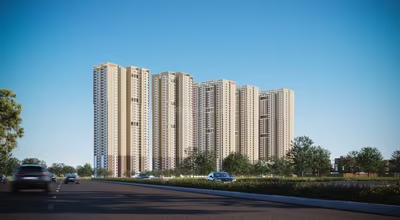
The ongoing impact of the pandemic on homebuyer preferences is becoming increasingly evident, with a recent Homebuyer Sentiment Survey revealing that a significant 51% of prospective buyers now favour three-bedroom apartments (3BHKs). This is a notable increase from just 41% recorded in the same survey two years ago. The trend is particularly pronounced in metropolitan areas like Bengaluru, Chennai, and Delhi-NCR, where over half of the respondents have expressed a preference for larger living spaces. This shift towards more spacious homes reflects a broader desire for comfort and versatility as families adapt to changing lifestyles in the post-COVID era.
Conversely, the Mumbai Metropolitan Region (MMR) and Pune are witnessing a growing demand for one-bedroom apartments (1BHKs). In these regions, more than 40% of participants indicated a preference for 2BHK units, with first-time homebuyers increasingly leaning towards 1BHK configurations. Real estate experts attribute this trend to a demographic shift towards nuclear families, as many individuals transition from joint family setups. The allure of affordable and conveniently located 1BHK apartments in the western markets has made them particularly attractive for young professionals and those entering the housing market for the first time.
Sustainability considerations are also influencing buyer preferences across the spectrum. While larger 3BHK apartments often promise more space and flexibility, developers are increasingly focusing on eco-friendly designs and energy-efficient technologies to appeal to environmentally conscious buyers. In Pune, for instance, 2 and 3BHK units are in high demand among IT professionals who are still navigating hybrid work arrangements. Developers are recognising the importance of integrating sustainable features into their projects to attract this demographic, further contributing to the city’s evolving urban landscape.
Moreover, the survey indicates a growing inclination towards timely project completion, with 98% of homebuyers prioritising this assurance. This demand for punctuality in project delivery is not merely a trend but reflects a fundamental shift in consumer expectations. As awareness around quality and sustainability rises, developers must adapt to meet these evolving needs. A staggering 93% of respondents highlighted the importance of construction quality, while 72% expressed a desire for well-ventilated homes. Such insights emphasise that the modern homebuyer is not just looking for space but also prioritises a healthy and sustainable living environment.




