

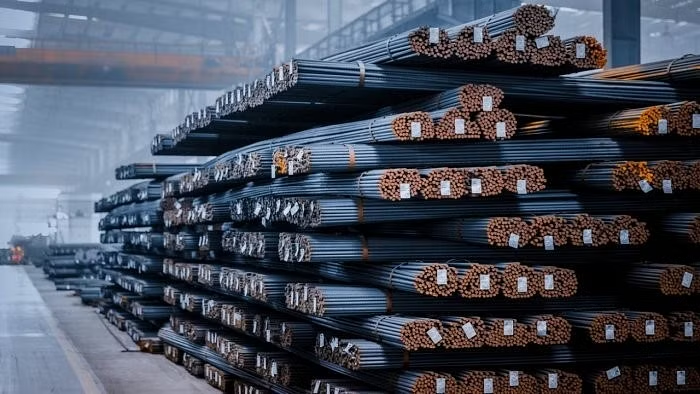
Domestic Steel Demand to Grow 8-9% in 2025
India’s steel demand is poised for significant growth in 2025, with an anticipated increase of 8-9 percent, defying the global industry slowdown. The surge is attributed to robust demand from steel-intensive sectors such as housing, infrastructure, and engineering, coupled with growth in packaging and other segments. The introduction of a safeguard duty, as proposed by the industry, could further support steel prices and profitability, making it a critical factor to watch.
According to Crisil Ratings, global steel demand in 2024 is estimated to have declined by 1 percent, with China, the world’s largest steel producer and consumer, seeing a 3.5 percent drop. This decrease was primarily driven by weaker demand from China’s real estate sector, despite policy changes and economic support packages. Similarly, steel demand in Europe, Japan, and the US has seen declines ranging from 2-3 percent. However, India’s steel demand grew by an impressive 11 percent, helping to offset the global dip.
In 2025, while global steel demand is expected to see a modest increase of 0.5-1.5 percent, India will continue to be the leading force behind demand growth. The projected recovery in residential construction in developed economies, such as the EU, the US, and Korea, along with easing financing conditions, is likely to contribute to global steel demand. However, India’s market remains the most resilient and growth oriented. One of the key challenges for the Indian steel industry, however, lies in domestic supply. Crisil Ratings noted that domestic production growth remained weak in 2024, with the top seven players only achieving a marginal 0.05 percent increase in crude steel production. This was partly due to extended shutdowns and planned maintenance.
Despite this, medium and small players reported significant production growth, with crude steel production increasing by 14 percent and finished steel production by 11.3 percent. This highlights the steady demand for long steel products, particularly from the construction sector. The surge in finished steel imports from key exporters like China, Japan, Vietnam, and South Korea also impacted the domestic market. Imports from China, especially hot-rolled coils (HRC), have increased sharply, creating price pressure on domestic producers. This has resulted in a decline in steel prices, with hot-rolled coil (HRC) prices falling by 9 percent in 2024, and cold-rolled coil (CRC) prices declining by 7 percent.
However, a decline in coking coal prices and a reduction in volatility have provided some relief to steel manufacturers, alleviating margin pressures. Coking coal prices fell by 12 percent in 2024, while iron ore prices saw a rise of 9-10 percent. The imposition of the proposed safeguard duty is expected to provide a positive impact on steel prices in 2025, particularly in the first half. With rising production from new plants, supply is expected to increase, but steel prices are likely to remain above the average levels of 2024, offering a slight upside.

