Haryana Minister Urges Traffic Plan to Prevent Snarls During Metro Expansion
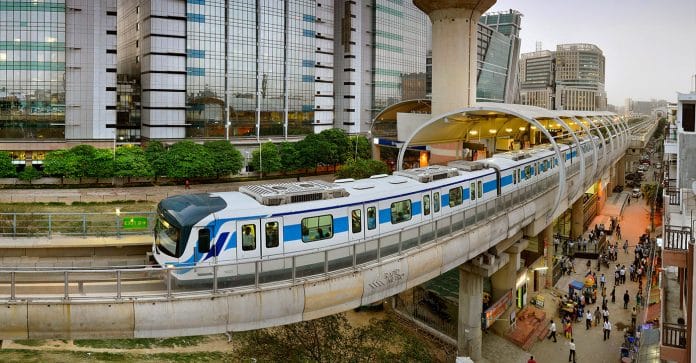
Haryana’s Minister of State (MoS) for Industry and Commerce, Rao Narbir Singh, has called on officials to create a detailed traffic diversion plan to ensure smooth traffic flow and reduce inconvenience to commuters during the ongoing metro expansion between Millennium City Centre and Cyber City in Gurugram. The minister’s instruction came after an inspection of the proposed metro expansion route, where he emphasised the importance of thorough planning to avoid traffic snarls and ensure public comfort during the construction phase. This project is seen as crucial to the state’s broader efforts to modernise transport infrastructure and address the growing urban mobility needs in the region.
The expansion of the metro is expected to significantly enhance connectivity between key urban areas of Gurugram, ultimately reducing congestion at other busy stations. Minister Singh stressed the need for the traffic management plan to manage the growing volume of traffic and ensure that daily commuters are not heavily affected by the construction. Officials were also instructed to finalise the metro route alignment within a month to ensure that the construction can progress smoothly. The project, which is set to connect Millennium City Centre to Cyber City, is a part of Haryana’s larger push to modernise public transport. Once completed, it will provide a more efficient and cleaner mode of transport for residents, easing the pressure on congested roads and offering a more sustainable alternative to road travel.
To prepare for the construction, the Gurugram Metro Rail Limited (GMRL) is conducting final local surveys to assess the existing conditions along the proposed route. A ground-penetrating radar (GPR) survey will also be carried out to identify any underground utilities, such as water pipes, sewage lines, and electricity cables, which might be affected during construction. This proactive approach is designed to prevent accidental damage to critical infrastructure and ensure minimal disruption to public services during the construction phase. Rao Narbir Singh further highlighted the importance of keeping essential public utilities, such as drainage, water supply, electricity, and sewage systems, operational throughout the construction process. Any disruptions to these services must be addressed with timely mitigation measures. The final metro route alignment will take these considerations into account to ensure the seamless progression of the project.
The metro expansion comes at a crucial time as Gurugram and the surrounding areas continue to grow rapidly, increasing the demand for efficient public transport. The 26.6 km main metro line from Millennium City Centre to Cyber City, along with a 1.8 km spur from Basai Village to Dwarka Expressway, will ease traffic congestion and provide better access to key areas. Estimated to cost Rs 5,452 crore, the project is an integral part of Haryana’s long-term vision to improve urban mobility and contribute to the city’s development. Prime Minister Narendra Modi is expected to lay the foundation stone for the project in February 2024, with officials committed to ensuring the timely completion of the metro system. The project will use advanced technologies such as communication-based train control (CBTC) signalling and standard gauge tracks, with initial three-coach trains set to be introduced, which can later be expanded to six coaches as needed. While the metro expansion promises numerous benefits, successful execution of the traffic management plan during the construction phase will be critical in minimising disruptions and ensuring a smooth transition to improved infrastructure. With careful planning and coordination, officials are optimistic that the metro expansion will provide long-term benefits for commuters, enhancing connectivity, reducing congestion, and supporting the region’s continued growth.